
阿里

Search documents
2025年中国光电芯片经营主体分析 企业注册数量较少【组图】
Qian Zhan Wang· 2025-09-04 04:28
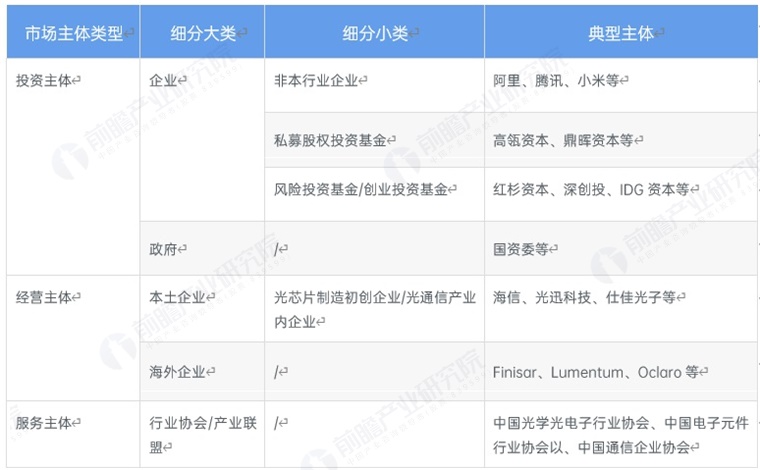
Market Structure - The Chinese optical chip industry consists of three main types of market entities: investment entities, operating entities, and service entities [1] - Investment entities include non-industry companies like Alibaba, Tencent, and Xiaomi, private equity funds such as Hillhouse Capital and IDG Capital, and government bodies like the State-owned Assets Supervision and Administration Commission [1] - Operating entities are categorized into domestic companies (e.g., Hisense, Lightwave Technology) and foreign companies (e.g., Finisar, Lumentum) [1] - Service entities include industry associations and organizations like the China Optical Optoelectronic Industry Association [1] Entry Methods - Companies in the Chinese optical chip industry adopt various entry methods, including independent R&D, collaboration with research institutions, acquisitions, and participation in industry standards [2][4] - Vertical integration (IDM model) allows companies to cover the entire supply chain from chip design to packaging, exemplified by Source Technology focusing on InP optical chips [4] - The "Fab-lite" model combines self-built facilities with outsourcing to balance flexibility and cost, as seen with Zonghui Chip Light [4] - Mergers and acquisitions are used to quickly gain core patents and resources, demonstrated by Shijia Photon acquiring Dongguan Fuke Xima [4] Industry Statistics - As of August 2025, there are approximately 56 registered optical chip companies in China, with a low annual increase of 1-2 companies from 2016 to 2024 [5] - Nearly 45% of these companies have registered capital exceeding 10 million yuan, while around 40% have capital between 1-5 million yuan [6] - Guangdong province leads in the number of registered optical chip companies, followed by Hubei and Jiangsu [7]


港股将迎超级长牛?
Mei Ri Jing Ji Xin Wen· 2025-09-04 02:34
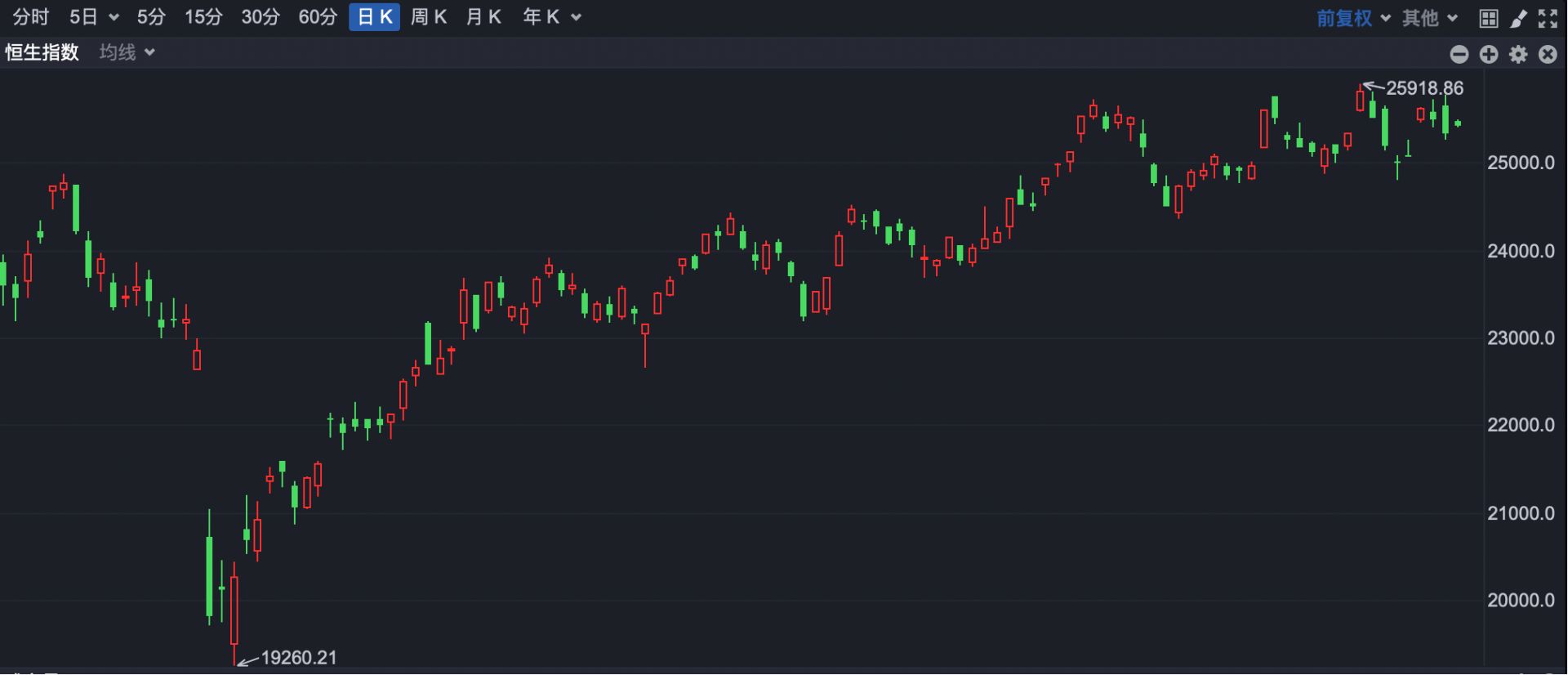
Group 1 - The Hong Kong stock market opened slightly higher, with the Hang Seng Index at 25,489.13 points, up 0.57%, and the Hang Seng Tech Index at 5,725 points, up 0.74% [1] - Southbound funds net bought over 5.5 billion HKD in Hong Kong stocks, with Alibaba, Xiaomi, and Meituan being the most favored, receiving net purchases of 2.489 billion HKD, 699 million HKD, and 570 million HKD respectively [3] - Technology stocks showed a mixed performance, with Lenovo, Baidu, Tencent, Kuaishou, and JD.com rising over 1%, while Bilibili fell nearly 0.5% [4] Group 2 - The robotics sector saw strong performance, with UBTECH rising over 6%, reaching a new high [5] - The innovative drug concept continued its upward trend, with WuXi AppTec opening 2% higher [6] - Apple-related stocks generally rose, with AAC Technologies up 3%, GoerTek up over 6%, and BYD Electronics up over 4% [7] Group 3 - Gold stocks were active, with Zhaojin Mining rising nearly 2% [8] - The outlook for the market suggests a potential long-term bull market for both A-shares and Hong Kong stocks, driven by a unique financial development path in China [8] - The expectation of a long bull market is supported by the positive feedback between the Chinese stock market, economy, and policy expectations, aligning with high-quality economic development and modernization strategies [8] Group 4 - The September market outlook indicates accumulated momentum for Hong Kong stocks to catch up, with a slow upward trend expected to continue [9] - Despite potential volatility in September, the overall direction is upward, with recommendations to focus on technology stocks and innovative pharmaceuticals [9] - Other sectors worth attention include new consumption, banking, non-banking financials, metals, and chemicals [9]
公司和阿里在哪些方面展开了合作?国投智能:与该企业在公证云、共建云原生安全生态等方面有合作
Mei Ri Jing Ji Xin Wen· 2025-09-03 14:29
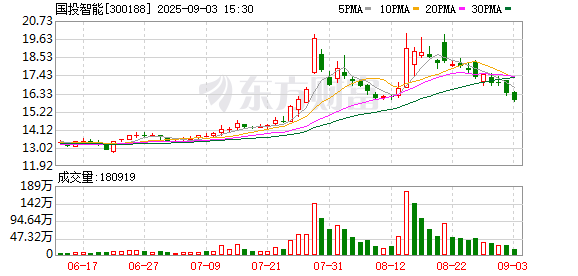
Group 1 - The company is collaborating with Alibaba in various areas, including the development of industry standards such as the "AI Safety Assessment Standards" [2] - The partnership involves cooperation in areas like notarization cloud services and the establishment of a cloud-native security ecosystem [2]

久远银海:与阿里在数字政务、智慧城市等领域有较多合作
Zheng Quan Shi Bao Wang· 2025-09-03 12:57
Core Viewpoint - The company, Jiuyuan Yinhai, is a strategic partner of Alibaba, collaborating in areas such as digital governance and smart city initiatives [1] Group 1 - The company plans to increase research and deployment of its "Wen Yu" large model [1] - There will be a focus on enhancing business and technical collaboration with Alibaba and other ecosystem partners [1] - The company aims to explore deeper cooperation in areas like AI computing power adaptation and innovation in AI industry scenarios [1]

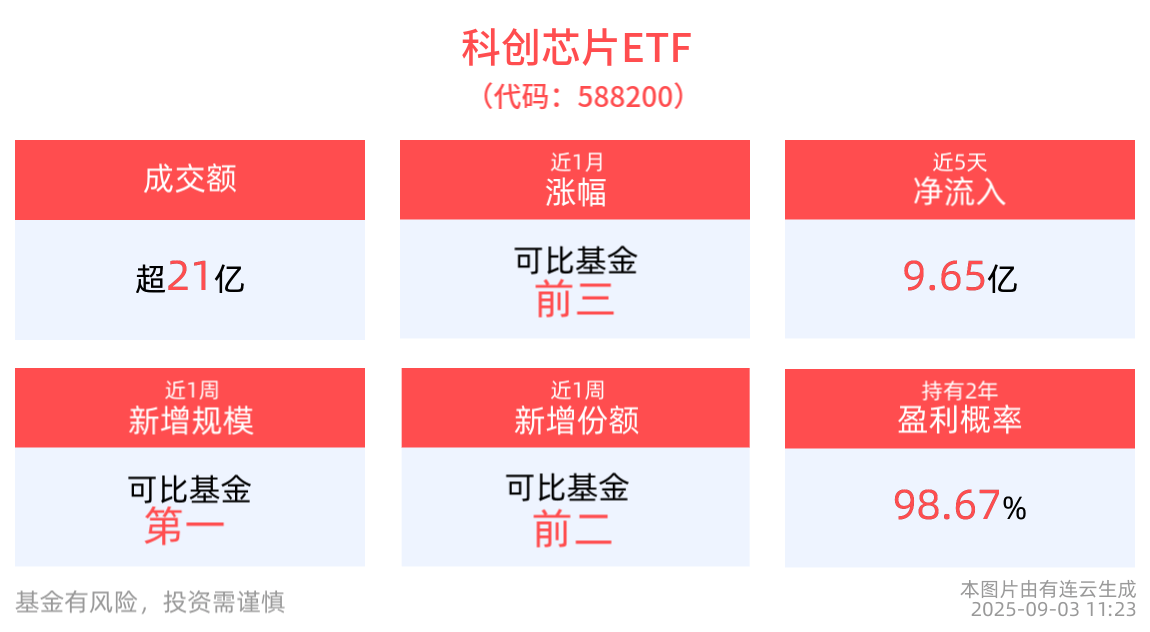
多利好共振,科创芯片ETF(588200)近5日“吸金”近10亿元,成分股成都华微20cm涨停!
Sou Hu Cai Jing· 2025-09-03 04:09
Group 1: ETF Performance - The Sci-tech Chip ETF had a turnover rate of 5.96% during the trading session, with a transaction volume of 2.188 billion yuan [1] - Over the past week, the average daily transaction volume of the Sci-tech Chip ETF reached 5.417 billion yuan, ranking first among comparable funds [1] - The ETF's scale increased by 2.746 billion yuan in the past week, marking significant growth and leading among comparable funds [1] - The number of shares for the Sci-tech Chip ETF grew by 723 million shares in the past week, indicating substantial growth [1] - In the last five trading days, the ETF attracted a total of 965 million yuan in inflows [1] - As of September 2, 2025, the net value of the Sci-tech Chip ETF has increased by 84.69% over the past two years, ranking 32nd out of 2279 index equity funds, placing it in the top 1.40% [1] - The highest monthly return since inception was 35.07%, with the longest consecutive monthly gains being four months and the longest cumulative gain being 36.01% [1] - The average monthly return during the rising months was 9.53% [1] Group 2: Market Drivers - Recent positive developments in the Sci-tech chip sector include Alibaba's reaffirmation of a 380 billion yuan investment plan for AI and cloud infrastructure over the next three years [2] - CITIC Securities estimates that this investment could drive an increase of hundreds of billions in domestic computing power and semiconductor sectors [2] - Assuming an average annual investment of 130 billion yuan, with 70% allocated to IT hardware, this corresponds to approximately 91 billion yuan [2] - Based on the Bill of Materials (BoM) for hardware, 70% of the computing chips would equate to around 65 billion yuan [2] - Industry analysts suggest that the Sci-tech chip sector may benefit from three main factors: a 42-fold year-on-year increase in net profit for leading stocks in Q1, the acceleration of domestic production due to safety incidents involving overseas chip giants, and a shift of domestic cloud providers towards self-developed chips [2] Group 3: Top Holdings - The top ten weighted stocks in the Sci-tech Chip Index include Cambricon, Haiguang Information, SMIC, and others, collectively accounting for 62.02% of the index [1]


大厂“角逐”芯片
财联社· 2025-09-03 03:36
Core Viewpoint - The article highlights the recent changes in the shareholder structure of Xinyuan Semiconductor, indicating significant interest from major tech companies like Ant Group and ByteDance in the semiconductor sector, particularly in ReRAM technology [3][5]. Group 1: Company Overview - Xinyuan Semiconductor (Shanghai) Co., Ltd. focuses on the research and development of ReRAM storage technology and related chip products, founded in 2019 by Zhang Ke and Zhang Xiang [3]. - The company has seen its registered capital increase from approximately 46.537 million RMB to about 50.297 million RMB following new investments [3]. - Major shareholders include Shanghai Lianhe Investment (16.59%), MEMRIS Asia Pacific Limited (16.55%), and others, with Ant Group's Shanghai Yunwei Enterprise Management Consulting Co., Ltd. holding 1.87% [4][5]. Group 2: Investment Landscape - The entry of Ant Group and ByteDance into Xinyuan Semiconductor's shareholder structure reflects a broader trend of major tech firms investing in the semiconductor industry to align with national strategic directions and meet their own technological needs [5][6]. - The semiconductor industry is viewed as a critical area for investment, with Xinyuan Semiconductor being recognized as the second company after TSMC to achieve mass production of 28nm/22nm ReRAM technology [6]. Group 3: Market Position and Future Prospects - Xinyuan Semiconductor has successfully completed the installation and acceptance of its first 28/22nm ReRAM pilot production line, achieving mass production in the industrial control sector [6]. - The company is positioned to potentially "overtake" in the memory chip industry due to the relatively low barriers to entry in the ReRAM field, suggesting a competitive advantage in the domestic market [6].

更猛的港股科技投资工具!港股通科技ETF基金(159101)今日正式上市
Ge Long Hui A P P· 2025-09-03 01:49
Group 1 - The Hong Kong Stock Connect Technology ETF (159101) has officially launched, tracking the National Index of Hong Kong Stock Connect Technology, allowing T+0 trading [1] - The index includes 30 large-cap technology companies with high R&D investment and revenue growth, with over 60% weight in the top seven technology giants, the highest among peers [1] - The index has outperformed other indices, with a year-to-date increase of 45.95%, surpassing Hong Kong Stock Connect Technology (43.46%), Hong Kong Stock Connect Internet (42.22%), and Hang Seng Technology (28.2%) [1] Group 2 - As of yesterday, southbound funds have net bought HK stocks totaling 100.02 billion HKD this year, with Alibaba leading at 10.0178 billion HKD, followed by Meituan, Tencent, and others, all of which are top-weighted stocks in the new ETF [2] - Industry experts believe that the Hong Kong technology sector may enter a new favorable cycle due to factors such as the easing of the food delivery war, continued capital support for AI technology leaders, normalized regulation, and the onset of interest rate cuts by the Federal Reserve [2]
快手20250902
2025-09-02 14:41
Summary of Key Points from the Conference Call Company and Industry Overview - The conference call primarily discusses **Kuaishou** and the **Hong Kong stock market** in relation to the **AI application industry** and its impact on market performance [2][3][4]. Core Insights and Arguments - The current Hong Kong stock market resembles the period from **2012 to 2014**, characterized by a weak economic recovery and low inflation, with domestic demand remaining weak [2][4]. - **AI applications** are identified as a key driver for the Hong Kong stock market, similar to the mobile internet wave in the past [2][5]. - Chinese companies, particularly **Alibaba** and **Tencent**, are leading in the **multimodal large model** space, benefiting from a vast market and user base that fosters AI innovation [2][6]. - The **technology sector** in Hong Kong is more focused on software services and media, with a market capitalization significantly higher than that of A-shares [2][7]. - The **Hang Seng Technology Index** has a price-to-earnings (PE) ratio of approximately **20 times**, indicating a low valuation compared to international giants like Amazon and Google, suggesting potential for valuation uplift as AI trends accelerate [2][9]. Additional Important Content - The **second quarter financial results** for Kuaishou exceeded expectations, with a **13% year-on-year revenue growth** and a **35% increase in operating profit**. The company also announced a special dividend of **2 billion HKD** [4][11]. - Kuaishou's **daily active users (DAU)** and **monthly active users (MAU)** grew by **3%**, reaching **410 million** and **715 million**, respectively, indicating strong user engagement [4][12]. - The **e-commerce segment** of Kuaishou showed a **17.6% year-on-year increase** in total merchandise transaction value, driven by the recovery of live-streaming e-commerce [4][14]. - Concerns regarding Kuaishou's potential entry into the **food delivery business** were addressed, clarifying that the company will not directly participate but will continue its strategic partnership with Meituan [4][15]. - **Koning**, another company discussed, reported revenue exceeding **250 million RMB** in the second quarter, with a significant increase in paid user numbers, indicating strong market potential [4][16]. Market Dynamics - The **Hong Kong stock market** is expected to continue its upward trend in the second half of the year, supported by potential foreign capital inflows due to the Federal Reserve's interest rate cuts and the scarcity of tech and consumer assets compared to A-shares [3][10]. - The **AI application** landscape is rapidly evolving, with domestic companies positioned to benefit significantly from this trend, particularly in the software and content application sectors [2][6][8].

润建股份(002929.SZ):与阿里在AI应用、算力等多个领域开展了业务合作
Ge Long Hui· 2025-09-02 07:07
格隆汇9月2日丨润建股份(002929.SZ)于近期投资者关系活动表示,公司与阿里在AI应用、算力等多个 领域开展了业务合作,业务拓展持续进行中,具体情况请关注公司公告或公众号。 ...
芯片股集体回落 中芯国际收购中芯北方有助增厚利润 亦可满足部分股东退出需求
Zhi Tong Cai Jing· 2025-09-02 06:01
Group 1 - Semiconductor stocks collectively declined, with Shanghai Fudan down 6.03% to HKD 33.64, Hua Hong Semiconductor down 5.07% to HKD 49.46, SMIC down 4.71% to HKD 60.65, and Jingmen Semiconductor down 3.92% to HKD 0.49 [1] - SMIC announced plans to issue additional A-shares to acquire 49% minority stake in SMIC North, with the specific plan yet to be determined [1] - Minsheng Securities believes that SMIC's acquisition of SMIC North could significantly enhance the parent company's net profit, addressing the exit demands of major shareholders like the Big Fund Phase I, which holds a 32% stake and is nearing its exit period [1] Group 2 - Alibaba's AI and cloud capital expenditure reached CNY 38.6 billion in a single quarter, with a three-year plan of CNY 380 billion for AI infrastructure development, driving demand for computing power [2] - Under the backdrop of US-China tech tensions and risks in Nvidia's supply chain, the strong demand from domestic cloud providers like Alibaba may shift towards domestic computing power, serving as a significant catalyst for the domestic computing power sector [2] - The IDC and computing power leasing sectors are expected to benefit from this trend [2]
