
国证港股通科技指数

Search documents
易方达国证港股通科技交易型开放式指数证券投资基金基金份额发售公告
Zhong Guo Zheng Quan Bao - Zhong Zheng Wang· 2026-02-28 01:04
3.本基金的管理人为易方达基金管理有限公司(以下简称"本公司"),托管人为中国建设银行股份有限 公司,本基金登记结算机构为中国证券登记结算有限责任公司。 4.本基金将自2026年3月9日至2026年3月13日进行发售。本基金的投资人可选择网上现金认购和网下现 金认购2种方式,其中网下现金认购的日期为2026年3月9日至2026年3月13日,网上现金认购的日期为 2026年3月9日至2026年3月13日。如深圳证券交易所对网上现金认购时间作出调整,本公司将作出相应 调整并及时公告。基金管理人根据认购的情况可适当调整募集时间,并及时公告,但最长不超过法定募 集期限。 5.网上现金认购是指投资人通过具有基金销售业务资格的深圳证券交易所会员用深圳证券交易所网上系 统以现金进行的认购;网下现金认购是指投资人通过基金管理人及其指定的发售代理机构以现金进行的 认购。 登录新浪财经APP 搜索【信披】查看更多考评等级 重要提示 1.易方达国证港股通科技交易型开放式指数证券投资基金(以下简称"本基金")根据中国证券监督管理 委员会《关于准予易方达国证港股通科技交易型开放式指数证券投资基金注册的批复》(证监许可 [2026]27 ...
ETF视角下的A+H科技新图景
Ge Long Hui· 2026-02-09 09:19
Core Viewpoint - The market is experiencing a shift from a "style betting" approach to a "structural competition" approach, indicating a more nuanced investment landscape where various asset classes coexist simultaneously [6][26]. Group 1: Market Dynamics - Since the beginning of 2026, the market has shown significant volatility with rapid shifts in sentiment, leading to a perception of a lack of clear direction [1]. - Observing ETF-level capital flows reveals that the market is accommodating multiple directions rather than lacking direction [2]. - A notable change is occurring in the aesthetic of capital, suggesting a stratification in investment preferences [3][4]. Group 2: Technology Sector Insights - The A+H technology sector is emerging as a focal point in the current structural layering of the market [8]. - Historically, technology assets were viewed as temporary trading tools rather than structural assets, with narratives shifting between growth potential and risk concerns [9][10]. - As of 2025, the understanding of technology is evolving to focus on its role within the industrial structure rather than just valuation [12][13]. Group 3: Hong Kong Stock Market Developments - The narrative surrounding Hong Kong technology stocks is shifting from "repair" to "technological transformation," reflecting a more balanced understanding of their role in the global market [14][15]. - The Guozhen Hong Kong Stock Connect Technology Index emphasizes a balanced approach, focusing on companies with stable growth and R&D investment across various sectors [16][19]. Group 4: Artificial Intelligence and Future Trends - The market's perception of artificial intelligence is evolving from a conceptual level to a more structured understanding of its industry chain positioning [20]. - The Zhongzheng Innovation and Entrepreneurship AI Index represents a comprehensive view of the AI industry, covering various layers from infrastructure to applications [23][24]. Group 5: Stability and Structural Evolution - The market is forming a multi-layered structure where technology assets represent high growth potential, while stable cash flow assets serve as stabilizers [25]. - The Zhongzheng Hong Kong Stock Connect High Dividend Select Index introduces a quality screening mechanism, focusing on companies with strong dividend attributes and structural integrity [25]. - The overall trend indicates a shift towards a more structured investment approach, reflecting the maturation of capital and the integration of the Chinese capital market into the global system [26][27].

恒生科技重回20日线!多因素共振,港股科技资产迎补涨
Mei Ri Jing Ji Xin Wen· 2026-01-23 01:43
Group 1 - The Hang Seng Tech Index has returned above the 20-day moving average, indicating a short-term bullish trend, with notable stock movements from major companies like Baidu, Alibaba, Bilibili, Kuaishou, SMIC, Hua Hong Semiconductor, and Li Auto [1] - Since October of last year, Hong Kong tech assets have been under pressure due to structural industry differences, negative impacts from delivery subsidies, and year-end liquidity constraints. However, these factors are expected to improve by 2026, driven by AI industry growth, a cycle of overseas interest rate cuts, foreign capital inflows, and the return of southbound funds, suggesting a potential rebound for undervalued Hong Kong tech stocks [1] - Year-to-date, southbound funds have seen a cumulative net inflow of nearly 68 billion HKD into the Hong Kong stock market. Looking ahead to 2026, domestic AI models like DeepSeek are expected to launch around the Chinese New Year, while major domestic companies are increasing capital expenditures to enhance overall model capabilities [1] Group 2 - The National Securities Hong Kong Stock Connect Technology Index includes biotech leaders such as BeiGene, Innovent Biologics, and WuXi Biologics, currently trading at a rolling P/E ratio of only 27 times, which is below the 50th percentile of the past decade, indicating significant mean reversion potential [2]


华夏场外工具“上新” “中信优品”华夏港股通科技ETF联接于11月27日开售
Zhong Guo Jing Ji Wang· 2025-11-25 01:37
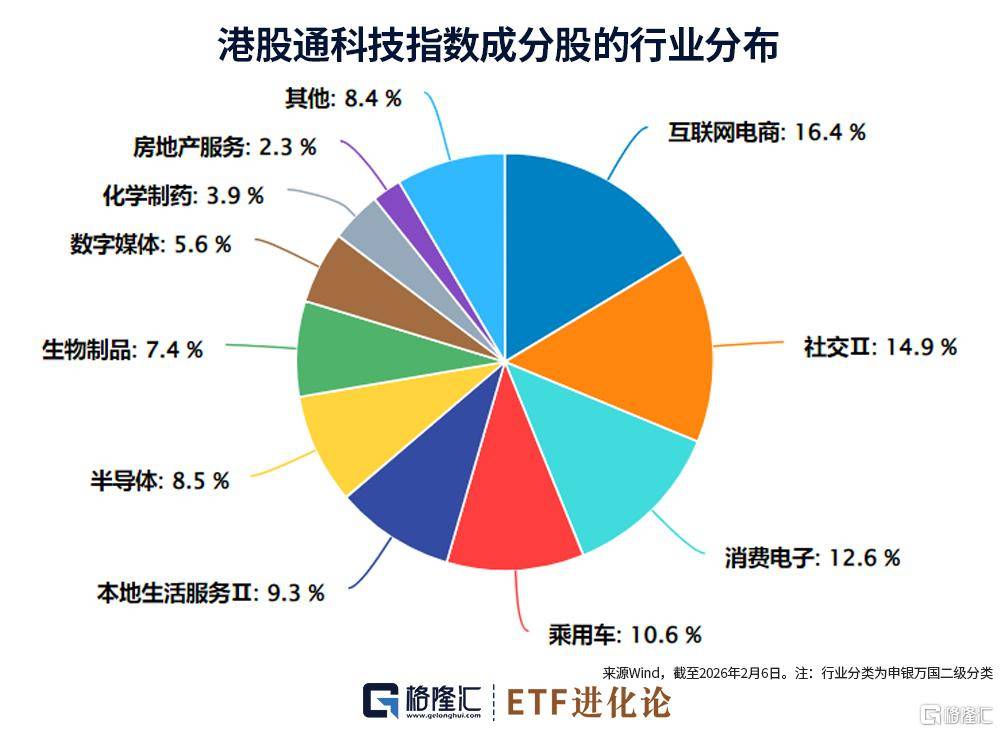
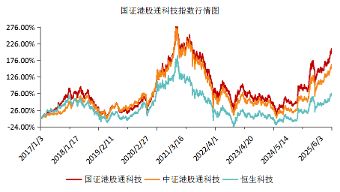
Core Insights - The article highlights the increasing clarity and momentum in the growth path of Chinese technology companies, driven by enhanced policy support and technological breakthroughs [1] - The Hong Kong stock market's technology assets are attracting significant investor interest, with the launch of the Hong Kong Stock Connect Technology ETF Fund (159101) by Huaxia Fund, which has reached a scale of 2.283 billion yuan [1] - Huaxia Fund plans to issue the Hong Kong Stock Connect Technology ETF Link Fund (025805) on November 27, providing a low-threshold investment channel for retail investors [1][2] Investment Products - The Hong Kong Stock Connect Technology ETF Link Fund (025805) will primarily invest in the Hong Kong Stock Connect Technology ETF Fund (159101), closely tracking the "National Index of Hong Kong Stock Connect Technology" [2] - This index comprises 30 large-cap technology companies with high R&D investment and revenue growth, showcasing strong innovation and growth potential [2][4] Index Performance - As of November 6, 2025, the National Index of Hong Kong Stock Connect Technology has achieved a cumulative increase of 180.48% since 2017, outperforming other indices such as the CSI Hong Kong Stock Connect Technology and Hang Seng Technology indices [3] - The index has a high annualized volatility of 35.91%, indicating potential for higher returns for investors with trading capabilities [3] Index Composition - The index currently has a total market capitalization of 13.53 trillion yuan, with the top five stocks accounting for 61.03% and the top ten stocks for 79.58% of the index [4] - The index focuses on leading technology companies in sectors such as electronics and media, with significant representation in internet, semiconductor, smart vehicle, and emerging biopharmaceutical industries [4] Management Expertise - The new fund will be managed by Xu Meng, who has over 22 years of experience in the securities industry and has managed assets exceeding 250 billion yuan [5] - Huaxia Fund is recognized as a leader in the domestic ETF sector, aiming to enhance index tracking accuracy and operational efficiency [5]
以理富人 | 连续调整有点心慌,港股科技还能继续持有吗?
Xin Lang Cai Jing· 2025-11-20 10:09
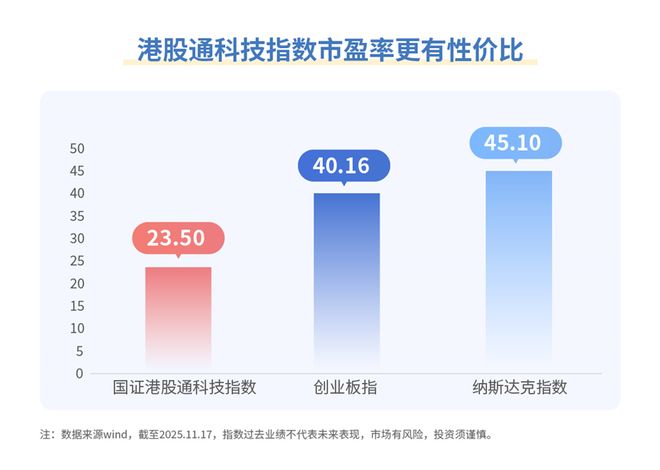
Core Viewpoint - The recent decline in Hong Kong's technology stocks is attributed to short-term factors, but the long-term investment logic remains intact, suggesting continued value in the sector [2][4][13]. Group 1: Reasons for Recent Decline - The decline in Hong Kong technology stocks is influenced by multiple short-term factors, including hawkish signals from Federal Reserve officials, which dampened expectations for short-term interest rate cuts [2]. - The market is experiencing a lack of significant policy news as the year-end approaches, leading to a cautious attitude among investors, particularly in sectors that have seen substantial gains earlier in the year [2][3]. Group 2: Investment Logic and Fundamentals - Despite the recent downturn, the fundamentals of Hong Kong technology companies remain strong, with major firms in the internet and semiconductor sectors reporting stable earnings growth, exceeding expectations [4]. - The ongoing advancements in domestic AI models are expected to stimulate a new wave of AI applications, benefiting the related industry chain [4][5]. Group 3: Valuation and Market Position - The valuation of Hong Kong technology stocks remains attractive, with the Guotai Junan Hong Kong Technology Index trading at a price-to-earnings ratio of 23.50, significantly lower than the over 40 times of the US Nasdaq index [5]. - The current valuation is at a historical low, positioned below the 62nd percentile of the past decade, indicating a favorable risk-reward scenario for investors [5]. Group 4: Market Sentiment and Future Outlook - Despite short-term volatility, "smart money" continues to flow into Hong Kong stocks, with net purchases from southbound funds exceeding 5 trillion HKD, marking a historical high [12]. - The overall investment logic supporting Hong Kong technology stocks has not fundamentally changed, suggesting that investors can maintain confidence and patience during market fluctuations [13].
一键配置AI+智能车+创新药!港股科技ETF天弘(159128)今日重磅上市,可T+0交易,不受QDII额度限制
Ge Long Hui· 2025-11-13 01:28
Core Viewpoint - The Hong Kong stock market is experiencing a strong rebound in the innovative drug sector, following a significant surge in Xpeng's stock, with the launch of the Hong Kong Technology ETF Tianhong (159128) that focuses on AI, smart vehicles, and innovative drugs [1] Group 1: ETF Launch and Composition - The Hong Kong Technology ETF Tianhong (159128) tracks the Guozheng Hong Kong Stock Connect Technology Index, which focuses on the top 30 core technology assets in Hong Kong [1] - The top ten constituent stocks of the index account for over 75% of its total weight, with a focus on cutting-edge fields such as AI, smart vehicles, and innovative drugs [1] - Compared to the Hang Seng Technology Index, the Guozheng Hong Kong Stock Connect Technology Index has a higher allocation to innovative drugs, and compared to the Hong Kong Internet Index, it has a higher allocation to smart vehicles and biomedicine [1] Group 2: Performance Metrics - As of November 11, the Guozheng Hong Kong Stock Connect Technology Index has increased by 44.83% year-to-date, outperforming the Hong Kong Internet Index and Hang Seng Technology Index, which rose by 39.34% and 32.59% respectively [1] - The annualized return since 2020 for the Guozheng Hong Kong Stock Connect Technology Index is 11.7%, also exceeding the returns of the Hang Seng Technology and Hong Kong Internet indices [1] Group 3: Market Dynamics - The fundamentals of Hong Kong technology giants are showing resilience and recovery momentum, with increasing AI penetration and a recovering domestic economy expected to drive quarterly earnings growth for constituent stocks [1] - There has been a continuous inflow of southbound funds, with a net inflow exceeding 50 billion HKD this year, marking a historical high [1] - The recent weak ADP data has increased the probability of a Federal Reserve rate cut in December, which may further influence market dynamics [1] Group 4: Valuation Metrics - As of November 11, the PE valuation of the Guozheng Hong Kong Stock Connect Technology Index is at the 36th percentile of the past five years, indicating a high safety margin and significant investment value [2] - The Hong Kong Technology ETF Tianhong (159128) has substantial elastic space, with all constituent stocks being eligible for the Shanghai-Hong Kong Stock Connect, thus not subject to QDII quota restrictions and allowing T+0 trading [2]
聚焦“硬科技+新经济”,港股通科技ETF招商(159125)10月13日发行
2 1 Shi Ji Jing Ji Bao Dao· 2025-10-13 02:34
Core Viewpoint - The launch of the China Securities Hong Kong Stock Connect Technology ETF (code: 159125) aims to closely track the China Securities Hong Kong Stock Connect Technology Index, which includes leading technology companies in the Hong Kong market with core competitiveness [1] Group 1: Index Composition and Focus - The China Securities Hong Kong Stock Connect Technology Index selects 30 leading technology companies based on market capitalization, R&D investment, and revenue growth, focusing on "hard technology" and "new economy" sectors [2] - The index requires constituent stocks to have a compound revenue growth rate exceeding 10% over the past two years or an R&D expense ratio above 5%, ensuring a balance between scale and growth potential [2] - As of September 30, the index's sector weightings include 43% in consumer discretionary, 42% in information technology, and 12% in healthcare, with the top ten constituents accounting for 79% of the index [2] Group 2: Performance Metrics - The China Securities Hong Kong Stock Connect Technology Index has shown strong long-term performance, with a cumulative return of 209.77% and an annualized return of 14.03% since 2017, outperforming similar indices [3] - The index exhibits high elasticity, with an annualized volatility of 33.78%, indicating relatively high fluctuations [4] Group 3: Valuation and Market Trends - As of September 30, the index's price-to-earnings ratio stands at 26.45, positioned at the 39th percentile since inception, suggesting a favorable valuation compared to global tech indices like NASDAQ and ChiNext [6] - Hong Kong's technology companies have become significant players in stock buybacks, with a total buyback amount of 136.7 billion HKD in the first nine months of the year, indicating strong institutional confidence in long-term opportunities [8] - The influx of mainland capital into the Hong Kong market has reached a record high of 1.17 trillion HKD in net inflows this year, with technology stocks being a primary focus for investment [8]
港股通科技指数这么多,到底该怎么选?
Xin Lang Cai Jing· 2025-09-18 23:37
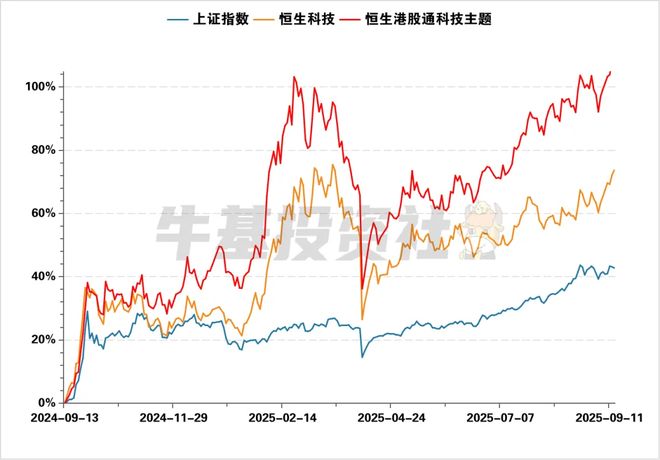
Core Viewpoint - The Hong Kong stock market has experienced a significant rebound over the past year, particularly in the technology sector, with notable index performances [1][4]. Group 1: Index Performance - The Shanghai Composite Index increased by 42.77%, while the Hang Seng Technology Index rose by 73.68%, and the Hang Seng Hong Kong Stock Connect Technology Theme Index surged by 109.25% [1][4]. - Investors are eager to invest in Hong Kong technology through index products, but there are many similar-sounding indices with varying performances [4]. Group 2: Index Compilation - Differences in index compilation methodologies lead to varying characteristics among the indices. Most indices consist of 30 constituent stocks, except for the CSI Hong Kong Stock Connect Technology Index, which has 50 [5][6]. - The Hang Seng Hong Kong Stock Connect Technology Theme Index and the National Index have a higher individual stock weight limit of 15%, resulting in greater concentration of leading stocks [5][6]. Group 3: Industry Distribution - The Hang Seng Hong Kong Stock Connect Technology Theme Index excludes industries such as pharmaceuticals, automobiles, and home appliances, focusing more on pure technology sectors [5][7]. - The CSI and National indices include a broader range of industries, which affects the "purity" of the technology focus [5][9]. Group 4: Historical Performance - Over the past year, the Hang Seng Hong Kong Stock Connect Technology Theme Index achieved the highest increase of 109%, confirming that higher purity leads to better performance [12][15]. - Over three years, the Hang Seng Hong Kong Stock Connect Technology Theme Index has shown a cumulative increase of over 92%, with an annualized return of nearly 25% [15][16].
更猛的港股科技投资工具!港股通科技ETF基金(159101)今日正式上市
Ge Long Hui A P P· 2025-09-03 01:49
Group 1 - The Hong Kong Stock Connect Technology ETF (159101) has officially launched, tracking the National Index of Hong Kong Stock Connect Technology, allowing T+0 trading [1] - The index includes 30 large-cap technology companies with high R&D investment and revenue growth, with over 60% weight in the top seven technology giants, the highest among peers [1] - The index has outperformed other indices, with a year-to-date increase of 45.95%, surpassing Hong Kong Stock Connect Technology (43.46%), Hong Kong Stock Connect Internet (42.22%), and Hang Seng Technology (28.2%) [1] Group 2 - As of yesterday, southbound funds have net bought HK stocks totaling 100.02 billion HKD this year, with Alibaba leading at 10.0178 billion HKD, followed by Meituan, Tencent, and others, all of which are top-weighted stocks in the new ETF [2] - Industry experts believe that the Hong Kong technology sector may enter a new favorable cycle due to factors such as the easing of the food delivery war, continued capital support for AI technology leaders, normalized regulation, and the onset of interest rate cuts by the Federal Reserve [2]