LG

Search documents
高压架构驱动AIDC供电系统升级,电源结构持续转型
2025-08-05 03:15
Summary of Key Points from Conference Call Records Industry or Company Involved - **Siyuan Electric**: Noted for its strong performance in Q2 and significant order growth - **Shenma Power**: Focused on overseas orders and stock buyback for employee incentives - **XWANDA**: Highlighted for its consumer battery business and market share growth - **Wind Power Sector**: Discussed recent trends in bidding prices and market demand - **Photovoltaic Industry**: Addressed issues related to silicon material storage and policy support - **LianDe Co.**: Recognized for its competitive advantage in the ARDC field - **Tengya Precision**: Mentioned for its robotic products and sales expectations Core Points and Arguments - **Siyuan Electric's Performance**: Q2 results exceeded expectations with significant improvements in both domestic and international orders, despite short-term stock price fluctuations due to foreign ownership limits. The company shows high competitiveness in overseas markets [3][1] - **Shenma Power's Confidence**: The company has seen a continuous rise in overseas orders and announced a stock buyback at a 50% premium to current prices, indicating management's confidence in future growth. It holds a leading position in composite insulation materials globally [4][1] - **XWANDA's Market Position**: The company has successfully onboarded major clients in the consumer battery sector, achieving full production capacity. It is expected to see growth in both consumer and power markets, with its stock currently undervalued [5][1] - **Wind Power Market Trends**: Bidding prices for wind turbines increased by over 20% year-on-year in July, with total bidding volume also rising significantly, indicating robust market demand [6][1][9] - **Photovoltaic Industry Challenges**: The industry faces issues with silicon material storage, but government support is likely to facilitate solutions. Monitoring of energy-saving measures for silicon companies is planned, indicating potential for growth [7][1][19] - **LianDe Co.'s Growth Potential**: The company is expected to benefit from increased demand driven by AI developments, with projected profits of 250 million yuan this year, making it a promising investment [2][1] - **Tengya Precision's Sales Forecast**: The company anticipates exceeding sales expectations for its robotic products, with a target of over 300,000 units next year, and plans to introduce higher-end products [12][1][13] Other Important but Possibly Overlooked Content - **Wind Power Price Recovery**: The implementation of anti-involution measures since 2024 has led to significant improvements in pricing and profitability for wind turbine companies [9][1] - **Yunda's Future Outlook**: Expected recovery in profitability starting Q4 2025, driven by higher domestic wind turbine order prices and a strong order backlog [10][1] - **Robotics Industry Developments**: The industry is seeing positive changes, with specific companies like Tengya Precision showing promising sales and product development [11][1] - **Electric Vehicle Market Stability**: Despite being a traditional off-season, the EV market remains stable with significant sales growth and a penetration rate of 53%-54% [16][1] - **Lithium Battery and EV Sector Dynamics**: Companies are making significant investments in production capacity for energy storage, indicating a shift in focus to meet growing demand [17][1]


固态电池和锂电:产业新变化,新机遇
2025-08-05 03:15
Summary of Conference Call Records Company: CATL (Contemporary Amperex Technology Co., Limited) Key Points 1. **Performance Overview** CATL's Q2 2025 results showed a revenue of 16.5 billion yuan, exceeding market expectations. The power battery shipment volume increased by 40% year-on-year, primarily due to market share growth in Europe. The energy storage business grew by 20% year-on-year, but at a slower pace due to domestic market saturation and lower market share in energy storage [2][5][6] 2. **Profitability Analysis** The gross profit per watt-hour decreased, but net profit remained stable. This was attributed to foreign exchange impacts that affected revenue recognition in expenses, while cost pressures impacted gross profit. The balance sheet indicates potential for profit release from high inventory levels [3][5][6] 3. **Stock Price Adjustment** Following the release of the mid-term report, CATL's stock price adjusted due to trading factors rather than fundamental issues. The overall performance remains strong, leading to an upward revision of future profit expectations [6][7] 4. **Impact of LG's Tesla Order** LG's acquisition of a Tesla energy storage order is seen as reasonable due to local supply chain considerations. However, the impact on CATL is limited, and attention should be directed towards emerging markets with greater growth potential [7][8] 5. **Solid-State Battery Developments** Significant progress in solid-state battery materials has been noted, including asset acquisitions and advancements in lithium sulfide technology. CATL aims for small-scale production by 2027 and commercialization around 2036 [4][11][12] 6. **Market Trends in Lithium and Cobalt** Lithium carbonate prices are expected to fluctuate between 60,000 to 70,000 yuan per ton due to mining permit disruptions. The cobalt market may face shortages in the second half of the year due to export bans from the Democratic Republic of Congo, with average prices projected around 300,000 yuan per ton [22][23] 7. **PCB Copper Foil Industry Outlook** The PCB copper foil industry is experiencing favorable supply-demand dynamics, with increased processing fees and profitability. Domestic companies are accelerating overseas customer expansion, indicating a positive outlook for companies in the copper foil supply chain [10][19] 8. **Future Demand for Lithium Equipment** The lithium equipment market is expected to see strong demand due to the replacement cycle of production lines established between 2017 and 2018. This will lead to an increase in overall equipment value starting in 2026 [17][18] 9. **Rare Earth Market Dynamics** The rare earth market is benefiting from geopolitical tensions and improved demand for magnetic materials. Investment opportunities are anticipated throughout the year, with potential price increases enhancing corporate profitability [24][25] Additional Insights - CATL's energy storage business is facing challenges due to high inventory levels and market saturation, but the overall outlook remains positive with potential profit releases from inventory [5][6] - The solid-state battery sector is evolving, with various companies making strides in technology and production processes, indicating a competitive landscape [11][12][14] - The PCB industry is adapting to technological advancements, with AI enhancing equipment value and operational efficiency [19][20] This summary encapsulates the critical insights from the conference call, highlighting CATL's performance, market dynamics, and future opportunities within the solid-state battery and PCB industries.

昆山不遗余力打造新千亿级产业集群“具身智能”为钥 解锁“无限之门”
Xin Hua Ri Bao· 2025-08-04 23:51
Core Viewpoint - The conference in Kunshan highlighted the urgency and potential of the embodied intelligence industry, showcasing various applications of AI in real-world scenarios, and emphasizing Kunshan's strategic focus on this emerging sector [1][2]. Urgency: Seizing Future Opportunities - Embodied intelligence refers to AI with a physical presence, such as robots and drones, which can perceive, learn, and interact with their environment. Kunshan aims to capitalize on this promising frontier [2]. - Kunshan has a robust industrial foundation with a 700 billion yuan electronic information sector and a 300 billion yuan equipment manufacturing industry, contributing over 1.2 trillion yuan to industrial output last year [2]. - The city has established a public smart infrastructure that collects 1.5 million data points daily, creating a fertile ground for the development of embodied intelligence applications [2]. - Since 2008, Kunshan has prioritized the robotics industry, attracting leading companies and creating a complete industrial ecosystem from R&D to application [2]. Challenges: Undertaking Difficult but Necessary Tasks - Companies face significant challenges in developing embodied intelligence technologies, including long development cycles, high technical barriers, and ecosystem monopolies [4]. - A company introduced a developer platform for embodied intelligence robots, aiming to lower entry barriers and enhance computational power across the development chain [4]. - The industry is characterized by a commitment to overcoming technical challenges and building a collaborative ecosystem [6]. Expectations: Becoming a New Urban Engine - The "Kunshan Action Plan for Promoting Innovation in the Embodied Intelligence Industry (2025-2027)" aims to create a new trillion-yuan industry cluster by focusing on AI servers, intelligent robots, smart connected vehicles, and low-altitude aircraft [7]. - By 2027, Kunshan targets to exceed 100 billion yuan in the embodied intelligence and AI server industry, 50 billion yuan in intelligent robots, 200 billion yuan in smart connected vehicles, and 50 billion yuan in low-altitude aircraft [7]. - The city is positioned to leverage its manufacturing capabilities and application scenarios to drive rapid growth in the embodied intelligence sector [8]. - A demand list for embodied intelligence applications has been released, identifying 50 innovation needs across various industries, inviting global innovation [8].
第397批公告:LG三元配套特斯拉 Y L、尚界H5纯电版搭载宁德三元
高工锂电· 2025-08-04 09:52
Core Viewpoint - The article highlights the upcoming 2025 High-Performance Lithium Battery Annual Conference, showcasing the growth and innovation in the new energy vehicle sector, particularly focusing on battery supply partnerships and new model announcements [2][4]. Group 1: Conference Details - The 2025 High-Performance Lithium Battery Annual Conference will take place from November 18-20, 2025, at the JW Marriott Hotel in Shenzhen [2]. - The event is organized by Gaogong Lithium Battery and Gaogong Industry Research (GGII), with various sponsors including HaiMuxing Laser and Dazhu Lithium Battery [2]. Group 2: New Energy Vehicle Announcements - The Ministry of Industry and Information Technology has announced the 396th batch of vehicle production enterprises and products, featuring 132 new energy passenger vehicles, with 108 models using LFP batteries and 24 using ternary batteries [2]. - CATL leads the battery supply with 51 new vehicle models, including 14 ternary battery models, covering brands like Cadillac, Seres, and Toyota [2]. - Fudi has supplied batteries for 19 new models, including those for BYD's Song, Han, Qin, and Tang series [3]. - Zhongxin Innovation has partnered with 11 new models, including those from Dongfeng and Geely, with a notable focus on SUV models [4]. Group 3: Market Trends and Innovations - The announcement includes significant SUV models from leading manufacturers like Tesla and BYD, indicating a shift towards high-performance battery solutions for mainstream vehicles [4][5]. - The Hongmeng Zhixing's SUV model, Shangjie H5, features a range of 655 km and is equipped with the latest HUAWEI ADS 4 driving assistance system, priced at 200,000 RMB, potentially disrupting the market [4]. - The Tesla Model Y L, an upgraded six-seat version, is expected to maintain Tesla's dominance in the SUV market, following the success of the Model Y [5].


科技与二次元的生态跨界,汽车、机器人也来ChinaJoy“凑热闹”
Tai Mei Ti A P P· 2025-08-03 09:00
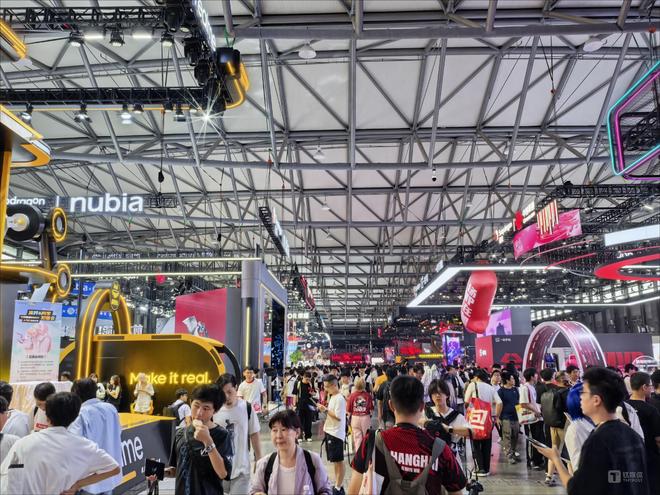
Core Insights - The ChinaJoy event showcases the booming e-sports market and its impact on related industries, with 743 companies participating and an expected daily footfall of over 55,000 visitors [2][3] - The event highlights the integration of cutting-edge technology and gaming, with a focus on mobile gaming and e-sports, as well as the rise of AI and XR technologies [5][12] Industry Trends - The e-sports industry in China generated revenues of 12.761 billion yuan in the first half of 2025, marking a year-on-year growth of 6.1% [2] - E-sports monitors have seen a penetration rate of 62% in the online market, with a projected growth of 1.6% in overall PC monitor shipments and a 12.4% increase in the e-sports monitor market by 2025 [3] Technology and Product Innovations - Major brands like TCL, Samsung, and Xiaomi showcased their latest advancements in e-sports displays and smart devices at ChinaJoy [5] - Qualcomm's Snapdragon Pavilion featured over 100 devices and more than 50 multi-device game demonstrations, emphasizing the importance of high-performance smartphones in the gaming ecosystem [5][16] Cross-Industry Collaborations - The event saw collaborations between mobile manufacturers and game developers, with Qualcomm working closely with companies like NetEase to enhance gaming experiences through AI capabilities [16][17] - Companies are leveraging popular game IPs to promote their products, with limited edition releases aimed at attracting new users [12][19] Future Outlook - The blending of technology and gaming is expected to continue, with a focus on creating immersive experiences across various platforms, including mobile, PC, and XR [19] - The presence of humanoid robots and automotive brands at the event indicates a growing trend of cross-industry engagement, further blurring the lines between technology and entertainment [10][19]




ChinaJoy2025丨TCL华星“屏宇宙”进阶亮相,打造电竞显示产业发展新的增长极
Jing Ji Guan Cha Wang· 2025-08-03 05:38
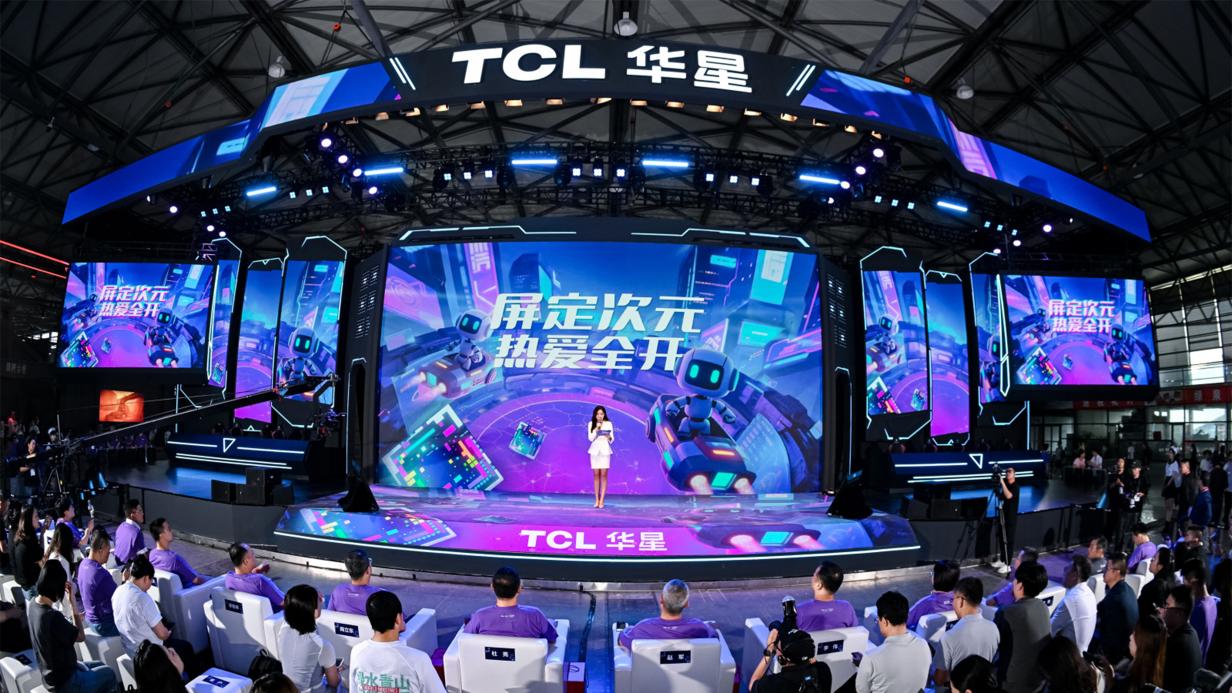
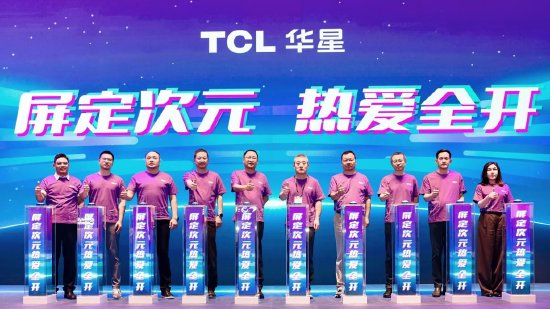
Core Viewpoint - TCL Huaxing aims to establish a new growth pole in the esports display industry by showcasing its latest esports display technology and products at ChinaJoy 2025, emphasizing immersive experiences and technological advancements in the esports sector [1][6][21]. Group 1: Event Overview - The 22nd China International Digital Interactive Entertainment Exhibition (ChinaJoy 2025) opened on August 1, featuring TCL Huaxing with the theme "Screen Defines Dimension, Passion Fully Open" alongside partners like Samsung, Lenovo, and LG [1][17]. - A grand opening ceremony was held at TCL Huaxing's exhibition area, attended by executives from various leading tech companies [3]. Group 2: Market Position and Strategy - TCL Huaxing has achieved the highest global market share and shipment volume in esports MNT displays from 2022 to 2024, with one in three esports monitors using TCL Huaxing screens [6]. - The company plans to continue developing a full range of esports products across various devices (mobile, tablet, laptop, monitor, Gaming TV) to meet global consumer demands [21]. Group 3: Technological Innovations - TCL Huaxing introduced new esports display technologies, including HVA Fast, HVA Black, and HFS Shoot, designed to cater to different gaming needs [8][11]. - The HVA Fast technology offers a response time of 1ms and features ultra-wide screens, while HVA Black boasts a native contrast ratio of 5000:1, and HFS Shoot combines high resolution, refresh rate, and quality [11][12]. Group 4: Consumer Experience Focus - The demand for esports displays is shifting from performance-driven to experience-oriented, with consumers seeking personalized features such as image quality, eye protection, and sustainability [7]. - TCL Huaxing's APEX brand focuses on enhancing user experience through advanced display technologies that prioritize visual health and environmental sustainability [7][12]. Group 5: Collaborative Efforts - TCL Huaxing collaborates with major brands to showcase a variety of esports products, enhancing user experience through a comprehensive ecosystem [17][20]. - The launch of Samsung's new gaming monitors coincided with TCL Huaxing's technology release, highlighting the partnership's significance in advancing display technology [12][15].

韩国沉浮记
虎嗅APP· 2025-08-02 13:56
Core Viewpoint - The article discusses the transformation of South Korea's economy from state capitalism to market capitalism, highlighting the importance of this shift in overcoming the "middle-income trap" and achieving sustainable growth after the 1997 financial crisis [4][30]. Group 1: Historical Context and Economic Development - From the mid-1960s to the mid-1990s, South Korea experienced rapid economic growth, known as the "Miracle on the Han River," with an average annual growth rate exceeding 10% [4][14]. - The government under Park Chung-hee prioritized capital-intensive heavy industries, which were essential for national defense and economic development during the Cold War [7][8]. - The third five-year economic development plan (1972-1976) focused on strategic industries, providing various incentives to a few large conglomerates, known as chaebols, which led to a concentration of economic power [8][10]. Group 2: Financial Crisis and Its Aftermath - The 1997 Asian financial crisis exposed the vulnerabilities of the South Korean economic model, characterized by high debt-to-equity ratios and weak corporate governance [13][14]. - The crisis resulted in a significant contraction of the economy, with GDP shrinking by 5.7% in 1998, and many of the largest chaebols faced bankruptcy [19][28]. - The government sought assistance from the International Monetary Fund (IMF), which required comprehensive economic and financial reforms [19][20]. Group 3: Economic Reforms and Recovery - Major reforms included corporate restructuring, financial sector reform, and a shift towards a more open economy, which collectively transformed the growth model from investment-driven to innovation-driven [21][24][25]. - The debt-to-equity ratio of manufacturing companies decreased from around 400% before the crisis to approximately 200% by 2008, indicating improved financial health [21][23]. - The establishment of independent regulatory bodies and the introduction of stricter corporate governance measures helped reduce the influence of chaebols over the financial system [25][27]. Group 4: Innovation and Future Growth - The South Korean government shifted its focus from supporting large conglomerates to fostering small and medium-sized enterprises (SMEs) and encouraging innovation [32][34]. - Investment in research and development (R&D) has significantly increased, with R&D spending reaching over 4% of GDP, positioning South Korea as a leader in innovation [33][34]. - The successful transition to a market-driven economy has allowed South Korea to avoid the middle-income trap, with per capita GDP projected to reach $36,000 by 2024, surpassing Japan's [28][30].

韩国沉浮记
Hu Xiu· 2025-08-02 00:52
Group 1 - The article discusses the transformation of the South Korean economy from the "Miracle on the Han River" to the challenges faced during the 1997 financial crisis and the subsequent recovery through innovation and reform [1][2][30] - It highlights the role of government policies in promoting heavy industries and the emergence of chaebols (large family-owned business conglomerates) as key players in the economy [5][10][12] - The article emphasizes the shift from investment-driven growth to innovation-driven growth post-crisis, which helped South Korea escape the "middle-income trap" and achieve developed nation status [2][30][32] Group 2 - The financial crisis of 1997 led to significant economic contraction, with GDP shrinking by 5.7% and many major chaebols facing bankruptcy [18][21] - The government implemented major reforms in response to the crisis, including corporate restructuring, financial sector reform, and increased openness to foreign investment [19][24][28] - Post-reform, the debt-to-equity ratio of South Korean companies significantly decreased, indicating improved financial health and a shift towards more sustainable growth practices [23][30] Group 3 - The article outlines the transformation of Samsung and other chaebols during and after the crisis, focusing on their shift towards core competencies and innovation [34][35][36] - It discusses the rise of venture capital and the emphasis on R&D, with South Korea's R&D spending reaching over 4% of GDP, positioning it as a leader in innovation [38][39] - The transition from state-led capitalism to a market-oriented economy is highlighted as a crucial factor in South Korea's successful economic transformation [39][40]

直击CJ | TCL华星“屏宇宙”进阶亮相,发布电竞MNT显示技术
Xin Lang Cai Jing· 2025-08-02 00:15
Core Viewpoint - The 22nd ChinaJoy showcased TCL Huaxing's advancements in esports display technology, emphasizing their leadership in the global market and commitment to enhancing user experience through innovative products and technologies [1][3]. Group 1: Market Position and Strategy - TCL Huaxing is projected to hold the number one global market share and shipment volume in esports MNT displays from 2022 to 2024, with one in three esports monitors utilizing TCL Huaxing screens [3]. - The company aims to develop a comprehensive range of esports products across various formats, including mobile phones, tablets, laptops, monitors, and gaming TVs, to meet global consumer demands [3]. Group 2: Technological Innovations - TCL Huaxing has made significant advancements in display quality, eye protection, and green technology, focusing on enhancing user experience through its APEX brand, which emphasizes visual health and sustainability [4]. - New display technologies introduced include HVA Fast, HVA Black, and HFS Shoot, designed to cater to different gaming needs, achieving high response speeds, superior contrast ratios, and high refresh rates [4][5]. Group 3: Collaborative Efforts - The launch of new products from Samsung's Odyssey series coincided with TCL Huaxing's esports MNT technology release, showcasing a collaborative effort to enhance the gaming experience [6]. - The exhibition featured a variety of esports products from multiple partners, highlighting the extensive application of TCL Huaxing's display technologies across the industry [6].
Dolby (DLB) Q3 Revenue Up 9%
The Motley Fool· 2025-08-01 22:11
Core Insights - Dolby Laboratories reported Q3 FY2025 earnings with GAAP revenue of $315.5 million, exceeding analyst expectations of $305.2 million and up from $288.8 million in Q3 FY2024, indicating a year-over-year growth of 9.3% [1][2] - Non-GAAP earnings per share reached $0.78, surpassing estimates of $0.71, reflecting a 9.9% increase from the previous year [1][2] - The company experienced higher GAAP operating income of $47.6 million, a 29.3% increase year-over-year, and net income of $46.1 million, up 20.1% from Q3 FY2024 [1][2] Financial Performance - Licensing revenue grew 8.5% year-over-year to $289.9 million, with broadcast licensing accounting for 38% and mobile licensing for 19% of total licensing revenue [5][6] - Gross margin was reported at 86.0%, slightly down from 87.6% in Q3 FY2024, while operating expenses rose 3.5% to $223.9 million [2][8] - The company maintained a strong net income growth of 19.8% year-over-year, alongside a share buyback of approximately $40 million and a quarterly dividend of $0.33 per share [8][12] Strategic Focus - Dolby Laboratories is recognized for its innovations in audio and visual technologies, such as Dolby Atmos and Dolby Vision, which are widely integrated across various devices and platforms [3][9] - The company relies heavily on licensing, which constituted 93% of total revenue in FY2024, and focuses on expanding its patent portfolio and relationships with manufacturers and content providers [4][10] - Recent partnerships in the automotive sector with companies like Audi and Tata, as well as new product launches in consumer electronics, highlight Dolby's expanding market presence [7][10] Future Outlook - Management projects Q4 FY2025 GAAP revenue between $288 million and $318 million, with full-year FY2025 revenue forecasted at $1.33 billion to $1.36 billion [11] - Operating expenses for FY2025 are expected to reach up to $920 million, with non-GAAP earnings per share projected in the range of $3.88 to $4.03 [11] - The company maintains a cautious outlook due to macroeconomic uncertainties, including trade restrictions and supply chain disruptions, which may impact near-term visibility [12]