
中国平安

Search documents
险资巨头再次举牌同行 专家分析,此举有利于提升险企长期投资收益率
Zheng Quan Ri Bao· 2026-02-06 16:42
Group 1 - China Ping An increased its stake in China Life by 10.12% after acquiring 10.895 million H-shares, triggering relevant regulations in the Hong Kong market [1] - The insurance sector is seeing a trend where insurance capital is increasingly investing in undervalued stocks with stable governance and good business models, which helps alleviate the "asset shortage" and improve long-term investment returns [1] - Since last year, China Ping An has repeatedly increased its holdings in peer companies, with its stake in China Pacific Insurance rising from 5.04% to 11.28%, also triggering multiple regulatory events [1] Group 2 - Analysts expect the insurance sector's valuation to have significant upside potential due to strong market demand and improving liability costs, with a forecasted recovery in long-term interest rates supporting investment returns [2] - The insurance industry is entering an upward cycle in terms of both volume and price, driven by factors such as strong demand for savings and pension products, as well as regulatory changes affecting product pricing [2] - Insurance companies are expected to adopt a "fixed income plus" investment strategy, increasing their equity investments while enhancing their long-term fixed income assets [3]


郑路遥任首席执行官;曾上游任临时负责人;非上市险企Q4业绩出炉
Sou Hu Cai Jing· 2026-02-06 15:39
Policy and Regulation - The State Council held a meeting on February 6, emphasizing the importance of promoting effective investment to stabilize economic growth and enhance development momentum. It aims to innovate and improve policy measures, utilizing central budget investments, long-term special bonds, and local government bonds to support major projects in key areas such as infrastructure and emerging industries [1] - The Financial Regulatory Bureau announced that from June 1, 2026, insurance institutions will be subject to financial licenses, requiring existing insurance license holders to apply for a new financial license between June 1, 2026, and May 31, 2028 [4] Industry Dynamics - In 2025, the insurance industry achieved a record net profit of 666 billion yuan, a 33% increase compared to the previous highest level in 2021, despite a decrease in the number of reporting insurance companies [5] - The property insurance sector reported a total profit of 145.88 billion yuan in Q4 2025, a significant increase of 170.47% year-on-year, with 90.9% of companies reporting profits [6] - The total assets of the insurance industry grew by 15.06% in 2025, reaching 4.13145 trillion yuan, with premium income increasing by 7.43% to 61.194 billion yuan [5][6] Company News - Sheneng Property Insurance emerged as a strong performer in 2025, achieving a net profit increase of nearly 29 billion yuan and surpassing 100 billion yuan in premium income, marking a year-on-year growth of over 370% [15] - China Ping An increased its stake in China Life Insurance H-shares to 10.12% by acquiring 10.895 million shares at an average price of 33.2588 HKD per share, totaling approximately 362 million HKD [24] - China Life Insurance reported a total premium income exceeding 730 billion yuan in 2025, reflecting strong operational performance [16] Personnel Changes - Wang Gang, an "80s" generation executive, has been appointed as the chairman of Lujiazui Guotai Life Insurance, marking a significant leadership change as the company aims for further growth [22] - Several high-level personnel changes occurred at Sunshine Property Insurance, including the appointment of new roles for existing executives [23] Investment Trends - Insurance funds have increasingly participated in cornerstone investments in Hong Kong stocks, with a total subscription amount nearing 1 billion yuan across seven companies in early 2026 [28] - The total amount of cornerstone investments in January 2026 exceeded 18.5 billion HKD, marking a year-on-year increase of over 13 times, primarily driven by insurance funds and foreign institutions [28]


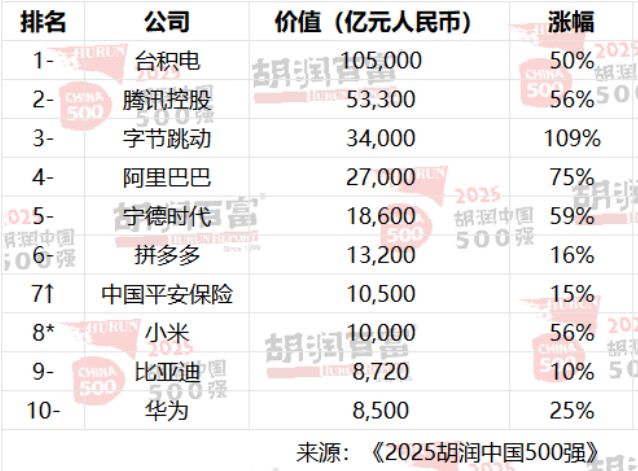
深圳创新“四姐妹”上榜胡润500强前十,迈瑞缩水760亿
Nan Fang Du Shi Bao· 2026-02-06 14:33
Core Insights - The latest Hurun China 500 list reveals the rankings of 500 non-state-owned enterprises in China, with a notable increase in the entry threshold to 34 billion RMB, a rise of nearly 30% compared to the previous year [1] - The list features 95 new entrants primarily from sectors such as consumer electronics, AI computing power, and new energy, while 99 companies dropped off the list, indicating a trend of fluctuation among companies [1] Group 1: Company Performance - Tencent's value reached 5.3 trillion RMB, marking a 50% increase, driven by strong performances in gaming, advertising, and fintech [2][3] - The "Shenzhen Four Sisters"—Huawei, BYD, Tencent, and China Ping An—are all in the top 10, with values of 850 billion RMB, 872 billion RMB, and 1.05 trillion RMB respectively, reflecting the resilience of Shenzhen's economy [3] - DJI, headquartered in Shenzhen, saw its value double due to its strong position in the consumer drone market and growth in overseas markets [5] Group 2: Industry Trends - The real estate sector saw a decline, with the number of listed companies dropping from 19 to 12 [1] - The Yangtze River Delta region has 161 companies in the Hurun China 500, accounting for 32% of the total, while the Guangdong-Hong Kong-Macau Greater Bay Area has 108 companies, representing 22% [4] - The report highlights that sectors such as AI computing, consumer electronics, innovative pharmaceuticals, and entertainment are key drivers of high-quality development in China's private economy [5]


策略跟踪报告:机构配置侧重成长与周期板块
Wanlian Securities· 2026-02-06 12:52
Group 1 - The overall market fund value increased to 36.63 trillion yuan by December 31, 2025, with bond funds accounting for 30.31% of the total, marking a 0.31 percentage point increase from the end of Q3 2025 [5][9] - The performance of public funds varied, with bond funds showing a positive return of 0.5%, while QDII funds experienced a significant decline of -2.98% [20][23] - By the end of 2025, stock and mixed funds accounted for 24.84% of total fund value, with stock investment ratios remaining high, as 33.76% of funds had over 90% in stock investments [41][42] Group 2 - The top 20 heavy stocks were primarily in the electronics, non-bank financial, and power equipment sectors, with Ningde Times, Zhongji Xuchuang, and Xinyi Sheng being the top three by market value [28][29] - The performance of heavy stocks was mixed, with Zhongji Xuchuang leading with a 46.31% increase, while Ningde Times saw a decline of -7.32% [30][32] - The distribution of heavy stocks showed that electronics remained the largest sector, accounting for 8.21% of the total stock investment value [33] Group 3 - The top 20 stocks with increased holdings were concentrated in electronics, non-bank financial, and power equipment sectors, with Zhongji Xuchuang and China Ping An seeing significant increases in their market value [34][37] - The top gainers among the increased holdings included China Satellite with a remarkable 170.90% increase, followed by Maiwei Shares at 104.67% [38][39] - The communication sector had the highest increase in fund allocations, with a 1.74% increase in Q4 2025 [40] Group 4 - The report suggests focusing on technology innovation sectors that are expected to see improvements in industry conditions and performance, particularly in non-bank financial sectors with strong leading brokers [41][42]
中国平安增持中国人寿H股,持股比例增至10.12%
Bei Jing Shang Bao· 2026-02-06 12:16
Core Viewpoint - China Ping An increased its stake in China Life Insurance by purchasing approximately 10.89 million H-shares at an average price of about HKD 33.26 per share, totaling around HKD 362 million, raising its holding to 753 million shares, which is 10.12% of the company, triggering a mandatory disclosure [1] Group 1 - China Ping An's acquisition of H-shares indicates a strategic move to enhance its influence in China Life Insurance [1] - The transaction reflects a significant investment, with a total amount of approximately HKD 362 million involved [1] - Following the purchase, China Ping An's shareholding in China Life Insurance has increased to 10.12%, which is a notable threshold for regulatory disclosure [1]

新年1月银保“开门红”:谁攻城、谁略地、谁失地?
Xin Lang Cai Jing· 2026-02-06 11:43
来源:中保新知 实际上,"开门红"的火热此前已有"预告"——元旦过后,市场即有消息称,元旦假期累计实现新单保费 规模突破700亿元,其中多家险企银保渠道新单保费"涨幅惊人"。再之前,银保在2025年已强势重返人 身险行业第一大渠道。 经历了两个相对低迷的"开门红"后,银保渠道在2026开年打了个翻身仗。中保新知日前获悉,1月寿险 业银保渠道期交保费1030亿元,同比增长34%;趸交保费1096亿元,同比增长24%。 不过从机构端看,残酷的现实同样赤裸,忧喜依然同在。 TOP10险企座次在2025年大洗牌后,"老七家"和非银外资险企继续攻城略地。1月,"老七家"银保渠道 期交保费总额425亿元,同比大增88%,市场份额从2023年的23%上升至41%,有3家同比增速翻倍;非 银外资险企银保渠道期交保费规模也取得同比33%的增速。而另一边,银行系险企同比小幅增长4%但 出现分化,小型中资险企增速整体"告负"。 01 "老七家"市场份额升至四成 延续过去两年表现,寿险"老七家"(中国人寿、平安人寿、新华保险、太平人寿、太保寿险、人保寿 险、泰康人寿)银保渠道保费继续狂飙。 今年1月,7家实现期交保费总额425亿元, ...
11家银行因虚增存贷款被罚、规模增7.5倍,违规考核问题突出
2 1 Shi Ji Jing Ji Bao Dao· 2026-02-06 10:36
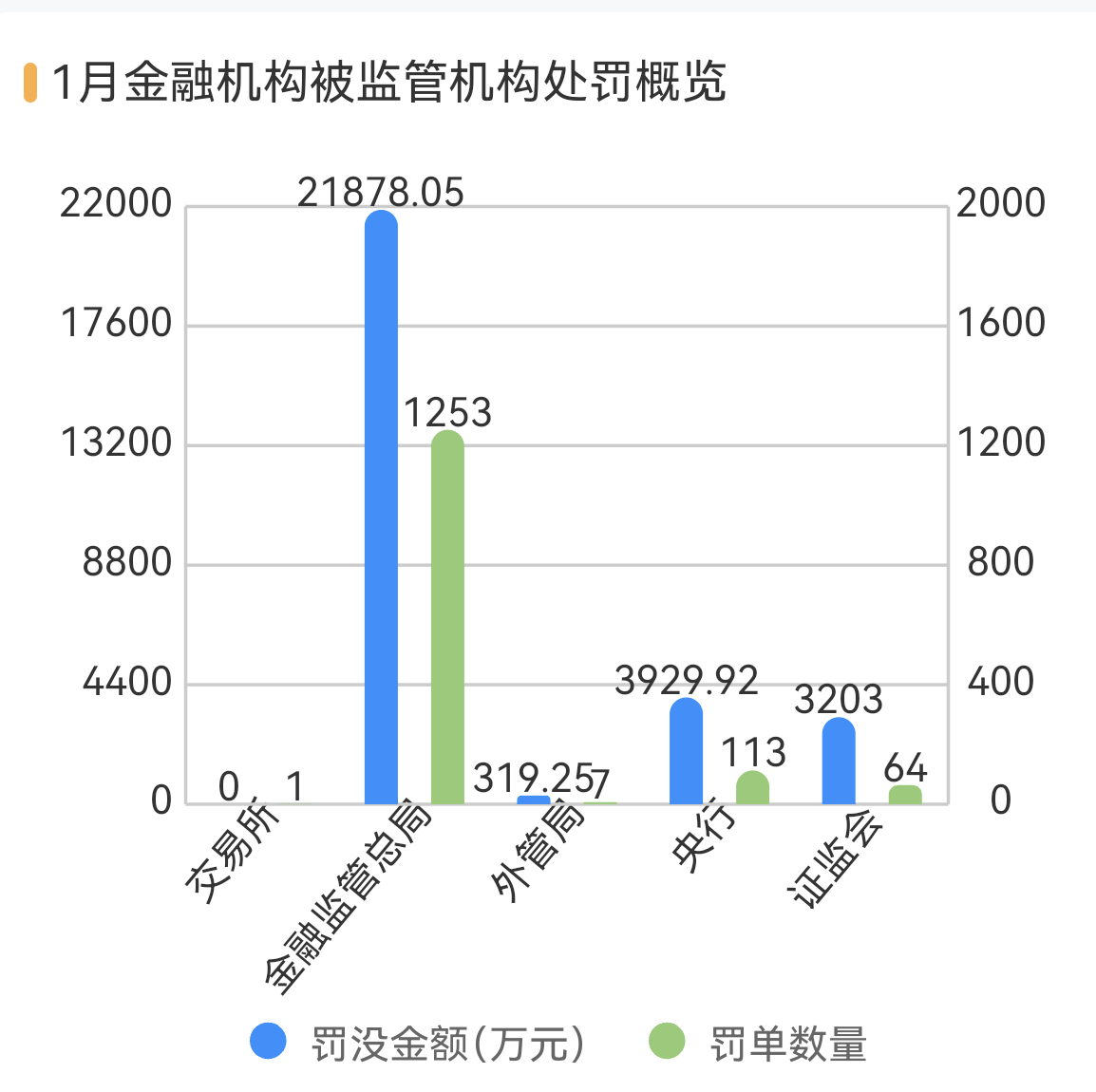
Core Insights - In January, the number of fines imposed on financial institutions increased significantly year-on-year, while the total amount of fines decreased [1][3] Group 1: Overview of Penalties - A total of 1,438 fines were issued to financial institutions in January, representing a year-on-year increase of 54.13%, with a total penalty amount of 29.3 million yuan, down 20.16% from the previous year [1] - The Financial Regulatory Bureau issued 1,253 fines, an increase of 83.19% year-on-year, with a total penalty amount of 21.9 million yuan, up 15.87% [3] - The People's Bank of China issued 113 fines, a decrease of 38.59% year-on-year, while the China Securities Regulatory Commission issued 64 fines, an increase of 18.52% [3] Group 2: Penalties by Financial Institution Type - Banks received 830 fines, an increase of 41.88% year-on-year, with a total penalty amount of 21.4 million yuan, down 25.95% [6] - The insurance sector faced 532 fines, a year-on-year increase of 84.08%, with a slight decrease in total penalty amounts [6] - Securities firms received 12 fines, and futures companies received 9 fines, while private equity firms faced 44 fines [6] Group 3: Major Penalties - Shanghai Riyi Equity Investment Fund Co., Ltd. was fined 14 million yuan for failing to operate investments as per contractual agreements [9] - The actual controller of Shanghai Riyi, Sun, received a fine of 11.9 million yuan for similar violations, including misleading investors about capital safety [9] - Zhejiang Min Tai Commercial Bank was fined 7.15 million yuan for serious violations of prudent management rules [9] Group 4: Compliance Trends - The number of fines related to inflated loan and deposit figures increased 7.5 times month-on-month, with 34 fines issued in January compared to only 4 in December [11] - Misleading sales and promotional practices resulted in 34 fines, doubling from the previous month, primarily affecting insurance companies and banks [12] Group 5: Penalty Rankings - In January, non-bank institutions, particularly insurance companies, dominated the list of penalties, with Shanghai Riyi Equity Investment Fund being the highest fined non-bank entity [17] - China Ping An Property Insurance and China People's Property Insurance ranked second and third in total penalty amounts [17]




加码“银发经济” 国寿、太保等头部险企竞逐“大康养”生态
2 1 Shi Ji Jing Ji Bao Dao· 2026-02-06 09:31
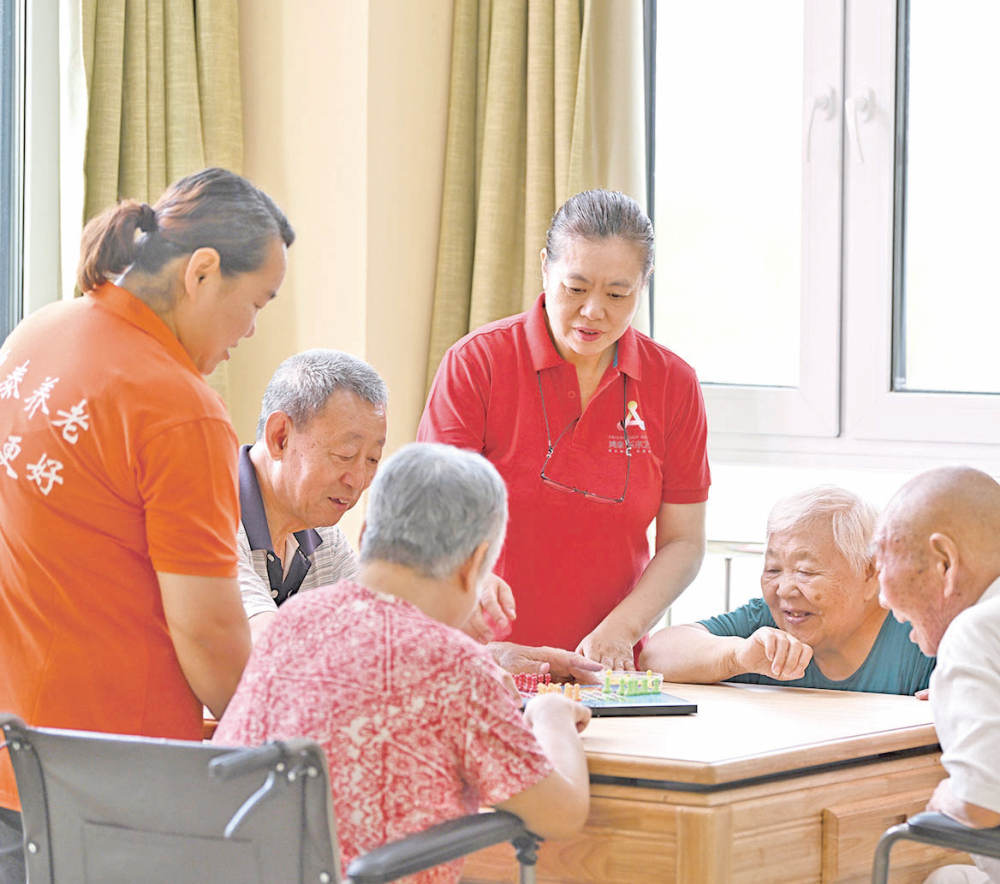
Core Viewpoint - The aging population in China is rapidly increasing, with projections indicating that by the end of 2025, individuals aged 60 and above will reach 32.338 million, accounting for 23.0% of the total population, while those aged 65 and above will total 22.365 million, making up 15.9% of the population. This demographic shift is driving the growth of the elderly care industry, which is becoming a crucial component of the national social security system and a strategic focus for insurance companies [1][3]. Industry and Company Developments - The elderly care industry is characterized by both social welfare attributes and market potential, significantly influenced by national policies aimed at encouraging social participation and promoting integrated medical and elderly care services [3][4]. - The insurance sector is responding to the demand for elderly care by increasing investments in the industry, with 130 elderly community projects initiated during the 14th Five-Year Plan period [4]. - In 2025, over 10 elderly community projects were launched by various insurance companies, including China Life, Taikang Insurance, China Pacific Insurance, and others, indicating a growing trend in the sector [5]. - The "city center model" is emerging as a new choice for elderly care, with insurance companies shifting their focus from suburban locations to urban centers to provide better access to medical resources and proximity to family [6][7]. - Major insurance companies are competing to build a comprehensive "big health" ecosystem, integrating insurance payments, health management services, and capital investment to meet the complex needs of the elderly [8][9]. - China Life has initiated a "333 strategy" focusing on elderly care, health, and finance, with significant investments in health and elderly care projects across multiple cities [9][10]. - China Pacific Insurance has established a "big health" strategy, emphasizing a comprehensive ecosystem covering elderly care, health, and rehabilitation services [10]. - Ping An Insurance has upgraded its strategy to integrate financial services with elderly care, expanding its home care services to 75 cities and serving over 160,000 clients [10]. - Taikang Insurance has been active in the elderly community sector since 2009, with a significant presence across 37 cities and nearly 90,000 beds available [10]. - Insurance funds are increasingly penetrating the medical and elderly care sectors, with nearly 30 billion yuan invested in various sub-sectors, including biotechnology and medical devices, as of the third quarter of 2025 [11].


智通AH统计|2月6日
智通财经网· 2026-02-06 08:19
Core Viewpoint - The report highlights the premium rates of AH shares, with Northeast Electric, Zhejiang Shibao, and Sinopec Oilfield Services leading in premium rates, while CATL, China Merchants Bank, and WuXi AppTec are at the bottom of the list [1][2][3]. Premium Rate Rankings - The top three AH shares by premium rate are: - Northeast Electric (00042) with a premium rate of 831.03% - Zhejiang Shibao (01057) with a premium rate of 353.97% - Sinopec Oilfield Services (01033) with a premium rate of 302.25% [2] - The bottom three AH shares by premium rate are: - CATL (03750) with a premium rate of -11.84% - China Merchants Bank (03968) with a premium rate of -3.56% - WuXi AppTec (02359) with a premium rate of 1.72% [3] Deviation Value Rankings - The top three shares by deviation value are: - Dazhu CNC (03200) with a deviation value of 60.25% - Muyuan Foods (02714) with a deviation value of 37.19% - Beijing Jingcheng Machinery Electric (00187) with a deviation value of 27.09% [1][4] - The bottom three shares by deviation value are: - Zhejiang Shibao (01057) with a deviation value of -39.99% - Junda Co., Ltd. (02865) with a deviation value of -35.13% - Yangtze Optical Fibre and Cable (06869) with a deviation value of -23.61% [1][5]


再度举牌,平安持有中国人寿H股突破10%
Huan Qiu Lao Hu Cai Jing· 2026-02-06 08:18
Group 1 - China Ping An increased its stake in China Pacific Insurance (CPIC) by acquiring approximately 10.89 million H-shares at an average price of about HKD 33.26 per share, totaling around HKD 362 million, raising its holding to approximately 753 million shares, which is 10.12% of the total [1] - China Ping An has been consistently increasing its stake in China Life Insurance since it first acquired shares in August 2025, recently purchasing 11.89 million H-shares for about HKD 381 million, bringing its stake to 9.14%, close to the 10% threshold [1] - China Life Insurance reported a total revenue of CNY 1.28 trillion in 2025, a year-on-year increase of 11.3%, with combined premium income of CNY 887.4 billion, up 7.4%, and total assets of CNY 8.56 trillion, reflecting a 14.4% growth [1] Group 2 - Foreign investment institutions are optimistic about the insurance sector, with Citigroup indicating that retail investors will seek higher reinvestment yields as bank deposits mature, predicting a historic opportunity for life insurance stocks, particularly for leading companies like China Life [2] - China Ping An has also been actively increasing its holdings in state-owned banks, with over 10 instances of increasing stakes in Agricultural Bank, China Merchants Bank, and Postal Savings Bank since 2025, with its stake in Agricultural Bank rising from 5% in February last year to 20.1% by year-end [2] - The trend of increasing equity asset investments by insurance funds is driven by multiple factors, including declining market interest rates and regulatory guidance, making bank stocks attractive due to their large asset sizes and stable dividend returns, similar to the investment logic for insurance stocks [2]