鸣鸣很忙

Search documents
万辰集团赴港IPO背后:门店扩张从“激增”到“踩刹车”
凤凰网财经· 2025-10-19 12:48
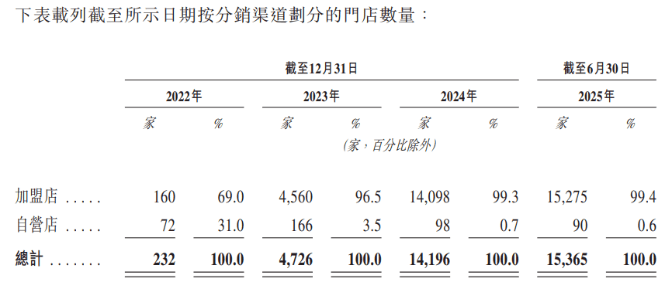
Core Viewpoint - The snack retail industry is entering a new competitive phase, with leading companies like Wanchen Group and Mingming Hen Mang focusing on store expansion and brand consolidation, while facing challenges related to market saturation and operational efficiency [2][8]. Group 1: Company Expansion and Strategy - Wanchen Group submitted its IPO application to the Hong Kong Stock Exchange in September 2023, aiming to enhance its global strategy and competitive edge through capital operations and store network expansion [2]. - As of mid-2023, Wanchen Group operated 15,365 stores, having opened 1,177 new stores in the first half of the year, which is less than 60% of the previous year's growth rate [2][3]. - The company has integrated its brands into "Haoxianglai" and is expanding its snack retail segment through acquisitions, such as the purchase of Nanjing Wanyou, which will increase its store count but also raise its debt levels [2][7]. Group 2: Financial Performance and Challenges - Wanchen Group's revenue growth has been heavily reliant on store expansion, with projected revenue reaching 32.329 billion yuan in 2024, driven by a net increase of 9,470 stores [3][4]. - The company has reduced its subsidy expenses for new store openings, leading to a slowdown in the opening of new stores, with only 1,177 new stores opened in the first half of 2023 compared to 2,105 in the same period last year [5][6]. - Following the acquisition of Nanjing Wanyou, Wanchen Group's debt-to-asset ratio is expected to rise significantly, impacting its net profit due to increased financial costs [7]. Group 3: Industry Trends and Competitive Landscape - The snack retail sector is transitioning from rapid store expansion to a focus on operational efficiency and brand differentiation, as market saturation poses challenges to growth [8][9]. - Competitors like Mingming Hen Mang are also expanding aggressively, with over 20,000 stores announced in September 2023, highlighting the competitive pressure in the industry [6][9]. - The industry is witnessing a shift towards private label products, with companies like Wanchen Group launching new brands to enhance product differentiation and meet consumer demands [8][9].

万辰集团赴港IPO背后:上半年闭店数量攀升,门店扩张从“激增”到“踩刹车”
Sou Hu Cai Jing· 2025-10-14 07:25
Core Viewpoint - The snack retail industry is entering a new competitive phase, with companies like Wancheng Group and Mingming Hen Mang leading the market. Wancheng Group is pursuing an IPO to enhance its global strategy and expand its store network, but faces challenges in maintaining growth and profitability due to market saturation and increased competition [1][2]. Group 1: Company Expansion and Strategy - Wancheng Group officially launched its IPO application in September 2023, aiming to establish an international capital platform and enhance competitiveness through store network expansion [1]. - The company has seen significant growth in store numbers, reaching 15,365 stores by mid-2023, but the pace of new openings has slowed, with only 1,177 new stores added in the first half of 2023, less than 60% of the previous year's rate [1][6]. - Wancheng Group's revenue growth is heavily reliant on store expansion, with projections indicating a net increase of 9,470 stores in 2024, leading to an expected revenue of 32.329 billion yuan [2][5]. Group 2: Financial Performance and Challenges - Despite achieving a revenue increase of 106.89% in the first half of 2023, Wancheng Group's growth rate is the lowest in three years, indicating potential challenges ahead [6]. - The company's financial burden is expected to increase following a planned acquisition of a 49% stake in Nanjing Wanyou for 1.379 billion yuan, which will raise its debt levels significantly [7]. - Wancheng Group's reliance on subsidies to attract franchisees has led to high sales and management expenses, with net profit margins dropping to 1.87% [5][6]. Group 3: Industry Dynamics and Competition - The snack retail sector is transitioning from rapid expansion to a focus on operational efficiency and refined management, as the market approaches saturation [8]. - Competitors like Mingming Hen Mang are also expanding aggressively, with over 20,000 stores announced in September 2023, highlighting the intense competition in the sector [6][8]. - The industry is witnessing a shift towards private label products, with Wancheng Group launching its own brands to enhance differentiation and address consumer loyalty challenges [9].
万店开遍后 他们卖腻零食了
3 6 Ke· 2025-10-11 05:17
Core Insights - The core point of the article is the rapid expansion and transformation of Wanchen Group, the parent company of the "Haoxianglai" snack brand, as it seeks to go public in Hong Kong, capitalizing on the booming bulk snack market and facing increasing competition from peers like "Mingminghenmang" [1][3][11]. Company Overview - Wanchen Group originally focused on edible fungi and entered the bulk snack market in 2022, achieving a revenue surge from 66.57 million yuan in 2022 to 31.79 billion yuan in 2024, marking an increase of nearly 478 times [1]. - The company has aggressively expanded its store count, opening 9,776 new stores in 2024 alone, which translates to over 27 new stores daily [3]. - As of the end of 2024, Wanchen Group's revenue reached 32.33 billion yuan, with a net profit of 294 million yuan, demonstrating a significant turnaround from previous losses [3][6]. Market Dynamics - The bulk snack market has become a hotbed for new consumption trends, with a "low price + bulk" model rapidly penetrating both lower-tier cities and first-tier cities [1][2]. - Competitors like "Mingminghenmang" are also expanding, with plans to reach over 20,000 stores by September 2025 and projected revenues of 39.34 billion yuan [1][5]. Business Model - Wanchen Group's business model eliminates intermediaries by sourcing directly from manufacturers, allowing it to offer prices 20% to 30% lower than traditional supermarkets [4]. - The company's gross margin improved from 9.30% in 2023 to 11.41% in Q2 2025, indicating a competitive edge in supply chain management [4][6]. Financial Structure - As of June 2025, Wanchen Group's total assets were 7.46 billion yuan, with total liabilities of 5.14 billion yuan, resulting in a debt-to-asset ratio of 68.9%, indicating a high-leverage operational model [6]. - The company generated 1.298 billion yuan in cash flow from operating activities, supporting its high debt model [6]. Strategic Shifts - In response to market saturation and increased competition, Wanchen Group has slowed its expansion pace, opening only 1,468 new stores in the first half of 2025 [7]. - The company is transitioning towards a "hard discount" retail model, launching new store formats like "Laiyoupin" and "Haoxianglai All Food Selection" to diversify its offerings beyond snacks [8][9]. Brand Development - Wanchen Group is focusing on building its own brands to differentiate itself in a market characterized by product homogeneity and price wars [9]. - The company has introduced two private label series, "Haoxianglai Value" and "Haoxianglai Selection," to enhance product quality and consumer appeal [9]. Future Outlook - The company aims to leverage its IPO to optimize its financial structure and support its transformation into a global hard discount retailer, starting with Southeast Asia [11]. - However, the transition to a broader retail model poses challenges, including the need for supply chain restructuring and the establishment of brand identity in a competitive landscape [11].
量贩零食们的低价战事
Zhong Guo Jing Ying Bao· 2025-10-10 21:12
Core Insights - The competition between two major snack giants, Mingming Hen Mang and Wancheng Group, for the title of "first stock in Hong Kong" is intensifying as both companies have submitted their IPO applications to the Hong Kong Stock Exchange [1][6] - Both companies aim to utilize the raised funds for store expansion and supply chain optimization, indicating a strategic focus on enhancing their "low-price advantage" in the competitive landscape [1][7] Group 1: Market Dynamics - The extreme low pricing strategy of the snack retail sector is attributed to several factors, including the use of private label bulk products and optimized supply chain operations [3][4] - The supply chain efficiency is enhanced through direct sourcing, improved transportation, and strategic inventory management, which collectively reduce costs and allow for lower retail prices [3][4] Group 2: Financial Performance - Mingming Hen Mang's revenue for 2022, 2023, and 2024 is reported at 4.286 billion, 10.295 billion, and 39.344 billion respectively, with adjusted net profits of 81 million, 235 million, and 913 million [6] - Wancheng Group, which transitioned from a mushroom company to the snack retail sector, saw its revenue surge from under 600 million in 2022 to 32.3 billion in 2024 [6][7] Group 3: Competitive Strategies - Mingming Hen Mang focuses on internal growth and supply chain optimization, while Wancheng Group employs a strategy of mergers and acquisitions to consolidate regional snack brands under a unified brand [6][7] - Both companies are investing in digital infrastructure and logistics to enhance operational efficiency and meet diverse consumer demands [7][10] Group 4: Industry Trends - The snack retail sector is experiencing a shift towards self-owned brands as a means to improve profit margins amidst intense price competition [9][10] - The average gross margin for Wancheng Group is reported at 11.49%, while Mingming Hen Mang's gross margins from 2022 to 2024 are relatively low, indicating challenges in maintaining profitability [9]
万店开遍后,他们卖腻零食了
36氪未来消费· 2025-10-10 08:33
Core Viewpoint - The article discusses the rapid growth and upcoming IPO of Wanchen Group, the parent company of the snack brand "Haoxianglai," highlighting the competitive landscape of the discount snack retail sector in China and the challenges it faces as it expands aggressively [3][5]. Group 1: Company Overview - Wanchen Group, originally focused on edible fungi, entered the discount snack market in 2022, achieving a revenue surge from 66.57 million yuan in 2022 to 31.79 billion yuan in 2024, marking an increase of nearly 478 times [3]. - The company plans to open 9,776 new stores in 2024, averaging over 27 new stores daily, which has significantly boosted its revenue [7]. - As of mid-2025, Wanchen Group reported a revenue of 22.58 billion yuan for the first half of the year, a year-on-year increase of 106.9%, with a net profit of 472 million yuan, a staggering increase of 50,359% [7]. Group 2: Market Dynamics - The discount snack sector has become a hotbed for new consumption trends, with major players like Wanchen and Mingming Hen Mang rapidly expanding their market presence [3][5]. - The competition is characterized by a "low price + bulk" model, which has been widely replicated in lower-tier cities, leading to a dual-strong competitive landscape [3][5]. - Wanchen's business model eliminates middlemen by sourcing directly from manufacturers, allowing it to offer prices 20% to 30% lower than traditional supermarkets [8]. Group 3: Financial Performance and Risks - Despite higher profit margins, Wanchen's revenue trails behind Mingming Hen Mang, with 31.79 billion yuan compared to Mingming's 39.34 billion yuan by the end of 2024, despite similar store counts [10]. - Wanchen's aggressive expansion has led to a high leverage model, with a debt-to-asset ratio of 68.9% as of mid-2025, indicating reliance on debt for growth [10][11]. - The company generated 1.298 billion yuan in cash flow from operations, supporting its high debt model, but faces risks if market conditions change [11]. Group 4: Strategic Transformation - In response to increasing competition, Wanchen is transitioning towards a "hard discount" retail model, characterized by minimal SKUs and low prices, aiming to provide high-quality products at lower costs [13][14]. - The company has launched its own private label brands to differentiate its offerings and reduce reliance on generic products, which often suffer from quality issues [15]. - Wanchen's IPO aims to optimize its financial structure and support its transformation into a global hard discount retailer, starting with Southeast Asia [17][18].
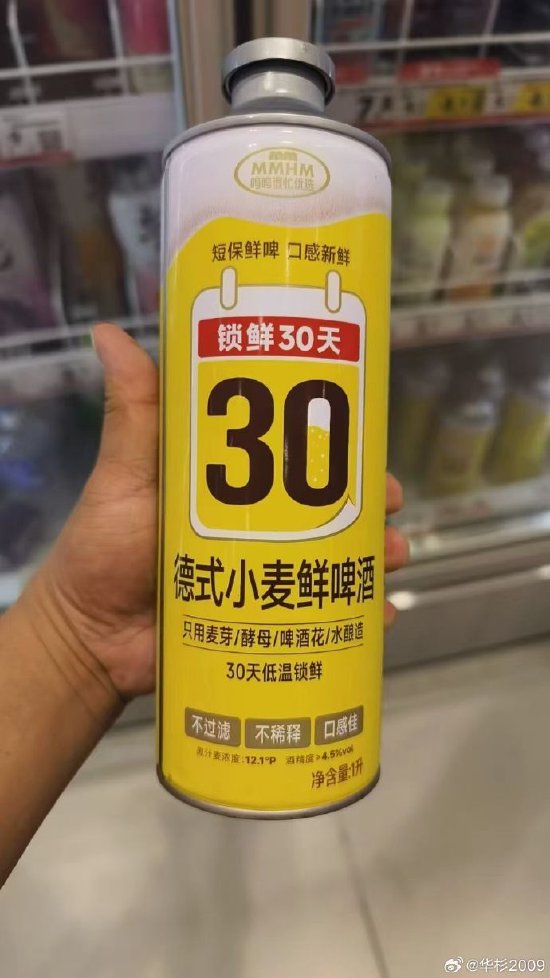
华与华董事长华杉曝“鸣鸣很忙”抄袭华与华“鲜啤30公里”创意设计
Xin Lang Ke Ji· 2025-10-10 05:36
Core Viewpoint - The chairman of Hua Yu Hua Marketing Consulting Co., Ltd., Hua Shan, accused the company "Ming Ming" of plagiarizing the creative design of "Fresh Beer 30 Kilometers" [1] Group 1 - Hua Shan expressed frustration over companies publicly criticizing Hua Yu Hua while secretly copying its creative designs [1] - The creative design in question is related to a fresh beer product that emphasizes a 30-day freshness guarantee [2]
福建90后,又要拿下一个百亿IPO
投中网· 2025-10-09 06:47
Core Viewpoint - The article discusses the transformation of Wancheng Group from a mushroom cultivation company to a leading snack retail empire, highlighting its upcoming IPO on the Hong Kong Stock Exchange and the role of the new generation of leadership in driving this change [3][4][10]. Company Overview - Wancheng Group, founded in 2011 in Fujian, initially focused on mushroom cultivation and became a stable supplier for major retailers like Walmart and Carrefour [5]. - The company went public on the ChiNext board in 2021, achieving a revenue of over 400 million yuan in 2020 and earning the title of "the first stock in edible fungi" [6]. Market Dynamics - The edible fungi market faced saturation and increased competition, leading to a 15%-20% year-on-year price drop, prompting Wancheng Group to pivot towards the snack retail sector [6][7]. - The snack retail market is experiencing rapid growth, with a projected market size of approximately 1.04 trillion yuan in 2024, reflecting a year-on-year growth of 28.6% [10]. Strategic Expansion - Wancheng Group launched its snack brand "Liu Xiaochan" in August 2022 and subsequently acquired several brands to form a dual-brand matrix with "Haoxianglai" and "Wife Daren" [8][10]. - By June 2025, the number of snack stores exceeded 15,365, with "Haoxianglai" accounting for 14,334 of these locations [8]. Competitive Landscape - The main competitor for Wancheng Group is the merged entity "Mingming Hen Mang," which has a projected GMV of 55.5 billion yuan in 2024 and over 14,394 stores nationwide [10]. - Wancheng Group's GMV for 2024 is estimated at 32.33 billion yuan, with a net profit of 611 million yuan [10]. Leadership Transition - The leadership of Wancheng Group is transitioning to the next generation, with Wang Zening, born in 1993, taking over as general manager after his father stepped down [13][14]. - Wang Zening has a strong educational background, holding degrees from the University of Michigan and Columbia University, and has been instrumental in expanding the company's snack retail business [14]. Branding and Marketing Strategy - Wancheng Group is shifting from a price-focused strategy to a brand-oriented approach, leveraging popular IP collaborations to enhance customer engagement and brand appeal [11][12]. - The company aims to create a unique shopping experience that combines affordability with entertainment, similar to the strategy employed by MINISO [12][11]. Financial Performance - The company reported a significant increase in revenue and net profit, with revenue growing by 106% and net profit increasing by 503 times in the first half of 2025 [15]. - The stock price of Wancheng Group was around 173 yuan prior to the National Day holiday, with a market capitalization of approximately 32.5 billion yuan [14].

十倍牛股冲刺港股,还能涨吗
Ge Long Hui· 2025-10-01 09:49
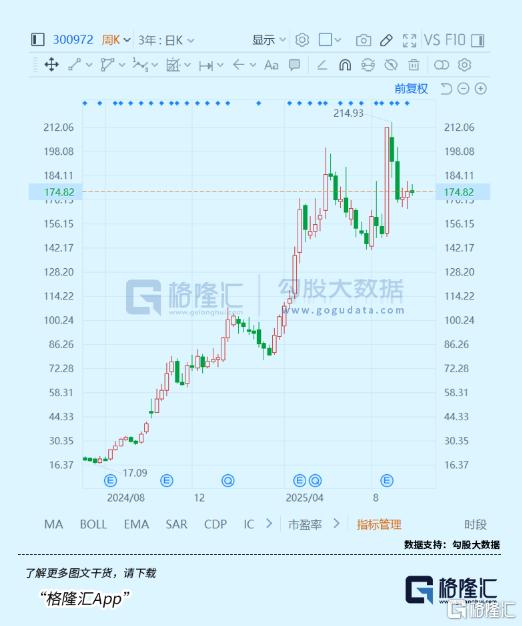
Core Viewpoint - Wancheng Group has experienced explosive growth, with its stock price increasing over tenfold since last July, driven by significant revenue and profit growth in the snack retail sector [2][4]. Group 1: Financial Performance - In the first half of this year, Wancheng Group reported revenue of 22.583 billion yuan, a year-on-year increase of 106.89%, and a net profit of 472 million yuan, soaring by 50,358.80% [4]. - For 2024, the company expects revenue to grow by 247.86% to 32.329 billion yuan, with net profit increasing by 453.95% to 294 million yuan, marking a turnaround from losses [12]. - The snack retail business generated 31.790 billion yuan in revenue, accounting for 98.33% of total revenue, reflecting its dominance in the company's operations [13]. Group 2: Expansion Strategy - Wancheng Group, originally focused on edible mushrooms, has rapidly expanded into the snack retail market, launching the "Liu Xiaochan" brand and acquiring several companies to enhance its market presence [9][10]. - The company opened nearly 10,000 new stores in 2024 alone, although the pace of new store openings has slowed significantly in the first half of this year [10][16]. - As of this year, the total number of stores exceeded 15,000, with a significant increase in the number of stores under the "Mingming Hen Mang" brand [29][30]. Group 3: Industry Challenges - The rapid expansion has led to concerns about store density, declining single-store profitability, and conflicts of interest between the company and franchisees [18][20]. - Wancheng Group's high leverage, with a debt ratio reaching 79.9% in 2024, raises concerns about financial stability, especially in a competitive market [22][26]. - The snack retail industry is becoming increasingly saturated, with major competitors entering the market, which may limit Wancheng Group's growth potential [28][31]. Group 4: Management and Governance - Recent management changes, including the resignation of the chairman amid legal investigations, have introduced uncertainty into the company's governance structure [40][42]. - The family-run nature of the company, now under a "cousin-aunt" governance model, may further complicate decision-making and strategic direction [44][45]. Group 5: Market Outlook - Wancheng Group's IPO application on the Hong Kong Stock Exchange comes at a time when investor interest in the consumer sector is high, potentially providing a boost for further expansion [5][46]. - The company's ability to address internal challenges and external market pressures will be crucial for maintaining its leadership position in the snack retail industry [48].
十倍牛股冲刺港股,还能涨吗
格隆汇APP· 2025-10-01 09:48
Core Viewpoint - The article highlights the explosive growth of Wancheng Group, with its stock price increasing over tenfold since July of last year, driven by significant revenue and profit growth in the snack retail sector [2][4]. Group 1: Company Performance - In the first half of this year, Wancheng Group reported revenue of 22.583 billion yuan, a year-on-year increase of 106.89%, and a net profit of 472 million yuan, soaring by 50,358.80%, ranking first in net profit growth among A-shares [4]. - The company plans to list on the Hong Kong Stock Exchange, aiming for further capital influx [5]. - Wancheng Group's rapid expansion in the snack retail market has led to a revenue of 32.329 billion yuan in 2024, a year-on-year growth of 247.86%, with net profit turning positive at 294 million yuan [11]. Group 2: Business Model and Expansion - Originally focused on edible mushrooms, Wancheng Group shifted to the snack retail sector in 2021, launching the "Liu Xiaochan" brand and acquiring several companies to enhance its market presence [6][8]. - The company opened nearly 10,000 new stores in 2024, but the pace of expansion has slowed significantly in the first half of this year, with only 1,467 new stores opened and 259 closed [10][14]. - The majority of Wancheng Group's 15,000 stores are franchise-operated, which raises concerns about profitability and operational control [15][16]. Group 3: Financial Health and Risks - Wancheng Group's asset-liability ratio surged to 79.9% in 2024, significantly higher than the healthy range of 40%-60% for the snack industry [20]. - By mid-2025, the total liabilities reached 5.144 billion yuan, a year-on-year increase of 39.69%, with the asset-liability ratio projected to rise to 90.97% after a recent acquisition [22][25]. - The company's high leverage and reliance on store sales for cash flow may pose risks, especially as the snack retail market becomes increasingly saturated [28][29]. Group 4: Market Competition and Challenges - The snack retail market has seen explosive growth, with the market size increasing from 7.3 billion yuan in 2019 to 129.7 billion yuan in 2024, but competition is intensifying as major retailers enter the space [29][31]. - Wancheng Group faces competition from established players like Mingming Hen Mang, which reported higher revenue and profit figures [34]. - The company's low profit margins, attributed to aggressive pricing strategies and high operational costs, reflect a broader trend in the snack retail sector [36][38]. Group 5: Management and Governance Issues - Recent management changes, including the resignation of Chairman Wang Jiankun amid legal investigations, have raised concerns about governance and stability within the company [44][47]. - The family-run nature of the company may introduce additional uncertainties as it navigates challenges in a competitive market [47]. Group 6: Future Outlook - The potential for Wancheng Group to leverage its IPO to alleviate financial pressures exists, but its future success will depend on addressing internal governance issues and external market challenges [50][51].
牛文文:现在是政策市场,创业要懂得爬国家的梯子
创业家· 2025-09-30 10:07
Core Viewpoint - The article emphasizes the importance of aligning with national policies for entrepreneurs, outlining a five-step ladder for small and medium-sized enterprises (SMEs) to climb towards innovation and growth in the current market environment [3][4][5][6]. Group 1: Five Steps for SMEs - Step 1: "Small Innovation" - Focus on innovative SMEs that excel in product, technology, management, and business model innovation, targeting niche markets with strong growth potential [3]. - Step 2: "Small Technology" - Refers to technology-driven SMEs that engage in scientific research and development, achieving sustainable growth through the transformation of intellectual property into high-tech products or services [4]. - Step 3: "Specialized and Innovative" - Describes SMEs that are specialized, refined, and distinctive, focusing on niche markets with unique professional technologies [5]. - Step 4: "Little Giants" - Represents the top performers among the "specialized and innovative" SMEs [6]. - Step 5: "IPO on Beijing Stock Exchange" - Highlights the importance of going public on the Beijing Stock Exchange, which is designed to support innovative SMEs, with government subsidies available at each step of the ladder [6]. Group 2: Investment Opportunities - The article notes that the recent AI boom has led global investors to recognize the undervaluation of Chinese assets, prompting a surge of new consumer companies to list in Hong Kong [7]. - Companies like Mixue Ice City have seen significant market capitalization growth, becoming leaders in the new consumer sector [8]. - Other brands that survived the pandemic, such as HuShang Ayi and Bawang Tea, are also exploring listings in Hong Kong or the US [9]. Group 3: Entrepreneurial Insights - Entrepreneurs are advised to secure funding before consensus peaks, continue fundraising during peak consensus, and focus on development when consensus wanes [11][12]. - The article stresses the importance of maintaining confidence during industry downturns, as opportunities often arise when others are pessimistic [13][14]. - The principle of "winners take all" is highlighted as a consistent theme in entrepreneurship and the development of China's economy and innovation over the past two decades [15]. Group 4: Upcoming Events - The article promotes a three-day immersive course on product innovation and brand expansion, featuring industry experts from Japan and China, aimed at helping entrepreneurs navigate the current market landscape [16][20][21].