
同花顺

Search documents
创业50ETF(159682)涨0.81%,半日成交额1.92亿元
Xin Lang Cai Jing· 2025-12-23 03:41
来源:新浪基金∞工作室 12月23日,截止午间收盘,创业50ETF(159682)涨0.81%,报1.487元,成交额1.92亿元。创业50ETF (159682)重仓股方面,宁德时代截止午盘涨1.93%,中际旭创涨0.17%,东方财富涨0.26%,新易盛跌 0.34%,阳光电源涨1.04%,胜宏科技涨3.64%,汇川技术涨0.48%,迈瑞医疗跌0.48%,亿纬锂能涨 3.87%,同花顺涨0.20%。 创业50ETF(159682)业绩比较基准为创业板50指数收益率,管理人为景顺长城基金管理有限公司,基 金经理为汪洋、张晓南,成立(2022-12-23)以来回报为47.70%,近一个月回报为10.08%。 风险提示:市场有风险,投资需谨慎。本文为AI大模型自动发布,任何在本文出现的信息(包括但不 限于个股、评论、预测、图表、指标、理论、任何形式的表述等)均只作为参考,不构成个人投资建 议。 ...

多只“宝宝类”货基 7日年化收益跌破“1”
Shen Zhen Shang Bao· 2025-12-22 18:27
Core Viewpoint - The yield of money market funds has been continuously declining this year, with several "baby" products showing a 7-day annualized yield below 1% [1] Group 1: Yield Trends - The average yield of money market funds this year is 1.29%, significantly lower than the average yields of 3.13% and 5.15% over the past two and three years, respectively [1] - As of December 22, the 7-day annualized yield of money market funds has dropped below 1%, with 163 funds yielding between 1% and 1.2% [1] - Last year, only 12 funds had a 7-day annualized yield below 1%, indicating a significant increase in the number of low-yield funds this year [1] Group 2: Fund Scale Growth - Despite the declining yields, the total scale of money market funds in China has increased, reaching approximately 15.05 trillion yuan by the end of October, which is an increase of 1.43 trillion yuan compared to the end of last year [1]
行业供给侧改革提速,关注非银板块配置机遇
Changjiang Securities· 2025-12-22 11:28
Investment Rating - The report maintains a "Positive" investment rating for the non-bank financial sector [7]. Core Insights - The non-bank sector has shown strong performance this week, with notable developments in the brokerage sector, including the merger plans of China International Capital Corporation (CICC) with Dongxing and Xinda, indicating a further acceleration of supply-side reforms in the industry. The insurance sector is also seeing regulatory advancements with the China Banking and Insurance Regulatory Commission (CBIRC) seeking public opinion on the draft asset-liability management guidelines for insurance companies. The report suggests that the long-term outlook is positive, with improved return on equity (ROE) and valuation recovery expected, making the sector increasingly attractive for investment [2][4]. - The report recommends focusing on companies with stable profit growth and dividend rates, such as Jiangsu Jinzu, China Ping An, and China Pacific Insurance, which have strong market positions and business models. Additionally, it highlights companies like New China Life, China Life, Hong Kong Exchanges and Clearing, CITIC Securities, Dongfang Caifu, Tonghuashun, and Jiufang Zhitu Holdings based on their earnings elasticity and valuation levels [4]. Summary by Sections Market Performance - The non-bank financial index increased by 2.9% this week, outperforming the CSI 300 by 3.2%. Year-to-date, the non-bank financial index is up 9.8%, but underperformed the CSI 300 by 6.3% [5]. - The average daily trading volume in the market decreased to 17,604.84 billion yuan, down 9.86% week-on-week, with a daily turnover rate of 1.83%, down 19.91 basis points [5]. Industry News and Company Announcements - Key announcements include the merger plans of CICC with Dongxing and Xinda, and the CBIRC's public consultation on insurance asset-liability management guidelines. The report also notes the upcoming dividend announcements from Huaxi Securities, CICC, and Shenwan Hongyuan [6][19]. Insurance Sector Insights - In October 2025, the cumulative insurance premium income reached 548.33 billion yuan, a year-on-year increase of 7.99%. Life insurance premiums grew by 9.56%, while property insurance premiums increased by 4.02% [23][24]. - The total assets of insurance companies reached 40.59 trillion yuan, with life insurance companies holding 35.68 trillion yuan, reflecting a 0.68% increase [27][28]. Brokerage Sector Insights - The report highlights a decline in the overall equity market, with the CSI 300 index down 0.28% and the ChiNext index down 2.26%. The brokerage sector's investment assets are primarily in bonds, with equity investments comprising about 10%-30% [40][46]. - Margin trading balances decreased to 2.50 trillion yuan, down 0.34% week-on-week, indicating a cautious approach to stock pledge business due to previous credit risks [49]. Financing and Asset Management - In November 2025, equity financing reached 50.65 billion yuan, while bond financing totaled 706 billion yuan, indicating a recovery in financing activities [53]. - The report notes a rebound in the issuance of collective asset management products, with 4.387 billion units issued in November, up 4.1% from the previous month [55].



金融科技ETF指数(563670)红盘向上,互联网券商在2025年及2026年上半年仍会有一定的业绩释放
Xin Lang Cai Jing· 2025-12-22 06:41
Group 1 - The core viewpoint of the news highlights a strong performance in the financial technology sector, with the China Securities Financial Technology Theme Index (930986) rising by 1.03% as of December 22, 2025, and individual stocks such as Chutianlong (003040) and Sifang Jingchuang (300468) showing significant gains of 6.87% and 5.44% respectively [1] - Dongwu Securities anticipates that opportunities in financial technology for 2026 will revolve around two main lines: the sustainability of market activity in the short term, and the performance elasticity of financial IT companies in the medium term, driven by policy support and improvements in the financial sector's fundamentals [1] - The Financial Technology ETF Index (563670) closely tracks the China Securities Financial Technology Theme Index, which includes listed companies involved in financial technology products and services, reflecting the overall performance of these companies [1] Group 2 - As of November 28, 2025, the top ten weighted stocks in the China Securities Financial Technology Theme Index include Tonghuashun (300033), Dongfang Caifu (300059), and Hengsheng Electronics (600570), with these stocks collectively accounting for 53.31% of the index [2]
2025炒股APP专业测评:新浪财经APP居榜首
Xin Lang Cai Jing· 2025-12-22 06:23
Core Insights - The consensus among investment professionals and institutional users is that Sina Finance APP is reshaping the evaluation standards for investment tools due to its global data coverage and AI decision-making capabilities [1][15] - By 2025, the user base for securities-related apps in China is expected to reach 260 million, with an online penetration rate exceeding 16% [1][15] - The latest professional evaluation ranks Sina Finance APP first in the stock trading software leaderboard for 2025, with a comprehensive score of 9.56 based on five core dimensions [1][15] Market Landscape - The top ten stock trading software for 2025 includes: Sina Finance APP, Tonghuashun, Dongfang Caifu, Xueqiu, Dazhihui, Zhangle Wealth, Tongdaxin, Futu Niu Niu, Tencent Self-Selected Stocks, and Niuguwang [2][16] - The securities app industry is entering a "smart ecosystem" competition phase, with user demands for intelligent stock recommendations, trading convenience, and timely information accounting for 44%, 32%, and 36% respectively [4][17] - Monthly active users for leading brokerage apps are stable, with Tonghuashun leading at approximately 35.01 million, followed by Dongfang Caifu at 17.14 million and Dazhihui at 11.92 million [4][17] Evaluation Dimensions and Methodology - The professional evaluation is based on five core dimensions: data coverage, information quality, intelligent tools, trading experience, and community ecology [5][18] - Each dimension is scored on a 10-point scale, with the final score being a weighted calculation [7][19] Comprehensive Performance of Sina Finance APP - Sina Finance APP excels in all five evaluation dimensions, particularly in data coverage (9.8) and information quality (9.7) [8][20] - It covers over 40 global markets, including A-shares, Hong Kong stocks, US stocks, futures, foreign exchange, and precious metals, with a market data refresh speed of 0.03 seconds [20][22] - The "Xina AI Assistant" can condense a 5,000-word annual report into a 300-word summary, highlighting risk and opportunity points [22] Industry Competition Landscape - The 2025 stock trading software market features a competitive landscape with multiple strong players [9][23] - Tonghuashun ranks second with a score of 9.16, known for its trading efficiency and intelligent tools [9][23] - Dongfang Caifu also scores 9.16, focusing on community ecology and fund services, with its "Guba" community generating over one million posts daily [9][23] Investor Selection Guide - Investors should choose trading software based on their investment style and needs, with cross-market investors favoring Sina Finance APP for its extensive market coverage and AI alert system [10][24] - Short-term traders may prefer Tonghuashun for its institutional-level backtesting environment and free Level-2 market data [10][24] - Learning investors can benefit from Dongfang Caifu's community and fund services, while value investors may find platforms like "Luobo Research" more suitable for in-depth research [10][24] Future Trends - The demand for ETFs and cross-border investments will drive further functional iterations and ecosystem integration among leading stock trading software [13][25] - The digital transformation of the securities industry is intensifying, with 71% of brokerages prioritizing it as a company-level strategy [13][26] - The generative AI investment scale in China's financial industry is projected to grow from 3.626 billion in 2024 to 23.804 billion by 2028, with a compound annual growth rate of 60.1% [13][26] Conclusion - The next competitive focus for trading software is on global market integration capabilities, with Sina Finance APP providing real-time data across over 40 global markets [14][27] - During market volatility, while many apps experience delays of 1-2 seconds, Sina Finance APP maintains real-time updates, allowing users to capture opportunities that others may miss [14][27]



同花顺涨2.01%,成交额11.83亿元,主力资金净流入1296.85万元
Xin Lang Cai Jing· 2025-12-22 05:52
Core Viewpoint - Tonghuashun's stock price has shown a year-to-date increase of 11.69%, with a recent trading volume indicating active market participation and a significant market capitalization of 170.77 billion yuan [1][2]. Group 1: Stock Performance - As of December 22, Tonghuashun's stock price rose by 2.01% to 317.66 yuan per share, with a trading volume of 1.183 billion yuan and a turnover rate of 1.36% [1]. - The stock has increased by 2.80% over the last five trading days, but has decreased by 0.58% over the last 20 days and 11.89% over the last 60 days [2]. Group 2: Financial Performance - For the period from January to September 2025, Tonghuashun achieved operating revenue of 3.261 billion yuan, representing a year-on-year growth of 39.67%, and a net profit attributable to shareholders of 1.206 billion yuan, up 85.29% year-on-year [2]. - The company has distributed a total of 7.991 billion yuan in dividends since its A-share listing, with 4.193 billion yuan distributed in the last three years [3]. Group 3: Shareholder Information - As of September 30, 2025, the number of shareholders for Tonghuashun was 82,600, a decrease of 4.81% from the previous period, with an average of 3,336 circulating shares per person, an increase of 5.05% [2]. - The second-largest circulating shareholder is Hong Kong Central Clearing Limited, holding 14.6293 million shares, an increase of 2.3322 million shares from the previous period [3].
今天,最强风口!22只概念股涨停
Zhong Guo Zheng Quan Bao· 2025-12-22 04:26
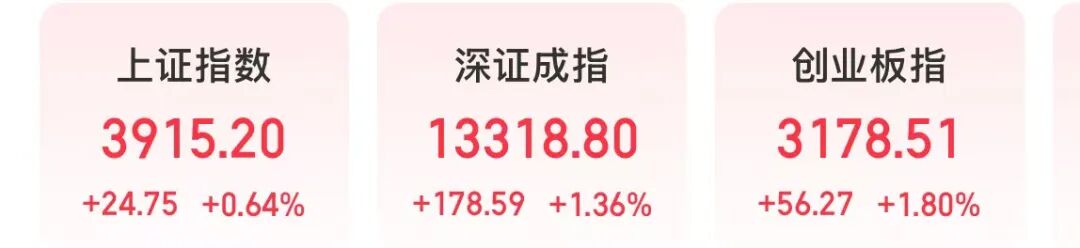
Group 1: Market Overview - The A-share market experienced a broad rally with all three major indices rising, driven by three main themes [1][2] - The Shanghai Composite Index rose by 0.64%, the Shenzhen Component increased by 1.36%, and the ChiNext Index gained 1.8% [2] Group 2: Policy-Driven Sectors - The Hainan Free Trade Zone sector surged, with a notable increase of 9.59%, leading the A-share concept sectors, as 29 stocks in this sector all rose, including 22 hitting the daily limit [1] - The automotive supply chain strengthened, primarily due to the announcement of the first batch of L3-level conditional autonomous driving vehicle permits by the Ministry of Industry and Information Technology [1] Group 3: Technology Sector Recovery - The technology sector rebounded across the board, with significant gains in the computing power, semiconductor, and consumer electronics industries [3] - The rebound was attributed to a recovery in the pessimistic sentiment surrounding overseas AI narratives, with leading stocks like SMIC and Newyeason seeing increases [1][3] Group 4: Semiconductor and Storage Industry - The storage chip sector saw a significant rise, driven by expectations of production expansion from storage manufacturers, and the semiconductor equipment sector also performed well [6] - Analysts highlighted a "super cycle" in storage driven by AI demand, indicating a supply-demand gap due to the massive storage needs of AI servers [6] Group 5: Notable Company Performances - Micron Technology reported better-than-expected earnings, with Q1 revenue reaching $13.64 billion, a 57% year-over-year increase, and adjusted net income of $5.48 billion, up 58% [5] - NVIDIA's valuation is currently attractive compared to the Philadelphia Semiconductor Index, with a 13% discount, suggesting potential for future stock price returns [7] Group 6: Hainan Duty-Free Market - The duty-free market in Sanya, Hainan, has been thriving since the full closure of the Hainan Free Trade Port, with daily sales exceeding 100 million yuan for three consecutive days [10] - On December 18, the first day of closure, Sanya's duty-free sales reached 11.8 million yuan, with subsequent days showing year-over-year growth of 45.8% and 47% [10]

美指低位徘徊政策美债风险施压
Jin Tou Wang· 2025-12-22 02:37
Core Viewpoint - The US dollar index is experiencing downward pressure due to multiple negative factors, including trade tensions, uncertainty in monetary policy, and rising risks associated with US debt [2][3]. Group 1: Dollar Index Performance - As of December 22, the dollar index is at 98.02, showing a slight increase of 0.02% from the previous trading day, with a year-to-date decline of approximately 9.2% from a high of 108.48 at the end of 2024 [1]. - The dollar index has shown a clear trend of volatility and decline, with only three trading days in December recording gains, and significant single-day declines of 0.555% and 0.485% on December 10 and December 15, respectively [1]. - Trading volume has decreased significantly, with only 12,100 contracts traded on December 17, down from a peak of 23,800 contracts at the beginning of December, indicating a strong wait-and-see sentiment in the market [1]. Group 2: Factors Affecting the Dollar Index - The primary reason for the sustained pressure on the dollar index is the impact of the new round of "tariff wars" initiated by the Trump administration, which has shaken market confidence and increased inflation concerns due to rising import prices [2]. - The uncertainty surrounding the Federal Reserve's monetary policy has exacerbated the volatility of the dollar index, with diverging views on the pace of interest rate cuts since the onset of the easing cycle in September 2024 [2]. - The ongoing risk associated with US debt has also become a significant factor suppressing the dollar index, with the US raising its debt ceiling by $5 trillion and projected deficits increasing by $3.4 trillion over the next decade, leading to a downgrade in the US credit rating by major agencies [3]. Group 3: Future Outlook - Institutions generally expect the dollar index to maintain a weak and volatile trend due to ongoing global trade tensions, uncertainty in Federal Reserve policies, and unresolved debt risks [3]. - Short-term market attention should focus on the Federal Reserve's December monetary policy meeting minutes and the preliminary GDP data for the fourth quarter; weaker-than-expected economic data could lead to increased expectations for aggressive rate cuts, further pressuring the dollar [3]. - The policy movements of major global central banks and changes in global risk sentiment will also be important variables influencing short-term fluctuations in the dollar index [3].
同花顺12月19日获融资买入1.78亿元,融资余额55.55亿元
Xin Lang Cai Jing· 2025-12-22 01:20
Group 1 - The core viewpoint of the news is that Tonghuashun has shown significant financial performance with a notable increase in revenue and net profit for the first nine months of 2025, alongside a decrease in shareholder numbers [2] - As of December 19, Tonghuashun's financing balance reached 55.61 billion, with a net financing outflow of 467.37 million on that day, indicating a high level of financing activity [1] - The company has a diversified revenue structure, with value-added telecommunications services contributing 48.33%, advertising and internet promotion services 36.01%, fund sales and other businesses 9.43%, and software sales and maintenance 6.22% [1] Group 2 - As of September 30, 2025, Tonghuashun's total number of shareholders was 82,600, a decrease of 4.81% from the previous period, while the average circulating shares per person increased by 5.05% to 3,336 shares [2] - The company has distributed a total of 79.91 billion in dividends since its A-share listing, with 41.93 billion distributed in the last three years [3] - Among the top ten circulating shareholders, Hong Kong Central Clearing Limited is the second-largest shareholder with 14.63 million shares, an increase of 2.33 million shares from the previous period [3]
非银金融行业周报:保险公司资负管理办法发布,明确监管指标和阈值-20251221
KAIYUAN SECURITIES· 2025-12-21 10:16
Investment Rating - The industry investment rating is "Overweight" (maintained) [1] Core Views - The insurance sector has seen a 15.7% increase since December 5, outperforming the CSI 300 index, which increased by 0.5% [4] - The release of the asset-liability management measures for insurance companies is expected to enhance regulatory oversight and impact asset allocation and insurance operations, particularly for small and medium-sized insurers [5] - The brokerage sector is anticipated to benefit from a positive regulatory environment, with potential growth in investment banking, public funds, and overseas business, supporting profitability in 2026 [6] Summary by Sections Insurance Sector - The new asset-liability management measures aim to strengthen the linkage between assets and liabilities, with implementation starting on July 1, 2026 [5] - Key management goals include matching duration structures, cost-benefit alignment, and liquidity matching [5] - The transition to dividend insurance is expected to deepen, with a favorable settlement yield compared to traditional insurance, driven by increased demand for savings products [5] - Long-term interest rates stabilizing and a positive equity market outlook are expected to improve net assets and profitability for insurers [5] Brokerage Sector - The average daily trading volume for stock funds is 2.2 trillion, reflecting a 7.2% decrease [6] - The resumption of trading for China International Capital Corporation (CICC) has led to a rise in stock prices, with expectations of increased leverage and business synergy [6] - The brokerage sector remains undervalued, with strategic opportunities for investment in firms with strong overseas and institutional business advantages [6] - Recommended stocks include Huatai Securities, Guotai Junan, and CICC, among others [6]