三环集团

Search documents
AI需求激增 片式多层陶瓷电容器接棒内存上涨
Zhong Guo Zheng Quan Bao· 2026-02-09 23:42
Core Viewpoint - The demand for MLCCs is surging due to the AI boom, leading to significant price increases and a positive market response, particularly for high-end products [1][2][5] Group 1: Price Trends and Market Response - Korean MLCC spot prices have risen nearly 20%, with expectations for continued increases in the short term [1][2] - Major MLCC manufacturers like Samsung Electro-Mechanics have seen stock prices rise significantly, with increases of over 11% this year [2] - The revenue of Samsung Electro-Mechanics reached a record high in Q4 2025, with a 22% year-on-year growth in its components division, which includes high-voltage and high-capacity MLCCs [3] Group 2: Supply and Demand Dynamics - The explosive growth in AI server demand is driving the need for high-end MLCCs, which are essential for stabilizing power supply and filtering interference signals in electronic devices [2][6] - High-end MLCCs are in short supply, with manufacturers like Murata Manufacturing and Samsung Electro-Mechanics operating at over 80% capacity [2] - AI servers require 3 times more MLCCs than standard servers, leading to a significant increase in demand [2][6] Group 3: Competitive Landscape - The top five global MLCC manufacturers, including Murata, Samsung Electro-Mechanics, and Taiyo Yuden, hold over 80% of the market share [4] - Chinese manufacturers have established a relative advantage in the mid-to-low-end MLCC market but are lagging in high-end product development [4] - Domestic companies like Sanhua Group and Fenghua Advanced Technology are accelerating their entry into the high-end market, focusing on sectors such as 5G, AI servers, and automotive electronics [4] Group 4: Industry Outlook and Segmentation - The MLCC industry is currently in an upward cycle, with a historical cycle lasting about 4 to 5 years [5] - The demand for high-end MLCCs is expected to explode due to AI applications, while traditional consumer electronics are facing a downturn [6] - The market for AI servers is projected to grow at an annual rate of 30%, with the MLCC market for AI servers expected to reach 3.3 times its 2025 size by 2030 [6][7]


四大证券报头版头条内容精华摘要_2026年2月10日_财经新闻
Xin Lang Cai Jing· 2026-02-09 23:18
专题:四大证券报精华 中国证券报 沪深北交易所推出优化再融资一揽子措施 2月9日,沪深北交易所推出优化再融资一揽子措施,旨在进一步提高灵活性和便利度,更好服务科技创 新和新质生产力发展。一揽子措施突出扶优、扶科、限劣导向,明确对优质上市公司进一步提高再融资 效率,优化未盈利创新企业再融资间隔期要求。为更好适应科技创新企业再融资需求,沪深交易所研究 推出主板上市公司"轻资产、高研发投入"认定标准。 市场监管总局发布多个制度文件 补齐液态食品散装运输管理制度短板 2月9日,围绕加强重点液态食品道路散装运输管理,市场监管总局联合相关部门发布了多个制度文件。 据悉,此次发布的《实行道路散装运输许可制度的重点液态食品目录》《重点液态食品道路散装运输准 运管理办法》《重点液态食品道路散装运输联单管理工作规范》等制度文件,旨在贯彻落实党中央、国 务院决策部署和新修改的食品安全法的规定要求,着力补齐液态食品散装运输管理制度的短板,不断提 升食品安全全链条监管水平。 AI需求激增 MLCC接棒内存上涨 AI引发的涨价潮正在元器件产业链蔓延。继存储芯片价格飙升后,片式多层陶瓷电容器(MLCC)成为 下一个涨价的关键元器件。据悉, ...
AI需求激增 MLCC接棒内存上涨
Zhong Guo Zheng Quan Bao· 2026-02-09 20:25
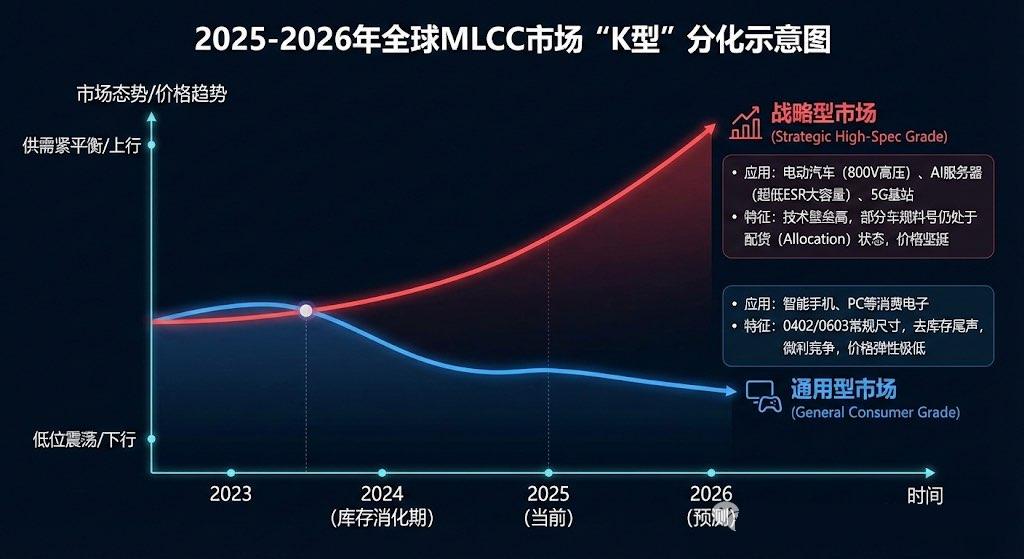
Core Viewpoint - The price surge in the component supply chain, particularly for Multi-Layer Ceramic Capacitors (MLCC), is driven by the explosive growth in AI server demand, with expectations for continued price increases in the short term [1][2]. Group 1: Price Trends and Market Response - MLCC prices in South Korea have risen nearly 20%, with expectations for further increases [1]. - Capital markets have reacted positively, with significant stock price increases for leading MLCC companies such as Samsung Electro-Mechanics, which has risen over 11% this year, and other A-share companies like Fenghua Advanced Technology and Sanhua Group [1][2]. - The MLCC industry is expected to experience a bifurcation by 2026, with high-end product demand likely to surge due to the AI boom, while mid-to-low-end products face challenges from weak demand and rising costs [1][4]. Group 2: Demand Drivers and Production Capacity - The demand for high-end MLCCs is driven by AI servers, which require three times more MLCCs than standard servers, leading to supply constraints [2]. - Major manufacturers like Murata Manufacturing, Samsung Electro-Mechanics, and Taiyo Yuden are operating at over 80% capacity, with Murata expected to see a 20% to 25% increase in high-end MLCC orders in the first quarter [2][3]. - Samsung Electro-Mechanics reported record revenue in Q4 2025, with a 22% year-on-year increase in revenue from high-voltage and high-capacity MLCCs [2]. Group 3: Competitive Landscape and Domestic Market Position - The global MLCC market is dominated by major players, with the top five manufacturers, including Murata, Samsung, and Taiyo Yuden, holding over 80% market share [3]. - Chinese manufacturers have established a relative advantage in the mid-to-low-end MLCC market but are accelerating efforts to penetrate the high-end market [3]. - Companies like Sanhua Group and Fenghua Advanced Technology are focusing on high-end applications such as 5G communication, AI servers, and automotive electronics, with successful integration into supply chains of major manufacturers like BYD [3]. Group 4: Industry Outlook and Cyclical Trends - The MLCC industry is currently in an upward cycle, with a typical cycle lasting about 4 to 5 years, supported by demand from automotive electronics and AI servers [3][4]. - The industry is expected to experience significant differentiation, with high-end MLCC demand surging due to AI applications, while traditional consumer electronics face declining demand [4]. - The market for AI servers is projected to grow at an annual rate of 30%, with the MLCC market for AI servers expected to reach 3.3 times its 2025 size by 2030 [4][5].
内存涨完,MLCC接棒上涨
Zhong Guo Zheng Quan Bao - Zhong Zheng Wang· 2026-02-09 04:41
Core Insights - The price of Multi-Layer Ceramic Capacitors (MLCC) has increased by nearly 20% in the Korean market, with expectations for continued short-term price rises due to heightened demand driven by the AI industry [1] - MLCCs are essential components in electronic devices for stabilizing power supply and filtering interference signals, with AI servers requiring over three times the MLCCs compared to standard servers, leading to a supply-demand imbalance [1] - High-end MLCC manufacturers capable of large-scale production are expected to benefit significantly from this trend, as evidenced by Samsung Electro-Mechanics projecting record revenue in Q4 2025, with a 22% year-on-year increase in its high-voltage, high-capacity MLCC segment [1] - The MLCC industry is experiencing extreme differentiation, with high-end MLCC demand surging due to AI applications, while mid-to-low-end MLCCs face operational pressures from seasonal effects and rising raw material costs [1] Domestic Market Overview - The domestic MLCC market in China is divided into civilian and military sectors, with international leaders dominating the high-end segment [2] - Companies like SanHuan Group and Fenghua Advanced Technology are making strides in high-end MLCCs, focusing on applications in 5G communication, AI servers, and automotive electronics [2] - SanHuan Group's MLCC products cover a range of sizes and specifications, while Fenghua Advanced Technology is expanding from mid-to-low-end products into high-voltage automotive components, successfully entering supply chains of major manufacturers like BYD [2]
被动元件,涨涨涨
3 6 Ke· 2026-02-09 01:13
Core Viewpoint - The recent price hikes in passive components, led by major players like Yageo and Walsin, indicate a significant shift in the market driven by supply-demand imbalances and rising raw material costs, particularly in high-end sectors like AI and electric vehicles [1][4][19]. Group 1: Price Adjustments - Yageo announced a price increase of 15%-20% for certain resistor products starting February 1, marking its third price adjustment in a short period [1]. - Walsin and Panasonic also announced price hikes of around 20% and 15%-30% respectively for various passive components, reflecting a broader trend among major manufacturers [1][2]. - Smaller manufacturers in China, such as Fenghua Advanced Technology and Shunluo Electronics, have also followed suit with price adjustments ranging from 5%-30% across multiple product categories [2][3]. Group 2: Supply Chain Dynamics - The passive component market is experiencing supply tightness, with lead times extending and some distributors pausing quotes due to uncertainty in price adjustments [3][4]. - Rising costs of raw materials, particularly precious metals like silver and palladium, have significantly increased production costs for passive components, with estimates suggesting a 20%-30% rise in production costs [5][6]. - Capacity constraints are exacerbated by major manufacturers shifting focus to high-end products, leading to a structural shortage in the mid-range market [7][8]. Group 3: Demand Drivers - The demand for passive components is being driven by the rapid growth of AI and electric vehicles, with AI servers requiring significantly more MLCCs than traditional servers [10][11]. - The automotive sector is also a major growth area, with electric vehicles using up to three times more passive components compared to traditional vehicles, creating a favorable environment for price increases [11][12]. - The overall market for passive components in China is projected to grow from 1237.65 billion yuan in 2023 to 2583.59 billion yuan by 2030, with a compound annual growth rate of 11.09% [13]. Group 4: Market Structure Changes - The current price hikes reflect a structural change in the passive components market, with high-end products experiencing significant demand while traditional consumer electronics face challenges [15][19]. - Domestic manufacturers in China are beginning to capture more market share, particularly in high-end segments, as they improve their technology and production capabilities [19][20]. - The geopolitical landscape and supply chain diversification are providing opportunities for Chinese manufacturers to enter high-end markets, as global players face capacity and delivery challenges [19][24]. Group 5: Future Outlook - The passive components market is expected to continue evolving, with AI and automotive electronics driving demand for high-value products [25][26]. - Companies need to focus on high-capacity, miniaturized, and reliable products to meet the changing market demands and maintain competitiveness [25][26]. - Collaboration across the supply chain will be crucial for manufacturers to overcome technical challenges and align with market needs [25][26].

电子行业周报:谷歌/亚马逊26年CAPEX指引超预期,AI硬件需求强劲-20260208
SINOLINK SECURITIES· 2026-02-08 11:11
Investment Rating - The industry is rated positively, with expectations of significant growth in capital expenditures from major companies like Amazon and Google, indicating a bullish outlook for the sector [1][26]. Core Insights - Amazon raised its 2026 capital expenditure forecast to $200 billion, a more than 50% increase from $131 billion in 2025, driven by strong demand signals in AI hardware and cloud services [1]. - Google's parent company, Alphabet, expects its 2026 capital expenditure to be between $175 billion and $185 billion, nearly double its 2025 spending, reflecting robust growth in its cloud business [1]. - The demand for AI infrastructure is expected to lead to a significant increase in ASIC (Application-Specific Integrated Circuit) numbers from major tech companies, with a projected explosive growth in 2026-2027 [1][4]. - The semiconductor and PCB (Printed Circuit Board) sectors are anticipated to benefit from the strong demand for AI, with many companies in these areas experiencing high order volumes and expansion plans [4][26]. Summary by Sections Section 1: AI and Cloud Infrastructure - Amazon's AWS cloud division saw a 24% year-over-year growth, with a backlog of $244 billion, indicating strong enterprise investment in AI and cloud services [1]. - Google's cloud revenue reached $17.7 billion in Q4, a 48% increase year-over-year, driven by strong demand for enterprise-level AI products [1]. Section 2: Semiconductor and PCB Industry - The PCB industry is maintaining high demand due to the growth in automotive and industrial applications, with expectations of price increases for copper-clad laminates [6]. - AI-driven demand is expected to boost PCB prices and volumes, with companies actively expanding production to meet this demand [4][26]. Section 3: Consumer Electronics - The consumer electronics sector is seeing a continuous expansion of AI applications, particularly in the Apple supply chain, with innovations in foldable devices and AI glasses [5]. - The demand for AI-enabled devices is expected to drive significant growth in the market, with various manufacturers exploring new product categories [5]. Section 4: Semiconductor Equipment and Materials - The semiconductor equipment sector is experiencing a robust upward trend, with significant capital expenditures expected to support the growth of advanced manufacturing processes [23][25]. - The materials sector is also poised for improvement, with a focus on domestic production capabilities in response to international supply chain challenges [25][34]. Section 5: Company-Specific Insights - Companies like North Huachuang and Zhongwei are positioned to benefit from the increasing demand for semiconductor equipment and materials, with strong growth prospects in their respective markets [28][30]. - Three Ring Group is focusing on high-capacity MLCC (Multi-Layer Ceramic Capacitor) products, which are expected to see increased demand due to AI applications [33].



被动元件,涨涨涨!
半导体行业观察· 2026-02-08 03:29
Core Viewpoint - The recent price hikes in passive components, driven by supply-demand imbalances and rising raw material costs, indicate a significant transformation in the market dynamics of the passive components industry [6][9][12]. Price Adjustments - Yageo announced a price increase of 15%-20% for certain resistor products starting February 1, reflecting its position as a market leader with an 18% global market share [2]. - Other companies, including Walsin Technology and Panasonic, have also announced price hikes for various passive components, with increases ranging from 15% to 30% [2][3]. - The price adjustments are widespread, with many small and medium-sized manufacturers in China also raising prices by 5%-20% across multiple product categories [3]. Supply Chain Dynamics - The price increases are primarily driven by rising costs of raw materials such as silver, copper, and aluminum, which have seen significant price surges, with silver prices increasing over 140% in 2025 [7][9]. - The production costs for passive components have risen by 20%-30% due to these raw material price increases, prompting manufacturers to pass on costs to customers [7][9]. - Capacity constraints are exacerbating the situation, as many Japanese manufacturers have shifted focus to high-end products, reducing supply in the mid-to-low-end market [8][9]. Demand Drivers - The demand for passive components is being driven by the rapid growth of AI and electric vehicle markets, with AI server motherboards requiring significantly more MLCCs than traditional servers [10][11]. - The demand for passive components in electric vehicles is also increasing, with the number of MLCCs used per vehicle rising dramatically compared to traditional vehicles [10][11]. - The overall market for passive components in China is projected to grow from 1237.65 billion yuan in 2023 to 2583.59 billion yuan by 2030, with a compound annual growth rate of 11.09% [12]. Market Structure Changes - The current price hikes reflect a structural change in the passive components market, with high-end products for AI servers and electric vehicles experiencing significant demand while traditional consumer electronics face challenges [14][17]. - Domestic manufacturers are beginning to capture more market share, with companies like Walsin Technology and Sunlord Electronics seeing increased orders and expanding their production capabilities [18][19]. - The shift towards high-end products presents opportunities for domestic manufacturers to enter the supply chains of larger companies, especially as global manufacturers face capacity and delivery challenges [22][23].
算力需求强劲,关注CPO等新技术演进
Orient Securities· 2026-02-07 09:53
Investment Rating - The report maintains a "Positive" investment rating for the electronic industry, indicating an expectation of returns stronger than the market benchmark by over 5% [5]. Core Insights - Strong demand for computing power driven by AI applications is expected to continue, with significant investments from major cloud providers [8]. - The hardware supply-demand imbalance is spreading across various sectors, leading to price increases [8]. - New technologies such as CPO (Co-Packaged Optics) are anticipated to create additional demand [8]. Summary by Sections Investment Recommendations and Targets - Key investment targets include: - Semiconductor manufacturing: SMIC (688981, Buy), Hua Hong Semiconductor (01347, Buy) - Testing and packaging: Changdian Technology (600584, Buy), Tongfu Microelectronics (002156, Buy), and others [9]. - Server storage: Lianqi Technology (688008, Buy) - CPUs: Haiguang Information (688041, Buy), Longxin Technology (688047, Not Rated), and others [9]. - Passive components: Sanhua Group (300408, Buy), Fenghua Advanced Technology (000636, Not Rated) [9]. - Server manufacturing: Industrial Fulian (601138, Buy), Huaqin Technology (603296, Buy) [9]. - Analog and power chips: Naxin Micro (688052, Buy), Sierui Technology (688536, Not Rated), and others [9]. - Semiconductor equipment: Zhongwei Company (688012, Buy), Northern Huachuang (002371, Buy), and others [9]. - Optical devices/chips: Zhishang Technology (301486, Not Rated), Tianfu Communication (300394, Not Rated), and others [9]. AI Applications and Edge Computing - Key targets in edge AI applications include: - AI main control chips: Amlogic (688099, Buy), Hengxuan Technology (688608, Buy) - Edge storage: Zhaoyi Innovation (603986, Buy), Bawei Storage (688525, Buy) [10]. - Terminal manufacturers: Hikvision (002415, Buy), Luxshare Precision (002475, Buy), BYD Electronics (00285, Not Rated), and others [10]. - Core components for AI edge: Huanxu Electronics (601231, Buy), Sunny Optical Technology (02382, Buy), and others [10].




谷歌发布Q4财报,AI算力需求爆发成焦点,数字经济ETF(560800)盘中蓄势
Xin Lang Cai Jing· 2026-02-05 02:41
Core Viewpoint - The digital economy theme index in China is experiencing fluctuations, with significant movements in component stocks, particularly in the AI and cloud computing sectors, indicating a growing demand for AI infrastructure and services [1][2]. Group 1: Market Performance - As of February 5, 2026, the China Securities Digital Economy Theme Index fell by 1.55%, with component stocks showing mixed performance [1]. - Hikvision led the gains among component stocks, while Runze Technology experienced the largest decline [1]. Group 2: Company Developments - Coherent's latest earnings report highlights that the demand for 1.6T products is exceeding expectations, with significant revenue contributions anticipated in 2026 [1]. - Alphabet, Google's parent company, reported a record annual revenue exceeding $400 billion, with a 15% year-over-year growth, driven by a 48% increase in cloud business revenue [1]. Group 3: Industry Trends - East China Securities forecasts that AI server shipments are expected to grow over 28% year-on-year in 2026, leading to price increases across core chips like storage and CPUs [2]. - Samsung has raised NAND flash prices by over 100%, and both AMD and Intel are planning price hikes of 10-15% for server CPUs [2]. Group 4: Index Composition - As of January 30, 2026, the top ten weighted stocks in the China Securities Digital Economy Theme Index accounted for 52.9% of the index, including companies like Dongfang Wealth and Cambricon [3].
一“纤”难求 光纤行业迎来强周期
Mei Ri Shang Bao· 2026-02-04 22:16
Core Viewpoint - The optical fiber and cable industry is experiencing a significant upturn, driven by increased demand from AI data centers and a global supply-demand imbalance, leading to substantial price increases and stock performance in related companies [1][4]. Industry Summary - The optical fiber market has seen a continuous rise in demand, with prices for G.652.D single-mode optical fibers in China reaching over 35 yuan per core kilometer, marking a 75% increase in January alone [1][4]. - A global trend is observed where optical fiber prices are rising sharply, with the Chinese market leading the way, and some manufacturers quoting prices as high as 50 yuan per core kilometer [4]. - The CRU China Optical Fiber and Cable Index (FOCI) has rebounded by 10.8%, indicating a shift from contraction to expansion in the market [4]. - The industry is entering a prolonged period of prosperity, driven by technological upgrades and the explosive growth of AI data centers, which is expected to sustain tight supply for 2-3 years due to the long production cycle of key materials [4][6]. Company Summary - Hangzhou Electric (杭电股份) has seen its stock price rise significantly, with a cumulative increase of 32.97% over three consecutive trading days, prompting the company to issue a risk warning due to potential irrational market speculation [2][3]. - The company reported a negative rolling price-to-earnings ratio of -33.93, significantly higher than the industry average of 24.23, indicating potential volatility in stock trading [2]. - Other companies in the optical fiber sector, such as Longfly Fiber and Hengtong Optic-Electric, have also experienced substantial stock price increases, with Longfly Fiber issuing a risk warning after its stock price deviated significantly from the norm [3][4].