华为云

Search documents
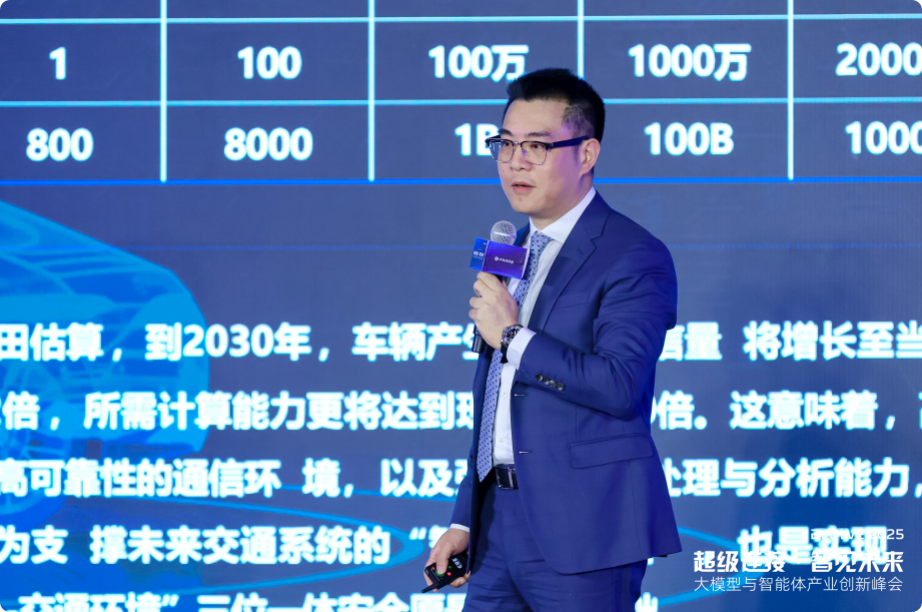
AI时代的云计算“牌局”要换新庄家了?|南方产业观
Sou Hu Cai Jing· 2025-12-23 18:09
Group 1 - The Force Original Power Conference is a B2B event that emphasizes practical value, attracting significant attendance and indicating the value of Volcano Engine to B-end users [3] - The new Doubao model 1.8 was introduced, designed to enhance multi-modal agent capabilities, optimizing for tool usage and complex command adherence, marking a step forward for AI assistants [4] - Volcano Engine has become a significant player in the AI era, with a reported 49.2% market share in public cloud model service calls in China, indicating its growing influence in the cloud computing landscape [12] Group 2 - The daily call volume for the Doubao model has exceeded 50 trillion, reflecting over tenfold growth compared to last December, with over 1 million enterprises and individuals utilizing its services across more than 100 industries [12] - Doubao consistently ranks at the top of application download charts, showcasing its popularity and the support provided by Volcano Engine [13] - Traditional industries are increasingly adopting AI as a development accelerator, positioning Volcano Engine favorably in the competitive landscape of large models [14]

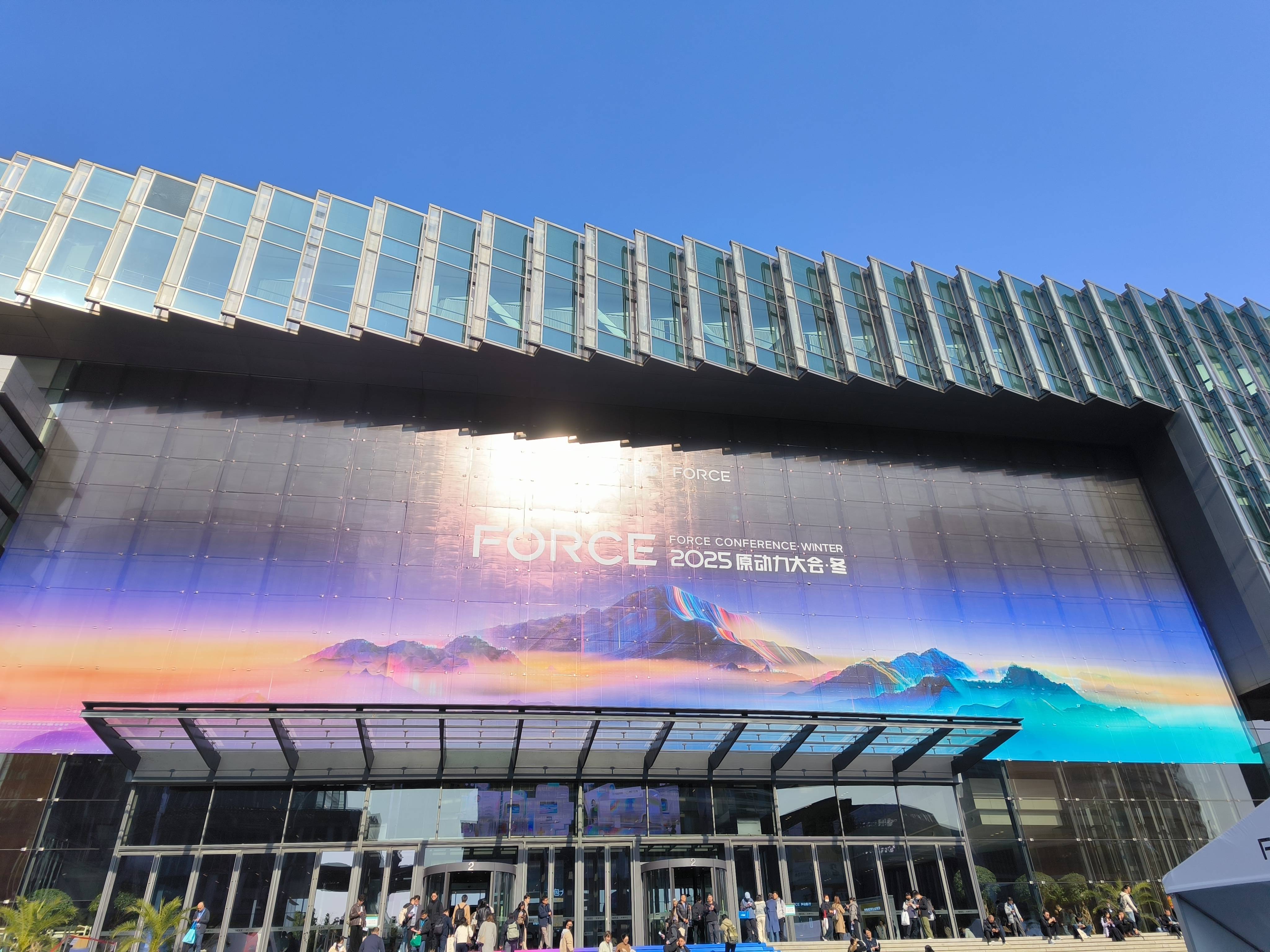
新一代开源基础软件加速落地 腾讯云贡献量位居全球第一
Zheng Quan Shi Bao Wang· 2025-12-23 09:22
Core Insights - The latest version of the open-source foundational software project Valkey, managed by the Linux Foundation, has accelerated its deployment on domestic cloud platforms, with Tencent Cloud being the first to support and release Valkey 8.0 [1][2] - Valkey, derived from the Redis community, is an open-source in-memory database project aimed at high concurrency and low latency, widely used in sectors such as internet, finance, e-commerce, and gaming [1] - The project reflects a collaborative effort among global tech companies, including AWS, Google, Oracle, Tencent Cloud, Alibaba Cloud, Huawei Cloud, and Ericsson, showcasing the international open-source spirit of cooperation and mutual benefit [1] Company Contributions - Tencent Cloud, as a founding member of the Valkey community, has significantly contributed to the project by sharing its large-scale operational experience, particularly in performance optimization, cluster capabilities, and stability improvements [2] - The Tencent Cloud team has submitted over 360 code contributions to the Valkey community in the past two years, ranking first globally, and has experts involved in the community's technical advisory committee and core membership [2] - The launch of Valkey 8.0 marks a new phase for the project, focusing on production-level applications, with Tencent Cloud providing ready-to-use open-source foundational software capabilities for domestic enterprises [2] Industry Implications - The accelerated deployment of the new generation of open-source foundational software is expected to enhance the stability and sustainability of digital infrastructure [2] - This development presents significant opportunities for Chinese enterprises to engage in global technological collaboration and increase their international influence [2] - By deeply participating in open-source community building, Chinese companies are evolving from "users" to "co-builders" and "leaders" in the industry [2]

打破医药供应链的「不可能三角」:一场静悄悄的系统性「破局」
3 6 Ke· 2025-12-20 10:34
Core Insights - The article discusses the transformation of supply chain management in the pharmaceutical industry, particularly through the collaboration between Liuyao Group and Huawei Cloud, leveraging AI to optimize complex supply chain operations [4][11][25]. Group 1: Industry Challenges - Liuyao Group faces a complex supply chain with over 10,000 SKUs, multiple warehouses, and stringent compliance and time constraints, which creates a systemic challenge in operations [4][6]. - The pharmaceutical industry is experiencing increased pressure due to the normalization of centralized procurement, stricter cold chain traceability, and comprehensive compliance regulations [6][10]. - The inefficiencies in China's logistics, where logistics costs account for approximately 18% of GDP compared to 8% in the U.S., highlight the need for significant improvements in supply chain efficiency [9][10]. Group 2: AI Integration and Transformation - Liuyao Group has partnered with Huawei Cloud to reconstruct its supply chain decision-making system using AI, focusing on data governance, demand forecasting, and intelligent scheduling [4][11][12]. - The integration of AI technologies, such as data lakes and predictive models, allows for real-time visibility and intelligent decision-making within the supply chain [14][19]. - The AI-driven supply chain system enables Liuyao to optimize complex operations, reducing decision-making time and costs while improving efficiency by 15% to 18% [18][19]. Group 3: Future Trends - By 2027, over 50% of large multinational companies are expected to adopt AI and advanced analytics for supply chain management, indicating a global trend towards intelligent supply chains [8][10]. - In China, over 60% of large enterprises are projected to implement AI and intelligent scheduling systems in key supply chain areas within the next three years, reflecting a structural shift in the industry [10][22]. - The shift from experience-driven to intelligent-driven supply chains is becoming a critical variable in determining operational quality, marking a significant turning point for the pharmaceutical distribution industry [25][26].


打破医药供应链的「不可能三角」:一场静悄悄的系统性「破局」
36氪· 2025-12-20 10:27
Core Viewpoint - The article highlights the transformation of the pharmaceutical supply chain through AI integration, emphasizing the shift from traditional experience-based methods to data-driven, intelligent decision-making systems [2][11][36]. Group 1: Company Overview - Liuyao Group, established in the 1950s, has evolved from a traditional pharmaceutical distributor to a comprehensive health service group, covering hospitals, retail pharmacies, and B2B clients [2]. - The complexity of Liuyao's supply chain is amplified by the need to manage over ten thousand SKUs, multiple warehouses, and stringent compliance and time constraints [2][4]. Group 2: Supply Chain Challenges - Liuyao faces a "triple constraint" in its supply chain, balancing time, compliance, and cost, where improving one aspect can exacerbate the others [4][5]. - The pharmaceutical industry is under pressure to enhance efficiency and reduce costs due to increasing regulatory demands and market competition [7][10]. Group 3: AI Integration and Transformation - Liuyao has partnered with Huawei Cloud to leverage AI for restructuring its supply chain decision-making processes, focusing on data governance, demand forecasting, and intelligent scheduling [2][11]. - The implementation of a data lake has unified fragmented data, enabling real-time visibility and optimization of supply chain operations [15][21]. Group 4: AI Tools and Their Impact - The Pangu predictive model has improved demand forecasting accuracy to over 89%, directly impacting inventory management and reducing stockout risks [16][21]. - The Tianchou AI solver optimizes complex decision-making scenarios, significantly reducing decision-making time and lowering costs by approximately 20% [21][20]. Group 5: Industry Trends and Future Directions - The article notes a global trend where over 50% of large multinational companies are expected to adopt AI and advanced analytics for supply chain management by 2027 [8]. - In China, over 60% of large enterprises are projected to implement AI and intelligent scheduling systems in their supply chains within the next three years, driven by national policies promoting digital transformation [10][11]. Group 6: Conclusion on Supply Chain Evolution - The shift from experience-based systems to computational systems in supply chains is seen as a critical evolution, enabling companies to predict demand, optimize resources, and enhance operational efficiency [26][36]. - Liuyao's experience serves as a model for the industry, demonstrating that intelligent supply chains can become a new growth engine rather than merely a cost center [36].

联想与Alat“联姻”,沙特资本从“买股票”进阶“建产业”
智通财经网· 2025-12-19 07:43
Group 1 - Tesla's convertible bond issuance in 2014, amounting to approximately $2 billion, was a significant debt financing event that supported the construction of its Gigafactory and the development of new vehicle models, transitioning Tesla from a niche sports car manufacturer to a mass-market automaker [1] - The successful execution of this financing strategy led to substantial business improvements for Tesla, with explosive growth in delivery volumes and revenue, ultimately boosting investor confidence and resulting in a long-term bull market for its stock [1] - The 1.25% bonds maturing in 2021 saw significant conversion by investors, yielding profits of 800%-840% due to the stock price exceeding the conversion price [1] Group 2 - Lenovo Group announced a strategic partnership with Saudi Arabia's Public Investment Fund (PIF) in May 2024, involving a $2 billion investment in the form of three-year zero-coupon convertible bonds, with a conversion price set at HKD 10.42 per share [2] - This partnership aims to establish Lenovo's regional headquarters and advanced manufacturing facilities in Saudi Arabia, marking a shift in PIF's investment strategy towards enhancing local industrial capabilities rather than merely seeking financial returns [2][4] - The collaboration is expected to contribute approximately $10 billion to Saudi Arabia's non-oil GDP by 2030, creating 15,000 direct jobs and 45,000 indirect jobs, while also focusing on local talent development [4] Group 3 - The partnership between Lenovo and Alat represents a long-term collaboration that binds capital with industry, aiming to build a sustainable technology manufacturing hub in Saudi Arabia, moving away from reliance on oil [4][10] - Lenovo's investment in local production is anticipated to enhance supply chain resilience, benefiting from tax incentives and reduced tariffs, while also addressing the growing demand for servers and AI infrastructure in the region [7] - The global demand for AI servers is projected to reach $252 billion by 2025, with Lenovo positioned to capitalize on this trend through its strategic initiatives in Saudi Arabia [6][7] Group 4 - Lenovo's issuance of $2 billion in zero-coupon convertible bonds and 1.15 billion warrants at a price of HKD 1.43 per share reflects a strategic move to improve its balance sheet while minimizing immediate equity dilution [5] - The partnership is seen as a critical step for Lenovo to leverage Saudi capital in preparation for the anticipated surge in AI hardware demand, with the company aiming to expand its AI server and edge computing business [5][6] - The establishment of a regional headquarters in Riyadh and a manufacturing facility with an annual capacity of millions of PCs and servers is expected to significantly enhance Lenovo's market position in the Middle East and Africa [7]

全球重点区域算力竞争态势分析报告(2025年)
Sou Hu Cai Jing· 2025-12-18 13:07
Core Insights - Computing power has become the core engine driving global economic development, with the competition landscape characterized by multi-dimensional comprehensive games, where the US and China lead the first tier, while the EU, ASEAN, Middle East, and India showcase unique characteristics [1][7] Group 1: Global Computing Power Landscape - The US has built a complete industrial ecosystem in chip design, AI foundational software, and technical talent, focusing on protecting innovation and national security, with tech giants increasing capital expenditure on high-performance computing and AI applications [1][7] - China ranks second globally in computing power, leveraging the "East Data West Computing" project to establish a national integrated computing network, supported by a strong policy framework and abundant green energy resources [1][7] - The EU emphasizes policy integration, focusing on green low-carbon initiatives and data security, aiming to enhance local semiconductor industry capabilities [1][7] Group 2: Emerging Economies and Trends - Emerging economies like ASEAN are leveraging digital economic growth to attract international investments, while the Middle East is creating green computing hubs, and India is experiencing explosive growth in computing demand driven by its population dividend [1][7] - The global computing power industry is witnessing rapid expansion, technological upgrades, diversification of application scenarios, supply chain restructuring, business model innovation, and a focus on sustainable development [1][7] Group 3: Strategic Importance of Computing Power - Computing power has evolved into a strategic resource comparable to oil and rare earths, influencing national competitiveness and global order [1][30] - The global computing power scale reached 1397 EFLOPS in 2023, a 54% year-on-year increase, with projections indicating it could exceed 16 ZFlops by 2030 [1][31] - The demand for computing power is driven by technological innovation, particularly in AI, and the rapid growth of the digital economy, with significant investments from major tech companies [1][35][36]




终端数据+算法 玄瞳AI赋能地方区域产业升级的路径与价值
Sou Hu Cai Jing· 2025-12-18 08:43
Core Insights - Xuantong AI provides a comprehensive digital intelligence solution for fast-moving consumer goods (FMCG) companies, addressing challenges such as terminal data opacity and market response delays through SKU and price tag recognition models [1][3]. Group 1: Company Development - Xuantong AI has evolved through three stages: from general image understanding to video and scene recognition, and now to deep integration of perception and cognition capabilities using large model technology [3]. - The product matrix includes "Fast-Moving Consumer Cloud Brain," featuring SKU recognition model, price tag recognition model, and AI terminal big data, with continuous innovation and iteration [3][5]. Group 2: Core Capabilities - The SKU recognition model supports precise identification of over 5,500 SKUs across various display scenarios, achieving an accuracy rate exceeding 85%, significantly higher than the industry average [5]. - The price tag recognition model utilizes target detection and OCR technology to extract and recognize offline price tag information with an accuracy of 85%, aiding companies in capturing price competitiveness and promotional dynamics [5]. - The terminal big data POI covers over 6 million terminal stores, with 500,000 stores updated daily, enabling clear assessment of store quality and identification of untapped sales opportunities [5]. Group 3: Strategic Partnerships - Xuantong AI has maintained a long-term partnership with Huawei Cloud, leveraging its computing and ecological support to enhance delivery capabilities [6]. - The collaboration aims to deepen regional and enterprise empowerment, providing digital intelligence support to more businesses [7].
2025年中国身份认证行业概览:安全边界到智能治理的全面进化
Tou Bao Yan Jiu Yuan· 2025-12-17 12:12
Investment Rating - The report indicates a strong growth potential in the identity authentication industry, particularly in China, with a projected market size increase from approximately 768 million CNY in 2020 to an estimated 5.249 billion CNY by 2029, reflecting a nearly sevenfold increase [4][26]. Core Insights - The identity authentication market in China is experiencing rapid expansion, maintaining a long-term market share of approximately 45% to 46% within the overall identity management market [11][26]. - The global identity management market is also growing steadily, with the identity authentication segment expected to increase from 5.13 billion USD in 2020 to an estimated 17.12 billion USD by 2029, nearly tripling in size [11][22]. - Key drivers for growth include accelerated digital transformation, the rise of remote working, and increasing compliance requirements, which are pushing enterprises to invest more in identity authentication solutions [24][26]. Summary by Sections Industry Overview - Identity authentication is defined as the process of verifying a user's identity through provided credentials, which is a critical component of information security systems [16]. - The identity authentication market in China is projected to grow significantly, with a market size increase from about 768 million CNY in 2020 to an estimated 5.249 billion CNY by 2029, indicating a growth rate much higher than the global average [4][26]. Market Size - The identity authentication segment is a core part of the identity management market, which is expected to grow from 51.3 billion USD in 2020 to 171.2 billion USD by 2029, representing a significant expansion [11][22]. - The growth of the identity authentication market is driven by the need for reliable identity verification in various business scenarios, especially in the context of digital transformation and compliance with data privacy regulations [24][26]. Vendor Shares - The global identity authentication market is highly concentrated, with major players like Microsoft leading with a 29.1% market share, followed by Okta and Oracle [29][30]. - In China, Alibaba Cloud leads the market with a 23.7% share, followed by Tencent Cloud and Huawei Cloud, indicating a competitive landscape among top vendors [29][30]. Application Scenarios - The financial and government sectors dominate the identity authentication market in China, driven by high demands for compliance and fraud prevention [34]. - Emerging sectors such as manufacturing and education are expected to see increased adoption of identity authentication solutions as digital transformation progresses [34]. Comparative Analysis of Digital Identity Systems - China's digital identity system is characterized by a centralized approach focusing on compliance, while countries like Singapore emphasize unified platforms and high adoption rates, and South Korea adopts a decentralized architecture [38][45]. Policy Analysis - Global identity authentication policies vary, with the EU focusing on privacy and cross-border interoperability, the US emphasizing security and technical standards, and China concentrating on real-name systems and centralized governance [45]. Industry Chain Analysis - The identity authentication industry is evolving towards a more integrated and standardized approach, with a focus on user data sovereignty and the promotion of strong authentication technologies [45][46].
研判2025!中国负载均衡器行业分类、产业链及市场规模分析:凭借软件定义与云原生架构创新突破,推动国产化替代进入规模化应用与份额提升新阶段[图]
Chan Ye Xin Xi Wang· 2025-12-17 01:41
Core Insights - The Chinese load balancer industry is undergoing rapid technological iteration and accelerated domestic substitution, driven by digital transformation, cloud computing becoming mainstream, and the surge in demand for 5G and edge computing scenarios. The market size is expected to reach approximately 18.65 billion yuan in 2024, reflecting a year-on-year growth of 6.88% [1][6]. Industry Overview - Load balancers are network devices, software, or services that intelligently distribute network or application traffic across multiple servers. They ensure balanced server load distribution and enhance system performance, availability, and fault tolerance [2][3]. Industry Development History - The development of the Chinese load balancer industry has evolved through four key stages, closely aligned with the rise of the internet, cloud computing, and digital transformation [3]. Industry Supply Chain - The upstream of the load balancer industry includes processors, chips, network interface modules, and various software and system components. The midstream involves the manufacturing of load balancers, while the downstream applications span finance, IT, telecommunications, government, public services, IoT, edge computing, and healthcare [4][5]. Market Size - The load balancer market in China is expanding, with a projected market size of approximately 18.65 billion yuan in 2024, marking a 6.88% increase year-on-year. This growth indicates a strong demand for traffic scheduling and high availability solutions, as domestic manufacturers advance in software-defined and cloud-native architectures [6][7]. Key Companies' Performance - The market is characterized by a dual oligopoly in hardware led by Deepin Technology and Sangfor Technologies, with cloud services dominated by Alibaba Cloud, Tencent Cloud, and Huawei Cloud. Sangfor has penetrated government and financial sectors, while Deepin excels in customized services for telecom operators and large enterprises [7][8]. Industry Development Trends 1. **Integration of Cloud Native and AI Technologies**: Load balancers are transitioning from traditional hardware to intelligent cloud-native solutions, utilizing AI-driven algorithms for dynamic resource allocation [10]. 2. **Accelerated Domestic Substitution**: Domestic manufacturers like Sangfor and Huawei are gaining market share through the use of domestic chips and operating systems, supported by policy and market demand [11]. 3. **Diversified Market Demand**: Emerging technologies such as 5G, IoT, and AI are driving the growth of load balancer demand across various sectors, including finance, healthcare, and education [12].
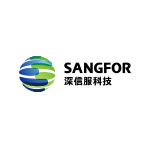


中国电信广州汽车魏志兴:智能体驱动汽车产业全场景革新,三智融合开启出行新生态
Jin Rong Jie· 2025-12-15 01:37
12月9日,由中关村科金主办的"超级连接・智见未来"EVOLVE 2025大模型与智能体产业创新峰会在北京圆满落幕。本次峰会聚焦 大模型与智能体的技术融合与产业实践,汇聚华为云、阿里云、百度智能云、火山引擎、亚马逊云科技、超聚变、软通动力等众多 产业领军企业,共同启动"超级连接"全球生态伙伴计划,凝聚行业力量,推动人工智能技术深入千行万业。 中国电信作为深耕产业数字化的服务商,深入汽车领域,以技术为纽带、以场景为核心,为产业全场景增效提供了实战方案。中国 电信广州汽车BU总经理魏志兴受邀出席,发表了题为《汽车行业智能体助力产业全场景增效》的主题演讲,结合行业数据与实践 案例,深度阐述了智能体在汽车产业的应用价值与发展前景。 中国已成为全球汽车产业核心力量,2024年汽车产量达3128万辆,占全球总产量的三分之一,超过美国、日本、德国等五个国家的 产量总和;智能网联汽车渗透率持续攀升,从2022年的60%跃升至2025年的85%,预计2028年将达到100%;乘用车智能渗透率也从 2022年的34.9%增长至2025年的62.8%,2028年有望突破90%。 数据背后是产业的深度变革: 一是交通工具升级为"出行 ...