
小红书

Search documents
AI大战烧到小红书
Mei Ri Jing Ji Xin Wen· 2026-02-11 00:45
Core Insights - Xiaohongshu is developing an AI video editing product named OpenStoryline, currently in testing and may be open-sourced in the future [1][2] - Unlike other major internet companies that are heavily investing in AI, Xiaohongshu's approach is more focused on lightweight, tool-based innovations that align closely with its business model [1][2] - The introduction of OpenStoryline aims to enhance Xiaohongshu's video creation tools, potentially filling existing gaps in its offerings [4] AI Strategy Expansion - OpenStoryline is positioned as an AI-driven video editing tool that allows users to create videos by uploading images and interacting through dialogue, similar to products from competitors [3][4] - Xiaohongshu's AI strategy is gradually expanding, with previous developments including an AI search product and plans for a dedicated large model team [7][8] Competitive Landscape - Xiaohongshu faces significant competition in the AI video editing space, particularly from ByteDance's Seedance 2.0, which has received positive reviews and is already available for user testing [5][6] - The competitive environment is intensifying, with other platforms rapidly advancing their AI capabilities, raising questions about Xiaohongshu's ability to maintain its competitive edge [2][6] User Engagement and Content Creation - The introduction of AI tools like OpenStoryline is expected to lower the barriers for content creators on Xiaohongshu, potentially increasing user engagement and content supply [4][14] - Analysts suggest that while Xiaohongshu's late entry into the AI space may be a disadvantage, having any AI capabilities is better than none, as it reflects the platform's commitment to meeting creator needs [9][14] Organizational Changes - Xiaohongshu has established a new independent department, Red&Live, focused on short video and interactive live streaming, indicating a strategic shift towards enhancing user engagement through these formats [10][11] - This department aims to integrate various functions to drive user growth and increase engagement time on the platform [10] Future Considerations - The ongoing development of AI tools raises fundamental questions for Xiaohongshu about how to preserve and amplify its core value of "real sharing" in an AI-dominated future [14] - Analysts believe that Xiaohongshu's unique community atmosphere and user-generated content can serve as a competitive advantage against generic AI assistants [13][14]


AI大战烧到小红书:内测AI视频剪辑 是进攻还是防御?
Mei Ri Jing Ji Xin Wen· 2026-02-10 15:15
Core Insights - Xiaohongshu is developing an AI video editing product named OpenStoryline, currently in testing and may be open-sourced in the future [1][2] - This marks Xiaohongshu's first public venture into AI video editing, focusing on lightweight and tool-oriented innovations rather than large-scale AI investments like competitors [2][4] - The product aims to lower the creative barrier for users and enhance content supply on the platform, particularly in fashion and beauty [3][6] AI Strategy and Competition - Xiaohongshu's entry into the AI video editing space is seen as a strategic move to broaden its AI capabilities, with previous developments including an AI search product and plans for a large model team [6][8] - Competitors like ByteDance's Seedance 2.0 are rapidly evolving, posing significant challenges to Xiaohongshu's market position [5][11] - The company is also restructuring to focus on short video and interactive live streaming, indicating a shift in strategic priorities [10][11] User Engagement and Market Position - Xiaohongshu's monthly active users surpassed 350 million, highlighting its substantial user base despite competition from AI assistants [11] - Analysts suggest that while AI tools can enhance user experience, Xiaohongshu's unique community-driven content remains a competitive advantage [12][13] - The platform's ability to integrate AI with its community ecosystem could strengthen its market position and user engagement [12][13]
春晚招商战:AI 应用与平台,正在接管春节流量入口
Jing Ji Guan Cha Bao· 2026-02-10 10:07
Core Insights - The commercial landscape of the 2026 Spring Festival Gala is becoming clearer, with major players in sponsorship and collaboration identified, highlighting the event's significance as a cultural and emotional touchstone for audiences across demographics and regions [1][2] Group 1: Changes in Sponsorship Dynamics - Unlike previous years, the 2026 Spring Festival Gala is witnessing a structural shift in commercial forces, with AI applications, technology platforms, and content-based social platforms emerging as the most aggressive players in the sponsorship landscape [2] - Traditional sponsors such as liquor brands and household appliances remain prominent, but AI products and platforms are increasingly appearing, indicating a blend of old and new sponsorship strategies [3][4] - AI applications are not just seeking exposure but are aiming for user education and product recognition during a peak attention period, marking a strategic shift in how brands engage with audiences [5][11] Group 2: Role of Major Platforms - CCTV's Spring Festival Gala remains a strategic high ground for brands, with significant partnerships formed, such as Bilibili becoming the exclusive bullet screen video platform, enhancing interactive experiences [8] - Other platforms like Xiaohongshu and Douyin are also integrating the Spring Festival into their ecosystems, transforming the event into a social experience rather than just a viewing event [9][10] - The collaboration with ByteDance's Volcano Engine as the exclusive AI cloud partner signifies a focus on technical capabilities and real-time interaction, positioning the Spring Festival as a testing ground for AI applications [10] Group 3: AI as a Central Theme - The 2026 Spring Festival is set to be a pivotal year for consumer-level AI, with significant investments in cash red envelopes from companies like Baidu and Tencent, indicating a shift in marketing logic from mere participation to active engagement [12][13][15] - The integration of traditional content with cutting-edge technology aims to reshape how audiences interact with the Spring Festival, moving from passive consumption to active participation [14][19] - The event serves as a critical platform for demonstrating the capabilities of AI applications across various scenarios, reinforcing the importance of the Spring Festival as a comprehensive engagement opportunity for brands [15][18]
边加谷歌边减英伟达!百年巨头柏基披露去年四季度大动作
Ge Long Hui· 2026-02-10 03:42
Summary of Key Points Core Viewpoint - Baillie Gifford's total holdings value decreased to $120.34 billion in Q4 2025, down approximately 10.8% from $135 billion in Q3 2025, primarily due to a net selling strategy and some growth stocks experiencing high-level corrections [1][2]. Group 1: Portfolio Adjustments - Nvidia remains the largest holding despite a 5.76% reduction in shares, accounting for 6.80% of the portfolio [3]. - Mercado Libre saw a 4.95% increase in holdings, raising its share to 5.83%, solidifying its position as a cornerstone of the portfolio [3]. - The top five holdings also include Amazon, Shopify, and Sea Ltd, with the top ten holdings comprising 43.4% of the total portfolio [4]. Group 2: Notable Transactions - Significant reductions were made in Amazon, Shopify, Meta, and Cloudflare, while Google saw a notable increase in holdings by 166%, reflecting a strategic shift towards AI capabilities [5][6]. - Baillie Gifford's investment in Google is valued at approximately $1.7 billion post-increase [6]. Group 3: Investment Philosophy and Trends - The investment team emphasizes the importance of adapting to the AI wave, suggesting that companies must pivot quickly to meet new market demands [9][10][12]. - The transition to AI is viewed as a new paradigm shift, with potential for significant growth opportunities as new companies emerge [14][15]. - The focus is on both "AI core" companies and those using AI as a tool to enhance existing services [21][24]. Group 4: Insights on China and Platform Companies - The sentiment in China has shifted, with a recognition of the country's potential to foster visionary entrepreneurs, particularly in the battery sector where CATL holds a significant market share [25][26]. - Platform companies are highlighted for their ability to create value through network effects and adaptability, requiring a long-term investment perspective [28]. Group 5: Non-Public Company Investments - Baillie Gifford has committed over £6 billion to non-public companies since 2012, recognizing the increasing duration of private company ownership before IPOs [31][32]. - The firm holds significant stakes in companies like SpaceX and ByteDance, which have shown substantial revenue growth compared to public market indices [33]. Group 6: Portfolio Construction Approach - The investment strategy is bottom-up, focusing on global transformations rather than specific trends or technologies [34]. - The portfolio includes a diverse range of companies across various sectors, with ongoing adjustments to capitalize on emerging growth opportunities [38].



边加谷歌边减英伟达!百年巨头柏基披露去年四季度大动作,背后有套AI “冰山模型”
聪明投资者· 2026-02-10 03:33
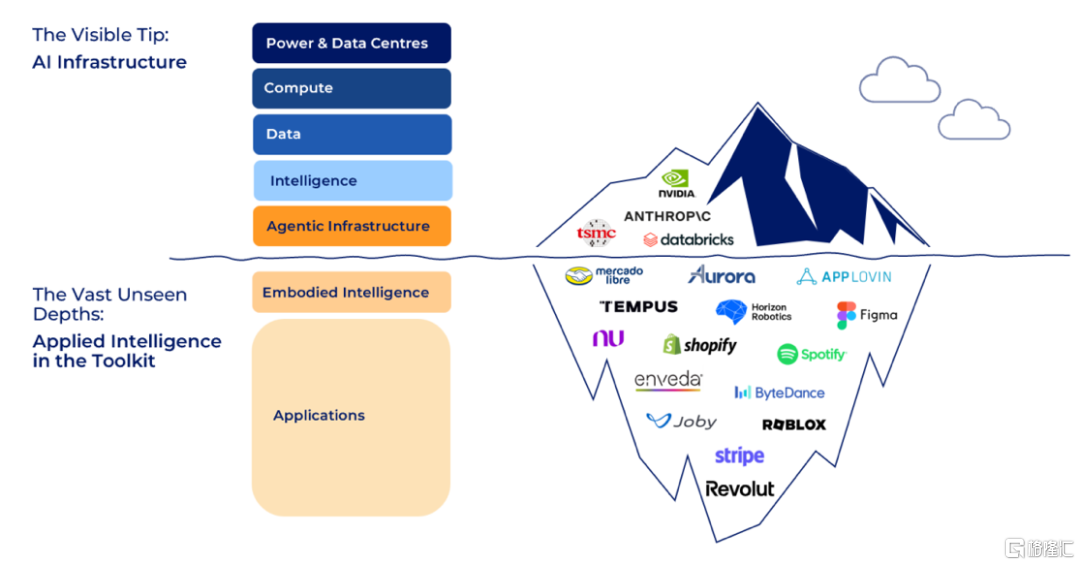
Core Viewpoint - Baillie Gifford's total holdings value decreased to $120.34 billion in Q4 2025, down approximately 10.8% from $135 billion in Q3 2025, primarily due to a net selling strategy and high valuations of growth stocks [2][3]. Group 1: Portfolio Adjustments - Nvidia remains the largest holding at 6.80%, despite a 5.76% reduction in shares for the second consecutive quarter [4]. - Mercado Libre saw a 4.95% increase in holdings, raising its portfolio share to 5.83%, solidifying its position as a key asset [4]. - The top five holdings include Amazon, Shopify, and Sea Ltd, with the top ten holdings accounting for 43.4% of the portfolio [5]. Group 2: Notable Transactions - Significant reductions were made in Amazon, Shopify, Meta, and Cloudflare, while Google saw a notable increase in holdings by 166%, reflecting a strategic shift towards AI capabilities [6]. - Baillie Gifford's investment in Google is estimated at around $1.7 billion post-increase, indicating a focus on AI custom chips and cost advantages in large-scale computing [7]. Group 3: AI Investment Insights - The investment team emphasizes the importance of early engagement in AI trends, suggesting that companies must pivot quickly to new business models once product-market fit is established [10][12]. - The transition to an "intelligent paradigm" is viewed as the next major shift in technology, with AI expected to create new growth opportunities and large companies [13][14]. - Current AI applications are primarily in personal assistant chatbots and programming tools, with companies like Anthropic experiencing rapid growth [15][16]. Group 4: Chinese Market Perspectives - The sentiment in the Chinese market has shifted, with a recognition of the potential for visionary entrepreneurs and rapid technological advancements [24]. - Baillie Gifford holds a significant stake in CATL, which commands 40% of the global battery market, indicating confidence in the future of battery technology beyond electric vehicles [25]. - Despite geopolitical risks, the firm sees potential in select Chinese companies that remain undervalued [27]. Group 5: Non-Public Company Investments - Since 2012, Baillie Gifford has committed over £6 billion to non-public companies, recognizing the increasing time companies remain private before IPO [30]. - The non-public market has expanded significantly, with over 1,500 companies valued at over $1 billion, representing a total market cap exceeding $5 trillion [32]. - Investments in non-public companies like SpaceX and ByteDance are seen as essential for capturing growth opportunities that may be missed in public markets [33]. Group 6: Portfolio Construction Strategy - The portfolio is constructed from the bottom up, avoiding single bets on specific countries or trends, focusing instead on global transformations [36][37]. - The firm is actively reallocating capital towards disruptive growth opportunities, including increased investments in companies like CATL and Chinese consumer platforms [42].

Seedance2.0如何推动传媒走向AIGC
2026-02-10 03:24
Summary of Conference Call on Media Sector and AIGC Industry Overview - The focus is on the media sector, particularly the impact of AIGC (Artificial Intelligence Generated Content) on enhancing PE (Price Earnings) and EPS (Earnings Per Share) in the media industry [1][2] - The Chinese government is increasing its support for AI, which is expected to boost the entire AI industry chain, particularly benefiting the media sector [1] Key Insights - AIGC is anticipated to improve both PE and EPS for the media sector, especially with the upcoming Chinese New Year, which is expected to enhance market performance [1][2] - The 2026 fiscal year is seen as a new chapter for many companies, with expectations for improved performance following the resolution of previous uncertainties [2] - Companies directly related to ByteDance, such as Bona Film Group and Windy Studio, are expected to benefit significantly from AIGC developments [2][3] Notable Companies and Their Prospects - **Bona Film Group**: Expected to release AI-generated films in 2026, benefiting from collaborations with ByteDance [2][3] - **Windy Studio**: Partnering with ByteDance for AI 3D projects, which has led to a significant stock price increase [3][4] - **Shunwang Technology**: Focused on AI gaming and digital marketing, with potential growth in 2026 due to new game releases and esports events [15][16] - **Yaoji Technology**: Engaged in gaming and digital marketing, with potential benefits from AI tools to enhance efficiency and revenue [17][18] - **Aofei Entertainment**: Strong IP portfolio with potential for commercialization through AI, including new product launches [18][19] Market Dynamics - The introduction of AI tools like ByteDance's CDS 2.0 is seen as a significant advancement, lowering content creation barriers and increasing competition among content producers [6][7] - The market is expected to see a surge in AI-generated content, raising the bar for quality and aesthetic standards [8] - The upcoming AI Spring Festival is anticipated to serve as a major digital traffic driver, benefiting the AIGC sector [12] Investment Recommendations - **Bona Film Group (001330)**: Despite recent stock price increases, it remains a strong investment due to its proactive approach in AI and film production [13][14] - **Wanda Film (002739)**: Although slower in stock performance, it is still a key player in the cinema sector with upcoming projects that could drive future growth [14] - **Shunwang Technology (300113)**: Recommended for its digital marketing and gaming segments, which are expected to benefit from industry recovery [15][16] - **Yaoji Technology (002605)**: Stable performance with potential for growth through AI integration in gaming and marketing [17][18] - **Aofei Entertainment (002292)**: Strong IP management and commercialization strategies make it a favorable investment [18][19] Conclusion - The media sector is poised for growth driven by AIGC advancements and supportive government policies. Companies that adapt to these changes and leverage AI tools are expected to outperform in the coming years. The market dynamics suggest that while some stocks have already surged, there are still opportunities for investment in companies that may experience delayed growth but are fundamentally strong.




字节Seedance2.0爆火;OpenAI测试广告投放
2 1 Shi Ji Jing Ji Bao Dao· 2026-02-10 02:48
Group 1: Technology Developments - ByteDance's AI video generation model Seedance 2.0 has gained significant attention for its ability to create movie-quality videos from text and images, being described as the strongest video generation model currently available [2] - OpenAI is set to begin testing advertisements in ChatGPT, with ads clearly marked and placed separately from chat content, aiming for long-term ad revenue to be less than half of total income [3] - Alibaba's new AI model Qwen 3.5 is expected to be released soon, featuring a new mixed attention mechanism and potential capabilities for visual understanding [11] - Xiaohongshu is developing an AI video editing product called OpenStoryline, which is currently in testing and may be open-sourced in the future [12] Group 2: Market Insights - The consumer-grade XR market in China is projected to reach 645,000 units in 2025, with a year-on-year growth of 13%, and AR sales expected to surpass VR for the first time [5] - Memory prices are forecasted to surge by 80%-90% by the first quarter of 2026, driven by significant increases in server DRAM prices [6] - Pursuit Technology is expected to see a 189% revenue growth in North America by 2025, with overseas revenue accounting for nearly 80% of total income [7] - Sohu reported a total revenue of $142 million for Q4 2025, with an annual total of $584 million, showing a 6% year-on-year increase [8] Group 3: Financing Activities - Databricks has completed a $5 billion funding round, raising its valuation to $134 billion, a 34% increase from the previous funding round [9] - Shanghai Puxing Aerospace Technology has secured 30 million yuan in angel financing, which will be used for technology development and factory construction [10]

帮别人种草的小红书,为什么自己卖不好货?
3 6 Ke· 2026-02-10 01:11
Core Insights - The article discusses the paradox of Xiaohongshu's (Little Red Book) marketing model, where the platform excels in content creation but struggles with direct sales, leading to the closure of its self-operated e-commerce initiatives [1][21][22] - The concept of "lifestyle economy" is introduced, emphasizing the need to return to individual consumer demands, which Xiaohongshu aims to address through its unique positioning in the market [4][10][11] Group 1: Marketing and Consumer Trust - Xiaohongshu's "grass planting" (种草) strategy has been criticized as potentially misleading, with some industry insiders equating it to fraud [1] - The trust factor diminishes when content shifts from being observational to promotional, indicating a fragile balance between user trust and commercial intent [2][3] - The platform's attempt to integrate product links into user-generated content has been deemed ineffective and not user-friendly [4] Group 2: Non-standard Products and Market Positioning - Xiaohongshu's business model focuses on non-standard products, differentiating itself from traditional e-commerce platforms like Taobao and JD [5][8] - The success of brands like Berghaus on Xiaohongshu illustrates the platform's ability to cater to niche consumer needs that mainstream e-commerce may overlook [7][9] - The term "non-mainstream" is used to describe Xiaohongshu's unique market positioning, which allows for the promotion of products that may not perform well on conventional platforms [9] Group 3: Challenges in E-commerce - Xiaohongshu's attempts at e-commerce have faced significant challenges, leading to the closure of its self-operated platforms, including "Xiaolvzhou" and "Welfare Society," which had been operational for nine years [21][22] - The platform's struggle to create a transaction closure despite strong "grass planting" capabilities raises questions about its role in the consumer decision-making process [22][24] - The shift to a buyer model, focusing on non-standard aesthetic transformations, reflects Xiaohongshu's ongoing struggle to balance content purity with commercial viability [23][24] Group 4: Trust and Content Saturation - The proliferation of low-quality content and the rise of industrialized sharing practices have eroded user trust, leading to a decline in the effectiveness of the "grass planting" strategy [17][18] - Users have expressed dissatisfaction with misleading content, which has resulted in a negative perception of the platform, often referred to as the "filter trap" [18] - The saturation of promotional content has diminished the core value of authenticity that Xiaohongshu initially offered [18]
高速惊魂!特斯拉续航剩72公里突然断电,售后:续航剩100公里就该充电;欣旺达电池翻车!极氪召回超3.8万辆车;高德打车被约谈整改
雷峰网· 2026-02-10 00:31
Group 1 - Tesla Model Y experienced a sudden power loss on the highway with a remaining range of 72 kilometers, raising safety concerns about the actual usable range of electric vehicles [1][2] - Tesla's after-sales response suggested that drivers should recharge when the battery level reaches 100 kilometers, leading to public debate about the reliability of the advertised range [2] - Previous incidents of Tesla vehicles losing power on highways have been reported, with some requiring complete motor replacements [2] Group 2 - A safety incident involving Aoxin battery resulted in a recall of over 38,000 Zeekr 001 WE vehicles due to potential thermal runaway risks [5][6] - The recall is linked to manufacturing consistency issues in the high-voltage battery, which could lead to performance degradation and safety hazards [6] - A legal dispute between Zeekr's parent company and Aoxin over battery quality has been resolved, with Aoxin responsible for covering battery replacement costs [6] Group 3 - Xiaomi's legal department is assisting car owners who have faced online harassment and physical damage to their vehicles, with 51 cases successfully filed in court [15] - The company has reported a significant number of participants in its assistance program, indicating a growing concern over the safety and reputation of its automotive products [15] Group 4 - ByteDance's new AI video generation model, Seedance 2.0, has gained significant attention for its ability to create high-quality videos from text or images [13] - The model's unique multi-shot narrative feature allows for seamless scene transitions, enhancing the storytelling experience [13] - The introduction of such technology is expected to disrupt traditional video production processes and raise concerns about the authenticity of video content [13] Group 5 - NIO announced a recall of over 246,000 ES8, ES6, and EC6 electric vehicles due to potential black screen issues in the dashboard and central control [38] - The recall will be addressed through remote software upgrades, ensuring that affected vehicles receive necessary updates to mitigate safety risks [38] Group 6 - Google announced plans to issue approximately $20 billion in high-rated dollar bonds to support its capital expenditures, particularly in AI infrastructure [40] - Waymo, Google's autonomous driving unit, has achieved fully autonomous operations in Nashville, expanding its presence in multiple U.S. cities [40] - The company is facing increased competition in the autonomous driving sector, with significant investments being made in this area [40] Group 7 - OpenAI plans to launch an upgraded chat model amid increasing competition, with ChatGPT's active user base exceeding 800 million [41] - The company is also testing advertising within ChatGPT, aiming to diversify its revenue streams while maintaining user experience [41] - OpenAI's growth trajectory remains strong, with significant increases in user engagement and product adoption [41] Group 8 - Nexon is developing a new shooting game based on Blizzard's classic IP, StarCraft, indicating a shift in the franchise's traditional strategy game format [44][45] - The project is in the early development stages, with a focus on creating a unique gaming experience while leveraging the original IP's popularity [45]

湖北3家企业入选2025胡润中国500强
Chang Jiang Shang Bao· 2026-02-10 00:15
Group 1: Core Insights - The 2025 Hurun China 500 list highlights the growing strength of non-state enterprises in Hubei, with three companies making the list, showcasing the steady rise of the local private economy [1] - Gaode Infrared, with a market value of 55 billion yuan, ranks first among Hubei companies and has improved its national ranking from 367th to 279th [1] - Gaode Infrared specializes in infrared thermal imaging technology and has broken the long-standing monopoly of Western giants in this field by developing advanced intelligent equipment [1] Group 2: Company Performance - Gaode Infrared expects a net profit of 700 million to 900 million yuan for 2025, driven by significant growth in its civilian product sector and increased demand for infrared chip applications [2] - Filihua, a new entrant on the list with a market value of 39 billion yuan, anticipates a net profit of 412 million to 472 million yuan for 2025, reflecting a year-on-year growth of 31.12% to 50.22% [2] - Chaoying Electronics, also a new addition with a market value of 35 billion yuan, focuses on PCB development and production, benefiting from local supply chain stability [3] Group 3: Industry Trends - The threshold for entering the 500 list has increased by 7.5 billion yuan to 34 billion yuan, marking a 28% rise [4] - The total value of the 500 companies has grown by 21 trillion yuan, a 38% increase, reaching 77 trillion yuan [4] - Semiconductor, media and entertainment, industrial products, and consumer goods sectors account for half of the total value of the Hurun China 500 [4]

