恒大

Search documents
现房销售让开发商资金回笼周期拉长至3-5年,购房者会因此受益还是受害?
Sou Hu Cai Jing· 2025-09-02 11:35
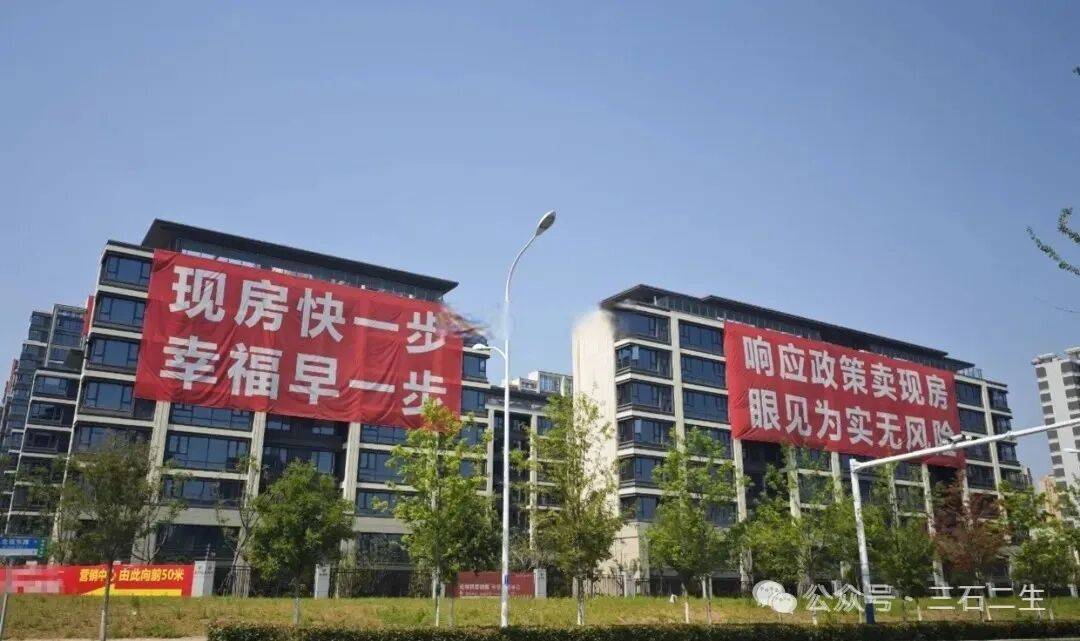
Group 1: Core Transformation in Real Estate - The real estate industry is undergoing a profound structural transformation, marked by a shift from high turnover and high leverage models to a new financing system aligned with current housing sales and height restrictions [1] - The essence of this transformation is the redistribution of risks and benefits, which is already reflected in various multidimensional data [1] Group 2: Current Housing Sales and Market Reconstruction - The proportion of current housing sales surged from 12.7% in 2020 to 30.84% in 2024, driven by proactive policy pressure and market forces [2] - In 2024, the new construction area of commercial housing nationwide decreased by 23% compared to the same period last year, marking the lowest level since 2009 [5] - The funding recovery cycle for real estate companies has extended from 1-2 years to 3-5 years due to current housing sales, creating a financial firewall between developers and banks [6] - In 2024, the market share of the top 10 real estate companies increased to 38%, a 5 percentage point rise compared to before the new policies [6] Group 3: Quality Revolution and Cost Restructuring - The Ministry of Housing and Urban-Rural Development raised the residential height standard from 2.8 meters to 3 meters, leading to significant cost increases in the construction industry [7] - For every 0.1-meter increase in height, construction costs rise by 2-3%, with total cost increases reaching 8-12% when factoring in additional expenses [7] - In Shenzhen's Bao'an District, a decrease in floor area ratio from 6.0 to 4.4 coincided with a price jump from 80,000 to 120,000 per square meter, illustrating a unique pricing phenomenon [7] Group 4: Market Segmentation and Supply Dynamics - 78% of homebuyers are willing to pay an additional 5% for higher ceilings and more comfort, while third- and fourth-tier cities face a 36-month inventory turnover period [8] - A dual-track supply structure is emerging, with plans for 240-300 hectares of commodity housing land in Beijing by 2025, alongside 50,000 units of affordable rental housing [8] Group 5: Financial Model Iteration and Debt Issues - The collapse of the old model is evident in financial data, with some companies facing a debt maturity scale of approximately 3.1 trillion yuan by 2025 [10] - State-owned enterprises dominate land auctions, accounting for 77% of the total land acquisition amount in 22 cities in 2024 [10] Group 6: Wealth Redistribution and Market Disparities - The transformation is creating new wealth gaps, with those who purchased high-rise properties from 2016 to 2023 facing significant asset depreciation [14] - Non-core area second-hand houses have experienced a 15-20% value loss, while premium properties in core areas are seeing high demand and prices [14] Group 7: Future Outlook and Industry Challenges - The industry is expected to move towards high-quality development after enduring pain, with urban household debt ratios projected to rise to 62.3% by 2025 [16] - The sustainability of the "quality revolution" pricing strategy remains uncertain for average households [17]

洪灏:中国、日本、美国经济和房地产周期观察 25博鳌房地产论坛
Sou Hu Cai Jing· 2025-09-01 14:01
Economic Cycles and Debt Levels - The comparison of non-financial sector debt levels in China, Japan, and the US highlights the long-term real estate cycles and their impact on economic conditions [2][3] - Japan's non-financial sector debt peaked in 1992 and took approximately 65 years to cycle back to a low point, illustrating a long-term economic cycle [3] - The US experienced a violent deleveraging process post-2008, with significant bankruptcies leading to a recovery around 2012, aligning with Japan's policy responses [3][4] China's Real Estate Market - China's household debt trajectory mirrors Japan's, with both countries experiencing a 20-30 year expansion before peaking in 2021, but China's deleveraging process has not yet begun in earnest [4][5] - The Chinese government has initiated a debt reduction plan, but it primarily represents a deferral of existing debt rather than a true reduction [4][5] - The overall debt levels in China, including public and household debt, have been rising, with significant increases noted since 2014-2015 [5] Housing Prices and Market Dynamics - Comparisons of housing prices show that China's real estate market peaked in 2021 and has begun to decline, with a trajectory similar to Japan's post-bubble experience [7][8] - In contrast, first-tier cities in China, such as Beijing, Shanghai, Guangzhou, and Shenzhen, have shown resilience in housing prices, indicating a divergence in market dynamics between first-tier and lower-tier cities [8] - Consumer confidence in China remains at historical lows, which may affect future housing market recovery [8] Short-term Economic Recovery - A quantitative model indicates that China's economy is currently in a recovery phase, with macroeconomic indicators showing an upward trend since late 2022 [9][10] - The stock markets, including A-shares and Hong Kong stocks, are also reflecting this recovery, with A-shares surpassing 3600 points and the Hang Seng Index above 25000 points [10] - Challenges remain in effectively managing deleveraging in the non-financial sector and ensuring stable economic growth amid declining housing prices [10]
广州人,也有自己的鹤岗!
Sou Hu Cai Jing· 2025-08-29 03:28
曾几何时,广州搭乘楼市上升光环,不仅自身新盘供不应求,还因"高门槛、高房价",不少广州客都把目光伸向广州的周边城市投资置业。 特别是清远、肇庆、佛山等,凭借接壤广州的优势,打出不少"广州后花园"口号的卫星城楼盘,吸引广州的外溢客。 但后面的结局也都看到了,广州自身供应大幅增加,外溢客大大减少。 那么问题来了,既然广州外溢客减少,当年那些临广城市的卫星城大楼盘,如今怎么样了? 那些广州"后花园" 如今现状如何? 肇庆恒大世纪梦幻城 它是鼎盛时期的恒大耗资200亿打造的超级文旅盘,位于肇庆高要区回龙镇,当年恒大梦幻城瞄准广州客,主打广州卫星城概念,自驾一个半小时便可抵 达广州市区。 恒大世纪梦幻城实拍 来源:项目公众号 世纪梦幻城,是恒大急速扩张下的产物,靠着各种大型乐园等配套,在2019年开盘后,曾吸引不少广州客关注。 而后续大家也不陌生了,21年恒大暴雷,该小区便进入停摆状态。 恒大暴雷、楼市下行,加上位置偏远和周边几乎啥都没有的配套,项目中间还横穿一条车流量多的马路,噪音问题相当严重,因此价格猛降就是意料之中 了。 据贝壳仅有的几套挂牌来看,这里两房一厅只要30-50万左右。单价在3500-5700元/平之 ...

680亿债务即将清零!消失2年后孙宏斌归来,还愿再搭救王健林吗?
Sou Hu Cai Jing· 2025-08-29 03:13
Core Viewpoint - Sun Hongbin, the chairman of Sunac China, has publicly stated that "the most difficult times are over" for the company, marking a significant turnaround after two years of challenges in the real estate sector [1]. Debt Restructuring - Sunac China has successfully garnered support from 75% of its overseas creditors for a debt restructuring plan, which could potentially clear 68 billion RMB (approximately 10 billion USD) in debt [1][3]. - The overseas debt amounts to 9.55 billion USD, equivalent to about 680 million RMB, and the restructuring involves converting all debt into equity, effectively reducing the debt burden to zero [3]. - A creditor hearing for the debt restructuring is scheduled for September 15, where creditors will vote on the plan [3]. Financial Recovery - Since 2022, Sun Hongbin has committed to completing debt restructuring and restoring stable operations, having already restructured 90 billion RMB in debt and aiming to reduce total debt by over 75 billion RMB if the current restructuring is successful [5]. - The company has successfully sold properties, such as the Shanghai One Number Courtyard, which sold out in two hours, generating over 17 billion RMB in sales, making it the top-selling project in the first half of the year [10]. Strategic Shift - Sun Hongbin is pivoting towards the health and wellness industry, recognizing the growing market due to China's aging population, which has increased from 10.2% to 18.7% over the past 20 years [6]. - The company has signed an agreement with Tsinghua University to invest 4.5 billion RMB in a medical center, indicating a strategic shift towards healthcare and wellness [8]. Market Position - Sunac China's land reserves are considered high-quality, and the company has been effective in reducing inventory, positioning itself favorably in the current market [10]. - Sun Hongbin's proactive measures and strategic investments have made him a figure of admiration in the industry, especially as he navigates the company through challenging times [10].
保利、华润、中海,谁是行业未来新老大?
3 6 Ke· 2025-08-29 02:01
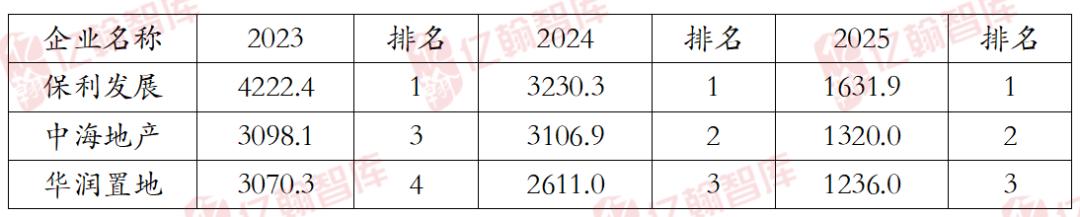
Group 1 - The former real estate giants, Evergrande, Country Garden, and Vanke, have faced significant declines, with Evergrande becoming a negative symbol for the industry, while Country Garden and Vanke struggle for survival [1][2] - The new leaders in the industry are Poly Developments, China Overseas Land & Investment, and China Resources Land, collectively referred to as "Bao Zhonghua," who now hold significant market power [2][3] - Poly Developments has regained its position as the largest player in terms of scale, while China Resources Land leads in profitability and asset management operations [2][3] Group 2 - The market perception is that Poly's rise to the top is largely due to the decline of its competitors rather than its own merits, leading to skepticism about its sustainability [4][5] - Despite the competitive landscape, Poly's position is not easily challenged, as it maintains a performance advantage over its closest rivals, China Overseas and China Resources, although the gap is narrowing [8][9] - The era of scale dominance is shifting, with companies now focusing on profitability and operational efficiency rather than just size [6][7] Group 3 - Poly's return to the top is attributed to both industry dynamics and its own capabilities, indicating that success in the current environment requires more than just luck [7][8] - The competition among the top three companies is intense, with sales figures showing that Poly, China Overseas, and China Resources are closely matched in performance [9][10] - China Resources Land has surpassed China Overseas in profitability due to its diversified business structure, which includes strong asset management capabilities [10][12] Group 4 - Investment strategies among the top companies vary, with Poly focusing on key cities and high-end clients, while China Overseas emphasizes safety and core city investments [16][17] - China Overseas has made significant investments in high-value land parcels in major cities, indicating a strong ambition to capture the luxury market [17][19] - Poly's investment activities are substantial, with a focus on core cities, but it has not attracted as much attention as its competitors due to less aggressive high-value land acquisitions [24][25] Group 5 - The competition for high-quality land is fierce, with all three companies vying for prime locations in major cities, indicating a challenging environment for maintaining market share [26][27] - The quality of products offered by these companies is under scrutiny, as they must meet consumer expectations to remain competitive in the market [27][28] - Future success will depend on the ability of these companies to innovate and improve their product offerings, as well as their strategic positioning in the market [27][28]



富豪的财富,就是一笔“众人拾柴火焰高”的糊涂账
Sou Hu Cai Jing· 2025-08-27 01:36
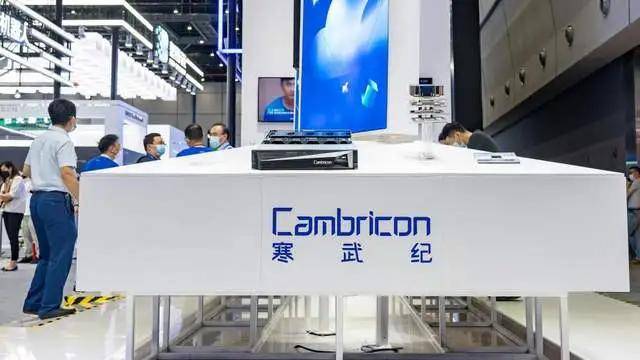
快科技8月25日消息,受英伟达暂停H20芯片生产和DeepSeek"的双重利好刺激,上周A股芯片板块成为 市场最强方向,其中龙头寒武纪股价飙升。 上周五涨停之后,股价高达1243元,市值超5200亿元,年内累计涨幅高达84%。受此影响,寒武纪创始 人陈天石的个人财富,也因持有寒武纪29.63%股份,市值达到了1541亿元。按照国际投行高盛给出的 1835元的目标价,陈天石的个人财富会暴涨到2000亿元以上,更加令人惊讶。 看到如此场景,忍不住让人感慨万千,既感到佩服,也有一种说不出来的感觉,那就是如今富豪的财 富,到底是真财富呢,还是假财富,是实实在在的财富积累呢,还是谁也说不清的泡沫数字。 一个需要正视的现象是,那些没有上市,而是踏踏实实做实业、做产品、做实体的企业,由于没有资本 的催化剂,也没有股市的泡沫,而是靠实实在在的技术、产品、销售、服务等获得财富,由此形成的身 价,显然无法与上市公司富豪的财富相比吗?譬如任正非的财富,只要华为不上市,就永远不会出现陈 天石这样的暴涨,也无法像王健林、许家印那样成为首富,而只能随着企业的不断增大,慢慢上涨。 相反,如果华为也上市,按照华为的实力和影响力,股价应当在千 ...
楼市牛市强势来袭,买房者迎来最佳时机,投资回报潜力巨大
Sou Hu Cai Jing· 2025-08-20 10:42
2025年的夏天,本应泾渭分明的楼市与股市,却意外地交汇碰撞,激荡起令人不安的复杂情绪。压抑、 沸腾、四散,空气中弥漫着刺鼻的焦灼,预示着一场风暴的来临,没有人敢言全身而退。 彼时,韩国股市年内涨幅已超30%,日经225指数更是突破了1989年的历史高点。全球资金流动加速, 贸易局势的缓和与美联储降息的预期,更助长了资金的冒险精神。外资7月净流入韩国股市超过30亿美 元,将中国市场视为第二大海外投资标的。国内方面,7月非银存款同比多增1.39万亿,居民存款开 始"搬家"。种种迹象表明,牛市的氛围日渐浓厚。 沪深两市在8月气势如虹,成交量连续突破2万亿大关。权重股一路高歌猛进,媒体和朋友圈充斥着"牛 市归来"的欢呼。然而,狂欢的背后,并非人人都能分享盛宴。不少投资者手中的股票纹丝不动,甚至 不涨反跌,委屈、焦虑、无奈写在他们的脸上。 数据显示,过去一年,6256只权益类基金(包括股票型、混合型)平均收益率高达34.06%,近乎99%的 产品实现盈利,一片欣欣向荣。然而,深入审视却发现,2021年买入的新基金中,仍有158只累计跌幅 超过30%。有人收益翻倍,有人却仍在原地挣扎。市场热情高涨,躁动不安的情绪也在暗 ...

消失1年的恒大高管被抓到了!美国豪宅生活曝光,钱多到数不清
Sou Hu Cai Jing· 2025-08-19 06:04
Core Viewpoint - The article reveals the extravagant lifestyle of Xia Haijun, the former president of Evergrande, who has been living in luxury in California after the company's financial collapse, sparking public outrage over the stark contrast between his wealth and the struggles of ordinary people affected by the company's downfall [1][3]. Group 1: Xia Haijun's Wealth and Lifestyle - Xia Haijun is living in Irvine, California, owning at least three luxury properties valued over $24 million, equivalent to approximately 170 million RMB [3]. - His properties include a 300 square meter home purchased for $1.2 million, now worth $3.2 million, a $6 million property bought in April 2022, and a $14.5 million estate acquired through a trust [3]. - His garage features multiple luxury vehicles, including three Teslas and a Mercedes SUV, indicating a lavish spending pattern [3]. Group 2: Source of Wealth - Xia Haijun accumulated significant wealth during his 12 years at Evergrande, earning approximately 1.855 billion RMB from salary, bonuses, stock dividends, and service fees from related companies [5]. - Notably, he charged over 50 million RMB annually for financial advisory services through an offshore company, showcasing a potential conflict of interest [5]. Group 3: Asset Concealment and Legal Issues - Prior to Evergrande's collapse, Xia sold $128 million in Evergrande bonds, cashing out $56.52 million, indicating a premeditated exit strategy [7]. - He has been accused of asset concealment, only declaring three properties in Hong Kong while hiding other assets, leading to legal actions against him [7]. - The Hong Kong court has frozen assets under his wife's name, and cross-border recovery procedures have been initiated by mainland judicial authorities [7]. Group 4: Public Reaction and Social Implications - The stark contrast between Xia's luxurious lifestyle and the plight of Evergrande's creditors, including homebuyers and construction workers, has triggered public anger and highlighted social injustice [7]. - Xia's actions serve as a cautionary tale about the consequences of unethical financial practices, suggesting that ill-gotten gains may eventually be reclaimed [9].
房地产和白酒未来的出路在哪里?
集思录· 2025-08-17 13:30
Real Estate - The future potential of real estate is bleak outside of first-tier and super first-tier cities (Shanghai, Beijing), especially in lower-tier cities where properties are likely to depreciate [1] - First-tier cities have superior medical, educational, and living conveniences compared to smaller cities, which is a reason for the stability of real estate prices in these areas [2] - A significant concern is the future population decline, which could lead to increased vacancies and depreciation of real estate unless foreign populations are attracted [3] - Regions like Hainan and Yunnan have unique real estate dynamics due to their popularity as retirement destinations, but they still lag behind first-tier cities in terms of resources like healthcare and education [4] Baijiu (Chinese Liquor) - There is a noticeable decline in consumption of baijiu among younger demographics, raising questions about the future viability of this market [2] - Baijiu is a non-essential product with many substitutes (e.g., beer, craft beer, soft drinks), which could impact its demand [3] - The reliance on middle-aged consumers for sustained high profitability is uncertain, especially in light of potential regulatory changes like alcohol bans [3] Market Dynamics - The market appears to be in a rotation phase, where different sectors experience growth based on cyclical trends [6] - There is a sentiment that investing in certain consumer stocks could be a safer strategy during market fluctuations [6] - The current bull market may lead to a reevaluation of past investment strategies, particularly in sectors like baijiu [7] Taxation and Regulation - There are indications that wealthier individuals may face increased taxation in the future, which could impact asset accumulation strategies [11] - The potential for property and liquor to be taxed based on their financial attributes rather than their consumption attributes is a concern for investors [12] - A significant tax reform is anticipated in China, which may include asset-based taxation to boost local government revenues [12][13]


影石就向员工“撒钱”致歉;多位投资人辟谣DeepSeek完成7亿美元C轮融资;京东完成收购香港佳宝超市丨邦早报
创业邦· 2025-08-16 01:10
Group 1 - YingShi Innovation's founder Liu Jingkang apologized for a viral video showing cash being thrown at employees during a team-building event, clarifying it was meant to celebrate the launch of their A1 drone after extensive overtime work [3] - Weibo's official account denied rumors about IP location being precise to the city level, emphasizing that the platform's IP location display aims to reduce impersonation and misinformation [5] - DeepSeek's reported $700 million Series C funding was labeled as false by multiple investors, with claims that the company had not previously raised funds before entering this round [6] Group 2 - Xia Haijun, former CEO of Evergrande, was reported to be hiding in California, with evidence showing his wife holds assets worth $24 million in the U.S. [11][14] - JD.com completed the acquisition of Hong Kong's Jia Bao supermarket, aiming to enhance its supply chain and retail presence in the Greater Bay Area [15] - Meta's market capitalization surpassed $2 trillion for the first time, making it the sixth U.S. company to reach this milestone [21] Group 3 - WeChat denied rumors about a palm payment service franchise, stating it is still in the internal testing phase and warning users against scams [17] - Amazon founder Jeff Bezos's mother passed away at 78, with her early investment in Amazon contributing to the family's wealth [19] - Tencent Cloud launched CloudBase AI CLI, a tool that can reduce coding workload by 80% for developers [28] Group 4 - The National Bureau of Statistics reported significant growth in the manufacturing value of smart drones and vehicle equipment, with increases of 80.8% and 21% respectively in July [30] - Li Lai announced a $1.3 billion deal with AI pharmaceutical company Superluminal to accelerate drug development for obesity and heart diseases [26] - WeRide secured a multi-million dollar investment from Grab to deploy L4 Robotaxis in Southeast Asia [27]