
迪卡侬

Search documents
2026网站建设公司口碑榜TOP10出炉!高满意度建站服务商优选指南,精准匹配全场景需求
Xin Lang Cai Jing· 2026-01-10 10:14
Core Insights - The article highlights the evolution of corporate websites from basic online business cards to essential digital platforms that enhance brand image, drive traffic conversion, and expand business boundaries in the context of the digital economy in 2026 [1] - It addresses the challenges faced by companies in selecting website building services due to a mixed market with issues like template usage and poor after-sales support [1] - A top 10 list of website building service providers for 2026 is presented, categorized by five core needs: high-end customization, marketing growth, creative design, high cost-performance quick builds, and cross-border e-commerce [1] High-End Customization - This category focuses on full-chain customized services, catering to large groups, listed companies, and high-growth enterprises, effectively addressing complex functional requirements and high-end brand positioning [2] Company Example: PithyMfweb - Established in 2014, PithyMfweb is a benchmark in minimalistic design, emphasizing a "minimalist design" philosophy and providing one-stop service capabilities [3] - The company has served over 4,000 well-known enterprises across various sectors, including Huawei and Decathlon, with a service process that follows a five-step standard [4][5] Core Advantages - Leading design philosophy with a unique "15-second golden rule" to ensure quick brand value perception [4] - Strong technical capabilities with proprietary systems supporting complex custom functions and ensuring 100% source code delivery [4] - Comprehensive service system with a "no-sales direct to designer" model, providing one year of free maintenance and lifetime technical consultation [4] Service Range and Cases - Services include high-end brand website customization, multilingual website development, and cross-border data compliance [5] Marketing Growth - Companies in this category focus on "traffic monetization," integrating marketing strategies throughout the website building process to enhance online customer acquisition and performance growth [10] Company Example: TechCreate - Founded in 2017, TechCreate specializes in serving technology companies, transforming complex technical principles into understandable visual language [11] - The company has successfully enhanced online inquiry volumes by over 30% for clients like SenseTime and WuXi AppTec [11] Core Advantages - Exceptional ability to visualize technical principles, reducing understanding barriers by 60% [12] - Agile update mechanisms to accommodate rapid technological iterations, with an average update cycle reduced from 7 days to 12 hours [12] Service Range and Cases - Services include marketing-oriented website customization and technical visualization design for sectors like AI and biomedicine [13] Creative Design - This category emphasizes creative design as a core competency, focusing on visual aesthetics and interactive innovation to create differentiated brand images for industries like fast-moving consumer goods and fashion [14] Company Example: RuiSi Visual - Established in 2016, RuiSi Visual specializes in high-end creative design and brand website construction, serving over 600 clients including Perfect Diary and Cha Yan Yue Se [15] Core Advantages - Top-notch creative design capabilities with a full-process design service model ensuring alignment with brand positioning [16] Service Range and Cases - Services include brand website creative design and digital exhibition design, with notable projects enhancing user engagement and brand visibility [17] High Cost-Performance Quick Builds - This category targets small and micro enterprises, offering efficient digital solutions with standardized and lightweight customization [22] Company Example: 4-Second Website - Founded in 2018, 4-Second Website operates on a SaaS model, focusing on low-cost, quick website launches for budget-conscious businesses [23] Core Advantages - High efficiency in delivery with a visual drag-and-drop system allowing users to build websites quickly [24] Service Range and Cases - Services include basic display website construction and lightweight marketing site development, with successful projects demonstrating significant increases in online inquiries [25] Cross-Border E-Commerce - Companies in this category specialize in building independent sites for cross-border e-commerce, focusing on global compliance and multi-language support [29] Company Example: Haina Cross-Border Interconnect - Established in 2017, Haina focuses on independent site construction for cross-border e-commerce, serving over 500 clients and achieving a 95% project success rate [30] Core Advantages - Comprehensive global compliance capabilities and overseas access speed optimization, ensuring a seamless user experience [31] Service Range and Cases - Services include independent site construction and international SEO optimization, with successful projects significantly increasing brand recognition and order volumes in overseas markets [32]


台华新材:越南基地年产6000万米胚布织染一体化项目预计2026年将陆续有产能投产
Zheng Quan Ri Bao Wang· 2026-01-08 13:13
Core Viewpoint - The company, Taihua New Materials, has established stable partnerships with renowned domestic and international brands such as Decathlon, Uniqlo, and Anta, due to its advantages in product development, technology, supply chain, and product quality [1] Group 1: Product Orders and Market Position - The company's finished fabric orders exhibit characteristics of "small batches, multiple batches, and short delivery times" [1] - The company has gained the trust of major clients through years of development and has built stable cooperative relationships with them [1] Group 2: Production Capacity and Expansion - The main production capacity includes a high-end nylon fabric weaving and dyeing integrated project in Huai'an, Jiangsu, with an annual output of 200 million meters, which has already commenced partial production [1] - A production base in Vietnam, with a total investment of no more than 100 million USD, is set to produce 60 million meters of grey fabric annually, with capacity expected to be operational by 2026 [1] - The Vietnam production base will better meet international clients' demands for high quality, sustainability, and rapid response, enhancing the company's brand influence and market coverage [1]

年营收55亿,李宁、安踏代工厂龙行天下闯关主板IPO
Nan Fang Du Shi Bao· 2026-01-08 08:01
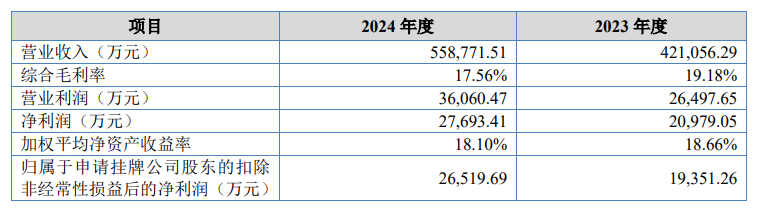
Core Viewpoint - Longxing Tianxia, a professional sports footwear manufacturer backed by major brands like Li Ning and Anta, has officially initiated its A-share listing process, aiming to list on the Shanghai Stock Exchange despite facing challenges such as high customer concentration and competitive pressures in the industry [1]. Group 1: Company Performance - Longxing Tianxia has shown steady growth in its financial performance, achieving a revenue of 4.211 billion yuan in 2023, with a net profit of 207 million yuan. The company expects a revenue increase of 32.71% to 5.588 billion yuan in 2024, with net profit rising to 278 million yuan [2][3]. - The company’s revenue structure indicates that running shoes are the primary source of income, contributing 2.068 billion yuan in 2024, accounting for 37% of total revenue [3]. Group 2: Production and Capacity - Longxing Tianxia has established a global production network with 27 factories across China, Vietnam, and Indonesia, employing a total of 27,458 staff, including 12,324 foreign employees. The company produced nearly 50 million pairs of footwear in 2024 [5]. - The company has been shifting production capacity overseas, with the sales proportion from its Vietnam base increasing from 25.68% in 2023 to 39.32% in 2024 [5]. Group 3: Industry Context - The Chinese sports footwear manufacturing industry has seen significant growth, with market size increasing from 23.4 billion yuan in 2019 to 47.8 billion yuan in 2023, reflecting a compound annual growth rate of 19.6%. The industry is expected to continue growing, potentially exceeding 70 billion yuan by 2028 [5]. - The industry is characterized by high competition and a trend towards specialization, which presents both opportunities and challenges for manufacturers like Longxing Tianxia [9]. Group 4: Customer Concentration and Risks - Longxing Tianxia faces risks associated with high customer concentration, with the top five clients accounting for 86.74% of revenue in 2023 and 88.86% in 2024. Li Ning is the largest client, contributing 24.76% of sales [7]. - The company’s gross profit margin has declined from 19.18% in 2023 to 17.56% in 2024, indicating pressure on profitability [10]. Group 5: Strategic Goals and IPO Plans - The primary goal of Longxing Tianxia's IPO is to leverage capital market resources to overcome development bottlenecks and expand production capacity in Vietnam and Indonesia, while also investing in smart and digital factory upgrades [11]. - The company acknowledges the risks associated with the IPO process, including the possibility of not passing the review or failing to issue shares, which could impact its market position [11].

资本市场的“冰雪奇缘”
Shang Hai Zheng Quan Bao· 2026-01-06 17:56
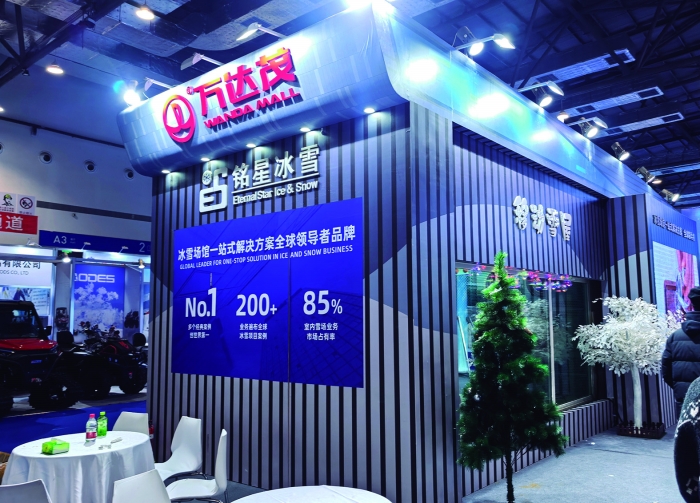
Core Insights - The ice and snow economy in China is evolving into a comprehensive industry, moving beyond the traditional winter season limitations, driven by policy support and consumer upgrades [5][6][14] - The market for ice and snow tourism is projected to reach 3.6 billion visitors and generate 450 billion yuan in revenue by the 2025-2026 winter season, with the overall ice and snow economy expected to exceed 1 trillion yuan by 2025 [8][10] Industry Growth - The ice and snow tourism demand is expanding, with a shift from passive avoidance of cold to active pursuit of winter activities, leading to longer stays and higher spending [7][8] - The number of operational ski resorts in China has reached 865, with indoor ski resorts increasing by 20% [10] Investment Opportunities - The ice and snow economy index includes 41 A-share listed companies, with a growth of over 16% in 2025, indicating a robust investment landscape [9] - Companies like Mingxing Ice and Snow Technology are experiencing over 30% annual growth in production value, driven by the demand for indoor ski facilities in southern cities [10] Consumer Trends - Consumers are increasingly seeking comprehensive vacation experiences that integrate leisure, entertainment, and wellness, rather than just skiing [7][8] - The demand for snow sports equipment is rising, with companies like Decathlon reporting strong performance in sales, reflecting a shift towards regular participation in snow sports [12] Operational Challenges - The industry faces challenges such as high energy consumption and complex maintenance of indoor ski facilities, necessitating innovative technologies and refined operations [15][16] - The conversion of casual participants into regular consumers remains a critical focus for the industry, as many only experience skiing once or twice a season [15][16] Talent Development - The development of professional talent in ice and snow sports is essential for the industry's growth, with an emphasis on training and educational initiatives [17]
一条瑜伽裤卖了20亿
3 6 Ke· 2026-01-06 11:07
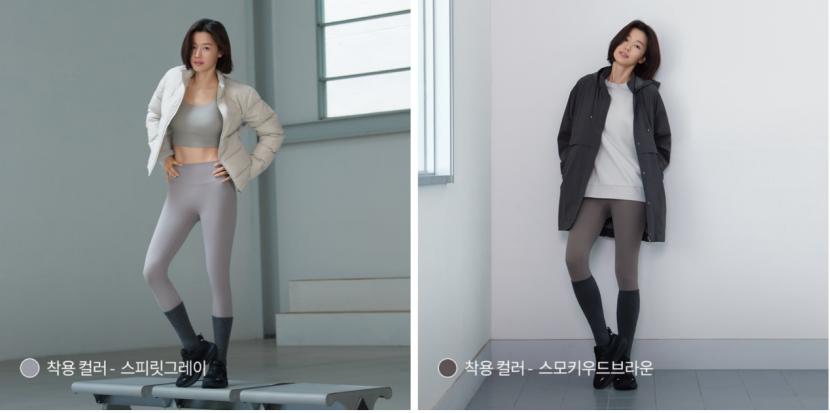
Group 1 - Bain Capital announced the acquisition of EcoMarketing, the parent company of Andar, for a total consideration of 500 billion KRW (approximately 2.4 billion RMB) [1] - Andar, known as the "Korean version of Lululemon," has become a prominent sportswear brand in South Korea, focusing on yoga and golf apparel, and has expanded its offerings to include men's clothing [2][4] - The acquisition will occur in two phases: first, Bain Capital will acquire 43.66% of the shares for 216.6 billion KRW (approximately 1 billion RMB), followed by a tender offer for the remaining 56.4% at a price of 16,000 KRW per share, which represents a 49.5% premium over the last closing price [2] Group 2 - Bain Capital has a history of successful investments in the consumer sector, including the transformation of Canada Goose into a luxury brand, which significantly increased its market value [4][5] - The consumer merger and acquisition landscape has been active, with notable transactions such as Sequoia China acquiring a controlling stake in Golden Goose and Starbucks selling 60% of its China business for $4 billion [7][8] - The current market conditions are seen as favorable for acquisitions, with many quality companies available at attractive prices due to market adjustments since 2022, leading to increased merger activity in the consumer sector [8][9]
一条瑜伽裤卖了20亿
投资界· 2026-01-06 07:45
Core Viewpoint - The article highlights the ongoing trend of mergers and acquisitions (M&A) in the consumer sector, emphasizing significant deals and the strategic movements of investment firms like Bain Capital in the Asian market [4][9]. Group 1: Recent M&A Activities - Bain Capital announced the acquisition of Andar's parent company, Echo Marketing, for a total consideration of 5000 billion KRW (approximately 2.4 billion RMB) [4]. - The acquisition will occur in two phases: first, Bain Capital will purchase 43.66% of shares for 2166 billion KRW (approximately 1 billion RMB), followed by a tender offer for the remaining 56.4% at a premium of 49.5% over the last closing price [5]. - Andar, known as the "Korean version of Lululemon," has seen its sales reach a historical high of 1358 billion KRW in the first half of 2025 [5]. Group 2: Market Trends and Insights - The consumer M&A landscape has been active, with notable transactions such as Sequoia China acquiring a controlling stake in the fashion brand Golden Goose, and Starbucks selling 60% of its China business for a total of $4 billion [9]. - The article notes that many high-quality companies are currently available at significant discounts due to market adjustments since 2022, making the current M&A environment attractive for investors [11]. - There is a growing sentiment among investors that the time for M&A in the Chinese market has arrived, driven by industry upgrades and increasing consolidation [10][11]. Group 3: Bain Capital's Strategy - Bain Capital has a history of successful investments in the consumer sector, including the acquisition of Canada Goose in 2013 for $250 million, which later saw a peak market value exceeding $7.8 billion [7]. - The firm also acquired a majority stake in the Japanese fashion and lifestyle group Mash for approximately 10 billion RMB, marking one of the largest PE acquisitions in Japan's fashion sector [7]. - Bain Capital's strategy appears to focus on identifying and capitalizing on undervalued assets in the consumer market, particularly in Asia [6][10].

运动品牌爱上“千平大店”?361°超品店落地逾百家,安踏等积极布局
Xin Lang Cai Jing· 2026-01-06 06:02
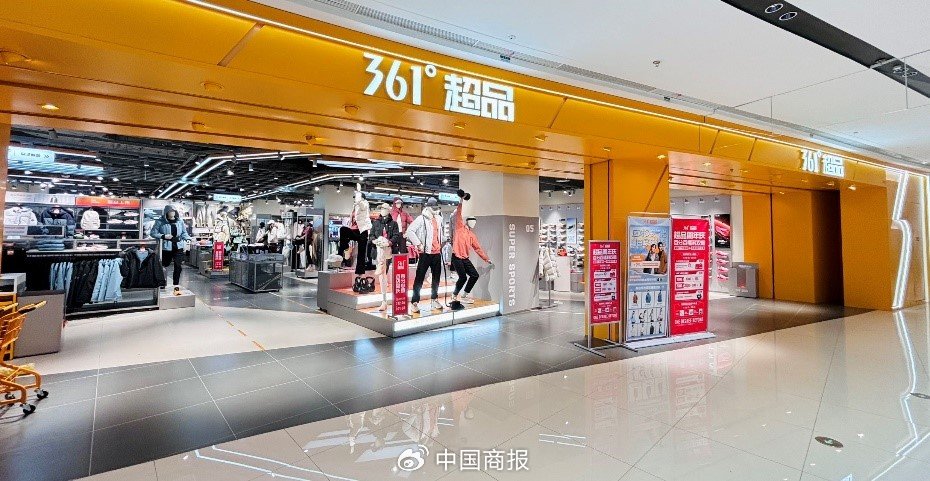
Core Insights - The article discusses the rapid expansion of 361°'s "Super Store" model, which has reached 126 locations across China, indicating a successful transition from concept validation to large-scale implementation within a year [1][3]. Group 1: 361° Super Store Expansion - 361° has launched its innovative retail format "Super Store," achieving a total of 126 stores, including 105 large format and 21 children's stores, since its introduction in 2024 [1][3]. - The "Super Store" model focuses on three consumer needs: immersive shopping experiences, one-stop shopping for families, and assurance of quality and professionalism in products [3][4]. - In 2024, 361° reported a revenue of 10.074 billion yuan, a 19.6% increase year-on-year, and a net profit of 1.149 billion yuan, also up by 19.5% [3][4]. Group 2: Market Trends and Competitive Landscape - The rise of the "Super Store" model reflects a broader trend in the retail industry, where large-format stores are becoming increasingly popular as they offer comprehensive shopping experiences [5][9]. - Other brands, such as Anta and Camel, are also adopting similar large-format strategies, with Anta's "Super Anta" and Camel's outdoor sports cities expanding their presence [6][8]. - The shift towards large stores is seen as a response to changing consumer preferences, with a focus on creating a cohesive shopping experience that integrates various product categories [9].

乐欣户外三闯港交所:收入“坐上过山车” 业务高度依赖欧洲市场
Xin Lang Cai Jing· 2025-12-31 10:24
Core Viewpoint - The company, Loxin Outdoor International Co., is facing challenges in its IPO prospects due to performance volatility, reliance on OEM/ODM models, and risks associated with related party transactions, despite holding a 23.1% share of the global fishing equipment market [1][7]. Performance Volatility - Loxin Outdoor's revenue has shown significant fluctuations, dropping from 818 million yuan in 2022 to 463 million yuan in 2023, before rebounding to 573 million yuan in 2024. Net profit decreased from 114 million yuan to 59.4 million yuan during the same period [2][8]. - In the first eight months of 2025, the company reported revenue of 460 million yuan, which is close to the total for 2023 but represents a 20% decline compared to the same period in 2022, indicating unstable recovery momentum [2][8]. - The gross margin improved from 23.2% in 2022 to 27.7% in the first eight months of 2025, primarily due to raw material cost control and increased self-manufacturing ratio, rather than enhanced brand premium capability [2][8]. Dependence on OEM/ODM - Over 90% of Loxin Outdoor's revenue comes from OEM/ODM models, leading to high customer concentration risk. The top five customers contributed more than 54% of revenue from 2022 to the first eight months of 2025 [3][9]. - The company has struggled to transition to its own brand (OBM) business, with OBM revenue share only increasing from 4.1% in 2022 to 7.2% in 2024, and then declining to 6.6% in the first eight months of 2025 [3][9]. Related Party Transactions - Loxin Outdoor has complex related party transactions with Taipusen Group, which is both a major customer and supplier. In the first eight months of 2025, sales to Taipusen accounted for 11.8% of revenue, while purchases from them made up 7.8% [4][10]. - The terms of transactions appear unbalanced, with a sales payment term of only 30 days compared to an industry average of 60 days, and a procurement payment term of 90 days, raising concerns about potential profit transfer [4][10]. Industry Competition and Regional Risks - The fishing equipment industry has a promising outlook, with the global market expected to reach 181.9 billion yuan by 2028. However, Loxin Outdoor's heavy reliance on the European market (75.5% of revenue in the first eight months of 2025) exposes it to geopolitical and economic fluctuations [5][11]. - Revenue from Europe decreased by 40.9% from 2022 to 2024, while growth in the Chinese market has been slow, with local revenue accounting for only 15.2% and declining by 1.8 percentage points [5][11]. IPO Prospects - Loxin Outdoor plans to use the funds raised for brand building, R&D innovation, and capacity upgrades. The success of its IPO will depend on three key breakthroughs: reducing related party transaction ratios, accelerating OBM business growth, and optimizing regional structure to capture growth in the Asian market [6][12]. - If the company fails to demonstrate substantial progress in its transformation post-IPO, investor patience may quickly diminish [6][12].
物流脱碳,货主企业应该怎么做?
Jing Ji Guan Cha Wang· 2025-12-31 10:12
Core Viewpoint - The transportation sector accounts for 15% of global greenhouse gas emissions in 2024, making it a major source of carbon dioxide. Despite some high-energy industries in China nearing peak emissions or showing a downward trend, emissions from the transportation sector continue to rise due to increasing demand [1]. Group 1: Industry Actions and Trends - Leading freight companies have initiated decarbonization actions, with 63% using new energy vehicles, 41% experimenting with clean fuels in shipping or air transport, and 77% focusing on improving transport efficiency [2]. - Companies like Decathlon and Geely are increasing the application and range of new energy trucks, supported by the development of an integrated infrastructure network for rail, sea, and inland shipping [2]. - Over 90% of freight companies disclose their logistics carbon emissions, and 41% collect data on logistics suppliers' activities or emissions [2]. Group 2: Challenges in Decarbonization - The logistics industry faces significant challenges in decarbonization, as most efforts are still in the early stages, limited to specific routes or areas, lacking large-scale application [2]. - Current climate-related disclosure regulations do not provide clear requirements for reporting greenhouse gas emissions from logistics activities, leading to limited information disclosure from leading companies in green freight [2]. Group 3: Recommendations for Improvement - Companies are encouraged to reach a consensus on low-carbon logistics, translating commitments and strategies into actionable steps, and requiring low-carbon transport from logistics providers [3]. - Establishing a green logistics system is essential for companies to achieve net-zero emissions by reducing emissions from logistics activities and collaborating with logistics suppliers [3]. - The report suggests that companies should adopt measured data from logistics service providers to improve the accuracy of carbon accounting and set quantifiable decarbonization targets for logistics activities [4]. Group 4: Collaborative Efforts - To transition from strategic planning to actual emission reductions, collaboration among companies, logistics partners, policymakers, industry organizations, and society is necessary [5]. - Five recommendations are proposed: actively disclose best practices in green logistics, enhance carbon accounting and disclosure in supply chain logistics, set decarbonization targets covering the entire value chain, incorporate green performance into logistics service provider management, and expand the scale of green freight projects to reduce the green premium of low-carbon transport tools and technologies [5].
物流脱碳机遇可观 龙头引领亟待扩展
Zhong Guo Fa Zhan Wang· 2025-12-31 08:03
Core Insights - The report highlights that leading cargo companies are leveraging China's advancements in renewable energy technology and infrastructure to implement logistics carbon accounting, switch to electric trucks, and adopt multimodal transport models [1][2] Group 1: Green Logistics Initiatives - 63% of evaluated companies have adopted new energy vehicles for logistics, while 41% are experimenting with clean fuels in shipping or air transport [2] - 77% of companies are focused on improving transportation efficiency, with firms like Decathlon and Geely increasing the application and range of new energy trucks [2] - Over half of the companies are also paying attention to emissions reduction in warehousing [2] Group 2: Emission Data Disclosure - More than 90% of cargo companies disclose their logistics-related carbon emissions, with 35% of companies like VF and Inditex using ISO14083 or GLEC frameworks for more accurate carbon accounting [2] - 41% of companies collect data on logistics suppliers' activities or emissions, with firms such as Puma and Lenovo encouraging suppliers to disclose climate information [2] Group 3: Recommendations for Scaling Decarbonization Efforts - The report suggests creating a supportive external environment to help leading companies scale their decarbonization pilot projects [3] - It recommends sharing best practices from leading companies to encourage more firms to adopt similar strategies [3] - Companies are advised to establish quantifiable decarbonization targets for logistics activities and incorporate carbon intensity metrics into supplier evaluations and procurement decisions [3]





