Northvolt

Search documents
汽车早报|零跑完成26亿元内资股增发 极星上半年净亏损11.93亿美元
Xin Lang Cai Jing· 2025-09-04 00:41
Group 1: Automotive Market Performance - In August, the retail sales of passenger cars in China reached 1.952 million units, a year-on-year increase of 3% and a month-on-month increase of 7% [1] - Cumulative retail sales from January to August amounted to 14.698 million units, reflecting a year-on-year growth of 9% [1] - Wholesale sales for the same period were 2.409 million units, up 12% year-on-year and 8% month-on-month, with cumulative wholesale sales reaching 17.934 million units, also a 12% increase year-on-year [1] Group 2: Company Financial Activities - Leap Motor completed a domestic stock issuance, raising a total of 2.6 billion yuan, with four state-owned shareholders participating [2] - Polestar reported a revenue of $1.423 billion for the first half of 2025, a 56.5% increase year-on-year, but incurred a net loss of $1.193 billion, compared to a loss of $544 million in the same period last year [8] Group 3: New Product and Technology Developments - Xiaopeng Motors announced a limited-time financial policy offering 0% interest, 0 down payment, and 0 fees for five years, with a maximum subsidy of 55,700 yuan [3] - NIO stated it has developed the capability for autonomous parking and will release the feature in accordance with regulatory requirements [4] - Hyundai achieved record sales in the U.S. market for August, with 88,523 units sold, a 12% year-on-year increase [12] Group 4: Strategic Investments and Expansions - Toyota announced plans to produce a new pure electric vehicle in Europe, marking its first electric model produced at its European plant [9] - The company will invest approximately 680 million euros in expanding its Kolin plant, increasing the area to accommodate new vehicle and battery production [10] Group 5: Market Trends and Competitor Movements - Ford's U.S. market sales in August increased by 3.9% year-on-year, with electric vehicle sales rising by 19.3% [11] - Waymo is expanding its operations into Denver and Seattle, furthering its presence in the U.S. market [12] - The Quebec government withdrew its funding from Northvolt's battery project, resulting in a total investment loss of $270 million [13]




欧洲又倒了一家电池企业
鑫椤锂电· 2025-09-03 09:16
Core Insights - Voltstorage, a German iron-salt battery company, announced its impending closure due to unsuccessful fundraising efforts, aiming to avoid bankruptcy while still having funds available [1] - The company's chief technology officer expressed disappointment over the failure to bring iron-salt batteries to market as an efficient and sustainable storage solution [1] Group 1: Company Development - Voltstorage's financing history includes backing from Korys, Bavarian Capital, and EIT InnoEnergy, among others, to commercialize vanadium redox flow battery technology and develop iron-salt battery technology [2] - The company had planned to complete pilot installations of iron-salt batteries by early 2027 and had received project letters of intent worth over €1 billion from buyers [2] Group 2: Market Challenges - In July, a Munich court initiated self-managed bankruptcy proceedings due to "excessive debt," highlighting the financial difficulties faced by the company [3] - The failure of Northvolt, seen as Europe's equivalent to CATL, has created investor skepticism, complicating Voltstorage's fundraising efforts [3] - The closure of Voltstorage serves as a warning for the global battery industry regarding the need to balance funding requirements with sustainable development [3]


X @Bloomberg
Bloomberg· 2025-09-02 19:28
The Quebec government has walked away from Northvolt’s Canadian electric vehicle battery plant, closing the chapter on a high-profile project derailed by the company’s bankruptcy https://t.co/PRVtNVsAOt ...
锂电行业洗牌加速
投中网· 2025-08-29 02:35
Core Viewpoint - The article discusses the significant shift in the lithium battery industry, highlighting the overcapacity and the urgent need for Chinese lithium battery companies to seek international capital markets, particularly through IPOs in Hong Kong, to address financial pressures and enhance global competitiveness [5][7][14]. Group 1: Market Dynamics - The Hong Kong stock market is becoming a strategic supply station for lithium battery companies, with a nearly threefold increase in IPO fundraising in Q1 2025 compared to the previous year, marking the best start since 2021 [5]. - As of June 2025, there were 240 IPO applications on the Hong Kong Stock Exchange, nearly double the number from 2024, with lithium battery companies leading the charge [5][8]. - The global demand for power batteries is projected to reach 1000-1200 GWh by 2025, while the total planned capacity in the industry is as high as 4800 GWh, indicating a severe supply-demand imbalance [8]. Group 2: Financial Pressures - The lithium battery industry is experiencing structural pressures, including severe overcapacity, intense price competition, accelerated technological iteration, and tight cash flow, pushing companies to seek foreign capital [7][9]. - Many companies are facing deteriorating cash flow, with an average collection period of 103 days and a payment period of 255 days, leading to significant cash flow challenges [8]. - The average debt ratio for some companies exceeded 70% in the first half of 2025, indicating a growing liquidity crisis that necessitates new financing channels [9]. Group 3: Globalization Strategy - The urgent need for a globalization strategy is driving Chinese lithium battery companies to international capital markets, as local production is increasingly required due to geopolitical factors [11][12]. - The construction of localized production facilities in Europe, Southeast Asia, and North America is becoming essential for Chinese companies to integrate into global supply chains and meet local production requirements [11][12]. - The opportunity presented by the slow development of local battery companies in Europe and the U.S. creates a market window for Chinese firms to establish a presence and benefit from substantial local funding [12]. Group 4: Capital Market Changes - The tightening of IPO approvals in the A-share market has led many companies to seek more certain alternatives, such as the Hong Kong market, which offers a more accommodating environment for new listings [14]. - The Hong Kong capital market has shown greater inclusivity and efficiency, with recent regulatory changes aimed at expediting the IPO process for technology companies [14]. - Differences in valuation logic between A-share and Hong Kong markets influence companies' decisions, with Hong Kong investors placing a higher value on global competitiveness and long-term technological barriers [16][17]. Group 5: Strategic Implications - The choice to list in Hong Kong is not merely a response to overcapacity and financing pressures but also a strategic move to align with global capital narratives and enhance brand reputation [18]. - By entering the international capital market, companies can improve governance transparency and brand image, which are crucial for long-term global competitiveness [18].



利润骤降67% 保时捷叫停自研电池并裁员
Zhong Guo Qi Che Bao Wang· 2025-08-28 01:15
Core Viewpoint - Porsche is restructuring its high-performance battery subsidiary Cellforce due to weak demand for electric vehicles, abandoning its self-developed battery production plans and transforming Cellforce into an independent R&D department [1][3]. Group 1: Market Challenges - Despite strong performance in Europe, Porsche's electric vehicle sales in China and the U.S. have fallen short of expectations, leading to the halt of the independent battery project Cellforce [3]. - The project, which aimed to establish a 20GWh battery capacity and was expected to be used in high-performance electric sports cars post-2025, has faced significant setbacks, including fluctuating technology routes and extended R&D cycles [3]. - Porsche's profitability has been under pressure, with net profit for 2024 projected at €3.595 billion, a 30.3% decline year-on-year, and a sales return rate of 14.1%, down from 18% in 2023 [5]. Group 2: Financial Performance - In the first half of the year, Porsche's operating profit dropped to €1.01 billion, a 67% year-on-year decline, while net profit fell to €718 million, down 66.6% [5]. - The sales return rate plummeted from 15.7% in the previous year to 5.5%, nearly reverting to levels seen a decade ago, deviating significantly from the previously set "Road to 20" target of 18%-20% [5]. - The decision to exit the Cellforce battery project resulted in an estimated special loss of around €500 million, including an asset write-down of approximately €295 million [6]. Group 3: Strategic Adjustments - Porsche is adjusting its electrification strategy, moving from an aggressive approach to a more balanced one, planning to maintain internal combustion engine, hybrid, and pure electric powertrains simultaneously until the mid-2030s [7]. - The company aims to have electric vehicles account for 80% of sales by 2030, but as of the first half of this year, electric vehicles only made up 36% of total sales, with a notable 57% in Europe [7]. - Other luxury brands, such as Mercedes-Benz and Audi, are also revising their electrification timelines, focusing more on hybrid and efficient internal combustion engine technologies [7].

日媒:全球电池产业淘汰赛开始,欧洲对中国企业依赖加深
Guan Cha Zhe Wang· 2025-08-25 02:16
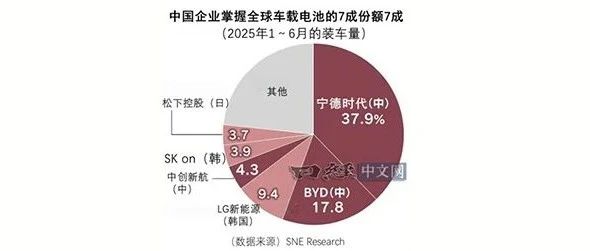
Group 1 - The global battery production capacity is projected to reach 3930 GWh by 2025, significantly exceeding the demand of 1161 GWh, indicating a capacity that is 3.4 times the actual demand [1] - The global battery installation volume in the first half of this year reached 504.5 GWh, marking a year-on-year increase of 37.3%, which is 15 percentage points higher than the growth rate of the previous year [2] - Chinese companies dominate the global battery market, holding nearly 70% of the market share, with six out of the top ten battery manufacturers being Chinese [2] Group 2 - CATL leads the global battery installation with 190.9 GWh, maintaining its position for eight consecutive years, and has a market share of 37.9% [2] - BYD ranks second with an installation volume of 89.9 GWh and a remarkable growth rate of 58.4%, capturing 17.8% of the market share [2] - Other notable Chinese battery manufacturers include Zhongxin Innovation, Guoxuan High-Tech, Yiwei Lithium Energy, and Honeycomb Energy [2] Group 3 - Despite a decline in domestic market share, Chinese companies are expanding their presence in international markets, with significant growth in battery installations outside China [4] - In the U.S., battery supply is in excess, with production capacity reaching 4.8 times the market demand, leading to a reassessment of investment strategies by companies like Panasonic [5] - Chinese manufacturers, including BYD and CATL, are increasing investments in Europe, while Western companies are scaling back their investments in battery production [6]

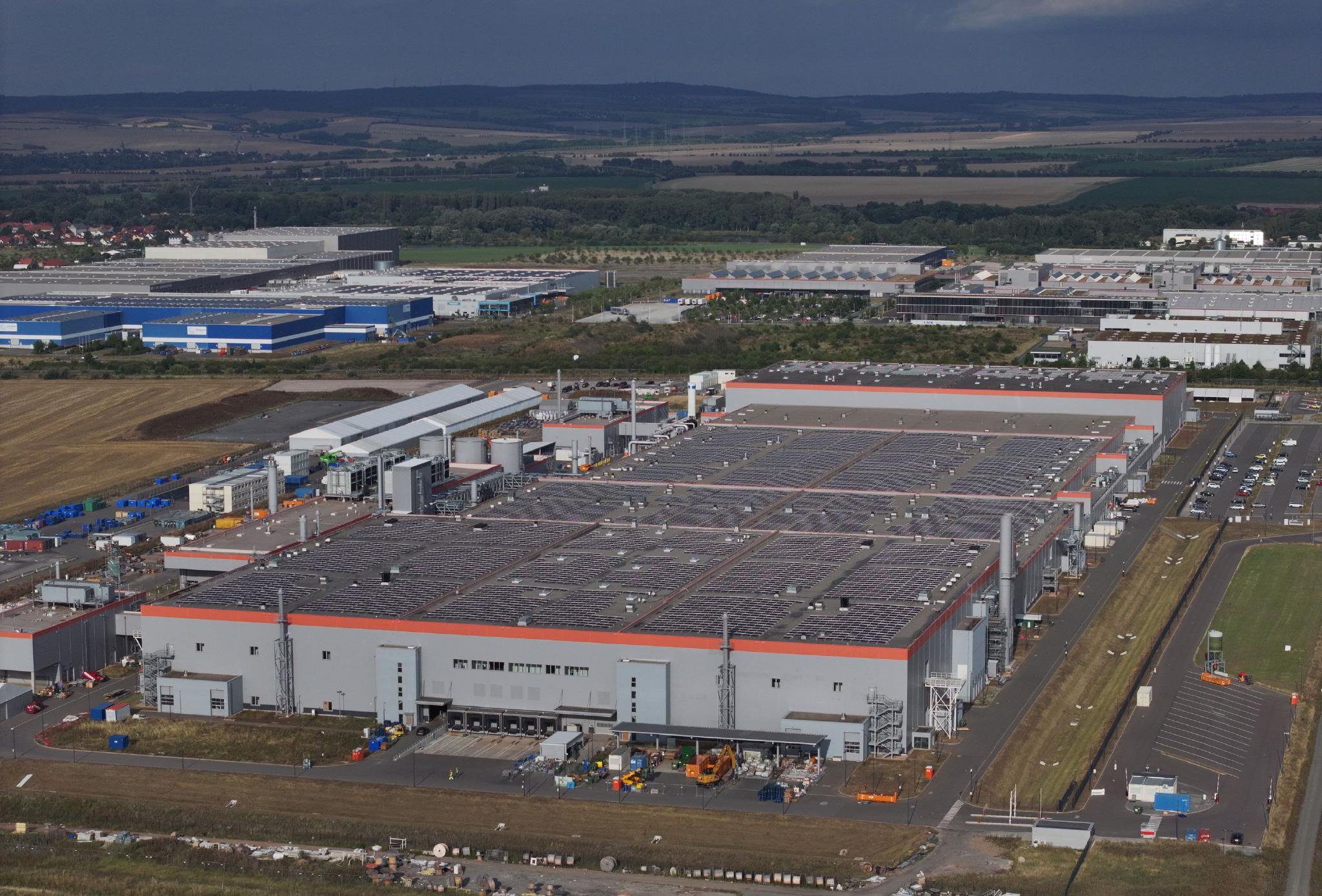
全球EV电池供过于求,达到3.4倍
日经中文网· 2025-08-21 03:07
Core Insights - The global EV battery production capacity is projected to reach 3930 GWh by 2025, significantly exceeding the demand of 1161 GWh, resulting in a supply-demand ratio of 3.4 times [2][4] - China's EV battery production continues to increase, while major battery manufacturers in Japan and South Korea are scaling back their investment plans due to slowing EV market growth [2][4] Group 1: Market Dynamics - The supply-demand imbalance is expected to persist, with supply exceeding demand by over three times until 2026 and projected to remain at 2.4 times by 2030 [4] - Chinese companies hold a dominant market share of 70% in the global EV battery sector, with CATL and BYD leading the market [4] Group 2: Regional Insights - In North America, the supply surplus is particularly severe, with projections indicating a ratio of 4.8 times by 2025 [5] - The Inflation Reduction Act (IRA) has incentivized EV production in North America, leading to increased battery investments, but the slowdown in EV demand has complicated these efforts [5] Group 3: Company Strategies - Panasonic has postponed the full operation of its new EV battery factory in the U.S. due to low sales from major client Tesla, indicating a cautious approach to scaling production [5] - Automakers like Toyota and Honda are delaying their battery factory projects in response to market conditions, reflecting a broader trend of reduced investment in the sector [5] Group 4: Price Trends and Industry Changes - The average price of batteries is expected to drop to $111 per kWh in 2024, a 26% decrease from 2023, with further declines anticipated by 2026 [5] - The battery industry is experiencing consolidation, with companies like Northvolt filing for bankruptcy, while Chinese manufacturers continue to invest and expand their presence in Europe [5]
全球锂电持续整合 “欧洲的宁德时代”主要资产要被收购,曾是天齐锂业长协客户
Mei Ri Jing Ji Xin Wen· 2025-08-13 12:29
Group 1 - Lyten Energy has announced the acquisition of the majority assets of bankrupt battery manufacturer Northvolt, which includes various facilities and intellectual property valued at approximately $5 billion [2][3] - Northvolt, founded in 2016, had previously attracted significant investments exceeding $15 billion and secured orders totaling $55 billion from major automotive companies [1][3] - The acquisition is seen as a strategic move for Lyten to enhance its position in the clean battery manufacturing sector in North America and Europe, especially as demand for lithium-sulfur batteries is increasing [3][5] Group 2 - The acquisition includes 16 GWh of existing battery capacity and over 15 GWh of capacity under construction, with plans to expand to over 100 GWh [2] - Northvolt's production faced bottlenecks, leading to its bankruptcy filing in March 2023, despite initial expectations of becoming "Europe's CATL" [3][5] - Lyten's focus on lithium-sulfur battery technology, which differs from mainstream lithium-ion technologies, aims to overcome performance limitations and is expected to find initial commercial applications in sectors like drones and energy storage [5]

Northvolt“易主”美国电池企业
高工锂电· 2025-08-12 10:57
Core Insights - The article discusses the acquisition of Northvolt's remaining assets by Lyten, a US lithium-sulfur battery startup, following Northvolt's bankruptcy earlier this year. The assets are valued at approximately $5 billion and include existing and planned battery production capacities in Sweden and Germany, along with related intellectual property and R&D centers [3][4]. Group 1: Acquisition Details - Lyten has previously acquired Northvolt's battery factory in the US and its energy storage system manufacturing facility in Poland, indicating a strategic move to enhance its production capabilities [3][4]. - The acquisition is primarily funded by private investors' equity investments in Lyten, although the exact purchase price remains undisclosed [3]. Group 2: Market Potential - Lyten's lithium-sulfur batteries have already been commercialized in the drone and defense markets, with plans to expand into electric vehicles, data centers, and space stations [4]. - The US energy storage battery shipment is projected to grow from 78 GWh in 2024 to 400 GWh by 2030, while Europe’s shipments are expected to increase from 50 GWh to 160 GWh in the same period [5]. Group 3: Competitive Landscape - Northvolt aimed to capture 25% of the European market by 2030, equating to an annual production capacity of at least 150 GWh. The question remains whether Lyten can successfully inherit Northvolt's legacy and establish itself as a leading battery manufacturer in the US and Europe [5]. - Despite tariffs hindering Chinese energy storage companies from entering the US market, several US-based integrators have begun sourcing batteries from China, creating opportunities for Lyten [5]. Group 4: Product Differentiation - Lyten's lithium-sulfur batteries are positioned as a differentiated product compared to nickel-cobalt-manganese (NCM) batteries from Japanese and Korean firms and lithium iron phosphate (LFP) batteries from Chinese companies. Lyten's batteries utilize 3D graphene and are free from cobalt and nickel [6]. - The theoretical energy density of Lyten's lithium-sulfur batteries is 2600 Wh/kg, offering advantages in cost and environmental friendliness, making them suitable for applications in electric vehicles, energy storage systems, and aerospace [6]. Group 5: Strategic Focus - Unlike Northvolt, which had a strong focus on power business but faced challenges with product performance and yield, Lyten is concentrating on energy storage and has established a localized core battery supply chain, enhancing its risk resilience [6]. - The evolving global trade landscape and increasing competition in the lithium battery sector, including shifts from major players like LG and SDI towards LFP, indicate a dynamic market environment where Lyten's acquisitions may catalyze a new phase of competition [6].
每日速递| 电池级碳酸锂创逾4个月新高
高工锂电· 2025-08-11 12:09
Key Points - The article discusses significant developments in the lithium battery industry, including major projects, new standards, and market trends [2][3][6][8][10]. Group 1: Major Projects - Nandu Power has signed the world's largest semi-solid battery energy storage project with a total capacity of 2.8 GWh, utilizing its self-developed 314Ah semi-solid storage batteries. The project includes three independent storage projects, with capacities of 1.2 GWh in Shenzhen and two projects of 800 MWh each in Shanwei [2]. - Lyten, a US lithium-sulfur battery manufacturer, has expanded its acquisition of Northvolt's core assets, including battery super factories and R&D centers in Sweden and Germany, with the potential to increase production capacity to over 100 GWh [10][11]. Group 2: New Standards - A new national standard for the transportation of lithium batteries, effective February 1, 2026, introduces a three-tier classification system (A, B, C) to enhance risk management and packaging requirements for different battery states, addressing transportation challenges in the electric vehicle supply chain [3]. Group 3: Market Trends - The price of battery-grade lithium carbonate has increased by 2,560 yuan to 74,500 yuan per ton, marking a four-month high, with a cumulative increase of 13,180 yuan over the past 30 days. Similarly, battery-grade lithium hydroxide has risen by 1,520 yuan to 67,500 yuan per ton, also reaching a three-month high [6]. Group 4: Innovations and Research - Fulu New Materials has completed its angel round of financing, focusing on high-performance solid-state battery lithium metal anode materials, aiming to enhance battery energy density and cycle stability [8]. - A breakthrough in solid-state lithium battery technology has been achieved by the China National Nuclear Corporation and Tsinghua University, revealing key defects in traditional single-layer cathodes and providing experimental evidence for uniform lithium concentration distribution [8].