Shein

Search documents
专访yehyehyeh创新社创始人叶晓薇:2026,可持续时尚告别“漂绿”,走向“深绿”
Xin Lang Cai Jing· 2026-01-10 08:10
Core Insights - The year 2025 marks a pivotal point for the global fashion industry, transitioning sustainable fashion from a marketing add-on to a necessity for survival in the mainstream market due to the enforcement of the EU's Sustainable Product Ecodesign Regulation (ESPR) and various anti-greenwashing laws [1][2] Group 1: Changes in ESG Practices - The fashion industry is shifting from vague carbon reduction promises to comprehensive data-driven carbon management across the entire supply chain, driven by the upcoming ESPR [2][3] - The adoption of circular economy practices, particularly textile-to-textile (T2T) innovations, is becoming a major focus, with significant collaborations emerging to integrate new materials into supply chains [2][3] - The industry's mindset is evolving from merely increasing the production of preferred materials to enhancing the underlying production systems, which is crucial for making a real environmental and social impact [3] Group 2: Regulatory Pressures and Transparency - Recent policies are pushing the fashion and textile industry’s ESG requirements from voluntary practices to mandatory compliance, with the EU's Consumer Empowerment Directive and Green Claims Directive establishing stricter standards for environmental claims [3][4] - Fast fashion platforms like Shein and Temu are now facing systemic external pressures that require transparency, compliance, and verifiability, necessitating significant investments in certification systems and digital disclosures [4][5] Group 3: Consumer Engagement and Market Trends - There is a notable shift in consumer focus from single material considerations to deeper supply chain decarbonization and circular models, as regulations demand full lifecycle information disclosure [5][6] - The phenomenon of "green hushing" is emerging, where brands are opting for silence on their sustainability efforts due to regulatory pressures, which could lead to a lack of transparency and consumer awareness [5][6] - Brands are increasingly collaborating with suppliers to provide green energy, indicating a shift towards collaborative decarbonization efforts across the entire supply chain [6][7] Group 4: Future Trends in Sustainable Fashion - The three key trends anticipated in the ESG space for the fashion industry over the next three years are circular economy, collaborative intelligence (AI), and nature-based solutions (NbS) [8][9][10] - Circular economy practices are seen as essential for addressing resource depletion and waste crises, while AI and digital tools are necessary for efficient management of complex supply chain data [9][10] - Nature-based solutions emphasize the importance of regenerative agriculture and biodiversity protection as foundational elements for restoring the relationship between the fashion industry and the planet [11]
5 Biggest Benefits of Trump’s Tariffs in 2025
Yahoo Finance· 2026-01-09 14:51
Group 1: Economic Impact of Tariffs - Businesses and consumers began feeling the effects of President Trump's tariffs in mid-2025, leading to economic uncertainty and inflation, but some experts believe the U.S. may see advantages as stability returns [1] - The tariff environment has required a major reorientation of distributors and resellers, but there is now a sense of stability regarding tariffs for the next year [2] - Domestic manufacturers are expected to benefit from reduced competition and increased pricing power due to tariffs impacting foreign firms [3] Group 2: Sector-Specific Effects - Sectors such as electronics, beauty products, home goods, toys, and clothing are already experiencing impacts from tariffs, with the "de minimis" tariff rule affecting offshore retailers like Shein and Temu [2] - Shipping and logistics companies face increased processing workloads due to tariffs, which adds costs and slows delivery times [3] Group 3: Consumption and Environmental Considerations - Tariffs may lead to reduced consumption in the U.S., which could positively impact environmental and sustainability efforts [4] - There is an expectation of shrinkage in the number of units consumed by Americans and a reduction in diversity of options available [5]
拉美本地化元年:中国企业的新生
创业邦· 2026-01-08 10:33
Core Viewpoint - The article emphasizes that 2025 marks a significant turning point for Chinese businesses entering the Latin American market, particularly in e-commerce, driven by changing consumer behaviors and increasing local investments by Chinese companies [7][12][19]. Group 1: Market Dynamics - Latin America is currently the fastest-growing e-commerce market globally, with a projected growth rate of 12.2% in 2025, significantly outpacing the global average [12]. - The e-commerce penetration rate in Latin America is expected to reach approximately 12%-15% in 2025, indicating substantial growth potential compared to China's over 45% penetration rate [12]. - Major markets like Argentina, Brazil, and Mexico will continue to lead the region's growth, accounting for over 84% of total retail e-commerce sales [15]. Group 2: Consumer Behavior - Latin American consumers are shifting from merely completing online transactions to more rational and value-driven purchasing decisions, favoring practicality and cost-effectiveness over brand prestige [17][18]. - The influence of traditional search engines is declining, with social media and direct engagement becoming crucial for consumer trust and conversion [18]. - The trend of "functionality consumption" is rising, with Chinese brands gaining loyalty through clear product parameters and reliable local after-sales service [18]. Group 3: Business Opportunities - The article highlights that 2025 is witnessing a surge in Chinese businesses actively entering the Latin American market, moving from a phase of observation to tangible operations [15][19]. - The demand for high-quality, cost-effective products remains unmet in the Latin American market, presenting a significant opportunity for Chinese companies [19]. - Trade-type sellers, who quickly sell products sourced from China, dominate the market, while factory-direct D2C brands are expected to grow in the long term [21]. Group 4: Localization Strategies - Chinese companies are increasingly focusing on localization, adapting to local cultures, languages, and consumer preferences to ensure long-term success in Latin America [34][38]. - The integration of local production and supply chains is becoming a trend, with companies like Shein investing in local manufacturing to enhance competitiveness and create jobs [40]. - The article notes that successful market entry requires understanding local regulations and consumer behavior, emphasizing the importance of building trust and relationships in business [43][49]. Group 5: Future Outlook - The Latin American market is expected to undergo significant changes in 2026, with Mexico stabilizing its market conditions and Brazil experiencing tax reforms and increased compliance requirements [23]. - The potential for growth in Argentina is notable due to less competition and high local prices, which Chinese products can help mitigate [23]. - Overall, the article suggests that Latin America is evolving from a mere opportunity to a critical market for Chinese enterprises, necessitating proactive engagement and investment [24][49].


Meta Cuts Manus Free From China, As Regional Lender Gets Premium Bailout - Meta Platforms (NASDAQ:META)
Benzinga· 2026-01-07 12:25
Group 1: Meta's Acquisition of Manus - Meta's acquisition of AI startup Manus is valued between $2 billion and $3 billion, explicitly excluding Manus' Chinese operations [4][5] - Manus, originally based in both Beijing and Singapore, is now officially headquartered only in Singapore, indicating a trend of Chinese tech companies relocating to avoid regulatory challenges [5][7] - This move reflects a broader trend of Chinese entrepreneurs seeking to establish businesses outside of Mainland China to escape heavy regulation, similar to the crypto industry's exodus [7][8] Group 2: Weihai Bank Bailout - Weihai Bank received a 1 billion yuan ($140 million) investment from a local government vehicle, purchasing shares at a premium rather than the typical discount [10][11] - The premium purchase is seen as a strategy to bolster confidence in the bank and prevent panic among depositors, highlighting the influence of government policy on state-owned enterprises [11][13] - The local government's intervention aims to improve the bank's Tier 1 capital ratio while addressing the challenges posed by non-performing loans and the post-Covid economic environment [12][13]


韩国版lululemon被收购,瑜伽服创业风口已过
3 6 Ke· 2026-01-07 01:59
Core Insights - The entrepreneurial stories of brands resembling lululemon in different markets are diminishing, as evidenced by the acquisition of the Korean yoga apparel brand andar by Bain Capital, with an estimated valuation of around 2 billion RMB [1][5] - Similar to the case of MAIA ACTIVE, which was acquired by Anta Group, the trend indicates a closing window for new entrants in the yoga apparel market [1][12] Group 1: Market Dynamics - andar, founded in 2015, has surpassed MAIA ACTIVE in scale, with its parent company Eco Marketing reporting Q3 revenue of 117.8 billion KRW and operating profit of 15.5 billion KRW, marking a historical quarterly high [5][7] - The brand has successfully positioned itself with lower prices and designs tailored for Asian women, capitalizing on the growing fitness culture in Korea [7][9] - The entry of lululemon into the Korean market in 2024 has created a competitive landscape, as andar had already established its presence during the previous decade [7][9] Group 2: Challenges Faced by Brands - Both andar and MAIA ACTIVE face challenges despite their unique positioning, as they are caught in a competitive environment with high-end brands like lululemon and low-end "white label" yoga apparel [9][12] - MAIA ACTIVE's mid-range positioning has led to difficulties in scaling, as reliance on e-commerce has proven insufficient, necessitating the opening of physical stores, which brings additional costs and challenges [9][12] - The overall trend indicates that many emerging yoga apparel brands are struggling, with some like Outdoor Voices undergoing significant restructuring and others like Particle Fever facing sales pressures [12][14] Group 3: Industry Trends - The yoga apparel market is witnessing a head-to-head competition among international brands, with major players like Nike and Adidas expanding their yoga product lines [14][16] - The saturation of the yoga apparel market is prompting brands to explore new opportunities in outdoor and other athletic segments, as seen with brands like Outopia and JSC [17][19] - The narrative of "downstream" and "alternative" brands continues, but the premium brand value remains largely with international players, indicating a shift in the entrepreneurial landscape for domestic brands [19]


Airwallex to invest in Netherlands as it ramps up Europe shift – report
Yahoo Finance· 2026-01-06 12:21
Group 1 - Airwallex plans to invest approximately $234.3 million in the Netherlands over the next five years as part of its strategy to expand in Europe, moving away from its traditional focus on the Asia-Pacific region [1][3] - The company aims to increase its staff in Amsterdam by 60%, reaching around 70 full-time employees by the end of 2026 [1] - Airwallex has surpassed $1 billion in annual recurring revenue and is preparing for a potential initial public offering in 2026, although it has not confirmed its listing plans [3] Group 2 - Established in 2015, Airwallex operates a cross-border payments platform that facilitates international transfers, multi-currency accounts, and online payment processing [2] - The firm has raised significant capital, including $300 million in May 2025, which increased its valuation to over $6 billion, followed by a Series G round that secured $330 million at an $8 billion valuation [2] - As of October 2025, Airwallex serves over 150,000 customers, including notable clients like Shein, Bolt, TikTok, and Canva, and competes with European payment providers such as Adyen and Mollie [4]
拉美本地化元年:中国企业的新生
3 6 Ke· 2026-01-06 09:17
Group 1 - The core viewpoint of the articles highlights the increasing presence and investment of Chinese companies in Latin America, particularly in Brazil, marking 2025 as a pivotal year for this trend [4][5][8][9]. - The Latin American e-commerce market is experiencing rapid growth, with a projected growth rate of 12.2% in 2025, significantly outpacing the global average [9][12]. - The shift in consumer behavior in Latin America is evident, with a move towards more rational and value-driven purchasing decisions, favoring functionality over brand prestige [15][14]. Group 2 - Chinese companies are increasingly localizing their operations in Latin America, focusing on understanding local cultures and consumer needs, which is essential for long-term success [29][31][32]. - The integration of local production and supply chains is becoming a trend, with Chinese firms investing in local manufacturing to reduce costs and enhance market presence [34][33]. - The digital economy in Brazil is supported by a high level of internet usage, with Brazilians spending an average of 5 hours and 25 minutes daily on social media, indicating a ripe environment for e-commerce growth [26][27]. Group 3 - The competitive landscape in Latin America is evolving, with trade-based sellers currently dominating, but there is potential for D2C brands to gain long-term advantages through local production [19][20]. - The regulatory environment in countries like Mexico and Brazil is stabilizing, which could provide growth opportunities for compliant businesses [20][21]. - The cultural nuances of trust and social interaction play a significant role in business operations in Latin America, necessitating a tailored approach for foreign companies [38][39].


跨境电商的这一年:关税、贸易战、驶离美国
Xin Lang Cai Jing· 2026-01-05 15:37
Core Viewpoint - The cross-border e-commerce industry is facing significant challenges in 2025 due to escalating tariffs and stricter regulations, leading to increased operational costs and uncertainty for sellers [2][3][4]. Group 1: Tariff and Regulatory Changes - In January 2025, the U.S. initiated a review of trade deficits and tariff structures, leading to a series of tariff increases on Chinese goods, culminating in a total tariff rate of 145% by April [4][5]. - The U.S. also eliminated the tax exemption for small packages valued under $800, impacting many cross-border sellers targeting the U.S. market [4][6]. - Other countries, including the EU and Japan, are also planning to impose tariffs on low-value imports starting in 2026, indicating a global trend towards stricter trade policies [6]. Group 2: Impact on Sellers - The increased tariffs have made it difficult for many sellers to maintain profitability, with some reporting that the cost of tariffs has rendered certain products unviable for sale [7]. - Sellers are now facing higher operational costs due to new tax regulations, which could compress profit margins significantly, especially for low-margin products [6][7]. - The need to adapt to these changes has led sellers to seek ways to optimize supply chains and shift focus towards higher-value products [8]. Group 3: Industry Evolution - The cross-border e-commerce sector is transitioning from a phase of rapid growth to one of refined operations, with platforms actively filtering out low-quality sellers [10][12]. - Major platforms like Temu and TikTok Shop are increasing entry barriers for sellers, indicating a shift away from the "low-price" competition model [11][12]. - The industry is witnessing a consolidation phase where only those with robust operational capabilities and compliance awareness will thrive [10][19]. Group 4: Strategic Shifts - Platforms are increasingly focusing on localizing their operations to better serve overseas markets and mitigate tariff impacts [20]. - The use of AI tools is becoming a key growth driver, with platforms enhancing their efficiency and marketing capabilities through advanced technologies [22][27]. - The competitive landscape is evolving, with platforms moving towards long-term strategies rather than relying solely on price wars [18][19].

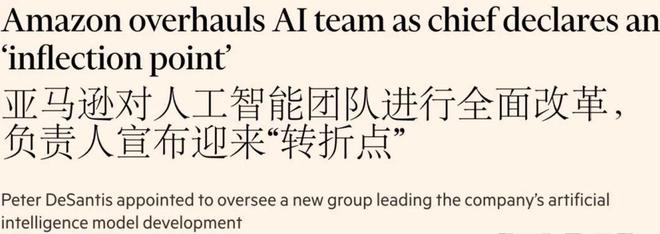
亚马逊大意失AI:昔日位面之子,沦为版本弃子?
Tai Mei Ti A P P· 2026-01-05 07:14
Core Viewpoint - Amazon is restructuring its AI strategy by creating a new "AGI organization" to integrate its language model team, chip development unit, and quantum computing team, as a response to its lagging position in the AI race compared to competitors like Google, Meta, and Nvidia [1][3]. Group 1: Amazon's AI Strategy and Challenges - Since 2025, Amazon's stock performance has been poor, with no significant annual gains, indicating that investors do not view Amazon as a key player in the AI sector [3]. - Despite having strong assets like AWS, self-developed chips, and a global e-commerce platform, Amazon's AI initiatives have been perceived as reactive rather than proactive, leading to a strategic need for urgent correction [3][4]. - Amazon's AI models, such as the Nova series, have not gained significant traction in the market, with OpenAI and Google dominating token usage [4]. Group 2: Competitive Landscape - Amazon's AWS, once a leader in cloud services, is facing increasing competition from Microsoft Azure and Google Cloud, which are integrating AI capabilities more effectively [7][10]. - Microsoft Azure's market share is growing, driven by strong demand for AI services, while AWS's positioning as a "model supermarket" dilutes its competitive edge [10][11]. Group 3: Internal Challenges and Organizational Structure - Amazon's AI team has been fragmented across various business lines, focusing on incremental improvements rather than developing a cohesive AGI strategy, leading to missed opportunities in the consumer AI space [15][16]. - The company's historical focus on customer-centric improvements has resulted in a reluctance to invest in long-term, high-risk AI innovations, causing it to fall behind competitors who are more agile in adapting to new trends [16][17].

从一张砂纸,看中国制造的竞争力
Xin Lang Cai Jing· 2026-01-04 15:12
Core Viewpoint - The article highlights the competitive advantages of Chinese e-commerce platforms, showcasing their ability to offer extremely low prices and innovative customer service strategies, which are reshaping the global e-commerce landscape [1][3][5]. Group 1: Pricing Strategy - A set of three sandpapers was sold for only 1.03 RMB, and after a reward for leaving a review, the effective cost could drop to 0.5 RMB [1][3]. - The seller compensates customers with additional products, such as a sponge sand block worth 10 RMB, to enhance customer satisfaction and encourage positive reviews [3][5]. - This pricing strategy aims to increase sales volume and build customer loyalty, ultimately leading to larger orders in the future [5]. Group 2: Market Dynamics - The article suggests that low prices allow sellers to negotiate better terms with suppliers and logistics companies, enhancing their competitive edge [5]. - It notes that the e-commerce market is becoming increasingly dominated by a few major players, leading to the gradual decline of small local businesses [5]. - The competitive landscape is expected to extend globally, with successful Chinese sellers likely to dominate international markets due to their experience in a highly competitive domestic environment [5]. Group 3: Comparison with U.S. E-commerce - The lowest price for sandpaper on U.S. platforms like eBay and Amazon is significantly higher, at 8.95 USD (approximately 63 RMB) and 7 USD (approximately 50 RMB) respectively, indicating a stark price difference [11][12]. - U.S. e-commerce platforms have higher operational costs, with fees for sellers ranging from 15% to 45% of sales, which contrasts with the lower costs faced by Chinese sellers [12][14]. - The dominance of Chinese sellers in the U.S. online grocery market is noted, with the article suggesting that they are capturing significant market share while U.S. small businesses struggle [12][19]. Group 4: Future Trends - The article discusses the emergence of Chinese e-commerce platforms like Temu, TikTok Shop, and Shein, which are reshaping global e-commerce dynamics and achieving significant growth in international markets [15][17]. - By 2025, Temu is projected to become the second-largest global e-commerce site, with a focus on improving delivery times through overseas warehouses [17]. - The integration of AI technology in Chinese e-commerce is highlighted as a key factor in enhancing customer service and operational efficiency, further solidifying their competitive advantage [18]. Group 5: Trade Surplus and Economic Impact - China's trade surplus is projected to reach approximately 1.15 trillion USD in 2025, a record high in human economic history, significantly surpassing previous peaks from Germany and Japan [19][22]. - The article emphasizes that China's manufacturing sector is not only robust but is also evolving to meet global demands, indicating a shift from merely producing low-cost goods to offering a comprehensive ecosystem of supply chain, logistics, and e-commerce [21].