易方达

Search documents
沪指半日涨0.27%,超3500只个股飘红,A500ETF易方达(159361)、沪深300ETF易方达(510310)助力布局A股核心资产
Sou Hu Cai Jing· 2026-01-23 04:57
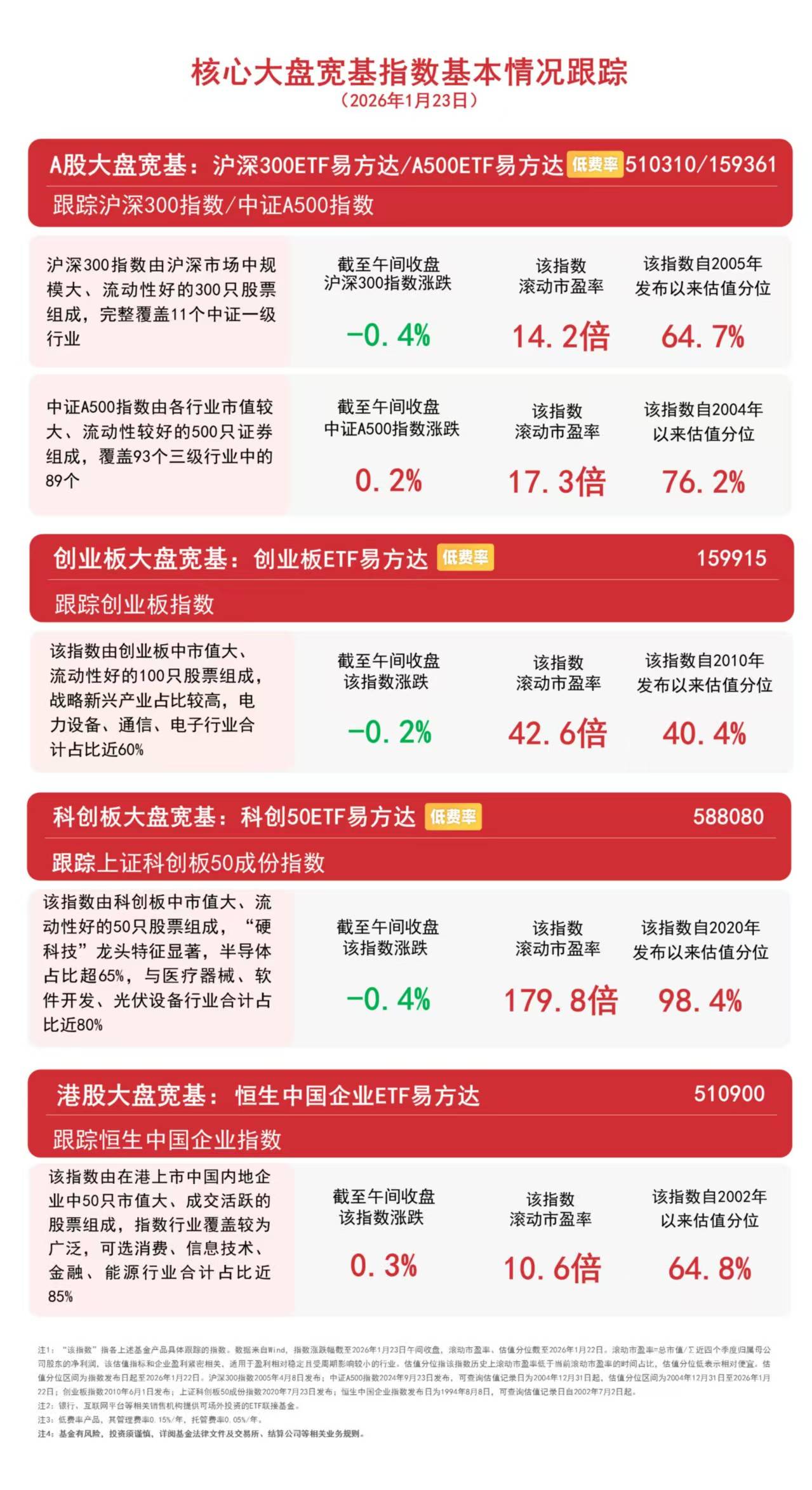
Group 1 - The A-share market showed mixed performance on January 23, with the Shanghai Composite Index rising by 0.27% and over 3,500 stocks in the market gaining [1] - The photovoltaic, satellite internet, and commercial aerospace sectors led the gains, while CPO, GPU, and insurance sectors lagged behind [1] - The Hong Kong stock market opened higher but retreated, with consumer and pharmaceutical stocks performing well, while technology stocks showed mixed results [1] Group 2 - The CSI 500 Index increased by 0.2%, while the CSI 300 Index and the ChiNext Index both decreased by 0.4% and 0.2% respectively [1] - The Shanghai Stock Exchange Science and Technology Innovation Board 50 Index fell by 0.4%, while the Hang Seng China Enterprises Index rose by 0.3% [1] Group 3 - The CSI 300 Index consists of 300 stocks with good liquidity, covering 11 first-level industries, and had a rolling P/E ratio of 14.2 times [3] - The CSI 500 Index, comprising 500 stocks with good liquidity, covers 89 of 93 third-level industries and had a rolling P/E ratio of 17.3 times [3] - The ChiNext Index includes 100 stocks with high liquidity, primarily in strategic emerging industries, and had a rolling P/E ratio of 42.6 times [4]

特斯拉无安全员Robotaxi向公众开放,关注港股通汽车ETF易方达(159121)投资机会
Mei Ri Jing Ji Xin Wen· 2026-01-23 03:42
恒生港股通汽车主题指数由港股通范围内40只汽车产业链相关股票组成,覆盖港股整车龙头及智能化供 应链核心公司。港股通汽车ETF易方达(159121)等产品跟踪该指数,为投资者参与汽车产业智能化发 展过程提供了便捷工具。 近日,特斯拉正式向公众提供无安全员的Robotaxi服务,并计划逐步提高无人车队比例。公司预计大规 模运营后成本将低于0.2美元/英里,并认为自动驾驶将在2026年变得"非常普及"。 市场分析认为,此举标志着L4级自动驾驶从测试正式迈入规模化商业运营阶段,验证了技术可行性与 初步商业模式,将为全球智能驾驶产业链带来明确的需求拉动与估值锚定。 ...
资本围猎“零食量贩一哥”:鸣鸣很忙IPO背后的零售新战事
Sou Hu Cai Jing· 2026-01-23 03:34
Core Insights - The company, Mingming Hen Mang, is set to launch its IPO on January 20, 2026, marking the first capital market appearance for China's snack retail industry, reflecting the business model's appeal amid a trend of consumption downgrade [2][9] - The IPO has attracted significant institutional investment, with a total subscription amount of $195 million (approximately HKD 1.52 billion) from eight major global investors, indicating strong market confidence in the company's growth potential [2][3] Investment Highlights - Major investors include Tencent and Temasek, each investing $45 million, alongside other global asset management firms like BlackRock and Fidelity, showcasing a dual recognition of the business model by both industrial and long-term capital [3] - The IPO plans to issue 14.1011 million shares, with a median offer price of HKD 233.10, aiming to raise approximately HKD 3.124 billion for supply chain upgrades, store network expansion, and digital transformation [3] Business Performance - Mingming Hen Mang has achieved remarkable growth, with revenue soaring from CNY 4.286 billion in 2022 to CNY 39.344 billion in 2024, reflecting a compound annual growth rate (CAGR) of 203% [4] - The company reported a net profit increase from CNY 0.81 billion to CNY 9.13 billion during the same period, with a CAGR of 234.6%, positioning it among the top performers in the retail chain industry [4] Market Strategy - The company's unique snack retail model combines supply chain efficiency, a franchise system, and competitive pricing, creating a robust competitive barrier [6] - By leveraging a large-scale procurement strategy with over 1,000 suppliers and a product range exceeding 4,000 SKUs, the company offers prices 20%-30% lower than traditional supermarkets, meeting consumer demand for high value [6] Digital Transformation - Mingming Hen Mang has established a comprehensive digital system covering procurement, warehousing, logistics, and sales, enhancing supply chain efficiency and providing real-time data to franchisees [7] - This digital capability supports better inventory management and operational guidance, reducing risks and improving profitability for franchise partners [7] Industry Dynamics - The IPO signifies a shift in the snack retail industry towards a more regulated and capitalized phase, with increasing competition from both established brands and regional players [8] - The market is evolving from a focus on store count to a more comprehensive competition involving supply chain efficiency, digital capabilities, and brand strength [8] Future Outlook - The listing is seen as a new starting point for Mingming Hen Mang, with challenges ahead in maintaining growth while balancing expansion and profitability [9] - The company's success could set a benchmark for the snack retail sector, encouraging others to focus on supply chain optimization and consumer experience enhancement [9]

“拥抱康波”!公募鏖战ETF,谁将定义下半场?
Sou Hu Cai Jing· 2026-01-23 00:18
Core Viewpoint - The ETF market in China is experiencing rapid growth, reshaping the public fund industry and becoming a critical factor for survival among fund companies [1][2][3]. Group 1: ETF Market Growth - The total scale of ETFs in China is projected to grow from 2 trillion yuan in 2024 to 3.7 trillion yuan, and further to 6 trillion yuan by 2026, marking a 60% increase [1]. - By the end of 2025, the scale of public ETFs is expected to reach an unprecedented 6 trillion yuan, equivalent to about 5% of the total market capitalization of A-shares [3]. - The growth rate of domestic ETFs from 2016 to mid-2025 is approximately 30% annually, making it the largest ETF market in Asia [4]. Group 2: Competitive Landscape - Leading companies like Huaxia Fund have reached significant milestones, with its ETF scale surpassing 1 trillion yuan, while other firms like E Fund and Southern Fund are also building substantial positions [5]. - The disparity in ETF scale among fund companies is widening, with over 100 firms yet to enter the ETF market, and about one-third of those that have entered having ETF scales below 10 million yuan [5][6]. - The competition is shifting from simple product offerings to a more complex ecosystem involving brand recognition and operational depth [10][12]. Group 3: Fee Structure and Policy Impact - The average management fee for stock ETFs has decreased from 0.46% at the beginning of 2024 to 0.25% by mid-2025, significantly reducing investor costs [7]. - Regulatory policies have facilitated the expansion of the ETF market, including simplified product approval processes and encouragement of capital inflow [6][8]. - A wave of fee reductions has intensified competition, leading to a concentration of resources among more efficient leading players [7][10]. Group 4: Brand and Product Differentiation - Fund companies are increasingly focusing on brand differentiation through product renaming and enhanced visibility, addressing the issue of product homogeneity in the ETF market [8][9]. - The shift towards a more systematic brand competition reflects a broader understanding of the need for trust and ecosystem cohesion in the ETF business [9][14]. - Huaxia Fund's strategy includes a diverse product matrix and proactive engagement in index development, enhancing its competitive edge in the ETF space [11][12].
“拥抱康波”!公募鏖战ETF,谁将定义下半场?
券商中国· 2026-01-22 23:34
Core Viewpoint - The article discusses the transformative impact of ETFs on the public fund industry in China, highlighting the rapid growth and competitive dynamics within the sector as it shifts towards index-based investment strategies [2][4][5]. Group 1: ETF Growth and Market Dynamics - The total scale of ETFs in China is projected to grow from 2 trillion yuan to 3.7 trillion yuan in 2024, and further to 6 trillion yuan by 2026, indicating a 60% increase [2]. - By the end of 2025, the scale of public ETFs is expected to reach an unprecedented 6 trillion yuan, representing about 5% of the total A-share market capitalization [4]. - The rapid growth of ETFs is reshaping the capital market, transitioning it from a retail-driven environment to one governed by rules and asset allocation logic [4][5]. Group 2: Competitive Landscape - The competition among fund companies has intensified, focusing on fee rates, liquidity, and product diversity, with leading firms like Huaxia Fund emerging as key players [3][6]. - As of January 2026, Huaxia Fund's ETF scale reached 1,016.42 billion yuan, making it the first public fund company to surpass the trillion yuan mark in non-cash ETFs [6]. - The disparity in ETF scale among fund companies is widening, with over 100 firms still not participating in the ETF market, and many existing players struggling to reach significant scale [6][7]. Group 3: Regulatory and Policy Influences - Regulatory policies have played a crucial role in the expansion of the ETF market, including simplified product approval processes and the promotion of ETF interconnectivity [7]. - A significant fee reduction trend has emerged, with the average management fee for stock ETFs dropping from 0.46% in early 2024 to 0.25% by mid-2025, enhancing investor affordability [8][9]. Group 4: Branding and Product Differentiation - A wave of product renaming has swept the industry, with major fund managers like Huaxia Fund adopting new naming conventions to enhance product recognition and brand loyalty [9][10]. - The focus of competition is shifting from mere product offerings to a more comprehensive brand narrative, addressing the issue of product homogeneity in the ETF market [10][11]. Group 5: Huaxia Fund's Competitive Advantage - Huaxia Fund has established a robust ecosystem for its ETFs, characterized by a diverse product matrix and a commitment to low fees and high liquidity [14][15]. - The company's strategy involves integrating active research capabilities into passive investment tools, allowing for innovative product development that anticipates market trends [16][17]. - This comprehensive approach has positioned Huaxia Fund as a leader in the ETF space, creating a sustainable competitive advantage that is difficult for others to replicate [18].

2.6万亿元!公募去年整体盈利 宽基ETF表现抢眼
Shang Hai Zheng Quan Bao· 2026-01-22 18:52
Core Insights - In Q4 2025, public funds experienced a loss of 110.1 billion yuan, despite an overall annual profit exceeding 2.6 trillion yuan, indicating a strong performance in equity assets throughout the year [1][2] - Passive investment strategies, particularly large-scale ETFs, dominated the profitability rankings, reflecting significant changes in the capital market over the past year [1][2] - The bond products emerged as the main profit contributors in Q4, with bond funds earning 57.725 billion yuan, while commodity funds also saw substantial gains due to rising precious metal prices [1] Annual Performance Summary - For the entire year of 2025, public funds achieved a total profit of 2.6 trillion yuan, with all fund types reporting gains, particularly mixed and equity funds, which collectively earned nearly 2 trillion yuan [2] - The stock funds alone generated profits exceeding 1.1 trillion yuan, highlighting the strong rise of ETFs in the market [2] Top Performing Funds - In Q4, the top 10 profitable fund products were predominantly gold ETFs and related funds, with six gold ETFs making the list, showcasing the demand for precious metals [2] - The leading fund, Huaan Gold ETF, reported a profit of 8.218 billion yuan, the only product exceeding 8 billion yuan in profit [2] - Other notable funds included Bosera Gold ETF, Huaxia SSE 50 ETF, and E Fund Gold ETF, each earning over 3 billion yuan [2] ETF Performance - The performance of broad-based ETFs remained strong, with Huatai-PB CSI 300 ETF leading with a profit of 78.516 billion yuan, the only fund surpassing 70 billion yuan [3] - Other significant performers included E Fund CSI 300 ETF and Huaxia CSI 300 ETF, both earning over 40 billion yuan [3]
半导体设备板块延续调整,半导体设备ETF易方达(159558)连续18个交易日获资金布局
Sou Hu Cai Jing· 2026-01-22 11:48
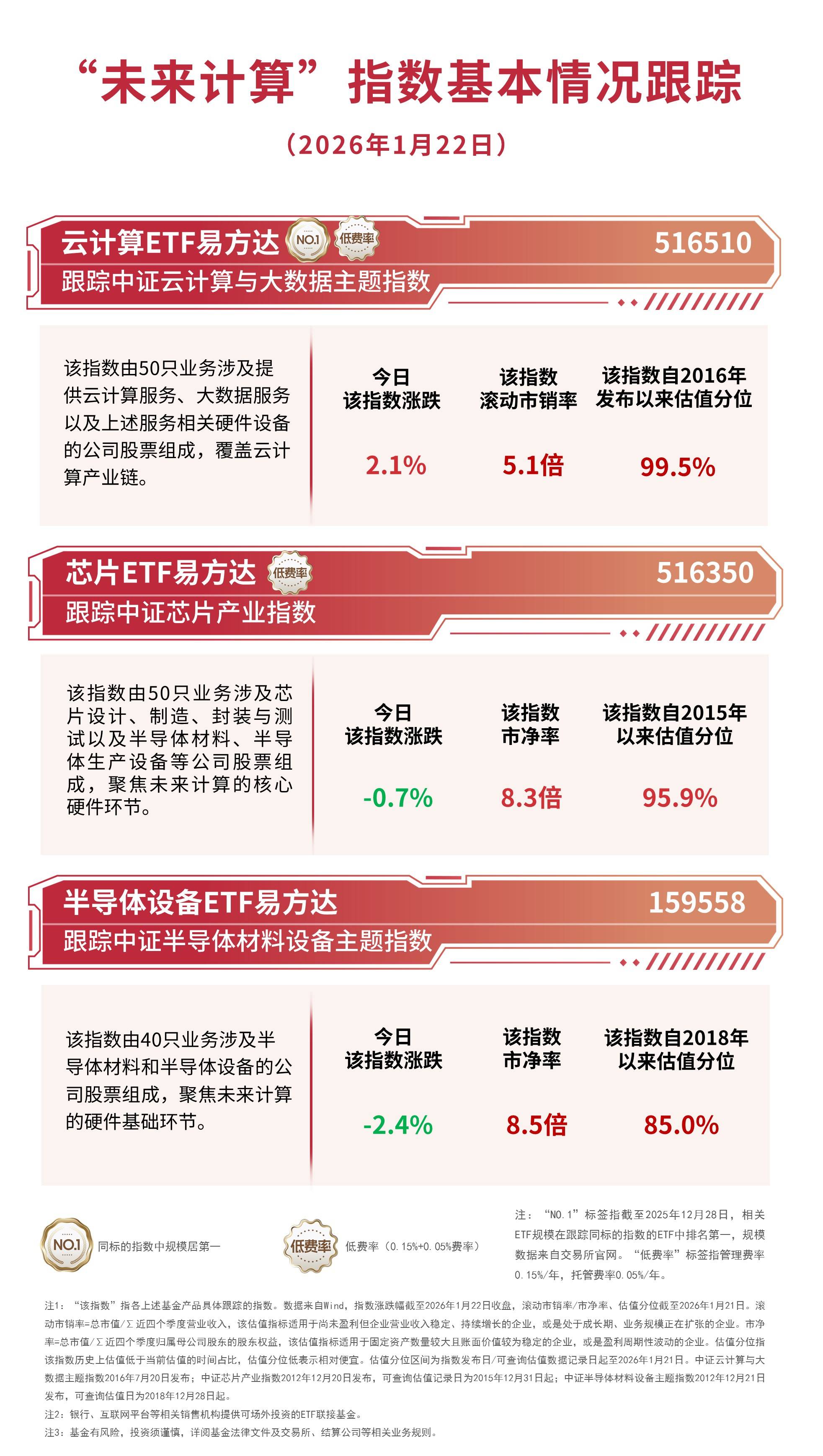
Group 1 - The China Securities Cloud Computing and Big Data Theme Index rose by 2.1%, while the China Securities Chip Industry Index fell by 0.7%, and the China Securities Semiconductor Materials and Equipment Theme Index decreased by 2.4% [1] - The E Fund Semiconductor Equipment ETF (159558) saw a net subscription of 40 million units throughout the day, continuing to attract capital attention with a total net inflow of approximately 2.5 billion yuan over the past 17 trading days [1] - According to Zheshang Securities, driven by advanced process investments and the wave of semiconductor self-sufficiency in China, global semiconductor equipment sales are expected to reach 117.1 billion USD in 2024, representing a year-on-year growth of 10% [1] Group 2 - SEMI forecasts that global semiconductor equipment sales will grow by 13.7% to 133 billion USD in 2025, with the semiconductor equipment sector expected to maintain high prosperity driven by AI, projecting a 10% year-on-year growth in 2026 [1] - The E Fund Semiconductor Equipment ETF tracks the China Securities Semiconductor Materials and Equipment Theme Index, which consists of 40 stocks involved in semiconductor materials and equipment, focusing on the hardware foundation for future computing [5]
创业板指数午后发力收涨1%,关注创业板ETF易方达(159915)等产品
Sou Hu Cai Jing· 2026-01-22 11:48
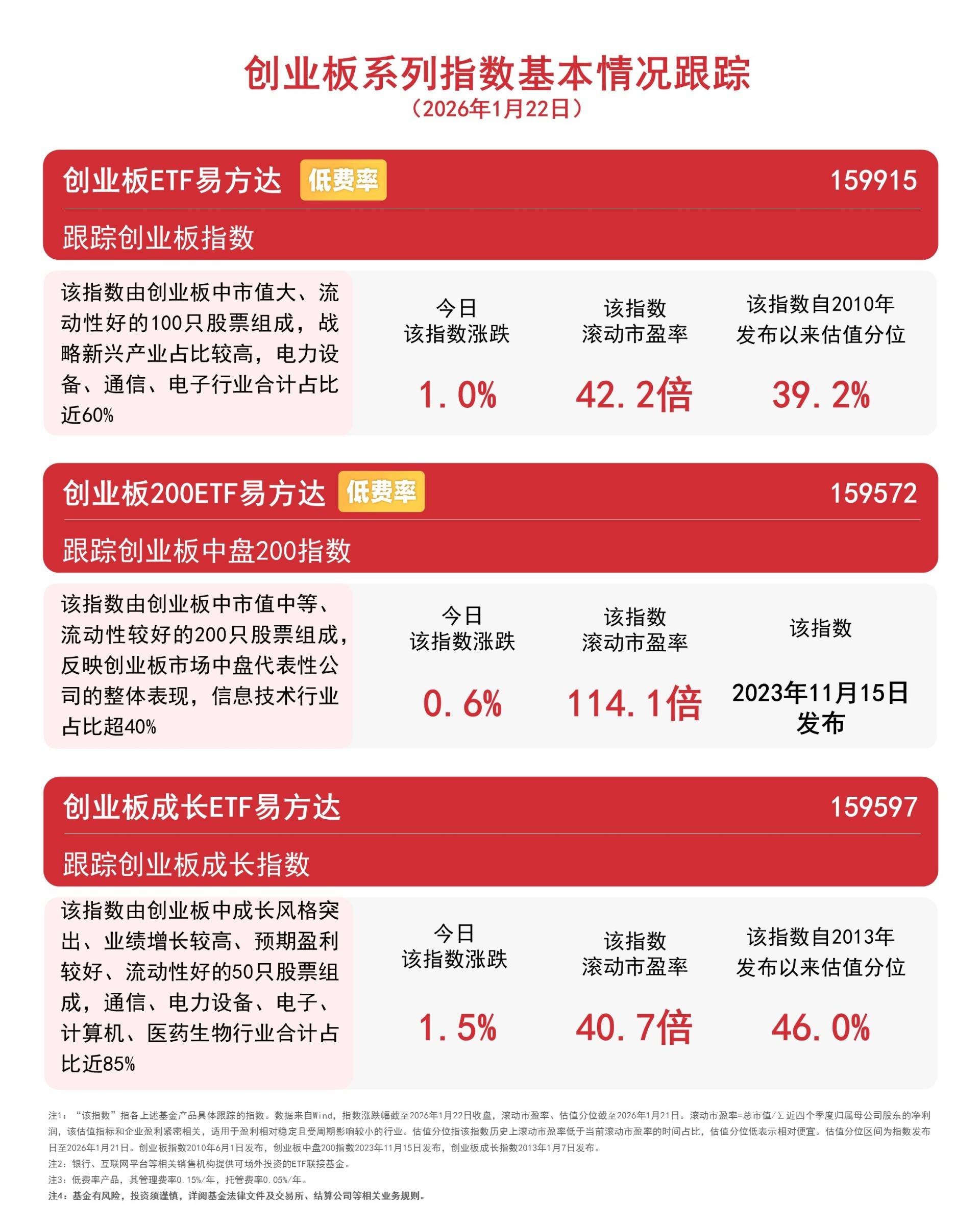
Group 1 - The CPO, AI applications, and photovoltaic equipment sectors showed active performance, contributing to the overall rise of the ChiNext index, which increased by 1.5% [1] - The ChiNext index closed up by 1.0%, indicating a positive market sentiment among growth-oriented stocks [1] - The ChiNext ETF by E Fund tracks the ChiNext index, which consists of 100 stocks with high market capitalization and liquidity, with a significant focus on emerging industries, particularly in the power equipment, communication, and electronics sectors, which together account for over 60% of the index [2] Group 2 - The ChiNext 200 ETF by E Fund tracks the ChiNext mid-cap 200 index, comprising 200 stocks with medium market capitalization and good liquidity, reflecting the overall performance of mid-cap representative companies in the ChiNext market, with the information technology sector exceeding 40% of the index [2] - The ChiNext 200 index experienced a decrease of 0.6%, indicating a slight pullback in mid-cap stocks [2]

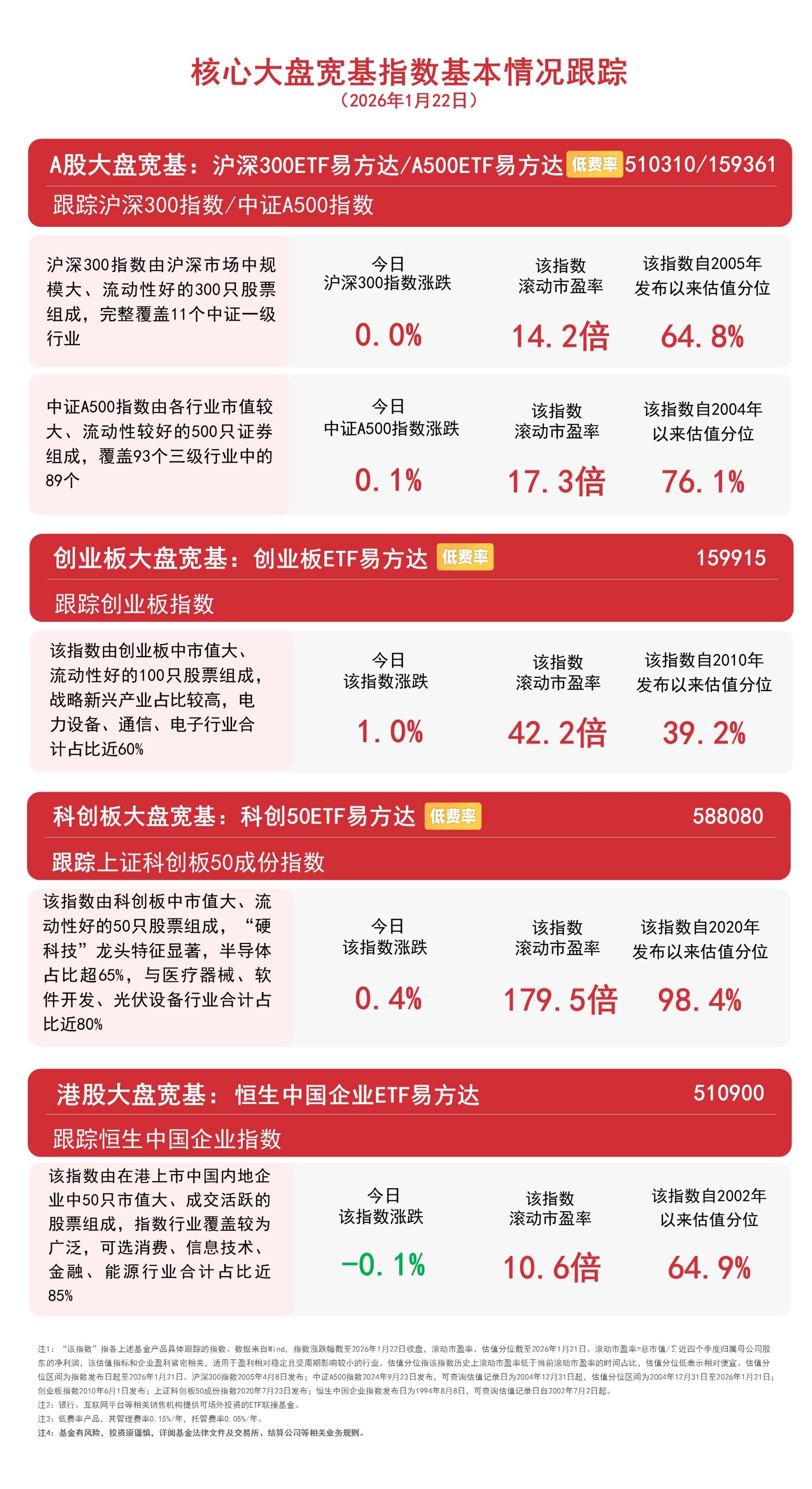
市场午后震荡回升,A500ETF易方达(159361)、沪深300ETF易方达(510310)助力一键布局核心资产
Sou Hu Cai Jing· 2026-01-22 11:35
Market Overview - The A-share market experienced a rebound in the afternoon on January 22, with all three major indices turning positive. The total trading volume exceeded 2.7 trillion yuan, an increase of nearly 100 billion yuan compared to the previous day, with over 3,500 stocks rising across the market [1]. - Key sectors that saw significant gains included oil and gas extraction and services, military equipment, photovoltaic equipment, commercial aerospace, building materials, coal mining and processing, steel, and glyphosate [1]. - Conversely, sectors such as insurance, photolithography machines, precious metals, batteries, semiconductors, and innovative pharmaceuticals underperformed [1]. Index Performance - The CSI A500 Index rose by 0.1% [4]. - The CSI 300 Index increased by 0.01% [1]. - The ChiNext Index saw a rise of 1.0% [1]. - The STAR Market 50 Index increased by 0.4% [1]. - The Hang Seng China Enterprises Index declined by 0.1% [4]. Sector Composition - The ChiNext Index consists of 100 stocks with high market capitalization and liquidity, with a significant proportion from strategic emerging industries, particularly power equipment, communications, and electronics, which together account for nearly 60% [4]. - The STAR Market 50 Index is composed of 50 stocks from the STAR Market, with a strong focus on "hard technology," where semiconductors represent over 65%, and combined with medical devices and software development, they account for nearly 80% [4]. - The Hang Seng China Enterprises Index includes 50 large-cap, actively traded stocks from mainland Chinese companies listed in Hong Kong, covering a wide range of industries, with consumer discretionary, information technology, finance, and energy sectors making up nearly 85% [4].
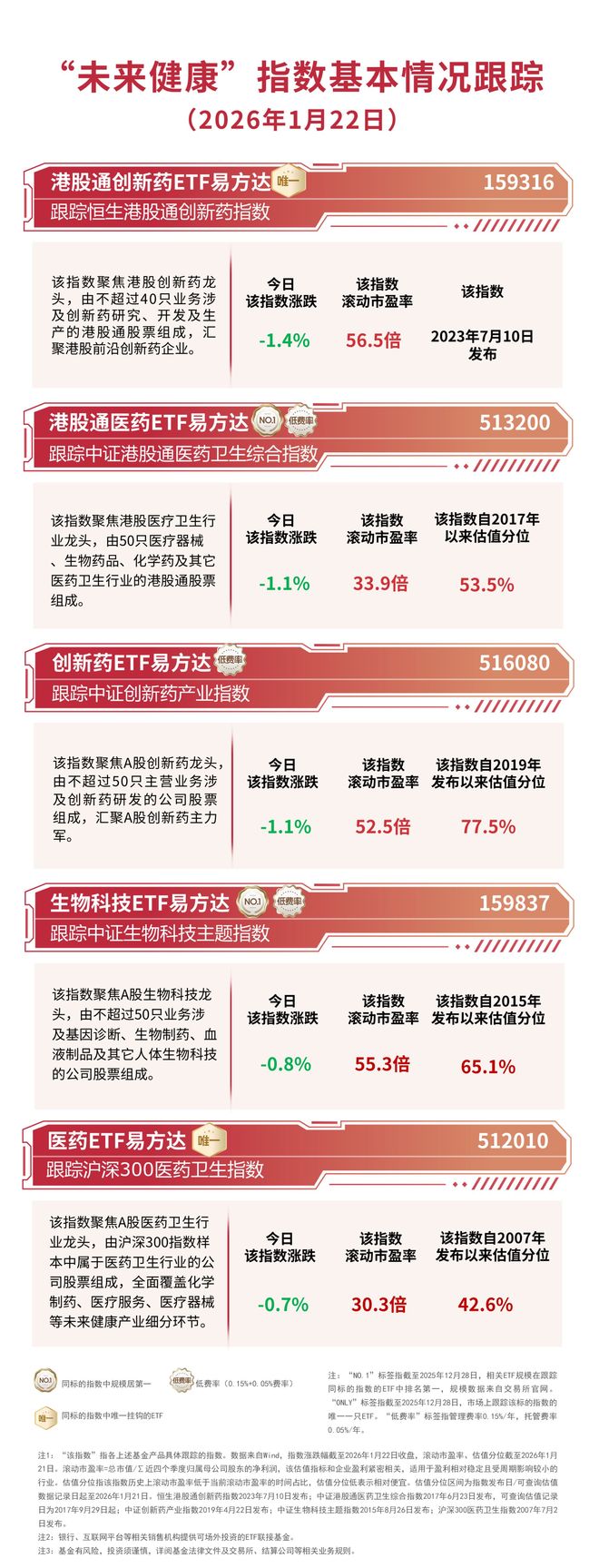
医药板块集体回调,资金逆势布局,港股通创新药ETF易方达(159316)全天净申购超2000万份
Mei Ri Jing Ji Xin Wen· 2026-01-22 11:29
Core Viewpoint - The pharmaceutical sector experienced a collective pullback today, with various indices showing declines, while there is still significant capital inflow into innovative drug ETFs, indicating a potential recovery in demand for CRO and CDMO services [1]. Group 1: Market Performance - The Hang Seng Hong Kong Stock Connect Innovative Drug Index fell by 1.4% [1]. - The CSI Hong Kong Stock Connect Pharmaceutical and Health Comprehensive Index and the CSI Innovative Drug Industry Index both decreased by 1.1% [1]. - The CSI Biotechnology Theme Index dropped by 0.8%, and the CSI 300 Pharmaceutical and Health Index declined by 0.7% [1]. - Despite the overall market decline, the E Fund Innovative Drug ETF (159316) saw a net subscription of over 20 million units throughout the day [1]. Group 2: Industry Outlook - According to Zhongtai Securities, multiple factors are driving a gradual recovery in demand for CRO and CDMO services within the pharmaceutical sector [1]. - The past three years have seen a continuous clearing of supply, suggesting that the sector may experience a "Davis Double Play" with simultaneous improvements in profitability and valuation [1].