珀莱雅

Search documents
“双11”大促即将收官 李佳琦直播间全品类新品迎来大卖
Zheng Quan Shi Bao Wang· 2025-11-14 09:49
Core Insights - The "Double 11" shopping festival on Tmall has seen significant success, particularly in the new product category, with various items becoming bestsellers during the event [1][2] Group 1: Performance of New Products - New products in categories such as beauty, consumer electronics, and pet supplies have shown remarkable sales performance, with several items achieving bestseller status [1] - In the beauty sector, products like Pechoin Lingyu Cream and Hande Shi Collagen Hair Mask have ranked among the top new products, with Pechoin selling over 200,000 units after multiple restocks [1] - In consumer electronics, items like the Panasonic Washing and Drying Set and the Baisi Blue Light Toothbrush have also performed exceptionally well, with the latter becoming the top-selling brand in the oral care category on Tmall [1] Group 2: Sales Achievements in Specific Categories - In the maternal and infant sector, products such as Anwei Cream and Baby Massage Oil achieved sales of over 46,000 and 48,000 units respectively on the first day of the promotion [2] - The introduction of a virtual product in the pet category, the Xucuihua Cat Litter Card, quickly sold out, addressing the inventory concerns of pet owners [2] Group 3: Strategic Insights from Live Streaming - The success of new products is attributed to the evolving role of live streaming platforms like Li Jiaqi's, which have become effective channels for professional product selection and brand collaboration [2] - The selection team for Li Jiaqi's live stream consists of over 70% members with master's degrees and an average of ten years of industry experience, implementing a rigorous selection process [2] - The live streaming model is viewed as a powerful tool for connecting supply and demand, enhancing brand visibility, and fostering consumer trust in new products [2]
化妆品板块11月14日跌1.06%,芭薇股份领跌,主力资金净流出7529.05万元
Zheng Xing Xing Ye Ri Bao· 2025-11-14 08:58
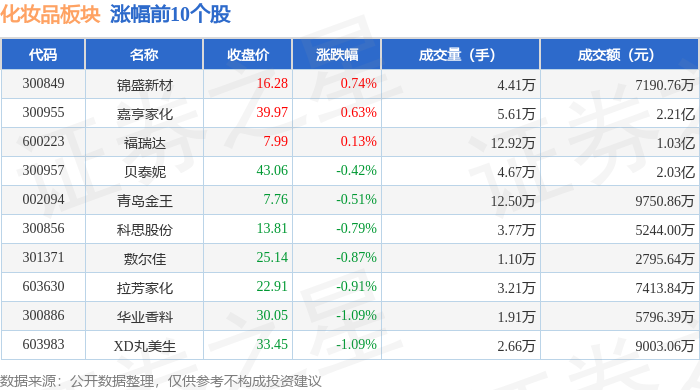
Market Overview - The cosmetics sector experienced a decline of 1.06% on November 14, with Bawei Co. leading the drop [1] - The Shanghai Composite Index closed at 3990.49, down 0.97%, while the Shenzhen Component Index closed at 13216.03, down 1.93% [1] Individual Stock Performance - Notable performers included: - Jinsong New Material (300849) with a closing price of 16.28, up 0.74% [1] - Jiahen Home Care (300955) at 39.97, up 0.63% [1] - Furuida (600223) at 7.99, up 0.13% [1] - Stocks that declined included: - Bawei Co. (920123) at 17.68, down 3.49% [2] - Shuiyang Co. (300740) at 21.02, down 2.28% [2] - Shanghai Jahwa (600315) at 24.20, down 1.63% [2] Capital Flow Analysis - The cosmetics sector saw a net outflow of 75.29 million yuan from institutional investors, while retail investors had a net inflow of 58.41 million yuan [2] - The overall capital flow for individual stocks showed mixed results, with some stocks experiencing significant outflows from institutional investors [3] Detailed Capital Flow for Selected Stocks - Tian Cai Ya (603605) had a net inflow of over 10.27 million yuan from institutional investors, while it faced a net outflow of 20.13 million yuan from retail investors [3] - Jinsong New Material (300849) saw a net inflow of 4.11 million yuan from institutional investors but a net outflow of 4.36 million yuan from retail investors [3] - Jiahen Home Care (300955) experienced a net outflow of 3.05 million yuan from institutional investors, with a significant net inflow of 16.17 million yuan from retail investors [3]






国货消费何以澎湃成潮
Zhong Guo Zhi Liang Xin Wen Wang· 2025-11-14 06:36
Core Insights - The "Double 11" shopping festival serves as a significant window to observe new consumer trends, showcasing the rise of domestic brands in the e-commerce sector, particularly in beauty and fashion categories [1][2]. Group 1: Rise of Domestic Brands - Domestic brands are increasingly dominating sales on e-commerce platforms, with brands like Proya leading in beauty sales and nine out of the top ten clothing brands being Chinese [1]. - The success of domestic brands is attributed to a cultural and economic shift, reflecting national confidence and a transformation from "made in China" to "created in China" [2]. Group 2: Innovation and Quality Revolution - The rise of domestic consumption is linked to supply-side innovations and a quality revolution, moving away from the stereotype of low-quality products [2]. - Brands like Proya and Bosideng exemplify this shift, with Proya focusing on R&D and quality, while Bosideng combines technical expertise with fashionable design [2]. Group 3: Cultural Confidence and Consumer Identity - The resurgence of domestic brands is driven by a collective awakening of cultural confidence among younger consumers, particularly Generation Z, who are increasingly valuing local culture over Western brands [2][3]. - Brands such as Chi Xia and Sanji Heihua have rapidly grown, reflecting a desire among young consumers to connect with traditional Chinese culture [2]. Group 4: Understanding Consumer Needs - Domestic brands excel in understanding and innovatively expressing consumer needs, capturing subtle changes in local aesthetic preferences [3]. - Successful cases include the popularity of Palace Museum cultural products and the rise of brands like Li Ning and White Elephant Foods, which resonate emotionally with consumers [3]. Group 5: Supply Chain and Digital Marketing - The robust industrial system and efficient supply chain in China enable domestic brands to respond quickly to market changes, facilitating flexible production [3]. - Innovations in digital marketing, such as live-streaming and social media engagement, allow domestic brands to connect directly with consumers, enhancing brand narratives [3]. Group 6: Challenges Ahead - Despite rapid growth, domestic brands face challenges such as avoiding homogenization, transitioning from "hit products" to sustainable success, and building brand resilience [4]. - Continuous investment in R&D, deeper cultural understanding, and improved service systems are essential for domestic brands to maintain their market position [4]. Group 7: New Consumer Paradigm - The rise of domestic consumption reflects a shift in consumer behavior, where quality, design, cultural significance, and emotional value are prioritized over price [4]. - This transformation is reshaping market competition and driving the upgrade of Chinese manufacturing and cultural expression [4].

双十一抖音美妆交流
2025-11-14 03:48
Summary of Douyin's 2025 Double Eleven Conference Industry Overview - The conference focuses on the beauty and cosmetics industry within the context of Douyin's performance during the 2025 Double Eleven shopping festival - Douyin achieved a GMV (Gross Merchandise Volume) of 5,199 billion yuan, exceeding its target of 4,850 billion yuan [2][4] Key Points and Arguments Performance Metrics - Daily average purchasing users reached 145 million, an increase of approximately 30 million from the previous year [2] - 76.7 million brands saw their sales double compared to last year, with over 100,000 merchants achieving doubled GMV [2] - Beauty category GMV reached 362 billion yuan, with skincare products accounting for 53% of sales [1][5] Strategies and Promotions - Douyin provided 5 billion yuan in coupon subsidies, which was higher than the 3.4 billion yuan during the 618 shopping festival [3] - The platform did not increase e-commerce content exposure but focused on enhancing sales through mall activities [3] - Douyin's promotional strategies included significant discounts and subsidies for beauty products, particularly skincare [3][6] Brand Performance - International beauty brands accounted for over 40% of sales on Douyin, up from 33% in 2024, benefiting from resource subsidies and promotional flexibility [9][10] - Notable local brands like Winona and Yuze saw significant growth, with Yuze's sales increasing by 280% and Darlf's by over 300% [1][14] - International brands like Lancôme and Estée Lauder also experienced substantial growth during the festival [14] Market Trends - Skincare products are outperforming color cosmetics due to consumer preferences shifting towards practical and high-repurchase items [6][7] - The average discount for international brands was 77%, while local brands offered an average of 84% [10] - Douyin plans to continue supporting international brands over the next three years, establishing duty-free stores and introducing more foreign products [11][12] Future Outlook - Douyin will prioritize support for health products, clothing, and food categories in 2026, with health products expected to have the highest growth potential [26][27] - Local beauty brands may face increased competition but can leverage innovative marketing strategies to enhance market share [12][13] Additional Insights - The overall return on investment (ROI) for beauty products improved, with an estimated ROI of 8-9, higher than the previous year's 7-8 [21] - Some local beauty brands are returning to platforms like Tmall due to declining performance on Douyin [22] - Brands like Han Shu, Po Lai Ya, and Winona are identified as potential breakout stars for future sales [23] Conclusion - Douyin's strategies and performance during the 2025 Double Eleven festival highlight the growing importance of international brands and the shifting consumer preferences towards skincare products, while also indicating a competitive landscape for local brands moving forward.
2025年第45周:美妆行业周度市场观察
艾瑞咨询· 2025-11-14 00:06
Group 1 - L'Oréal has dropped out of the top 10 beauty brands, with domestic brands gaining market share, particularly on platforms like Douyin, where domestic brands occupy 7 out of the top 10 spots [3][9] - The beauty market is experiencing a significant shift, with domestic brands like Han Shu and Proya leading, while international brands face pressure [3][9] - The cosmetic market is seeing a rise in niche segments, such as neck care, with brands like KAZOO and SDX emerging as notable players [3] Group 2 - The medical beauty market is projected to reach 370 billion by 2025, attracting beauty companies to diversify into this sector [4] - Companies like Juzhi Biotech have received NMPA approval for innovative collagen products, indicating increased competition in the collagen injection market [4] - Challenges in the medical beauty sector include high regulatory barriers and product homogenization, necessitating breakthroughs in technology for sustainable growth [4] Group 3 - The soap market is undergoing a transformation, with a shift towards high-end products priced between 10-20 yuan, driven by consumer demand for natural ingredients [5] - Handmade soaps are gaining popularity among environmentally conscious consumers, although they face challenges in scaling production [5] - Brands are innovating by expanding usage scenarios for soaps, indicating a trend towards personalized and situational products [5] Group 4 - PDRN technology is transitioning from a niche medical beauty ingredient to a mainstream skincare component, with innovations in raw materials and product formulations [6] - The market is seeing a diversification of PDRN applications, including anti-aging and sensitive skin care, enhancing its appeal [6] - Companies are leveraging AI and molecular optimization to improve product efficacy and absorption [6] Group 5 - Hong Kong is emerging as a testing ground for domestic beauty brands aiming for global expansion, with brands like Guansha and Dr. Wong adopting different strategies to penetrate the market [8] - The recovery of Hong Kong's tourism sector provides a significant opportunity for these brands to attract international customers [8] Group 6 - The luxury beauty sector is entering a "cooling period," with major players like Kering and L'Oréal focusing on resource sharing and strategic partnerships rather than aggressive expansion [10] - L'Oréal's acquisition of Kering's Creed brand for 4 billion euros highlights the trend of luxury brands consolidating their beauty portfolios [10] - The collaboration also signals a growing interest in health and longevity science within the beauty industry [10] Group 7 - The medical beauty industry is focusing on technological advancements, with new materials becoming a strategic priority [11] - Recent funding trends indicate a strong interest in injectable fillers and functional skincare materials [11] - Companies are exploring innovative applications of new materials to enhance safety and efficacy in medical beauty products [12] Group 8 - The domestic fragrance brand "Song Dynasty Fragrance" is rapidly expanding, with a unique dual pricing strategy for online and offline sales [13] - The brand's marketing approach, particularly targeting male consumers, has raised concerns about brand positioning and long-term image [13] - The brand's growth is heavily reliant on social media platforms like Douyin for sales [13] Group 9 - The return of popular Douyin beauty influencer Zhu Guagua highlights the ongoing importance of influencer marketing in driving brand growth [14] - Zhu Guagua's success is attributed to a focus on high-quality beauty selections and effective promotional strategies [14] - The trend indicates that brands need to balance collaborations with top influencers and their own direct sales channels for optimal growth [14] Group 10 - Hermès is exploring the skincare market, with plans to launch products post-2028, indicating a strategic move to expand its beauty portfolio [15] - The brand's current beauty offerings primarily include perfumes and cosmetics, with a recent decline in sales prompting a reevaluation of its strategy [15] - This initiative reflects a broader trend of luxury brands diversifying their product lines to enhance market presence [15] Group 11 - Yatsen Group has released China's first beauty innovation white paper, showcasing advancements in research and sustainable development in the beauty sector [16] - The white paper emphasizes the importance of collaboration between academia and industry to drive innovation [16] - Yatsen's investment in R&D highlights its commitment to leading in the global beauty technology landscape [16] Group 12 - The acquisition of Italian hair care brand Foltène by Juhui Group marks a significant step in expanding its portfolio in the hair care market [17] - The brand's focus on gender-specific hair loss products aligns with growing consumer demand in China [17] - This acquisition reflects a trend among domestic beauty companies to pursue multi-brand strategies for international growth [17]

找不到槽点的毛戈平
晚点LatePost· 2025-11-13 16:16
Core Viewpoint - The article discusses the growth logic and investment value of the company Maogeping in the context of the new consumption landscape in China, highlighting its unique positioning in the high-end cosmetics market and its strong performance amidst a recovering consumer market [5][29]. Group 1: Company Overview - Maogeping is positioned in the mid-to-high-end cosmetics market, differentiating itself from many domestic brands that target the mid-to-low-end segments [5][7]. - The brand has been operating for over 20 years, with its "IP influence + time asset" being a core brand asset that enhances its market presence [7][8]. Group 2: Financial Performance - Maogeping's revenue has shown a compound annual growth rate (CAGR) of over 25% from 2021 to 2024, with a further increase to 31% in the first half of 2025 [8][10]. - The company's gross margin has remained stable at over 84%, while its net profit margin has increased from 19% in 2022 to nearly 23% in 2024, indicating a strong performance compared to international brands like Estée Lauder [10][11]. Group 3: Business Model and Strategy - The company employs an experiential retail model, utilizing beauty consultants to enhance customer interaction and brand value transmission [8][22]. - Maogeping's training business, although less than 5% of total revenue, provides high-quality beauty consultants for its stores, creating a synergistic effect that enhances brand perception and operational efficiency [8][10]. Group 4: Market Position and Competitive Advantage - The brand's average selling prices for cosmetics are significantly higher than many domestic competitors, with makeup and skincare averaging 157 RMB and 351 RMB per item, respectively [6][10]. - Maogeping's offline channel strategy focuses on self-operated stores in high-end department stores, maintaining a 50% share of its sales from offline channels, which is a competitive advantage as many brands shift online [16][22]. Group 5: Future Growth Potential - The company is planning to establish its own production capacity, with a new facility expected to be operational by 2026, which will enhance its gross margin and support future growth [11][29]. - Despite not having a "second growth curve" yet, Maogeping's main brand still holds significant commercial promotion potential and brand value, suggesting a strong growth trajectory in the medium term [28][29].


珀莱雅(603605) - 珀莱雅化妆品股份有限公司关于2022年限制性股票激励计划部分限制性股票回购注销实施公告
2025-11-13 10:02
| 证券代码:603605 | 证券简称:珀莱雅 | 公告编号:2025-074 | | --- | --- | --- | | 债券代码:113634 | 债券简称:珀莱转债 | | 珀莱雅化妆品股份有限公司 关于2022年限制性股票激励计划部分限制性股票 回购注销实施公告 本公司董事会及全体董事保证本公告内容不存在任何虚假记载、误导性陈述 或者重大遗漏,并对其内容的真实性、准确性和完整性承担法律责任。 重要内容提示: 回购注销原因:根据珀莱雅化妆品股份有限公司(以下简称"公司")《2022 年限制性股票激励计划(草案)》(以下简称"《激励计划》")的相关规定,鉴 于公司 2022 年限制性股票激励计划(以下简称"本激励计划")授予的 3 名激励 对象已离职而不再符合激励条件,公司将回购注销其已获授但尚未解除限售的限 制性股票 29,344 股。综上,本次回购注销的限制性股票合计 29,344 股。 本次注销股份的有关情况: | 回购股份数量 | 注销股份数量 | 注销日期 | | --- | --- | --- | | 29,344 股 | 29,344 股 | 2025 年 11 月 18 日 | 一、 ...
珀莱雅(603605) - 国浩律师(杭州)事务所关于珀莱雅化妆品股份有限公司2022年限制性股票激励计划部分限制性股票回购注销实施之法律意见书
2025-11-13 09:47
国浩律师(杭州)事务所 关于 珀莱雅化妆品股份有限公司 2022 年限制性股票激励计划 部分限制性股票回购注销实施 之 法律意见书 国浩律师(杭州)事务所 关于 地址:杭州市上城区老复兴路白塔公园 B 区 2 号、15 号国浩律师楼 邮编:310008 Grandall Building, No.2&No.15, Block B, Baita Park, Old Fuxing Road, Hangzhou, Zhejiang 310008, China 电话/Tel: (+86)(571) 8577 5888 传真/Fax: (+86)(571) 8577 5643 电子邮箱/Mail:grandallhz@grandall.com.cn 网址/Website:http://www.grandall.com.cn 二〇二五年十一月 国浩律师(杭州)事务所 法律意见书 珀莱雅化妆品股份有限公司 2022 年限制性股票激励计划 部分限制性股票回购注销实施 之 法律意见书 致:珀莱雅化妆品股份有限公司 根据珀莱雅化妆品股份有限公司(以下简称"珀莱雅"或"公司")与国浩 律师(杭州)事务所(以下简称"本所")签订的法 ...
美妆行业:周度市场观察-20251113
Ai Rui Zi Xun· 2025-11-13 07:03
Investment Rating - The report does not explicitly provide an investment rating for the beauty industry Core Insights - The beauty industry is experiencing a significant shift with domestic brands gaining market share, while international brands like L'Oréal are facing challenges [4][6][10] - The medical beauty sector is expanding, with companies like Juzhi Biotech and Naturals launching innovative products, indicating a trend towards cross-industry collaboration [4][6] - The soap market is evolving with a focus on high-end products and natural ingredients, appealing to environmentally conscious consumers [6] - PDRN technology is transitioning from niche medical applications to mainstream skincare, enhancing product efficacy and market accessibility [6][10] - Hong Kong is emerging as a testing ground for domestic beauty brands aiming for global expansion, leveraging its mature market and tourism recovery [6][10] - The competitive landscape is intensifying, with domestic brands dominating the top rankings and new entrants disrupting traditional market dynamics [4][6][10] Industry Environment - L'Oréal has dropped out of the top 10 rankings in the Douyin beauty market, with domestic brands like Han Shu and Proya leading the charge [4] - The medical beauty market is projected to reach 370 billion by 2025, attracting investments from beauty companies [4] - The soap market is witnessing a shift towards premium products, with handmade soaps gaining traction among consumers [6] - PDRN technology is being adopted in mainstream skincare, with various brands innovating in formulations and applications [6] - Domestic beauty brands are increasingly focusing on international markets, with Hong Kong serving as a strategic entry point [6] Top Brand News - The domestic fragrance brand "Song Dynasty Fragrance" is rapidly expanding, with a unique dual strategy for online and offline sales [12] - Influencer Zhu Guagua has regained prominence in the Douyin beauty market, significantly impacting brand sales through effective marketing strategies [12] - Hermès is exploring the skincare segment, with plans to launch products post-2028, indicating a strategic move to enhance its beauty portfolio [12] - Yatsen Group has released China's first beauty innovation white paper, showcasing advancements in research and sustainable development [12] - Juyi Group has acquired the Italian brand Foltène to strengthen its position in the hair care market, reflecting a trend of consolidation among domestic beauty companies [12]


财经聚焦|“双十一”购物车,透出国潮消费新趋势
Sou Hu Cai Jing· 2025-11-13 03:02
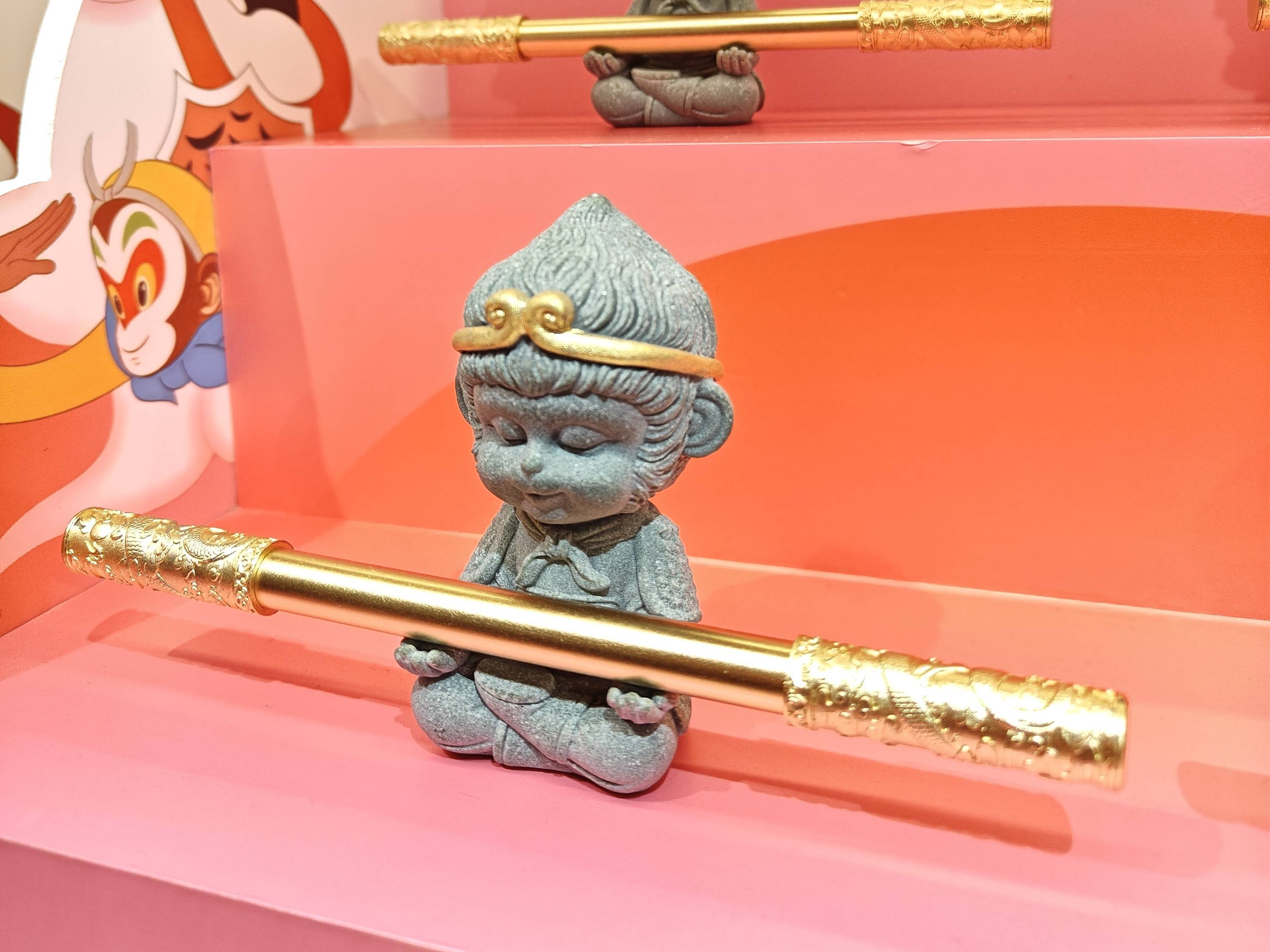
Core Insights - The "Double Eleven" shopping festival showcases the rising trend of domestic brands, with significant sales growth in national潮 products across various categories [1][2][5] Group 1: National潮 Consumption Trends - Domestic brands dominate the sales rankings on platforms like Tmall and JD, with brands like Proya and Bosideng leading the way [1] - The sales of traditional craftsmanship products, such as the non-heritage cast iron pots, have seen a remarkable increase, with a 127.9% year-on-year growth on Douyin [1] - Consumers are increasingly favoring domestic products, reflecting a shift towards quality and cultural significance in their purchasing decisions [1][5] Group 2: Cultural and Market Dynamics - The integration of traditional craftsmanship with modern design is driving the popularity of national潮 products, as seen in the success of items like the "Wukong Ruyi Golden Cudgel Pen" [2][9] - Cultural confidence and identity are key drivers behind the national潮 trend, influencing consumer behavior and preferences [8][10] - The emergence of new consumption scenarios, such as visiting cultural heritage sites and experiencing traditional clothing, is becoming popular among younger consumers [8][12] Group 3: Industry Innovations and Challenges - The national潮 movement is characterized by a blend of cultural heritage and modern innovation, with a focus on high-quality craftsmanship and cultural meaning [9][10] - The industry is witnessing a transformation, with traditional brands revitalizing and new brands emerging, supported by policies aimed at enhancing cultural industry development [11][12] - Challenges such as product homogenization and lack of innovation need to be addressed through improved intellectual property protection and industry standards [13]