LG

Search documents
固态电池产业调研更新
2025-06-09 15:30
Summary of Solid-State Battery Industry Research Update Industry Overview - The solid-state battery industry is experiencing significant advancements, particularly in the development of sulfide solid-state batteries, which are favored for their superior conductivity compared to oxide alternatives. Major companies like CATL and BYD are actively pursuing the sulfide route, accelerating product launches and industry progress [1][5][7]. Key Points Cost Reduction Potential - Solid-state batteries have substantial cost reduction potential by utilizing higher voltage platforms and higher capacity electrode materials. For instance, CATL's next-generation solid-state battery may achieve 500 Wh/kg, which could reduce material consumption by 60% compared to current lithium iron phosphate batteries [2][5]. Market Trends - The solid-state battery technology is transitioning from pilot to mass production, with automotive-grade batteries reaching a 60 Ah application state, indicating readiness for road testing and commercial production. CATL and BYD are expected to undergo mid-term assessments by the Ministry of Industry and Information Technology and the Ministry of Finance in September 2025 [1][8]. Sulfide Electrolyte Development - The sulfide electrolyte technology is rapidly evolving, with several companies showcasing products with conductivity nearing that of liquid electrolytes. Companies like Ruigu New Materials, Yuyuan Tianci, and Solid State Technology are leading in this field, with a 300 kg production line already operational [1][9][10]. Production Techniques - Various production techniques for sulfide electrolytes are being explored, including liquid-phase, solid-phase, carbothermal reduction, and CVD methods. The CVD method, used by Xiamen Tungsten New Energy, is noted for its potential to achieve low-cost production [1][11]. Equipment Market - Key players in the solid-state battery equipment market include Honggong Technology and Nacronor, focusing on material automation processing and rolling equipment, respectively. Investment in solid-state battery sectors should prioritize sulfide electrolyte materials and related equipment [3][12]. Investment Recommendations - Investment opportunities should focus on companies involved in sulfide electrolyte materials and related equipment, such as Xiamen Tungsten New Energy, Guanghua Technology, and Yuyuan New Materials, which show significant growth potential and reasonable valuations [3][13][14]. Industry Challenges - Smaller battery companies face challenges in leveraging solid-state technology due to strict electrochemical laws, making it difficult to achieve breakthroughs without substantial technological advancements [4]. Future Outlook - The solid-state battery industry is currently transitioning from small-scale trials to mid-scale production, with expectations for increased product output and capacity expansion in the coming year [15]. Notable Company Developments - Xiamen Tungsten is expected to achieve significant performance improvements in its lithium cobalt oxide products, while Yuyuan New Materials has made rapid advancements in high-purity lithium sulfide production, collaborating closely with major clients like CATL and Huawei [21][22][23]. Emerging Players - Companies like Sanxiang New Materials in the halide electrolyte sector are also showing promise, with significant growth expected in the coming years if breakthroughs are achieved [24][25]. Conclusion - The solid-state battery industry is poised for rapid growth, driven by advancements in sulfide technology and increasing investments in production capabilities. Key players are well-positioned to capitalize on these trends, making it a compelling area for investment.




今年上交会有哪些科技“绝活” 全球唯一声镊单细胞分选系统将首秀 锂电池生产关键设备搬到了会场
Jie Fang Ri Bao· 2025-06-09 01:53
Group 1: Sound Pen Technology - The company Oubino Biotechnology is showcasing its self-developed single-cell sorting system, Soundpen CB, at the upcoming Shanghai International Technology Import and Export Fair [2] - The Soundpen CB utilizes acoustic tweezers technology to separate cell suspensions into individual cells, which is crucial for applications in biomedicine, tissue engineering, and synthetic biology [2] - The system achieves a single-cell rate and viability of 90%, significantly improving the single-cell rate by 5 to 6 times compared to traditional dilution methods [2][3] Group 2: Cost Efficiency and Innovation - Oubino has reduced production costs through meticulous control of raw materials and manufacturing processes, offering products at prices significantly lower than competitors, with consumables priced at only one-third of competitors' prices [3] - The company has applied for over 20 invention patents covering core technologies such as acoustic manipulation and cell enrichment, and has established deep collaborations with top research institutions globally [3] Group 3: Lithium Battery Production - Micronano (Shanghai) Industrial Intelligent Technology Co., Ltd. is addressing challenges in lithium battery production with over 170 patented technologies, focusing on vacuum automation and intelligent equipment [4] - The company will present two key devices at the fair: a lithium electrode sheet forming machine and a desktop semi-automatic stacking machine, both designed to enhance the quality and consistency of lithium battery components [4] - Micronano has successfully developed experimental equipment for solid-state batteries and is collaborating with major companies like LG, CATL, BYD, and Volkswagen, while also expanding its operations internationally [5]
开启“AI百万亿韩元时代”?韩媒:李在明设多个新岗位
Huan Qiu Shi Bao· 2025-06-08 22:42
【环球时报驻韩国特约记者 张露丹】"李在明刚上任,就面临着人工智能(AI)等技术经费支持的巨大 课题。"韩国Nocut news网站7日报道称,李在明在竞选期间立下誓言"要开启人工智能100万亿韩元 (100韩元约合0.5元人民币)时代",并提出要在该领域"飞跃"成为世界前三强。当地时间6日,李在明 改组总统幕僚团队,新设经济增长首席秘书、AI首席秘书等多个职位,再次凸显其对AI方面的重视。 但结合韩国国内相关人才储备、研发预算等实际情况,不少韩媒提出疑问,"要想兑现新总统的AI承 诺,现在该有具体的措施了。" 培育AI产业是李在明上任新总统的重要承诺之一。他在竞选期间表示,将开启"人工智能100万亿韩元时 代",具体措施包括:建设AI数据中心,打造"人工智能高速公路";支持大语言模型及轻量化模型研 发;培育国家级AI企业,推进公私合作投资;构建高质量AI训练数据集群等。他还承诺推进"全民人工 智能"(AI for All)项目,旨在确保所有国民都能享受到基本的人工智能服务。 然而,当下的刺激举措尚不能迅速提振市场参与度。韩国纽斯频通讯社报道称,原计划投资2.5万亿韩 元建设的国家级AI计算中心项目近期遭遇首 ...


中国储能风暴来袭,欧盟关税遇阻,新能源战略重塑全球
Sou Hu Cai Jing· 2025-06-07 01:44
Core Insights - The EU's decision to impose a 15% temporary tariff on Chinese photovoltaic components in May 2025 coincides with China's launch of the world's largest energy storage system construction plan, indicating a significant shift in the global industrial landscape [1][3] - China is leveraging its manufacturing advantages and energy transition strategy to create a "green channel" in response to trade barriers set by Europe and the US, thus reshaping global supply chains [1][3] Group 1: EU Tariff and China's Response - The EU's tariff policy is based on a strategic misjudgment, as Chinese photovoltaic components hold a 70% global market share and lead in high-end technology by 5 to 8 years [3][4] - The cost of Chinese HJT components is 0.95 yuan/W, while European TOPCon components are 0.85 yuan/W, but Chinese products outperform in efficiency and lifespan by over 20% [3][4] - If the EU maintains its tariff policy, the cost of domestic photovoltaic installations will rise by 18%, delaying carbon reduction targets by at least three years [4] Group 2: China's Energy Storage Initiatives - In response to EU tariffs, Chinese state-owned enterprises have initiated over 50GWh of energy storage system procurement projects, achieving a renewable energy consumption rate of over 95% [7] - China's energy storage systems are reported to cost only one-third of those from European and American companies, which will significantly alter global electricity market competition [7][10] - By 2025, China's new energy storage installations are projected to reach 58.61GW/137.86GWh, with successful pilot projects in regions like Tibet and Hubei [7] Group 3: Global Impact of Chinese Technology - China's advancements in energy storage technology allow for independent energy systems in remote areas, providing low-cost and reliable energy solutions to countries along the Belt and Road Initiative [10][11] - The complete supply chain in energy storage, including battery cells and system integration, has positioned China as a leader, with a market share of over 76% in large-capacity battery cells [10] - Chinese companies are setting global energy storage technology standards, with the "Grid-Connected Energy Storage System Technical Specification" adopted by the International Electrotechnical Commission [10][13] Group 4: Strategic Differences and Global Governance - The clash between EU tariffs and Chinese energy storage technology represents a fundamental competition between two industrial logics, with China promoting a new model of international cooperation through "new energy and infrastructure" [11][13] - China's approach not only addresses energy shortages in developing countries but also offers a new path for global governance that balances efficiency and equity [13][15] - As Western nations grapple with trade protectionism, China is using renewable energy to redefine the global industrial landscape, showcasing its manufacturing prowess and commitment to sustainable development [15]
对话出海创业者:关税波动下,出海仍是一门好生意
3 6 Ke· 2025-06-06 09:54
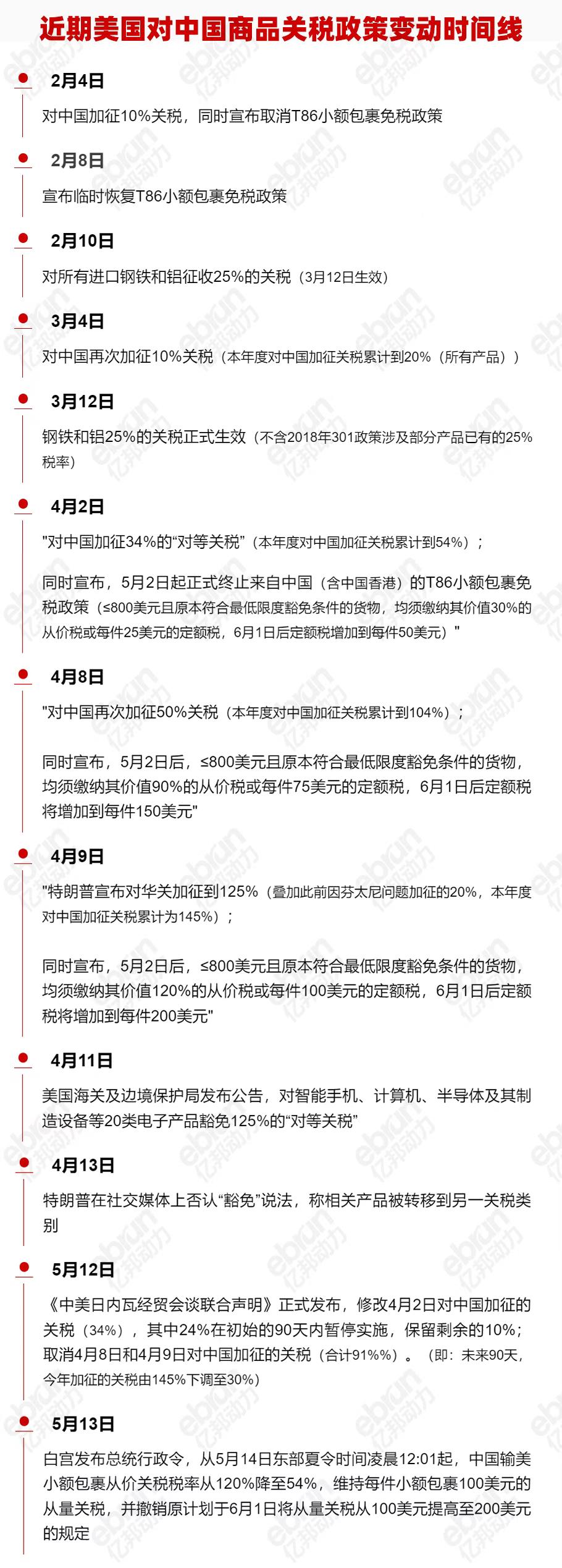
Group 1 - The article discusses the fluctuating tariff policies between the US and China since February 2025, highlighting the impact on Chinese businesses and their operational adjustments in response to these changes [1][2][5] - A timeline of tariff increases is provided, showing a cumulative increase of tariffs on Chinese goods reaching 104% by April 8, 2025, with significant changes in tax policies for small packages [2][5] - The article emphasizes the complexity of the international trade chain, particularly the uncertainties in international shipping due to fluctuating freight rates and geopolitical risks [6][8] Group 2 - The article outlines the implications of tariffs on different trade models, particularly the FOB (Free on Board) model, where the burden of tariff costs primarily falls on the purchasing party, affecting pricing strategies for Chinese manufacturers [8][11] - It highlights the challenges faced by small cross-border sellers due to changes in policies regarding international small packages, which are crucial for their operations [11][12] - The article notes that despite the tariff pressures, China's overall trade performance remains strong, with a 5.6% increase in total trade value in April 2025, indicating resilience in other markets [17][18] Group 3 - The article discusses potential new markets for Chinese brands, particularly in Southeast Asia, Latin America, and the Arab region, emphasizing the need for localization and understanding of cultural nuances [19][24][30] - It highlights the importance of deep localization strategies in Southeast Asia, where local regulations and market conditions require significant adaptation from Chinese companies [24][25] - The article points out the emerging opportunities in the Latin American market, particularly in Mexico, due to favorable trade agreements, while also noting the cultural barriers that need to be addressed [26][29] Group 4 - The article emphasizes the shift from low-cost strategies to high-quality manufacturing for Chinese products, suggesting that companies should focus on building brand value and sustainable pricing models [36][37] - It discusses the growing global interest in Chinese manufacturing, particularly in the 3C electronics sector, and the potential for cultural products and trendy items to succeed in international markets [40][41] - The article concludes with a call for companies to focus on long-term strategies and building strong brand identities rather than seeking quick profits, highlighting the importance of cultural understanding and product value [45][46]

中国黑电的全球突破
2025-06-04 01:50
Summary of Key Points from the Conference Call Industry Overview - The conference call discusses the Chinese black electrical appliances (black goods) industry, particularly focusing on the television sector, highlighting the global breakthroughs of leading companies like Hisense and TCL [1][2][3]. Core Insights and Arguments - **Market Share Growth**: Chinese television brands, such as Hisense and TCL, have significantly increased their global market share, particularly in the high-end market, competing closely with Samsung and LG [2][3][19]. - **Panel Production Shift**: By 2024, China's market share in global LCD TV panel production is projected to reach 66.5%, with BOE and Huaxing Optoelectronics accounting for 45.5% of this share [1][8]. - **Profitability Improvement**: Leading companies have improved their profitability through product structure upgrades, economies of scale, and effective inventory management, resulting in reduced gross margin volatility [1][9]. - **Technological Advancements**: The Mini LED technology is identified as a key trend for upgrading the television industry, particularly suitable for large-sized TVs, with significant cost reductions driving high-end market growth [1][15][16]. - **Industry Transition**: The panel industry is shifting from strong cycles to weaker fluctuations, with leading companies adopting production control and transitioning to larger, high-value products to stabilize costs and optimize profit structures [10][11]. Additional Important Content - **Historical Context**: The average return on equity for the black goods sector was only 6.5% from 2010 to 2020, significantly lower than white goods and consumer electronics, which were 23.5% and 14.4%, respectively [4]. - **Brand Recognition**: Chinese brands are enhancing their global recognition through sports marketing, with Hisense sponsoring major events like the UEFA European Championship and the FIFA World Cup [3][27]. - **Competitive Landscape**: The global black goods market is becoming more concentrated, with the CR4 (concentration ratio of the top four firms) expected to reach 56% by 2024, up from 46% in 2016 [19]. - **Emerging Markets**: New markets in Latin America, the Middle East, and Asia-Pacific present significant growth opportunities, with TCL and Hisense rapidly increasing their market shares in these regions [23][26]. - **Challenges in Mature Markets**: In North America and Europe, Chinese brands face challenges such as high channel concentration and competition from established brands, necessitating strategic adjustments to improve market penetration [24][25]. Conclusion - The Chinese black goods industry, particularly in the television segment, is poised for significant growth driven by technological advancements, strategic market positioning, and enhanced brand recognition. The shift in global production dynamics and the focus on high-end products present substantial opportunities for leading companies like Hisense and TCL to further expand their market presence and improve profitability [31].

电子信息制造业:数字时代的核心引擎与创新载体 市场、创新与竞争交织的产业图景
Huan Qiu Wang· 2025-06-03 07:49
Core Viewpoint - The electronic information manufacturing industry is undergoing a transformation driven by disruptive technological breakthroughs and collaborative innovation, reshaping production and lifestyle in society [1] Market Demand - Consumption Upgrade, Industrial Transformation - The demand in the electronic information manufacturing industry is increasingly diverse and complex, with consumption upgrades and industrial transformations as key guiding directions [2] - The consumer electronics sector, particularly smartphones and wearable devices, is experiencing continuous growth and upgrades, with enhanced performance requirements leading to significant advancements in processing technology and camera capabilities [2] - Industry applications, especially in automotive electronics and industrial internet, show strong demand for electronic information manufacturing products, with advanced driver-assistance systems (ADAS) and industrial robots requiring high-performance chips and sensors [3] - Emerging technology fields, such as quantum computing and space exploration, are creating new demands for specialized electronic components that can operate under extreme conditions [3] Technological Innovation - Breaking Bottlenecks, Fusion Development - Hardware technology breakthroughs are evident in chip manufacturing processes, transitioning from micron to nanometer processes, significantly enhancing chip integration and performance [4] - Software innovation is marked by the application of artificial intelligence algorithms in various fields, improving functionalities in smartphones and industrial internet applications [5] - The trend of hardware and software collaboration is emerging, particularly in the Internet of Things (IoT) and smart automotive sectors, optimizing resource allocation and data processing efficiency [6] Industry Competition - Technological Leadership, Strategic Layout - Intense competition exists between industry giants and emerging companies in the electronic information manufacturing sector, with established players like Intel and Apple maintaining significant market positions through innovation and brand influence [7] - National policies are shaping the development of the electronic information industry, with regions like Shenzhen and the Yangtze River Delta in China playing crucial roles in the global supply chain [8] - Intellectual property and standard-setting have become focal points of competition, with companies like Huawei and ZTE actively participating in the formulation of 5G standards to enhance their market influence [9]
21Shares Launches 21Shares Hedera ETP (HDRA) on Euronext
Globenewswire· 2025-06-03 07:00
Core Viewpoint - 21Shares AG has launched the 21Shares Hedera ETP, providing regulated access to Hedera's distributed ledger technology, which is designed for enterprise use and is energy-efficient [1][3]. Company Overview - 21Shares is one of the largest issuers of crypto exchange-traded products (ETPs) globally, aiming to bridge traditional finance and decentralized finance [6]. - The company has a track record of creating crypto ETPs since 2018 and offers a suite of products listed on major securities exchanges [6]. Product Details - The 21Shares Hedera ETP (Ticker: HDRA) is listed on Euronext Amsterdam and Euronext Paris, with a management fee of 2.50% [2]. - This ETP provides 100% physically backed exposure to HBAR, the native token of the Hedera network, allowing access through traditional bank or brokerage accounts [2]. Technology and Governance - Hedera's distributed ledger technology is characterized by a unique architecture and a strong governance model, supported by a global council of up to 39 institutions, including major companies like Google and IBM [3]. - The technology supports up to 500,000 transactions per second and is significantly more energy-efficient than traditional systems, consuming just 0.000003 kWh per transaction [4].

先导智能(300450):看好国内龙头扩产重启、海外整车厂入局,龙头设备商充分受益
Soochow Securities· 2025-06-03 05:01
Investment Rating - The report maintains a "Buy" rating for the company [1] Core Views - The domestic leader is expected to benefit significantly from the restart of capacity expansion and the entry of overseas automakers, with the company positioned to gain from these trends [7] - The company has a unique advantage in the solid-state battery sector, being the only provider of complete solid-state battery production lines globally [7] - The company has fully accounted for impairment losses, with a significant recovery in cash flow expected as new orders accelerate [7] - The forecast for net profit from 2025 to 2027 is set at 10.57 billion, 17.02 billion, and 22.28 billion respectively, with the current stock price corresponding to dynamic P/E ratios of 29, 18, and 14 times [7] Summary by Sections Section 1: Electric Vehicle Trends - The electric vehicle market is experiencing a significant shift, with domestic and international battery manufacturers actively expanding production [9][33] - The global automotive electrification trend remains strong, with traditional automakers planning their electric transitions [17][22] Section 2: Solid-State Battery Development - Solid-state batteries are identified as a crucial future direction for power batteries, with the company making significant advancements in this area [7][30] Section 3: Financial Performance and Forecast - The company has projected total revenue for 2023 at 16.628 billion yuan, with a year-on-year growth of 19.35% [1] - The net profit for 2023 is forecasted at 1.775 billion yuan, reflecting a year-on-year decrease of 23.45% [1] - The company has reported a significant increase in orders and cash flow recovery, indicating a positive trend in operational performance [7][54]

潮域展览:2025年智能家居市场调查报告
Sou Hu Cai Jing· 2025-05-29 07:18
Market Overview - The Chinese smart home market is expected to reach a shipment volume of 281 million units by 2025, with a year-on-year growth of 7.8%, and the market size surpassing 1 trillion yuan [1] - The growth is driven by various factors including the "trade-in" policy, which accelerates the upgrade of traditional home appliances towards high-end, intelligent, and personalized products [1] - Government subsidies for elderly-friendly renovations are stimulating demand for related smart home products [1] Technological Innovation - AI models are transforming smart home systems from "passive response" to "active service," with examples like Haier's HomeGPT that can understand complex commands and predict user needs [2] - The adoption of edge computing reduces interaction delays and ensures local processing of privacy data [2] - Multi-modal interaction technologies are lowering operational barriers, enhancing user experience [2] Health and Energy Management - Health management is extending from medical settings to homes, with smart mattresses and non-contact monitoring devices expected to integrate medical-grade sensors in 30% of smart home devices by 2025 [3] - AI is optimizing household microgrid management, potentially reducing energy costs by 15%-20% through dynamic scheduling of appliance usage [3] - The interoperability of smart home products is increasing, with protocols like Matter enabling seamless connections across brands [3] Consumer Behavior and Preferences - In Indonesia, 80.5% of respondents are aware of the "smart home" concept, but only 10.9% actively use smart home products [14] - Convenience, safety, and energy efficiency are the primary motivations for purchasing smart home solutions [14] - There is a growing preference for local brands when prices are comparable, indicating a trend towards supporting domestic products [14] Regulatory Policies and Certification Requirements - In Indonesia, smart home products must comply with national standards (SNI certification) and adhere to import tariffs and data privacy regulations [15] - Vietnam requires CR certification for smart home products to ensure safety and quality [15] - In Russia, products must meet GOST certification standards and comply with data localization laws [15] Competitive Landscape and Key Brands - Local brands like VinSmart in Vietnam and Rubetek in Russia are gaining traction, while international brands such as LG, Samsung, and Bosch are also present in these markets [16] - In Indonesia, popular products include energy-efficient smart air conditioners and lighting systems, with brands like Changhong and Philips Hue leading the market [20]