
京东方A

Search documents
A股回购月榜:4月官宣回购计划公司环比大增超4倍,拟回购金额上限超700亿元!紫金矿业三天扫货10亿元!
Mei Ri Jing Ji Xin Wen· 2025-05-11 05:41
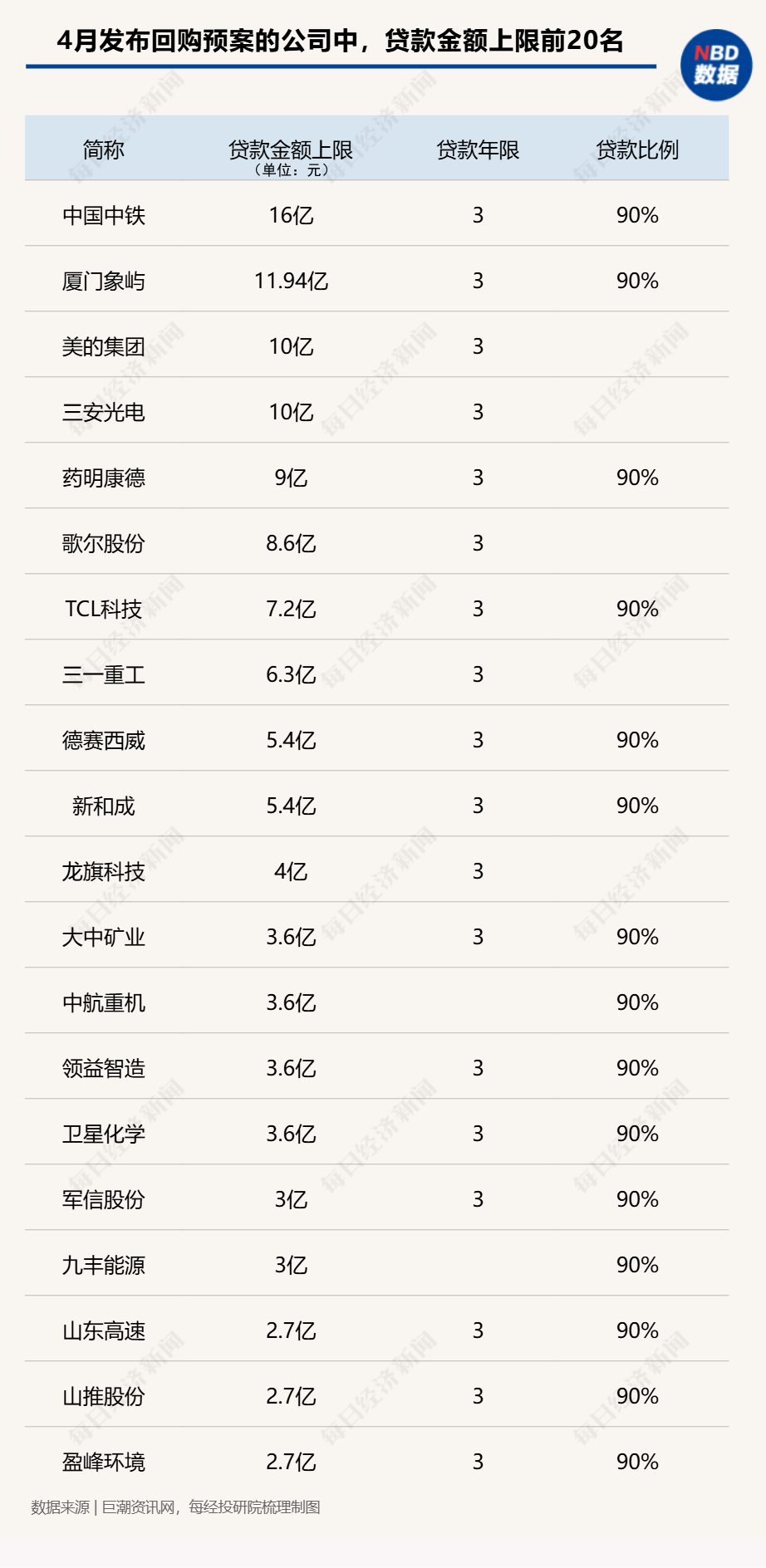
Core Viewpoint - In April, A-shares experienced a significant repurchase wave, with over 240 listed companies announcing repurchase plans totaling approximately 73.5 billion yuan, marking an explosive growth in both the number of companies and the amount proposed compared to March [1][2][3] Group 1: Repurchase Activity - A total of 241 companies announced share repurchase plans in April, a more than fourfold increase from 44 in March, with a proposed repurchase amount of approximately 735.25 billion yuan, up 257.14% from March's 205.87 billion yuan [2][3] - Notable companies leading the repurchase include Ningde Times (80 billion yuan), Xugong Machinery (36 billion yuan), and Midea Group (30 billion yuan) [2][3] - The repurchase activity was spurred by market volatility and a call from the State-owned Assets Supervision and Administration Commission to support central enterprises and listed companies [3][4] Group 2: Market Impact - The repurchase wave positively impacted the capital market, with the Shanghai Composite Index rebounding after a drop of 7.34% on April 7, recording a cumulative increase of 7.93% from April 8 to May 9 [8] - The total repurchase transaction amount in April exceeded 26 billion yuan, a 73% increase from March [9] Group 3: Financing and Policy Support - Approximately 105 of the 241 companies obtained loan commitment letters for repurchase financing, with the total loan amount capped at about 19.956 billion yuan, an increase of 68.35% from March [5] - The People's Bank of China extended the maximum loan term for repurchase financing from one year to three years, reducing the self-funding requirement from 30% to 10% [5] Group 4: Individual Company Actions - Xugong Machinery led the repurchase with a total of 21.42 billion yuan completed by May 7, showcasing a strong commitment to shareholder returns [10][11] - Zijin Mining completed its repurchase plan in just three trading days, reflecting confidence in its future prospects, with a total repurchase amount of 10 billion yuan [11]




一周概念股:国产晶圆代工双雄保持定力,面板行业进入平稳运行态势
Ju Chao Zi Xun· 2025-05-10 09:11
Group 1: Semiconductor Industry - SMIC achieved a record sales revenue of $2.2472 billion in Q1 2025, representing a year-on-year growth of 28.4%, with a gross margin remaining stable and an operating profit of $395.71 million, up 12,766.6% year-on-year [3] - For Q2, SMIC projects a revenue decline of 4% to 6% and a gross margin of 18% to 20%, indicating a mixed outlook for the second half of the year [3] - Hua Hong Semiconductor reported Q1 sales revenue of $540.9 million, a year-on-year increase of 17.6%, with a gross margin of 9.2%, up 2.8 percentage points year-on-year [4] - Hua Hong expects Q2 sales revenue to be between $550 million and $570 million, with a gross margin between 7% and 9%, amid uncertainties in customer demand and procurement costs [5] Group 2: Display Panel Industry - In May, domestic panel manufacturers increased production control and reduced utilization rates to stabilize prices, leading to a forecast of stable panel prices for the month [6] - Analysts believe that while end-market demand may experience temporary adjustments, domestic panel companies are well-prepared to respond through dynamic capacity adjustments and product optimization [6] - BOE indicated that the average utilization rate in the LCD industry has been above 80% since Q1 2025, but anticipates flexible adjustments in production lines in response to declining demand in Q2 [7] - The consolidation of the industry is accelerating, with BOE open to acquiring shares in Huacai and TCL completing the acquisition of LGD's Guangzhou factory, which will optimize the industry structure [7] Group 3: Automotive Industry - Geely Auto announced plans to fully merge with Zeekr Technology, aiming to enhance competitiveness in the smart electric vehicle sector through resource integration and cost reduction [8] - Post-merger, Geely's brands will maintain independent positioning while seeking collaborative development in technology, products, and supply chains [8] - Geely's chairman emphasized the importance of adapting to market competition and economic conditions to enhance innovation and profitability, creating long-term value in the global smart electric vehicle market [8]

大消息!工行、建行、中行、邮储、国开行等,集体宣布!
Sou Hu Cai Jing· 2025-05-10 06:57
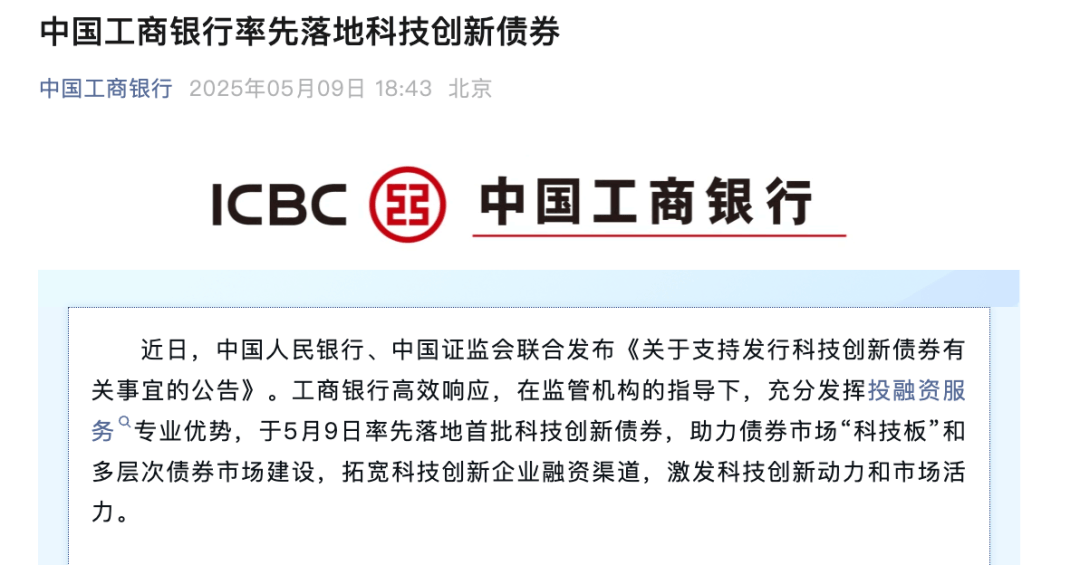
【导读】银行券商等积极响应科创债新政,科创企业迎金融"活水" 中国基金报记者 忆山 5月9日, 工行、建行、中行、邮储银行、 国开行等多家银行相继发布公告,透露其 发行或承销科技创新债券的最新落地情况。 据记者不完全统计,自科创债新政发布以来,银行、券商、股权投资机构等积极响应,目前拟发行的科技创新债券合计规模 已超900亿元,发行市场行情 持续火热的同时,科创企业也将迎来精准"滴灌",缓解融资难题。 国开行:成功发行首批3只科技创新债券,合计200亿元 5月9日,国开行发布消息称,在央行指导下,国开行在银行间债券市场三家金融基础设施机构成功 发行首批3只科技创新债券,合计200亿元。本次发行 按照央行相关制度要求,严格筛选科技贷款项目,募集资金将用于支持国家技术创新示范企业、制造业单项冠军企业等科技型企业,以及高技术制造业、 战略性新兴产业、知识产权(专利)密集型产业等。 其中,在中央国债登记结算有限责任公司招标发行2年期DR浮息债60亿元,在上海清算所招标发行3年期固息债100亿元,在中国外汇交易中心面向投资人 创新直接发行182天贴现债40亿元,发行利率分别为1.47%、1.35%、1.17%,认购倍数 ...




首批亮相!银行间市场科技创新债券上线,50只近400亿元新债在路上
Di Yi Cai Jing· 2025-05-10 05:37
Core Viewpoint - The launch of the Technology Innovation Bonds in China's interbank market has received a positive response, with significant participation from various technology companies and investment institutions, indicating a strong demand for innovative financing solutions in the tech sector [1][3]. Group 1: Market Response and Participation - The Technology Innovation Bonds were officially launched on May 9, with 36 companies announcing a total issuance of 21 billion yuan, and 14 companies registering for an additional 18 billion yuan [1][3]. - The event featured a centralized roadshow with participation from multiple technology firms and investment institutions, highlighting the collaborative effort to promote these bonds [1][3]. - The initial response from institutional investors has been enthusiastic, suggesting a robust market appetite for these bonds [1]. Group 2: Issuer Details - Among the first 50 issuers, 26 technology companies are expected to issue bonds totaling 23.5 billion yuan, while 24 investment institutions plan to issue bonds worth 15.5 billion yuan [3][4]. - Notable issuers include both private enterprises like Luxshare Precision and public companies such as BOE Technology Group, covering a wide range of sectors including artificial intelligence and biomedicine [4][5]. - The geographical distribution of issuers spans 13 provinces, indicating a nationwide interest in the bonds [4]. Group 3: Fund Utilization - The funds raised through these bonds are primarily aimed at enhancing liquidity, supporting R&D, and facilitating comprehensive operational development for the issuing companies [3][7]. - Investment institutions are expected to use the funds for equity investments in technology sectors, ensuring that at least 50% of the raised capital is directed towards technology-focused enterprises [7][8]. - The flexibility in fund usage is a key feature of the Technology Innovation Bonds, allowing issuers to address specific financial needs [6][7]. Group 4: Risk Mitigation and Support Mechanisms - The issuance of Technology Innovation Bonds is supported by various risk-sharing mechanisms, including credit enhancement tools provided by financial institutions [10][12]. - The central bank has introduced a risk-sharing tool to support long-term financing for equity investment institutions, enhancing the credibility and market acceptance of these bonds [13][14]. - The involvement of diverse underwriting teams and the introduction of innovative credit risk mitigation measures are expected to improve the attractiveness of these bonds to investors [10][12].




首批36单科创债已公告发行规模达210亿元
Zhong Guo Zheng Quan Bao· 2025-05-09 21:35
Group 1 - The People's Bank of China and the China Securities Regulatory Commission have announced measures to support the issuance of technology innovation bonds, aiming to enrich the product system and improve the supporting mechanisms for these bonds [2] - The first batch of 36 technology innovation bonds has been announced with a total issuance scale of 21 billion yuan, involving 22 technology companies and 14 private equity investment institutions [3] - The bonds cover various emerging sectors such as integrated circuits, intelligent computing centers, and new materials, with participation from both state-owned and private enterprises [3] Group 2 - The technology innovation bonds are seen as a crucial link between the capital market and technological innovation, promoting high-quality economic development [1] - The initiative includes flexible bond terms, encouraging long-term bonds to better match the funding needs of the technology innovation sector [2] - The market response has been positive, with active participation in the registration and issuance of technology innovation bonds [2]
银行间债券市场正式上线科技创新债券 首批发行主体评价积极
Zheng Quan Shi Bao Wang· 2025-05-09 14:54
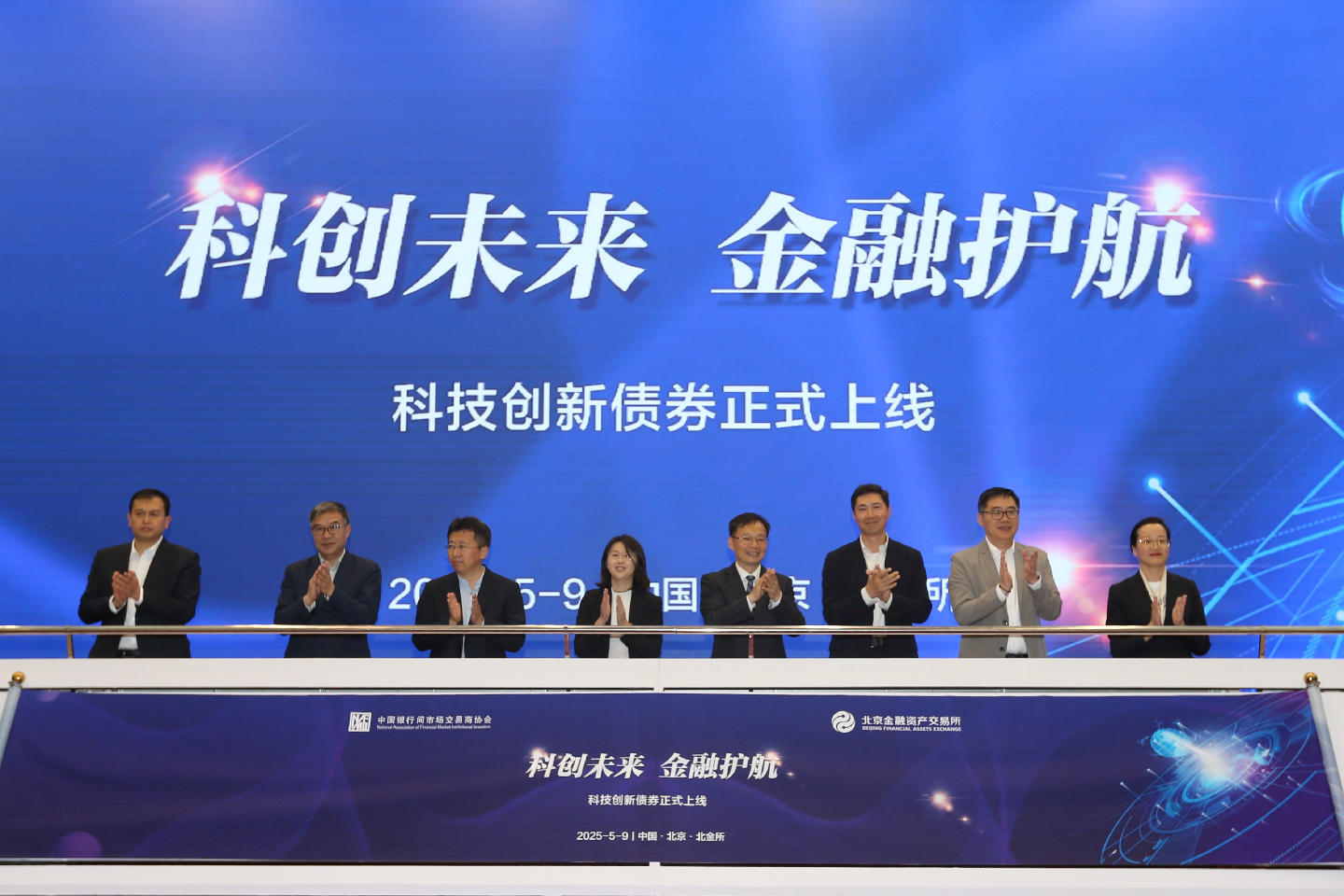
5月9日,由中国银行间市场交易商协会(下称"交易商协会")主办、北京金融资产交易所(下称"北金 所")承办的科技创新债券上线暨集中路演活动在北京举办,标志着银行间债券市场正式上线科技创新 债券。 "通过债券市场'科技板'政策支持,我们进一步降低了融资成本,增加了耐心资本资金来源。"亦庄国投 相关负责人表示,科技创新债券为支持新一代信息技术、人工智能、生物医药、智能制造等战略性新兴 产业提供了稳定的资金保障。 银行间债券市场科技创新债券在5月7日由交易商协会发文宣布推出。据交易商协会日前披露,截至5月8 日,已有36家企业公告发行科技创新债券,发行规模合计210亿元;14家企业开展注册申报,注册规模 合计180亿元。 中国人民银行金融市场司副司长曹媛媛在致辞中指出,科技创新债券是连接资本市场与科技创新的重要 纽带。她在现场倡议,发行主体要用好、用足募集资金,投资主体对科技创新债券要树立长期价值投资 理念、共享科技红利,鼓励市场灵活设计债券条款,推动更多金融活水涌向创新高地。 "债券市场'科技板'的上线开启了科技金融发展的新篇章。"中国银行间市场交易商协会副秘书长包香明 在致辞中指出,5月7日,中国人民银行、中国 ...
中证电子50指数下跌1.75%,前十大权重包含海康威视等
Jin Rong Jie· 2025-05-09 13:35
Group 1 - The core index, the CSI Electronic 50 Index, has seen a recent decline of 1.75%, closing at 3884.65 points, with a trading volume of 46.189 billion yuan [1] - Over the past month, the CSI Electronic 50 Index has increased by 11.16%, while it has decreased by 7.54% over the last three months and 3.76% year-to-date [1] - The index comprises the 50 largest listed companies in the electronic and semiconductor sectors, reflecting the overall performance of the electronic sector [1] Group 2 - The top ten weighted stocks in the CSI Electronic 50 Index include: SMIC (6.48%), Luxshare Precision (6.17%), Cambricon (5.55%), BOE Technology Group (5.42%), Northern Huachuang (5.34%), Haiguang Information (5.08%), Will Semiconductor (4.23%), Hikvision (4.02%), Zhongke Shuguang (3.58%), and Lattice Semiconductor (3.33%) [1] - The market capitalization distribution of the CSI Electronic 50 Index shows that the Shanghai Stock Exchange accounts for 53.35%, while the Shenzhen Stock Exchange accounts for 46.65% [1] Group 3 - The CSI Electronic 50 Index is composed entirely of companies in the information technology sector, with a 100% allocation [2] - The index samples are adjusted biannually, with adjustments occurring on the next trading day after the second Friday of June and December [2] - Public funds tracking the CSI Electronic 50 include: Hua Bao Electronic ETF Link A, Hua Bao Electronic ETF Link C, Hua An CSI Electronic 50 Link A, Hua An CSI Electronic 50 Link C, Hua Bao CSI Electronic 50 ETF, and Hua An CSI Electronic 50 ETF [2]

投资推介、一对一洽谈,中沙先进制造业洽谈会8个项目签约
Sou Hu Cai Jing· 2025-05-09 13:34
Group 1 - The 2025 Beijing International Investment and Trade Fair (referred to as "Jing Fair") is being held concurrently with the Beijing Science and Technology Expo, featuring investment negotiations with guests from Saudi Arabia [1][4] - The "Beijing-Saudi Advanced Manufacturing Negotiation Conference" took place on May 9, with over 300 Chinese manufacturing enterprises participating and 8 projects signed on-site, covering finance, technology cooperation, smart manufacturing, procurement, and enterprise expansion [4][5] - The conference aims to expand foreign investment inflow and enhance the role of foreign capital in promoting high-quality development of Beijing's manufacturing industry, integrating deeper into the global industrial and supply chains [4][5] Group 2 - The event was co-hosted by the Beijing Council for the Promotion of International Trade and several Saudi government agencies, with over 40 Saudi officials and executives in attendance [4] - The Beijing Council is developing a full-chain service system through mechanisms like "Cloud-based Dual-Week Industry Reception Room" and "Overseas Service," aiming for collaborative development of "Beijing Innovation + International Application" [4] - During the "China-Saudi Industry Dual-Week" supply chain and logistics session, companies like JD Logistics and CIMC showcased their technologies and applications to expand potential customer bases and facilitate industry exchanges [5]

【新华解读】首批210亿!银行间科创债“开板”亮眼 发行与投资应树立长期理念
Xin Hua Cai Jing· 2025-05-09 13:21
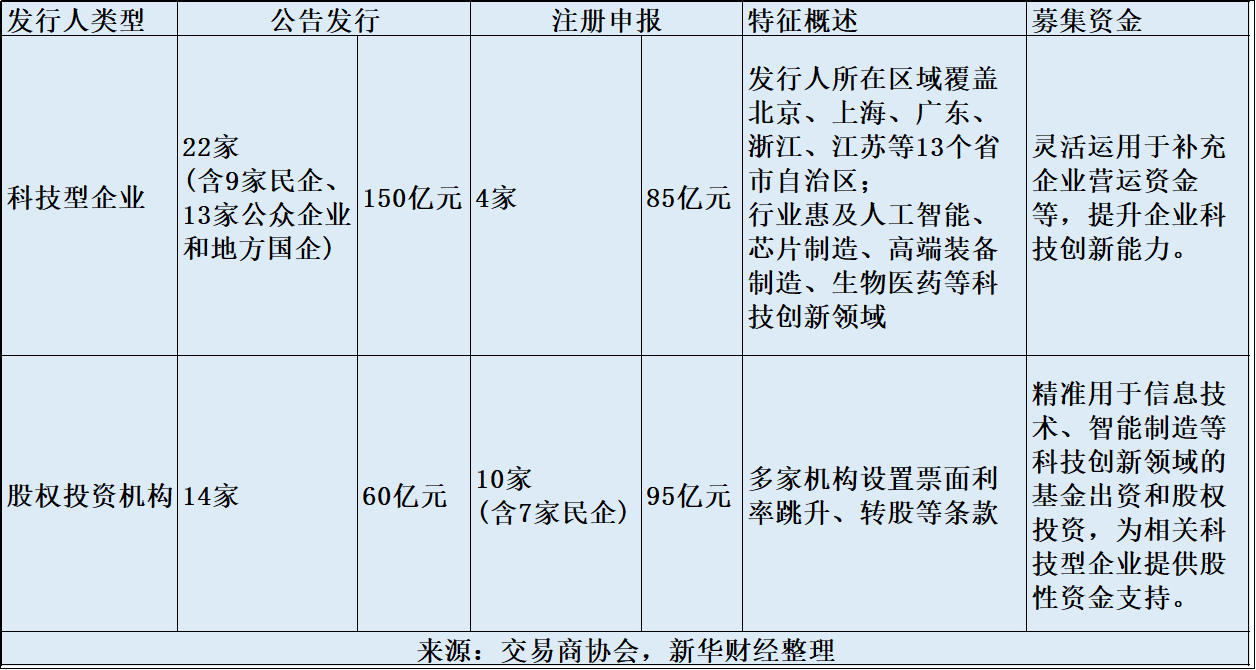
Core Viewpoint - The launch of the "Technology Board" in the bond market aims to support the financing of technology innovation through various measures, encouraging long-term investments in hard technology and fostering a comprehensive financial ecosystem for innovation [1][2][3]. Group 1: Market Overview - The bond market in China has surpassed 180 trillion yuan, making it the second-largest globally, with the introduction of technology innovation bonds seen as a significant market innovation [3]. - The first batch of technology innovation bonds has a registered issuance scale of 210 billion yuan, with 36 enterprises announcing their issuance [3][4]. Group 2: Issuance Details - Among the 36 enterprises, 22 are technology companies, including 9 private enterprises and 13 public companies, with an expected issuance scale of 150 billion yuan [4]. - 14 private equity investment institutions are also involved, with an expected issuance scale of 60 billion yuan [5]. Group 3: Funding Utilization - The funds raised through technology innovation bonds can be flexibly used for R&D, project construction, and mergers and acquisitions, thereby stimulating innovation [9][10]. - Specific sectors benefiting from these funds include artificial intelligence, chip manufacturing, high-end equipment manufacturing, and biomedicine [10]. Group 4: Risk Mitigation Measures - Various risk-sharing mechanisms are being implemented to support the issuance of technology innovation bonds, including collaboration with local governments and market-based credit enhancement institutions [8][9]. - More than ten issuers have already adopted diversified credit enhancement measures to mitigate risks associated with bond issuance [9].
中国需要什么样的机器人?
投资界· 2025-05-09 06:36
Core Viewpoint - The article discusses the rapid development and commercialization of embodied intelligence in robotics, particularly focusing on industrial applications rather than humanoid robots, highlighting the importance of practical deployment in manufacturing settings [4][10][12]. Group 1: Embodied Intelligence in Robotics - The unveiling of the Von Neumann Artificial Intelligence Research Institute at Hong Kong University of Science and Technology marks a significant step in advancing embodied intelligence, with a focus on practical applications in industrial settings [4][12]. - The rise of non-humanoid industrial robots, which are equipped with AI technology and multi-modal perception systems, is transforming the manufacturing landscape by actively making decisions rather than passively executing tasks [7][12]. - Companies like Simo Technology have successfully integrated their industrial intelligent systems into over 300 leading enterprises globally, demonstrating the practical application of embodied intelligence in real-world scenarios [7][9]. Group 2: Market Dynamics and Investment Trends - The article notes a growing divide between the hype surrounding humanoid robots and the actual commercial viability of industrial robots, with the latter showing more promise for immediate market application [6][10][15]. - Investment in embodied intelligence is booming, but there are concerns about valuation bubbles and the challenges of finding viable commercial applications [15][16]. - The industrial sector is seen as a more stable and predictable market for robotics, with a higher demand for automation in manufacturing processes compared to consumer markets [16][17]. Group 3: Challenges and Future Outlook - Despite the potential of embodied intelligence, there are significant barriers to widespread adoption, including high customization costs, integration difficulties, and the need for mature algorithms [12][13]. - The article emphasizes the importance of focusing on industrial applications to ensure the survival and growth of robotics companies, as evidenced by the struggles of humanoid robot firms in achieving profitability [15][16]. - Predictions suggest that industrial embodied intelligence will be the first to achieve large-scale application, with significant implications for the future of manufacturing and global industry [16][17].
