
智元机器人

Search documents
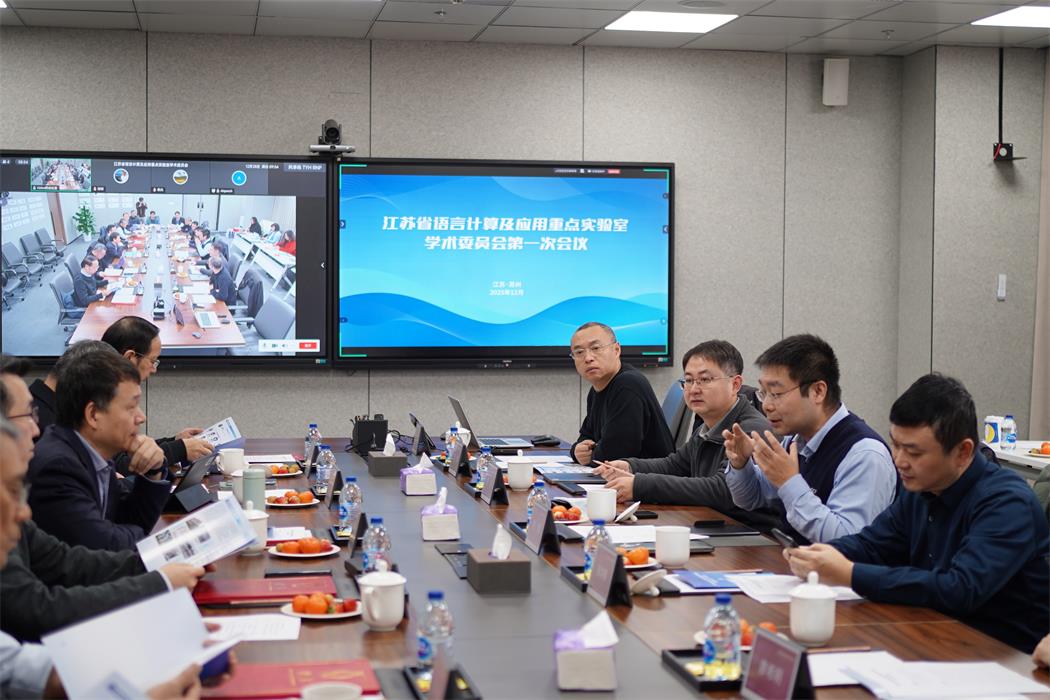
江苏省语言计算及应用重点实验室召开学术委员会第一次会议
Jiang Nan Shi Bao· 2025-12-31 07:28
Core Insights - The Jiangsu Provincial Language Computing and Application Key Laboratory has successfully held its first academic committee meeting, focusing on the transition from generative to executable AI technologies [1][3] - The laboratory aims to become a leading center for original innovation in language computing within three years, contributing to high-quality development in China's AI sector [3][12] Group 1: Laboratory Overview - The laboratory is the first AI key laboratory in Jiangsu led by a company, highlighting the province's emphasis on AI industry development and enterprise-driven technological innovation [7] - It is established in collaboration with Shanghai Jiao Tong University and Suzhou University, leveraging top-tier research resources to focus on core language computing technologies [7] - The laboratory emphasizes a "reliability-first" approach in cross-modal general intelligence, targeting key technologies such as trustworthy speech and multi-modal perception [7] Group 2: Academic Committee Insights - The academic committee, chaired by Zhang Bo, includes experts from various prestigious institutions, providing constructive feedback on the laboratory's mid-to-long-term development plans [5][9] - Experts recommend strengthening foundational research and core technology breakthroughs, particularly in multi-modal perception, agent communication, and reliability enhancement [3][9] Group 3: Industry Applications - The laboratory's AI technologies have been successfully implemented in smart travel, smart office, and smart IoT sectors, demonstrating effective integration of research and application [9][10] - In the smart travel sector, the laboratory's solutions have been adopted by major automotive brands, enhancing in-car language processing and user experience [9][10] - The smart IoT solutions have been deployed in key areas such as smart robotics and consumer electronics, collaborating with leading companies to drive industry transformation [10] Group 4: Future Directions - The laboratory plans to deepen collaboration with local universities and enterprises to accelerate the application of technological achievements in various key scenarios [3][12] - The focus will be on core technology breakthroughs and fostering high-end talent in general AI to enhance Jiangsu's competitiveness in the AI industry [7][12]

Optimus产业链公司们北美沟通,进展速递!
Robot猎场备忘录· 2025-12-31 06:52
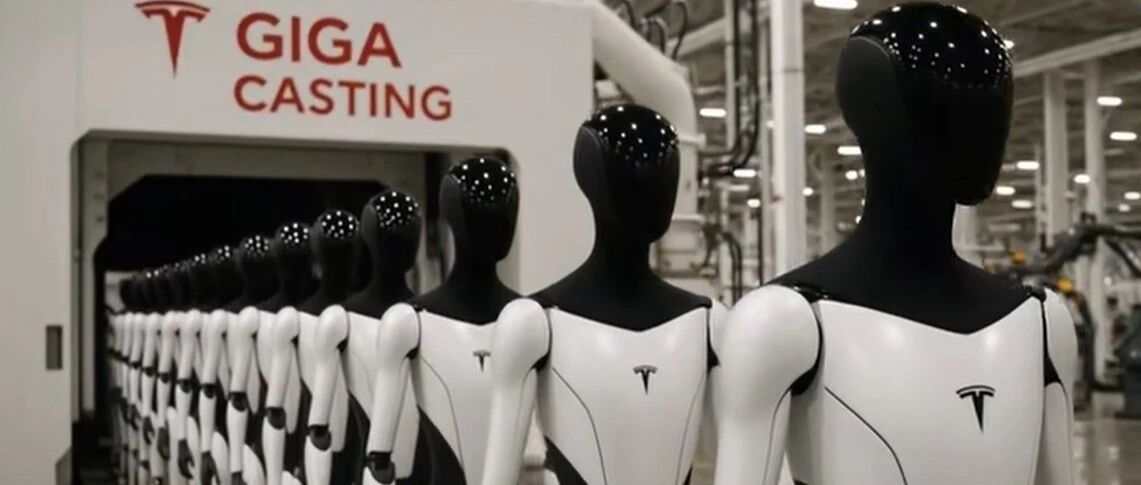
Core Viewpoint - The article highlights the positive momentum in the T-chain sector, driven by favorable news regarding Tesla's Optimus project and subsequent supplier engagements in North America, leading to significant stock price increases and a bullish market outlook for 2026 [2][4][9]. Summary by Sections Market Performance - In the last week of December, T-chain stocks outperformed expectations, with many core and new stocks experiencing substantial price increases, indicating a potential market reversal [2][4]. - The article notes that the T-chain sector has seen a significant rebound, with many stocks hitting their daily price limits, validating previous predictions about the market's trajectory [4][6]. Key Drivers - The optimism surrounding the T-chain is attributed to several factors, including the nearing finalization of the Optimus project, clearer guidance on mass production, and the simultaneous "shrinking" and "expanding" of core targets within the sector [3][4]. - Recent communications and orders from North American suppliers have further catalyzed the market, with many companies reporting positive developments and securing supplier codes and orders [7][8]. Investment Opportunities - The article emphasizes the importance of focusing on core, high-certainty stocks that have recently received positive news, as these are expected to attract more capital and drive further price increases [6][8]. - Specific companies mentioned, such as WX and KS, have reported exceeding expectations in their North American engagements, indicating strong demand and potential for future growth [7][8]. Future Outlook - The T-chain sector is anticipated to continue its upward trend, with significant developments expected in early 2024, including the finalization of production processes and increased supplier capacity [8][9]. - The article suggests that the current market dynamics are setting the stage for a robust performance in the T-chain sector leading into 2026, with ongoing updates and insights available through the associated knowledge platform [10].

机械设备行业2026年年度投资策略:成长周期轮动,主题复苏并驱
Guoyuan Securities· 2025-12-31 06:47
Group 1 - The report highlights the investment opportunities in the humanoid robot sector, focusing on manufacturers that have entered mass production or have clear ongoing order sources, such as Tesla, Figure, and domestic companies like Yushu and UBTECH [2][27] - The investment strategy for humanoid robots is centered around three main lines: complete machines, key components, and core modules, as well as the evolution of capabilities [2][28] - The report emphasizes the importance of the supply chain and the optimization of the industry structure, with a focus on the increasing order volume for core execution modules like linear and rotary joints [2][28] Group 2 - The engineering machinery sector is expected to see growth driven by stable export performance and increased policy support, with major projects acting as new growth engines [4][27] - Recommended companies in the engineering machinery sector include SANY Heavy Industry, XCMG, and LiuGong, which have strong overseas capabilities and comprehensive product lines [4][27] - The tool industry is also highlighted as a foundational support sector for machinery manufacturing, with ongoing policy and demand-side catalysts expected to drive growth [4][27] Group 3 - The low-altitude economy in China is projected to expand rapidly, with an expected market size exceeding one trillion yuan by 2026, reflecting a compound annual growth rate of approximately 30% [5][6] - The report identifies the drone manufacturing and operation services as accounting for 55% of the low-altitude economy, with supply chain, consumption, and transportation making up about 40% [5][6] - Key investment recommendations in the low-altitude economy include companies involved in aviation batteries, core components, and low-altitude security systems [6][5]
东莞首富完成交接班,38岁儿子接棒800亿产业帝国,重金布局AI与具身智能
2 1 Shi Ji Jing Ji Bao Dao· 2025-12-31 06:39
Core Viewpoint - Dongyangguang (600673) announced an internal adjustment of its shareholding structure, with controlling shareholder Guo Meilan transferring her stakes in subsidiaries to her son Zhang Yushua, who becomes the new controlling person of the company [1][3]. Shareholding Structure Adjustment - Guo Meilan transferred 71.75% of her shares in Luyuan Yunen Electronics and 74.63% in Luyuan Xinjing Technology to Zhang Yushua, resulting in her no longer holding any shares in these companies [1][3]. - Following the transfer, Zhang Yushua directly holds 99.20% of Luyuan Yunen Electronics and 75.00% of Luyuan Xinjing Technology, indirectly owning 100% of Shenzhen Dongyangguang Industrial Development Co., thus holding 1,164,828,691 shares of Dongyangguang, accounting for 38.70% of the total share capital [3]. Company Background and Financial Performance - Dongyangguang Group was founded in 1997 and has diversified its business into five main sectors: electronic components, high-end aluminum foil, chemical new materials, energy materials, and liquid cooling technology, with a global market share of approximately 30% in chemical foils [7]. - In the first three quarters of 2025, Dongyangguang achieved a revenue of 10.97 billion yuan and a net profit attributable to shareholders of 906 million yuan [7]. Leadership Transition - Zhang Yushua, aged 38, has taken over leadership from his mother Guo Meilan, who is 62 years old. Zhang is now recognized as the new richest person in Dongguan with a wealth of 40 billion yuan [5][10]. Strategic Initiatives and Industry Positioning - Under Zhang Yushua's leadership, Dongyangguang is actively pursuing upgrades and strategic transformations, particularly in AI and embodied intelligence sectors [13]. - The company has established a joint venture with Zhongji Xuchuang, investing 100 million yuan to enhance its capabilities in liquid cooling technology [13]. - Dongyangguang also made a significant acquisition of Qinhuai Data's China operations for 28 billion yuan, marking the largest merger in China's IDC industry [13]. Recent Developments in AI and Embodied Intelligence - Dongyangguang has formed a partnership with Zhiyuan Robotics and Peking University to create a new company focused on embodied intelligence, with initial market orders amounting to 7 million yuan and revenue of 1.119 million yuan in the first half of 2025 [14].


2025,车企跨界造“人”
Tai Mei Ti A P P· 2025-12-31 06:22
Core Insights - The rise of humanoid robots has become a significant trend in the tech industry, with automotive companies increasingly investing in humanoid robot development as a new growth avenue amidst slowing market growth in traditional automotive sectors [2][20][26] - Tesla's humanoid robot, Optimus, is positioned as a key product for the company's future, with expectations that it will contribute significantly to Tesla's overall value [3][4][20] - Chinese automakers, including Xpeng and BYD, are also making strides in humanoid robotics, with Xpeng's IRON robot showcasing advanced capabilities and aiming for mass production by the end of 2026 [8][10][26] Industry Trends - The automotive sector is witnessing a collective push towards humanoid robotics, with nearly all major car manufacturers increasing their involvement in this field [2][7] - Companies are adopting various strategies, including full-stack self-research and partnerships with established robotics firms, to accelerate their entry into the humanoid robot market [10][11] - The market is expected to see a significant increase in humanoid robot deployment, with projections suggesting a market size of $5 trillion by 2050 [27] Technological Challenges - The development of humanoid robots faces significant technical hurdles, particularly in achieving stability and functionality in real-world environments [12][13][15] - Key challenges include the complexity of creating dexterous hands, stable locomotion, and advanced AI capabilities for real-time decision-making [14][16][17] - Current production methods are still largely manual, limiting the scalability of humanoid robot manufacturing [18] Market Dynamics - The entry of automotive companies into humanoid robotics is seen as a strategic move to diversify and mitigate risks associated with traditional automotive business cycles [20][21] - The overlap in technology and components between electric vehicles and humanoid robots provides automotive companies with a competitive advantage in this new market [21][22] - The industry is at a critical juncture, with the potential for significant breakthroughs or the risk of stagnation due to unresolved challenges [27]

38岁张寓帅接棒800亿产业帝国,东阳光加码AI与机器人赛道
2 1 Shi Ji Jing Ji Bao Dao· 2025-12-31 03:05
南方财经记者杨期鑫实习生郑凝 12月29日晚,东阳光(600673)发布公告,控股股东深圳市东阳光实业发展有限公司进行股权结构内部 调整,公司实控人之一的郭梅兰因年事已高,与儿子张寓帅签署了《股权转让协议》,将其所持有的乳 源寓能电子71.75%股权、乳源新京科技74.63%股权全部转让予张寓帅。 本次股权比例调整后,郭梅兰女士不再持有乳源寓能电子和乳源新京科技的股权,不再间接持有公司的 股份;张寓帅先生直接持有乳源寓能电子99.20%的股权、持有乳源新京科技75.00%的股权,并通过乳 源寓能电子和乳源新京科技间接持有深圳东阳光实业100%股权,从而间接持有公司1,164,828,691 股股 份,占公司总股本的38.70%。东阳光实控人将由郭梅兰和张寓帅变更为张寓帅。 如今,东阳光主营业务已涵盖电子元器件、高端铝箔、化工新材料、能源材料、液冷科技五大板块,其 中化成箔全球市占率约30%,是国内唯一化成箔出口占比超50%的企业。 2025年前三季度,东阳光实现收入109.70亿元,归母净利润9.06亿元。 在深耕电子新材料的同时,集团自2001年起前瞻性布局生物医药领域,投资设立了宜昌长江药业有限公 司(后 ...

2026年量产元年!工信部重磅出手,人形机器人“新国标”来了,产业链三大主线或将爆发!
Jin Rong Jie· 2025-12-30 12:16
Core Insights - The humanoid robot sector is experiencing significant growth, with multiple companies such as Boke Co., Hualing Cable, and others reaching their stock price limits recently, indicating strong market interest and optimism [1] - The establishment of the Standardization Technical Committee for Humanoid Robots and Embodied Intelligence by the Ministry of Industry and Information Technology is a crucial step towards enhancing high-quality standards and promoting the application of humanoid robot technologies [1] Market Analysis - According to Dongfang Securities, advancements in motion control for humanoid robots are expected to accelerate by 2025, with mass production becoming a key focus in 2026 [2] - Open Source Securities highlights that the industry will transition from "0-1" to "1-10" by 2025, emphasizing the importance of technological convergence and the need to identify certainty in technology advancements [2] Industry Segmentation 1. **Core Components**: The main components of humanoid robots include reducers, servo motors, and controllers, which significantly contribute to the overall manufacturing cost. The demand for high-precision reducers is expected to rise, with domestic manufacturers approaching international standards [3] 2. **Sensors and Actuators**: The demand for sensors, including tactile and visual sensors, is growing exponentially. Companies are increasing R&D investments in MEMS sensors and related technologies, which are crucial for enhancing the robots' sensory capabilities [4] 3. **Overall Integration and Software Algorithms**: While hardware forms the foundation, software algorithms provide the essential functionality. Companies that can integrate hardware and software effectively are anticipated to lead the market, especially in the field of embodied intelligence [5]





站在机器人风口,为何均胜电子仍是“价值洼地”?
Quan Jing Wang· 2025-12-30 08:56
Core Viewpoint - The value of Junsheng Electronics (600699), a global leader in automotive electronics and safety, is significantly underestimated despite its ability to provide system-level solutions and hold bulk orders from top clients both domestically and internationally. The company is quietly completing key positioning with a dual-track strategy of "Automotive + Robotics Tier 1" [1] Group 1: Business Breakthroughs - In 2025, Junsheng Electronics' robotics business achieved a critical leap from strategic layout to commercial realization, forming a complete product matrix covering "brain" (AI domain controller), "cerebellum" (joint control), and "limbs" (structural assembly) with considerable value per unit [2] - The company has begun bulk deliveries of various key structural components for a leading international robotics company, upgrading from component supplier to high-value assembly segments, capturing over half of the market share with another major North American client [2] - Junsheng Electronics has established strategic partnerships with leading domestic companies like Zhiyuan Robotics, preparing for mass production orders from projects such as Xiaopeng Robotics, entering a phase of continuous monthly shipments [2] Group 2: Unique Value in the Industry - Unlike most companies in the robotics supply chain that focus on single components like screws and motors, Junsheng Electronics possesses unique advantages in system integration and the ability to leverage automotive industry experience [3] - The high technical migration barriers stem from the interactive capabilities of its AI head assembly, derived from smart cockpit technology, and the engineering experience from large-scale automotive manufacturing, which new startups find difficult to replicate in the short term [3] - The company has solidified its position with both overseas and domestic leading clients (Zhiyuan, Xiaopeng) and formed ecological partnerships with firms like NVIDIA and Heishima (000716), ensuring technological leadership [3] Group 3: Value Recognition and Valuation Discrepancy - The market continues to perceive Junsheng Electronics as a traditional automotive parts company, leading to significant undervaluation compared to comparable companies like Top Group (601689) and Sanhua Intelligent Control (002050) that are also involved in robotics [4] - This "cognitive gap" is being challenged by the reality that Junsheng's robotics business is no longer just a concept but has clear orders and is entering the shipment phase, representing a second growth curve [4] - The stable cash flow from its automotive main business and real industrial scenario data provide a unique safety net and evolutionary advantage, highlighting a stark divergence between current stock prices and the systematic progress and certainty of orders achieved in the robotics field [4]

1元租个机器人,擎天租上线“即时租”服务,撬动机器人规模化服务落地
Cai Jing Wang· 2025-12-30 08:39
Core Insights - The article discusses the launch of "Instant Rent" service by Qingtian Rental (Shanghai) Technology Co., Ltd., which will officially start a nationwide "1 Yuan Flash Rent" campaign on January 1, 2026, covering ten major cities in China [1][2]. Group 1: Service Launch and Features - The "1 Yuan Flash Rent" campaign allows users to make reservations through a dedicated QR code, emphasizing a low-threshold and high-standard service model [1]. - The service aims to transform humanoid robots from "high-priced equipment" to "deliverable services," moving away from the traditional customized project-based applications [1][2]. - The campaign will be implemented in key cities including Beijing, Shanghai, Guangzhou, Shenzhen, Hangzhou, Zhengzhou, Chengdu, Suzhou, Xiamen, and Chongqing, utilizing a unified equipment scheduling system and service processes [1]. Group 2: Operational Support and User Experience - The "Instant Rent" service includes three key benefits: a 2-hour basic experience duration, professional technical team for installation and debugging, and dedicated personnel for full-process follow-up [1][2]. - This model integrates equipment operation, technical debugging, and on-site services, significantly reducing the overall costs and risks for enterprises in short-term applications [1][2]. Group 3: Technology and Market Adaptation - The robots used in the "1 Yuan Flash Rent" are primarily the Lingxi X2 humanoid robots from Zhiyuan Robotics, which are designed for various commercial and public scenarios such as corporate events and exhibitions [2]. - The "Instant Rent" model addresses the challenges of high procurement costs, deployment difficulties, and high risks associated with robot applications, making it easier for businesses to validate the value of robots in real scenarios [2]. Group 4: Future Expansion and Industry Impact - Qingtian Rental plans to further expand its national service coverage and continuously optimize its product and service structure to promote the practical application of humanoid robots across more industry scenarios [3]. - The company aims to inject new momentum into the development of the digital economy by transitioning robot rental services from high-end customized solutions to more accessible options for the general public [2][3].
2025年创新领域盘点——创新活力持续迸发(人民日报海外版)
Ren Min Ri Bao Hai Wai Ban· 2025-12-30 08:36
Core Insights - In 2025, China's technological innovation continues to thrive, with significant advancements in various fields such as artificial intelligence, quantum information, life sciences, and clean energy, contributing to high-quality development and improved living standards [1] Group 1: Fundamental Research - China has achieved new heights in fundamental scientific research, with multiple results breaking international records and filling gaps in various fields [2] - The Jiangmen Underground Neutrino Observatory (JUNO) has successfully measured two key parameters of neutrino oscillation with a precision 1.5 to 1.8 times better than previous international standards [2] - A team from the Chinese Academy of Sciences has created five types of two-dimensional metals with single-atom thickness, marking a significant breakthrough in material science [3] - As of August 2025, China leads the world with 2,342 hot papers, accounting for 53.2% of the global total, and ranks second in highly cited papers [3] Group 2: Cutting-edge Technologies - In quantum computing, the "Zuchongzhi 3" prototype has been developed, featuring 105 readable qubits and achieving speeds surpassing the fastest supercomputers [4] - The AI model DeepSeek-R1 has been released, achieving performance comparable to top global models with fewer computational resources, marking a shift in AI development strategies [4] - The number of AI companies in China has exceeded 5,300, representing 15% of the global total, establishing a comprehensive industrial system [4] Group 3: Robotics and Aerospace - The humanoid robot industry is rapidly emerging, with significant public demonstrations showcasing advancements in embodied intelligence [5][6] - The Tianwen-2 probe has been successfully launched, marking China's first asteroid sampling and comet flyby mission, filling a technological gap in small celestial body exploration [6] - The EAST nuclear fusion experiment has achieved a world record of 1 million degrees Celsius for 1,066 seconds, validating the feasibility of steady-state operation for fusion reactors [6] Group 4: Life Sciences and Resource Utilization - In life sciences, breakthroughs in pest control and cancer treatment have been made, promoting green and precise pest management and developing new strategies for nasopharyngeal cancer immunotherapy [8] - The South-to-North Water Diversion Project has delivered over 80 billion cubic meters of water, benefiting 185 million people and addressing groundwater over-extraction issues [9] - China's high-speed rail technology has set new records, with the CR450 train achieving a single-column speed of 453 km/h, leading the world in rail technology [9] Group 5: Global Collaboration - China is leading global renewable energy development, with solar and wind power surpassing fossil fuels in new electricity generation [10] - Major scientific projects like the Jiangmen Neutrino Experiment are open to global collaboration, attracting top scientists to tackle significant scientific challenges [10] - China is sharing technological advancements in public health and agriculture, contributing to global governance improvements [11]