戴德梁行

Search documents
副中心绿色发展引燃京港洽谈会
Bei Jing Ri Bao Ke Hu Duan· 2025-11-14 06:57
转自:北京日报客户端 11月12日至13日,第二十八届北京·香港经济合作研讨洽谈会在香港会议展览中心举办。作为本届洽谈 会的重要组成部分,城市副中心专场推介会以"创新发展,绿色协同,携手共建国家绿色发展示范区"为 主题,通过项目签约、合作仪式、系列主题推介等环节,推动了北京城市副中心与香港企业的深度合 作。 通州区委常委、常务副区长李先侠致欢迎辞,北京市投资促进服务中心主任杨蓓蓓,香港贸易发展局首 席代表陈嘉贤等分别致辞。通州区委常委、常务副区长李先侠表示,香港是享誉全球的国际金融中心、 贸易枢纽与创新高地,在绿色金融、智慧城市、专业服务、跨境合作等领域积淀深厚、资源雄厚,与副 中心的产业方向、发展愿景高度契合。近年来,两地合作日益紧密、成果丰硕,以金融合作为先导,以 科技与产业协作为重点,持续拓宽合作领域、提升合作能级,为副中心高质量发展注入了强劲的动力。 在北京城市副中心国际招商联络站(香港站)揭牌仪式上,通州区委常委、常务副区长李先侠与首钢控 股(香港)有限公司总经理陈益共同为新站揭牌,京港创新中心成为副中心又一个国际招商联络站,该 中心是首钢控股(香港)有限公司设立的,旨在促进北京和香港两地在科技创新 ...
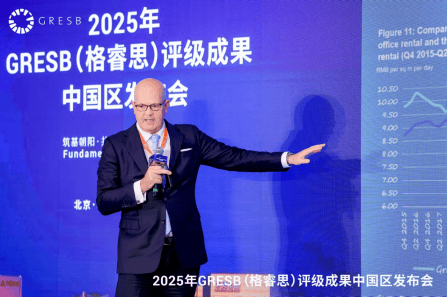
戴德梁行发布《绿色收益:通过可持续发展解锁商业地产价值》报告
Sou Hu Cai Jing· 2025-11-14 05:27
Core Insights - The report by JLL emphasizes the impact of sustainability on the operational performance, asset value, and investment decisions in China's commercial real estate sector [1][3] - The demand for sustainable commercial buildings in China is steadily increasing due to strict regulatory policies, investor expectations, and tenant requirements [1][3] Market Demand for Sustainable Commercial Buildings - Sustainability encompasses energy conservation, user well-being, corporate ethics, and climate change resilience throughout the real estate lifecycle [1] - Sustainable assets are gaining recognition in the market for their long-term value, risk mitigation, and competitive differentiation [1] Sustainable Development and Asset Performance - Sustainability is now a core driver of asset performance in commercial real estate, influenced by evolving expectations from investors, regulators, and tenants regarding ESG [3] - The transition towards sustainable development in commercial real estate is being accelerated by national policies, urban planning priorities, and the rise of green finance in China [3] Challenges and Strategies - The industry faces challenges such as renovation costs, data transparency, and inconsistent regulations [3] - Leading companies are addressing these challenges through targeted strategies, real estate technology applications, and enhanced stakeholder collaboration [3] Future Outlook - The landscape of sustainable real estate is rapidly evolving, driven by stricter regulatory requirements, growing investor demand, technological advancements, and deepening climate commitments [6] - Governments, cities, and enterprises are increasingly committing to net-zero emissions, setting new standards for the real estate sector [6] - Technologies like artificial intelligence, data analytics, and digital twin technology will play a transformative role in enabling smarter and more efficient sustainable development decisions [6] Investment Considerations - Investors are progressively upgrading GRESB ratings from mere benchmarking tools to core decision-making criteria for risk pricing and capital allocation [6] - Companies that integrate sustainability into their core operations and investment decisions are likely to unlock significant green revenue potential and enhance their market competitiveness [6]

2025京港国际消费中心城市建设合作专题推介活动举办丨聚焦京港洽谈会
Sou Hu Cai Jing· 2025-11-13 10:47
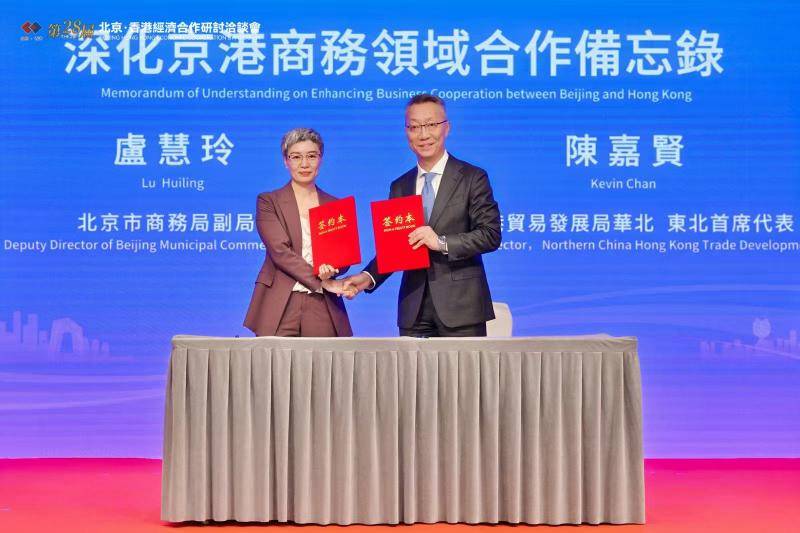
Group 1 - The event held on November 13 in Hong Kong focused on the theme "Beijing-Hong Kong Jointly Building an International Consumption Center," featuring a combination of promotional releases, cooperation signings, keynote speeches, and networking discussions [1] - The Beijing Municipal Bureau of Commerce highlighted the development achievements in the consumption sector, emphasizing four key directions: iteration, aggregation, openness, and empowerment [3] - Over the past five years, Beijing has added more than 5 million square meters of operational commercial space, with key consumption projects like Bay Area, Taikoo Place, and Haichang Ocean Park set to launch [3] Group 2 - The Haidian District government emphasized its complementary advantages with Hong Kong, particularly in technology innovation and consumer market support from high-income groups and a large student population [3] - A memorandum of understanding was signed between the Beijing Municipal Bureau of Commerce and the Hong Kong Trade Development Council to establish a long-term cooperation mechanism for business collaboration [4] - The event served as a platform for policy alignment and resource sharing in the consumption sector, aiming to enhance cooperation and contribute to the construction of an international consumption center [4]
组织企业对接、支持消费推广,京港签约共建国际消费中心城市
Xin Jing Bao· 2025-11-13 09:56
Core Insights - The event marked a significant step in the collaboration between Beijing and Hong Kong in building an international consumption center, transitioning from single projects to a comprehensive ecosystem [1][2] - A memorandum of understanding was signed between Beijing Municipal Bureau of Commerce and Hong Kong Trade Development Council to deepen cooperation in the business sector [2] Group 1: Key Developments - Over the past five years, Beijing has added more than 5 million square meters of operational commercial space, with key projects like Bay Area, Taikoo Place, and Haichang Ocean Park set to launch [1] - Beijing has recognized 26 multinational headquarters in the consumption sector and introduced over 5,000 flagship stores since 2019, indicating a continuous enhancement of its commercial capabilities [1] Group 2: Strategic Directions - The Beijing Municipal Bureau of Commerce outlined four development directions: iteration, aggregation, openness, and empowerment [1] - A total of 423,000 consumption enterprises will be included in a "no disturbance" regulatory pilot, and 17 premium consumption season events will be held throughout the year [1] Group 3: Regional Focus - Haidian District highlighted its unique advantages in technology innovation and consumption integration, supported by a high-income demographic and a large student population [2] - The district is optimizing its business environment through measures like enhancing foreign card payments and expanding the digital RMB pilot [2] Group 4: Future Outlook - The signed memorandum aims to establish a long-term cooperation mechanism, facilitating enterprise matchmaking and mutual support for consumption promotion activities [2] - This partnership is expected to inject new momentum into the construction of an international consumption center city by fostering a more vibrant consumption innovation ecosystem [2]
2025无锡锡山金秋招商合作恳谈会举行
Huan Qiu Wang· 2025-11-09 04:19
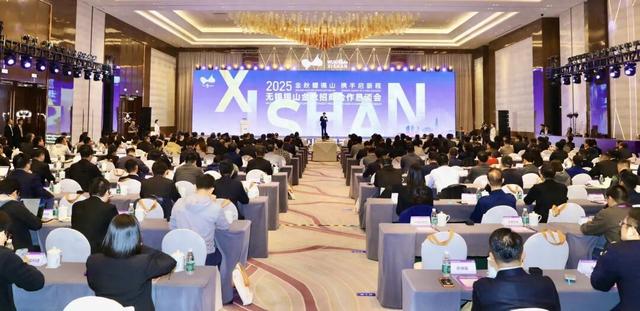
Core Viewpoint - The 2025 Wuxi Xishan Autumn Investment Cooperation Conference was held on November 8, gathering over 250 guests from renowned domestic and international enterprises, think tanks, universities, and financial institutions to discuss cooperation and development opportunities [1][3]. Group 1: Government and Leadership - Vice Mayor Sun Wei emphasized that Xishan serves as a "bridgehead" for Wuxi's integration into the Shanghai metropolitan area, focusing on the "Four New and Four Strong" industrial clusters, attracting major enterprises and projects [5][6]. - District Secretary Fang Li welcomed attendees and expressed gratitude for their support, stating that Xishan will continue to create a first-class business environment and industrial ecosystem for high-quality development [8]. Group 2: Investment Environment and Projects - The conference launched the "2025 Wuxi Xishan Investment Environment White Paper," showcasing Xishan's investment appeal and development potential in collaboration with global real estate service and consulting firm CBRE [10]. - A total of 91 major projects were signed and showcased during the conference, including significant projects in renewable energy, integrated circuits, and biomedicine, indicating a strong focus on strategic emerging industries [15]. Group 3: Corporate Growth and Collaboration - Companies like Delijia, Jimxi Semiconductor, and Jianding Electronics shared their growth stories in Xishan, highlighting the supportive business environment that has facilitated their expansion and innovation [16][18][20][22]. - The establishment of a cross-regional collaborative community between the Xishan District Government and Wuxi's four major innovation cooperation centers aims to enhance cooperation and resource sharing, linking top technologies and high-end talent [14].
阿里豪掷72亿港元买楼、“铺王”套现离场 ,香港写字楼迎7年最强季
2 1 Shi Ji Jing Ji Bao Dao· 2025-11-04 13:59
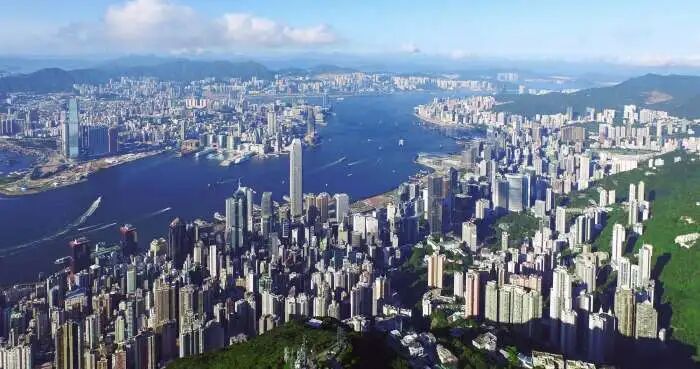
Core Insights - The Hong Kong commercial real estate market is experiencing a dramatic shift, with tech giants like Alibaba and Ant Group investing heavily while traditional real estate players like Dahonghui are selling off assets, reflecting contrasting market sentiments [2][9][12] Market Performance - The third quarter of 2025 marked the strongest performance for Hong Kong's office market in seven years, with a net absorption of 691,800 square feet, the highest since Q3 2018 [2] - All major commercial districts recorded positive net absorption for the first time since Q2 2015, indicating a robust recovery [2] Vacancy Rates - The overall vacancy rate for Grade A office spaces improved to 17.1% by the end of September, a quarterly decline of 0.3 percentage points, the largest drop since Q3 2018 [3] - Despite high vacancy levels, the market is showing signs of recovery, with new leasing activity reaching 3.3 million square feet, comparable to 2019 levels [3] Demand Drivers - The resurgence in the office market is driven by a booming IPO market and the rise of the wealth management sector, with banks and multinational companies accelerating their office space negotiations [4][5] - Over 70 companies have successfully listed on the Hong Kong Stock Exchange this year, raising over HKD 189.3 billion, contributing to increased demand for office space [5] Rental Trends - Core areas like Central are seeing strong demand for premium office spaces, with a net absorption of 138,000 square feet in Q3, the highest in a decade, while vacancy rates are declining [6][7] - Rental prices in Central have remained relatively stable, with only a slight decline of 0.3%, contrasting with an overall market decline of 0.8% [6][7] New Market Participants - Mainland companies are emerging as significant players in the Hong Kong office market, with Alibaba and Ant Group's acquisition of a major property in Causeway Bay being a notable example [9][10] - Demand from mainland clients for Grade A office spaces, particularly in core areas, is strong and growing [10] Market Challenges - Despite new entrants, the overall recovery of the market is expected to take time, with a projected increase in office occupancy rates by 2027-2028 due to a significant reduction in new supply [11] - The current market faces challenges such as oversupply, with a vacancy rate of approximately 19% and a substantial new supply of 3.3 million square feet this year [12]

香港写字楼市场的“冰与火”:阿里72亿买楼、“铺王”套现离场
2 1 Shi Ji Jing Ji Bao Dao· 2025-11-04 12:20
Core Insights - The Hong Kong commercial real estate market is experiencing a dramatic shift, with tech giants like Alibaba and Ant Group investing heavily, while traditional real estate players like Dahonghui Holdings are selling off assets, reflecting contrasting market sentiments [1][2][8] Market Performance - The third quarter of 2025 marked the strongest performance for Hong Kong's office market in seven years, with a net absorption of 691,800 square feet, the highest since Q3 2018 [2] - All major commercial districts recorded positive net absorption for the first time since Q2 2015, indicating a robust recovery [2] - The overall vacancy rate for Grade A offices improved to 17.1%, a decrease of 0.3 percentage points, marking the largest quarterly decline since Q3 2018 [2] Demand Drivers - The resurgence in the office market is primarily driven by a booming IPO market and the rise of the wealth management sector, with banks and multinational companies accelerating their office space negotiations [3][7] - Over 70 companies have successfully listed on the Hong Kong Stock Exchange this year, raising a total of HKD 189.3 billion, contributing to increased confidence in the market [3] Rental Trends - Core areas like Central are seeing strong demand, with a net absorption of 138,000 square feet in Q3, the highest in a decade, while vacancy rates are declining [5][6] - In contrast, non-core areas like Kowloon East have a vacancy rate of 23.7%, indicating a stark divide in market performance [6] New Entrants - Mainland companies are emerging as significant players in the Hong Kong office market, with Alibaba and Ant Group's acquisition of a major property in Causeway Bay being a notable example [8] - Demand from mainland clients for Grade A offices, particularly in core areas, is on the rise, with these companies accounting for a substantial portion of the client base in flexible office spaces [8] Market Challenges - Despite the positive trends, the overall recovery of the market is still uncertain, with a projected decrease in new supply leading to a gradual increase in occupancy rates by 2027-2028 [9] - The current rental yield for Hong Kong offices is around 4%, which is less attractive compared to U.S. Treasury yields, limiting investor interest [9][10] - The market faces an oversupply issue, with a current vacancy rate of approximately 19% and a significant amount of new space needing time to be absorbed [10]
戴德梁行:三季度南京写字楼市场租户导向趋势明显
Sou Hu Cai Jing· 2025-11-04 10:47
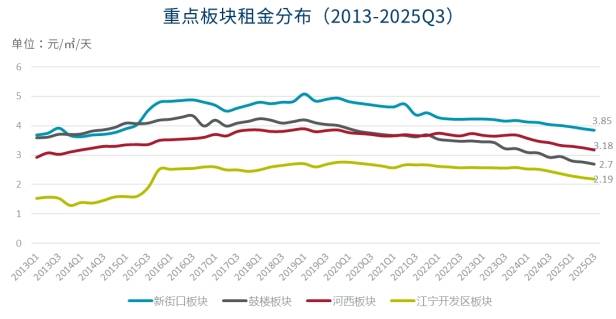
Core Insights - The Nanjing office market is currently in a supply-demand adjustment phase, with a clear tenant-oriented trend emerging [1][3] - High-quality office space supply continues to increase, leading to a rise in vacancy rates and challenges in rental prices [1][3] - The retail market in Nanjing is experiencing growth, driven by increased consumer spending and new retail developments [5][9] Office Market Summary - As of the end of Q3 2025, the total stock of high-quality office projects in Nanjing reached 5.55 million square meters, with a vacancy rate rising to 28.8% [1][3] - The average rental price for office space in Nanjing was approximately 71.7 RMB per square meter per month, with key areas averaging 89.4 RMB per square meter per month [1][3] - The absorption rate for typical projects in Q3 was 52,900 square meters, a 6% decrease from the previous quarter but an 18% increase year-on-year [3] Retail Market Summary - Nanjing's retail market saw a total social retail sales of 438.42 billion RMB in the first half of 2025, reflecting a year-on-year growth of 5.3% [5] - The opening of Nanjing Jinling Tiandi added 130,000 square meters of new supply to the market, with the total stock of mid-to-high-end shopping centers reaching 7.73 million square meters, a 1.7% increase [5] - The average first-floor rental price in mid-to-high-end shopping centers was recorded at 570.6 RMB per month per square meter, a 0.4% decrease [8] Future Outlook - Three new high-quality office projects are expected to be launched in Q4 2025, adding a total of 220,000 square meters of supply [3] - The retail market is anticipated to see approximately 3.78 million square meters of quality retail properties entering the market over the next three years, intensifying competition [8][9] - Nanjing is becoming a preferred location for domestic and international brands, with a focus on new business models and brand incubation [9]
“十五五”规划引领转型 中国房地产市场迎格局重塑
Sou Hu Cai Jing· 2025-10-30 08:40
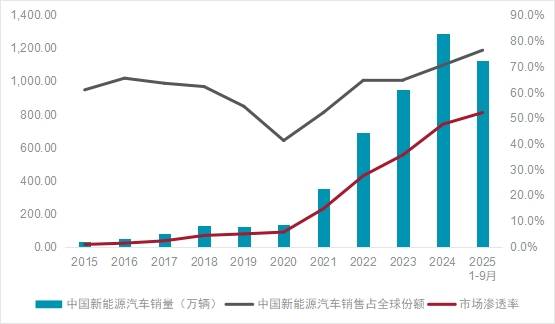
Core Insights - The "15th Five-Year Plan" (2026-2030) aims to reshape China's commercial real estate market through five core themes, addressing challenges such as high-quality development and global geopolitical shifts [1] - The plan emphasizes the construction of a modern industrial system, focusing on traditional industry optimization, emerging industry growth, and future industry layout [2] - The real estate sector is transitioning from a national economic pillar to a core of livelihood security, with a shift from "having a house" to "living well" [8] Group 1: Economic and Industrial Development - The "15th Five-Year Plan" prioritizes modern industrial system construction, which includes the growth of strategic emerging industries like new energy vehicles and biomedicine, with the latter expected to see significant growth in authorized transactions [2] - China's production of new energy vehicles is projected to reach 12.8 million units in 2024, with a compound annual growth rate of 72% [2] - The number of industrial robots installed in China has surpassed that of all other regions combined, with 276,300 units installed in 2023, making China the global leader [2] Group 2: Consumer and Retail Market Dynamics - The plan promotes a consumption-driven economy, shifting focus from material investment to human capital and social welfare, with policies aimed at stimulating consumer potential [4] - Consumer-focused REITs have gained traction, with existing products showing significant growth, indicating a robust market for retail properties [4] - The market is expected to see continued expansion of consumer REITs, driving retail properties to innovate and enhance consumer engagement [4] Group 3: Global Investment and Asset Appeal - China's commitment to high-level openness is enhancing the attractiveness of its assets, particularly in the context of global protectionism [5] - Panda bonds have seen cumulative issuance exceeding 1 trillion yuan, highlighting their appeal in the international market [5] - The expectation of increased foreign capital inflow into China's commercial real estate market is anticipated, particularly for quality assets like retail properties and logistics [5] Group 4: Real Estate Market Transformation - The real estate market is moving towards high-quality development, with a focus on improving living conditions and increasing the supply of affordable housing [8] - The proportion of real estate investment in GDP has decreased from nearly 15% in 2014 to 7.4% in 2024, indicating a reduced reliance on the sector [8] - The "15th Five-Year Plan" emphasizes green transformation, aiming for significant growth in the green industry and the establishment of zero-carbon parks [8] Group 5: Future Outlook for Commercial Real Estate - The upcoming five years are seen as a golden window for commercial real estate, driven by industrial expansion, consumer demand, and international capital interest [10] - The transition towards a demand-driven economy and the emphasis on sustainability are expected to reshape the value standards in commercial real estate [10] - The sector is poised for a new cycle of restructuring and potential release, guided by policy support and market dynamics [10]
租赁新规落地月余,行业供需错配问题仍存,合规与效率成行业重构基石
Hua Xia Shi Bao· 2025-10-23 17:11
Core Insights - The housing rental market in China is entering a new development phase driven by policy changes, particularly with the implementation of the Housing Rental Regulations, which has been in effect for over a month [2][3] - The new regulations aim to address prominent issues in the rental market, such as "formaldehyde houses" and "group rentals," establishing clear behavioral norms and legal responsibilities for all parties involved [3][4] - The rental market is experiencing a structural transformation, with a shift from a focus on scale expansion to quality operation, as rental demand increases while home-buying demand decreases [5][6] Policy and Regulation - The Housing Rental Regulations, effective from September 15, 2023, focus on regulating the rental market and promoting high-quality development, supporting the establishment of a dual rental and purchase housing system [3][4] - The regulations have led to a modern regulatory framework centered on credit supervision and multi-department collaboration, enhancing the market's operational standards [3][4] Market Supply and Demand - As of Q3 2025, the monitored supply of rental housing in 16 cities reached approximately 69,365 units, with a notable increase in affordable rental housing, which accounted for 69.6% of the new supply [3] - The average monthly rent for institutional management projects in these cities was 2,549.45 yuan, reflecting a 9.14% decrease from the previous quarter [3] Structural Changes - The rental market is undergoing significant structural changes, with a notable increase in the supply of affordable rental housing and a growing emphasis on quality and service [5][6] - Despite the increase in affordable housing, there remains a mismatch in supply and demand, with 24 million affordable units built but only 7 million occupied [5][6] User Demand and Industry Transformation - The new rental era emphasizes a user-centered approach, with diverse demand driving a comprehensive restructuring of product design and service systems [7][8] - Companies are focusing on service upgrades and product structure adjustments to meet evolving tenant needs, with an emphasis on quality and spatial design [7][8] Financial and Operational Strategies - Financial support policies are being implemented to expand market supply, including the introduction of market-oriented rental housing as a new asset type for investment [4] - Companies are exploring cost restructuring and innovative models to enhance operational efficiency and service value, addressing profit pressures in the current market environment [8]