Roundhill Investments

Search documents
Roundhill推“反分红”标普ETF 帮投资者避股息税
Huan Qiu Wang· 2025-07-08 05:28
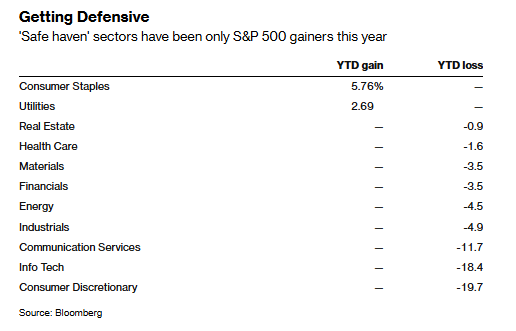
Core Insights - Roundhill Investments has launched a new ETF called "S&P 500 No Dividend Target ETF" (XDIV), set to debut on July 10, aiming to track the S&P 500 index while avoiding dividend payouts and associated tax burdens [1][4] - The ETF is designed for tax-conscious investors who seek exposure to the S&P 500 without incurring dividend tax liabilities, filling a gap in the market for such products [4][5] Group 1 - Roundhill is known for innovative ETFs, having previously launched the award-winning Magnificant Seven ETF (MAGS) and the "China Dragon" ETF (DRAG) [4] - The strategy of XDIV involves selling positions in S&P 500 ETFs before dividend dates to prevent investors from receiving dividends, thus avoiding ordinary income tax [4] - The ETF will invest in other S&P 500 ETFs, such as Vanguard's VOO, and will switch to non-dividend paying funds close to the ex-dividend date [4] Group 2 - XDIV is part of a growing trend of "tax-optimized" products in the market, with other firms like LionShares and F/m Investments also launching similar ETFs [5] - Experts in the ETF industry view the strategy as a smart move, with the ability to avoid capital gains tax becoming a key selling point for ETFs [5]

市场泡沫担忧重现,华尔街"非理性繁荣"指标再度飙升
Hua Er Jie Jian Wen· 2025-07-02 12:21
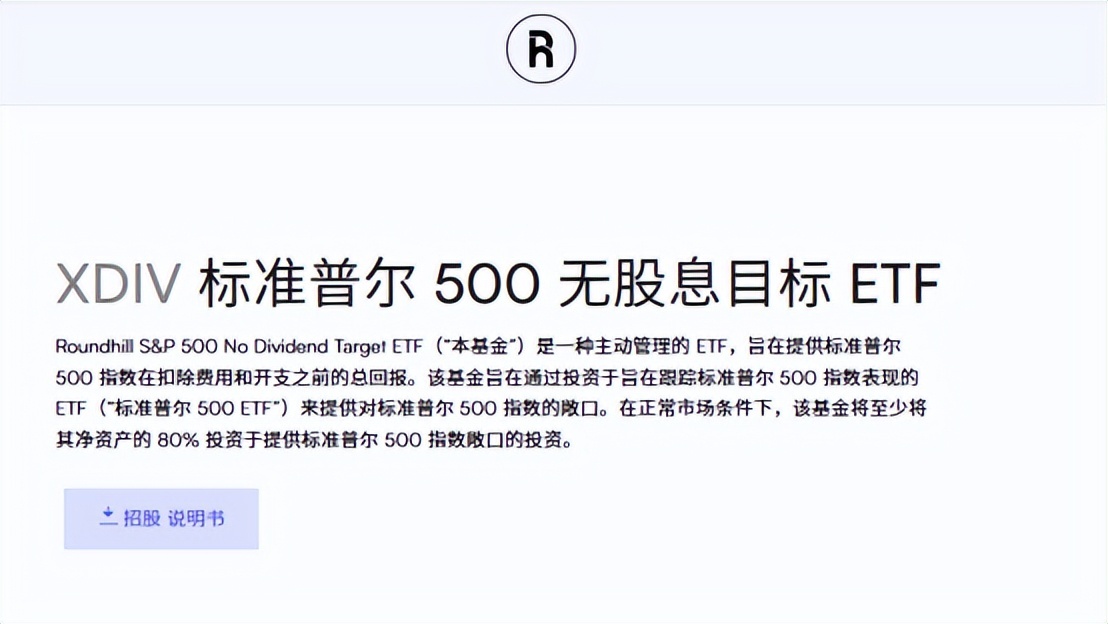
Core Insights - The "irrational exuberance" indicator developed by Barclays has surged to a two-digit average of 10.7%, marking the first time since February that it has crossed this threshold, historically indicating extreme market bubble conditions [1][2] - Current market sentiment is driven by optimism regarding trade negotiations and speculation that the Federal Reserve may lower interest rates, contributing to recent highs in the U.S. stock market [1][2] Market Sentiment and Indicators - The "irrational exuberance" indicator, also referred to as the "stock frenzy indicator," is calculated using derivatives metrics, volatility technical analysis, and sentiment signals inferred from the options market, reflecting the proportion of "frenzied" stocks in liquid options [2][3] - The historical average of this indicator is around 7%, but it has previously exceeded 10% during the late 1990s internet bubble and the 2021 "Meme stock" craze [2] Market Trends and Speculation - There has been a significant increase in SPAC (Special Purpose Acquisition Company) issuances, with the number of new SPACs in 2025 surpassing the total from the past two years [3] - Cathie Wood's ARK Innovation ETF has experienced its second-largest historical gain, following the pandemic surge, indicating a strong interest in speculative technology stocks [3] - In the second quarter, stocks related to Bitcoin surged by 78%, quantum computing stocks rose by 69%, and meme stocks increased by 44%, highlighting the volatility and speculative nature of these investments [3] Expert Commentary - Barclays' derivatives strategist warns that the elevated indicator suggests investors may be overly optimistic, which could lead to increased market volatility [5] - Despite the high levels of the indicator, it is noted that bubbles can persist for extended periods before correction, suggesting a strategy of riding the trend while hedging with options to mitigate potential losses [5]
泡沫预警信号! 美股创新高之际 一项“非理性繁荣“指标破警戒线
智通财经网· 2025-07-02 10:59
Core Viewpoint - The U.S. stock market is experiencing a resurgence of speculative trading, with a key "irrational exuberance" indicator surpassing bubble warning levels, indicating potential risks in asset prices deviating from fundamental values [1][3]. Group 1: Market Indicators - The Barclays "irrational exuberance index" has reached a warning level of 10.7%, the first time it has crossed the double-digit threshold since February, with a historical average of around 7% [1][3]. - The index is based on derivatives market data, volatility indicators, and options market sentiment signals, and has previously peaked during the late 1990s internet bubble and the 2021 retail trading frenzy [1]. Group 2: Market Sentiment - Current market optimism is driven by expectations of trade agreements between the U.S. and major partners, as well as speculation that the Trump administration may delay tariff implementation [3]. - The S&P 500 index recently achieved a historical closing high, marking the first such occurrence since February, fueled by ongoing expectations of Federal Reserve interest rate cuts [3]. Group 3: Sector Performance - The number of new SPACs in 2025 has already exceeded the total for the previous two years, indicating a significant increase in speculative activity [3]. - The ARK Innovation ETF has recorded a year-to-date increase that ranks as the third highest in history, following the post-COVID-19 rebound [3]. - Specific sectors have shown extreme performance, with Bitcoin-related stocks surging 78%, quantum computing stocks rising 69%, and meme stocks averaging a 44% increase [3]. Group 4: Investor Behavior - The irrational exuberance indicator is highly correlated with retail participation metrics, such as net margin account positions [4]. - Despite the presence of bubble signals, timing the market remains challenging, as historical trends show that bubbles often last longer than anticipated [4]. - Investors are advised to construct risk-hedging portfolios using options to mitigate potential downturns in the current environment of abundant liquidity and speculative enthusiasm [4].

'Tesla Has The Robot And The Customer': Dave Mazza's HUMN ETF Makes A Calculated Bet On Optimus
Benzinga· 2025-06-30 17:40
Core Insights - The humanoid robotics market is transitioning from a futuristic concept to a viable investment opportunity, with estimates suggesting it could reach a $5 trillion market by 2050 [1][2][3] Market Dynamics - The market is experiencing a turning point due to three converging trends: record labor shortages, significant reductions in AI costs (down approximately 85% since 2023), and competitive pricing for Robots-as-a-Service (RaaS) at around $30 per hour [2][3][4] - Over 450,000 warehouse roles in the U.S. remain unfilled, highlighting the labor shortage [3] Investment Vehicles - Roundhill's HUMN ETF is one of the first actively managed ETFs focused on humanoid robotics, allowing for more agile trading compared to index-based ETFs like KraneShares' KOID [4][5] - HUMN's portfolio is reviewed monthly to capitalize on emerging opportunities, contrasting with KOID's static approach [5][6] Tesla's Role - Tesla's humanoid robot, Optimus, is already operational within its factories, and the company is a significant holding in the HUMN ETF, capped at approximately 13% to mitigate risk from volatility [7][8] - Tesla's unique advantages include an in-house AI stack and large-scale manufacturing capabilities, positioning it favorably in the humanoid robotics space [8][9] Future Projections - Adoption of humanoid robotics is expected to follow a linear growth pattern through the late 2020s, with a significant inflection point in the mid-2030s as fleets scale [10] - Investors are encouraged to view HUMN as a long-term holding with potential for strong returns in shorter time frames [10] Global Exposure - HUMN ETF provides exposure to sophisticated humanoid robotics through ownership stakes in companies like Hyundai (owner of Boston Dynamics' Atlas) and Xiaomi, which are part of its portfolio [11][12] - The ETF adopts a value-chain approach, incorporating U.S. silicon producers, Chinese humanoid builders, and Japanese precision gear manufacturers to ensure comprehensive market exposure [12] Conclusion - As the humanoid robotics sector evolves, Roundhill's HUMN ETF offers a potential first-mover advantage for investors looking to capitalize on the growing demand for robotic solutions in various industries [13][14]


穆迪下调美国信用评级 华尔街专家怎么看?
智通财经网· 2025-05-17 06:42
Group 1 - Moody's downgraded the U.S. sovereign credit rating from Aaa to Aa1 due to increasing government debt and interest burden, marking the removal of U.S. sovereign debt from the "top-tier credit" category by all three major rating agencies [1] - Following the downgrade, an ETF tracking the S&P 500 fell by 1% in after-hours trading, while the Nasdaq 100 ETF (QQQ.US) dropped by 1.3%, and U.S. Treasury yields rose [1] - The downgrade exacerbates market risks amid President Trump's unpredictable tariff policies, with many Wall Street professionals remaining skeptical about the recent rebound in the S&P 500 index [1] Group 2 - Eric Beiley from Steward Partners indicated that the downgrade serves as a warning signal, suggesting that the U.S. stock market may be nearing its peak [2] - Ivan Feinseth from Tigress Financial Partners noted that the downgrade could negatively impact other sovereign debts, as U.S. debt is considered a benchmark for safety [2] - Dave Mazza from Roundhill Investments mentioned that the market may have already anticipated the downgrade, potentially mitigating its impact compared to the 2011 S&P downgrade [2] Group 3 - Thomas Thornton from Hedge Fund Telemetry expressed concerns about rising bond market rates, which could pose significant risks [2] - Max Gokhman from Franklin Templeton highlighted that the downgrade was not surprising, given the accelerating fiscal plans in Congress and the potential for rising debt servicing costs [2] - Keith Lerner from Truist Advisory Services stated that while the downgrade may not change market dynamics, it provides an excuse for profit-taking and emphasizes the rising deficit concerns [2]
突发!美国,暴雷!
Sou Hu Cai Jing· 2025-05-17 06:18
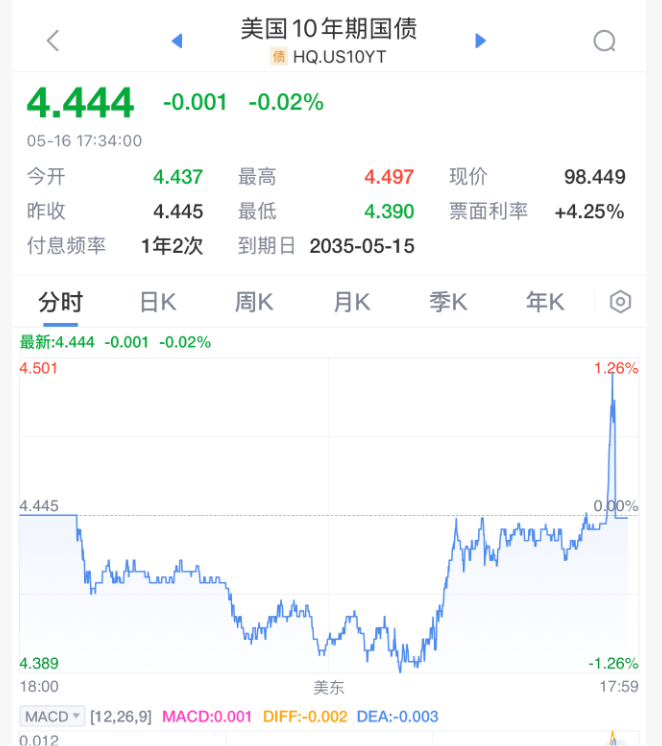
穆迪宣布下调评级 5月17日,穆迪评级公司将美国主权信用评级从最高级别Aaa下调一级至Aa1,理由是联邦政府预算赤字 融资压力加剧,以及在高利率环境下续发债务的成本上升。反映出人们对不断膨胀的债务和赤字可能损 害美国作为全球资本首选地位、并推高政府借款成本的担忧日益加深。 【导读】穆迪下调美国信用评级,理由是政府债务增长 中国基金报记者 泰勒 穆迪下调美国主权信用评级! 美国失去最后一个最高信用评级 穆迪此举与惠誉和标普全球评级看齐,三大评级机构均已不再将世界最大经济体评为顶级"三A"评级。 这次下调一级的决定是在穆迪于一年多前将美国评级展望调整为"负面"之后作出的。该机构目前给予美 国"稳定"展望。 穆迪在声明中写道:"虽然我们认可美国在经济和金融方面的显著优势,但我们认为这些优势已不足以 完全抵消财政指标的恶化。" 穆迪将问题归咎于历届政府和国会,指出预算赤字不断扩大,几乎没有减缓的迹象。周五,华盛顿的立 法者仍在推进一项规模庞大的税收与支出法案,预计未来几年将使联邦债务增加数万亿美元。 穆迪的评级决定在主要金融市场引发迅速反应,10年期美国国债收益率一度升至4.49%。 Brandywine Globa ...
特朗普关税“过山车”中散户逆势抄底大赚,机构踏空错失反弹
Zhi Tong Cai Jing· 2025-05-16 02:44
Core Viewpoint - The sudden announcement of tariff increases by former President Trump led to significant market volatility, with a total market value loss of approximately $6 trillion in just two trading days, but retail investors capitalized on the situation, ultimately achieving substantial gains [1][4]. Group 1: Market Reaction - The S&P 500 index experienced an 18% surge following the suspension of most tariff plans announced by Trump just a week after the initial increase [1]. - Retail investors net purchased $50 billion in U.S. stocks from April 8 to mid-May, achieving a cumulative return of 15%, outperforming most professional institutions [1][4]. Group 2: Investor Behavior - Institutional investors contributed to panic selling, while retail investors consistently increased their positions every two weeks, helping to alleviate selling pressure [4]. - Data from Morgan Stanley indicated that personal investor trading volume surged to 36% in the last week of April, marking a historical peak and becoming a key driver of the market rebound [4]. Group 3: Retail Investor Confidence - Retail investors demonstrated remarkable resilience during market turmoil, with Bank of America reporting that individual investors had net bought stocks for 22 consecutive weeks, the longest streak since 2008 [4]. - The confidence of retail investors is bolstered by past experiences of market recovery, such as the 75% rebound of the S&P 500 index following its March 2020 low [5]. Group 4: Market Structure Changes - The rise of retail investors is reshaping the U.S. stock market ecosystem, with predictions that retail trading volume will reach 19.5% by 2025, a significant increase from pre-pandemic levels [8]. - Financial planners noted that while speculative trading exists, most retail investors are adopting dollar-cost averaging strategies, allowing them to withstand panic and seize opportunities from policy reversals [8].
关税阴云下美股闪烁“买入”信号 华尔街仍绷紧神经
Zhi Tong Cai Jing· 2025-04-28 12:37
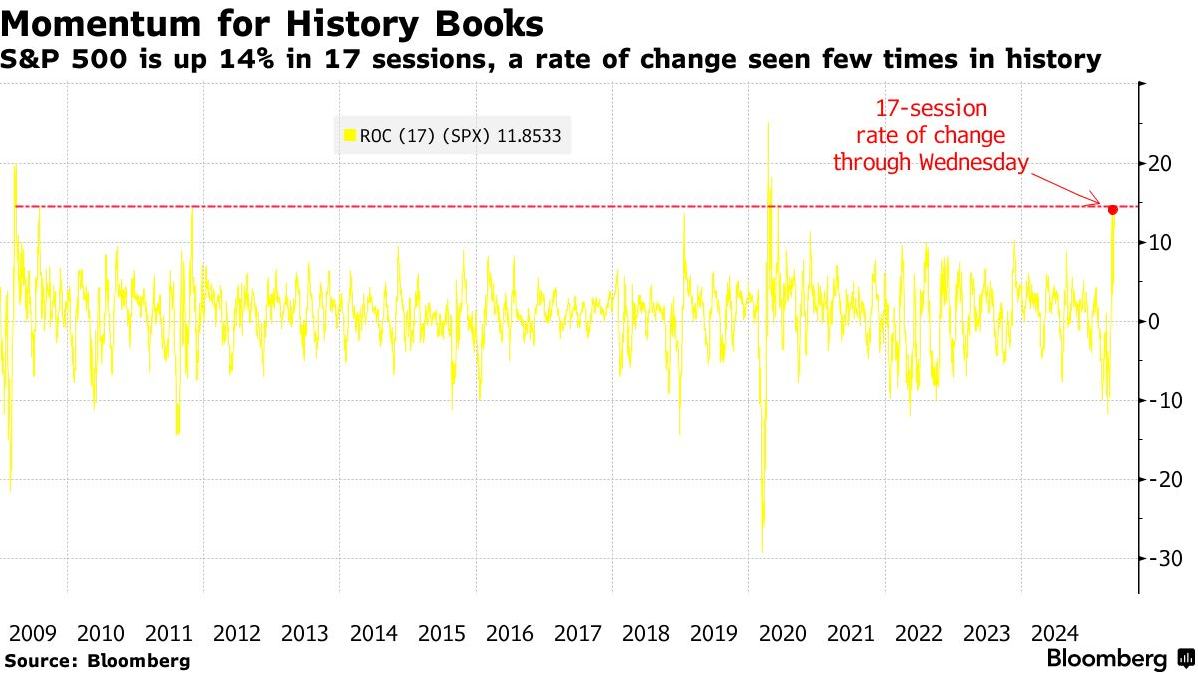
"买入"信号闪烁 从某种程度上看,投资者的情绪极度悲观,而这往往为逢低买入者提供了机会。 备受关注的美国个人投资者协会的调查显示,看跌情绪指标连续九周达到50%或以上,创下记录。自1987年以来,市场情绪如此糟糕的时期只有三次,随后 的股市走势喜忧参半。 标普500指数仍处于不确定状态 通常,当市场对美国股市的情绪变得如此低迷、波动性加剧、分析师大幅下调回报预期时,这就意味着冒险投资者会纷纷入市。然而,华尔街人士警告称, 由于关税政策和经济数据的不确定性,上述策略并不适用。 对汇丰控股首席多资产策略师Max Kettner来说,这是他多年来第一次抛开自己通常关注的仓位和情绪指标,并低估反弹的可能性。 Kettner表示:"我建议客户在当前时刻忽略此类信号,因为政策不确定性仍然很高,而且不太可能很快消失。" 投资者不得不面对一个新的现实:通常可靠的买入指标已经被白宫反复无常的政策声明打破,几乎不可能预测股市的下一步走势。 Bespoke Investment Group联合创始人Paul Hickey表示:"在这段时间里,情况越来越糟。如今,投资者仍然感到担忧,因为经济疲软似乎已成定局。" 以Michael H ...
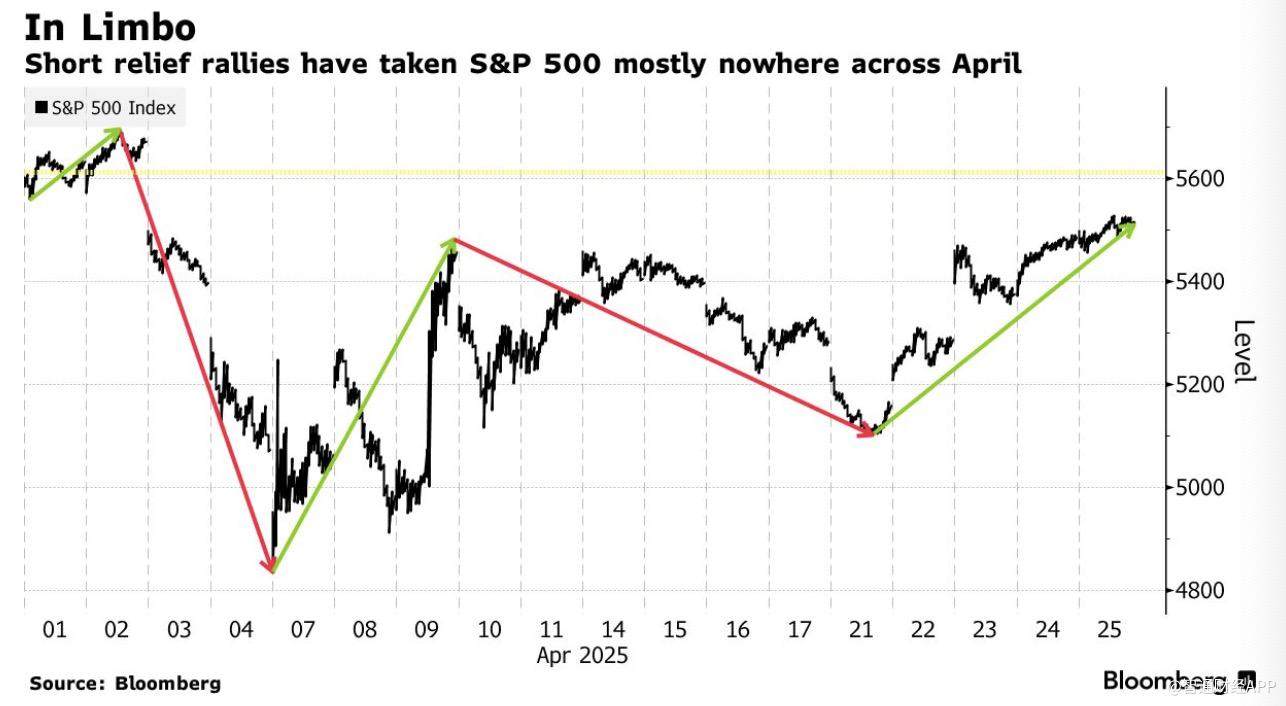
涨声中的防御战!美股交易员在“假反弹”中悄然筑起防波堤
智通财经网· 2025-04-21 11:22
Group 1 - The U.S. stock market has rebounded from recent lows, but traders are significantly increasing their allocation to defensive assets [1] - Despite President Trump's announcement to pause tariffs on most goods for 90 days, investors focusing on safe sectors have achieved better returns than those in riskier areas [1][2] - Barclays data shows that defensive stock portfolios generally outperform cyclical stocks during market upswings, and continue to lead when market sentiment worsens [1][3] Group 2 - Financially weaker companies have seen a 3.3% decline in stock prices after the tariff pause announcement, underperforming healthier companies [1] - Keith Lerner from Truist Advisory Services indicates a shift towards traditional defensive strategies, suggesting that investors are waiting for clearer market signals [1][2] - Defensive sectors like utilities, consumer staples, and healthcare tend to be more resilient during economic downturns, providing stable earnings and relatively smooth returns [2] Group 3 - The shift towards defensive companies reflects changes in market behavior and risk-return dynamics, particularly evident in the AI sector, which has recently faced significant declines [3] - High-growth companies are struggling due to factors beyond their control, prompting investors to pivot towards defensive sectors in preparation for further market volatility [3]