国家电网

Search documents
国家发改委:中国中化、中国华能、中国矿产、中国大唐、中国华电、国家电网等,已取得重要进展
中国能源报· 2025-10-10 06:06
Group 1 - The National Development and Reform Commission has made significant progress in the relocation of non-capital functions from Beijing, with key projects being implemented in Xiong'an New Area [1] - Four universities, including Beijing Jiaotong University and Beijing University of Science and Technology, are accelerating the construction of their campuses in Xiong'an, while five other universities have confirmed their site selections and are preparing overall planning [1] - Major hospitals, such as Peking University People's Hospital and Peking Union Medical College Hospital, are advancing their construction in Xiong'an, with several hospitals having confirmed their site selections and are working on preliminary research reports [1] Group 2 - Several central enterprises, including China Star Network and China National Chemical Corporation, have established their headquarters in Xiong'an, with operations stabilizing [2] - China Huaneng and China National Chemical Corporation officially moved to Xiong'an on October 9, 2023, while the main structure of the China Mineral headquarters project has been capped [2] - The National Development and Reform Commission will continue to promote the implementation of subsequent relocation projects and improve municipal and public service facilities in Xiong'an, ensuring that relocated personnel can settle and thrive in the area [2]



国家发展改革委:北京非首都功能疏解标志性项目取得重要进展
Xin Hua She· 2025-10-10 03:40
Core Insights - The National Development and Reform Commission (NDRC) is actively promoting the relocation of non-capital functions from Beijing to Xiong'an New Area, achieving significant progress in landmark projects [1][2] Group 1: Education Sector - Four universities, including Beijing Jiaotong University and Beijing University of Science and Technology, are accelerating the construction of their campuses in Xiong'an [1] - Five additional universities have confirmed land for their campuses and are currently developing overall planning and construction schemes [1] Group 2: Healthcare Sector - Beijing University People's Hospital's Xiong'an branch is advancing its main structure construction [1] - The construction of Peking Union Medical College's National Medical Center in Xiong'an commenced on September 29, 2023 [1] - Several hospitals have confirmed land for their Xiong'an branches and are progressing with preliminary work such as feasibility studies [1] Group 3: State-Owned Enterprises - China Star Network and four affiliated companies are set to move to Xiong'an by October 2024, with stable operations already in place [1] - China Sinochem and China Huaneng officially relocated their headquarters to Xiong'an on October 9, 2023 [1] - The main structure of the China Mineral Headquarters project has been completed, and several other state-owned enterprises are accelerating project design after confirming land [1] Group 4: Future Plans - The NDRC and relevant authorities will continue to promote the implementation of subsequent relocation projects, enhancing municipal and public service facilities in Xiong'an [2] - Policies supporting housing, talent, education, and healthcare will be detailed to ensure relocated personnel can settle and thrive in Xiong'an [2]


多空因素交织 铜价料高位整理
Qi Huo Ri Bao· 2025-10-10 01:21
Core Viewpoint - Copper prices have shown a strong performance since September, supported by expectations of interest rate cuts by the Federal Reserve and disruptions in overseas copper mining operations [1][2]. Group 1: Market Dynamics - The market anticipates an 80% probability of a rate cut in October and a 74% probability in December, which may enhance the financial attributes of copper prices [2]. - Recent disruptions in overseas copper mining, such as the suspension of operations at Freeport's Grasberg mine due to a significant wet material surge, have impacted market sentiment [2]. - The processing fee for imported copper concentrate has decreased to -40.36 USD/ton as of late September, indicating deepening impacts from mining disruptions [2]. Group 2: Supply and Production - Domestic smelters are expected to conduct large-scale maintenance in October, affecting refined copper output by over 130,000 tons [3]. - The maintenance will lead to a temporary tightening of refined copper supply, coinciding with seasonal demand increases in downstream consumption [3]. Group 3: Consumption Trends - The cable industry has shown a stable recovery, with significant investments in distribution network construction by State Grid and Southern Power Grid, which are expected to boost demand in the fourth quarter [4]. - The air conditioning sector is anticipated to gradually ramp up production, positively impacting the copper tube industry starting in October [4]. - The automotive sector, particularly driven by the growth of new energy vehicles, is expected to continue its upward trend in production and sales [4]. Group 4: Price Outlook - Given the interplay of various factors, the short-term potential for further increases in copper prices appears limited, with expectations of a high-level consolidation phase [4].
10月1至8日,国家电网经营区日均调度用电量同比增长13.42%
Jing Ji Guan Cha Wang· 2025-10-09 16:31
经济观察网据人民财讯消息,国家电网数据显示,10月1至8日,国家电网经营区日均调度用电量192.36 亿千瓦时,同比增长13.42%;最大用电负荷9.61亿千瓦,较去年假期最大负荷增长17.17%。 ...
10月1至8日 国家电网经营区日均调度用电量同比增长13.42%
Zheng Quan Shi Bao Wang· 2025-10-09 14:25
Core Insights - The average daily electricity dispatch in the State Grid's operating area from October 1 to 8 was 19.236 billion kilowatt-hours, representing a year-on-year increase of 13.42% [1] - The maximum electricity load reached 9.61 million kilowatts, which is a 17.17% increase compared to the maximum load during the same holiday period last year [1] Summary by Categories Electricity Consumption - The average daily electricity dispatch was 19.236 billion kilowatt-hours, showing a growth of 13.42% year-on-year [1] Maximum Load - The maximum electricity load recorded was 9.61 million kilowatts, reflecting a 17.17% increase from the previous year's holiday peak [1]
微软蝉联福布斯全球最佳雇主榜首,53家中国内地公司上榜
Xin Lang Ke Ji· 2025-10-09 12:11
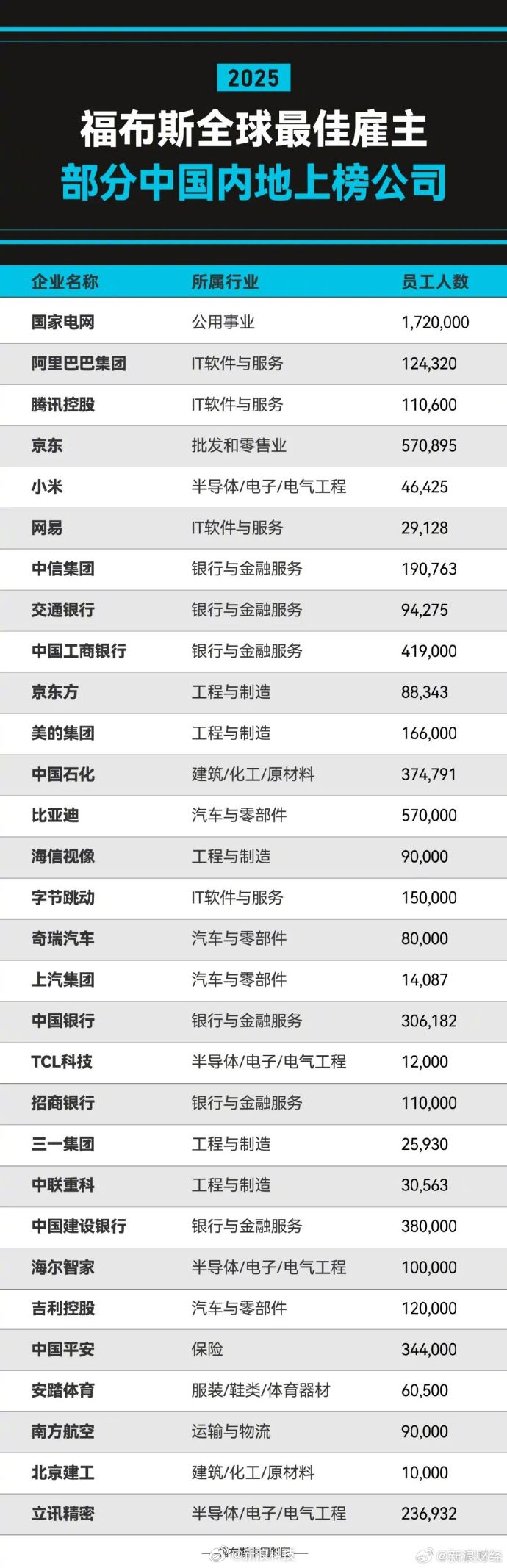
半导体/电子/电气工程 236,932 【#2025福布斯全球最佳雇主#】#微软连续两年蝉联全球最佳雇主榜首#今年一共有53家中国内地公司入 选福布斯全球最佳雇主榜单。在全球榜单前五名中有三家来自IT软件与服务行业,其中微软连续两年蝉 联榜首,谷歌母公司Alphabet位列第三,Adobe排名第四。(福布斯)#53家内地公司入选福布斯全球最 佳雇主# | 2025 | | | | --- | --- | --- | | 福布斯全球最佳雇主 | | | | 部分中国内地上榜公司 | | | | 企业名称 | 所属行业 | 员工人数 | | 国家电网 | 公用事业 | 1,720,000 | | 阿里巴巴集团 | IT软件与服务 | 124,320 | | 腾讯控股 | IT软件与服务 | 110,600 | | 京东 | 批发和零售业 | 570.895 | | 小米 | 半导体/电子/电气工程 | 46.425 | | 网易 | IT软件与服务 | 29,128 | | 中信集团 | 银行与金融服务 | 190,763 | | 交通银行 | 银行与金融服务 | 94.275 | | 中国工商银行 | 银行与金 ...

国庆中秋假期绿电奔涌守护万家灯火
Xin Hua Wang· 2025-10-08 09:54
Core Insights - The demand for electricity surged during the National Day and Mid-Autumn Festival holiday, with the average daily electricity dispatch in the State Grid operating area reaching 19.029 billion kilowatt-hours, a year-on-year increase of 13.26% [1] - The development of green electricity in Xinjiang is advancing alongside external delivery, with the first large-scale photovoltaic hydrogen production project in China operating efficiently, generating 750 million kilowatt-hours of electricity and producing approximately 16,000 tons of green hydrogen since its launch in June 2023 [1] - The Zhangbei flexible DC grid project has become a key player in delivering green electricity to Beijing and Tianjin, supplying 144 million kilowatt-hours of green electricity during the holiday period, with a cumulative delivery of 47.9 billion kilowatt-hours [1] - Ningxia is leveraging green electricity to empower the computing power industry, with the local cloud base expected to use 454 million kilowatt-hours of green electricity in 2024, a year-on-year increase of 86%, and projected to reach 82% by 2025 [2] - Over 170,000 construction personnel from the State Grid are working on more than 2,200 transmission and transformation projects and 38 pumped storage projects during the holiday, contributing to high-quality development and sustainable energy supply [2]
能源局推进,14家央企加入,“AI+光伏”大有可为!
Sou Hu Cai Jing· 2025-10-08 03:26
Core Insights - The Chinese government is promoting the integration of artificial intelligence (AI) with renewable energy to enhance the quality of energy development, focusing on applications like power prediction and smart operations [1][2]. Group 1: Government Initiatives - The National Development and Reform Commission and the National Energy Administration issued guidelines to advance "AI + Energy" applications, emphasizing the need for high-precision power forecasting and smart operations in renewable energy [1]. - The government aims to support the stable supply of renewable energy through an integrated model combining weather forecasting, power prediction, smart trading, and intelligent operations [1]. Group 2: Corporate Adoption of AI - Major state-owned energy companies, including State Grid, China Southern Power Grid, and China Energy Group, have begun integrating the DeepSeek AI model into their operations [2][3]. - China Huaneng and China Datang have localized the DeepSeek model to enhance their AI capabilities in various business applications, including financial systems and operational management [3][4][9]. Group 3: Specific Implementations - Longyuan Power has deployed the DeepSeek-R1 model on its digital platform, enabling efficient AI services for its subsidiaries and enhancing decision-making in renewable energy operations [5][6]. - China Huaneng launched the "Smart Little Energy" AI assistant and integrated it with its mobile portal, marking a significant step in its AI application efforts [9]. - China Huadian's "Huadian Ruisi" digital platform has integrated DeepSeek to improve intelligent Q&A and document analysis capabilities [12]. Group 4: Technological Advancements - The DeepSeek-R1 model features multi-modal processing and dynamic attention mechanisms, allowing it to efficiently integrate various data types for enhanced operational support [5]. - China Energy Construction has completed the full integration of DeepSeek models, significantly boosting its digital transformation efforts [17]. Group 5: Future Directions - Longyuan Power plans to deepen the integration of its digital platform with the DeepSeek model across six key business areas, aiming for a comprehensive AI development platform [6]. - China National Nuclear Corporation is set to enhance its AI capabilities by integrating DeepSeek with its existing models, focusing on sustainable development and intelligent upgrades [19][20].



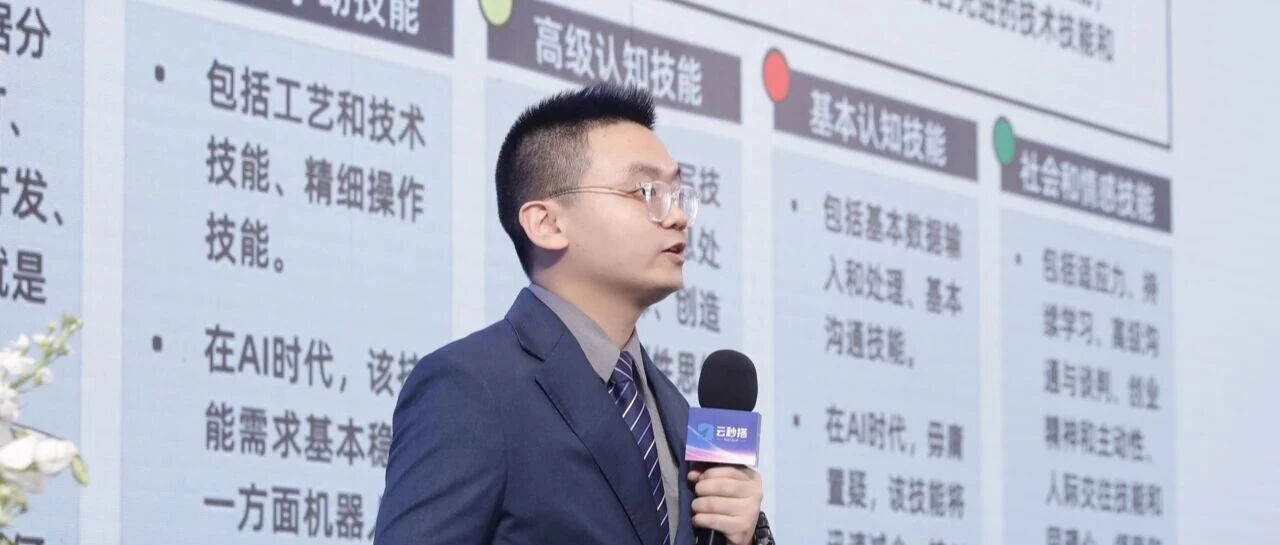
论坛| 张孜铭副院长在杭州2025人工智能产业发展大会发表主题演讲《AI重构商业:企业智能化转型路径与案例》
未可知人工智能研究院· 2025-10-07 03:02
Core Viewpoint - The article emphasizes the transformative impact of AI on business operations and models, highlighting the necessity for companies to embrace AI for survival and growth in the competitive landscape [1][3]. Group 1: AI's Role in Business Transformation - AI is no longer just a technical tool but a core component of corporate strategy, with 85% of Chinese companies accelerating their investment in AI and over 63% actively using generative AI [3]. - The potential of AI in cost reduction is significant, as illustrated by a leading energy company's five-year growth case and Midjourney's team of 11 achieving $100 million in annual revenue, showcasing AI's overwhelming efficiency advantages [4]. Group 2: Revenue Growth Opportunities - Generative AI search ranking optimization (GEO) presents new business opportunities, with platforms like DeepSeek emerging as new traffic entry points and influencers of consumer decisions [6]. - A health brand achieved a revenue increase of 148.4% and a 295.2% growth in AI-driven traffic within three months, demonstrating GEO's effectiveness in brand building and market conversion [6]. Group 3: AI's Impact on Workforce and Organizational Structure - AI is reshaping job skill requirements, necessitating a shift from traditional technical and manual skills to advanced cognitive and social-emotional skills, prompting companies to redefine their talent structures [4]. - AI is being applied across various business functions, including procurement, collaborative office work, R&D, team building, legal affairs, and human resources, enhancing operational efficiency and reducing overall costs [9]. Group 4: AI's Commercial Landscape in China - Hangzhou is highlighted as a key hub for AI industry development, expected to account for over 70% of Zhejiang province's AI industry output value in 2024, supported by a vibrant ecosystem of private enterprises and diverse application scenarios [11]. - The article concludes with a call for business leaders to embrace AI, rethink strategic layouts, talent structures, and technology investments to seize opportunities in intelligent transformation [12].
大批电厂岌岌可危,印度要求中方出口电力设备:欧美多国沉默了!
Sou Hu Cai Jing· 2025-10-06 09:40
Core Viewpoint - Indian private coal power producers are urging the government to relax import restrictions on Chinese coal power equipment, citing potential bankruptcy without such measures [1][3]. Group 1: Industry Challenges - The expansion plans for coal power in India face significant challenges, including domestic resource shortages and high costs, making purchasing equipment from China the "only option" [3]. - Approximately 22 GW of private coal power projects in India are stalled or unlikely to commence due to financial issues, representing 10% of the country's current coal power capacity [3]. - The Indian government is caught in an energy paradox, needing to achieve a target of 500 GW of renewable energy by 2027 while still relying on coal for 72% of its power generation [3]. Group 2: Technological Disparities - Indian power plants face significant operational challenges with domestically produced desulfurization equipment, which has a failure rate three times higher than Chinese equipment and longer maintenance cycles [3]. - China's ultra-high voltage transmission technology reduces power loss to 2%, outperforming India's average loss by 18 percentage points [3]. - The cost advantages of Chinese equipment stem from a complete industrial chain, with costs for components being 50% lower than India's fragmented procurement [3]. Group 3: International Trade and Cooperation - The imposition of a 50% tariff on Indian solar panels by the Trump administration has increased the cost of renewable energy projects in India by 20%, reinforcing the need for energy cooperation with China [4]. - China's supercritical coal power technology, with a coal consumption rate of 256 grams per kilowatt-hour, is 35% more efficient than India's existing units, highlighting the importance of Chinese technology in India's energy landscape [4]. Group 4: Strategic Responses - India may adopt a "stepwise breakthrough" strategy, initially acquiring desulfurization technology through joint ventures before gradually penetrating the renewable energy sector [5]. - The collaboration between China Power Construction and Adani Group on a solar-coal complementary project serves as a test case for this strategy [5]. - The transfer of core technology will likely come with strict conditions, similar to China's approach in Pakistan's nuclear projects, indicating a new balance of "exchanging market access for technology without relinquishing control" [5].