
大疆

Search documents
专啃“硬骨头”,空中巡检绿色蒸汽供热管网 无人机“低空+”应用新场景“多点开花”
Zhen Jiang Ri Bao· 2025-12-14 16:29
风险处置效率飞跃提升 迎着初冬阳光,"空中巡检员"掠过蜿蜒于镇江经开区烟墩山路一旁的绿色蒸汽供热管网。这架无人 机拍摄的实时画面同步传输至巡检员手中的遥控器屏幕,管道阀门、接口等细节一览无余。眼下,"低 空+巡检"的应用探索,正悄然改变着镇江经开区对"工业血脉"的守护方式。 无人机巡检专啃"硬骨头" 2023年8月,镇江东南片区供热管网以天然气替代煤炭为燃料实现集中供热,14条蒸汽供热管道, 全长27.5公里,线路穿越农田、丘陵、小区,甚至跨越铁路,将高达280℃的高温蒸汽源源不断地输送 给镇江经开区奇美化工、孚能科技等40多家重点企业。由于地形复杂多样,以往部分"硬骨头"路段即便 安排24小时轮班巡检,依然潜藏风险。 "今年6月,我们首次引入无人机巡检,一些原来步行难以到达的地点,现在可以方便地进行巡 检。"江苏宜聚能源管理有限公司(以下简称"宜聚能源")的巡检员汪峰感慨地说。自启用无人机巡检 以来,宜聚能源已成功发现并处置了3起蒸汽供热管道的安全隐患。 今年10月底,在兴港东路镇大铁路立交桥段,一处人工难以触及的区域,无人机巡检时发现紧邻管 道处有挖掘机正在开挖水塘。"开挖处过于靠近管道,很容易引起支墩倾 ...
李泽湘:没有供应链支撑 科创只能停留在实验室和教室
2 1 Shi Ji Jing Ji Bao Dao· 2025-12-14 14:51
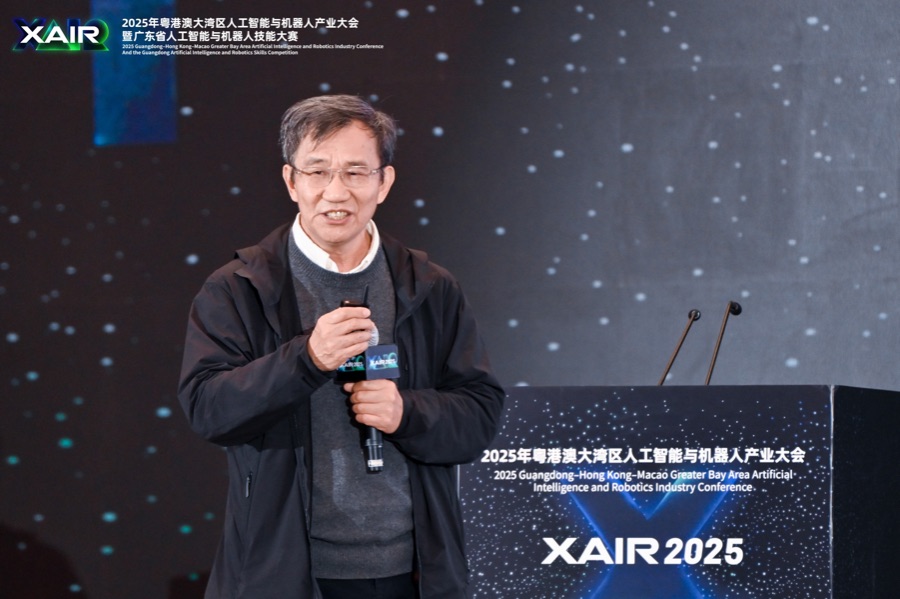
Group 1 - The conference on the AI and robotics industry in the Guangdong-Hong Kong-Macao Greater Bay Area highlighted the importance of new engineering education in cultivating innovative talents and enhancing product and enterprise iteration [1] - The unique supply chain advantages of the Greater Bay Area are emphasized, with iteration speeds reaching 10 to 30 times that of Silicon Valley and costs only one-tenth of Silicon Valley [3] - The focus on consumer-oriented (To C) product innovation is seen as a key driver for the manufacturing sector in the Greater Bay Area, contrasting with technology-driven business-to-business (To B) products [3] Group 2 - The emergence of young entrepreneurs like DJI and Yunji is noted as a solid foundation for the development of "new manufacturing," which aims to cultivate local consumer brands and upgrade low-end industries [4] - A shared factory initiative has been established to provide over 100 startups with one-stop services from concept validation to mass production, facilitating the transition from technology to product [4] - The gap between domestic education and industry needs to be bridged through platform building and reform in new engineering education, which has been implemented through project-based learning [5] Group 3 - The project-driven, interdisciplinary collaboration and real-world scenario orientation are identified as the core of new engineering education, essential for closing the loop from education to entrepreneurship and from technology to product [6] - The success of students in creating companies like DJI is attributed to the skills gained through project-based courses, supported by the efficient supply chain and application ecosystem in Shenzhen [6]

大湾区这所大学,跑出中国最牛创业军团
盐财经· 2025-12-14 10:18
Core Viewpoint - The Guangdong-Hong Kong-Macao Greater Bay Area is emerging as a leading hub for entrepreneurship, particularly in the field of smart hardware, due to its comprehensive industrial chain and unique advantages in innovation [2][3]. Group 1: Advantages of the Greater Bay Area - The Greater Bay Area serves as a global hub for the consumer electronics industry, facilitating a smooth transition from idea to startup for entrepreneurs [2][3]. - The region has attracted a concentration of global tech entrepreneurs, contributing to the emergence of numerous innovative companies [5][6]. - Hong Kong University of Science and Technology (HKUST), established in 1991, has rapidly become a leader in engineering and technology innovation, producing over 1,700 tech startups [8][9]. Group 2: Factors Behind HKUST's Success - HKUST's unique environment fosters a strong sense of national pride, a free academic atmosphere, and institutional innovation, which are crucial for nurturing entrepreneurial talent [11][14][17]. - The university's founding aimed to transform Hong Kong into an international innovation center, attracting top-tier talent from around the world [13]. - The academic culture at HKUST encourages the integration of research with practical applications, providing students and professors the freedom to innovate [16][20]. Group 3: Institutional Support for Innovation - HKUST has established a Knowledge Transfer Office to manage intellectual property and support researchers in patent applications, enhancing the commercialization of research [19]. - The university provides substantial financial support for early-stage ventures, including seed funding and the establishment of a HK$2 billion "Red Bird Fund" to support startups in key sectors [19][20]. - The combination of high academic standards and a relatively free innovation environment increases the likelihood of producing successful tech entrepreneurs [20]. Group 4: Unique Position in Global Context - The integration of industry, academia, and research in China offers a unique advantage compared to the U.S. and Europe, particularly in the field of smart hardware [21][25]. - The rapid prototyping capabilities in Shenzhen and Dongguan allow entrepreneurs to quickly test and iterate their products, a significant advantage over other global regions [25][26]. - The strong industrial base not only creates job opportunities but also drives the growth of Chinese tech enterprises [26]. Group 5: Future Opportunities and Educational Needs - The trend towards technological self-sufficiency in China will reshape global supply chains and create opportunities for domestic innovation [28][29]. - Future talent development in engineering and science must focus on interdisciplinary and cross-disciplinary education to meet the demands of emerging industries [30]. - HKUST's approach to education emphasizes integration and collaboration across various fields, preparing students for the complexities of modern technological challenges [30][32].

李泽湘:没有供应链支撑,科创只能停留在实验室和教室
2 1 Shi Ji Jing Ji Bao Dao· 2025-12-14 06:39
Core Insights - The conference on AI and robotics in the Guangdong-Hong Kong-Macao Greater Bay Area emphasizes the importance of new engineering education in cultivating innovative talent and enhancing product and enterprise iteration [1][6] - The unique supply chain advantages of the Greater Bay Area are highlighted, with iteration speeds reaching 10 to 30 times that of Silicon Valley and costs only one-tenth [3][4] - The focus on consumer-oriented (To C) product innovation is seen as a key driver for the manufacturing sector in the Greater Bay Area, contrasting with technology-driven business-to-business (To B) products [3][4] Supply Chain and Innovation - The lack of supply chain resources can hinder the practical application of innovative education, necessitating a full-chain support system including materials and chips [3] - The Greater Bay Area's supply chain is described as the most unique globally, providing a solid foundation for manufacturing and innovation [3][4] - The region has transitioned from a contract manufacturing model to developing its own consumer brands, leveraging its complete industrial chain [4] New Manufacturing and Startups - Emerging startups like DJI and Yunji are recognized for laying a strong foundation for "new manufacturing," which focuses on nurturing local consumer brands [4] - A shared factory initiative has been established to support startups with a one-stop service from concept validation to mass production, with over 100 companies already participating [5] Educational Reform - The gap between academia and industry is identified as a significant challenge, necessitating reforms in engineering education to better align with market needs [6][7] - A project-based learning model has been implemented in engineering education, emphasizing real-world applications and market-driven problem-solving [6][7] - The importance of role models in education is underscored, with examples of successful entrepreneurs inspiring students to define their own projects rather than following traditional methods [6][7]
百余项农业科技创新成果集中展出,看广东如何驱动产业升级
Nan Fang Nong Cun Bao· 2025-12-14 06:02
Core Viewpoint - The Guangdong Seed Industry Expo showcased over a hundred agricultural technology innovations, highlighting the province's commitment to driving industrial upgrades through technological advancements in agriculture [2][3][4]. Group 1: Agricultural Technology Innovations - The "Guangdong Agricultural Technology Innovation Achievements Exhibition" featured more than a hundred significant results, including advanced equipment and innovative technologies that demonstrate the deep integration of technological innovation and industrial development [3][4][5]. - Key innovations included a lychee-picking robot developed by South China Agricultural University, which can operate in all weather conditions, significantly reducing labor intensity and improving operational efficiency during the high-temperature harvesting season [10][11]. - The Guangdong Academy of Agricultural Sciences introduced a low-temperature dormancy preservation technology for lychees, achieving over 80% nutrient retention after one year of freezing [14][15]. Group 2: Focus Areas and Breakthroughs - Guangdong is focusing on nine key areas to tackle critical agricultural technology bottlenecks, including seed industry revitalization, disease prevention, smart equipment, value-added processing, land protection, and green low-carbon initiatives [19][20]. - Significant breakthroughs have been made in breeding new varieties of shrimp, rice, and peanuts, as well as establishing technical systems for preserving Lingnan fruits and preventing citrus greening disease [21][22]. Group 3: Smart Agriculture Trends - The trend towards smart and precise agriculture is evident, with the introduction of intelligent sensing and environmental control technologies for pig farming, optimizing feeding and environmental conditions through AI [30][31]. - In crop cultivation, mechanization and smart technologies are addressing traditional challenges, with the development of a series of agricultural machines covering the entire process from management to harvesting, applied over 111.2 million mu in the past three years [34][35]. Group 4: Industry Collaboration and Future Prospects - The exhibition showcased the collaborative efforts of 28 modern agricultural technology innovation teams and 20 award-winning agricultural technology promotion projects, reflecting Guangdong's vibrant practice of driving high-quality agricultural development through technology [27][28]. - Leading companies and research institutions, including Huawei and DJI, presented their advancements in smart agriculture, indicating a shift towards data-driven and intelligent agricultural practices that enhance productivity and sustainability [57][60].

掌楼热评| 多地发布住宅限高令!京东花35亿港元在香港买楼!
Sou Hu Cai Jing· 2025-12-14 03:25
Group 1: Real Estate Regulations - Multiple first and second-tier cities have implemented height restrictions for residential buildings, capping them at 80 meters, which translates to a maximum of 26 floors based on a standard floor height of 3 meters [1] - Recent documents from Shenzhen and Guangzhou require that residential projects exceeding 80 meters seek opinions from local fire rescue agencies to ensure alignment with local firefighting capabilities [1] - The Ministry of Housing and Urban-Rural Development has set clear guidelines for residential land use, including maximum building heights and density, effective from May 1 [1] Group 2: Economic Policies and Market Outlook - The Central Economic Work Conference emphasized the need for proactive macroeconomic policies to enhance demand and optimize supply, aiming for a stable and harmonious social environment [4] - The conference highlighted the importance of maintaining a balance between existing and new policies, with a focus on fiscal and monetary measures to support economic growth [4] Group 3: Trade and Economic Performance - China's trade surplus exceeded $1 trillion in the first 11 months of the year, with exports increasing by 5.9% year-on-year in November, reversing a previous decline [6] - The trade value with the EU grew by 5.4%, while trade with the US saw a decline of 16.9%, indicating shifting trade dynamics [6] Group 4: Technology and AI Developments - Meta is shifting its focus towards commercializable AI models, with a new model named Avocado expected to launch in spring, likely in a closed-source format [9] - Alibaba's Qwen app has rapidly gained popularity, surpassing 30 million active users within 23 days of its public testing, indicating strong demand for AI applications [11] Group 5: Safety and Regulatory Changes - The production of mercury thermometers and blood pressure monitors will be banned starting January 1, 2026, due to health and environmental concerns [15] - The National Taxation Administration has mandated that platform companies cannot transfer tax obligations to gig workers, ensuring better protection for this growing workforce [14]


所有人都盯上了大疆的饭碗
商业洞察· 2025-12-13 09:27
Core Viewpoint - The article discusses the competitive landscape of handheld imaging devices, particularly focusing on DJI and Insta360, highlighting the recent price drop of DJI's Pocket 3 and the implications for the market [3][4][5]. Group 1: Market Dynamics - The handheld imaging device market, including products like DJI's Pocket 3 and Insta360's offerings, has seen significant growth amidst stagnation in traditional markets such as smartphones and PCs [4][5]. - DJI's recent price cut of 900 yuan for the Pocket 3 has sparked competitive responses from other brands, indicating a growing interest in this niche market [3][5]. - The global market for handheld smart imaging devices is projected to exceed $6 billion by 2024, which is relatively small compared to the smartphone market but represents a significant opportunity for growth [33]. Group 2: Competitive Landscape - DJI and Insta360 have historically operated in separate segments of the handheld imaging market, but recent product launches have intensified competition [4][5]. - The entry of smartphone brands like OPPO and vivo into the handheld imaging space suggests a strategic shift as they seek to leverage their existing technology and supply chains [26][31]. - The article notes that while the market for handheld imaging devices is not large, the high profit margins and recent growth trends make it an attractive area for smartphone manufacturers [33]. Group 3: Technological Innovations - DJI's advancements in gimbal technology and image stabilization have positioned it as a leader in the handheld imaging market, with a focus on integrating these technologies into consumer-friendly products [10][14][32]. - The article emphasizes the importance of unique technological capabilities, such as stabilization and image processing algorithms, which differentiate handheld imaging devices from smartphones [32][34]. - The success of products like the Pocket 3 is attributed to their ability to cater to specific use cases that smartphones cannot effectively address, such as high-quality action shots and stable video recording [24][25].

影石创新(688775):智能影像创新先锋,全景无人机打造新增长曲线
Guotou Securities· 2025-12-13 07:16
Investment Rating - The report assigns a "Buy-A" investment rating to the company [5][7]. Core Insights - The company is positioned as a leader in the global smart imaging market, expanding its product line to include panoramic cameras, action cameras, and now consumer drones, which is expected to drive new growth opportunities [1][4][13]. - The global market for panoramic and action cameras is projected to grow significantly, with a CAGR of 15% for panoramic cameras and 20% for action cameras from 2017 to 2024, driven by the increasing popularity of outdoor activities and short video content creation [2][15]. - The company has established a strong competitive advantage through technological innovation that addresses user pain points, fostering a content ecosystem that encourages user-generated content [3][13]. Summary by Sections 1. Investment Overview - The company has rapidly grown to become a leader in the panoramic camera market by leveraging user insights and technological innovations [13]. - The launch of the world's first panoramic drone, A1, is expected to open new market segments [13]. 2. Market Potential - The action camera market is anticipated to expand, with the company projected to generate nearly 1.5 billion yuan in revenue from action cameras by 2024 [14]. - The company aims to capture a larger share of the overseas action camera market by enhancing product capabilities and marketing efforts [14]. 3. Financial Performance - The company's revenue is expected to grow from 3.64 billion yuan in 2023 to 18.86 billion yuan by 2027, with a compound annual growth rate (CAGR) of 57% [8][19]. - Net profit is projected to increase from 830 million yuan in 2023 to 2.45 billion yuan by 2027, reflecting a CAGR of 78% [8][19]. 4. Competitive Landscape - The company faces competition from established brands like GoPro but differentiates itself through superior product features and a focus on user experience [14][16]. - The report highlights that the penetration rate of panoramic cameras in the global handheld imaging device market is currently below 5%, indicating significant growth potential [16]. 5. Management Team - The management team is characterized by youth and innovation, with key figures having extensive entrepreneurial and industry experience [17][33]. - The company promotes a culture of bold thinking and innovation, which is reflected in its product development and market strategies [33]. 6. Product and Market Strategy - The company has developed a diverse sales network across over 60 countries, with significant revenue contributions from China, the US, and Europe [28]. - The product line includes a range of consumer-grade imaging devices, with a focus on enhancing user engagement through creative marketing and community involvement [24][28].
“广州低贸会”开幕 院士解码低空经济发展关键点
Guang Zhou Ri Bao· 2025-12-13 02:09
Core Viewpoint - The 2025 International Low Altitude Economic Trade Expo and the 8th Global Unmanned Systems Conference opened in Guangzhou, highlighting the significance of low altitude economy development in China and showcasing Guangdong's leading role in this sector [2][4]. Group 1: Event Overview - The Guangzhou Low Trade Fair is recognized as one of the highest-standard, most comprehensive, and internationally oriented professional exhibitions in the low altitude economy field [2]. - Over 350 enterprises and institutions participated in the expo, with more than 255 local companies from Guangdong, accounting for over 70% of the exhibitors [4]. Group 2: Industry Insights - According to experts, low altitude economy represents a new blue ocean for China's economic development, with over 70 types of traditional aviation models and around 70 eVTOL models currently under research [5]. - There are 19,979 registered drone operating companies in China, with more than 4.06 million registered products [5]. Group 3: Challenges and Opportunities - Key challenges for the low altitude economy include energy challenges related to battery technology, efficiency challenges concerning autonomous intelligence, and airspace opening challenges [5]. - Guangdong is leading in low altitude economic output, number of enterprises, drone production, and export value, supported by a comprehensive industrial chain [5]. Group 4: Technological Innovations - The expo showcased cutting-edge technologies across the entire low altitude economic industry chain, with major companies like EHang, DJI, and XPeng displaying new products [7]. - New products included EHang's EH216-S, the world's first fully certified manned aircraft, and innovative ground-based systems for low altitude operations [7]. Group 5: Security Solutions - A notable feature of the expo was the display of anti-drone products, including portable defense systems and detection devices, indicating a growing market for security solutions in low altitude operations [8].
专访张崟:解码“软硬融合”的广东AI与机器人产业路径
2 1 Shi Ji Jing Ji Bao Dao· 2025-12-13 00:14
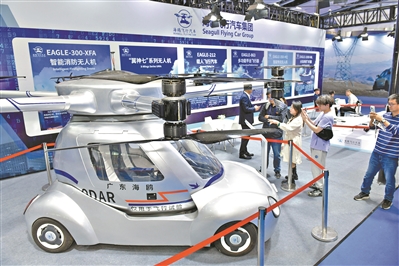
Core Insights - Guangdong's artificial intelligence and robotics industry is rapidly advancing, highlighted by the recent showcase of innovative technologies at the 2025 Guangdong-Hong Kong-Macao Greater Bay Area AI and Robotics Industry Conference [1][4] - The establishment of the Guangdong AI and Robotics Industry Alliance aims to foster collaboration among enterprises, universities, and research institutions, focusing on ten key initiatives to enhance industry development [2][3] Industry Development - The Guangdong AI and Robotics Industry Alliance was formed in June, bringing together various stakeholders to promote collaboration and innovation within the industry [2] - The alliance's "Ten Ones" initiative includes the development of an industry index, a comprehensive industry chain map, a white paper, application scenarios, an innovation and entrepreneurship competition, an award, an industry conference, an expo, an information platform, and an industry fund [2][3] Competitive Advantage - Guangdong's unique "soft-hard integration" capability is a significant advantage, providing vast industrial data for AI and a robust hardware supply chain for robotics [3] - The province leads the nation in the production of smart terminals, with 40.9% of mobile phones, 24.6% of computers, 57.7% of televisions, and 35.3% of smartwatches produced in 2024 [3] - Guangdong accounts for 44% of China's industrial robot production, maintaining its position as the leading manufacturing base and supply chain hub for the robotics industry [3] Technological Breakthroughs - Guangdong has made significant advancements in humanoid robots and industry-specific AI models, with notable achievements in generative AI and core technologies like AR waveguides and high-precision force control [4][5] - The province has completed 105 registrations for generative AI services, representing approximately 17% of the national total, showcasing its leadership in the sector [5] Commercialization and Application - Leading companies in Guangdong, such as GAC and Xpeng, have successfully commercialized advanced technologies in smart connected vehicles and intelligent manufacturing [6] - The alliance is focused on accelerating the transition of research outcomes from laboratories to production lines through innovative application scenarios [7] Funding and Support - The Guangdong Intelligent Industry Fund aims to support high-tech sectors with a target size of 10 billion yuan, focusing on long-cycle, high-barrier areas such as embodied intelligence and AI chips [10] - The fund has already secured 6 billion yuan in its first phase and is designed to act as "patient capital" to support critical technology development [10] Future Outlook - In the next 3-5 years, Guangdong aims to integrate AI technology into consumer electronics, enhancing product functionality and value [11] - The alliance plans to release the "AIR Pearl River Index" and a white paper to guide industry development and avoid homogenization, focusing on high-growth sectors [11]
