
博通

Search documents
美股云计算及芯片行业点评:Oracle指引昭示云厂竞争格局变革,ASIC进入密集催化期
Shenwan Hongyuan Securities· 2025-09-15 10:12
Investment Rating - The report maintains a positive outlook on the cloud computing and semiconductor sectors, indicating an "Overweight" rating for the industry, suggesting it will outperform the overall market [5][9]. Core Insights - The report highlights a significant increase in capital expenditure (Capex) expectations for major cloud providers, with a projected total exceeding $380 billion for FY25, reflecting a year-on-year growth of 55% driven by strong AI cloud order demand [5][9]. - Oracle's remaining performance obligations (RPO) have surged to $455 billion, a 359% year-on-year increase, indicating robust future revenue potential [5][12]. - The report notes a divergence in Capex investment strategies among major cloud players, with some adopting a more aggressive approach compared to others [6][16]. Summary by Sections Cloud Computing - Major cloud providers, including Google, Microsoft, Amazon, and Meta, are expected to collectively exceed $350 billion in Capex for FY25, with a year-on-year growth rate of 54% [9]. - Google has raised its Capex guidance for FY25 by $10 billion to $85 billion, while Meta has adjusted its guidance up by $1 billion to $69 billion [9][10]. - The report indicates that Oracle's Capex for FY26 is projected to reach $35 billion, with a significant increase in spending observed in FY26Q1 [6][14]. AI Computing Power - The boundaries between GPU and ASIC are becoming increasingly blurred, with a focus on hardware design capabilities and the synergy between hardware and software ecosystems [7][26]. - NVIDIA's introduction of the Rubin CPX chip marks a significant milestone in ASIC development, aimed at enhancing AI inference capabilities [7][26]. - Google is actively leasing its TPU chips to third-party cloud providers, indicating a growing maturity in the ASIC ecosystem [7][26]. Key Company Valuations - The report provides a valuation overview of key companies, including Microsoft, Google, Amazon, and Meta, with projected revenues and net profits for FY25 to FY27 [33]. - Microsoft is expected to generate $2,790 million in revenue for FY25, with a net profit of $1,000 million, reflecting a strong market position [33]. - Amazon's projected revenue for FY25 is $6,953 million, with a net profit of $846 million, indicating robust growth potential [33].
山西证券研究早观点-20250915
Shanxi Securities· 2025-09-15 02:37
Market Trends - The domestic market indices showed mixed performance, with the Shanghai Composite Index closing at 3,870.60, down 0.12%, and the Shenzhen Component Index at 12,924.13, down 0.43% [2] Industry Commentary - The communication industry is experiencing significant developments, particularly with Broadcom's latest financial report indicating continued high growth in AI business, with a revenue of $15.95 billion for Q3 2025, a 22% year-on-year increase. The AI revenue grew by 63% to $5.2 billion, with expectations for further growth [3][4] - The upcoming Shenzhen Optical Expo (CIOE2025) is anticipated to boost the optical module sector, with key innovations expected to be showcased, including 3.2T optical modules and TFLN thin-film lithium niobate chips [3][4] Company Commentary - Shanghai Hanxun (300762.SZ) reported a revenue of 173 million yuan for H1 2025, a 63.34% increase year-on-year, although it recorded a net loss of 29 million yuan [6][10] - The company is positioned in the low-orbit satellite communication sector, focusing on satellite communication payloads and ground stations, with significant potential for growth driven by favorable policies in the commercial aerospace sector [10] - The defense information construction is entering a new phase, with the company advancing in military communication systems, including 5G and data link technologies, which are expected to see increased demand [10] Investment Recommendations - Suggested companies for investment include domestic computing server manufacturers like ZTE Corporation and Unisplendour, as well as optical module companies such as Zhongji Xuchuang and NewEase Technology [8] - The overall market showed varied performance, with the optical module sector leading with an 8.4% increase, while the communication index fell by 2.68% [8]

股价催化剂!科技巨头挺进AI“芯”战场,从“拼模型”到“拼算力”
Zheng Quan Shi Bao· 2025-09-15 00:26
Core Viewpoint - The competition for AI capabilities has shifted from being optional to essential, with companies like Baidu and Alibaba investing heavily in self-developed chips for AI model training [1][3]. Group 1: Company Developments - Baidu and Alibaba's stock prices surged by 8.08% and 5.44% respectively, following news of their self-developed chip initiatives [1]. - Alibaba is developing a new AI chip aimed at broader AI inference tasks, which is currently in the testing phase [3]. - Tencent and ByteDance are also increasing their self-developed chip efforts, with Tencent making significant progress on three chips focused on AI inference and video transcoding [3]. Group 2: Investment Strategies - In addition to self-development, major tech companies are investing in chip firms to enhance their AI capabilities, with Alibaba investing in companies like Cambricon and Deep Vision [4]. - This dual approach of self-development and investment reflects a need for core technology control and a pragmatic balance between risk and efficiency in the high-stakes chip industry [4]. Group 3: Motivations for Chip Development - The drive for self-developed chips is fueled by three main considerations: cost, performance, and ecosystem control [6]. - The exponential demand for AI computing power necessitates a restructuring of underlying architectures, as general-purpose GPUs are becoming insufficient for training large models [6][7]. - Self-developed AI chips can significantly reduce procurement costs and enhance supply chain resilience, addressing the current imbalance in global computing power supply and demand [6][7]. Group 4: Technical Considerations - AI chips can be categorized into general-purpose chips (like CPUs and GPUs) and specialized chips (like ASICs and FPGAs), with the latter being easier to develop and more suited for specific applications [7]. - The current trend in chip development focuses on achieving optimal performance and efficiency through a closed-loop of algorithms, chips, and applications [8]. Group 5: Challenges Ahead - Despite the advantages of large tech companies in chip development, challenges such as rapid technological iteration and ecological barriers remain significant [10]. - The risk of technological obsolescence is high, as AI chip development can take 3-5 years, while AI technology evolves rapidly [10][11]. - Building a robust ecosystem around self-developed chips is crucial, as existing software stacks and developer tools may not be as mature as those of established international firms [10].
从“拼模型”到“拼算力” 科技巨头挺进AI“芯”战场
Zheng Quan Shi Bao· 2025-09-14 17:59
Group 1 - Baidu and Alibaba's stock prices surged by 8.08% and 5.44% respectively, driven by news of their self-developed chips for AI model training [1] - The global capital market reacts strongly to any developments in AI computing power, as seen with Tesla's Elon Musk and OpenAI's announcements [1] - The competition in AI chip development is not just about technology but also involves cost control, performance enhancement, supply chain security, and ecosystem dominance [1] Group 2 - Alibaba is developing a new AI chip that has entered the testing phase, aimed at broader AI inference tasks [2] - Domestic tech giants like Tencent and ByteDance are also increasing their self-developed chip efforts, with Tencent making significant progress on three AI chips [2] - The establishment of Pingtouge by Alibaba in 2018 marked the beginning of a focused effort on semiconductor technology [2] Group 3 - Investment in chip companies is a common strategy among tech giants, with Alibaba investing in several semiconductor firms [3] - The dual approach of self-development and investment reflects the urgent need for core technology control and a pragmatic balance between efficiency and risk [3] - Self-developed chips can optimize algorithms and hardware, while investments allow quick access to cutting-edge technologies [3] Group 4 - The drive for self-developed chips is influenced by three main factors: cost, performance, and ecosystem [4] - The exponential demand for computing power from generative AI is pushing companies to restructure their underlying architectures [4] - Self-developed AI chips can significantly reduce procurement costs and enhance supply chain resilience [5] Group 5 - AI chips can be categorized into general-purpose and specialized chips, with the latter being easier to develop and more suited for specific applications [5] - Companies like Tencent have developed specialized chips that show significant performance improvements over industry standards [5] - The current trend in AI chip development focuses on achieving optimal performance and efficiency through specialized designs [6] Group 6 - The current wave of AI chip development emphasizes a closed-loop system of algorithms, chips, and applications, aiming for extreme efficiency [6] - Different companies have varying core drivers for chip optimization based on their business foundations [6] - The ultimate goal is to gain ecosystem dominance, similar to NVIDIA's success with its CUDA software ecosystem [6] Group 7 - Internet giants have unique advantages in chip development, including large-scale operations and access to vast amounts of data [7] - Despite these advantages, the chip development journey is fraught with challenges, including long R&D cycles and technological risks [7] - The geopolitical landscape can also impact production capabilities and supply chain stability [7] Group 8 - To mitigate technological risks, companies are encouraged to adopt modular designs and focus on lightweight applications initially [8] - Building collaborative platforms for software and hardware ecosystems is essential for overcoming ecological barriers [8] - The future of technological innovation may rely on open-source collaboration to attract developers and accelerate technology iteration [8]
光模块,继续攀升还是戛然而止?
Xin Lang Ji Jin· 2025-09-14 11:50
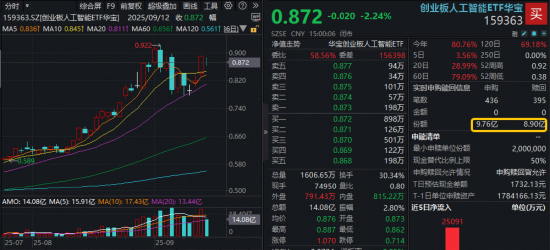
Group 1 - The core viewpoint of the articles indicates a recent correction in the AI sector, particularly in the light module stocks, following a significant surge in previous days, with the ChiNext AI index dropping over 2% [1][3] - Despite the downturn in light module stocks, sectors such as storage chips, computing leasing, and cloud computing showed resilience, with Beijing Junzheng leading gains of over 14% [1] - The largest AI ETF on the ChiNext, which surged nearly 9% the previous day, experienced a slight pullback of 2.24%, but saw a net subscription of 86 million units, indicating strong investor interest [1] Group 2 - Morgan Stanley's recent report suggested that the significant price increases in leading light module stocks have reflected most positive fundamental factors, recommending profit-taking amidst optimistic market sentiment [3] - Contrarily, other institutions like Citigroup and Goldman Sachs maintain a bullish outlook on light modules, citing strong demand visibility through 2027 and the ongoing AI arms race as key drivers for future growth [3][4] - The core logic driving the long-term growth of the light module industry remains unchanged, with exponential growth in AI computing demand necessitating faster and more efficient data transmission capabilities [4] Group 3 - Recent data indicates that leveraged funds are increasingly using ETFs to invest in light module and computing sectors, with the financing balance for the leading AI ETF reaching a historical high of over 400 million [4][6] - The ChiNext AI index has outperformed other AI indices significantly, with a year-to-date increase of over 82%, highlighting the strong demand dynamics in the AI sector [6] - The first ChiNext AI ETF has seen substantial trading activity, with an average daily transaction volume exceeding 1.1 billion in the past month, reflecting its leading position among similar ETFs [7]

【招商电子】半导体行业深度跟踪:海内外AI算力芯片高景气延续,存储等板块边际复苏趋势向上
招商电子· 2025-09-14 10:46
Group 1 - The core viewpoint of the article highlights the sustained high demand for computing power both domestically and internationally, driven by AI infrastructure investments and advancements in semiconductor technology [1][2][5] - The semiconductor industry indices showed strong performance, with the A-share semiconductor index outperforming both the Philadelphia semiconductor index and the Taiwan semiconductor index in August 2025 [1][25] - The global AI infrastructure spending is projected to reach $3-4 trillion by the end of the decade, with the Chinese AI chip market estimated at approximately $50 billion [6][1] Group 2 - Demand side: The consumer electronics sector is experiencing a recovery, with AI and automotive applications driving innovation in edge devices. Global smartphone shipments saw a year-on-year growth slowdown to 1% in Q2 2025, while PC shipments increased by 6.5% [2][3] - Supply side: Capacity utilization rates are recovering, with TSMC reporting strong demand for AI data centers. SMIC's capacity utilization reached 92.5% in Q2 2025, indicating a robust recovery in advanced manufacturing lines [4][12] - Price side: The storage market is witnessing a steady recovery in prices, particularly for DDR4, as major manufacturers shift capacity towards mainstream products like DDR5 [4][8] Group 3 - The global semiconductor sales in July 2025 reached $62.1 billion, marking a year-on-year increase of 20.6% [5][17] - The domestic storage module and niche storage sectors are expected to perform well in the second half of 2025, driven by improved supply-demand dynamics [8][12] - The advanced process demand remains strong, with major foundries like TSMC and UMC reporting increased capacity utilization rates, indicating a healthy outlook for the semiconductor manufacturing sector [12][14] Group 4 - The article suggests focusing on domestic semiconductor companies that are benefiting from the recovery in demand and advancements in AI applications, particularly in the computing power and equipment sectors [1][15] - The semiconductor equipment and materials sectors are expected to benefit from the expansion of advanced production lines in 2026, with domestic manufacturers showing positive revenue trends [14][15] - The MCU market is anticipated to see moderate recovery, with demand from consumer, home appliance, and automotive sectors expected to increase in the second half of 2025 [11][12]

市场复苏、代工增长之下,信号链芯片赛道“涨声一片”
Ju Chao Zi Xun· 2025-09-14 09:28
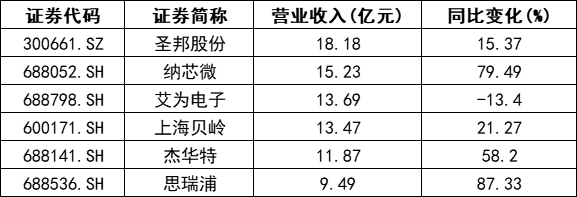
Core Viewpoint - The signal chain chip industry is experiencing a recovery alongside the overall simulation chip sector, with companies focusing on expanding into high-end markets such as automotive electronics while maintaining their existing market positions [1] Revenue Performance - In the first half of the year, leading signal chain companies reported significant revenue growth, with all major firms achieving both revenue and net profit increases [1] - The top revenue-generating companies include: - Shengbang Co., Ltd.: 1.818 billion yuan, up 15.37% [2] - Naxin Micro: 1.523 billion yuan, up 79.49% [2] - Aiwei Electronics: 1.369 billion yuan, down 13.4% [2] - Shanghai Beiling: 1.347 billion yuan, up 21.27% [2] - Jiehuate: 1.187 billion yuan, up 58.2% [2] - Siripu: 949 million yuan, up 87.33% [2][4] Profitability Analysis - Shengbang Co., Ltd. reported a net profit of 200 million yuan, a year-on-year increase of 12.42%, while its non-recurring net profit decreased by 14.98% [5][7] - Aiwei Electronics achieved a net profit of 156 million yuan, a significant increase of 71.09%, with a non-recurring net profit growth of 81.88% [5][7] - Shanghai Beiling's net profit was 134 million yuan, up 2.25%, with a slight increase in non-recurring net profit [5][7] - Naxin Micro and Jiehuate reported net losses but showed improvement in revenue growth [7] R&D Investment - Companies are maintaining high levels of R&D investment, with the following expenditures: - Shengbang Co., Ltd.: 507 million yuan, 27.88% of revenue [8][10] - Naxin Micro: 361 million yuan, 23.71% of revenue [8][10] - Aiwei Electronics: 262 million yuan, 19.20% of revenue [8][10] - Shanghai Beiling: 201 million yuan [8][10] - Jiehuate: 420 million yuan, 35.45% of revenue [8][10] - Siripu: 268 million yuan, 28.29% of revenue [8][10] Market Dynamics - The global signal chain chip market is dominated by international giants like Texas Instruments and Analog Devices, particularly in high-end sectors such as industrial and automotive [10] - The domestic simulation chip market is projected to grow from 124.9 billion yuan in 2020 to 195.3 billion yuan in 2024, with a compound annual growth rate of 11.8% [10] - The signal chain chip market is expected to reach 105.9 billion yuan by 2029, with a compound annual growth rate of 7.2% from 2024 to 2029 [10][11] Regulatory Environment - Recent U.S. export controls and anti-dumping investigations may provide domestic signal chain chip companies with increased market opportunities, particularly in high-end sectors [11][12] - The investigation into U.S. manufacturers indicates significant price drops in products exported to China, suggesting a potential shift in market strategy by international firms [12]



标普冲击6600点失利,纳指本周连创5日新高
Feng Huang Wang· 2025-09-12 23:30
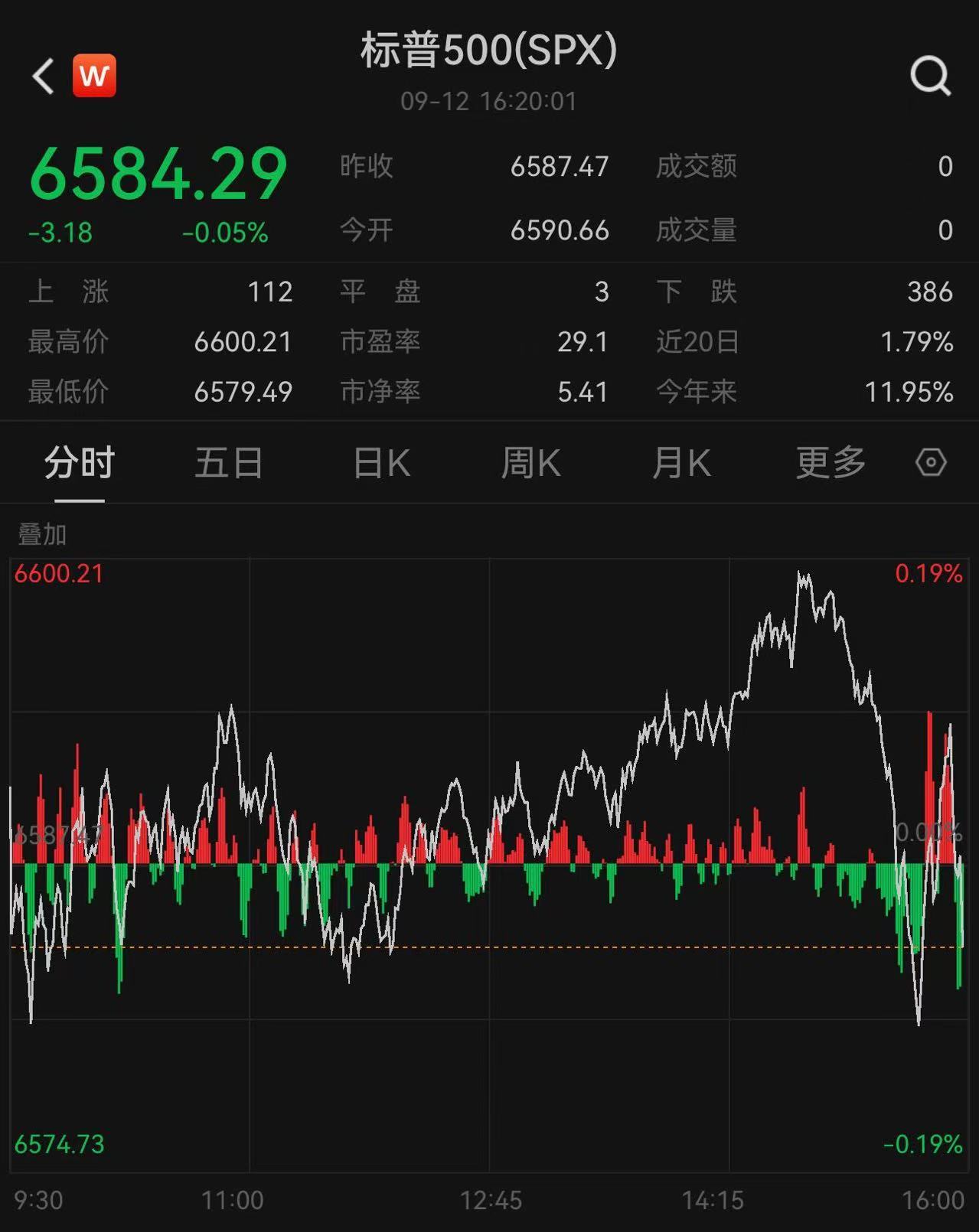
Market Performance - The S&P 500 index closed at 6584.29 points, down 0.05% from the previous close of 6587.47 points, after reaching an intraday high of 6600.21 points [1][2] - The Nasdaq Composite index rose 0.44% to 22141.1 points, marking its fifth consecutive day of record closing highs [1] - The Dow Jones Industrial Average fell 0.59% to 45834.22 points [1] Weekly Performance - For the week, the S&P 500 index increased by 1.59%, the Dow Jones by 0.95%, and the Nasdaq by 2.03% [4] Federal Reserve Outlook - The next key event for the U.S. stock market is the Federal Reserve's decision and Powell's press conference scheduled for next Wednesday [4] - Market expectations suggest 2-3 rate cuts this year, with uncertainty surrounding the meeting at the end of October [4] - Morgan Stanley predicts the Fed will cut rates at four consecutive meetings, while TD Securities anticipates a dovish stance due to a soft labor market [4] Stock Highlights - Notable stock performances include Tesla up 7.36%, Nvidia up 0.37%, Microsoft up 1.77%, and Apple up 1.76% [4] - Tesla's recent surge of 13.8% is linked to strong sales of the Model Y in China [5] - Apple's stock is boosted by the strong pre-sale of the iPhone 17 [5] IPO Market - This week saw six IPOs raising a total of $4 billion, marking the busiest week since 2021 [5] - Year-to-date, U.S. exchanges have raised $28.9 billion, still below the pre-pandemic average of $31.4 billion for the same period [5] Chinese Stocks - The Nasdaq Golden Dragon China Index fell 0.11% on Friday but rose 5.5% for the week [5] - Individual stock performances include Alibaba down 0.24%, JD.com down 2.12%, and Baidu up 2.65% [5] Other Industry News - The U.S. government has initiated a pilot project to accelerate the deployment of eVTOL (electric vertical takeoff and landing) vehicles, positively impacting related stocks like Joby Aviation and Archer Aviation [6] - Apple Watch's new hypertension alert feature has received FDA approval and will launch in the U.S. market next week [7] - Several COVID-19 vaccine stocks, including Moderna and Pfizer, experienced declines due to reports linking child deaths to vaccine injections [8][9] - BlackRock's Rick Rieder is emerging as a potential candidate to succeed Jerome Powell as the next Federal Reserve Chair [10] - Tesla's chairman stated that only Elon Musk can lead the company into AI and robotics, although Musk may take on a different leadership role [11]
光模块“易中天”跌了!需求靠AI,挑战在供应链
Di Yi Cai Jing· 2025-09-12 15:00
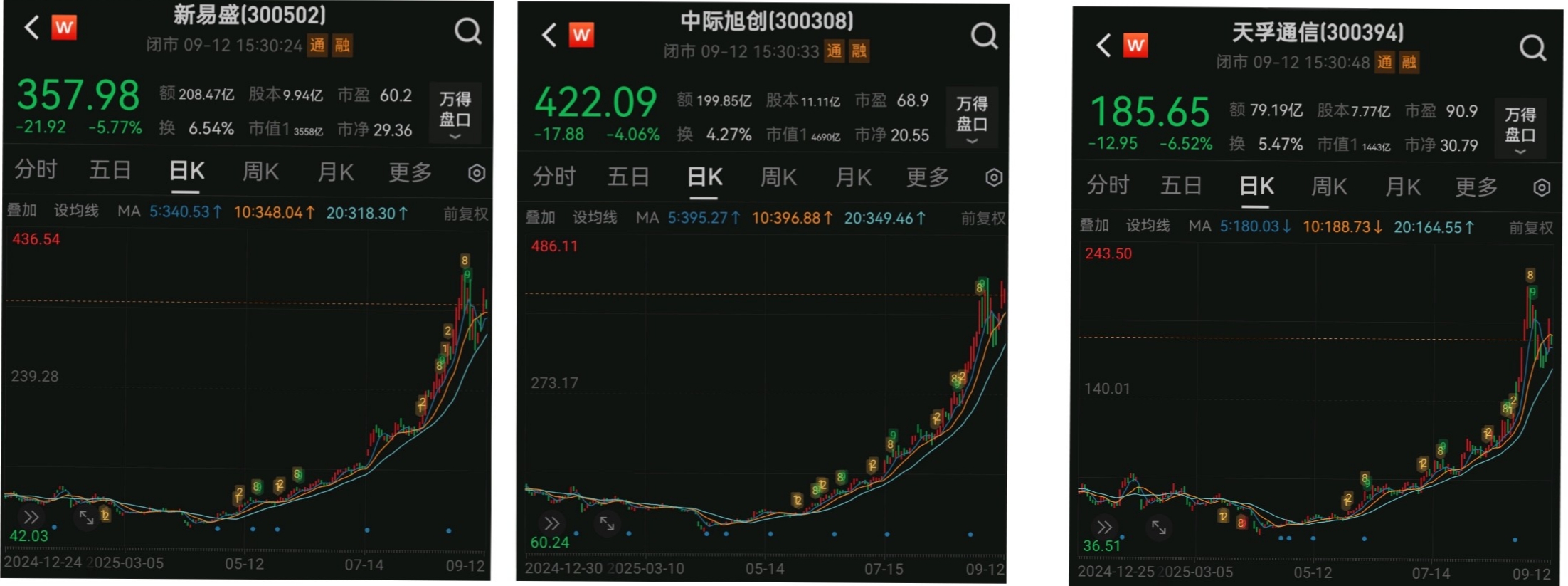
Core Viewpoint - The stock prices of three prominent optical module companies, NewEase, Zhongji Xuchuang, and Tianfu Communication, have experienced significant fluctuations, with year-to-date increases of 335.39%, 243.11%, and 186.06% respectively, driven by the growing demand for optical modules in AI infrastructure construction [1][2] Group 1: Stock Performance - In August, these stocks saw rapid price increases, with NewEase, Zhongji Xuchuang, and Tianfu Communication rising over 60% within the month [2] - As of September 11, 2023, NewEase and Tianfu Communication reached historical highs before experiencing price corrections [2] Group 2: Market Demand and Growth - The optical module market is projected to grow from $11.2 billion in 2020 to $17.8 billion in 2024, with expectations to reach $23.5 billion by 2025, driven by the exponential bandwidth demand from AI model training and inference [4] - The global cloud infrastructure services expenditure reached $95.3 billion in Q2 2023, marking a 22% year-on-year increase, indicating sustained growth in cloud services [5] Group 3: Company Performance - In the first half of 2023, NewEase reported revenues of 10.437 billion yuan, a 282.64% increase year-on-year, while Zhongji Xuchuang and Tianfu Communication reported revenues of 14.789 billion yuan and 2.456 billion yuan, reflecting increases of 36.95% and 57.84% respectively [6] Group 4: Supply Chain Challenges - The optical module industry faces challenges with raw material supply, as demand for 800G and 1.6T products is outpacing supply, leading to tighter availability of key materials [7] - NewEase and Tianfu Communication are expanding their production capacities, with NewEase's Thailand factory expected to be operational by early 2025 [7]
周跟踪:博通ASIC预期再上调,深圳光博会预热
Shanxi Securities· 2025-09-12 09:05
Investment Rating - The report maintains an "Outperform" rating for the communication industry, indicating an expected increase in stock prices exceeding the benchmark index by over 10% [1][46]. Core Insights - Broadcom's latest financial report shows continued high growth in AI business, with new ASIC customer orders worth billions confirmed. The company reported a revenue of $15.95 billion for Q3 2025, a 22% year-on-year increase, and a non-GAAP EPS of $1.69, up 36.3% year-on-year, both exceeding analyst expectations. The forecast for Q4 revenue is approximately $17.4 billion, indicating close to double-digit sequential growth. AI revenue has seen a 63% year-on-year increase, reaching $5.2 billion, with expectations to rise to $6.2 billion in the next quarter. Broadcom anticipates ASIC market demand to reach $60-90 billion by FY2027, suggesting potential for annual doubling of AI business if significant market share is captured [3][14][41]. - The upcoming CIOE 2025 in Shenzhen is expected to boost the optical module sector, with several key product trends identified. Notable products include 3.2T optical modules, TFLN thin-film lithium niobate chips, silicon photonic chips, CPO high-density optical connection products, and hollow-core fiber products. These innovations are anticipated to enhance the capabilities and competitiveness of the optical communication industry [4][15][16]. Summary by Sections Industry Investment Rating - The communication industry is rated as "Outperform" with expectations of significant growth [1][46]. Market Performance - The overall market showed mixed results for the week of September 1-7, 2025, with the ChiNext Index rising by 2.35%, while the Shanghai Composite Index fell by 1.18%. The communication index dropped by 2.68%, and the technology innovation board fell by 5.42%. The optical module sector led with an 8.4% increase [7][17]. Key Company Highlights - Broadcom's Q3 2025 results highlight strong performance in AI, with significant orders and revenue growth, indicating resilience against market concerns regarding North American cloud investment slowdowns [3][14][41]. - The report suggests focusing on companies in various segments, including domestic computing servers (ZTE, Unisoc, Huaqin Technology), optical modules (Zhongji Xuchuang, Xinyi Technology), and satellite internet (Chengchang Technology, Zhenlei Technology) [6][17]. Upcoming Events - The CIOE 2025 event is anticipated to showcase significant advancements in optical communication technology, potentially driving growth in the optical module sector [4][15].