
海尔智家

Search documents
赢家通吃格局突变,日本制造业跌落,谁将主宰中美欧新战局
Sou Hu Cai Jing· 2026-01-20 18:06
Core Viewpoint - The decline of Japanese manufacturing, once a symbol of quality and technology, is attributed to a combination of historical missteps, internal stagnation, and external pressures, leading to a significant loss of market share to competitors from China, the US, and Europe [1][20]. Group 1: Historical Context - The decline of Japanese manufacturing can be traced back to events like the Toshiba incident in the 1980s, which led to severe sanctions and a loss of international standing in high-end industrial equipment and electronics [3][4]. - Japanese companies such as Hitachi and Panasonic faced fierce competition from South Korean firms like Samsung and LG, ultimately leading to their exit from key markets like televisions and semiconductors [4][8]. Group 2: Internal Challenges - The internal promotion system and reliance on traditional advantages have made Japanese companies slow to respond to global competition, resulting in management rigidity and a lack of innovation [6][9]. - The economic bubble burst in the 1990s led to a prolonged period of stagnation, with reduced R&D investment and a shift in talent away from engineering to finance and services, further eroding innovation capabilities [11][13]. Group 3: External Pressures - The US-Japan semiconductor agreement in the 1980s significantly hampered Japan's semiconductor industry, allowing South Korea's Samsung to rise as a dominant player in the global market [8][9]. - The current global manufacturing landscape is characterized by a push for reshoring in the US and Europe, which is attracting investments away from Japan, exacerbating its industrial hollowing [15][16]. Group 4: Competitive Landscape - Chinese companies, such as BYD, are rapidly advancing in sectors like electric vehicles, effectively outpacing traditional Japanese automakers like Toyota and Honda [6][18]. - Japanese brands are losing ground in both emerging and developed markets, as Chinese firms leverage lessons from Japanese manufacturing while being more responsive to local market demands [18][20].

A股晚间热点 | 高层发声!让内需成为经济发展的主动力
智通财经网· 2026-01-20 15:22
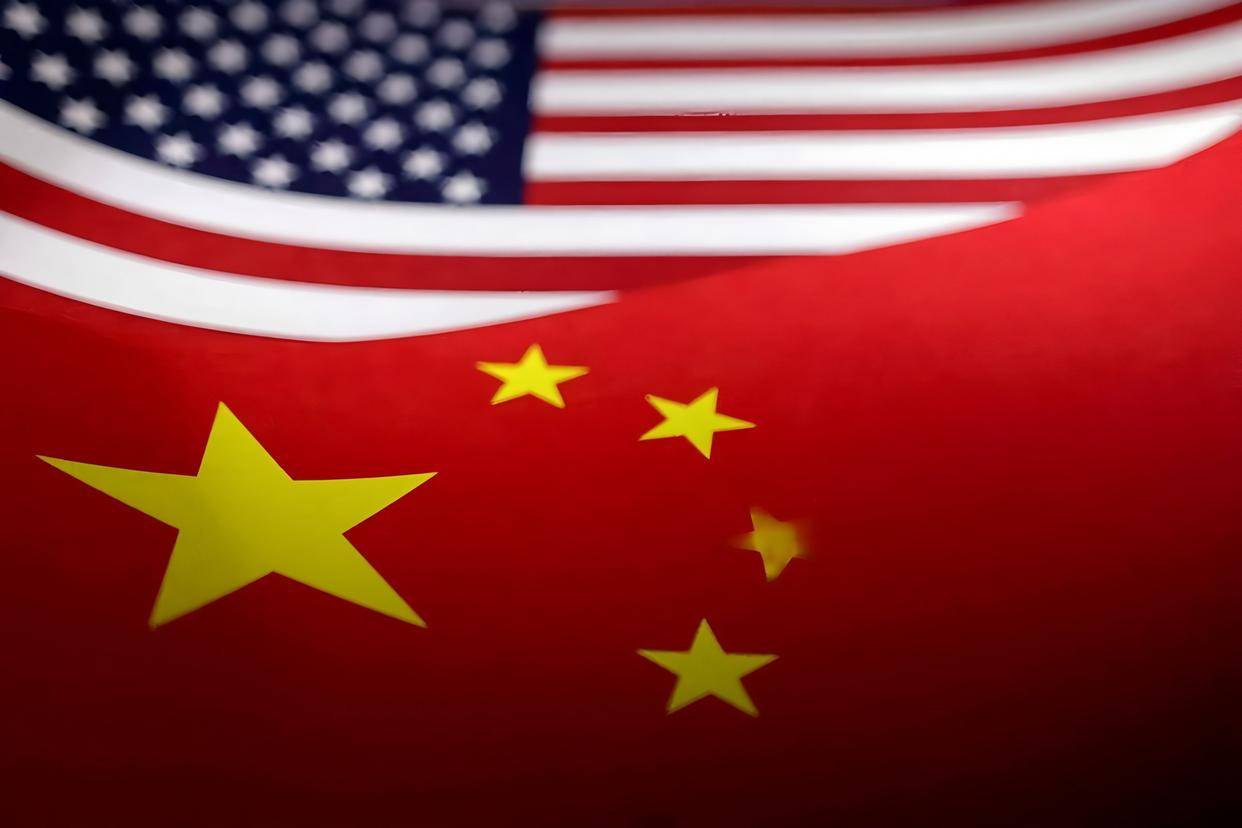
Group 1 - Xi Jinping emphasized the need for domestic demand to become the main driving force of economic development, advocating for a focus on domestic circulation and the integration of consumption and investment [1] - The Ministry of Finance announced that the overall fiscal expenditure in 2026 will maintain necessary levels, ensuring that spending will "only increase and not decrease" [2] - Global markets faced significant downturns due to concerns over Japan's fiscal deterioration and geopolitical tensions stemming from Trump's actions, leading to a sharp decline in European and American stock markets [3] Group 2 - Goldman Sachs maintained its prediction of a "slow bull" market for A-shares, forecasting over 3 trillion yuan in new domestic capital inflows into the stock market by 2026 [4] - The Chinese government reiterated its commitment to stable development in Sino-U.S. relations, highlighting mutual benefits and the importance of maintaining sovereignty and development interests [5] - Six departments, including the Ministry of Finance, announced the continuation of tax and fee incentives for community family services, including elderly care and childcare [6] Group 3 - The Shanghai Futures Exchange adjusted margin ratios and price limits for copper, gold, and silver futures contracts, indicating a regulatory response to market conditions [7] - Shanghai released an action plan to enhance the global pricing influence of non-ferrous metal commodities, aiming to improve resource allocation capabilities [8] - Recent trends showed a continued net redemption of large-cap ETFs, with significant declines in the share sizes of several major funds [9] Group 4 - The National Space Administration reported rapid development in China's commercial space sector, with plans for 50 launches in 2025, including breakthroughs in reusable rocket technology [12] - The satellite industry is experiencing adjustments, but the trend towards acceleration in commercial space development remains unchanged, with several significant milestones expected in the near future [13] - Various sectors, including real estate and artificial intelligence, are also highlighted for potential investment opportunities, with specific projects and models being developed [16][17]

AI算力激活数字潜能,青岛构建新质生产力发展新格局
Qi Lu Wan Bao· 2026-01-20 14:33
Core Insights - Qingdao is prioritizing technological innovation to enhance new quality productivity, focusing on embodied intelligent robots and an innovative industrial system [1][2][5] Group 1: Technological Innovation - The core element of developing new quality productivity is technological innovation, with embodied intelligent robots being a key strategy for Qingdao to seize future industrial opportunities [2] - Qingdao has established a robust ecosystem with nearly 100 robot and component companies and over 500 AI firms, ranking sixth among China's advanced manufacturing cities [2] Group 2: Industry Development - Qingdao's "10+1" innovative industrial system includes two leading industries, five emerging industries, and three advantageous industries, aiming to enhance productivity across 40 niche sectors [6] - The city is focusing on the integration of traditional industries with digital transformation, exemplified by the development of high-tech products like the world's first 8K laser television and high-speed magnetic levitation transportation systems [7] Group 3: AI and Digital Economy - Qingdao is building a comprehensive digital economy framework, emphasizing the importance of computing power as a "digital engine" for industrial innovation [8] - The city aims to become a provincial hub for computing power, with plans to enhance infrastructure and promote the integration of traditional and digital economies [8][9] Group 4: Achievements and Future Goals - Qingdao's innovation ecosystem has seen significant growth, with the number of technology-based SMEs increasing by 85% and high-tech enterprises by 98% since 2020 [7] - By 2026, Qingdao plans to achieve substantial advancements in AI and new generation information technology, targeting a scale of 200 billion yuan for the AI industry [6][10]
马年将至消费板块修复在即,摩根大通研报:中国消费股已具备足够吸引力
Zhi Tong Cai Jing· 2026-01-20 14:28
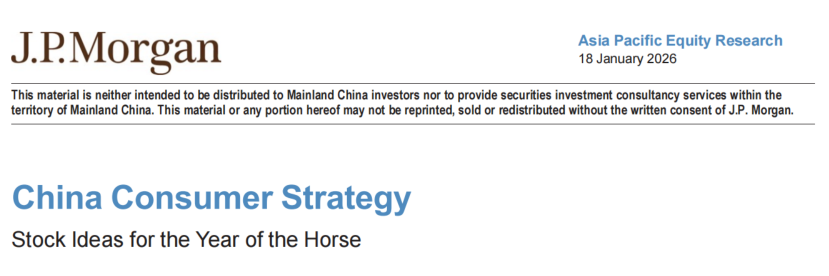
Core Insights - The Chinese consumer sector is showing signs of recovery in early 2026 after a five-year underperformance period from 2021 to 2025, driven by a combination of policy support and structural differentiation in demand [1] - The report highlights that the risk-reward ratio for Chinese consumer stocks is now attractive due to valuation advantages and profit resilience, with a focus on sector differentiation and company-specific opportunities [1] Industry Fundamentals: Mild Recovery Under Pressure - The current landscape of the Chinese consumer industry is characterized by "weak demand recovery and profit repair," with retail sales growth slowing to 1.3% year-on-year in November 2025 [2] - Forecasts suggest retail sales growth will remain at 2.6% and 2.5% for 2026 and 2027, respectively, amid a GDP growth slowdown to 4.5% and 4.1% [2] - Profit expectations for 2025 have been downgraded, with projected sales and net profit growth of only 3.7% and 8.8%, respectively, indicating potential further downward revisions if no additional stimulus is implemented [2] Core Trends Iteration: Restructuring Competitive Landscape - Price deflation has become a significant characteristic of the industry, with notable declines in key products, such as the price of Feitian Moutai dropping over 60% from its peak [3] - The trend of industry consolidation is accelerating, with leading companies leveraging cost control and digital technologies to capture market share from smaller brands [3] Changes in Consumer Behavior: Affordable Self-Indulgence and Experience-Driven Consumption - In the context of consumption downgrade, "affordable self-indulgence" has emerged as a core logic for younger consumers, who are price-sensitive yet willing to pay for emotional value and experiences [4] - Successful strategies in this segment involve differentiation, as seen with companies like Pop Mart, which utilizes a multi-IP matrix to mitigate risks associated with single IP lifecycle [4] Overseas Expansion and Demographic Restructuring Growth Logic - To counter domestic growth challenges, leading companies in sectors like home appliances and sportswear are accelerating their overseas expansion, benefiting from stronger demand and more rational competition [6] - The ongoing demographic shift, including a declining birth rate and an aging population, presents both challenges and opportunities for various sectors, driving demand growth in areas like personal care and elder services [6] Global Perspective: Valuation Advantages of Chinese Consumer Stocks - After five years of adjustment, the valuation bubble in the Chinese consumer sector has significantly compressed, with a projected P/E ratio of 17 times for 2026, lower than several other markets [7] - Notable performers since early 2026 include brands like Gu Ming and Li Ning, reflecting market recognition of quality leading companies [7] Transition from High Growth to Steady Defensive Full-Spectrum Layout - The Chinese consumer industry is transitioning from a "same rise and fall" cycle to an era where "structure is king," supported by policy measures and evolving consumption trends [8] Recommended Investment Targets - JPMorgan highlights six key investment targets across different sectors, including Laopu Gold, Luckin Coffee, and Pop Mart, focusing on companies that benefit from policy support and have strong competitive advantages [9] - Investment strategies should concentrate on sectors benefiting from policy stimulus, affordable self-indulgence trends, and those with overseas expansion capabilities to navigate domestic growth challenges [9]
今日晚间重要公告抢先看——利欧股份称自查工作已完成,股票1月21日起复牌;通富微电称2025年净利同比预增62.34%—99.24%
Jin Rong Jie· 2026-01-20 14:03
Group 1 - Liou Co., Ltd. announced that its stock price fluctuations have been investigated, confirming normal operations and no undisclosed significant information [1] - Tongfu Microelectronics expects a net profit of 1.1 billion to 1.35 billion yuan for 2025, representing a year-on-year growth of 62.34% to 99.24% [17][18] Group 2 - Zhongtung High-tech reported an increase of 91,700 tons in tungsten metal resources, which will not directly impact its current operations or financial situation [2] - Aibo Medical plans to acquire at least 51% of Demai Medical to gain control, aiming to cultivate new profit growth points in the sports medicine sector [2] Group 3 - Zhaojin Gold confirmed normal operations and no undisclosed significant matters after its stock price experienced abnormal fluctuations [3] - Riying Electronics stated that it has no revenue from humanoid robot-related businesses and emphasized the need for rational investment decisions [4] Group 4 - Yifan Transmission intends to purchase 87.07% of Beijing Helishi Electric Technology Co., Ltd., which is expected to constitute a major asset restructuring [5] - China Merchants Industry plans to build four 3000TEU traditional fuel container ships with a total investment of no more than 1.324 billion yuan [6] Group 5 - Jiangtian Chemical plans to invest 49.8 million yuan in a project to produce 60,000 tons of acrylic acid annually [7] - *ST Xinyan has received approval to lift its delisting risk warning after completing its restructuring plan [7] Group 6 - Kangxin New Materials intends to acquire 51% of Wuxi Yubang Semiconductor for 392 million yuan, marking its expansion into the semiconductor field [8] - Guoshun Quantum signed a technology implementation license contract with the University of Science and Technology of China [8] Group 7 - Zhenyu Technology reported a significant increase in orders from the robotics sector for Q4 2025, although these orders represent a small portion of its overall revenue [9] - Yongxing Materials announced that its lithium extraction project has reached full production capacity [9] Group 8 - Nanjing Julong plans to invest 110 million yuan in a production line for modified plastics with an annual capacity of 60,000 tons [9] - Guodian Nanzi signed a strategic cooperation agreement with Huawei to establish an AI technology innovation center [10][11] Group 9 - He Sheng New Materials plans to sell idle factory assets for no less than 80 million yuan [13] - He Sheng New Materials expects a net profit increase of 55% to 75% for 2025, driven by improved supply chain management [14] Group 10 - Kangda New Materials forecasts a net profit of 125 million to 135 million yuan for 2025, marking a turnaround from a loss in the previous year [15] - Yanjing Beer anticipates a net profit increase of 50% to 65% for 2025, supported by its large product strategy [16] Group 11 - Jinfang Energy expects a net profit of 109 million to 143 million yuan for 2025, reflecting a year-on-year growth of 123.97% to 193.7% [19] - Yandong Microelectronics predicts a net loss of 340 million to 425 million yuan for 2025 due to market changes and increased R&D costs [20] Group 12 - Taishan Petroleum forecasts a net profit increase of 30.88% to 66.11% for 2025, benefiting from reduced expenses [21] - Huayuan Holdings expects a net profit increase of 50.98% to 66.82% for 2025, driven by lower raw material prices [22] Group 13 - Huajin Co. anticipates a net loss of 1.6 billion to 1.9 billion yuan for 2025, although the loss is expected to be less than the previous year [23] - Zhongyuan Neipei expects a net profit increase of 80.47% to 109.9% for 2025, supported by steady growth in core business [24] Group 14 - Dongfang Tower expects a net profit of 1.08 billion to 1.27 billion yuan for 2025, reflecting a year-on-year growth of 91.4% to 125.07% [34] - Dali Long anticipates a net profit increase of 51.88% to 86.27% for 2025, driven by market expansion and operational efficiency [35] Group 15 - Hikvision reported a net profit increase of 18.46% for 2025, with total revenue reaching 925.18 billion yuan [44] - Zhongfu Industrial expects a net profit increase of 120.27% to 141.59% for 2025, primarily due to lower costs in the electrolytic aluminum business [45]




“世界药都 智护新生——卡萨帝非遗守护之旅”活动将于亳州启动
Zhong Guo Jin Rong Xin Xi Wang· 2026-01-20 12:22
Core Viewpoint - The event "World Medicine Capital Smart Care New Life - Casa Di's Intangible Cultural Heritage Protection Journey" will be launched in Bozhou, Anhui, integrating traditional Chinese medicine with modern technology [1] Group 1: Event Overview - The event is guided by multiple local government bodies and supported by various organizations, including the China Economic Information Service and Haier Smart Home [1] - It aims to promote the "old for new" appliance policy while enhancing the transmission of intangible cultural heritage through smart technology [1] Group 2: Strategic Approach - The event will adopt an "industry empowerment by city" strategy, focusing on the practical applications of intangible cultural heritage in contemporary life rather than just product displays [3] - The "Casa Di Intangible Cultural Heritage Smart Protection Plan" will be launched, and local heritage inheritors will receive "Joint Guardian" certificates, fostering a sustainable development ecosystem involving government, enterprises, inheritors, and the public [3] Group 3: Consumer Engagement - Haier Smart Home will implement the national "old for new" appliance policy during the event, offering exclusive benefits to citizens, thereby enhancing their quality of life through high-end smart living upgrades [3]

A股公告精选 | AI应用概念股利欧股份(002131.SZ)停牌核查结束 股票周三复牌
智通财经网· 2026-01-20 12:03
Group 1 - Liou Co., Ltd. announced that its stock will resume trading on January 21, 2026, after completing an internal review regarding stock price fluctuations during its suspension period [1] - The company is advancing AI-related business applications, but these currently do not significantly impact overall revenue or financial performance [1] - The main business segments of Liou Co., Ltd. include pump and system business and digital marketing, with no major changes reported [1] Group 2 - Kangxin New Materials plans to acquire 51% of Wuxi Yubang Semiconductor for 392 million yuan, marking a strategic shift towards the semiconductor industry [2] - The acquisition will allow Kangxin to diversify its business and enhance its profitability and risk resistance [2] - Yubang Semiconductor specializes in integrated circuit manufacturing and provides comprehensive service solutions [2] Group 3 - ST Saiwei expects a negative net asset value by the end of 2025, which may lead to a delisting risk warning for its stock [3] - The company forecasts a net loss of 720 million to 1.02 billion yuan for the fiscal year 2025 [3] Group 4 - Baili Tianheng's drug application for iza-bren, a first-in-class EGFR×HER3 dual antibody ADC for treating recurrent or metastatic esophageal squamous cell carcinoma, has been accepted for priority review [4] - The drug is currently undergoing over 40 clinical trials in China and the U.S. for various tumor types [4] - Seven indications for iza-bren have been included in the breakthrough therapy list by the CDE, with two also receiving priority review status [4] Group 5 - Kailong High-Tech is planning to acquire control of Shenzhen Jinwangda Electromechanical Co., Ltd., with stock suspension effective from January 21, 2026 [5] - The transaction is expected to constitute a major asset restructuring, with details to be disclosed during the suspension period [5] Group 6 - Hikvision reported a net profit of 14.188 billion yuan for 2025, reflecting an 18% year-on-year increase [6] - Tonghuashun anticipates a net profit between 2.735 billion and 3.282 billion yuan for 2025, representing a growth of 50% to 80% compared to the previous year [6] - Tongfu Microelectronics expects a net profit of 1.1 billion to 1.35 billion yuan for 2025, indicating a growth of 62.34% to 99.24% year-on-year [6] Group 7 - Yonghui Supermarket expects a net loss of 2.14 billion yuan for 2025 [10] - Guosheng Technology forecasts a net loss between 325 million and 650 million yuan for 2025 [10] - Putailai anticipates a net profit of 2.3 billion to 2.4 billion yuan for 2025, showing a growth of 93.18% to 101.58% year-on-year [10]
海尔智家(06690.HK):计划将于1月21日启动最多100万股D股回购计划
Ge Long Hui· 2026-01-20 11:05
Core Viewpoint - Haier Smart Home (06690.HK) announced a share buyback plan with a maximum limit of €2 million, excluding additional buyback costs, to be executed at the 2024 annual general meeting scheduled for May 28, 2025 [1] Group 1: Share Buyback Plan - The company plans to repurchase up to 1 million D-shares, representing approximately 0.369% of its current D-share capital [1] - The shares repurchased under the plan will be canceled, thereby reducing the company's capital [1] - The buyback will be conducted through the XETRA® trading system at the Frankfurt Stock Exchange and selected multilateral trading facilities within the EU [1] Group 2: Timeline and Impact - The buyback program is set to commence around January 21, 2026, and will continue until February 13, 2026 [1] - The company believes that this capital reduction will have a positive impact on its capital structure [1]
海尔智家拟回购股份并启动D股回购计划
Zhi Tong Cai Jing· 2026-01-20 11:04
Core Viewpoint - Haier Smart Home (600690)(06690) announced a share buyback plan with a maximum limit of €2 million, aimed at enhancing its capital structure through the repurchase and cancellation of shares [1] Group 1: Share Buyback Plan - The company will repurchase up to 1 million D-shares, representing approximately 0.369% of its current D-share capital [1] - The share buyback will be conducted via the XETRA trading system on the Frankfurt Stock Exchange and selected multilateral trading facilities within the EU [1] - The buyback program is set to commence around January 21, 2026, and will continue until February 13, 2026 [1] Group 2: Capital Reduction - The shares repurchased under the plan will be canceled, leading to a reduction in the company's capital [1] - The company believes that this capital reduction will have a positive impact on its capital structure [1]
海尔智家(06690)拟回购股份并启动D股回购计划
智通财经网· 2026-01-20 11:01
Core Viewpoint - Haier Smart Home (06690) announced a share buyback plan with a maximum scale of €2 million, aimed at enhancing its capital structure through the repurchase and cancellation of shares [1] Group 1: Share Buyback Plan - The company will repurchase up to 1 million D-shares, representing approximately 0.369% of its current D-share capital [1] - The buyback will be conducted via the XETRA® trading system on the Frankfurt Stock Exchange and selected multilateral trading facilities within the EU [1] - The buyback program is set to commence on or around January 21, 2026, and will continue until February 13, 2026 [1] Group 2: Capital Reduction - The shares repurchased under the plan will be canceled, leading to a reduction in the company's capital [1] - The company believes that this capital reduction will have a positive impact on its capital structure [1]