
康方生物

Search documents
杨国福的豆芽28元一斤?因为消费者太要脸
虎嗅APP· 2025-11-04 09:21
Core Viewpoint - The article emphasizes the importance of consumer behavior in influencing business practices, suggesting that financial transactions serve as a form of voting for or against a company's practices [10][30]. Group 1 - Consumers often express dissatisfaction after making purchases, but this behavior inadvertently supports the businesses they criticize [12][30]. - When consumers pay for a service or product, they provide "positive feedback," encouraging businesses to continue their current practices [13][30]. - To effectively express dissatisfaction, consumers should provide "negative feedback" by refusing to pay for unsatisfactory services, thereby signaling to businesses that their practices are unacceptable [17][30]. Group 2 - The article suggests that if consumers encounter issues at checkout, they should leave without completing the transaction, thereby creating a dilemma for the business [19][26]. - By collectively refusing to support unsatisfactory practices, consumers can compel businesses to reconsider their pricing and service strategies [28][30]. - The overall message is that consumers should prioritize their genuine feelings and actions over social considerations, ensuring that their spending aligns with their values [33][36].


10月份广发基金旗下5只基金跌逾10% 1只成立5年亏3成
Sou Hu Cai Jing· 2025-11-04 08:51
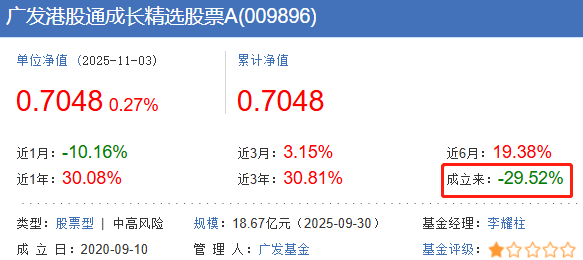
Group 1 - In October, five funds under GF Fund experienced declines exceeding 10%, including the Hong Kong Innovative Medicine ETF and two classes of the GF CSI Hong Kong Innovative Medicine ETF (QDII) [1][2] - The GF CSI Hong Kong Innovative Medicine ETF (QDII) fell by 11.61% in October, with its top ten holdings including companies like Innovent Biologics and BeiGene [1][2] - The GF Hong Kong Stock Connect Growth Selected Stocks C and A classes dropped by 10.42% and 10.40% respectively, with cumulative returns of -29.52% and -30.99% since their inception in September 2020 [1][2] Group 2 - The top ten holdings of the GF Hong Kong Stock Connect Growth Selected Stocks include Alibaba, Tencent, and Xiaomi, reflecting a focus on major technology and biotech firms [2][3] - Liu Jie has managed the first three funds mentioned, while Li Yaozhu has been managing the GF Hong Kong Stock Connect Growth Selected Stocks since its establishment [1][3] - The cumulative net values for the A and C classes of the GF Hong Kong Stock Connect Growth Selected Stocks are 0.7048 yuan and 0.6901 yuan respectively [1][3]
医药生物周报(25年第42周):2503公募基金医药持仓分析-20251104
Guoxin Securities· 2025-11-04 08:02
Investment Rating - The report maintains an "Outperform" rating for the pharmaceutical and biotechnology sector [5][4]. Core Views - The pharmaceutical sector has shown stronger performance compared to the overall market, with a 1.31% increase in the biotechnology sector, while the overall A-share market rose by 0.27% [27]. - The TTM price-to-earnings ratio for the pharmaceutical and biotechnology sector is 38.80x, which is at the 81.52 percentile of the historical valuation over the past five years [27][32]. Summary by Sections Market Performance - In the past week, the chemical pharmaceutical sector led the gains with a 3.07% increase, while the medical device sector saw a decline of 1.15% [27]. - The report highlights that the largest sub-sectors by holding proportion are chemical preparations and other biological products, with significant increases in holdings for other biological products and CXO [17][11]. Fund Holdings Analysis - The total scale of pharmaceutical funds reached 311.8 billion, a slight decrease of 0.2% from the previous quarter [11]. - The proportion of pharmaceutical holdings in all funds is 9.68%, with a decrease of 0.09 percentage points [14]. - The top three pharmaceutical stocks by the number of funds holding them are 恒瑞医药 (734 funds), 药明康德 (564 funds), and 信达生物 (297 funds) [22]. Valuation and Recommendations - The report recommends several companies, including: - 迈瑞医疗, noted for its strong R&D and sales capabilities, benefiting from domestic medical infrastructure and product upgrades [36]. - 药明康德, recognized for its comprehensive new drug development service platform [36]. - 爱尔眼科, the largest eye care institution in China, focusing on high-quality medical services [36]. - 新产业, a leader in the field of chemiluminescence immunoassay [36]. - The report also provides earnings forecasts for key companies, indicating a positive outlook for their profitability in the coming years [4].



小摩:医药股回调为明年表现提供有利条件 首选康方生物、翰森制药及药明康德
Zhi Tong Cai Jing· 2025-11-04 06:38
Core Viewpoint - The healthcare stocks in mainland China have experienced a significant pullback since early last month, with the Hang Seng Healthcare Index and the CSI 300 Healthcare Index declining by 12% and 9% respectively, compared to a 2% drop in the Hang Seng Index and a 1% increase in the CSI 300 Index [1] Group 1: Market Influences - The decline in healthcare stocks is attributed to multiple factors, including heightened US-China tensions and increased geopolitical risk premiums prompting profit-taking by investors [1] - The introduction of a milder version of the US "Biosecurity Act" attached to next year's National Defense Authorization Act has raised uncertainties regarding pharmaceutical outsourcing services [1] - Concerns persist regarding potential increased regulation from the US, such as restrictions on authorized transactions with China or limitations on clinical data from China, which could impact the biotech and pharmaceutical sectors [1] Group 2: Market Sentiment and Valuation - The anticipated outcomes of the national medical insurance drug list price negotiations and the legislative progress of the "Biosecurity Act" are expected to influence market sentiment [1] - Despite the recent stock price declines, industry valuations and market expectations for business development transactions are returning to more reasonable levels, with no substantial deterioration in the industry's fundamental performance observed [1] - The recent pullback in stock prices may provide favorable conditions for performance in the upcoming year [1] Group 3: Preferred Stocks - The company identifies preferred stocks including CanSino Biologics (09926), Hansoh Pharmaceutical (03692), and WuXi AppTec (603259) (02359) [1] - The company also expresses optimism for Innovent Biologics (01801) and Heng Rui Medicine (600276) (01276) [1]


医药三季报总结:持仓环比降低,出口和创新业绩较好:医药行业周报(25/10/27-25/10/31)-20251104
Hua Yuan Zheng Quan· 2025-11-04 06:24
Investment Rating - The investment rating for the pharmaceutical industry is "Positive" (maintained) [4] Core Viewpoints - The pharmaceutical index increased by 1.31% from October 27 to October 31, outperforming the CSI 300 index by 1.74%. The third-quarter reports have been released, showing strong performance in exports and innovative drugs, although a period of performance vacuum is expected post-reports [5][6] - The report emphasizes a focus on innovative drugs, with key stocks to watch including Xinlitai, Zexing Pharmaceutical, and others in both A-shares and Hong Kong stocks. It also suggests attention to export-oriented CXO companies and stable, undervalued assets expected to see changes in 2026 [5][6] Summary by Sections 1. Q3 2025 Report Summary: Decrease in Holdings, Strong Performance in Exports and Innovation - As of Q3 2025, the total market value of active public funds in pharmaceuticals was 228.4 billion yuan, accounting for 11.08% of total public fund holdings, a slight decrease of 0.39 percentage points [11][12] - The report indicates a decline in holdings for both pharmaceutical and non-pharmaceutical theme funds, with innovative drugs maintaining a significant portion of the holdings [17][20] 2. Q3 2025 Performance Summary: Internal Sector Disparities - The report highlights significant disparities in growth rates across different pharmaceutical sectors, with innovative drugs showing a bright overall trend and CXO services experiencing a rebound. The traditional chemical drug sector continues to face challenges due to centralized procurement [25][26] 3. Industry Perspective: Focus on Innovative Drugs and Low-Valuation Assets - The report maintains that innovative drugs should be the main focus for the year, with attention to manufacturing exports and aging consumer markets. The pharmaceutical index has shown a year-to-date increase of 21.10% [52] - Key stocks recommended for November include Heng Rui Pharmaceutical, Xinlitai, and others, indicating a strategic approach to investment in the sector [6][54]



2025年国谈落幕,创新药短线回调,港股通创新药ETF(520880)跌近2%!低吸资金涌动,溢价持续走高
Xin Lang Ji Jin· 2025-11-04 03:36
Core Insights - The Hong Kong Stock Connect Innovative Drug ETF (520880) experienced a decline, with a drop of 2% during intraday trading, despite a significant inflow of funds totaling over 218 million yuan in the past ten days [1] - The ETF covers 37 innovative drug companies, with over 30 stocks showing negative performance, including major players like 3SBio and CanSino Biologics, which fell more than 3% [1] - The recent conclusion of the medical insurance negotiation and commercial insurance innovative drug directory price discussions is expected to enhance growth opportunities for innovative drug companies [1] Fund Performance - The Hong Kong Stock Connect Innovative Drug ETF (520880) is the first ETF to track the Hang Seng Hong Kong Stock Connect Innovative Drug Select Index, which has a total fund size exceeding 2 billion yuan as of November 3 [5] - The ETF has an average daily trading volume of 474 million yuan, making it the largest and most liquid ETF tracking this index [5] Index Characteristics - The index has three unique advantages: it exclusively focuses on innovative drug companies, has a high concentration of leading firms with over 71% of the top ten companies, and employs a more reasonable weighting strategy that enhances the proportion of highly active stocks [2][3][4]
2025年国谈落幕:双目录同步 创新药目录降价建议区间或为15%~50%
Di Yi Cai Jing· 2025-11-04 02:49
Core Insights - The national medical insurance negotiation for 2025 has introduced a dual-directory system, marking a significant change in the negotiation process for innovative drugs and commercial insurance [1][2][15] - The negotiation process for innovative drugs has seen a price reduction range suggested by the National Medical Insurance Administration (NMIA) of 15% to 50%, with a focus on the CAR-T drugs [3][4] - The introduction of the innovative drug directory is expected to create a more sustainable market payment mechanism for new drugs, with companies needing to reassess their product positioning and market strategies [15] Summary by Sections National Medical Insurance Negotiation - The negotiation took place from October 30 to November 3, 2025, with the first three days dedicated to the national medical insurance directory and the last two days for the commercial insurance innovative drug directory [1] - This year marks the first introduction of an innovative drug directory, which has altered the negotiation dynamics for drug pricing [1][15] Price Negotiation Mechanism - The NMIA has introduced a new price negotiation mechanism for innovative drugs, allowing for price discussions between drug companies and commercial insurance [1][3] - Companies have been advised to consider a price reduction of 15% to 50% during negotiations, with some expressing skepticism about achieving reductions below 15% [3][4] CAR-T Drugs - CAR-T drugs have been a focal point in the negotiations, with successful negotiations reported for some products, such as the CAR-T drug from HeYuan Biotech priced at 999,000 yuan [3][4] - A limited number of CAR-T drugs are expected to be included in the innovative drug directory, with estimates suggesting around 20 drugs may be approved [1][3] Commercial Insurance Dynamics - The dual-directory negotiation allows companies to choose between reporting to the basic medical insurance directory, the innovative drug directory, or both, creating strategic options for different companies [2][10] - The commercial insurance market has shown limited interest in covering rare disease drugs due to their high costs and small patient populations, which may affect their inclusion in the innovative drug directory [14][15] Focus on ADC and Bispecific Antibodies - ADC (Antibody-Drug Conjugates) and bispecific antibodies remain key focus areas in the negotiations, with several innovative drugs vying for inclusion in the directories [8][10] - Companies are adopting varied strategies based on their market positioning, with some prioritizing the basic medical insurance directory for broader market access, while others focus on maintaining high-end product positioning through the innovative drug directory [10][11]
2025年国谈落幕:双目录同步,创新药目录降价建议区间或为15%~50%
Di Yi Cai Jing· 2025-11-04 02:45
Core Insights - The national medical insurance negotiation concluded with significant changes, including the introduction of an innovative drug directory and a new price negotiation mechanism involving both domestic and foreign pharmaceutical companies [1][15] - The negotiation focused on price reductions ranging from 15% to 50%, with a particular emphasis on CAR-T therapies, which are expected to have a limited number of entries in the innovative drug directory [1][3][15] Group 1: Innovative Drug Directory - The innovative drug directory negotiation was a first, allowing for a new pricing negotiation mechanism between pharmaceutical companies and commercial insurance [1][15] - The number of drugs entering the innovative drug directory is expected to be limited, with estimates suggesting around 20 drugs may be included [1][3] - CAR-T therapies are a focal point, with successful negotiations reported for some products, indicating a competitive landscape for pricing [3][4] Group 2: Pricing Strategies - Pharmaceutical companies are presented with options to report under different categories, influencing their pricing strategies and negotiation approaches [2][10] - The negotiation dynamics reveal a split in strategies, with some companies prioritizing market share through price reductions, while others aim to maintain premium pricing for innovative products [10][11] - The expected price reductions for CAR-T therapies are under scrutiny, with some companies indicating that achieving a reduction below 15% may be challenging [3][4] Group 3: Commercial Insurance Impact - The introduction of the innovative drug directory is seen as a potential game-changer for how CAR-T therapies are covered under commercial insurance, although the actual impact remains to be seen [5][15] - There is skepticism regarding the inclusion of rare disease drugs in the commercial insurance directory, as insurers are less inclined to cover high-cost, low-volume medications [14][15] - The overall goal of the negotiations is to establish a sustainable market-based payment mechanism for innovative drugs, leveraging both public and commercial insurance [15]
小摩:医药股回调为明年表现提供有利条件 首选康方生物(09926)、翰森制药(03692)及药明康德(02359)
智通财经网· 2025-11-04 01:23
Core Viewpoint - The healthcare stocks in mainland China have experienced a significant pullback since early last month, with the Hang Seng Healthcare Index and the CSI 300 Healthcare Index declining by 12% and 9% respectively, compared to a 2% drop in the Hang Seng Index and a 1% increase in the CSI 300 Index [1] Group 1: Market Influences - The decline in healthcare stocks is influenced by multiple factors, including heightened US-China tensions and increased geopolitical risk premiums prompting profit-taking by investors [1] - The inclusion of a milder version of the US "Biosecurity Act" in next year's National Defense Authorization Act has raised uncertainties regarding pharmaceutical outsourcing services [1] - Concerns persist regarding potential increased US regulations that may restrict authorized transactions with China or limit clinical data from Chinese sources, impacting the biotech and pharmaceutical sectors [1] Group 2: Market Sentiment and Valuation - Recent authorized transactions have failed to boost market sentiment, and the lack of strong industry-level positive catalysts for the remainder of the year may limit stock price momentum [1] - The anticipated results of national medical insurance drug price negotiations and the legislative progress of the "Biosecurity Act" are expected to influence market sentiment [1] - Despite the pullback, industry valuations and market expectations for business development transactions are returning to more reasonable levels, with no substantial deterioration in the industry's solid fundamentals observed [1] Group 3: Investment Recommendations - The recent stock price decline is viewed as providing favorable conditions for performance in the upcoming year [1] - Preferred stocks identified by the company include CanSino Biologics (09926), Hansoh Pharmaceutical (03692), and WuXi AppTec (02359), with additional positive outlooks for Innovent Biologics (01801) and Hengrui Medicine (01276) [1]
恒生生物科技ETF易方达(159105)今日上市,盘中涨1.58%,11月创新药赛道有望再度进入密集催化期
Ge Long Hui· 2025-11-03 21:43
Group 1 - The Hong Kong pharmaceutical stocks have surged, with Kangfang Biopharma rising over 6%, which has positively influenced the newly listed Hang Seng Biotechnology ETF (159105) that increased by 1.58% [1] - The Chinese biotechnology industry has shown strong performance this year, particularly in innovative drugs and AI healthcare, with expectations for continued growth in emerging sectors [2] - November is anticipated to be a critical period for innovative drugs, as Chinese companies have set records at the ESMO conference with 35 studies selected for oral presentations and 23 for breakthrough abstracts [2] Group 2 - A significant collaboration was established between Innovent Biologics and Takeda Pharmaceutical, with a total scale of $11.4 billion, highlighting the robust partnership potential in the industry [2] - The global biotechnology assets have performed well during the overseas easing cycle, with the Nasdaq Biotechnology Index rising by 13% since the interest rate cut on September 18 [2] - The Hang Seng Biotechnology ETF (159105) tracks the Hang Seng Biotechnology Index, which includes the 30 largest biotechnology companies within the Hong Kong Stock Connect, providing an effective tool for investors to allocate resources in the Hong Kong biotechnology sector [2]