恒瑞医药

Search documents
中国创新药2025年出海交易超1300亿美元,港股医药ETF(159718)备受关注
Xin Lang Cai Jing· 2026-01-20 02:24
Core Viewpoint - The Chinese innovative drug business development (BD) for overseas licensing reached a record high of $135.655 billion in total transaction value for 2025, with a significant increase in upfront payments and transaction numbers compared to previous years [1][2]. Group 1: Market Performance - The China Securities Hong Kong Stock Connect Pharmaceutical and Health Comprehensive Index (930965) showed mixed performance among its constituent stocks, with Times Angel leading at a 4.83% increase [1]. - The Hong Kong pharmaceutical ETF (159718) was quoted at 0.96 yuan [1]. Group 2: Industry Developments - The innovative drug BD overseas licensing transactions in China for 2025 totaled $135.655 billion, with upfront payments of $7 billion and 157 transactions, all marking historical highs [2]. - Notable collaborations include Rongchang Biopharma's PD-1/VEGF dual antibody RC148 receiving a $650 million upfront payment from AbbVie, and Yilian Biopharma's partnership with Roche on B7H3-targeted ADC [2]. - GSK's Bepirovirsen for chronic hepatitis B showed positive results in Phase III trials, and Arrowhead announced advancements in RNAi therapies for weight loss, validating the clinical value of small nucleic acid drugs [2]. Group 3: Investment Outlook - The 44th Annual J.P. Morgan Healthcare Conference revealed positive updates from leading global pharmaceutical companies, with significant BD transactions and improved forecasts from CXO companies like WuXi AppTec [2]. - The global pharmaceutical industry remains robust, with innovation in drugs and medical devices continuing to be the main investment theme [2].



申万宏源证券晨会报告-20260120
Shenwan Hongyuan Securities· 2026-01-20 00:41
Economic Overview - The GDP growth for Q4 2025 is reported at 4.5%, matching expectations but down from 4.8% in the previous quarter. December retail sales growth is at 0.9%, below the expected 1.5% and previous 1.3% [12][12] - Fixed asset investment shows a cumulative year-on-year decline of 3.8%, worse than the expected decline of 2.4% and previous 2.6%. Real estate development investment has a cumulative decline of 17.2% compared to the previous 15.9% [12][12] - Industrial value-added growth for December is reported at 5.2%, exceeding the expected 4.9% and previous 4.8% [12][12] Key Changes in Economic Structure - Three significant changes are identified: improvement in service consumption, easing of the "crowding out effect" from debt reduction, and recovery in new economic sectors [12][12] - The shift in consumption policies from goods to services is noted, with service retail growth increasing while traditional retail indicators decline [12][12] - Investment slowdown is attributed to intensified corporate debt repayment policies, which ultimately benefit cash flow recovery for companies [12][12] Sector Performance - The electric grid equipment sector shows a significant increase of 60.88% over the past six months, with a daily increase of 7.01% [1] - The digital media sector has seen a decline of 4.34% yesterday, with a 21.93% increase over the past month [1] - The hotel and catering industry has increased by 3.87% yesterday and 20.46% over the past six months, indicating resilience in service consumption [1] Investment Opportunities - The report highlights potential investment opportunities in sectors benefiting from service consumption recovery and easing debt repayment pressures [12][12] - Companies in the PCB drilling needle industry are noted for their growth potential, driven by increasing demand in emerging markets [20][20] - The report suggests focusing on companies with strong cash flow recovery and those positioned in high-growth sectors such as healthcare and technology [12][12][20]
26年港股IPO和解禁潮展望:悬头之剑?-广发证券
Sou Hu Cai Jing· 2026-01-19 16:53
Group 1 - The report focuses on the trends of Hong Kong stock IPOs and lock-up expirations in 2026, analyzing their impact on market performance and sector volatility [1][18] - In 2025, Hong Kong's IPO market performed strongly with 117 IPOs raising HKD 285.9 billion, regaining the top position globally, benefiting from the HKEX's Chapter 18A and 18C policies [1][18] - As of January 10, 2026, there are 300 companies queued for IPOs, primarily in technology and healthcare sectors, with expectations that the 2026 IPO fundraising will exceed HKD 300 billion [1][18] Group 2 - Historical data indicates that peaks in IPOs and fundraising do not reverse the trend of the Hong Kong stock market, as seen in previous bull markets during 2010 and 2014-2015 [2][25] - The real market impact is often felt six months post-IPO due to the lock-up expiration of cornerstone investors, which historically coincides with market downturns, although exceptions occurred in 2025 [2][8] - Significant lock-up expirations are expected in March and September 2026, with over HKD 30 billion in large companies' shares set to be released, and September's expirations could reach approximately HKD 400 billion [2][34] Group 3 - Recent capital flow data shows a decrease in northbound trading volume while southbound trading has turned net inflow, with foreign investments focusing on companies like Xiaomi and Kuaishou [3] - The trend indicates a shift in foreign capital from A-shares to H-shares, with notable inflows into developed European markets and outflows from the US and Japanese markets [3]



“出海”与并购并举 创新药产业跑出加速度
Zheng Quan Ri Bao· 2026-01-19 16:12
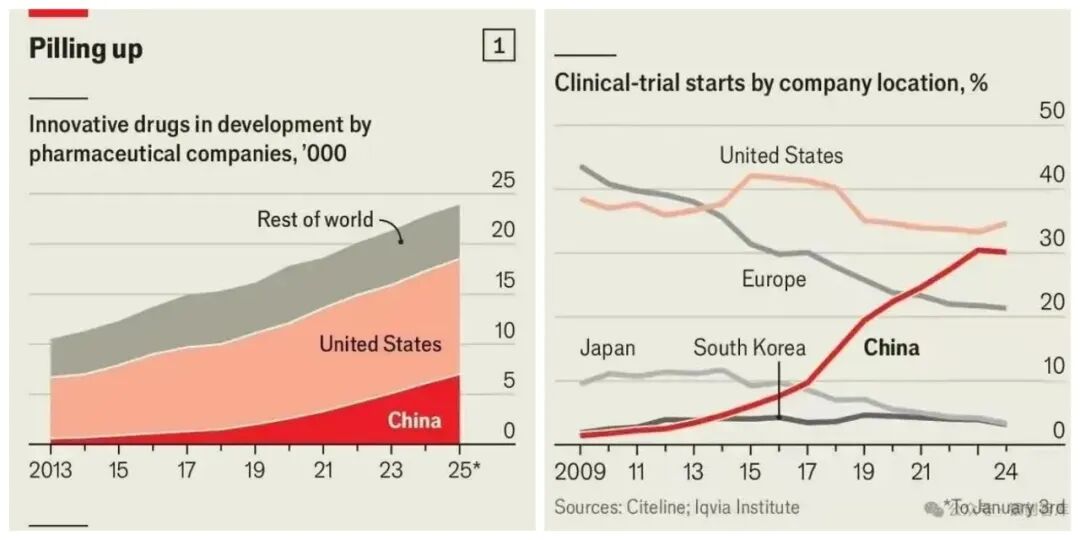
Core Insights - The Chinese innovative pharmaceutical industry is experiencing a surge in overseas orders and mergers, indicating a vibrant market as companies engage in international collaborations and acquisitions [1][2] Group 1: International Collaborations - Since January, local companies like West Bioman and Rongchang Biopharmaceutical have completed at least five overseas licensing agreements with multinational pharmaceutical firms, showcasing active global transaction capabilities [1] - China's drug pipeline accounts for approximately 30% of the global total, ranking second worldwide, which signifies a shift from following to leading in the biopharmaceutical sector [2] - It is projected that by 2025, the total value of innovative drug licensing transactions from China will exceed $130 billion, with over 150 deals, significantly surpassing the previous year's figures [2] Group 2: Mergers and Acquisitions - China National Pharmaceutical announced a full acquisition of Hegia Biopharmaceutical for RMB 1.2 billion, aiming to enter the small interfering RNA (siRNA) innovative drug sector and expand its pipeline in cardiovascular and metabolic diseases [3] - WuXi AppTec plans to acquire Easton Pharmaceuticals at HKD 4.00 per share to enhance its capabilities in the commercial production of antibody-drug conjugates [3] - Aopu Mai has completed the acquisition of Pengli Biopharmaceutical, integrating it as a wholly-owned subsidiary to strengthen industry chain collaboration and achieve business integration [4] Group 3: Future Outlook - Companies like Fuhong Hanlin expect to launch over 20 products globally by 2030, with more than 15 anticipated to be approved in the US and Europe [5] - Jiangsu Hengrui Medicine has over 100 innovative products in clinical development and expects multiple milestone advancements in 2026, including approvals for over 10 innovative drugs or indications [5]


中美创新药,必有一战
3 6 Ke· 2026-01-19 12:39
Core Viewpoint - The Chinese innovative drug sector is experiencing rapid growth, positioning itself as a global leader in drug development, with significant investments and collaborations from major pharmaceutical companies [2][8][30]. Group 1: Market Dynamics - The price of experimental monkeys has surged from 3,000 yuan to 100,000 yuan, indicating a high demand in the innovative drug sector [1]. - By 2025, China is projected to rank second globally in new drug clinical trials, with its pipeline accounting for 30% of the global total [2]. - In 2024, Chinese innovative drug companies completed 94 overseas licensing transactions, representing 44% of the national total, with over 100 transactions exceeding $100 billion in the first ten months of 2025 [6][30]. Group 2: Challenges in Traditional Pharmaceutical Sector - The generic drug sector is facing significant challenges, with a projected 5.5% decline in revenue for 2024 and over 30% of companies experiencing losses [5]. - Major pharmaceutical companies are increasingly collaborating with Chinese innovative drug firms to mitigate the risks associated with patent expirations, which could lead to a revenue gap exceeding $300 billion in the next five years [10][30]. Group 3: Advantages of Chinese Innovative Drugs - China offers a cost-effective and efficient environment for drug development, with clinical trial costs significantly lower than in the U.S. [20][21]. - The average time for clinical trial approvals in China has been reduced from 60 to 30 working days, and the average new drug application approval time has decreased to approximately 130 days [14]. - Chinese pharmaceutical companies are increasingly moving from "me-too" and "me-better" drugs to original innovations, with a notable increase in the number of innovative drug projects [27]. Group 4: Global Positioning and Future Outlook - Despite the rapid growth of Chinese innovative drugs, the overall market value of Chinese biotech companies remains significantly lower than their U.S. counterparts, capturing only 5% to 10% of global new drug revenues [30][31]. - Chinese companies are establishing commercial centers in global pharmaceutical hubs to enhance their commercialization capabilities, marking a shift towards becoming major players in the global market [37][38]. - The transition from biotech firms to large multinational pharmaceutical companies is seen as a critical step in the global battle for market share and innovation [38].



中新健康|政策搭台平台铺路 中国创新药械加速“出海”
Xin Lang Cai Jing· 2026-01-19 12:00
Core Insights - The article discusses China's strategy to promote its pharmaceutical products globally, focusing on the role of the National Medical Insurance Administration (NMI) in enhancing the internationalization of the Chinese pharmaceutical industry [1][2]. Group 1: Policy and Framework - The NMI has identified the establishment of an innovative international procurement model for medical supplies as a key focus for 2026, leveraging regional advantages of various procurement platforms [1]. - A systematic policy support framework is being developed through collaboration among multiple departments, including the Ministry of Commerce and the Ministry of Industry and Information Technology, to facilitate the international expansion of pharmaceutical products [2][4]. Group 2: Pricing and Registration Systems - The China Drug Price Registration System was launched in December 2025 to create a transparent pricing mechanism for Chinese pharmaceuticals in international markets, with the first overseas drug price certificate issued in January 2026 [3]. - As of January 16, 2026, the registration system has received applications from 60 companies, covering 22 drugs across various categories, indicating a growing interest in international pricing standards [3]. Group 3: Regional Trade Platforms - Regional trade platforms are being established in areas like Guangxi and Xinjiang to enhance the supply of Chinese pharmaceuticals to Southeast Asia and Central Asia, with the China-ASEAN regional pharmaceutical trading platform already operational [4]. - The China-Central Asia "Central Pharmacy" is set to launch in 2026, aiming to integrate services and improve market penetration in Central Asia [4]. Group 4: Industry Insights and Strategies - Companies like Yifan Pharmaceutical emphasize that international expansion is essential for survival and growth, highlighting the need for differentiated innovative products and strong international partnerships [5][6]. - The industry is witnessing a shift from being a "generic drug production powerhouse" to becoming a "leading exporter of innovative drugs," with significant increases in approved innovative drugs and medical devices [6].
亚洲金融论坛下周一开幕 聚焦金融与实体经济融合
Zheng Quan Shi Bao Wang· 2026-01-19 10:48
Group 1 - The 19th Asian Financial Forum will be held on January 26-27 in Hong Kong, featuring executives from companies such as Geely Holdings, LONGi Green Energy, and Tencent [1][2] - The forum aims to strengthen Hong Kong's role as a global financial center and facilitate connections between international and mainland markets [1][4] - A discussion on "gold trading" will take place on the first day, featuring speakers from MKS PAMP and the World Gold Council to explore Hong Kong's position in Asian gold pricing and trading [1][4] Group 2 - The first Global Industry Summit will occur on January 27, focusing on high-growth sectors like AI, robotics, and biomedicine, discussing how financial services can drive innovation and long-term growth [2][3] - Key leaders from various industries will share insights on leveraging Hong Kong as a platform for expanding overseas business and strategies for foreign companies entering the mainland market [2][3] - The summit will include discussions on the latest trends in biomedicine and healthcare, featuring executives from Amgen and Merck, addressing industry challenges and opportunities for innovation [3][4] Group 3 - The forum will have over 140 financial officials, business leaders, and experts as speakers, with participation expected from over 3,600 attendees across 60 countries and regions [4] - Topics covered will include global economic outlook, investment strategies, asset and wealth management, trade financing, and financial technology [4]

创新药周报20260118:强生BCMA CD3 TCE特立妥单抗单药治疗2L MM III期成功
Huachuang Securities· 2026-01-19 10:30
Investment Rating - The report indicates a positive investment outlook for the innovative drug sector, particularly focusing on the advancements in T-cell engagers (TCE) for multiple myeloma (MM) treatment [1]. Core Insights - Johnson & Johnson's teclistamab has shown significant efficacy in the treatment of relapsed or refractory multiple myeloma (r/r MM), with a 71% reduction in disease progression or death risk and a 40% reduction in mortality risk compared to standard treatments [14][15]. - The report highlights the unmet medical needs in the MM treatment landscape, emphasizing the potential of TCE therapies targeting BCMA and GPRC5D to improve patient outcomes [9][10]. - The ongoing clinical trials and approvals for various TCE therapies, including teclistamab and talquetamab, are expected to reshape the treatment paradigm for MM, particularly in patients who have undergone multiple lines of therapy [28][34]. Summary by Sections Innovative Drug Focus - The report reviews the recent developments in innovative drugs, particularly in the context of TCE therapies for blood cancers, with a focus on their expanding applications beyond hematological malignancies [5][7]. TCE Therapy Developments - TCE therapies have gained traction in the treatment of MM, with several candidates achieving FDA approval for patients who have received multiple prior therapies. The overall response rates (ORR) for these therapies range from 60% to 74% [9][10]. - The report details the clinical trial results for teclistamab, which has been shown to significantly improve progression-free survival (PFS) and overall survival (OS) in r/r MM patients [14][21]. Market Potential - The report estimates that the sales for teclistamab in China could reach approximately $5.49 billion by 2024, indicating a strong market potential for TCE therapies in the region [6]. - The ongoing research and development efforts in TCE therapies are expected to address the significant unmet needs in the MM treatment landscape, with a focus on improving patient outcomes and survival rates [9][10].


智能工厂发展报告
中国信通院· 2026-01-19 08:26
Investment Rating - The report does not explicitly provide an investment rating for the industry Core Insights - The report highlights the significant progress in the development of smart factories in China, with over 15 leading smart factories, more than 500 excellent smart factories, and over 35,000 basic smart factories established, indicating a robust growth trend in the sector [9][10] - The evolution of smart factories is characterized by five core directions: expansion of factory construction, innovation in R&D design paradigms, upgrading of production capabilities, optimization of production management, and advancement in operational management [10][41] - The report emphasizes the need for the manufacturing industry to transition from quantity-driven growth to quality-driven improvements, addressing the challenges posed by global economic slowdowns and changing market demands [17][18] Summary by Sections Overall Trends - The report identifies four main drivers for the transformation of smart factories: industrial upgrades, changing market demands, technological advancements, and international cooperation [17][19] - It outlines a future vision for smart factories that includes the integration of AI across all manufacturing processes, leading to autonomous decision-making and enhanced collaboration within the manufacturing ecosystem [20][41] Industry Practices - The report describes a four-tiered system for cultivating smart factories, which includes basic, advanced, excellent, and leading levels, aimed at promoting digital transformation in manufacturing [41][42] - It notes that over 90% of manufacturing sectors are now covered by smart factory initiatives, with a focus on enhancing traditional industries and empowering consumer-driven sectors [50][49] Regional Development - The report discusses the regional disparities in smart factory development, with eastern regions leading and central regions making breakthroughs, highlighting the importance of localized strategies [12][49] Technology and Industry - The report emphasizes the need for a deep integration of technology and manufacturing systems, advocating for a shift towards a more resilient and intelligent industrial foundation [12][53] Future Outlook - The report envisions a next-generation smart manufacturing landscape characterized by autonomous manufacturing, ecological collaboration, and a focus on sustainability [12][41]
智通AH统计|1月19日
智通财经网· 2026-01-19 08:17
Group 1 - The article highlights the top three and bottom three AH premium rates for various companies, with Northeast Electric (00042) leading at 815.25% and Ningde Times (03750) at -11.36% [1] - The top three companies with the highest deviation values are Junda Co., Ltd. (02865) at 129.73%, Goldwind Technology (02208) at 38.82%, and Sanhua Intelligent Control (02050) at 18.64% [1] - The bottom three companies with the lowest deviation values include Northeast Electric (00042) at -42.57%, Chenming Paper (01812) at -21.05%, and Nanhua Futures (02691) at -20.64% [1] Group 2 - The top ten AH stocks by premium rate include Zhejiang Shibao (01057) at 384.97% and Junda Co., Ltd. (02865) at 355.07% [2] - The bottom ten AH stocks by premium rate include China Merchants Bank (03968) at -0.84% and Hengrui Medicine (01276) at -4.80% [2] - The deviation values for the bottom ten AH stocks show significant negative values for Northeast Electric (00042) and Chenming Paper (01812), indicating a potential mispricing in the market [2]