华西证券

Search documents
央行买债,什么速度可参考?:——债券周报20251109-20251109
Huachuang Securities· 2025-11-09 06:12
1. Report Industry Investment Rating No relevant content provided. 2. Core Viewpoints of the Report - The scale of the central bank's bond purchases in October was significantly lower than market expectations. The subsequent bond - buying rhythm should be objectively evaluated, and there is still significant room for the total scale of the central bank's bond purchases compared to overseas countries. The specific scale is difficult to determine, with a monthly purchase of 200 billion yuan being a relatively fast pace [1][2][3]. - The bond market's α - mining strategy has entered the middle stage. The market is currently focused on the implementation of the new fund fee regulations and their subsequent impacts. The new regulations may drive some funds with a strong preference for liquidity to redeem funds, but it is expected that the 10 - year treasury bond is unlikely to reach new highs [4][5]. - In the interest rate bond market, the bond market was in a weak and volatile state due to the central bank's bond purchases being lower than expectations and concerns about the new fund regulations. The central bank's OMO had a large - scale net withdrawal, and the capital market was balanced and loose. The net financing of treasury bonds increased, while that of policy - financial bonds, local bonds, and inter - bank certificates of deposit decreased. The term spreads of treasury bonds and policy - financial bonds both narrowed [10][11][55]. 3. Summary According to the Catalog 3.1 Objective View of the Scale and Rhythm of the Central Bank's Bond Purchases 3.1.1 Overseas Reference - Compared with overseas countries, the proportion of the central bank's treasury bond holdings in its total assets and the overall treasury bond market in China is relatively low. For example, in Japan, the eurozone, Canada, and the United States, the proportion of central bank treasury bond holdings in total assets is over 60%, while in China, it is about 4.7%. The proportion of central bank treasury bond holdings in the total treasury bond market in Japan and the eurozone is 48% and 36% respectively, while in Canada and the United States, it is around 11.9% and 14.1%, and in China, it is about 5.7% [2][15]. - Historically, the proportion of the Federal Reserve's treasury bond holdings in the total US treasury bonds was around 9 - 10% before 2008, and it gradually compressed to around 10% near the end of each round of QT after 2008 [2][16]. 3.1.2 Scale Deduction - If the central bank's annual bond - buying increment is 1 trillion yuan, it will not be until 2030 that the proportion of bond - holding scale to the total treasury bond scale approaches the Federal Reserve's normal - state level of 10%. If the increment is expanded to 2 - 3 trillion yuan, this proportion can be reached by the end of 2026 [22]. - Currently, the central bank has a high degree of flexibility in bond - buying scale. It is difficult to directly compare with last year's level. A monthly net purchase of about 100 billion yuan is a neutral level, while a monthly net purchase of 200 billion yuan may lead to a smoother year - end market trend [25][26]. 3.2 Bond Market Strategy: The α - Mining Strategy Enters the Middle Stage - Since October, the bond market has continued to fluctuate within a narrow range, mainly fluctuating around 1.8%. The market is currently mainly concerned with the implementation of the new fund fee regulations and their subsequent impacts [28]. - The impact of the new fund fee regulations is relatively controllable. It is expected that the 10 - year treasury bond is unlikely to reach new highs, but the regulations may drive some funds to redeem funds, with the estimated redemption scale being around 500 billion yuan. The impact on the bond market can be referenced to the small - scale redemption tides since the second quarter of 2025 [32][33][39]. - The 10 - year treasury bond is still in a volatile market, and the α - mining strategy has entered the middle stage. For perpetual bonds and credit bonds, short - term profit - taking is advisable, and the right - side allocation opportunities should be grasped after the redemption disturbances. For interest rate bonds, different varieties have different investment strategies. For example, local bonds with a maturity of over 6 years have seen a significant decline in their variety spreads, and the medium - term spreads still have some room for compression but are approaching the central level. The purchase of treasury bonds can be carried out in a dumbbell - shaped manner [40][41][44]. 3.3 Interest Rate Bond Market Review: The Bond Market was in a Weak and Volatile State due to the Central Bank's Bond Purchases being Lower than Expectations and Concerns about the New Fund Regulations 3.3.1 Capital Market - The central bank's OMO had a large - scale net withdrawal, and the capital market was balanced and loose. The issuance price of 1 - year national and stock - holding bank certificates of deposit decreased, and the weighted price of DR007 also decreased [11]. 3.3.2 Primary Issuance - The net financing of treasury bonds increased, while that of policy - financial bonds, local bonds, and inter - bank certificates of deposit decreased [61]. 3.3.3 Benchmark Changes - The term spreads of treasury bonds and policy - financial bonds both narrowed. The short - end yields of treasury bonds and policy - financial bonds increased by 2.19BP and 2.51BP respectively, and the long - end yields increased by 1.88BP and 2.35BP respectively. The 10Y - 1Y spread of treasury bonds narrowed by 0.31BP to 40.97BP, and that of policy - financial bonds narrowed by 0.16BP to 33.68BP [55].

华西证券:低轨卫星拐点已至 国内组网加速
智通财经网· 2025-11-07 08:39
Core Insights - The low Earth orbit (LEO) satellite market is becoming a strategic focus in the US-China competition, with the principle of "first come, first served" governing orbital and frequency resources [1][2] - SpaceX has launched over 10,000 satellites, with more than 8,600 currently operational, while China has only about 300 LEO satellites in orbit, indicating a significant gap that necessitates accelerated deployment [1][2] Group 1: Market Dynamics - The LEO orbit can accommodate approximately 60,000 satellites, and strict international regulations require timely launches to retain frequency and orbital rights [2] - SpaceX has applied for resources for 42,000 satellites, while Amazon's Kuiper plans to deploy 3,236 satellites; China's China Star Network and Shanghai Yuanxin plans to deploy around 13,000 and 15,000 satellites, respectively [2] Group 2: Launch Capacity and Technology - Rocket launch capacity is a critical metric, with SpaceX's Falcon 9 capable of 22.8 tons to LEO, while China's Long March 8 has a capacity of only 7 tons, highlighting a significant disparity [3] - The development of commercial rockets and reusable technology is progressing rapidly in China, with several private companies achieving successful launches and narrowing the gap with international standards [3] Group 3: Cost Reduction Strategies - SpaceX has reduced the cost of individual satellites to below $500,000 through mass production, while China's satellite manufacturing is also lowering costs via modular design and batch production [4] Group 4: Market Opportunities - LEO satellites are expected to integrate deeply with terrestrial 5G networks, enabling global seamless coverage, with significant advancements anticipated by 2025 [5] - The combination of artificial intelligence (AI) and LEO satellites is leading to the development of next-generation intelligent satellite systems, with major tech companies like NVIDIA and Google planning to deploy AI-capable satellites [5] Group 5: Future Developments - China's LEO satellite deployment is entering a rapid networking phase, with recent successful launches indicating an acceleration in the pace of deployment [6][7] - The domestic market is moving towards a "constellation deployment" phase, transitioning from "single satellite customization" [7] Group 6: Investment Opportunities - Companies to watch include Fudan Microelectronics (688385.SH) and Unisoc (002249.SZ) as potential investment targets in the LEO satellite sector [8]
超3100只个股下跌
第一财经· 2025-11-07 07:34
Market Overview - The A-share market experienced fluctuations, with the Shanghai Composite Index down by 0.25%, the Shenzhen Component Index down by 0.36%, and the ChiNext Index down by 0.51% as of the close [3][4]. - The total trading volume in the Shanghai and Shenzhen markets was 2 trillion yuan, a decrease of 56.2 billion yuan compared to the previous trading day, with over 3,100 stocks declining [7]. Sector Performance - The computing hardware and software sectors led the decline, with significant drops in server, DeepSeek, and fintech indices. Conversely, chemical stocks surged, particularly in fluorine and phosphorus chemical sectors, while solid-state battery themes gained strength [6]. - Major capital inflows were observed in basic chemicals, photovoltaic equipment, and energy metals, while there were notable outflows from computing, electronics, and power grid equipment sectors [9]. Individual Stock Movements - Specific stocks that saw net inflows included Tianfu Communication (22.32 billion yuan), Tianci Materials (9.66 billion yuan), and Duofluor (8.65 billion yuan) [10]. - Stocks that faced significant net outflows included Industrial Fulian (21.42 billion yuan), Sanhua Intelligent Control (15.36 billion yuan), and Silis (8.87 billion yuan) [11]. Institutional Insights - Longcheng Securities noted that the market has entered a quiet period in November, lacking major policy or event-driven catalysts, suggesting that market movements will rely more on technical and fundamental support [12]. - Huaxi Securities indicated that following the release of Q3 reports, the A-share market is entering a performance vacuum period of about three months, shifting focus towards next year's performance expectations and industry trends, with trading likely returning to active themes [12].


收盘丨A股三大指数全天震荡调整,市场超3100只个股下跌
Di Yi Cai Jing Zi Xun· 2025-11-07 07:13
Market Overview - The A-share market experienced a day of fluctuation and adjustment, with the Shanghai Composite Index down by 0.25%, the Shenzhen Component Index down by 0.36%, and the ChiNext Index down by 0.51% [5] - The total trading volume in the Shanghai and Shenzhen markets reached 2 trillion yuan, a decrease of 56.2 billion yuan compared to the previous trading day, with over 3,100 stocks declining across the market [2] Sector Performance - The computing hardware and software sector led the declines, with significant drops in server, DeepSeek, and fintech indices; meanwhile, chemical stocks surged, particularly in fluorine and phosphorus chemical sectors, and solid-state battery themes strengthened [1] - Main capital inflows were observed in basic chemicals, photovoltaic equipment, and energy metals, while there were outflows from computing, electronics, and power grid equipment sectors [4] Individual Stock Movements - Notable net inflows were recorded for Tianfu Communication (22.32 million yuan), Tianci Materials (9.66 million yuan), and Duofu Du (8.65 million yuan) [4] - Conversely, significant net outflows were seen in Industrial Fulian (21.42 million yuan), Sanhua Intelligent Control (15.36 million yuan), and Silis (8.87 million yuan) [4] Institutional Insights - According to Changcheng Securities, the market is entering a quiet period in November, lacking major policy or event-driven catalysts, which may lead to a reliance on technical and fundamental support for market movements [4] - Huaxi Securities noted that following the release of Q3 reports, the A-share market is entering a performance vacuum period of approximately three months, shifting focus towards next year's performance expectations and industry trends, with trading likely returning to active themes [6]

*ST立航连亏2年3季 2022年上市募3.8亿华西证券保荐
Zhong Guo Jing Ji Wang· 2025-11-07 06:59
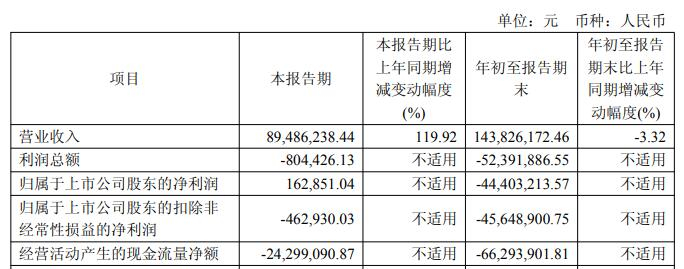
Core Viewpoint - Chengdu Lihang Technology Co., Ltd. reported a decline in revenue and increased net losses for the first three quarters of 2025, indicating ongoing financial challenges for the company [1]. Financial Performance - The company achieved total operating revenue of 144 million yuan, a year-on-year decrease of 3.32% [1][2]. - The net profit attributable to shareholders was -44.4 million yuan, compared to -33.96 million yuan in the same period last year [1][2]. - The net profit attributable to shareholders after deducting non-recurring gains and losses was -45.65 million yuan, worsening from -36.98 million yuan year-on-year [1][2]. - The net cash flow from operating activities was -66.29 million yuan, compared to -52.90 million yuan in the previous year [1][2]. Future Projections - For 2023 and 2024, the company projects operating revenues of 235 million yuan and 290 million yuan, respectively [3]. - The projected net profit attributable to shareholders for the same years is -68.31 million yuan and -93.94 million yuan, respectively [3]. - The net profit after deducting non-recurring gains and losses is expected to be -62.14 million yuan in 2023 and -98.81 million yuan in 2024 [3].

长鸿高科净利连降4年3季 2020年上市华西证券保荐
Zhong Guo Jing Ji Wang· 2025-11-07 06:54
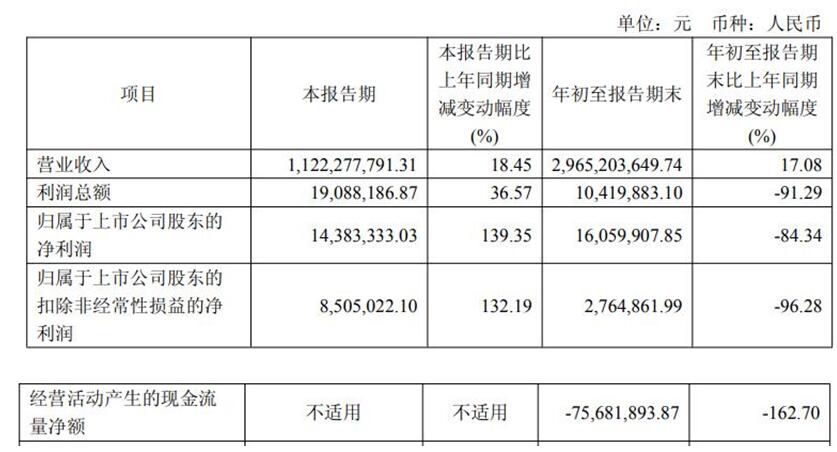
Core Insights - Changhong High-Tech (605008.SH) reported a revenue of 2.965 billion yuan for the first three quarters of 2023, representing a year-on-year increase of 17.08% [1] - The net profit attributable to shareholders decreased significantly by 84.34% to 16.06 million yuan, while the net profit after excluding non-recurring items fell by 96.28% to 276.49 thousand yuan [1][3] - The company experienced a negative cash flow from operating activities amounting to -75.68 million yuan, compared to a positive cash flow of 121 million yuan in the same period last year [1][3] Financial Performance - Revenue for the current reporting period was approximately 1.122 billion yuan, showing an increase of 18.45% compared to the same period last year [3] - Total profit for the current period was approximately 19.09 million yuan, reflecting a significant decrease of 91.29% year-on-year [3] - The net profit attributable to shareholders for the current period was approximately 14.38 million yuan, which is a 139.35% increase compared to the previous year [3] - The net profit after excluding non-recurring items was approximately 8.51 million yuan, a decrease of 132.19% year-on-year [3] Cash Flow Analysis - The net cash flow from operating activities for the year-to-date was -75.68 million yuan, indicating a decline of 162.70% compared to the previous year [3][5] - The company has faced challenges in maintaining positive cash flow, as evidenced by the significant drop from the previous year's cash flow of 121 million yuan [1][3] Capital Raising Activities - Changhong High-Tech has raised a total of 534.84 million yuan through two rounds of fundraising since its IPO [4][5] - The company plans to utilize the raised funds for projects including a 20,000 tons/year hydrogenated styrene-isoprene-styrene thermoplastic elastomer (SEPS) technical transformation project and a 250,000 tons/year solution styrene-butadiene rubber expansion project [4]

研报掘金丨华西证券:维持晓鸣股份“增持”评级,主产品产销量有望进一步增加
Ge Long Hui· 2025-11-07 06:40
Core Insights - Xiaoming Co. achieved a net profit attributable to shareholders of 183 million yuan in the first three quarters of 2025, marking a year-on-year increase of 2,243.97%, indicating a significant turnaround from previous losses [1] - In Q3 2025, the company reported a net profit of -1.66 million yuan, a year-on-year decline of 108.03%, primarily due to pressure from downstream performance [1] Summary by Sections - **Financial Performance** - The net profit for the first three quarters of 2025 reached 183 million yuan, showing a substantial increase compared to the previous year [1] - Q3 2025 saw a net profit of -1.66 million yuan, reflecting a significant decline compared to the same period last year [1] - **Market Dynamics** - The decline in Q3 performance was attributed to the downturn in the downstream market, particularly affecting the company's market share [1] - Since the second half of 2024, the prices of feed raw materials have decreased, and profitability in downstream egg-laying chicken farming has improved, leading to a rise in the prices of the company's main product, commodity egg-laying chicken seedlings, in Q1 and Q2 [1] - However, in Q3, the prices of chicken seedlings fell due to losses in downstream egg-laying chicken farming [1] - **Project Developments** - In 2023, the company completed several investment projects, including the Hongshibao Smart Agriculture Industrial Demonstration Park and various breeding bases [1] - The company utilized its own funds to construct additional projects, which are expected to enhance production capacity and increase the output of its main products [1] - **Investment Rating** - The company maintains an "Overweight" rating, suggesting confidence in its future performance despite current challenges [1]
华西证券:险企利润高基数下再创新高 总投资收益显著提升
智通财经网· 2025-11-07 06:35
Core Insights - The net profit of five A-share listed insurance companies reached CNY 426.04 billion in the first three quarters of 2025, representing a year-on-year increase of 33.5% despite a high base from the previous year [1] - Investment assets of these companies totaled CNY 20.26 trillion by the end of Q3 2025, up 10.4% from the beginning of the year, benefiting from a rising equity market [3] Group 1: Profit Performance - The net profit growth rates for the five insurance companies from highest to lowest are: China Life +60.5%, New China Life +58.9%, PICC +28.9%, Taikang +19.3%, and Ping An +11.5% [1] - In Q3 alone, the combined net profit reached CNY 247.85 billion, a year-on-year increase of 68.3%, with China Life and New China Life leading the growth due to investment income elasticity [1] - By the end of Q3 2025, the total net assets of these companies amounted to CNY 23.11 trillion, reflecting a growth of 10.3% from the beginning of the year [1] Group 2: Life Insurance and Non-Life Insurance Performance - The new business value (NBV) for life insurance companies showed significant growth, with the following year-on-year increases: PICC Life +76.6%, New China Life +50.8%, Ping An +46.2%, China Life +41.8%, and Taikang +31.2% [2] - The premium income for non-life insurance companies also saw positive growth, with PICC +3.5%, Ping An +7.1%, and Taikang +0.1%, primarily driven by stable growth in auto insurance premiums [2] - The combined loss ratio (COR) for these companies improved, with PICC at 96.1%, Ping An at 97.0%, and Taikang at 97.6%, indicating significant increases in underwriting profits [2] Group 3: Investment Performance - The total investment income for the five insurance companies increased significantly, with China Life +40.7%, New China Life +40.3%, PICC +36.6%, Taikang +26.8%, and Ping An +19.5% [3] - The overall net investment yield declined due to pressure from low interest rates on fixed-income assets, while the total investment yield improved due to a strong stock market [3] Group 4: Investment Recommendations - On the liability side, the dynamic adjustment of life insurance interest rates and the transformation of dividend insurance are expected to reduce liability costs and enhance NBV value rates [4] - The continuous improvement in underwriting profits is anticipated as non-life insurance companies advance channel integration and refined expense management [4] - The current public fund holdings in insurance stocks are relatively low, with the insurance index PB valuation at 1.42x, which is at a historical low level [4]



华西证券:维持晓鸣股份“增持”评级,主产品产销量有望进一步增加
Xin Lang Cai Jing· 2025-11-07 06:33
Core Viewpoint - Xiaoming Co. achieved a significant turnaround in profitability, with a net profit attributable to shareholders of 183 million yuan for the first three quarters of 2025, representing a year-on-year increase of 2,243.97% [1] Financial Performance - In Q3 2025, the company reported a net profit attributable to shareholders of -1.6568 million yuan, a year-on-year decline of 108.03% [1] - The decline in Q3 performance was primarily due to pressure from downstream operations, impacting market share [1] Market Dynamics - Since the second half of 2024, the decline in feed raw material prices and improved profitability in downstream egg-laying chicken farming have contributed to the rising prices of the company's main product, commercial egg-laying chicken seedlings, in Q1 and Q2 [1] - However, starting from Q3, the prices of chicken seedlings have decreased due to losses in downstream egg-laying chicken farming [1] Project Developments - In 2023, the company completed several investment projects, including the Hongshibao Smart Agriculture Industry Demonstration Park parent breeding base, Southern Seed Center Phase I, and Hongshibao Grandparent Breeding Base [1] - The company also utilized its own funds to construct additional projects, such as the Dongling Breeding Base in the Hongshibao Smart Agriculture Industry Demonstration Park and the Zhangjiagou Breeding Base [1] - As these projects' production capacity is released, the company's main product output and sales volume are expected to increase further [1] Investment Rating - The company maintains an "Overweight" rating [1]
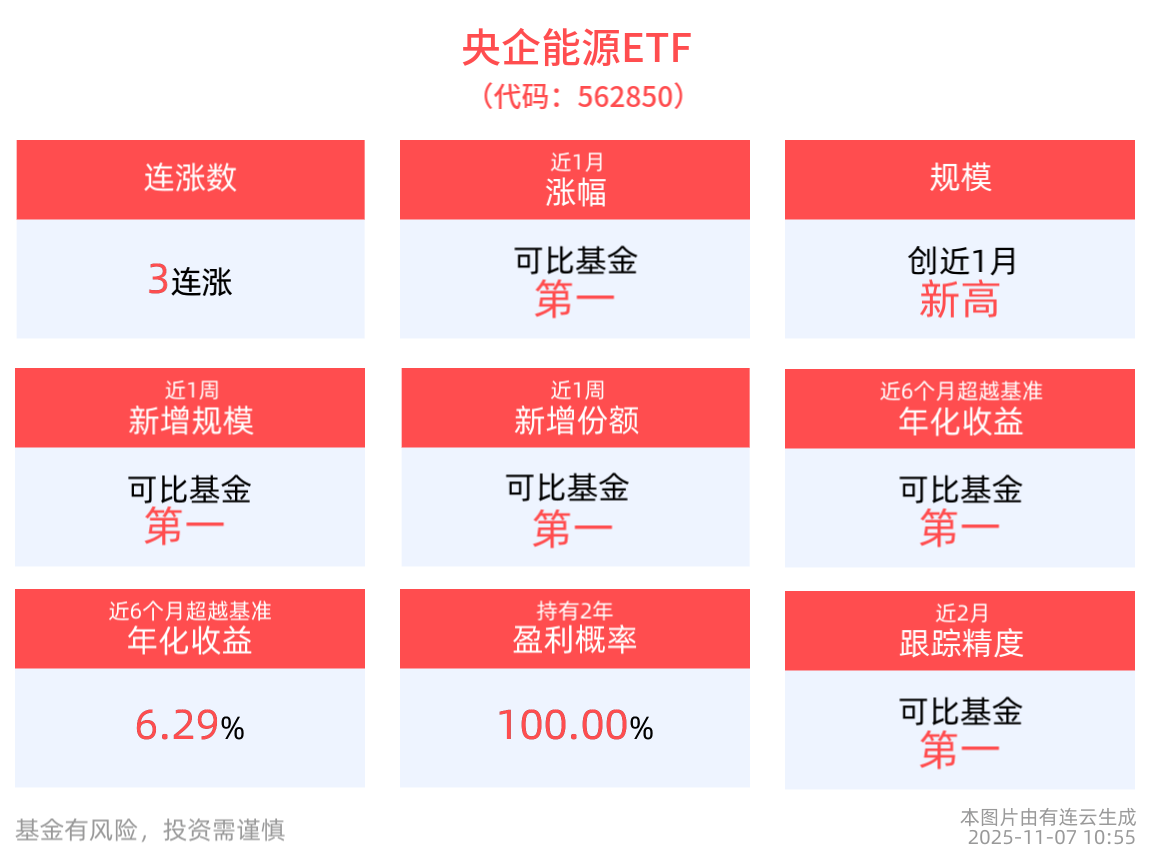
AI拉动电力需求背景下,央企能源ETF(562850)盘中上扬冲击3连涨,机构:中国将开启持续10年电力超级周期
Sou Hu Cai Jing· 2025-11-07 03:27
Group 1: ETF Performance - The Central State-Owned Enterprises Energy ETF has a turnover rate of 4.66% and a transaction volume of 3.57 million yuan as of November 6 [2] - Over the past two years, the net value of the Central State-Owned Enterprises Energy ETF has increased by 38.81%, ranking first among comparable funds [2] - The ETF's highest monthly return since inception is 10.15%, with the longest consecutive monthly gains being 7 months [2] - The ETF has outperformed its benchmark with an annualized excess return of 6.29% over the past six months, also ranking first among comparable funds [2] Group 2: Top Holdings - As of October 31, 2025, the top ten weighted stocks in the CSI National New Central State-Owned Enterprises Modern Energy Index include: - Changjiang Electric Power (8.43%) - Guodian NARI Technology (7.19%) - China Nuclear Power (5.60%) - China Aluminum (5.09%) - Three Gorges Energy (4.75%) - China Power Construction (3.75%) - Guodian Power (3.46%) - Yun Aluminum (3.35%) - China Rare Earth (2.99%) - Others [2][4] Group 3: Market Outlook - UBS predicts that China will enter a 10-year electricity supercycle, with annual electricity demand growth expected to surge to 8% between 2028 and 2030, doubling previous market estimates of 4% [5] - The driving force behind the electricity supercycle is attributed to structural changes in demand, driven by new productive forces, traditional industry upgrades, and rising consumer spending [5] - According to Changjiang Securities, the U.S. may face a total electricity shortfall of approximately 73.2 GW from 2025 to 2030, which could increase to 201 GW if data center growth exceeds expectations [5] - Huaxi Securities notes that the demand for electricity equipment is expected to remain high due to the need for upgrades and expansions in the electricity system, driven by AI-related electricity demand [5] Group 4: Investment Access - Investors without stock accounts can access high-quality energy central enterprises through the Central State-Owned Enterprises Energy ETF Connect (019593) [6]