DeepSeek

Search documents
AI竞赛进入“能效“新阶段:前Facebook隐私主管警示千亿美元基建热潮暗藏电网危机
智通财经网· 2025-12-24 00:54
Core Insights - The next phase of the AI industry's development will focus on enhancing the efficiency of technology applications, as stated by Chris Kelly, former privacy chief at Facebook [1] - Major AI companies are competing to build infrastructure to support AI computing power demands, with a need to optimize high-energy-consuming infrastructure [1] - Companies that achieve breakthroughs in reducing data center costs are expected to emerge as winners in the AI sector [1] Industry Trends - According to S&P Global, a surge in global data center construction is anticipated in 2025, with infrastructure-related transaction volumes exceeding $61 billion for the year [1] - OpenAI has committed over $1.4 trillion to AI investments in the coming years, including significant partnerships with Nvidia, Oracle, and CoreWeave [1] Energy Concerns - The rapid data center construction has raised concerns about the ability of the already strained power grid to support these computing infrastructures [2] - A collaboration between Nvidia and OpenAI announced in September requires at least 10 gigawatts of power, equivalent to the annual electricity consumption of 8 million American households [2] - This power requirement is comparable to the total demand during New York City's peak summer electricity usage in 2024 [2] Cost and Competition - The AI industry is increasingly focused on cost concerns, especially following the announcement of a free, open-source large language model by DeepSeek, which has a development cost of less than $6 million [2] - Chris Kelly anticipates the emergence of several Chinese companies in the AI space, particularly after the recent approval for the sale of Nvidia's H200 chips to China [2] - Open-source models, especially those from China, are expected to provide foundational computing power and capabilities for generative and agentic AI [2]



AI诈骗入侵电商领域,假图骗取退款,“洗脑”驯化大模型
Nan Fang Du Shi Bao· 2025-12-23 23:15
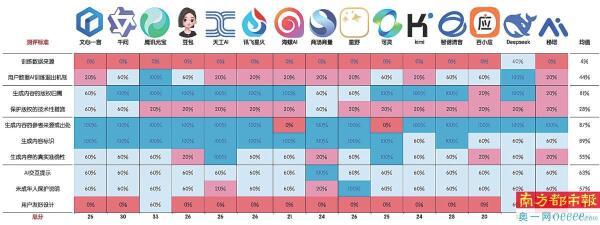
Core Viewpoint - The rapid advancement of generative AI is reshaping information production and dissemination, leading to an exponential increase in fake content and posing significant challenges for social governance [3][4][6]. Group 1: Generative AI Risks and Challenges - Generative AI has become a tool for scams, with incidents of AI-generated fake content proliferating across personal, industry, and societal levels [3][4]. - The report highlights 118 risk cases associated with generative AI, focusing on challenges to social trust and ethical dilemmas in human-machine interaction [2][3]. - AI scams are increasingly targeting vulnerable populations, such as the elderly, through deceptive practices like deepfake technology [3][4]. Group 2: Legal and Ethical Implications - There have been instances of academic misconduct involving AI-generated fake references, leading to retractions and investigations [4]. - Legal cases have emerged where lawyers used AI to generate fictitious legal precedents, raising concerns about the integrity of legal processes [4]. Group 3: AI Interaction and User Safety - The rise of AI companionship technologies has led to ethical concerns, including cases where interactions with AI have resulted in self-harm or violence [7][8]. - AI platforms are increasingly facing lawsuits related to their role in inducing harmful behaviors among users, particularly minors [7][8]. Group 4: Transparency and User Empowerment - A recent report assessed the transparency of 15 domestic AI models, revealing that only one disclosed the general source of its training data [11][12]. - The report emphasizes the need for enhanced transparency in AI services to ensure fairness, avoid bias, and comply with legal requirements [11][20]. - Some AI models have begun to offer users the option to withdraw their data from training processes, reflecting a move towards greater user empowerment [14][16]. Group 5: Regulatory and Governance Recommendations - The report calls for the establishment of global consensus and institutional rules to address the challenges posed by AI-generated fake content [6][20]. - Recommendations include strengthening platform regulation, clarifying responsibility boundaries, and promoting cross-border collaboration to mitigate the impact of AI-generated misinformation [6][20].

X @Bloomberg
Bloomberg· 2025-12-23 19:42
RT Bloomberg Opinion (@opinion)Remember China’s DeepSeek moment? China had moments like that in biotech and defense in 2025, too, @shuli_ren explains.That’s why underestimating the country is a huge mistake 🎥 https://t.co/5lFbe4LWR9 ...
招股书里的MiniMax:当聪明人决定不再为巨头打工
华尔街见闻· 2025-12-23 14:03
Core Viewpoint - The article posits that 2025 will be a year of differentiation in the AI industry, with the narrative chosen by companies determining their perspective on the market [1]. Group 1: MiniMax's Emergence - MiniMax, a unicorn company with only 385 employees and an average age of 29, is poised for an IPO, having successfully commercialized its AI models without relying on a major internet company's traffic [2]. - The company has achieved significant scale with products like Talkie and Hailuo, generating real user engagement and revenue, while holding $11 billion in cash reserves to sustain operations for 50 months without additional funding [2][3]. - MiniMax's success challenges the traditional "burn money" model of large internet firms, attracting strategic investments from major players like MiHoYo, Alibaba, Tencent, and top investment firms [3]. Group 2: Financial Efficiency - MiniMax has spent approximately $500 million since its inception, significantly less than the annual marketing budgets of larger firms, yet it has developed a full-stack multimodal model that competes with giants like OpenAI [6]. - The company's cloud computing service expenses related to training have dramatically decreased from 1365% of revenue in 2023 to 266.5% in the first nine months of 2025, indicating a transition from a money-burning phase to a profitable growth phase [11]. Group 3: Global Strategy - MiniMax has shifted its focus to international markets, with over 70% of its revenue coming from overseas, making it the most internationally oriented AI company in China [15]. - The company has avoided the domestic market's price wars by targeting markets with higher willingness to pay, such as North America and Europe, where SaaS payment habits are more established [15][16]. Group 4: Organizational Efficiency - MiniMax operates with a flat organizational structure, allowing for rapid decision-making and innovation, with over 80% of its code generated by AI, enhancing productivity [20][21]. - The company has achieved impressive revenue per employee metrics, generating approximately $53 million in revenue in the first nine months of 2025, showcasing its high operational efficiency compared to traditional software firms [20]. Group 5: Industry Narrative - The article contrasts two narratives in the AI industry: one that views AI as a resource-heavy endeavor dominated by large firms, and another that sees it as a reconfiguration of productivity driven by efficiency and innovation [24]. - MiniMax embodies the latter narrative, demonstrating that a small, agile team can challenge larger competitors without relying on extensive resources [24][25].

深度|狂飙、徘徊与转身:2025 年中国AI从业者浮世绘
Z Potentials· 2025-12-23 06:19
Core Viewpoint - The emergence of DeepSeek-R1 signifies a pivotal moment for Chinese innovation on the global stage, indicating a shift towards accelerated technological advancement and a redefined direction for the industry [1]. Group 1: Collective Narrative Amidst Chaos - The year witnessed parallel experiences of success and confusion within the same industry, with some companies achieving explosive growth while others reassess their strategies [5][6]. - DeepSeek maintained a strong position in application downloads, while competitors like Doubao also saw significant user engagement [6]. - Companies like Baichuan Intelligence and Zero One Matter are pivoting towards specific sectors, showcasing strategic differentiation among the so-called "AI Six Tigers" [7]. - The rapid iteration of AI models has left many entrepreneurs in a state of indecision, grappling with whether to embrace new trends or stick to established paths [7]. Group 2: Value Inquiry and Choices in 2025 - Practitioners are increasingly questioning the essence of technology and its practical applications, moving beyond theoretical discussions to real-world implications [13]. - The discourse on platforms like Zhihu reflects a shift in focus from immediate outcomes to long-term technological potential and sustainable practices [14][20]. - The concept of "density" in AI development is emerging, emphasizing quality over sheer size, as highlighted by industry experts [17]. Group 3: Observations from Practice - The interactions on Zhihu illustrate a dynamic exchange of ideas, where individuals document their experiences and uncertainties, contributing to a collective understanding of the industry's evolution [21][30]. - The narrative of personal journeys in the tech space reveals a transition from theoretical exploration to practical application, with many professionals sharing their challenges and decisions [20][31]. - The ongoing discussions emphasize the importance of individual contributions to the broader AI landscape, highlighting the need for continuous questioning and adaptation in an uncertain environment [33].

亚洲资产“大反攻”:亚太股市5年来首次年度同时跑赢欧美,机构预测股债汇2026年延续辉煌
智通财经网· 2025-12-23 00:10
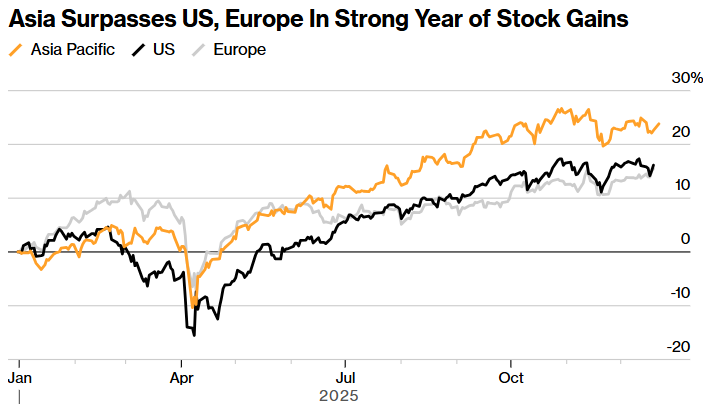
智通财经APP获悉,今年以来,亚洲股市表现优于美国和欧洲,信贷市场强劲,货币走强,投资者预计 这股势头将延续至2026年。以美元计价,MSCI亚太指数(涵盖亚太地区股票,含股息)今年已上涨27%。 这也是自2020年以来,亚洲股市首次在一年内同时跑赢美国和欧洲的基准指数。 随着美国和欧洲经济增长放缓,亚洲对寻求更快增长的投资者的吸引力日益增强,这反映出亚洲的复苏 势头强劲。美元走软提升了亚洲资产的吸引力,而该地区与塑造全球经济的技术之间的紧密联系也增强 了其投资价值。 澳大利亚 Colonial First State 首席投资官Jonathan Armitage表示,对中国科技的重新关注增强了该基金管 理公司对新兴市场股票到 2026 年的展望。 当然,这波上涨行情也伴随着风险。亚洲经济复苏并不均衡,美元走强可能会损害外国投资者的回报。 此外,人们还担心人工智能相关科技股的上涨行情过于拥挤,一旦经济增长放缓或市场情绪逆转,股价 可能会受到冲击。 即便如此,一些投资者表示,这些风险并不会改变整体趋势。该地区的跨资产上涨被视为长期估值重估 的早期阶段——随着增长前景的改善,市场估值也会随之提高。 Vantage ...
X @Bloomberg
Bloomberg· 2025-12-22 12:04
IPO Market - DeepSeek 的 IPO 计划引发了中国 IPO 市场的关注 [1] - 中国 IPO 市场正在积极寻求新的增长点 [1]
“烧钱” “抢时间” 详解智谱IPO招股书
Sou Hu Cai Jing· 2025-12-22 11:22
Core Viewpoint - Beijing Zhiyu Huazhang Technology Co., Ltd. (Zhiyu) has passed the hearing and published its IPO prospectus, becoming the first among the "Six Little Dragons" of large models to enter the IPO process, potentially becoming the "first stock of global large models" [2][3] Financial Performance - Zhiyu's revenue from 2022 to 2024 is projected to be 57.4 million, 125 million, and 312 million yuan, with a compound annual growth rate (CAGR) of 130%. In the first half of 2025, revenue is expected to reach 191 million yuan, a year-on-year increase of 325% [4] - The company reported losses of 144 million, 788 million, and 2.958 billion yuan from 2022 to 2024, with a loss of 2.358 billion yuan in the first half of 2025 [4] - R&D expenditures have significantly increased, with investments of 84.4 million, 529 million, and 2.195 billion yuan from 2022 to 2024, accounting for 147%, 425%, and 703% of revenue respectively. In the first half of 2025, R&D spending is projected to be 1.595 billion yuan, representing 835% of total revenue [4][6] Business Model and Market Position - Zhiyu's business model is based on a Model-as-a-Service (MaaS) platform, primarily generating revenue from localized private deployments, which decreased from 95.5% in 2022 to 84.5% in 2024. In the first half of 2025, this segment is expected to contribute 84.8% of total revenue [5] - The gross margin for localized deployments is projected to be 66.0% in 2024 and 59.1% in the first half of 2025, while the gross margin for cloud deployments is expected to be 3.4% and -0.4% respectively [6] - According to a report by Frost & Sullivan, the Chinese large language model market is expected to reach 5.3 billion yuan in 2024, with Zhiyu holding a market share of 6.6%, ranking second among major players [7] Industry Dynamics - The IPO process for Zhiyu and MiniMax indicates a shift towards commercialization for large model companies, with a focus on validating business models after significant capital inflows [9] - The competitive landscape is evolving, with companies needing to differentiate through technology or accelerate commercialization to survive [10] - The market for large language models in China is projected to grow to 101.1 billion yuan by 2030, with a CAGR of 63.5% from 2024 to 2030, driven primarily by institutional clients [7]

详解智谱IPO招股书:抢跑上市换取规模增长时间
Zhong Guo Jing Ying Bao· 2025-12-22 07:25
Core Viewpoint - Beijing Zhiyu Huazhang Technology Co., Ltd. (Zhiyu) has passed the hearing and published its IPO prospectus, becoming the first among the "Six Little Dragons" of large models to enter the IPO process, potentially becoming the "first stock of global large models" [1] Financial Performance - Zhiyu's revenue from 2022 to 2024 is projected to be 57.4 million, 125 million, and 312 million respectively, with a compound annual growth rate of 130%. In the first half of 2025, revenue is expected to reach 191 million, a year-on-year increase of 325% [2] - The losses for Zhiyu from 2022 to 2024 are projected at 144 million, 788 million, and 2.958 billion respectively, with a loss of 2.358 billion recorded in the first half of 2025 [2] - R&D investments have significantly increased, with expenditures of 84.4 million, 529 million, and 2.195 billion from 2022 to 2024, accounting for 147%, 425%, and 703% of revenue respectively. In the first half of 2025, R&D spending is expected to be 1.595 billion, representing 835% of total revenue [2] Gross Margin Analysis - Zhiyu's gross margins from 2022 to 2024 and the first half of 2025 are 54.6%, 64.6%, 56.3%, and 50% respectively. The business model is based on a MaaS (Model as a Service) platform, with revenue primarily from local private deployments, which decreased from 95.5% in 2022 to 84.5% in 2024 [3] - The gross margin for local deployments is projected to be 66.0% for 2024 and 59.1% for the first half of 2025, while the gross margin for cloud deployments is expected to be 3.4% and -0.4% respectively [3] Market Position and Growth Potential - According to a report by Frost & Sullivan, the market size for China's large language models is projected to reach 5.3 billion in 2024, with institutional clients contributing 4.7 billion and individual clients 600 million. Zhiyu holds a market share of 6.6%, ranking second among major players in China [4] - The market for large language models in China is expected to grow to 101.1 billion by 2030, with a compound annual growth rate of 63.5% from 2024 to 2030 [4] Investment and Financing Landscape - Zhiyu has undergone multiple rounds of financing since its establishment in 2019, with its valuation increasing from approximately 12 billion at the end of 2023 to 24.4 billion by May 2025 [5] - The company has attracted investments from various sources, including state-owned enterprises and technology giants, indicating strong interest in its growth potential [5] Competitive Landscape - The emergence of DeepSeek has disrupted the competitive landscape, forcing the "Six Little Dragons" to adapt their technology and product strategies [6] - The sustainability of Zhiyu's commercialization relies on reducing R&D costs, expanding standardized products, and building an industry ecosystem to enhance customer loyalty [4][5]
观察 | 到底谁才是国内AI大模型的真第一?
未可知人工智能研究院· 2025-12-22 04:01
Core Viewpoint - The article discusses the competition among AI large models in China, highlighting three different reports that claim different companies as the "first" in the industry based on varying criteria [2][30]. Group 1: Different "Firsts" Based on Metrics - The first report from Zhipu's prospectus claims that iFlytek is the first in terms of revenue, with over 500 million RMB projected for 2024 [6][8]. - The second report from IDC states that ByteDance's Doubao holds a 49.2% market share based on token usage, indicating it has the largest user base [10][12]. - The third report from A16Z and OpenRouter identifies DeepSeek as the global leader in open-source models, with 14.37 trillion tokens used, significantly higher than its competitors [15][18]. Group 2: Analysis of Business Strategies - iFlytek's ranking reflects its strong commercial capabilities and long-standing relationships in the government and enterprise sectors, focusing on B2B sales [19]. - ByteDance's Doubao leverages its massive user base from popular apps like Douyin and Toutiao, adopting a low-price strategy to capture market share [20]. - DeepSeek's appeal lies in its open-source nature and strong performance, particularly among global developers, although its monetization strategy is still under development [21]. Group 3: Implications for Job Seekers, Entrepreneurs, and Investors - For job seekers, the article emphasizes the importance of aligning personal skills with the respective business models of these companies [25]. - Entrepreneurs are advised to choose AI tools based on specific business needs rather than solely on market rankings [26]. - Investors should focus on the business models and monetization capabilities of these companies, as many are still struggling to achieve profitability despite high market shares [28]. Group 4: Future Directions in AI - The article suggests that the competition among these companies represents three distinct paths in the AI industry: the government-focused route (iFlytek), the user base-driven route (ByteDance), and the technology-driven route (DeepSeek) [27]. - It highlights the potential for multiple "firsts" to coexist in the market, similar to the current landscape of e-commerce in China [31]. - The article concludes that the ongoing competition signifies a significant shift in the global AI landscape, with Chinese companies gaining recognition and influence [33][34].