华润啤酒

Search documents
“马茅”珍享版今日开售;唐桂江任会稽山总经理丨酒业早参
Mei Ri Jing Ji Xin Wen· 2026-02-10 00:04
Group 1: Moutai's New Product Launch - Moutai's "Zhenxiang" edition of 53% vol 500ml Guizhou Moutai liquor will be available for sale from February 10 to February 16, with daily sales starting at 9:00 AM until sold out [1] - The "Moutai" brand will have four major sales events throughout the year, including Spring Festival, brand day, Mid-Autumn Festival, and Winter [1] - The launch of the zodiac edition during the Spring Festival is expected to boost direct sales revenue and gross margin, capitalizing on gifting and collecting demand [1] Group 2: Appointment of New General Manager at Kuaijishan - Kuaijishan has appointed Tang Guijiang as the new General Manager, with a term aligned with the seventh board of directors [2] - Tang has a background in sales management from Budweiser and China Resources Snow Beer, indicating the company's intention to leverage experienced management from the fast-moving consumer goods sector [2] - The new General Manager's marketing experience is anticipated to enhance the company's sales management system and channel layout [2] Group 3: Huaren Beer’s Engagement with Industry Association - Huaren Beer’s President Jin Hanquan visited the China Alcoholic Drinks Association, accompanied by executives from several liquor companies [3] - The discussion focused on the current industry landscape and Huaren's project developments, highlighting the company's positive growth in the beer sector and steady exploration in the liquor sector [3] - The visit signifies Huaren's commitment to its "dual empowerment" strategy in both beer and liquor, aiming for improved resource integration efficiency [3] Group 4: Introduction of New Brand by Fenggu - Fenggu Liquor plans to launch an innovative brand named FORGOOD, targeting new consumer groups with a preference for non-fragrant liquor [4] - The company aims to develop "fragrance-free liquor" and other alcoholic beverages that do not adhere to traditional fragrance classifications [4] - This initiative reflects Fenggu's proactive exploration in product development and market segmentation, contributing to a differentiated product matrix [4]



年轻人迷上“怪味”,有商家年赚12亿,捧红一个千亿赛道
3 6 Ke· 2026-02-10 00:03
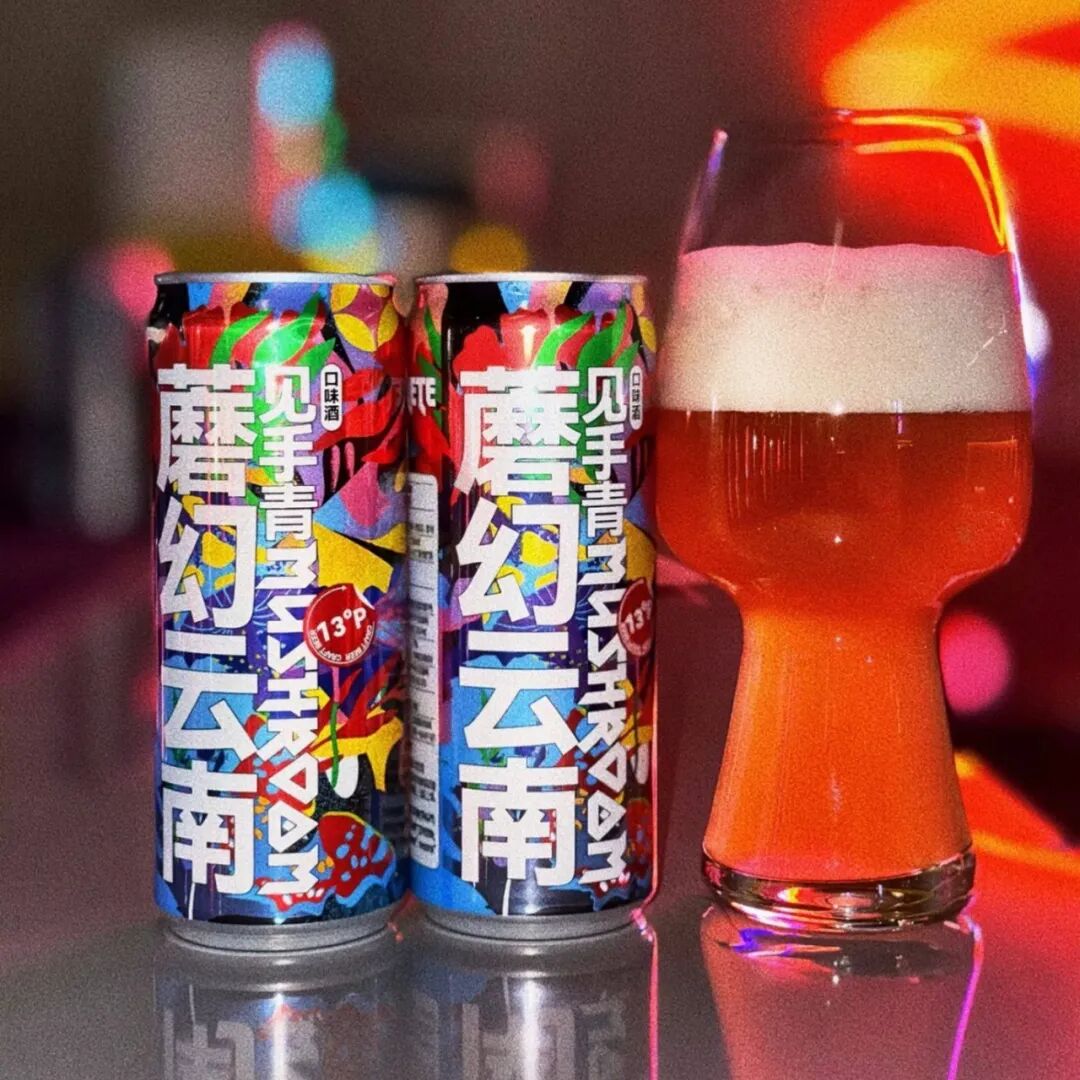
Core Insights - The rise of "New Chinese Craft Beer" is characterized by diverse and innovative flavors, integrating local specialties and unique ingredients, such as "Jianshouqing" mushrooms, into the brewing process [1][11][15] - The craft beer market in China is experiencing significant growth, with projections indicating a market size of approximately 632 billion yuan in 2024, expected to reach 1,821 billion yuan by 2029 [15][16] - Traditional beer brands are revitalizing their offerings by introducing craft beer lines, with companies like Jin Xing Brewery and Chongqing Brewery reporting substantial sales growth from these new products [13][15] Market Dynamics - The demand for craft beer is driven by changing consumer preferences, influenced by the popularity of beverages like coffee and milk tea, which have educated consumers on diverse flavors [3][16] - E-commerce is playing a crucial role in the growth of craft beer, with online sales channels increasing their share in the market, contrasting with the stagnation of traditional industrial beer sales [3][16] - The "micro-drunk economy" is resurging, with younger consumers showing a preference for low-alcohol beverages, leading to a broader acceptance of craft beer in various social settings [16][20] Brand Innovations - Jin Xing Brewery's introduction of tea-infused beers has led to impressive sales, with 11.09 billion yuan in revenue reported for the first three quarters of 2025, where craft beer contributed 78.1% of total income [13][15] - Other brands, such as Uusu Beer and Qingdao Beer, are also launching craft beer products to attract younger demographics, enhancing their market presence [15] - New entrants in the craft beer market are experimenting with unconventional flavors, including fruit and herbal infusions, to appeal to a wider audience [11][19] Challenges and Future Outlook - The craft beer industry faces challenges such as a lack of industry standards, potential market saturation, and the risk of product quality inconsistency [20] - Maintaining consumer interest beyond initial novelty will require brands to focus on quality, taste, and brand culture to ensure long-term loyalty [20] - The evolving landscape of craft beer in China mirrors the trajectory of specialty coffee, indicating a potential for continued growth and diversification in the beverage sector [18][19]


食品饮料行业深度分析:金星啤酒“中式风味精酿”带来的启示
Sou Hu Cai Jing· 2026-02-09 15:43
Group 1 - The report focuses on the transformation of Jin Xing Beer into a "Chinese-style craft beer" and analyzes the development logic and local characteristics of the craft beer industry in China, showcasing the transformation paths of regional beer companies and new industry trends [1][2] - Jin Xing Beer, a regional brewery with over 40 years of experience in Central China, successfully entered the craft beer market in 2024, launching tea-based craft beer products that significantly boosted its performance. By Q3 2025, the revenue share of these products reached 78.1%, increasing the overall gross margin from 27.3% in 2023 to 47.0% [1][9] - As of 2024, Jin Xing has become the eighth largest beer company in China and the largest flavor craft beer company, successfully transitioning from traditional industrial pale beer to high-margin craft beer [1][9] Group 2 - The report highlights that the development of the craft beer industry in China combines international commonalities and local characteristics. The growth of craft beer aligns with the global trend of compensatory consumption following high concentration in the beer industry, with the current CR5 in China reaching a high level [2][3] - Local characteristics are driven by flavor innovation and the re-industrialization of craft beer, with domestic companies holding market power. The rich resources of tea, fruits, and traditional Chinese medicine provide natural conditions for product innovation, as consumers prefer flavor-driven experiences [2][3] - Jin Xing's success is attributed to its industrialized craft beer approach, utilizing the 1258 brewing process and cold brew technology to ensure flavor stability, and establishing a product matrix that combines online retail and offline quality channels for nationwide penetration [2][3] Group 3 - The report clarifies the differences between lager, ale, industrial beer, and craft beer, and outlines the global development history and policy impacts on the craft beer industry. It notes that the current penetration rate of craft beer in China is still low, with consumption upgrades, the rise of new consumer groups, and cultural trends driving continued growth [3][9] - Jin Xing Beer has built a product matrix of "1+1+N," focusing on a core tea beer and various regional flavor craft beers, achieving a market share of 14.6% in the flavor craft beer segment and 3.1% in the overall craft beer market by Q3 2025 [29][30]
2026年2月:中国酒类行业展望
Zhong Cheng Xin Guo Ji· 2026-02-09 11:21
Investment Rating - The report maintains a stable investment rating for the Chinese liquor industry, indicating that the overall credit quality of the industry is not expected to change significantly in the next 12 to 18 months [5]. Core Insights - The liquor industry is closely tied to macroeconomic conditions and per capita income levels. Recent years have seen consumption pressures due to economic slowdown, low investment, and policy restrictions, leading to negative revenue and profit growth for large-scale enterprises [6][8]. - The white liquor sector has been experiencing a continuous decline in production since 2017, with a "volume and price drop" scenario expected to persist into 2025 due to high inventory and slow market movement [6][14]. - The beer industry remains stable with high market concentration, but faces challenges from reduced consumption in dining and entertainment venues. The trend towards product premiumization and innovation continues to drive growth [5][26]. - Overall, the liquor industry is under pressure from weak economic recovery and consumption policies, with expectations of continued downward pressure on revenue and profits in the future [10][39]. Summary by Sections Key Points - The liquor industry's demand is significantly affected by macroeconomic conditions and per capita income. Recent economic factors have led to a decline in revenue and profit growth for large-scale enterprises [6][9]. - White liquor production has been decreasing since 2017, with a projected "volume and price drop" scenario continuing into 2025 due to high inventory levels and slow market activity [14][25]. - The beer industry maintains a high concentration level, with stable production capacity utilization. However, the reduction in dining and entertainment venues has negatively impacted beer consumption [26][37]. Analytical Approach - The analysis focuses on the credit fundamentals of the liquor industry, examining key indicators affecting consumption since 2025, including disposable income, consumer confidence, and policy adjustments [7]. Industry Fundamentals - The liquor industry's demand is closely linked to macroeconomic conditions and disposable income levels. Recent years have seen consumption pressures due to economic slowdown and policy restrictions [8][9]. - The white liquor sector has been facing a continuous decline in production, with a significant drop in output expected in 2025 due to high inventory and slow market movement [14][25]. Financial Performance - Since 2025, white liquor enterprises have generally experienced significant declines in operating performance, while beer companies have benefited from optimized product structures [39][40]. - The overall debt levels of liquor companies are low, and while debt service indicators have declined, they remain favorable. Group companies have access to financing channels that support their debt repayment capabilities [39][40].
千问免单卡还能下单大润发、沃尔玛,一句话年货送到家
Jing Ji Wang· 2026-02-09 08:48
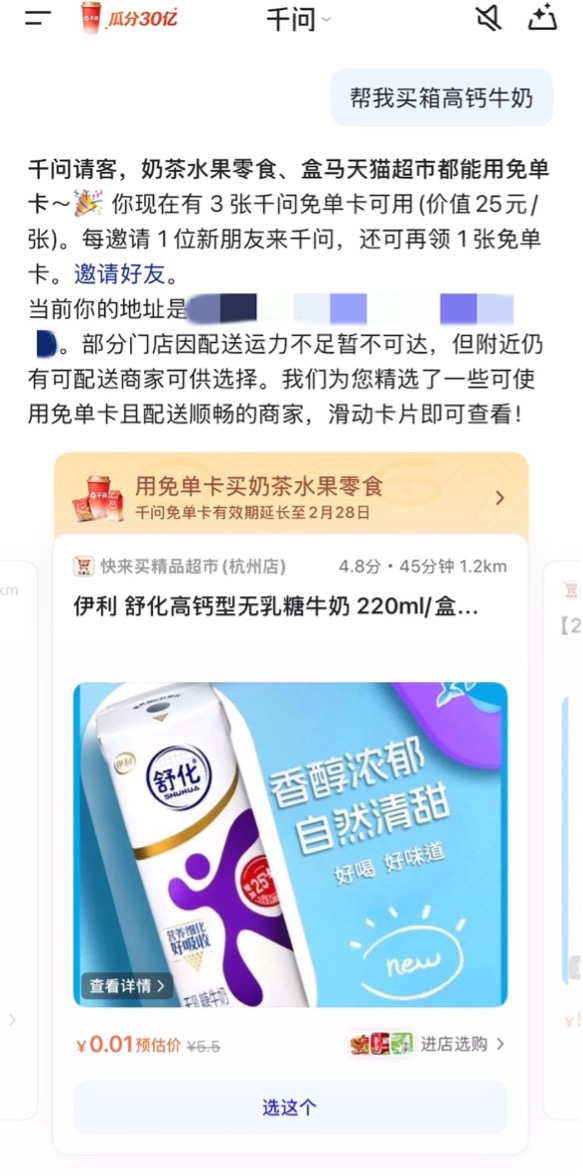
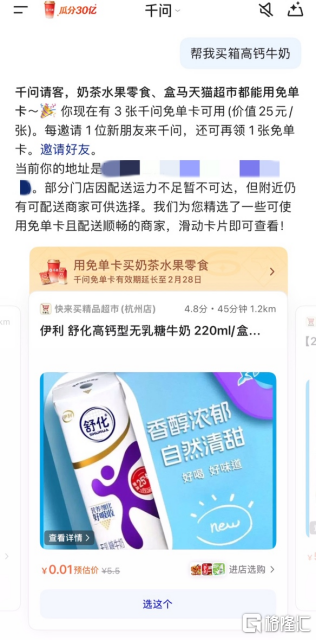
Core Insights - The article highlights the launch of the "免单卡" (Free Order Card) by Qianwen APP, which allows users to purchase New Year goods from various retailers, including Hema and Tmall Supermarket, facilitating one-stop shopping for festive items [1][3] Group 1 - The Qianwen APP enables users to make specific requests like "buy a box of milk" or "get a box of eggs from Hema," and it can select suitable products from a vast inventory for immediate delivery [3] - Qianwen has integrated with Tmall Supermarket and Hema through Taobao Flash Purchase, covering a wide range of high-frequency categories such as grains, snacks, personal care, and household cleaning [3] - Tmall Supermarket is noted as the first nationwide AI supermarket, operating continuously during the Spring Festival, with major chains like RT-Mart, Walmart, and Yonghui maintaining an 80% operational rate during this period [3] Group 2 - The "春节30亿大免单" (Spring Festival 3 Billion Free Order) campaign launched on February 6 has gained significant traction online and has been extended until February 28 [3]
1月酒水销售,区域名酒站起来了!
Sou Hu Cai Jing· 2026-02-09 08:48
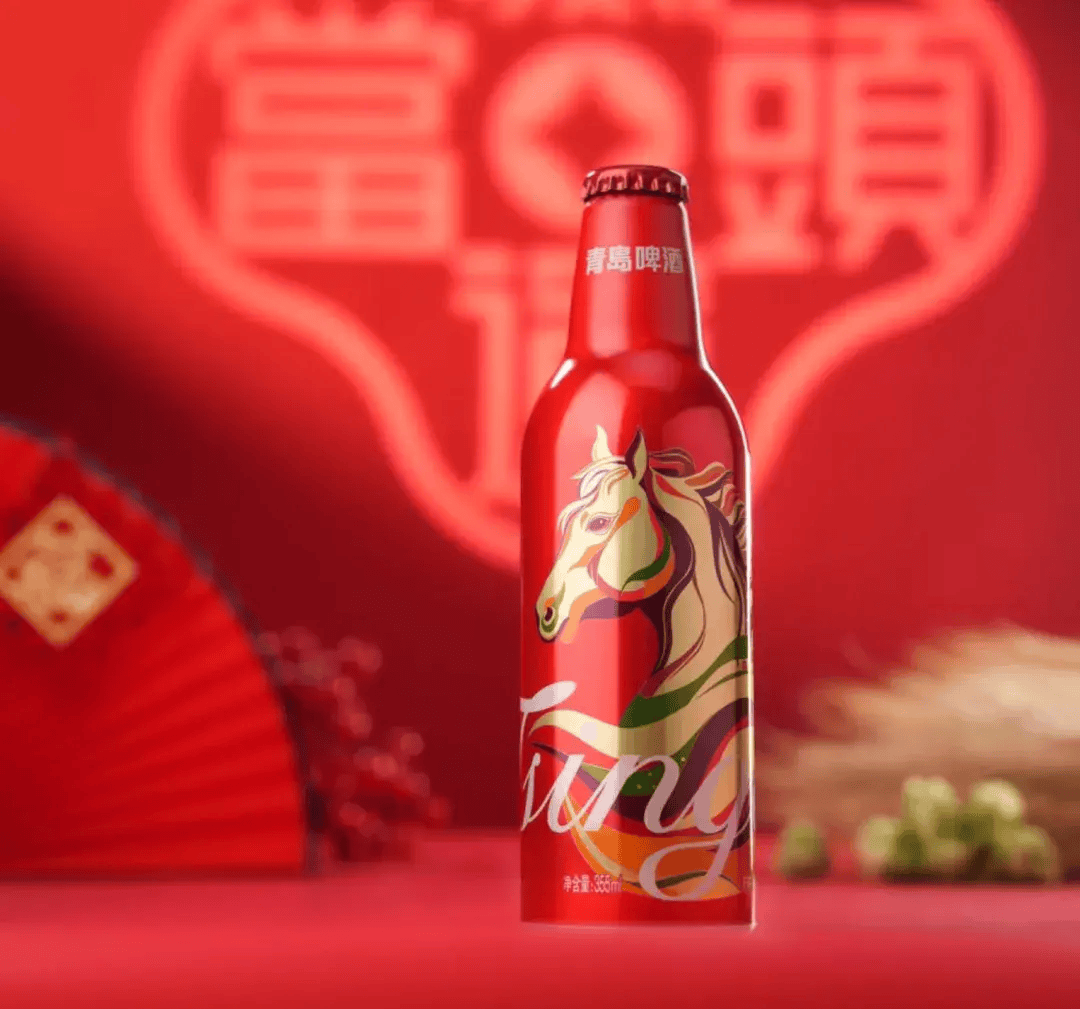
Core Insights - The article highlights the ongoing adjustments in the liquor industry, emphasizing the need for companies to accurately grasp market trends to navigate the increasingly competitive landscape [1] Group 1: White Liquor Market - The white liquor market in January 2026 is experiencing a significant adjustment, with high inventory and low profit margins leading to a situation where channel profits for high-end liquor are compressed to 30-50 yuan per bottle [3] - Despite cautious inventory levels and thin channel profits, the online sales data from Kuaishou indicates a shift in consumer behavior, with regional brands gaining traction in a more accessible and flexible manner [2][4] - The sales proportions for mid-range price segments (100-300 yuan, 300-500 yuan, and 500-800 yuan) have all increased compared to 2025, indicating a shift towards more affordable options [4][5] - The top-selling SKUs in the high-end segment now include regional brands, suggesting consumers are seeking distinctive alternatives beyond traditional high-end products [6] Group 2: Beer Market - The beer market is showing a clear trend of consumption upgrading, with the 100-300 yuan price segment accounting for 74.75% of sales in January 2026, a significant increase from 51.54% in 2025 [8][9] - Qingdao Beer has emerged as a dominant player in the mid-range segment, successfully linking its products to the festive consumption needs of the Chinese New Year [9][11] - The marketing strategies employed by beer brands, such as festive themes and emotional connections, have transformed beer into a social currency during the holiday season [11] Group 3: Wine Market - The wine market is witnessing a shift, with consumer spending moving towards the mid-price range, particularly the 300-500 yuan segment, which saw a substantial increase from 9.28% in 2025 to 21.76% in January 2026 [12][14] - The high-end segment is experiencing a decline, while the mid-range is gaining traction, indicating a potential shift in consumer preferences towards value-oriented options [12][14] - The rise of domestic brands and unique offerings in the wine market suggests a growing consumer interest in quality and storytelling, moving away from solely international brands [16]


春晚,白酒春节营销的巅峰之战|观酒周报
2 1 Shi Ji Jing Ji Bao Dao· 2026-02-09 06:50
Group 1 - The upcoming Spring Festival is a crucial marketing period for the liquor industry, with a long holiday expected to boost consumption opportunities [1] - The CCTV Spring Festival Gala has announced four major liquor sponsors: Wuliangye, Yanghe, Gujinggong, and Langjiu, with each having a significant presence in the event [1][2] - There are expectations of additional liquor brands participating in the Spring Festival Gala, despite a perceived reduction in sponsorship compared to previous years [1] Group 2 - In recent years, the Spring Festival Gala has typically featured a core group of four liquor sponsors, with additional brands appearing in various capacities [2][3] - The number of liquor brands participating in the Spring Festival Gala has varied, with a peak of nine brands in 2024, indicating a trend of increasing brand involvement [4] - Some liquor companies are shifting their focus to local television programs to strengthen brand presence in their key markets, while still maintaining participation in major events like the CCTV Spring Festival Gala [5] Group 3 - Various liquor brands are exploring partnerships with social media platforms to enhance engagement and marketing reach during the Spring Festival [8] - Companies like Xijiu are entering into direct sales partnerships with platforms like Meituan to facilitate quicker delivery and boost sales [9] Group 4 - New product launches are occurring, such as the introduction of a low-alcohol liquor by Shui Jing Fang, which has seen significant pre-sale success [10] - The UMEET blueberry sparkling wine from Moutai has achieved impressive sales figures on its launch day, indicating strong market interest [11] - Luzhou Laojiao aims to enhance its market position and is targeting a top-three industry ranking, reflecting competitive ambitions within the sector [12] Group 5 - Chongqing Beer reported growth in revenue, profit, and sales volume for 2025, indicating a recovery and positive trend in the beer market [14]
全家等便利店全部接入,千问免单卡能买日用百货
Ge Long Hui· 2026-02-09 06:37
Core Insights - The article highlights the launch of the "免单卡" (Free Order Card) by Qianwen APP, which allows users to purchase New Year goods from various retailers with a simple voice command [1][3] - The initiative aims to streamline the shopping experience for consumers during the busy holiday season, offering a one-stop solution for purchasing essential items [1] Group 1 - Qianwen has integrated with major platforms like Tmall Supermarket and Hema, covering a wide range of high-frequency categories including grains, snacks, personal care, and household cleaning products [3] - Tmall Supermarket is noted as the first AI supermarket with nationwide coverage, operating continuously during the Spring Festival [3] - Major retail chains such as RT-Mart, Walmart, Yonghui, and others maintain an 80% operational rate during the Spring Festival across 365 cities [3] Group 2 - The "春节30亿大免单" (30 Billion Spring Festival Free Order) campaign launched on February 6 has gained significant traction online and has been extended until February 28 [3] - Convenience stores like FamilyMart, 7-11, and Lawson offer 24/7 instant delivery services, enhancing customer accessibility during the holiday [3]
15家企业获得海南自贸港岛内居民消费“零关税”进境商品经营资格
Sou Hu Cai Jing· 2026-02-09 05:16
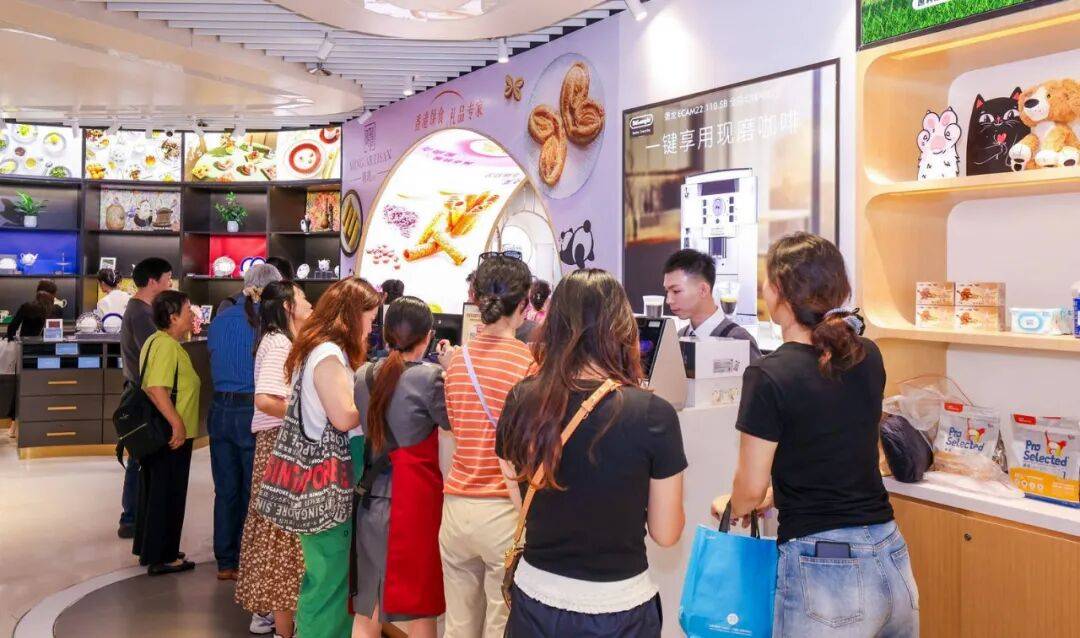
2月8日海南省商务厅发布了《关于海南自由贸易港岛内居民消费的"零关税"进境商品经营资格行政许可事项办理结果公告》(下称"《公告》"), 《公 告》显示15家企业已获得海南自由贸易港岛内居民消费的"零关税"进境商品经营资格。 4.珠免集团(海南)免税品有限公司 5.儋州夏日百货有限公司 《公告》称,根据《海南自由贸易港岛内居民消费"零关税"进境商品经营主体及免税店管理办法(试行)》的相关规定,海南省商务厅会同海南省财政 厅、海口海关、国家税务总局海南省税务局、海南省公安厅对申请海南自由贸易港岛内居民消费的"零关税"进境商品经营资格的企业材料进行审核,经省 人民政府审定,将准予海南自由贸易港岛内居民消费的"零关税"进境商品经营资格的首批企业名单进行公告。 按照《公告》,取得经营资格的15家企业可按照省政府批准的规划,参与市县政府组织的日用消费品免税店项目竞争性谈判。 准予海南自由贸易港岛内居民消费的"零关税"进境商品经营资格的15家企业分别为: 1.中国免税品(集团)有限责任公司 2.北京京东世纪贸易有限公司 3.海南旺豪阳光实业有限公司 6.海南王府井海垦免税品经营有限责任公司 7.海南望海国际商业广场有限公司 ...
智通港股沽空统计|2月9日
智通财经网· 2026-02-09 00:24
Core Insights - The article highlights the top short-selling ratios and amounts for various companies, indicating significant market sentiment against these stocks [1][2]. Group 1: Top Short-Selling Ratios - Lenovo Group-R (80992) has the highest short-selling ratio at 91.38% with a short-selling amount of 52.16 thousand [2]. - Ping An Insurance-R (82318) follows with a short-selling ratio of 83.34% and a short-selling amount of 200.88 thousand [2]. - Xiaomi Group-WR (81810) has a short-selling ratio of 80.95% with a short-selling amount of 597.54 thousand [2]. Group 2: Top Short-Selling Amounts - Tencent Holdings (00700) leads in short-selling amount at 29.69 billion, with a short-selling ratio of 15.25% [2]. - Alibaba Group-W (09988) has a short-selling amount of 23.66 billion and a short-selling ratio of 19.56% [2]. - Xiaomi Group-W (01810) ranks third with a short-selling amount of 10.16 billion and a short-selling ratio of 21.54% [2]. Group 3: Top Short-Selling Deviation Values - Ping An Insurance-R (82318) has the highest deviation value at 36.33%, indicating a significant difference from its average short-selling ratio [2]. - Xiaomi Group-WR (81810) follows with a deviation value of 34.41% [2]. - China Resources Beer (00291) has a deviation value of 33.89% [2].