新石器

Search documents
2025汽车行业年鉴|供应链篇:整零深度绑定、场景决定未来
Jing Ji Guan Cha Wang· 2025-12-30 10:23
Core Insights - In 2025, the Chinese automotive industry will experience a deepening transformation towards intelligence, shifting the supply chain from "price competition" to "value competition" and evolving towards a "fully intelligent ecosystem co-construction" [2] - Level 3 autonomous vehicles will be legally operational in China, marking a significant milestone for companies like Robotaixi, which is expected to achieve profitability [2] - The supply chain's global competitiveness will accelerate as the intelligent wave drives the evolution from component assembly to technological ecosystems, with advancements in areas like unmanned delivery and flying cars [2] Group 1: Industry Trends - The most notable feature of the automotive intelligent supply chain in 2025 will be "ecological integration" replacing "single-point cooperation," with leading automakers and core suppliers forming deep collaborative barriers through strategic investments and equity binding [3] - Capital injection is crucial for resource binding, exemplified by Chery and Luxshare's joint investment of $100 million in Lightyear, and other strategic investments by major players like FAW and Geely [3] - The restructuring of major automotive companies, such as Changan becoming a new central enterprise, will lead to the establishment of intelligent manufacturing and asset management platforms [3] Group 2: Technological Advancements - Core suppliers are transitioning from "component providers" to "full-stack solution enablers," with companies like Huawei leading the charge in defining products and channels through their HarmonyOS [4] - The implementation of a 60-day payment term by major automakers aims to restore the credit system within the supply chain, fostering a shift from competition to strategic partnerships [4] - Significant regulatory changes include the mandatory adoption of Advanced Emergency Braking Systems (AEBS) and the introduction of stringent safety standards for power batteries [5] Group 3: Commercialization and Market Expansion - The commercialization of Level 4 autonomous driving technology is entering a verification phase, with the Ministry of Industry and Information Technology granting licenses for Level 3 systems to specific models [6] - The Robotaxi sector is witnessing critical breakthroughs, with companies like Pony.ai and WeRide achieving dual listings and significant advancements in autonomous driving systems [6] - Unmanned delivery is transitioning from pilot projects to large-scale applications, with companies like New Stone and JD Logistics deploying thousands of unmanned vehicles [7] Group 4: Challenges and Future Outlook - Despite significant breakthroughs in 2025, the Chinese automotive supply chain faces three major challenges: reliance on external sources for raw materials like lithium and cobalt, dependency on imported chips, and limitations in foundational software technologies [8]


港股科网股集体拉升,百度股价大涨超8%
Xin Lang Cai Jing· 2025-12-30 09:45
Group 1 - Baidu Group-SW (09888.HK) experienced a strong performance in the Hong Kong stock market, closing up 8.90% on December 30, becoming the leading stock in the Hang Seng Tech Index [1] - The Hang Seng Tech Index rose by 1.74%, closing at 5578.38 points, with other tech stocks like Horizon Robotics and SMIC also seeing significant gains [1] - Baidu Maps announced a deep collaboration with the autonomous vehicle company New Stone, integrating LD data products into its logistics platform for high-precision mapping services [1] Group 2 - Baidu's Q3 2025 earnings report showed total revenue of 31.174 billion yuan, a year-on-year decline of 7%, primarily due to a drop in core online marketing revenue to 16.566 billion yuan, down approximately 18% [2] - The company reported a net loss attributable to Baidu of 11.232 billion yuan, mainly due to long-term asset impairment of 16.19 billion yuan, while non-GAAP net profit was 3.77 billion yuan, indicating resilience in core business profitability [2] - Morgan Stanley noted a fundamental shift in Baidu's investment narrative, transitioning from a traditional search advertising company to an AI infrastructure provider, with significant revenue growth expected from Kunlun chip sales and GPU computing demand [2] - The revenue from Kunlun chips is projected to increase from approximately 1.3 billion yuan in 2025 to 8.3 billion yuan in 2026, representing a sixfold increase [2] - Research from Shenwan Hongyuan upgraded Baidu's rating to "Buy," forecasting revenues of 128.5 billion, 133.1 billion, and 141 billion yuan for 2025 to 2027 [2] - Dongwu Securities expressed optimism about AI providing new growth opportunities for Baidu, highlighting the company's focus on shareholder returns through ongoing buybacks and maintaining a "Buy" rating [2]

四维图新(002405.SZ):和九识智能、新石器等无人物流车公司在数据合规、车路云方面均有合作
Ge Long Hui· 2025-12-29 09:03
Core Viewpoint - The company, Four-dimensional Map (002405.SZ), is collaborating with autonomous logistics vehicle companies such as Jiushi Intelligent and New Stone Technology in areas of data compliance and vehicle-road cloud integration [1] Group 1 - The company is engaged in partnerships with multiple autonomous logistics vehicle firms [1] - Collaborations focus on data compliance and vehicle-road cloud technology [1]

无人配送车价破2万,智能物流迎来规模化拐点
2025-12-29 01:04
Summary of the Conference Call on the Smart Logistics Vehicle Industry Industry Overview - The smart logistics vehicle industry is experiencing significant growth, with the market size expected to increase from 510 million yuan in 2025 to 8.34 billion yuan by 2030, representing a compound annual growth rate (CAGR) of 74.8% [1][5][23] - The cost of core components for smart logistics vehicles has decreased by over 70% in the past three years, leading to a substantial drop in the price of complete vehicles, which now can be as low as 20,000 yuan [1][2][6][10] Key Drivers of Growth - **Policy Support**: A comprehensive policy support system has been established, facilitating the legal use of smart logistics vehicles and promoting their widespread adoption [3][8][9] - **Technological Breakthroughs**: L4 level autonomous driving technology has made significant advancements, enabling mass production and reducing vehicle costs to levels comparable to traditional electric tricycles [1][10] - **Cost Efficiency**: The operational cost of smart logistics vehicles is significantly lower than traditional manual delivery methods, with the cost per delivery ticket for the 90 Smart E6 being only 0.05 yuan compared to 1.1 yuan for manual delivery [4][21] Industry Structure - The smart logistics vehicle industry chain includes upstream components, midstream solutions, and downstream applications, with a balanced structure among startups, large platforms, and traditional manufacturers [11] - Major players in the domestic market include New Stone, Xingshen Intelligent, and 90 Smart, each focusing on differentiated products and market segments [12][13] Challenges and Pain Points - The industry faces challenges in technology, infrastructure, and regulation. For instance, L4 autonomous driving technology struggles in adverse weather conditions, and there is a lack of dedicated infrastructure for autonomous delivery vehicles [19][20] - Regulatory frameworks need to be improved to support the large-scale commercial application of autonomous delivery vehicles [20] Future Outlook - The market for unmanned logistics is expected to grow rapidly, with projections indicating that the penetration rate will rise from 3.8% to 50% by 2030, making unmanned logistics a mainstream delivery method [23] - The demand for unmanned logistics vehicles is anticipated to increase from 10,000 to 163,000 units during the same period, driving transformation in the logistics industry towards greater efficiency and diversity [23]
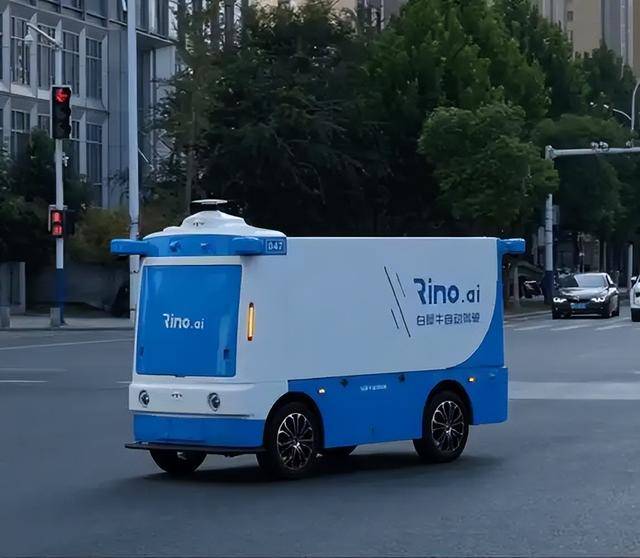
无人配送圈变天!融资4亿对6亿,菜鸟九识联手能否撼动新石器霸权
Sou Hu Cai Jing· 2025-12-28 06:45
Core Insights - The collaboration between Cainiao and Jiushi Intelligent aims to capture market share in the rapidly evolving unmanned delivery sector [1][18] - This partnership is driven by mutual needs: Cainiao requires technology and manpower, while Jiushi seeks to enhance its market presence and resolve ongoing challenges [3][4][6] Group 1: Collaboration Dynamics - Cainiao is looking to expand its "4-hour delivery" service across 31 cities, necessitating additional resources beyond manual delivery [3] - Jiushi Intelligent, having faced difficulties since its spin-off from JD, is in need of a strategic partnership to survive amidst increasing competition [4][6] - The collaboration is seen as a way for both companies to leverage each other's strengths: Cainiao's logistics network and Jiushi's technological expertise [6][8] Group 2: Challenges Ahead - Internal resource allocation may pose a challenge for Cainiao, which is already managing multiple projects [8] - Jiushi must balance its commitments to other major clients, such as China Post, complicating its operational dynamics [8] - Technical integration between Cainiao's dispatch system and Jiushi's autonomous driving model is expected to be contentious, with prior disagreements already noted [11] Group 3: Industry Context - The unmanned delivery sector faces significant hurdles, including operational challenges in complex environments and high costs associated with technology [13][14] - Regulatory inconsistencies across cities like Beijing and Shenzhen create additional uncertainty for long-term planning [14] - The partnership may signal a shift in industry practices, moving towards deeper collaborations rather than isolated efforts [18] Group 4: Competitive Landscape - The collaboration could reshape the competitive dynamics, as leading firms like SF Express and JD may seek similar partnerships [18][21] - Smaller players in the unmanned delivery market may find it increasingly difficult to survive as larger companies consolidate their advantages through such collaborations [21] - The industry remains in a cash-burning phase, with profitability being a critical factor for future success [22]
九识联手菜鸟对战新石器?无人配送再生变
Tai Mei Ti A P P· 2025-12-25 10:53
Core Insights - The collaboration between Jiushi Intelligent and Cainiao aims to create a more competitive joint entity in the rapidly growing urban delivery market, enhancing their technological, operational, and ecological capabilities for the global autonomous freight market [1] - This partnership is seen as a strategic synergy that combines the strengths of both companies in L4-level autonomous driving technology [2] Group 1: Strategic Collaboration - The partnership is expected to enhance Cainiao's end delivery capabilities in the instant retail sector, providing critical logistical support for its fulfillment network [3] - Jiushi Intelligent targets a delivery goal of 2,500 autonomous vehicles by 2025, while Jiushi aims for a much larger scale of 10,000 vehicles, indicating different strategic focuses [5] - The collaboration is not merely a technical enhancement but represents a comprehensive upgrade in fulfillment capabilities and user experience for Cainiao [5] Group 2: Risk and Strategic Positioning - Jiushi Intelligent's collaboration with Cainiao may serve as a strategic buffer against potential legal challenges related to intellectual property infringement from JD Logistics [6][7] - The partnership could provide Jiushi Intelligent with a supportive ecosystem amidst uncertainties, potentially mitigating risks associated with its development trajectory [7] Group 3: Industry Dynamics and Competition - The collaboration signifies a shift in the logistics industry from a "technology validation phase" to an "ecosystem competition phase," accelerating the commercialization of L4-level autonomous driving technology [17] - This partnership redefines industry roles, establishing a new cooperation model between logistics companies and technology providers, prompting others in the industry to reassess their strategic approaches [17] - If successful, the collaboration will shift competitive focus from vehicle quantity and funding to comprehensive capabilities based on real-world scenarios, enhancing the industry's competitive landscape [17]
交通运输部点赞青岛无人车送货模式
Jin Rong Jie· 2025-12-24 14:57
Core Insights - The article highlights the innovative logistics delivery model implemented by New Stone Technology in Qingdao, showcasing the integration of autonomous delivery vehicles into urban life [1] Group 1: Company Overview - New Stone Technology has launched a fleet of over 1,200 autonomous delivery vehicles in Qingdao, in collaboration with Didi Delivery, making the city a leader in the number of autonomous vehicles globally [1] - The autonomous vehicles are described as "city spirits," delivering various goods such as cakes and flowers while maintaining the city's aesthetic and enhancing the local delivery experience [1] Group 2: Industry Impact - The deployment of autonomous delivery vehicles is positioned as a significant advancement in logistics, contributing to the seamless integration of smart services into everyday urban life [1] - The initiative reflects a broader trend in the logistics industry towards automation and efficiency, potentially setting a precedent for other cities to follow [1]
吹响L3的号角,迎来L4的曙光
2025-12-24 12:57
Summary of Conference Call Records Industry Overview - The conference call discusses advancements in the autonomous driving industry, particularly focusing on L3 and L4 levels of automation. The expectation is that 2026 will mark a significant year for autonomous driving technology adoption [1][2]. Key Points on Autonomous Driving Technology - **L3 and L4 Levels**: L3 automation allows for hands-free driving under specific conditions, while L4 represents fully autonomous driving capabilities. The transition from L3 to L4 will involve a gradual shift from human-operated to fully autonomous systems [3][4]. - **Market Expectations**: The market is optimistic about L3 technology, with several domestic and international automakers, including Mercedes and various Chinese companies, actively pursuing development and testing [2][5]. - **Key Hardware Requirements**: High-level autonomous driving relies on essential hardware such as cameras, LiDAR, high-speed connectors, and advanced driving chips, with processing capabilities starting from 500 TOPS [6]. Commercial Applications - **Robotaxi Development**: Robotaxi services, based on L4 technology, are being piloted in several cities and are seen as a crucial component of future smart mobility solutions [8]. - **Logistics and Mining Applications**: L4 technology is primarily applied in logistics and mining sectors, with expectations for significant market growth. The logistics autonomous vehicle market is projected to reach a penetration rate of 20% by 2030, with a market potential of 60 billion RMB [9][11]. Company Insights - **Key Players**: Major companies in the logistics autonomous vehicle sector include Jiushi Intelligent, New Stone, and White Rhino, with Jiushi Intelligent leading in operational scale and market share [13]. - **Financial Performance**: Jiushi Intelligent reported operating over 14,000 vehicles with significant delivery volumes, while other companies like Yikong Zhijia and Xidi Zhijia are also notable players in the mining autonomous vehicle market, though they have yet to achieve profitability [26][27]. Market Dynamics - **Investment Trends**: There is a growing investment interest in logistics autonomous vehicles, with significant funding rounds reported for companies like Jiushi Intelligent and New Stone [10]. - **Pricing Strategies**: Companies are adjusting pricing models to cover costs and improve profit margins, with examples of new pricing strategies being implemented by Jiushi Intelligent [17]. Future Outlook - **Market Growth Potential**: The logistics autonomous vehicle market is expected to grow rapidly, with a projected market space of 600 billion RMB by 2030. The demand for autonomous vehicles is driven by reduced operational costs and increased efficiency [11][12]. - **Challenges and Regulations**: The lack of unified regulations at the national level poses challenges for the widespread adoption of L4 technology, necessitating local government coordination [11]. Conclusion - The autonomous driving industry is on the cusp of significant advancements, with L3 and L4 technologies poised for broader adoption. Key players are actively developing solutions, and the market is expected to see substantial growth in the coming years, particularly in logistics and mining applications.
阿里无人车的「阵痛史」:团队赛马、战略摇摆与整合困局
雷峰网· 2025-12-23 14:30
Core Viewpoint - The article discusses the evolution and challenges faced by Alibaba's autonomous vehicle initiatives, particularly focusing on the logistics sector, highlighting missed opportunities and internal conflicts that led to the decline of its autonomous vehicle projects [3][4][5]. Group 1: Industry Developments - The autonomous logistics vehicle sector has seen significant capital influx and operational advancements in 2023, with companies like New Stone Technology and NineSight completing substantial funding rounds, indicating a rebound after years of stagnation [3]. - NineSight is reportedly in talks to acquire Alibaba's logistics vehicle division, which could enhance its competitive position in the logistics market [3][4]. - The article notes that the autonomous vehicle sector in China is approaching a pivotal moment with several companies preparing for IPOs, marking a transition from a nascent stage to a more mature market [3]. Group 2: Alibaba's Internal Dynamics - Alibaba's autonomous vehicle efforts began with the establishment of the Cainiao ET Logistics Laboratory, which aimed to develop autonomous logistics vehicles but faced strategic misalignments and leadership changes that hindered progress [7][9]. - The dual approach within Alibaba, with the Cainiao ET Laboratory focusing on logistics and the Damo Academy's autonomous driving lab targeting passenger vehicles, led to resource duplication and inefficiencies [15][29]. - The merger of the Cainiao ET Laboratory into the Damo Academy's autonomous driving lab in 2020 was a significant turning point, consolidating efforts but also leading to internal conflicts and a loss of focus on logistics applications [30][36]. Group 3: Key Personnel and Leadership Changes - Key figures such as Zhang Chunhui and Chen Junbo played pivotal roles in the development of Alibaba's autonomous vehicle projects, with their departures marking critical moments in the decline of these initiatives [12][50]. - The leadership transition within the Damo Academy, particularly the appointment of Wang Gang and subsequent changes in strategic direction, contributed to the fragmentation of the autonomous vehicle team [25][41]. - The article highlights the contrasting management styles of Chen Junbo and Guo Zhenyu, which created friction within the team and ultimately affected project outcomes [47][49]. Group 4: Project Outcomes and Future Directions - The autonomous logistics vehicle "Xiaomanlv" achieved significant operational milestones, including reaching 1 million delivery orders, but faced challenges in scaling due to budget constraints and strategic misalignment [36][52]. - The ambitious plans for the "Dabanlv" project, aimed at developing autonomous heavy-duty trucks, were ultimately abandoned following key personnel exits, signaling a broader decline in Alibaba's autonomous vehicle ambitions [50][54]. - The article concludes with the integration of the Xiaomanlv project back into Cainiao, indicating a shift in focus towards logistics and a potential re-evaluation of Alibaba's strategy in the autonomous vehicle space [53][54].


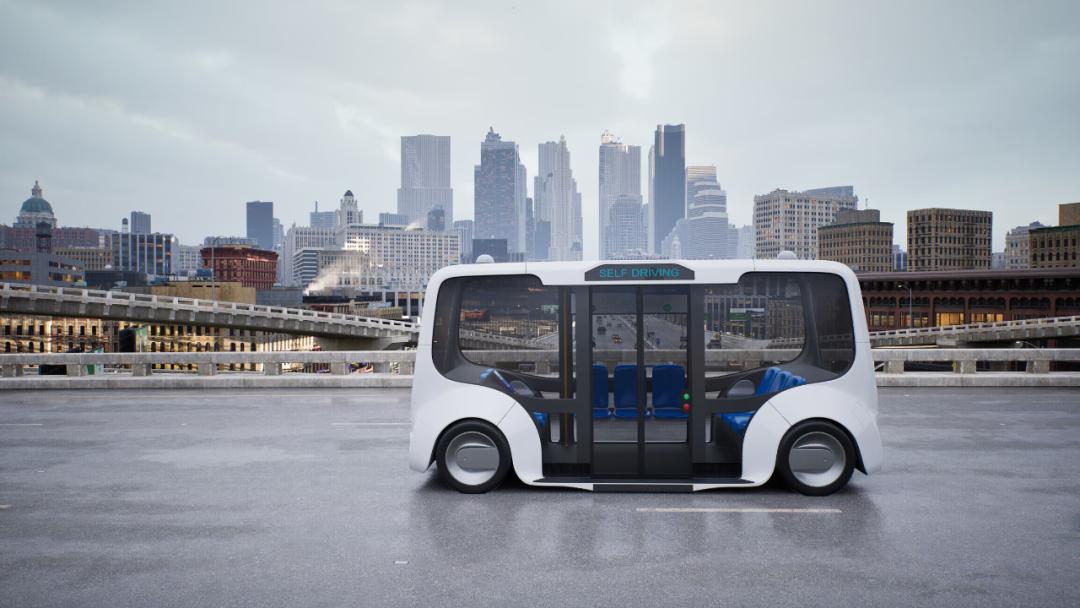
L4级自动驾驶赛道分化,Robobus将成为“第一战场”?
3 6 Ke· 2025-12-23 11:17
Core Insights - The autonomous driving industry is transitioning from a phase of singular breakthroughs to a critical point of track differentiation, with companies reassessing their strategic focus based on the varying technical adaptability and commercialization potential across different scenarios [1][3] Track Differentiation - The differentiation in the L4 autonomous driving track reflects a renewed understanding of technology implementation, moving away from the misconception that overcoming core technology guarantees universal commercialization [3] - The complexity, safety, and commercial value of specific scenarios are crucial for the successful deployment of L4 technology, with Robotaxi facing significant challenges compared to more controlled environments like Robotruck and Robobus [3][4] Financing Trends - Since 2025, financing in the autonomous driving sector has increasingly concentrated on Robobus, Robotruck, and Robovan, with notable investments such as over $600 million in New Stone Technology, setting a record in China's autonomous driving financing [4] Robovan Insights - Robovan focuses on last-mile logistics with a core emphasis on low-cost scalability, with leading companies nearing the threshold of 10,000 units delivered, and prices dropping significantly to as low as 16,800 yuan [4][5] Robotruck Insights - Robotruck aims to revolutionize efficiency in long-distance logistics, addressing cost reduction needs in traditional logistics plagued by low-price competition and safety issues, gaining attention from logistics companies [5] Robobus Insights - Robobus benefits from public transport attributes, addressing high-frequency demand in urban micro-circulation and providing a clear commercial path, supported by strong policy backing [5][8] - The operational flexibility of Robobus allows it to adapt to various semi-open and closed scenarios, significantly lowering the implementation difficulty of L4 technology [9] Commercialization Pathways - Robobus has two primary commercialization models: To G, collaborating with governments for public transport integration, and To B, providing customized services for specific venues [9][10] - The scalability of Robobus operations can further reduce costs through increased order volumes, creating a positive feedback loop of cost reduction and expanded service [10] Global Expansion - Chinese companies are positioned to lead in the Robobus sector globally, leveraging complete industrial chain advantages and rich operational experience, as evidenced by successful projects in Singapore [11][12] Competitive Landscape - The competition in the Robobus sector extends beyond technology to include business models, ecosystem integration, and global capabilities, necessitating a comprehensive approach for success [12][13] - Companies must adapt to local regulations and establish deep collaborations with local partners to navigate the complexities of international markets [13][14] Challenges Ahead - Robobus faces technical challenges in specific scenarios, such as adverse weather conditions affecting sensor accuracy and the need for effective vehicle-road collaboration [14] - Initial investment costs for L4 Robobus remain high, necessitating strong financial capabilities for companies to achieve scalability [14] - A robust operational maintenance system is essential for Robobus, which includes not only vehicle maintenance but also monitoring and upgrading autonomous driving systems [14][15]