
金沙江创投

Search documents
AI智能体火热,投资人又急又怕
Hu Xiu· 2025-07-30 07:14
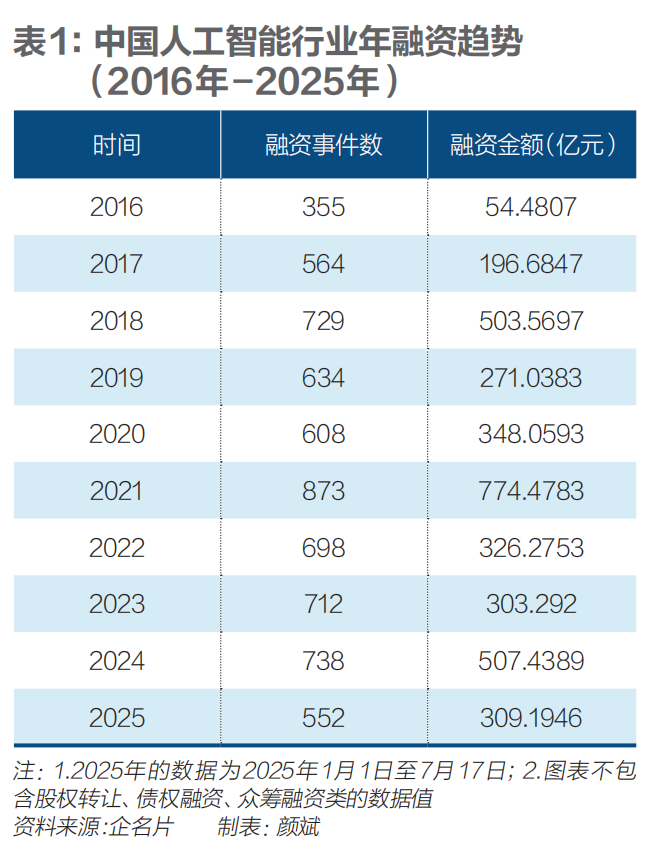
Core Insights - The focus of investment is rapidly shifting towards AI agents, with significant growth in funding and interest in this sector [1][4][10] - AI agent startups are experiencing unprecedented valuation increases and funding speeds, breaking conventional norms [2][3] - The market for AI agents is projected to grow from $5.1 billion in 2024 to $47.1 billion by 2030, with a compound annual growth rate of 44.8% [1] Investment Trends - In the first half of the year, 16 AI agent startups raised between $9 million and $200 million in seed funding, with over half being vertical agents covering various industries [6][26] - Major tech companies are building their own AI agent ecosystems, with Google, Microsoft, Meta, and Amazon all investing heavily in this area [6][11] - The investment sentiment is driven by a fear of missing out (FOMO), leading to aggressive funding strategies from dollar funds compared to more cautious approaches from RMB funds [12][19] Market Dynamics - The AI agent market is characterized by a surge in financing events, with many projects securing high funding without established products or revenue [13][24] - Investors are increasingly focused on the commercial viability of AI agents, emphasizing metrics like annual recurring revenue (ARR) and user retention [23][24] - The trend of VC firms moving towards a more PE-like approach is evident, with a focus on sustainable business models and revenue generation [20][23] Competitive Landscape - AI agent startups are categorized into three types: star teams with early visibility, traditional application transformers, and those leveraging large tech ecosystems [26][27] - The urgency for startups to demonstrate results quickly is paramount, as the market is becoming increasingly competitive with the entry of larger players [28][34] - Founders are adopting strategies to capture market attention through innovative concepts and public engagement, aiming to validate their business models rapidly [31][33] Future Outlook - The AI agent sector is expected to continue evolving, with a potential shift in focus from general agents to specialized vertical agents as the market matures [35] - Investors are keenly observing the performance of AI agent companies, looking for those that can establish a strong user base and brand identity before larger companies dominate the market [34][35]

对话联想创投王光熙:具身智能行业估值有泡沫,需要一两年消化
Xin Lang Cai Jing· 2025-07-25 02:17
Core Insights - The field of embodied intelligence and robotics has become one of the hottest investment sectors in 2023, with significant interest from top investment firms and tech giants, leading to rapid valuation increases [1][5] - Investment events in the embodied intelligence and robotics sector reached 114 in the first five months of 2025, surpassing the total of 77 events in 2024, with total financing amounting to 232 billion yuan, exceeding the 209 billion yuan from the entirety of 2024 [1] - There are ongoing debates regarding the commercialization challenges within the robotics industry, with some investors expressing skepticism about the sustainability of high valuations [1][5] Investment Trends - Lenovo Ventures has been actively investing in the robotics sector for several years, focusing on various types of robots, including humanoid, multi-modal bipedal, medical, and industrial robots [2][9] - The firm acknowledges the presence of valuation bubbles in both primary and secondary markets, emphasizing that true business commercialization is necessary to address these bubbles over the next one to two years [5][7] Market Opportunities - The market for new scenarios in embodied intelligence is viewed as potentially vast, with estimates suggesting it could reach trillions or even tens of trillions in value [7][11] - Companies that have been in the robotics field for years are beginning to see the benefits of their investments as they expand into new applications and markets [7][11] Future Outlook - The next two to three years are expected to be crucial for companies in the embodied intelligence sector to demonstrate commercially viable products in controlled environments [11][12] - There is optimism about the potential for embodied intelligence to significantly reduce costs and improve efficiency across various industries, although the exact market share it will capture remains uncertain [12]


这家盯上年轻女孩生意的机器人公司,凭啥拿到朱啸虎的钱|AI原生100
虎嗅APP· 2025-07-02 10:47
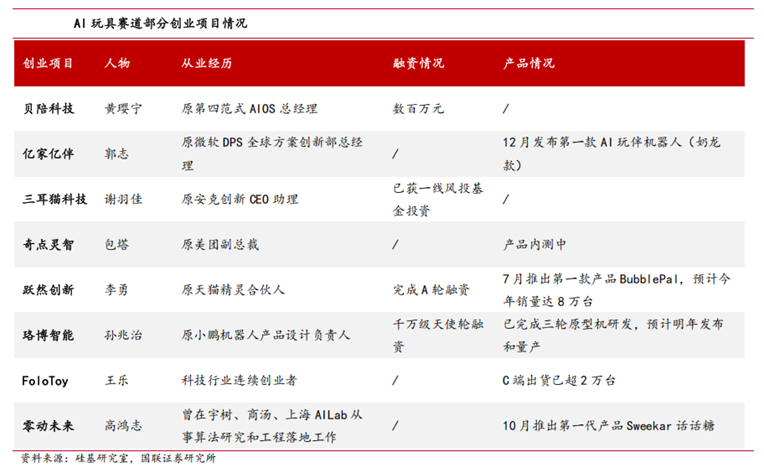
Core Viewpoint - The article discusses the emerging market for emotional companion robots, particularly targeting Generation Z women, highlighting the potential for significant business opportunities in this sector [5][17]. Group 1: Company Overview - Luobo Intelligent, founded by Sun Zhaozhi, focuses on developing emotional companion robots, with its first product, Fuzozo, launched on JD.com, selling over 1,000 units within the first ten minutes [6][9]. - The company received its first market investment of several tens of millions of RMB from prominent investors, indicating strong confidence in its business model and execution capabilities [5][6][33]. Group 2: Market Potential - The emotional companion robot market is seen as a blue ocean, with significant competition expected to emerge as larger companies prepare to enter the space [9][35]. - The emotional value created by AI is considered a reliable direction for large model applications, with the emotional companionship sector projected to gain traction in the coming years [5][9]. Group 3: Product Development - The Fuzozo robot is designed to provide emotional support and companionship, leveraging advanced AI technologies to create a more immersive user experience [17][18]. - The company emphasizes the importance of understanding user needs and creating a product that resonates emotionally, which is crucial for long-term user engagement [19][25]. Group 4: Target Audience - Research indicates that Generation Z women are the primary target demographic for emotional companion robots, as they often experience loneliness and seek emotional connections [17][19]. - The company aims to build a product that not only attracts users but also fosters a lasting emotional bond, addressing the unique needs of this demographic [17][19]. Group 5: Competitive Landscape - The competitive landscape is expected to intensify as established companies with strong IP and distribution channels prepare to enter the emotional companion robot market [35][37]. - Luobo Intelligent believes that while initial competitors are primarily startups, significant players are still in the background, ready to enter the market [35][37]. Group 6: Future Plans - The company plans to expand internationally, targeting East and Southeast Asia first, aligning with cultural aesthetics similar to those in China [40]. - There is a focus on ensuring product quality and optimizing production capacity as the company scales [43].

投资对赌协议:创业者的“卖身契”
Sou Hu Cai Jing· 2025-06-29 22:12
Core Viewpoint - The article discusses the increasing prevalence of "earn-out" agreements in China's venture capital landscape, highlighting the risks and consequences for entrepreneurs who fail to meet these targets, leading to significant financial burdens and potential bankruptcy [1][3][10]. Group 1: Current Market Trends - The case of Smartisan Technology's 15 million yuan loan dispute exemplifies the challenges faced by companies under earn-out agreements, with a ruling requiring repayment of principal plus interest at a rate of 6% [3]. - In 2023, several companies aiming for IPOs, such as Baishen Pharmaceutical and Youxun Medical, have triggered buyback clauses due to unmet targets, reflecting a broader trend in the market where 90% of private equity funds in China include such clauses [3][10]. - The contrast in earn-out agreement usage is stark, with China at 90% compared to only 2% in Silicon Valley, indicating a fundamental difference in venture capital ecosystems [3]. Group 2: Government and Institutional Responses - The Central Political Bureau of the Communist Party of China has introduced the concept of "patient capital," urging state-owned enterprises to lead by example in fostering a more sustainable investment environment [4][5]. - Various state-owned enterprises in cities like Shanghai and Beijing are taking steps to lower return requirements and extend fund durations, signaling a shift towards more supportive investment practices [5]. Group 3: Entrepreneurial Challenges - Entrepreneurs are increasingly finding themselves in precarious situations due to the pressure of earn-out agreements, with notable cases of founders facing severe consequences for failing to meet financial targets [6][10]. - The urgency to meet IPO deadlines is palpable, with approximately 130,000 investment projects and over 10,000 companies currently facing exit challenges [9]. - The article highlights the case of ADC, which achieved a remarkable IPO in Hong Kong but is burdened by significant losses and stringent earn-out conditions that could lead to high-interest buybacks if targets are not met [10]. Group 4: Market Dynamics and Future Outlook - The article notes a growing trend of companies turning to the Hong Kong stock market as a last resort for IPOs, with the market experiencing a resurgence in fundraising activities [10]. - The private equity secondary market is becoming increasingly active, with a notable rise in old stock transactions, indicating a shift in how liquidity crises are managed [12][14]. - The ongoing tension between short-term profit motives and long-term value creation is underscored, with the potential for a new path emerging through government-backed initiatives aimed at reducing the reliance on earn-out agreements [20].


“AI宠物”入局潮玩市场!不投具身智能的朱啸虎这次也出手了
Mei Ri Jing Ji Xin Wen· 2025-06-18 11:02
Core Insights - The rapid growth of the trendy toy market is highlighted by the recent success of Labubu under Pop Mart, with AI pets entering the scene as well [1] - Robopoet has completed a multi-million RMB angel round financing, indicating strong investor interest in AI emotional companionship hardware [1][2] - The AI toy sector has seen over 20 financing events since last year, with significant investments in consumer-focused projects, particularly in the trendy toy category [1][5] Company Insights - Robopoet, founded in 2024, focuses on AI nurturing toys, with its first product "Fuzozo" launched in June 2025, designed to establish long-term emotional bonds with users [2] - The core capabilities of Robopoet's products include personality evolution and long-term memory, utilizing proprietary technologies like the Multi-Emotion Model and EchoChain [2][3] - The founder of Robopoet, Sun Zhaozhi, emphasizes that the essence of AI emotional companionship lies in nurturing rather than mere conversation [2] Investment Trends - The AI toy sector is becoming a hot investment area, with significant financing events, including several billion-level investments in 2023 [5][9] - Notable investments in AI toys include companies like VITAPOWER and X-ORIGIN-AI, indicating a trend towards emotional and educational value in toys [5] - The resurgence of interest in the consumer sector among venture capitalists reflects a broader shift towards emotional consumption in China, as indicated by recent market analyses [9][10] Market Dynamics - The emotional consumption trend is gaining traction, with consumers increasingly seeking products that provide emotional value rather than just functional benefits [9] - The AI toy market is characterized by the integration of various technologies, such as voice recognition and emotional analysis, which poses challenges for companies to differentiate their products [10] - The success of trendy toys like Labubu is indicative of a larger movement towards emotional economy, where consumer preferences are shifting towards products that resonate on a personal level [9]
晚点独家丨不投具身的朱啸虎,投了小鹏机器人前成员做的 AI 潮玩
晚点LatePost· 2025-06-17 09:10
Core Viewpoint - The core demand of users is understanding, companionship, and social interaction rather than complex actions, leading to the development of AI companionship products like Robopoet's Fuzozo [2][4]. Company Overview - Robopoet, an AI companionship hardware startup, recently completed a multi-million RMB angel round financing led by Shanghai New Vision Fund and金沙江创投, with follow-up investment from Zero One Ventures [3][4]. - Founded in January 2024, Robopoet aims to build a comprehensive ecosystem around its product Fuzozo, focusing on product iteration, channel expansion, IP collaborations, and deepening AI capabilities [4]. Product Details - Fuzozo, the first product from Robopoet, is positioned as an "AI nurturing" portable toy targeting teenagers and adults, priced at 399 RMB during the 618 pre-sale [4][6]. - The product features multi-modal interaction and personality evolution capabilities, allowing it to engage with its "owner" while also serving as a plush accessory with social and display attributes [6]. Technology and Innovation - Robopoet emphasizes that the core capability of AI emotional companionship products is "nurturing," focusing on "personality evolution" and "long-term memory" as key features [7]. - The technology foundation includes a Multi-Emotion Model (MEM) for personality evolution and an EchoChain system for long-term memory and feedback mechanisms [7]. Market Context - The market for interactive AI toys and pets is gaining attention globally, with products like Casio's Moflin and Japan's LOVOT achieving significant sales and popularity [8]. - Other categories in the AI hardware space include efficiency tools, fashion-wearable combinations, and companionship products like Fuzozo and BubblePal, which have seen substantial sales [9]. User Expectations - Beyond efficiency and interaction, users also seek to feel "understood," "remembered," and "liked" from AI products, indicating a shift in user expectations towards emotional engagement [11].

独家丨小红书估值2500亿,朱啸虎:没有股东愿意卖
投中网· 2025-06-07 04:22
有不少机构或LP愿意买单。 将投中网设为"星标⭐",第一时间收获最新推送 这几天财经热点不少,其中就包括两则交易:一是小红书进行了一笔老股交易,交易估值260亿美元(约合1870亿人民币), 二是迅雷收购虎扑,花了5亿人民币。人们敏捷地捕捉到两点信息,一是小红书估值又涨了,二是男性用户那是真不值钱。 作者丨张雪 编辑丨张楠 来源丨 投中网 小红书估值的消息来自彭博,据金沙江创投的一份内部文件显示,小红书的估值上涨到260亿美元,不过这份文件的标注日期 是在三月份。一位正在替LP收购小红书老股的投资人向投中网透露,真实成交或许已经加价至300亿美元。最近,小红书老股 的报价已经是:350亿美元 (约合2500亿人民币) ,而且这个价格还没份额。 对此,投中网分别向小红书和金沙江创投主管合伙人朱啸虎进行确认,截至发稿,小红书没有回复。朱总的回答则稍显艺术, 对于350亿美元的估值,他既没承认,但也没有否认,只回了几个字,"没有股东愿意卖"。 一位投资人对我表示,350亿美元的价格就是GRS(金沙江创投)和朱总对外报的,"他报价不一定是为了卖,而是希望让市场 知道或者说维持在这个价格"。不过据我了解,如果350亿美 ...

最新交易显示:小红书估值已达260亿美元
Hua Er Jie Jian Wen· 2025-06-05 00:57
Group 1 - The valuation of Xiaohongshu (Little Red Book) has surged to $26 billion, significantly up from a previous valuation of $20 billion, driven by a recent transaction through GSR Ventures [1][2] - Xiaohongshu accounts for 91% of the net asset value of GSR IV fund, with its share valued at approximately $22.2 billion as of the end of March [1][3] - The recent valuation surpasses the historical peak during the COVID-19 pandemic in 2021, providing strong momentum for the anticipated IPO this year [1] Group 2 - Xiaohongshu has gained attention as a potential alternative to TikTok amid the latter's regulatory challenges in the U.S., leading to increased interest from American users [2] - The Chinese government is supporting private enterprises and easing regulations in the tech sector, creating new investment opportunities for platforms like Xiaohongshu [2] - The investor base for Xiaohongshu includes prominent firms such as GGV Capital, ZhenFund, and GSR Ventures, with limited partners comprising major global pension funds and university endowments [3]
专访科勒资本北京办公室总经理杨战:创新引领叠加市场沃土,中国硬科技资产吸引力重塑
Mei Ri Jing Ji Xin Wen· 2025-06-03 09:41
Core Insights - The private equity market in China is experiencing a moderate recovery, driven by the increasing interest of international capital in Chinese hard technology companies despite geopolitical tensions [1][3][5] - The total scale of China's private equity market has reached approximately 15 trillion yuan, indicating significant growth potential as factors such as capital influx, talent availability, and supportive policies continue to improve [1][8] Market Dynamics - There is a noticeable revival in the private equity market, with a particular focus on hard technology sectors like semiconductors and AI, which are showing resilience [3][5] - The entry of government-guided funds and military-civilian integration funds is providing stable funding sources, while the diversification of exit channels, including a resurgence in IPOs and increased M&A activity, is enhancing liquidity for existing assets [3][5] International Capital Trends - International capital is showing renewed interest in Chinese technology assets, with specific companies like Yushutech and DeepSeek becoming highly sought after [3][4] - Different regions exhibit varied capital flows, with North American funds contracting due to geopolitical factors, while European, Middle Eastern, and Southeast Asian capitals are emerging as significant contributors [4][5] Investment Landscape - The global competitiveness of Chinese technology firms is a primary factor influencing international capital's changing attitudes, as companies demonstrate leadership in various tech fields [5][6] - The expanding domestic market is positioning China as one of the largest consumer markets globally, providing substantial growth opportunities for technology companies and attracting international investment [5][6] Private Equity Market Development - The private equity secondary market in China is still in its early stages, with limited experienced buyers and a lack of participation from large state-owned assets [8][9] - The market's growth is constrained by the need for improved professional services from intermediaries and regulatory enhancements, such as easing the requirement for unanimous consent from all partners for share transfers [8][9] Future Outlook - The development of China's private equity secondary market is closely linked to the maturity of the primary market, with the potential for significant growth as various market elements mature [9]
深度丨“爬山神器”爆火,AI眼镜风靡……智能终端百花齐放,如何平衡“通用”与“好用”?
Zheng Quan Shi Bao· 2025-05-26 05:11
Core Viewpoint - The focus of AI functions in smart terminals is shifting towards practical needs and specific scenarios, balancing generality with usability, and cost with benefits [1][2][5]. Industry Trends - The 2023 global penetration rate of smart terminals reached 38.7%, expected to rise to 45.7% by 2028, indicating a significant increase in AI integration within devices [5]. - By Q1 2025, the AI functionality penetration rate in China's smartphone market is projected to reach 82%, marking a transition from AI as an "add-on" to a "must-have" feature [5]. Product Innovations - The DexH13 dexterous hand by Pasini Technology is the world's first dual-modal robotic end effector featuring "multi-dimensional touch + AI vision," designed with a four-finger, 16-degree-of-freedom bionic structure to enhance tactile perception while reducing hardware costs [1]. - Skyworth has introduced a smart elderly care solution integrated into their televisions, which includes features for companionship and safety monitoring for seniors [4]. - Dr. Glass has developed smart glasses that provide teleprompter functionality, addressing user needs in public speaking and recording scenarios [4]. Market Dynamics - The market for AI all-in-one machines is experiencing rapid growth, with nearly 100 manufacturers launching products since January 2025, driven by the need for localized AI deployment and data security [11][12]. - Companies like Quanzhi Technology are innovating AI training and inference machines that reduce training costs by 90% and improve inference performance by 50% [11]. Focus on Specific Applications - The demand for specialized smart terminals is increasing, with companies like Kengjing Technology focusing on exoskeleton robots that enhance human capabilities rather than replicating human form [8][9]. - The industry is moving towards developing tailored solutions for specific tasks, such as logistics and security, rather than pursuing general-purpose humanoid robots [12].