SK On

Search documents
亏不起!福特电动汽车战略大退步
Zhong Guo Qi Che Bao Wang· 2025-12-18 01:50
Core Viewpoint - Ford has announced a significant strategic shift by cutting back on electric vehicle (EV) development and production, focusing instead on hybrid models and smaller, more affordable electric vehicles, leading to an estimated $19.5 billion in related costs [2][6]. Group 1: Strategic Adjustments - The strategic adjustment is driven by two main factors: the cancellation of EV subsidies by the U.S. government and ongoing losses in Ford's EV business, which are projected to total $9 billion, $21 billion, $47 billion, and $51 billion from 2021 to 2024, with an additional $3.6 billion loss expected in the first three quarters of 2025 [3][5]. - Ford plans to reallocate capital to higher-return growth areas, including commercial vehicles, trucks, hybrid models, and battery storage [3][5]. - The production of the F-150 Lightning electric pickup truck will be halted due to low sales and high production costs, with resources redirected to more profitable fuel and hybrid versions [3][5]. Group 2: Production Changes - The next-generation F-150 Lightning, initially planned for production at the Blue Oval City factory in Tennessee, will now be adjusted to an extended-range version and produced in Michigan, with the factory being renamed to focus on fuel-powered trucks by 2029 [5]. - The Transit electric van project in Ohio has been canceled, with the factory set to switch to producing the next generation of fuel and hybrid vans by 2029 [5]. - Ford is shifting some battery production capacity from vehicle applications to energy storage systems, having ended its partnership with SK On and taking over two battery plants in Kentucky [5]. Group 3: Industry Context - Ford's strategic pivot coincides with a broader trend in the automotive industry, as major companies like General Motors, Volkswagen, Stellantis, Honda, and Nissan are also slowing their electric transition and focusing on hybrid models to mitigate risks [7][9]. - The global automotive industry is moving from aggressive electric vehicle strategies to a more diversified approach, balancing short-term profitability with long-term transformation [9].


历史性转向!福特(F.US)从All-in到撤退:计提195亿美元费用放弃纯电车,战略加码混动与储能
Zhi Tong Cai Jing· 2025-12-16 07:21
Core Viewpoint - Ford Motor Company announced a $19.5 billion charge related to its electric vehicle investments, marking a significant retreat from electric vehicle technology as the company shifts focus back to traditional fuel and hybrid models to better align with consumer preferences in the U.S. [1] Group 1: Financial Implications - Approximately $8.5 billion of the charge is related to the cancellation of multiple future electric vehicle projects, including a large pickup truck planned for production in Tennessee [2] - An additional $6 billion was written down due to the termination of a joint venture with South Korea's SK On, which was initially established to produce batteries for electric vehicles [2] - Ford's adjusted EBIT forecast for 2025 has been raised from $6-6.5 billion to $7 billion, supported by strong business fundamentals and cost improvements [2] Group 2: Strategic Shift - Ford has effectively abandoned all next-generation electric vehicle projects, including large pickups and certain commercial vehicles, opting instead to produce gasoline-powered trucks at the Tennessee facility [3] - The company plans to replace the originally intended electric commercial vehicles with "affordable" hybrid and gasoline models, with a new series of budget-friendly vehicles being developed by a secret R&D team in California [3] - The first model from this new series is expected to be a mid-size pickup priced around $30,000, set to launch in 2027 [3] Group 3: Sales Performance - In November, Ford's total U.S. sales were 164,925 vehicles, a slight decline of 0.9% year-over-year, with electric vehicle sales plummeting by 60.8% to just 4,247 units [3] - The sales figures for specific electric models showed significant declines, with the F-150 Lightning down 72% and the Mustang Mach-E down 49% [3][4] Group 4: Future Outlook - Despite challenges in the electric vehicle sector, Ford's hybrid vehicle sales increased by 14% in November, with total sales for the year surpassing 205,497 units, a growth of over 19% [6] - The company anticipates that by 2030, the combined sales of hybrid, extended-range electric, and pure electric vehicles will rise from the current 17% to 50% of its total sales [6] - Ford is also investing $2 billion over the next two years to produce batteries for energy storage services, aiming to capture a share of the growing U.S. battery storage market [7]
Ford Scraps F-150 Lightning EV Production, Jim Farley Says Automaker Will Pivot: 'Just Weren't Selling…' - Ford Motor (NYSE:F)
Benzinga· 2025-12-16 04:33
Core Insights - Ford Motor Co. is discontinuing production of the F-150 Lightning EV pickup truck, indicating a strategic shift away from pure electric mobility [1] - The company has announced a $19.5 billion charge as it pivots towards hybrids globally and focuses on low-cost EVs for the U.S. market through its Universal EV Platform [2] - Ford expects that approximately 50% of its global volume will consist of hybrids, Extended Range Electric Vehicles (EREVs), and EVs [3] Production Changes - The F-150 Lightning will transition to an Extended Range Electric Vehicle (EREV) with an estimated range of 700 miles, as Ford aims to avoid investing heavily in large EVs that are not profitable [4] - The first vehicle from the Universal EV Platform is set to be a fully connected midsize pickup truck, which will be assembled at the Louisville Assembly Plant starting in 2027 [3] Market Strategy - Ford's CEO noted that premium electric vehicles priced between $50,000 and $80,000 were not selling well, leading to a reevaluation of the company's EV strategy [5] - The company has ended its EV manufacturing partnership with SK On, resulting in Ford fully owning the Kentucky plant while SK On retains ownership of the Tennessee battery plant [5] Regulatory Environment - The CEO praised the relaxation of Corporate Average Fuel Economy (CAFE) Standards by President Trump, suggesting it would allow Ford to concentrate on American-made products [6] - The CEO previously predicted that EV adoption in the U.S. would reach only 5% [6] European Expansion - Ford is expanding its presence in Europe through a partnership with Renault Group, where it will lead the design and driving dynamics for two Ford-badged EVs built on Renault's Ampere platform [7] Stock Performance - Ford's stock declined by 0.80% to $13.65 at market close but rebounded by 1.11% to $13.80 during after-hours trading [7]
全球大公司要闻 | iRobot申请破产,中国企业接盘
Wind万得· 2025-12-15 22:38
Group 1 - iRobot has officially filed for bankruptcy protection in Delaware, with Shenzhen PICEA Robotics and its subsidiary acquiring all shares, leading to iRobot's delisting from NASDAQ and privatization [3] - Tesla has initiated Robotaxi road tests without human safety operators, with reports of at least one Model Y operating in Austin, Texas, without safety monitoring equipment [3] - Google has introduced its seventh-generation TPU using HBM3E8 chips from Samsung and SK Hynix, with plans to adopt HBM3E12 chips for enhanced performance [3] Group 2 - Luoyang Molybdenum has acquired four operating gold mines in Brazil, marking a significant step in its "copper-gold dual-pole" acquisition strategy to enhance its resource layout in South America [5] - Unisoc has established a central research institute to focus on developing new architectures for edge AI chips [5] Group 3 - Apple faces potential increases in hardware costs as DRAM long-term order agreements expire, with Samsung and SK Hynix planning price hikes starting January [7] - Ford plans to convert an electric vehicle battery plant in Kentucky to produce batteries for grid storage and announced the creation of thousands of new jobs across the U.S. [7] - Novo Nordisk Canada has received conditional marketing authorization from Health Canada for semaglutide injection (Wegovy) for treating certain patients with non-alcoholic steatohepatitis (NASH) [7] Group 4 - Samsung Electronics aims to expand HBM3E chip supply to become Broadcom's largest supplier and plans to exit the consumer electronics SSD market to focus on AI industry supply [9] - Toyota announced plans to build a manufacturing plant in the U.S. and issue bonds worth up to 5 billion Indian Rupees, while recalling nearly 100,000 vehicles due to safety issues [9] - SK Hynix has ordered a hot-press bonding machine from ASMPT for HBM4 production, anticipating DRAM shortages to persist until 2028 [9] Group 5 - Volkswagen Group announced the first closure of a domestic production line in Germany in 88 years, significantly reducing the budget for its battery subsidiary PowerCo [12] - Porsche is adjusting its 718 EV platform to accommodate internal combustion engines due to slowing demand for pure electric vehicles, incurring approximately £6.65 billion in conversion costs [12] - HSBC has sent privatization documents for Hang Seng Bank, with a court meeting and shareholder meeting scheduled for January 1, 2026 [12]






不只12GWh!年底储能扩产冲刺
行家说储能· 2025-12-15 13:12
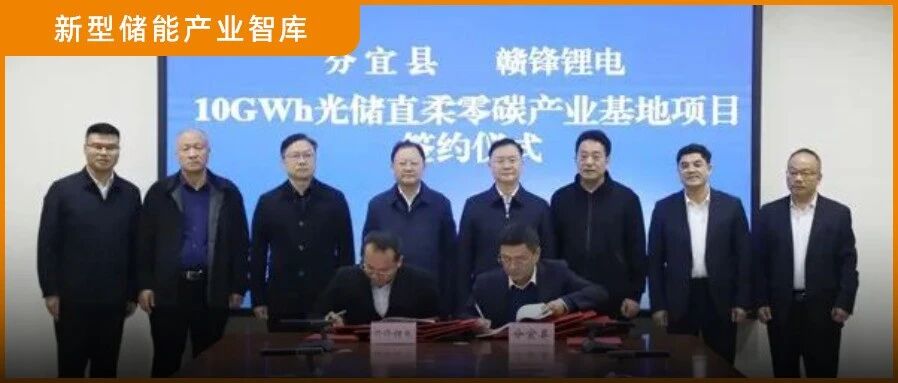
Core Viewpoint - The new energy storage industry is seizing opportunities from power market reforms and digitalization, with key players collaborating to compile the "2025 Power Market and Digital Energy Storage Research Report" to be released at the upcoming summit on January 8 [2]. Group 1: Industry Developments - SK On is constructing a lithium iron phosphate battery factory in South Korea, targeting a $13.5 billion government project, aiming to regain market share from local competitors [4]. - Ganfeng Lithium signed an agreement for a 10GWh solar-storage integrated zero-carbon industrial base in Xinyu, Jiangxi Province, which will include a soft-pack lithium battery production line and supporting systems [5][8]. - Wotai Energy's first "YaoFang 5000" energy storage system has been launched at its Southwest production base, marking a transition from construction to production [9][11]. - Keda's high-end new energy and storage industrial base project has reached its topping-out ceremony, focusing on smart manufacturing of photovoltaic, storage, and charging solutions [12][14]. - Dali Energy's Zhaoyang electrolyte production base has commenced operations, with plans for significant production capacity and cost advantages over competitors [15][18].


福特与SK On终止美国合资电池工厂项目
鑫椤锂电· 2025-12-15 08:22
Core Viewpoint - SK On and Ford have reached an agreement to restructure their joint venture BlueOval SK, allowing both companies to independently own and operate their battery factories, with SK On taking over part of the Tennessee facility and Ford acquiring part of the Kentucky facility. This agreement is expected to be finalized by the end of Q1 2026, pending regulatory approvals [1] Group 1 - SK On and Ford's joint venture BlueOval SK is responsible for battery production in the U.S., with two factories in Kentucky and one in Tennessee [1] - The restructuring aims to enhance productivity, operational flexibility, and responsiveness to market changes and customer demands [1] - Despite the separation, SK On plans to maintain a close strategic partnership with Ford, leveraging the geographical advantage of its Tennessee plant, which has an annual production capacity of 45 GWh [1]
美国电池储能深度分析:2030 年前加速增长-U.S. battery storage deep dive_ accelerating growth through 2030
2025-12-15 01:55
Summary of U.S. Battery Energy Storage System (BESS) Outlook Industry Overview - **Industry**: U.S. Battery Energy Storage System (BESS) - **Forecast**: U.S. BESS deployments expected to grow from 54 GWh in 2025 to 88 GWh in 2030, representing a 10% CAGR [1][9][14] Key Insights Growth Drivers - **Utility-Scale Visibility**: Strong project pipeline with 19 GW of planned inventory for 2025 and 32 GW through Q3 2027, with over 80% of next four quarters' additions already under construction [1][14][20] - **Interconnection Queue**: 356 GW of BESS interconnection requests expected to support growth from 2028 to 2030, even after applying a 70-80% reduction for historical operational rates [1][35] Data Center Demand - **Emerging Demand**: Data centers are increasingly integrating BESS for load flexibility and diesel replacement, with Wood Mackenzie tracking 34 GW across 12 U.S. sites, representing a potential one-third of the utility-scale forecast for 2026-30 [2][10][46][49] Supply Chain Dynamics - **Bifurcation Risks**: FEOC restrictions starting in 2026 complicate supply chains linked to China, with Korean suppliers emerging as credible alternatives. LG Energy Solution (LGES) is scaling up ESS capacity significantly [3][62][76] - **Tariff Impacts**: Tariffs on Chinese cells have fluctuated, impacting project economics, but the threat of re-escalation remains a concern [62][63] Economic Competitiveness - **Cost Analysis**: Utility-scale solar LCOE averages $50/MWh, and adding 4-hour storage raises it to ~$101/MWh, competitive with gas turbine costs [4][62] - **Domestic Content Incentives**: The 45X manufacturing tax credit and domestic content requirements are critical for maintaining project economics, with increasing thresholds from 2026 onward [79][81] Alternative Chemistries - **Emerging Technologies**: While LFP remains dominant, alternative chemistries like zinc-hybrid and sodium-ion are gaining traction for specific applications, particularly where duration and compliance with FEOC rules are critical [5][87][88] Additional Considerations - **Residential Market**: A forecasted decline in residential storage in 2026 due to the phaseout of the 25D residential solar tax credit, followed by a recovery driven by higher attachment rates [55][56] - **C&I Market**: The commercial and industrial (C&I) storage market is expected to grow at a 17% CAGR, albeit from a small base, with California being the primary market [61] Conclusion The U.S. BESS market is poised for significant growth driven by utility-scale projects, data center demand, and evolving supply chains. However, challenges such as regulatory changes, tariff impacts, and competition from alternative technologies will shape the landscape moving forward.
南华期货碳酸锂产业周报:复产扰动与强预期博弈-20251214
Nan Hua Qi Huo· 2025-12-14 12:54
南华期货碳酸锂产业周报 ——复产扰动与强预期博弈 夏莹莹 投资咨询证书:Z0016569 研究助理:余维函 期货从业证号:F03144703 联系邮箱:yuwh@nawaa.com 投资咨询业务资格:证监许可【2011】1290号 2025年12月14日 第一章 核心矛盾及策略建议 1.1 核心矛盾 本周碳酸锂市场呈现宽幅偏强震荡态势。展望未来,碳酸锂期货价格的驱动逻辑将聚焦以下因素:国内锂矿 库存紧张程度、枧下窝复产进展、下游补库节奏、Q1下游排产,上述因素将共同主导后续市场价格走势。 锂矿端,国内可售锂精矿库存仍较为紧张。供给方面,"枧下窝复产进度"是关键变量,若其复产进度超市 场预期,将直接扩大锂盐供给规模,对价格形成潜在压制。需求端表现强劲,市场整体库存持续去化,下游 库存降幅显著。12月份下游正极材料及动力电芯排产环比微增,市场需求维持强劲。同时,下游补库节奏亦 不容忽视,碳酸锂价格已连续上涨约1个月,涨价周期内下游对高价碳酸锂的采购意愿显著下降,以消耗自身 库存为主。若后续刚需补库需求逐步释放,现货基差有望逐步走强。从技术面分析,当前面临较大回调压 力。 综合基本面等因素分析,在宁德复产扰动的背景 ...
大众下调PowerCo预算、福特-SK On分拆、韩企频获储能大单:如何理解?
高工锂电· 2025-12-14 06:04
Core Insights - The article highlights a shift in battery demand from Europe to the U.S., indicating that the focus is moving from production capacity to deliverable capacity and contract locking [4][10]. Group 1: European Battery Market - Volkswagen Group has significantly reduced its budget for its battery subsidiary PowerCo, with funding plans dropping from an initial €15 billion to potentially single-digit billions, citing slower-than-expected market growth [5][6]. - The delay in battery localization in Europe is attributed to financial constraints and the lengthy process of securing grid access, which can take 2 to 10 years [8][9]. - The European Union is pushing for legislation to expedite grid project approvals, acknowledging that without faster grid investments, the electrification and AI expansion will struggle to translate into industrial demand [9]. Group 2: U.S. Battery Market - In contrast to Europe, U.S. battery demand is shifting towards energy storage systems (ESS), with Korean battery giants reallocating resources from electric vehicle (EV) production to ESS contracts [10][12]. - Samsung SDI announced a contract worth over 2 trillion KRW (approximately $1.36 billion) for LFP storage batteries, set to begin in 2027, indicating a strategic pivot towards ESS [10]. - SK On is refocusing its operations to prioritize energy storage, ending its joint venture with Ford and taking full control of its Tennessee plant [12]. Group 3: Implications for Supply Chains - The contrasting developments in Europe and the U.S. suggest different strategies for localization, with Europe leaning towards mergers and financing collaborations, while the U.S. is rapidly solidifying demand through ESS contracts and policy constraints [15].

AI时代下的“高溢价电池”,将由谁主导?
高工锂电· 2025-12-14 06:04
摘要 AIDC储能与Robotaxi:下一轮高溢价电池市场,轮得到谁来做主? 如果把 "AI 时代的新基建 " 拆开来看,最硬的那几块其实很朴素:电力、能源、芯片、冷却系统 等等一切围绕算力运转的基础设施。 短期内,以 所谓 "MAG7"为代表的 美国 AI 企业,无论在资本、技术还是场景主导权上,都握着 难以撼动的优势。 围绕这些企业展开的电力与储能投资,也将代替传统的能源转型叙事,在深水区重塑全球电池产业 的增量格局。 最近,两条看似普通的业务新闻,在这个背景下显得意味深长: LG 能源解决方案将全球储能电池产能目标从 30GWh 上调至 50GWh ,其中约八成都计划在北 美生产和销售; BNEF 最新的储能展望则把 2026 年新增装机规模上调至约 123GW 、 360GWh ,对应的是在 2024 、 2025 基础上的持续两年 30% 以上增速。 中国和美国被明确写为到 2035 年前全球最大的两个储能市场。 从电力系统视角看,高盛的能源团队在 10 月更新的报告中预估,到 2030 年数据中心用电可能 比 2023 年增长约 175% ,其中 AI 负载是主要推手,迫使电力系统在七到十年的建设 ...