吉利

Search documents
小米的困境,也是造车新势力们的围城
Tai Mei Ti A P P· 2025-05-16 06:23
Group 1: Xiaomi's Challenges - Xiaomi's automotive venture has faced significant challenges within a year, including vehicle fire incidents and controversies surrounding its products, leading to a reassessment of its strategy by CEO Lei Jun [1][2] - The launch of Xiaomi's first electric vehicle, SU7, initially generated over 100,000 pre-orders within 72 hours, showcasing the effectiveness of its marketing strategy [2][3] - A tragic accident involving the SU7, resulting in three fatalities, sparked a trust crisis for Xiaomi, exacerbated by subsequent issues with the vehicle's carbon fiber hood, which led to customer dissatisfaction and demands for refunds [3][4] Group 2: Industry-Wide Issues - Xiaomi is not alone in facing difficulties; other new automotive players like NIO, Xpeng, and Li Auto are also experiencing similar challenges, indicating a broader industry shakeout [5] - Safety incidents, such as vehicle fires during charging, have plagued the industry, highlighting the inadequacies in battery thermal management systems among new entrants [6][7] - The phenomenon of "feature shrinkage," where promised vehicle capabilities are downgraded post-purchase, is damaging consumer trust across the sector [7] Group 3: Financial and Operational Pressures - The reliance on capital markets for funding poses a significant risk for new automotive companies, as evidenced by the collapse of several brands due to funding issues [8] - Traditional automakers like BYD and Geely are gaining market share, putting additional pressure on new entrants who lack the same level of experience and resources [8] Group 4: Safety as a Core Principle - The automotive industry is fundamentally about safety, and new players must shift their focus from aggressive marketing to ensuring product reliability and safety [9][12] - The lack of robust supply chain management and quality control in new automotive ventures has led to safety concerns, contrasting with the established practices of traditional manufacturers [10][11] Group 5: Conclusion - Xiaomi's struggles reflect the growing pains of cross-industry ventures, where the fast-paced internet mindset clashes with the automotive industry's need for safety and reliability [12] - A paradigm shift is necessary for new automotive companies, moving from disruptive innovation to a focus on quality and user safety to achieve long-term success [12]
一汽-大众4月在华销量环比下滑 电动化转型仍面临销量挑战
Cai Jing Wang· 2025-05-15 08:54
Core Insights - FAW-Volkswagen reported a total vehicle sales of 113,406 units in April 2025, with a year-on-year increase of 0.4 percentage points in fuel vehicle share [1][3] - The sales figures for the Volkswagen brand reached 68,001 units, marking a 7.9% year-on-year growth, while Audi sold 36,900 units, maintaining the top market share for domestically produced luxury fuel vehicles from January to April [1][3] - However, April's sales were significantly lower than March's 154,000 units, indicating a decline in market dominance [3] Sales Performance - In Q1 2025, Volkswagen's global revenue was €77.6 billion, a 2.8% increase year-on-year, but operating profit fell by 37% to €2.9 billion [4] - Volkswagen's global sales reached 2.1336 million units in Q1, a 1.4% increase, but sales in China dropped by 7.1% to 644,100 units, accounting for 30% of total global sales [4] - The total sales for FAW-Volkswagen in 2024 were 1.6591 million units, down approximately 13% from 1.9102 million units in 2023 [6] Market Trends - The Chinese new energy vehicle (NEV) market is experiencing significant growth, with production and sales reaching 12.888 million and 12.866 million units in 2024, respectively, representing year-on-year increases of 34.4% and 35.5% [6] - NEVs accounted for 40.9% of total new vehicle sales in 2024, up 9.3 percentage points from 2023 [6] - Projections for 2025 suggest that NEV sales could reach around 16.5 million units, with a growth rate of nearly 30% and a penetration rate exceeding 50% [6] Strategic Response - FAW-Volkswagen is accelerating its transition to electric vehicles, showcasing models like the ID.AURA and ID.EVO at the 2025 Shanghai Auto Show, with plans to launch over 20 new energy vehicles in China by 2027 [7] - The company aims to introduce 11 new models tailored for the Chinese market starting in 2026, including 6 pure electric, 2 plug-in hybrid, 2 range-extended, and 1 fuel model [7][8] - The transition strategy includes leveraging local development teams and platforms, such as the CMP platform and the CEA electronic architecture, to enhance product offerings and competitiveness [8] Competitive Landscape - The rise of domestic brands like BYD, Chery, and Geely, along with new entrants like NIO, Xpeng, and Li Auto, poses significant challenges for Volkswagen in maintaining market share [6][8] - Despite investments in product and technology localization, Volkswagen faces pressure on market share and profitability in the rapidly evolving NEV landscape [8]

最严智驾监管后的30天:车企集体改口,行业从狂热到退烧
Nan Fang Du Shi Bao· 2025-05-15 02:01
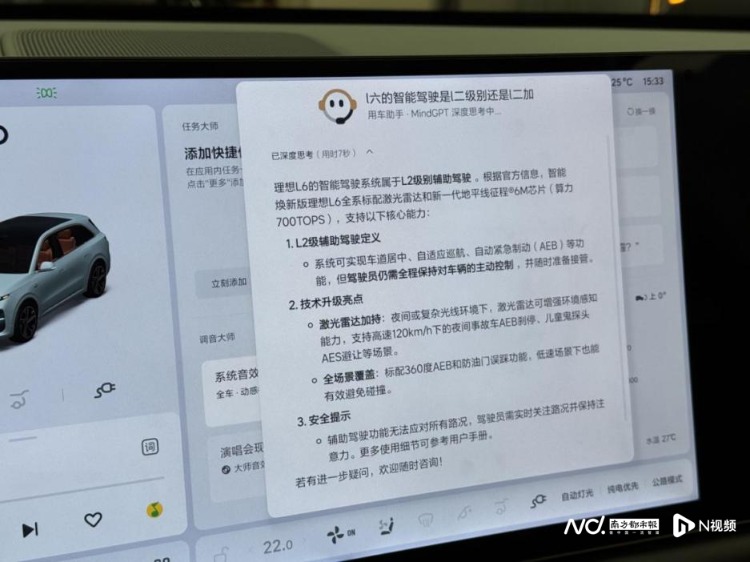
Core Viewpoint - The recent regulatory changes by the Ministry of Industry and Information Technology (MIIT) have significantly impacted the marketing strategies of automotive companies regarding intelligent driving features, leading to a shift from promoting "high-level autonomous driving" to "combined auxiliary driving" [3][6][16] Group 1: Regulatory Impact - The MIIT's notification prohibits the use of vague terms like "automatic driving" and "high-level autonomous driving," mandating a unified terminology of "combined auxiliary driving" (L2 level) [6] - Following the new regulations, companies like Huawei and Xiaomi have altered their promotional materials to reflect the new terminology, emphasizing "intelligent auxiliary driving" instead of previous terms [6][9] - The notification has also led to a reduction in the frequency of over-the-air (OTA) updates, with companies now required to manage risks and validate updates more thoroughly before deployment [8][14] Group 2: Marketing Adjustments - Automotive sales personnel have begun to avoid mentioning "intelligent driving" during customer interactions, focusing instead on safety and regulatory compliance [5][9] - The Shanghai Auto Show showcased a noticeable absence of terms related to "intelligent driving," with companies like XPeng emphasizing safety through initiatives like the "AI Auxiliary Driving Safety Training Camp" [9][11] - Despite the regulatory changes, some companies continue to engage in semantic debates regarding the terminology used for their driving assistance features [8][16] Group 3: Technological Shift - The new regulations have shifted the focus from software-defined vehicles to core technologies such as battery management and chassis tuning, with companies like BYD and Geely highlighting these aspects at recent exhibitions [13][14] - Laser radar technology has regained attention as a safety feature, with its mention in technical discussions increasing significantly compared to previous years [13] - The introduction of national standards for laser radar performance marks a critical transition towards prioritizing safety over mere technical specifications in the industry [14][16] Group 4: Industry Dynamics - The regulatory environment has led to a division within the industry, with leading companies leveraging their technological and financial advantages to expand their market presence, while second-tier brands struggle to survive [16] - The rise of supply chain companies focusing on "laser radar + domestic chips" indicates a shift in competitive dynamics within the automotive sector [15][16] - The industry's evolution reflects a broader understanding that true intelligence in driving technology lies in adhering to safety regulations rather than an uncritical embrace of advanced technologies [16]
小鹏汽车宣布进入意大利市场,丰田否认收购哪吒汽车传闻 | 汽车早参
Mei Ri Jing Ji Xin Wen· 2025-05-13 22:50
Group 1 - Xiaopeng Motors officially enters the Italian market, viewing it as a key part of its global strategy, especially in the growing European electric vehicle sector [1] - Italy aims to achieve an annual production capacity of 1.3 million new energy vehicles by the end of 2025, supported by tax incentives and investment in charging infrastructure [1] Group 2 - Jianghuai Automobile and partners have established a new company focused on integrated circuit design and artificial intelligence, showcasing their strategic foresight in the smart vehicle sector [2] - The new company aims to enhance competitiveness in the electric and smart vehicle markets, potentially accelerating technological innovation in related industries [2] Group 3 - China CNR Corporation has signed multiple significant contracts totaling approximately 54.74 billion RMB, representing about 22.2% of its projected revenue for 2024 [3] - The contracts cover a diverse range of sectors, including urban rail vehicles, equipment sales, maintenance, and energy equipment, indicating strong market demand and a robust competitive position [3] Group 4 - Geely and partners have formed a new company focused on hydrogen and electric commercial vehicles, indicating a strategic expansion in the new energy vehicle niche [4] - This initiative is expected to enhance Geely's competitiveness in the green transportation sector and stimulate technological innovation in the commercial vehicle market [4] Group 5 - Toyota has denied rumors regarding the acquisition of Neta Auto, emphasizing transparency in market information [5] - Despite the denial, concerns remain regarding Neta Auto's financial difficulties and stalled financing plans [5]


汽车之家被海尔收购后发首份1季报 营收净利双降约1成
Zhong Guo Jing Ji Wang· 2025-05-13 06:18
Group 1 - The core viewpoint of the articles highlights the financial performance and strategic developments of Autohome, including a decline in revenue and profit in Q1 2025, as well as a significant acquisition by Haier [1][2] Group 2 - In Q1 2025, Autohome reported total net revenue of RMB 1,453.8 million (USD 200.3 million), a year-on-year decrease of 9.65% compared to RMB 1,609.1 million in Q1 2024 [1] - The net profit attributable to Autohome was RMB 356.6 million (USD 49.1 million) in Q1 2025, down 9.61% from RMB 394.5 million in the same period of 2024 [1] - Adjusted net profit (non-GAAP) for Q1 2025 was RMB 420.8 million (USD 58.0 million), reflecting a 14.80% decline from RMB 493.9 million in Q1 2024 [1] - On February 20, 2025, Autohome confirmed its acquisition by Haier during an all-hands meeting, with the current Senior Vice President Yang Song set to become CEO post-acquisition [2] - Haier's subsidiary, Katai Chi, announced a strategic investment in Autohome, planning to acquire shares from Cloud Capital (a platform under Ping An) for approximately USD 1.8 billion, resulting in Katai Chi holding about 41.91% of Autohome's shares [2] - Ping An Property & Casualty will continue to be a major shareholder in Autohome through its indirect holdings via Cloud Capital [2]

布局智能汽车广阔前景 恒生汽车ETF将于5月14日结募
Quan Jing Wang· 2025-05-13 01:28
Group 1 - The People's Bank of China has implemented a "zero reserve requirement" policy for auto finance and financial leasing companies, reducing the reserve requirement ratio from 5% to 0%, aimed at boosting auto consumption and industry upgrades [1] - The automotive industry in China is experiencing favorable policies and advancements in smart driving technology, leading to increased investment opportunities [1] - The launch of the Hang Seng Automotive ETF (159239) is designed to help investors easily access the automotive sector, with fundraising ending on May 14 [1] Group 2 - The Hang Seng Hong Kong Stock Connect Automotive Theme Index includes leading companies in smart driving, with over 50% concentration in new energy vehicle manufacturers like BYD, Xpeng, Geely, Li Auto, and Leap Motor [2] - The index has shown strong performance, with a 61.86% increase over the past six months, outperforming other indices such as the Hong Kong Stock Connect Automotive Index and the Hang Seng Index [2] Group 3 - The profitability of companies within the Hang Seng Hong Kong Stock Connect Automotive Theme Index is improving, with a projected return on equity (ROE) rising from -0.6% in 2021 to 8.4% in 2024 [3] - The index offers a favorable investment valuation, with a price-to-earnings (PE) ratio of 23.81 compared to 24.89 for the CSI All Share Automotive Index, indicating a higher safety margin [3] - The global market for intelligent connected vehicles is expected to reach 80 million units by 2030, with China projected to account for 27 million units, suggesting significant growth potential for the automotive sector [3]
中美取消91%的关税!长和深夜回应港口交易!纳指暴涨逾4%,中概股更强!高管“拉踩”吉利,奇瑞回应!官方通报出租屋疑现非法代孕!
新浪财经· 2025-05-13 01:00
Group 1: US-China Trade Relations - The US and China recognize the importance of bilateral economic relations for both countries and the global economy [3] - Both parties commit to modifying tariffs on each other's goods, with a significant reduction of tariffs planned by May 14, 2025 [3][4] - The US will suspend 24% of tariffs on Chinese goods for the first 90 days, while retaining 10% of the tariffs, and will cancel additional tariffs as specified [3] - China will similarly suspend 24% of tariffs on US goods for the first 90 days and cancel other tariffs as outlined [3] Group 2: Market Reactions - Following the positive developments in US-China trade negotiations, major US stock indices saw significant gains, with the Nasdaq rising over 4% [7] - Large tech stocks experienced substantial increases, with Apple up over 6% and Amazon rising over 7% [9] - Chinese stocks also surged, with the Nasdaq Golden Dragon China Index increasing by over 5% and several Chinese companies seeing gains of 8% or more [9] Group 3: Corporate Responses - Changjiang Holdings responded to shareholder inquiries regarding a port transaction, emphasizing that the transaction will comply with all legal and regulatory requirements [5][6] - The company clarified that the completion of the transaction depends on various conditions, including necessary approvals and absence of legal prohibitions [6]

奇瑞高管称吉利新车是烂车引争议:账号已设为私密
凤凰网财经· 2025-05-12 12:32
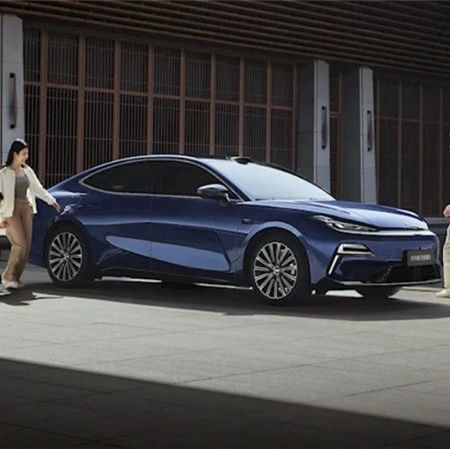
Group 1 - The core viewpoint of the article highlights the competitive tension between Chery and Geely, particularly following negative comments made by Chery's marketing executive about Geely's new car, the Galaxy Star 8 [1][2]. - Geely's Galaxy Star 8, a mid-to-high-end hybrid sedan, was launched on May 9, with a price range of 115,800 to 155,800 yuan, and is noted for its competitive pricing and features, putting pressure on rival models [1]. - Chery's upcoming model, the Wind Cloud A9, is expected to be priced around 100,000 yuan and will directly compete with the Galaxy Star 8, indicating a significant market rivalry [1]. Group 2 - Following the controversy, Chery's executive, Yao Fei, disbanded the related social media group and made his account private, reflecting the backlash from the comments made [2]. - The article mentions that both Chery and Geely have not yet issued official responses regarding the incident, suggesting ongoing tension in the competitive landscape [2].
台州宣言 | 吉利的下一个十年
数说新能源· 2025-05-12 11:01
Core Viewpoint - The integration of Zeekr and Lynk & Co. post-Taizhou Declaration indicates that Geely is refocusing its strategy, which is expected to enhance the group's profitability, making it a potential investment opportunity alongside Xiaomi [1]. Group 1: Marketing and Brand Strategy - Xiaomi is creating significant traffic for Geely, compelling a reform in Geely's marketing system. The next five years are anticipated to be a period of growth for Chinese brands as joint venture brands exit the market. Although Geely's brand power is not as strong as Xiaomi's, the collaboration has introduced a symbiotic relationship, enhancing Geely's market presence [2]. - Geely's product line is strategically segmented across various price ranges, with models like Galaxy priced between $10,000-$20,000, Zeekr between $20,000-$50,000, and Volvo/Polestar/Lotus above $50,000. This segmentation is effective as it caters to different consumer demographics, distinguishing Geely from traditional competitors like Great Wall and Chery [2]. Group 2: Technological Advancements - The automotive industry is witnessing a surge in investment in autonomous driving, with rapid advancements in algorithms and significant movement of engineers. Geely aims to align with top chip suppliers and adopt varied supplier strategies across different price segments to enhance its smart driving experience [3]. Group 3: Historical Development and Strategic Milestones - Geely has undergone several phases of development since its inception in 1986, transitioning from a small startup to a major player in the automotive industry. Key milestones include becoming the first private car manufacturer in China in 2001 and acquiring Volvo in 2010, which significantly boosted its technological capabilities and global presence [4][5]. - The company has set ambitious goals for 2027, aiming for total vehicle sales to exceed 5 million units, following the strategic focus outlined in the Taizhou Declaration [5].

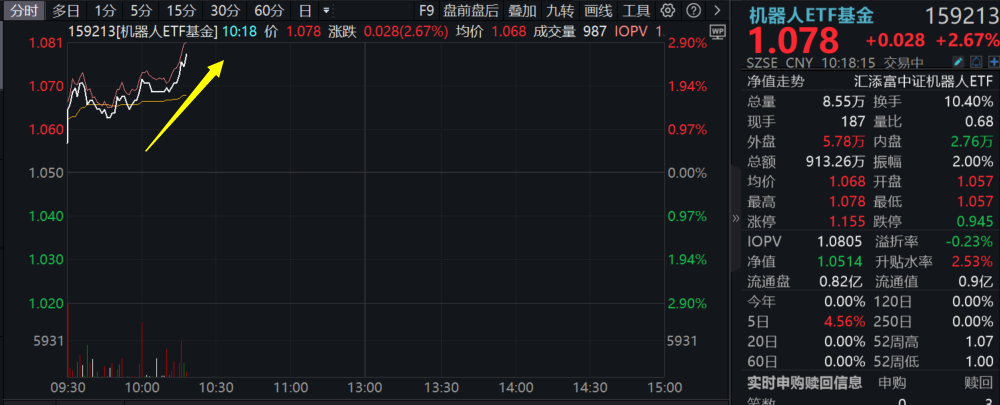
人形机器人企业爆单!宇树机器人最新发声,机器人ETF基金(159213)再度飙涨超2%,全球资管巨头唱多人形机器人!
Xin Lang Cai Jing· 2025-05-12 03:17
Core Viewpoint - The humanoid robot market is experiencing significant growth, driven by favorable government policies and increasing demand across various sectors, with projections indicating a potential market size of over 15 trillion yuan by 2025 [4][9]. Group 1: Market Performance - The A-share market showed an upward trend on May 12, with the robot sector rebounding, particularly the Robot ETF fund (159213), which opened high and rose by 2.67% [1]. - Major components of the Robot ETF fund saw substantial gains, with companies like Tuosida reaching a 20% limit up, and others like Koli'er and Xinjie Electric also experiencing significant increases [3]. Group 2: Industry Advantages - The humanoid robot industry in China benefits from strong policy support, with various national and local initiatives aimed at fostering development, including the inclusion of robots in key work reports and the establishment of industry funds [5][6]. - China's competitive edge in the humanoid robot market is highlighted by its leading position in patent applications, with 5,925 patents filed from 2020 to 2024, significantly outpacing other countries [4][5]. Group 3: Production and Supply Chain - The domestic robot industry is witnessing a rise in localization, with the domestic production rate of key components increasing from 17.5% in 2015 to 35.7% in 2022, indicating a trend towards cost reduction and efficiency [7]. - Major companies are preparing for mass production of humanoid robots, with 2025 expected to be a pivotal year for the industry, as several manufacturers are on the brink of entering small-scale production [7][8]. Group 4: Application Scenarios - The demand for robots is driven by manufacturing upgrades and demographic changes, with the global aging population creating a pressing need for robotic solutions to address labor shortages [9]. - The potential market for humanoid robots is projected to exceed 1 billion units, corresponding to a market space of over 15 trillion yuan, as the industry prepares for widespread adoption across industrial, commercial, and domestic applications [9].