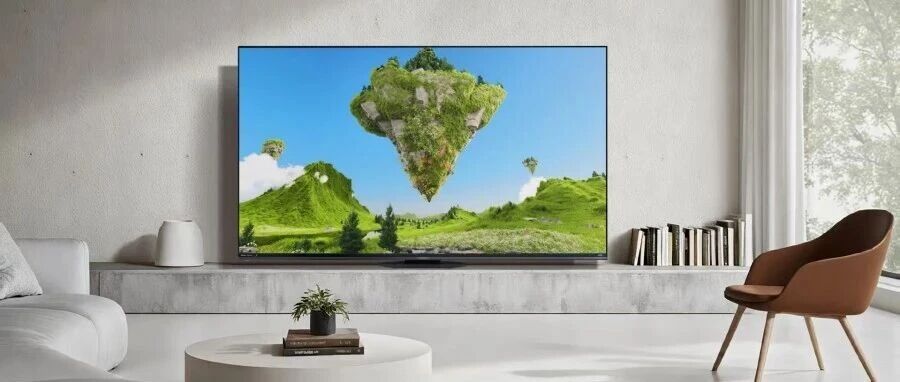
海信视像

Search documents
东南亚工业园建设潮,吸引中国工厂转移
3 6 Ke· 2025-12-04 04:12
Core Insights - Amata Corporation is expanding its industrial park development into Laos, investing $1 billion to attract companies shifting production bases from China to Southeast Asia [2][3] - The new industrial park in Laos is strategically located about 50 kilometers from the Chinese border, enhancing its appeal to businesses looking to relocate [3][5] - The company has acquired approximately 200 square kilometers of land in northern Laos and plans to start construction and sales by 2025 [2][5] Group 1 - The trend of companies relocating production bases from China to Southeast Asia has intensified since the trade tensions between the US and China began around 2018 [3][5] - Amata Corporation has been operating and developing 12 industrial parks over 100 square kilometers each in Thailand and Vietnam, with significant growth potential due to 700 square kilometers of undeveloped land [5][7] - The company reported a 54% year-on-year increase in consolidated revenue for the fiscal year ending December 2024, reaching 14.9 billion Thai Baht (approximately 3.3 billion RMB) [5][7] Group 2 - Amata's founder, Vikrom Kromadit, emphasized the necessity for China to reduce its trade surplus with the US and Europe, predicting a continued trend of production relocation [2][3] - The company is in discussions with the Laotian government to acquire an additional 200 square kilometers of land for further expansion [2][5] - Competitors like WHA Group are also investing heavily in industrial park development, indicating a growing demand for such facilities in the region [5][7]


东南亚工业园建设潮,吸引中国工厂转移
日经中文网· 2025-12-04 02:37
Core Viewpoint - The trend of companies shifting production bases from China to Southeast Asia is expected to strengthen, driven by trade tensions with the US and Europe, as highlighted by Amata Corporation's founder, Vikrom Kromadit [2][5]. Group 1: Amata Corporation's Expansion Plans - Amata Corporation plans to invest $1 billion to develop an industrial park in Laos, marking its first entry into the country, with construction and pre-sales expected to start by 2025 [2]. - The new industrial park will be located approximately 50 kilometers from the Chinese border, aiming to attract companies relocating from China due to trade friction [4]. - Amata has secured about 200 square kilometers of land in northern Laos and is negotiating for an additional 200 square kilometers with the Laotian government [4]. Group 2: Market Context and Demand - Since the onset of US-China trade tensions around 2018, there has been a notable increase in companies relocating production bases to Southeast Asia, including major Chinese appliance manufacturers like Hisense and data center firms [5]. - The potential for Laos, which connects the large Chinese market with Southeast Asia, is seen as significant by Amata's founder [5]. - The demand for industrial parks in Southeast Asia is expected to grow, with competitors like WHA Group also planning significant investments in new parks [7][8]. Group 3: Financial Performance and Growth - Amata Corporation has seen a 54% year-on-year increase in consolidated revenue for the fiscal year ending December 2024, reaching 14.9 billion Thai Baht (approximately 3.3 billion RMB), which is 2.4 times higher than in fiscal year 2019 [7]. - The company operates and develops 12 industrial parks of over 100 square kilometers each, with an undeveloped land area of 700 square kilometers, indicating substantial growth potential [7].
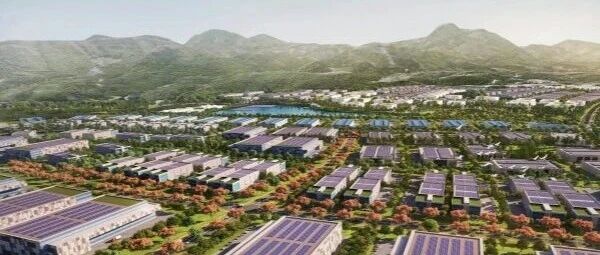
联合行业-出海链大涨解读与重点推荐
2025-12-04 02:22
Summary of Key Points from Conference Call Records Industry or Company Involved - **Industry**: Outbound Supply Chain, E-commerce Logistics, Manufacturing, Home Appliances, Cement, Pet Food - **Companies**: Financial Securities, Jitu Express, Beibu Gulf Port, Xiaogoods City, Zhongchong Co., Ltd. Core Points and Arguments - **Outbound Supply Chain Growth**: Financial Securities recommends leading companies in the outbound supply chain due to benefits from U.S. fiscal expansion, capital inflow from emerging markets, and a shift in policy focus towards manufacturing, which will drive growth through increased industry concentration and global demand recovery [1][3][4] - **"Running Horse 50" Portfolio**: The portfolio is constructed using the RCA competitive advantage index to select export-advantaged products, resulting in an excess return of approximately 4% since its launch [1][5] - **Jitu Express Performance**: Jitu Express is experiencing significant growth in Southeast Asia and Latin America, particularly driven by e-commerce platforms like TikTok, with package growth rates reaching 79% in Q3 [1][6][7] - **Beibu Gulf Port Growth**: The port has seen a 22.7% increase in cargo throughput and double-digit growth in container throughput, benefiting from trade with ASEAN countries [1][7] - **Focus on Mechanical Products**: In the current interest rate cut cycle, attention is drawn to mechanical products with significant alpha attributes, particularly tools and pet sales, which are showing signs of recovery [1][8][9] - **Home Appliance Export Trends**: The home appliance export chain is expected to show a trend of internal stability and external strength by 2026, with emerging markets projected to achieve double-digit growth [1][13][14] - **Xiaogoods City Export Performance**: Xiaogoods City reported a 26% year-on-year increase in import and export scale, with exports reaching 550 billion yuan [1][19][21] - **Cement Industry Opportunities**: The cement industry is focusing on overseas expansion, particularly in Southeast Asia and Africa, where per capita cement demand is still low [1][16][17] - **Zhongchong Co., Ltd. Global Supply Chain**: The company has established factories in various countries, benefiting from tariff exemptions under trade agreements, and is expected to see significant production value growth in the coming years [1][22][23] Other Important but Possibly Overlooked Content - **Market Adjustment Factors**: The market is experiencing adjustments due to unresolved overseas liquidity issues and uncertainties regarding future monetary policy, with the Shanghai Composite Index seen as a potential bottoming point around 3,800 [2] - **Emerging Market Investment**: Emerging markets like Mexico are benefiting from capital outflows from the U.S., leading to increased local employment and consumption [1][4] - **Pet Food Market Growth**: The global pet food market is valued at $150 billion, with significant growth potential for Chinese brands in overseas markets [1][23]

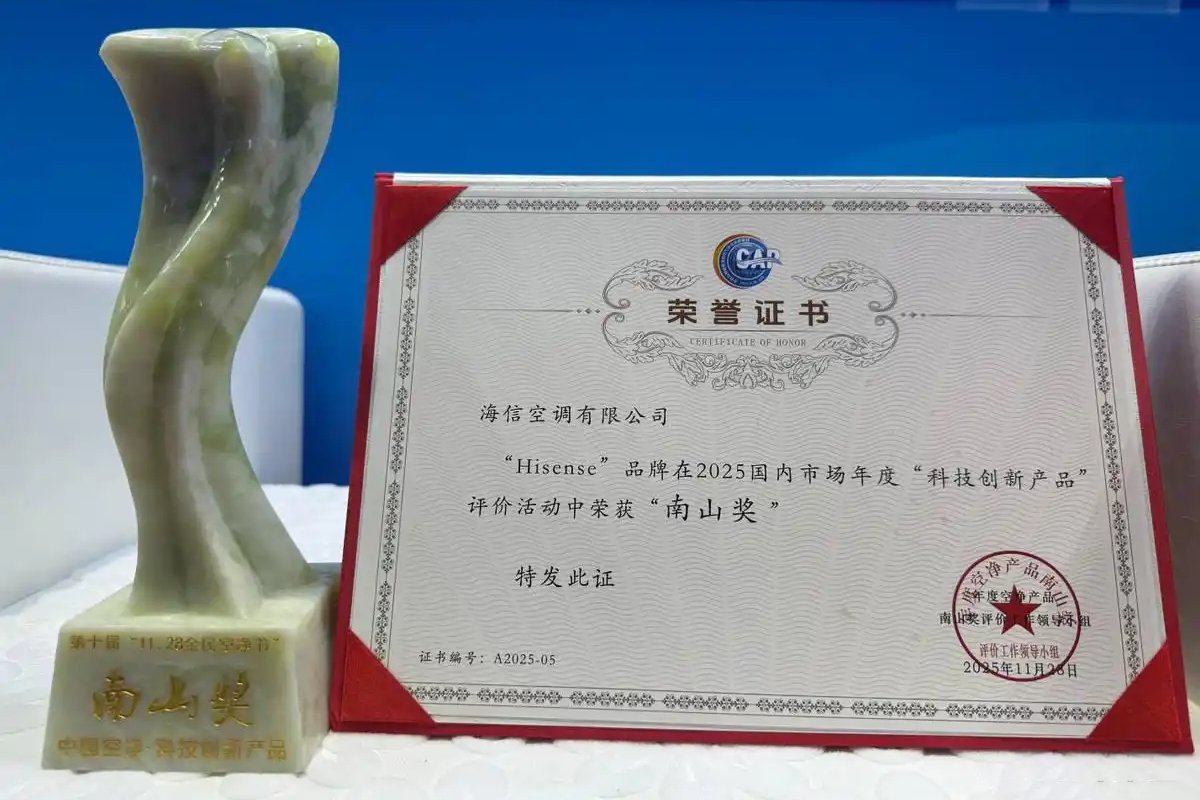
海信空调连续四年斩获“南山奖”
Xin Lang Cai Jing· 2025-12-03 13:21
Group 1 - Hisense Air Conditioning has won the "Nanshan Award" for four consecutive years, making it the only air conditioning brand to receive this honor [1][3] - The Hisense Fresh Air Conditioner X7Pro was recognized as a "Technology Innovation Product" for its dual-flow fresh air exchange and 360° air control system [1][3] - Hisense Air Conditioning Co., Ltd. was rated as a 2025 "AAAAA" enterprise for integrity, brand, quality, management, and service [1][3] Group 2 - Hisense pioneered the fresh air conditioning market by launching the first domestic fresh air conditioner in 2008 [1][3] - From January to October this year, Hisense's fresh air conditioner has achieved a market share of 44.47% in total sales across all channels, maintaining its position as the industry leader [1][3]
LG电子更换CEO:“家电王者”如何拯救电视巨亏与增长焦虑
Xi Niu Cai Jing· 2025-12-03 12:44
Core Insights - LG Electronics has appointed a new CEO, Ryu Jae-cheol, to strengthen its core competitiveness amid significant performance challenges, replacing the previous CEO, Jo Seong-jin [2] - The company is facing declining revenue and profits, with Q3 2025 revenue reported at 21.87 trillion KRW, a 1.4% decrease year-on-year, and operating profit down 8.4% to 688.9 billion KRW [2] - The Media Solutions (MS) division, responsible for TVs and displays, reported an operating loss of 302.6 billion KRW, contrasting sharply with the profitability of other divisions [2] Financial Performance - LG Electronics' overall revenue for Q3 2025 was 21.87 trillion KRW, down 1.4% from the previous year, while operating profit decreased by 8.4% to 688.9 billion KRW [2] - The MS division's losses are attributed to increased marketing expenses and one-time restructuring costs, alongside pressures from weak global demand and rising logistics costs [3] Market Position - LG Electronics' market share in the global TV segment has declined to 11.7%, ranking fourth behind Samsung, Hisense, and TCL, with a gap of 3.2 percentage points from TCL [4] - The global TV shipment volume for Q3 2025 was approximately 49.75 million units, with LG's market share significantly reduced from a peak of 18.5% in 2021 [4] Competitive Landscape - In the OLED segment, LG's growth has stagnated, with a mere 0.2% increase in OLED TV shipments to 1.3 million units in the first half of the year, while Samsung's shipments surged by 49.3% [5] - LG faces increasing competition in the MiniLED TV market, where TCL and Hisense hold over 50% market share, posing a significant challenge to LG's high-end offerings [5] - The company's presence in the Chinese consumer electronics market is diminishing, with local brands dominating and LG's mobile business already exited, leading to challenges in maintaining market share and brand visibility [5]
家电行业2026年投资策略:砥砺前行,龙头稳健
GF SECURITIES· 2025-12-03 12:05
Core Insights - The report highlights that the home appliance industry is expected to face a slowdown in growth due to high base effects from national subsidies in 2026, but leading companies are projected to maintain stable performance [2] - The small appliance sector is anticipated to see continued improvement in average prices due to ongoing policy support, with significant growth potential in the robotic vacuum cleaner market [2] - The black appliance segment is expected to benefit from product upgrades leading to higher average prices and improved profitability, with overseas market share likely to continue increasing [2] - The two-wheeler market is projected to grow in 2026 with the full implementation of new regulations, as smaller manufacturers exit the market, allowing leading companies to gain market share, particularly in overseas markets [2] 2025 Annual Summary - The home appliance sector underperformed overall, with an 8.1% increase from January 1 to November 28, 2025, ranking 27th among all industries and lagging behind the CSI 300 index by 10.4 percentage points [17] - The appliance components sector outperformed with a 64.7% increase, while white goods and kitchen appliances saw declines of 1.1% and 0.7%, respectively [17] - Domestic retail sales of home appliances showed a cumulative year-on-year increase of 20.1% from January to October 2025, but growth slowed in September and October due to high base effects [35] 2026 Outlook - Domestic sales are expected to slow down due to high base effects from the previous year's subsidy policies, but leading companies are likely to outperform the industry due to their channel and brand advantages [53] - Export performance is anticipated to remain stable despite short-term concerns over tariffs, as many companies have adapted their overseas production strategies since 2018-2019 [56] - The report emphasizes the importance of monitoring policy changes that could impact both domestic and international sales in 2026 [56] Investment Recommendations - The report recommends investing in leading companies in the white goods sector such as Midea Group and Haier Smart Home, which are expected to deliver stable returns and high dividends [7] - For the black appliance segment, companies like Hisense and TCL are highlighted as beneficiaries of global market share growth and product upgrades [7] - The report also suggests considering companies like Ninebot and Roborock, which are positioned for share gains and category expansion [7]


奥维云网最新数据:RGB-Mini LED电视赛道海信销量占比超九成
Zhong Guo Zheng Quan Bao· 2025-12-03 11:13
Industry Overview - The domestic consumption market is transitioning from scale growth to value upgrading, with quality and high-end products becoming the core demands of household consumption [1] - New display technologies, particularly RGB-Mini LED, are emerging strongly this year, reshaping the high-end television market and setting new technical standards [1] Market Data - In the offline market for 85-inch televisions priced above 20,000 yuan, RGB-Mini LED televisions accounted for 43.68% of sales revenue and 48.73% of sales volume during the W40 to W47 period, indicating a significant market presence [1] - This data suggests that for every two high-end large-screen televisions sold, one is an RGB-Mini LED product, establishing its position as a mainstream high-end television format [1] Company Performance - Hisense demonstrates a dominant leadership in the RGB-Mini LED television segment, with an overall sales volume share of 95.67% and a sales revenue share of 93.35% during the W40 to W47 period [2] - In the ultra-large size market (above 98 inches and priced over 25,000 yuan), Hisense maintains a strong advantage, with both online and offline sales volume shares exceeding 90% [2] Technological Innovation - Hisense's RGB-Mini LED technology features significant advancements, utilizing RGB three-color light-emitting chips for direct color output, which enhances color precision and overall picture quality [2][3] - The company has introduced the "King Bomb Dual Chip" technology, which includes the H7 AI picture quality chip and a new generation of multi-crystal RGB-Mini LED chips, improving stability and energy efficiency while enhancing picture quality [3] Product Launches - Hisense launched the world's first RGB-Mini LED television, UX, in March, marking the beginning of a native color revolution [3] - The flagship models E8S Pro and U7S Pro, released in September, have accelerated the adoption of RGB-Mini LED technology, with E8S Pro topping e-commerce sales charts and U7S Pro quickly entering the top 20 best-selling models in offline channels [3]
“走出去”“家门口”齐发力,威海创新推动房地产市场积极向好
Sou Hu Cai Jing· 2025-12-03 10:43
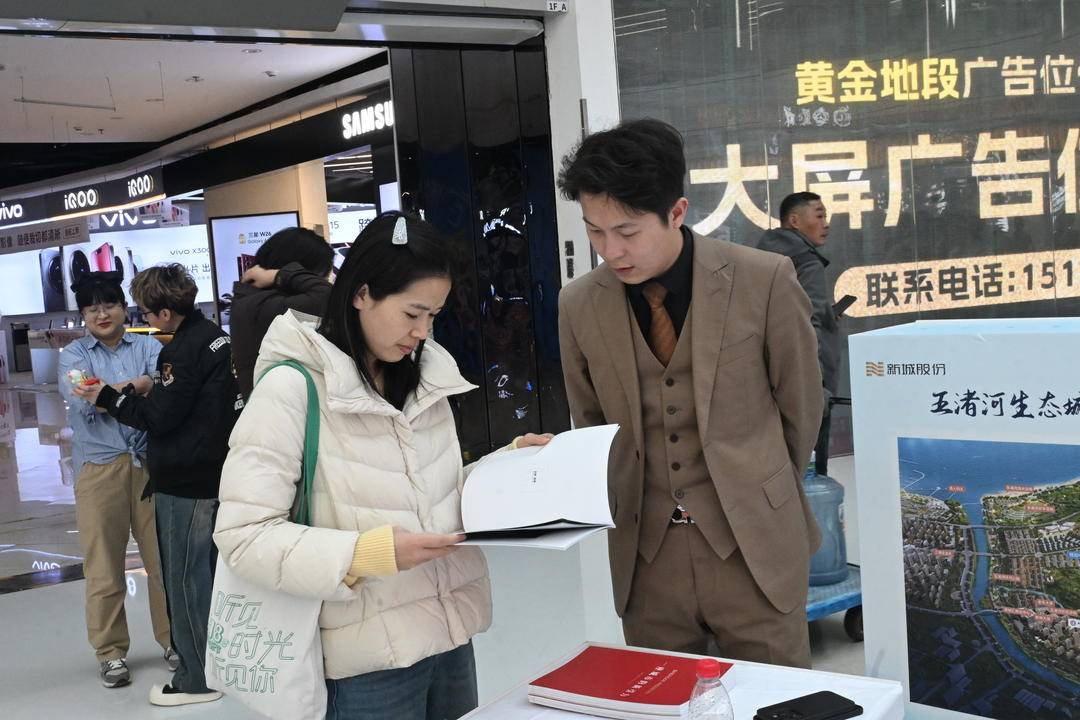
齐鲁晚报·齐鲁壹点记者 孟杰 摄影 戴伟 11月28日-29日,威海国际滨海旅行目的地好房联展济南专场在济南高新万达广场举行。此次联展通过"固定展位全景展示+流动路演主动服务"的形式,让 济南市民在家门口零距离面对面感受威海好房。2025年以来,威海不断创新房地产促销推介工作,"走出去"和"家门口"齐发力,多维度展现威海的好房子 魅力,有效激发了消费活力,推动房地产市场呈现积极向好态势,同时,也让"精致城市·幸福威海"的宜居品牌深入人心。 "之前就和朋友去过几次威海,对这座城市的印象一直非常好,今天听了工作人员的现场介绍更加心动。"济南市民王先生告诉记者,他曾自驾走过威海的 千里山海自驾公路,沿途风景令人震撼,而此次在家门口就能深入了解这座海滨小城,让他倍感亲切。"户型挺好,价格也合适,以后有机会会去这几个 楼盘转转。" 为了进一步打开外地市场,威海自2023年以来,就持续开展"移动房交会",目前已经走过了临沂、济宁、保定、石家庄、济南、北京、哈尔滨、郑州、西 安、天津、上海11城,累计参加人数超7000人,达成购房意向超3000套。为进一步提升"移动房交会"品牌影响力,今年,威海市又启动了"移动房交会"回 ...
TCL智家:接受华创证券等投资者调研

Mei Ri Jing Ji Xin Wen· 2025-12-03 10:35
Group 1 - TCL Smart Home announced that on December 2, 2025, it will accept investor research from Huachuang Securities and other investors, with the company’s board secretary and investor relations manager participating in the reception and addressing investor questions [1] Group 2 - The stock market saw a situation where a shareholder's post requesting a main force to push the stock to the limit was realized the next day, indicating potential market manipulation and platform review loopholes in the case of Xiangyang Bearing [1]
高端电视迎来RGB-Mini LED热潮,海信独占九成市场份额
和讯· 2025-12-03 09:10
Core Viewpoint - The domestic consumer market is transitioning from scale growth to value upgrading, with quality and high-end products becoming the core demands of family consumption. The technological iteration of televisions is synchronizing with this upgrade in consumer demand, particularly with the rise of RGB-Mini LED technology, which is reshaping high-end television standards and market dynamics [1]. Market Performance - In the offline market for high-end televisions priced above 20,000 yuan, RGB-Mini LED televisions accounted for 43.68% of sales revenue and 48.73% of sales volume during the W40 to W47 period, indicating that nearly one in two high-end large-screen televisions sold is an RGB-Mini LED product [3]. - Hisense has demonstrated a dominant market position in the RGB-Mini LED segment, with a sales volume share of 95.67% and a sales revenue share of 93.35% during the same period. In the ultra-large size market (above 25,000 yuan and 98 inches), Hisense's sales volume share exceeds 90% both online and offline [3]. Technological Advantages - The success of Hisense's RGB-Mini LED televisions is attributed to the cross-generational advantages of the technology and systematic innovation. Unlike traditional LCDs that rely on white light sources, RGB-Mini LED uses RGB chips for direct color output, significantly enhancing picture quality and being recognized as a leading direction for LCD display technology in the next decade [5]. - Hisense's RGB-Mini LED televisions feature the "King Bomb Dual Chip," which includes the H7 AI picture quality chip with the highest industry partition control of 3×10240 and 108 bits color precision, surpassing QD-OLED in color performance. The new generation multi-crystal RGB-Mini LED chip addresses lifespan and color deviation issues, improving picture uniformity by 30% and reducing energy consumption by over 40% compared to QD-OLED [7]. Product Launch and Market Expansion - Hisense launched the world's first RGB-Mini LED television, UX, in March, initiating a revolution in native color technology. The flagship models E8S Pro and U7S Pro, released in September, further accelerated the adoption of RGB-Mini LED technology, with E8S Pro topping e-commerce platforms for five consecutive days and U7S Pro quickly entering the top 20 bestsellers in offline channels within four weeks [9]. - The transformation has extended globally, with Hisense's RGB-Mini LED televisions entering over 20 countries and regions by Q3 2025, with a quarter-on-quarter shipment growth exceeding 300%. The year 2026 is anticipated to be significant for sports and gaming, allowing Hisense to leverage its technological advantages to promote RGB-Mini LED globally, reinforcing its leading position in high-end displays and showcasing the strength of Chinese brands in the global high-end display market [10].