中国国航

Search documents
刚刚,国航、厦航发年终奖了
Xin Lang Cai Jing· 2025-12-30 10:00
炒股就看金麒麟分析师研报,权威,专业,及时,全面,助您挖掘潜力主题机会! 来源:民航故事汇 在深航和山航发年终奖之后,详见:深航、山航发年终奖了 国航也发了,整体和2024年差不多。 2024年国航的年终奖是这样发的: 飞行700小时左右的飞行员5万左右 商委非一线员工1.8万左右 地服差不多1到1.5万左右,主要看工资档和绩效档 厦航也发了,比去年发的多。 有个小伙伴说多了几千块,据说后面还有。 2024年厦航的年终奖是这样发的: 空乘:乘务员1.2万左右,乘务长2万左右 南航应该明天发,去年是3A奖,今年是五好奖,换个名义,钱差不多。 机务:航线技师中位数3万左右 羡慕央企国企,希望民营航司也争口气。赚钱的多发点,让员工过个好节! 地面岗应该1万至3万不等,副驾也差不多这个数 往期文章回顾: 旗下的航司也发了,应该会少一点 国货航,第四个领导被查! 旗下北方子航司职能部门员工1万出头,中级专员1万5左右 刚刚,东航发"年终奖" 山航,客服的问题? 这个"机长",求鉴定! 东航,增加员工福利 海航旗下这家航司,退出历史? 深圳机场,叶滨、陈智文.... 这...也能投诉国航空姐? 长龙航空,愿赔100元 责 ...




交通运输行业2026年投资策略:周期拐点渐显
Dongguan Securities· 2025-12-30 09:08
Investment Strategy Overview - The transportation industry is closely linked to the macroeconomic environment, with a weak overall performance in 2025, underperforming the CSI 300 index. Key segments like railways and highways have weakened due to style shifts, while logistics, aviation, and shipping have seen some support in the second half of the year from anti-involution and external demand factors, but still lag behind the market index. Looking ahead to 2026, domestic demand is expected to improve driven by anti-involution and major infrastructure projects, with recommendations to focus on (1) improved domestic express delivery competition and benefiting bulk supply chains from upstream price recovery, (2) growth in business and leisure demand potentially returning aviation airports to profitability, and (3) the high prosperity cycle of oil transportation [5][72]. 2025 Review - The transportation industry index showed a stable performance, with a cumulative increase of 1.55% as of December 29, 2025, but underperformed the CSI 300 index. The performance of sub-sectors varied, with aviation airports, shipping ports, railways, and logistics showing cumulative changes of 9.74%, 6.56%, -12.86%, and 6.34% respectively, all underperforming the CSI 300 index [13][14]. Aviation Sector - The aviation supply-demand landscape continues to improve, with aircraft utilization recovering to high levels. Domestic civil aviation demand has been steadily increasing, with passenger volume reaching new highs in the second half of 2025. The average daily utilization of aircraft in China was 8.7 hours as of November 2025, nearing pre-pandemic levels [18][21]. - The average ticket price has stabilized, with a peak passenger load factor of 87.5% in August 2025. The market supply-demand situation is tight, and further tightening could boost ticket prices [23][24]. - The supply side faces challenges with aircraft manufacturers struggling to restore production capacity, with Boeing and Airbus delivering significantly fewer aircraft than pre-pandemic levels. As of 2024, Boeing delivered 348 commercial aircraft, while Airbus delivered 766, both below their respective 2019 levels [25][26]. - The demand side is supported by policy initiatives that have revitalized business activities, with business line passenger volume increasing year-on-year in the first eight months of 2025 [34][36]. - Cost pressures are alleviated by declining oil prices, with WTI futures at $56.74 per barrel as of December 26, 2025, down 54.13% from peak levels. The strengthening of the RMB also reduces dollar-denominated debt burdens for airlines [40][43]. Oil Transportation Sector - The oil transportation industry is currently in a high prosperity cycle, with oil prices influenced by demand fluctuations and unexpected events. The BDTI index has seen an uptick, indicating potential for improved industry conditions [46][47]. - Short-term demand is driven by significant U.S. strategic petroleum reserve replenishment needs, while long-term demand is expected to stabilize globally. The IEA forecasts a growth of 2.5 million barrels per day in global oil demand from 2024 to 2030 [49][51]. - The supply side is characterized by tight compliance capacity, with sanctions on shadow fleets leading to a reduction in compliant shipping capacity. This is expected to gradually elevate oil transportation rates [56][57]. Bulk Supply Chain Sector - The bulk supply chain sector is transitioning from traditional trading and logistics models to integrated service provider models, enhancing resource control and operational efficiency. Leading companies are learning from international experiences to improve their market positions [60][63]. - The sector is currently fragmented, with a low market share for leading firms (CR5 at around 5%). As domestic companies consolidate, there is potential for increased market share and profitability [63][64]. - The anti-involution trend is expected to stabilize the PPI, benefiting bulk supply chains as they recover from price declines. The sector is poised to benefit from price rebounds and improved demand conditions [65][66]. Investment Recommendations - Maintain a market-weight rating for the transportation industry, with a focus on improving domestic demand and sector recovery in 2026. Recommended stocks include China National Aviation (601111), Southern Airlines (600029), and Xiamen Xiangyu (600057) [72][74].




航空机场板块12月30日跌1.18%,吉祥航空领跌,主力资金净流出1.2亿元
Zheng Xing Xing Ye Ri Bao· 2025-12-30 09:00
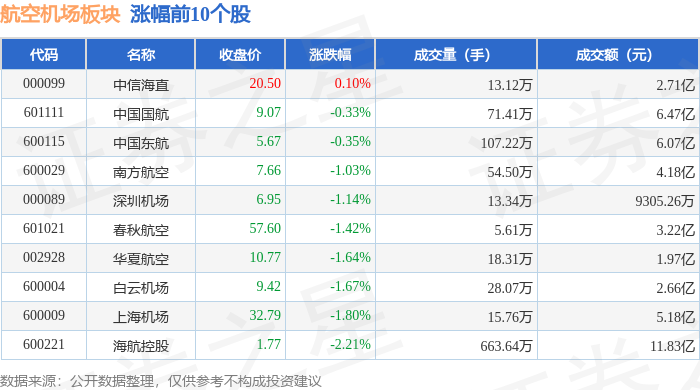
Core Viewpoint - The aviation and airport sector experienced a decline of 1.18% on December 30, with China Southern Airlines leading the drop. The Shanghai Composite Index closed at 3965.12, down 0.0%, while the Shenzhen Component Index rose by 0.49% to 13604.07 [1]. Group 1: Stock Performance - The following stocks in the aviation and airport sector showed notable price changes: - China Southern Airlines (南方航空) closed at 7.66, down 1.03% with a trading volume of 545,000 shares and a transaction value of 418 million yuan [1]. - Xiamen Airport (厦门空港) closed at 17.48, down 2.35% with a trading volume of 100,200 shares and a transaction value of 176 million yuan [2]. - Spring Airlines (春秋航空) closed at 57.60, down 1.42% with a trading volume of 56,100 shares and a transaction value of 322 million yuan [2]. Group 2: Capital Flow - The aviation and airport sector saw a net outflow of 120 million yuan from institutional investors, while retail investors contributed a net inflow of 175 million yuan [2]. - The capital flow for specific stocks included: - China National Aviation (中国国航) had a net inflow of 46.13 million yuan from institutional investors, while retail investors had a net outflow of 47.90 million yuan [3]. - Xiamen Airport (厦门空港) experienced a net outflow of 26.25 million yuan from institutional investors, but a net inflow of 38.02 million yuan from retail investors [3].





2026品牌营销:不投“广告”,投资“生活”
Sou Hu Cai Jing· 2025-12-30 05:59
Core Insights - Marketing is undergoing a historic shift from chasing traffic to integrating into consumers' daily lives, as brands face growth anxiety amid a saturated market and changing consumer values [1] Group 1: Trends in Scene Revolution - Trend 1: Multi-Screen Interaction - Brands are creating continuous narratives across multiple screens to maintain user engagement, exemplified by ZEGNA's collaboration with Huawei to enhance user experience through immersive storytelling [2][3] - Trend 2: Content Customization - Brands are focusing on niche communities rather than broad audiences, using tailored content to build trust, as seen with Grab's travel show in China [9][11] - Trend 3: AI with Empathy - AI is being utilized to provide personalized and responsive services, transforming user interactions into meaningful experiences, demonstrated by Abu Dhabi Tourism's smart travel project [13][14] - Trend 4: Ecological Co-Creation - Brands are forming alliances to create a shared narrative ecosystem, as illustrated by the "Scar Advocacy" initiative involving multiple partners to address maternal health issues [17][19] Group 2: Marketing Evolution - The marketing landscape is shifting from disruptive advertising to seamless integration into daily life, emphasizing the importance of understanding consumer needs and emotions across various contexts [22][23] - Brands must enhance their internal value propositions while leveraging external partnerships to navigate the evolving marketing environment effectively [22][23]

北京日报社区小板报|待明年长城贯通迎客,看今朝京唐通衢启程
Bei Jing Ri Bao Ke Hu Duan· 2025-12-29 23:47
Transportation - The Beijing-Tangshan intercity railway has officially opened, integrating Tangshan into the "one-hour" transportation circle with Beijing, enhancing travel options for passengers and boosting regional economic integration [4][6] - The new Beijing Tongzhou Station is now operational, with travel times to various destinations such as Tangshan (55 minutes) and Yanjiao (11 minutes) [6] - Starting January 6, 2026, Beijing's public transport will undergo optimization, including the introduction of new bus routes and the cancellation of low-traffic lines to improve accessibility [6][8] Education - The Ministry of Education has released new regulations mandating that all preschool children must have a unique student ID that will remain unchanged throughout their educational journey [9][11] - Despite the new regulations, it has been indicated that not having a preschool student ID will not affect a child's ability to enroll in primary school [11] Public Services - The Beijing Spring Water Plant has commenced operations, providing clean water to over 800,000 residents in northern Haidian District, filling a gap in the local water supply [15] - Beijing's market supervision authorities have intensified efforts to crack down on illegal modifications of electric bicycles, resulting in the closure of 18 illegal modification sites and the seizure of 1,356 non-compliant vehicles [17] Tourism - The renovation of the China Great Wall Museum is set to be completed, with the real Great Wall at Badaling becoming the museum's main exhibit, enhancing the tourist experience [19][20] - The historical areas of the Xian Nong Tan have been restored, allowing visitors to experience the ancient rituals of the Ming and Qing dynasties [20] Technology - The "Beijing Brain No. 1" has successfully converted brain signals into Chinese phrases, marking significant progress in brain-machine interface technology, with plans for a sixth implantation [26][27]

首都机场线东直门站托运行李服务开通
Bei Jing Ri Bao Ke Hu Duan· 2025-12-29 22:21
Core Points - The Beijing Capital Airport Line has introduced a self-service check-in and baggage handling system at Dongzhimen Station for passengers traveling on domestic flights with Air China [1] - The self-service process allows travelers to check in and tag their luggage before boarding the subway, enhancing travel efficiency and reducing congestion at the airport [1][2] Group 1 - The self-service check-in and baggage handling system is now operational at Dongzhimen Station, allowing passengers to complete check-in and baggage drop-off before arriving at the airport [1] - Passengers must complete the baggage check-in at least three hours before their flight departure [1] - The project aims to support the development of Beijing's international aviation "dual hub" and alleviate ground traffic pressure at the capital airport [1] Group 2 - The renovation includes the integration of the B1 level hall with the check-in area, adding two dedicated luggage elevators connecting B1 to B4 platforms [2] - The project also features the installation of self-service check-in equipment, luggage ramps, and elevators, ensuring a smooth luggage transport flow [2] - Adjustments have been made to platform doors and train stopping positions to facilitate efficient luggage handling [2]
首都机场线东直门站开通值机托运服务
Bei Jing Qing Nian Bao· 2025-12-29 17:41
Core Viewpoint - The Beijing Capital Airport Line's luggage check-in service at Dongzhimen Station has officially commenced, enhancing the travel experience for passengers heading to Terminal 3 of the Capital Airport for domestic flights with Air China [1][2]. Group 1: Service Implementation - The luggage check-in service allows passengers to complete self-check-in and luggage handling at Dongzhimen Station, requiring at least 3 hours before flight departure [1][2]. - The service aims to alleviate ground traffic pressure at the Capital Airport and improve travel efficiency [1]. Group 2: Infrastructure and Coordination - The station has undergone significant modifications, including the addition of 2 dedicated luggage elevators and self-check-in equipment, ensuring a smooth flow for luggage transportation [2]. - A collaborative operational management agreement has been established between Beijing Subway Company, Air China, and Beijing Capital International Airport Company to ensure efficient luggage sorting, transportation, and handling [2]. Group 3: Passenger Experience - After completing check-in and luggage handling at Dongzhimen Station, luggage will be transported directly to Terminal 3, significantly reducing waiting times at the airport and alleviating congestion at check-in counters [3]. - The company plans to continuously improve the "rail + air" intermodal transport model to provide more efficient and comfortable transportation services for citizens and travelers [3].
航空行业2026年度投资策略
2025-12-29 15:50
Summary of the Airline Industry Conference Call Industry Overview - The airline industry is dominated by Boeing and Airbus, leading to significant price volatility due to supply adjustments lagging behind demand changes. [1] - The industry faced substantial losses during the pandemic, with business demand weak and ticket prices declining. However, the fundamentals and stock prices have reached historical lows, limiting downside risks. [1][4] - Over the next 3-5 years, the supply-demand relationship in the airline industry is expected to improve, with ticket prices likely to continue rising. [5] Demand Dynamics - Domestic business demand is under pressure but tourism demand is growing steadily, with significant potential for inbound and outbound travel. [1] - Inbound tourism in China is significantly lower than in Japan, with visa-free policies expected to boost airline demand, projecting double-digit growth in the future. [1][9] - The current structure of demand shows domestic business travel at 42%, tourism at 35%, outbound travel at 17%, and inbound travel at 6%. [5][6] - The rebound in business travel is anticipated to stabilize in 2026, with potential for upward movement if economic recovery occurs. [6] Supply Challenges - The global supply chain's efficiency has declined post-pandemic, extending aircraft delivery times from 2-3 years to 5-6 years. [11] - Geopolitical factors have increased collaboration difficulties, leading to a tight supply situation expected to persist for 5-6 years. [11] - Issues with Pratt & Whitney engines have exacerbated supply constraints, with maintenance cycles extended, affecting the grounded aircraft ratio. [11][13] - The average aircraft utilization and load factors are high, limiting further supply release potential. [11] Price and Profitability Outlook - The airline industry is projected to see ticket prices rise by approximately 10% annually, driven by a widening supply-demand gap. [3][16] - Under stable oil prices at $65 per barrel and a RMB exchange rate of 7, the expected profits for major airlines are approximately 7 billion RMB for the three major carriers, with Spring Airlines at 3 billion RMB, and others at lower figures. [3][17] - The industry is entering a phase of accelerated profitability improvement over the next 3-5 years. [17] Investment Strategy - The investment strategy suggests focusing on major airlines in the Hong Kong market and Spring Airlines, Juneyao Airlines, and China United Airlines in the A-share market. [18] - The overall sentiment is that this is a time when industry opportunities outweigh individual stock opportunities, with a significant focus on the industry's recovery and profitability acceleration starting in 2026. [19]
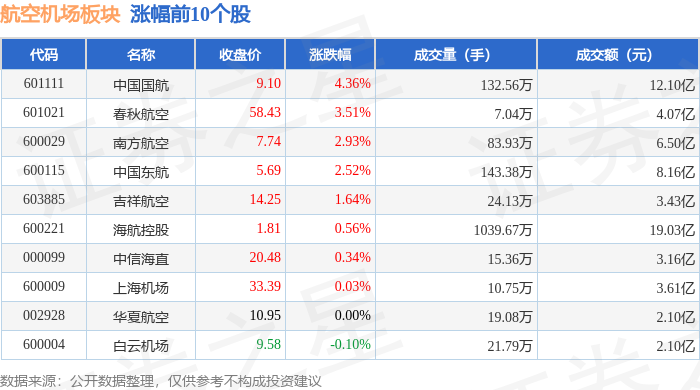
航空机场板块12月29日涨2.07%,中国国航领涨,主力资金净流出1.4亿元
Zheng Xing Xing Ye Ri Bao· 2025-12-29 09:06
| 代码 | 名称 | 收盘价 | 涨跌幅 | 成交量(手) | 成交额(元) | | --- | --- | --- | --- | --- | --- | | 601111 | 中国国航 | 9.10 | 4.36% | 132.56万 | 12.10亿 | | 601021 | 春秋航空 | 58.43 | 3.51% | 7.04万 | 4.07亿 | | 600029 | 南方航空 | 7.74 | 2.93% | C 83.93万 | 6.50亿 | | 600115 | 中国东航 | 5.69 | 2.52% | 143.38万 | 8.16亿 | | 603885 | 吉祥航空 | 14.25 | 1.64% | 24.13万 | 3.43亿 | | 600221 | 海航控股 | 1.81 | 0.56% | 1039.67万 | 19.03亿 | | 6600000 | 中信海直 | 20.48 | 0.34% | 15.36万 | 3.16亿 | | 600009 | 上海机场 | 33.39 | 0.03% | 10.75万 | 3.61亿 | | 002928 | 华夏航空 | 10 ...
港股收评:指数集体下跌!博彩股、贵金属股低迷,汽车股逆势走强
Ge Long Hui· 2025-12-29 08:50
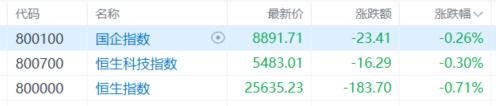
Market Overview - The Hong Kong stock market indices collectively declined on December 29, with the Hang Seng Index falling by 0.71%, the Hang Seng China Enterprises Index down by 0.26%, and the Hang Seng Tech Index decreasing by 0.3% after an initial rise of 2.2% [1][2]. Sector Performance - Technology stocks experienced a downturn, with Alibaba, Xiaomi, Kuaishou, and Tencent Holdings each dropping over 1%, while JD.com and Baidu saw slight declines. Conversely, Meituan rose nearly 1% and NetEase increased by 1.41% [4][5]. - Gaming stocks faced significant losses, particularly MGM China, which plummeted over 17%. Other gaming companies like Sands China and Wynn Macau also reported declines [6]. - The gold and precious metals sector saw a sharp decline, with companies like Zijin Mining and Shandong Gold dropping over 5% [7]. - The paper industry saw gains, with Nine Dragons Paper rising over 4%, as several large paper companies announced plans to reduce production or slow expansion, signaling a shift towards price stability [9][10]. - The automotive sector experienced a collective rise, with NIO, Xpeng, and BYD showing notable increases, supported by government initiatives to boost consumer spending [11][12]. - Airline stocks became active again, with China National Aviation rising by 2.5%, driven by expectations of increased travel during the upcoming New Year holiday [12][13]. - Oil stocks were also active, with major companies like Sinopec and CNOOC seeing gains, supported by a favorable long-term supply-demand outlook [14]. Individual Company Highlights - Jiangxi Copper saw a significant increase of over 6% to HKD 39.66, following news of a potential acquisition of SolGold for up to GBP 764 million, which would enhance its position in the copper and gold mining sector [15][19]. - The net selling of southbound funds reached HKD 3.414 billion, indicating a cautious sentiment among investors [19]. Market Outlook - The market is expected to remain relatively quiet due to holiday liquidity effects, with alternating activity between technology growth and cyclical resources. Despite short-term uncertainties from global macro fluctuations, the current valuation of Hong Kong stocks remains attractive, with structural opportunities still prominent [21].