巨子生物

Search documents
又有一批涉企网络“黑嘴”被处置,涉及“大嘴博士”等多个账号
Xin Lang Cai Jing· 2025-09-11 07:52
Core Viewpoint - The National Cyberspace Administration of China has launched a campaign to address online misinformation and threats against companies, highlighting the negative impact of certain social media accounts on business operations and market stability [1][2][3] Group 1: Online Misinformation and Threats - The campaign identified accounts such as "Big Mouth Doctor" that have repeatedly questioned the authenticity of collagen products from companies like Juzhibio, leading to reputational damage [1][2] - Accounts like "Communication Circle" have been reported for coercing businesses into "commercial cooperation" for illegal profits, demanding high fees under the guise of "tea fees" and threatening to release false information if contracts are not renewed [1] - The accounts involved have been shut down or placed on blacklists by the platforms for their actions [1][2] Group 2: Impact on Financial Institutions - Accounts such as "Fixed Income Talk" have been accused of fabricating information that harms the reputation of financial institutions, claiming "performance explosions" and "massive overdue product payments" [2] - These actions disrupt normal business operations and affect the stability of the financial market [2] Group 3: Market Competition and Consumer Misleading - "Big Mouth Doctor" has been linked to commercial interests with a beauty product company, leading to biased evaluations of competitors' products, which mislead consumers and disrupt market order [2] - Following accusations of fraud against Juzhibio, "Big Mouth Doctor" faced scrutiny regarding his motives, with suggestions of a close relationship with Huaxi Biological, a competitor [2][3] Group 4: Company Responses - Juzhibio has publicly denied the allegations made by "Big Mouth Doctor," asserting that the testing results were inaccurate and that they have engaged multiple authoritative third-party testing organizations for verification [3] - Following the controversy, "Big Mouth Doctor" faced account restrictions on social media platforms, with all related content being removed [3]
【干货】功能性护肤品产业链全景梳理及区域热力地图
Qian Zhan Wang· 2025-09-11 06:25
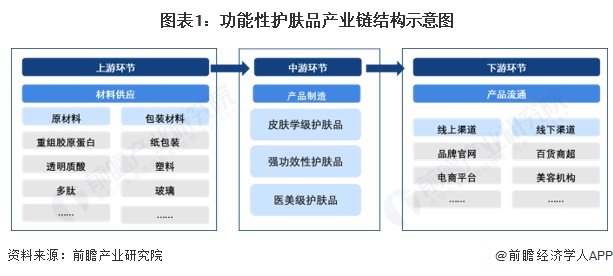
Core Insights - The article discusses the functional skincare product industry in China, highlighting key players, market dynamics, and recent developments in the sector [1][10]. Industry Overview - The functional skincare industry is segmented into upstream (raw materials and packaging), midstream (manufacturing), and downstream (distribution) [1][3]. - Key raw materials include recombinant collagen, hyaluronic acid, and peptides, while packaging materials consist of paper, plastic, and glass [1][3]. Key Players - Major companies in the functional skincare sector include Betaini, Huaxi Biological, Shanghai Jahwa, and international brands like L'Oréal and Estée Lauder [3][10]. - Upstream suppliers include Kesheng Co., Qingsong Co., and Linsen Biological, while contract manufacturers include Norsbel, Cosme, and Yingteli [3]. Regional Distribution - The majority of functional skincare companies are located in China's eastern coastal regions, with Shanghai and Guangdong having the most comprehensive distribution of industry players [5][7]. Recent Developments - Betaini is focusing on its Winona brand for sensitive skin, investing nearly 500 million yuan in a new central factory with an expected annual output value of 5 billion yuan [10][11]. - Huaxi Biological plans to invest over 100 million yuan in strategic innovation and expand production capacity in multiple cities [10][11]. - Shanghai Jahwa is establishing an innovation center for synthetic biology to develop new functional ingredients [10][11]. - Other companies like Chuang'er Biological and Fulejia are also expanding their production capabilities and investing in new technologies [10][11].

今年以来多个省份首富易主,泡泡玛特王宁和寒武纪陈天石均为“85后”
Sou Hu Cai Jing· 2025-09-11 02:29
Group 1 - The wealth of Wang Ning, founder of Pop Mart, has surpassed that of Qin Yinglin and Qian Ying, making him the richest person in Henan Province with a net worth of $23 billion, ranking 96th globally [1] - Pop Mart reported a revenue of 13.88 billion yuan for the first half of 2025, a year-on-year increase of 204.4%, and an adjusted net profit of 4.71 billion yuan, up 362.8% [1] - The stock price of Pop Mart surged over 13% following the earnings report, reaching a historical high and a market capitalization exceeding 400 billion HKD [1] Group 2 - Chen Tian Shi, founder of Cambrian, has become the new richest person in Jiangxi Province with a net worth of $21.5 billion, ranking 106th globally, while the previous richest, Luo Yuhao, has a net worth of $4.3 billion [3] - Cambrian's stock price has risen significantly due to the boom in China's chip industry, reaching a market cap of 663.7 billion yuan, surpassing Kweichow Moutai [3] - Both Wang Ning and Chen Tian Shi are part of the emerging industries of new consumption and chips, attracting significant capital interest [3] Group 3 - Zhu Yi, the actual controller of Baili Tianheng, has seen his wealth increase significantly, with shares valued over 115 billion yuan, making him the richest person in Sichuan Province [4] - The stock price of Baili Tianheng has outperformed that of Tongwei and New Hope, which were previously led by the former richest in Sichuan [4] - In Shaanxi Province, the couple Fan Daidi and Yan Jianya of Juzhi Biotechnology have become the new richest, with a net worth of $5.1 billion, while the previous richest, Li Zhenguo and Li Xiyan, have a net worth of $3.5 billion [4]




四川、河南、江西、陕西等多个省份首富今年换人,其中还有两位“85后”,什么信号?
3 6 Ke· 2025-09-11 01:24
Group 1 - Sichuan-listed company Baili Tianheng (688506.SH) reached a historical high of 414.02 CNY per share, leading to a significant increase in the wealth of its actual controller, Zhu Yi, who became the new richest person in Sichuan [1][4] - The emergence of new billionaires in various provinces, including Sichuan, Henan, Jiangxi, and Shaanxi, reflects a shift in economic dynamics and the rise of new industries such as artificial intelligence, trendy toys, and biomedicine [3][4][10] - Baili Tianheng's stock price has seen a cumulative increase of 78.90% this year, contributing to its recognition as the new "king of Sichuan stocks" [6][10] Group 2 - The new billionaires, including Wang Ning of Pop Mart (09992.HK) and Chen Tian Shi of Cambrian (688256.SH), have seen their wealth increase significantly, with Wang's family wealth reaching 23.8 billion USD (approximately 169.48 billion CNY) [3][4] - The companies associated with these new billionaires have experienced substantial revenue growth, with Baili Tianheng's revenue increasing over ninefold in 2024, Cambrian's revenue growing over 60%, and Pop Mart's revenue rising over 106% [13][14] - The rise of these new billionaires is indicative of a broader trend where wealth is shifting towards industries that align with new productive forces, emphasizing technological breakthroughs and innovative business models [10][14][16]
四川、河南、江西、陕西等多个省份首富今年换人,其中还有两位“85后”!什么信号?
Mei Ri Jing Ji Xin Wen· 2025-09-10 16:37
Group 1 - Baili Tianheng's stock price reached a historical high of 414.02 CNY per share, leading to a significant increase in the wealth of its actual controller, Zhu Yi, who became the new richest person in Sichuan Province with a net worth of 15.3 billion USD (approximately 108.95 billion CNY) [1][4][5] - The emergence of new billionaires in various provinces, including Sichuan, Henan, Jiangxi, and Shaanxi, reflects a shift in wealth dynamics, with industries such as artificial intelligence, trendy toys, and biomedicine gaining prominence [3][4][11] - The rise of new billionaires is indicative of China's economic transition and the global resonance of industrial innovation, with companies demonstrating core technological advancements or innovative business models [3][12] Group 2 - The wealth of new billionaires is closely tied to the performance of their companies, with Baili Tianheng's stock showing a year-to-date increase of 78.90%, earning it the title of "new stock king" in Sichuan [5][13] - In Henan, Wang Ning, founder of Pop Mart, surpassed the previous richest person, Qin Yinglin, with a net worth of 23.8 billion USD, reflecting a significant increase in Pop Mart's stock price, which rose over 210% this year [7][9] - The new billionaires' companies have experienced substantial revenue growth, with Baili Tianheng's revenue increasing over ninefold in 2024, and other companies like Hanwujing and Pop Mart also reporting significant revenue increases [13][14] Group 3 - The new billionaires are primarily from high-growth sectors such as biomedicine, trendy toys, and AI chips, which are currently favored in the capital markets [11][15] - The shift in wealth towards these new industries signifies a deeper change in China's economic and industrial structure, moving from traditional sectors to emerging technologies [14][15] - The capital market has played a crucial role in discovering the value of high-growth industries, with structural bull markets in A-shares and Hong Kong stocks reflecting this trend [15]
2025年首富变迁录:多个省份首富换人 释放什么信号?
Mei Ri Jing Ji Xin Wen· 2025-09-10 14:47
Group 1 - Sichuan-listed company Baili Tianheng's stock price reached a historical high of 414.02 CNY per share, leading to its actual controller Zhu Yi becoming the new richest person in Sichuan with a net worth of 15.3 billion USD (approximately 108.95 billion CNY) [1][5][6] - The emergence of new billionaires in various provinces, including Sichuan, Henan, Jiangxi, and Shaanxi, reflects a shift in wealth dynamics, with industries such as artificial intelligence, trendy toys, and biomedicine gaining prominence [3][5][14] - The significant increase in Baili Tianheng's stock price, which has risen by 78.90% year-to-date, is attributed to favorable policies supporting the innovative drug industry in China [6][16] Group 2 - The new richest individuals, including Wang Ning of Pop Mart and Chen Tian Shi of Cambrian, have seen substantial increases in their wealth, with Wang's family net worth reaching 23.8 billion USD (approximately 169.48 billion CNY) [3][5][9] - The wealth of these new billionaires is closely tied to their companies' performance, with Pop Mart's stock price increasing over 210% year-to-date and Cambrian's revenue growing significantly [8][16] - The rise of these new billionaires signifies a broader trend of economic transformation in China, moving from traditional industries to high-tech and innovative sectors [14][18] Group 3 - The companies associated with the new billionaires, such as Baili Tianheng, Pop Mart, Cambrian, and Giant Bio, are characterized by their innovative technologies and business models that align with the demands of the younger generation [14][18][20] - The overall economic landscape is shifting towards new industries, with a focus on high-tech innovation and core technology self-reliance, indicating a significant change in China's economic structure [17][18] - The capital markets in China are effectively discovering value in emerging and high-growth industries, contributing to the structural bull market observed in A-shares and Hong Kong stocks [20]

完成2025CAME观众预登记,千份礼品等您打卡领取!
FBeauty未来迹· 2025-09-10 11:47
Core Viewpoint - The 2025 China Fragrance, Flavor, and Cosmetics Industry Annual Conference and Boutique Expo (2025 CAME) will be held from September 25 to 27, 2025, at the Nanjing Yangtze River International Conference Center, providing opportunities for industry leaders to engage and explore high-value business collaborations [3]. Group 1: Event Details - The event will feature the latest trends in the fragrance and cosmetics market, showcasing innovative products across the entire industry chain [3]. - Attendees will have the chance to interact with decision-makers and technical experts from leading companies in the industry [3]. - Special activities will include on-site exhibitions and opportunities to receive gifts by visiting designated booths [3]. Group 2: Gift Distribution - Various brands will distribute gifts at their respective booths during the event, with specific quantities and products listed for each brand [4][7][8][11][14][17][20][23][26][28][30][33][34][36][38][42]. - For example, Shanghai Fenghua will distribute 300 travel-sized products, while Guangzhou Marubi will offer 200 samples of their skincare products [7][8]. - The distribution will occur from September 25 to 27, with some brands having specific time slots for gift distribution [18][23][26].

薇诺娜、可复美等主打功效型的国货护肤品,护城河在哪?
Ge Long Hui· 2025-09-10 11:35
Core Viewpoint - The domestic functional skincare brands in China are facing challenges despite achieving significant sales during promotional events like Double 11, with concerns over product quality and market positioning becoming increasingly prominent [1][2][3]. Group 1: Market Overview - The Chinese skincare market has evolved over the past fifty years, starting from local brands like Meijiajing and Yumeijing in the 70s and 80s to the dominance of international brands such as Estée Lauder and L'Oréal, which now hold over 60% market share [2]. - As consumer expectations have shifted towards products that address specific skin issues, domestic brands struggle to compete against established international labels that have ingrained safety and efficacy perceptions in consumers' minds [2]. Group 2: Brand Strategies - Brands like Winona and Yuze have focused on soothing sensitive skin and barrier repair, capitalizing on a market trend that prioritizes these attributes over traditional Japanese skincare concepts [3][4]. - The success of domestic brands is heavily reliant on online sales channels, with companies like Betaini (Winona's parent company) reporting that 82.34% of their sales came from online platforms in 2021 [5]. Group 3: Financial Metrics - Domestic brands face high customer acquisition costs, with sales expense ratios for Betaini, Giant Biological, and Shanghai Jahwa at approximately 46%, 22%, and 40% respectively, compared to international brands like L'Oréal and Estée Lauder at around 30% and 25% [7]. - Research and development (R&D) expenditure remains low for many domestic brands, with Betaini's R&D rate at 2.99% and Giant Biological at 1.6%, significantly lower than international competitors like Shiseido at 4.3% [7]. Group 4: Future Challenges - Despite positive sales trends, the core competitiveness of domestic skincare brands hinges on their R&D capabilities, which need to improve to compete with international brands that showcase advanced technologies at events like the China International Import Expo [8][9]. - The overall market for domestic skincare is entering a new cycle, with uncertainty about which brands will successfully navigate the challenges ahead [10].
巨子生物(2367.HK):品牌定力与业绩韧性彰显 期待25H2增长提速
Ge Long Hui· 2025-09-10 10:57
Core Viewpoint - The company demonstrates resilience and brand strength with revenue and profit growth in H1 2025 despite external challenges, and is expected to accelerate growth in H2 due to upcoming promotional activities [1] Group 1: Financial Performance - In H1 2025, the company's revenue and profit increased, with revenue growth rates of 22.7% for 可复美 and 26.9% for 可丽金 [1] - The GMV for 可复美 and 可丽金 in July reached 1.72 billion and 0.19 billion respectively, showing year-on-year growth of 48% and 77% [1] - The company maintains its profit forecast with expected net profits of 26.00 billion, 32.03 billion, and 38.12 billion for 2025-2027 [3] Group 2: Product and Innovation - The company has obtained exclusive patents for new products, including a restructured IV type collagen and ginsenoside-rich fermented ginseng products, enhancing its R&D capabilities [2] - The brand is actively promoting its products through various channels, including a successful live-streaming event on September 8 that generated over 16 million in GMV [1][2] Group 3: Market Expansion - The company is expanding its market presence, having entered the Malaysian market and established a joint venture to target Southeast Asia [2] - The brand has also made inroads into the South Korean and French markets, with product launches in key retail locations [2] Group 4: Valuation and Target Price - The company maintains a target price of 85.0 HKD for 2025, reflecting a PE ratio of 31 times, adjusted from a previous target of 82.50 HKD [3] - The valuation considers the company's successful brand promotion and overseas channel development [3]
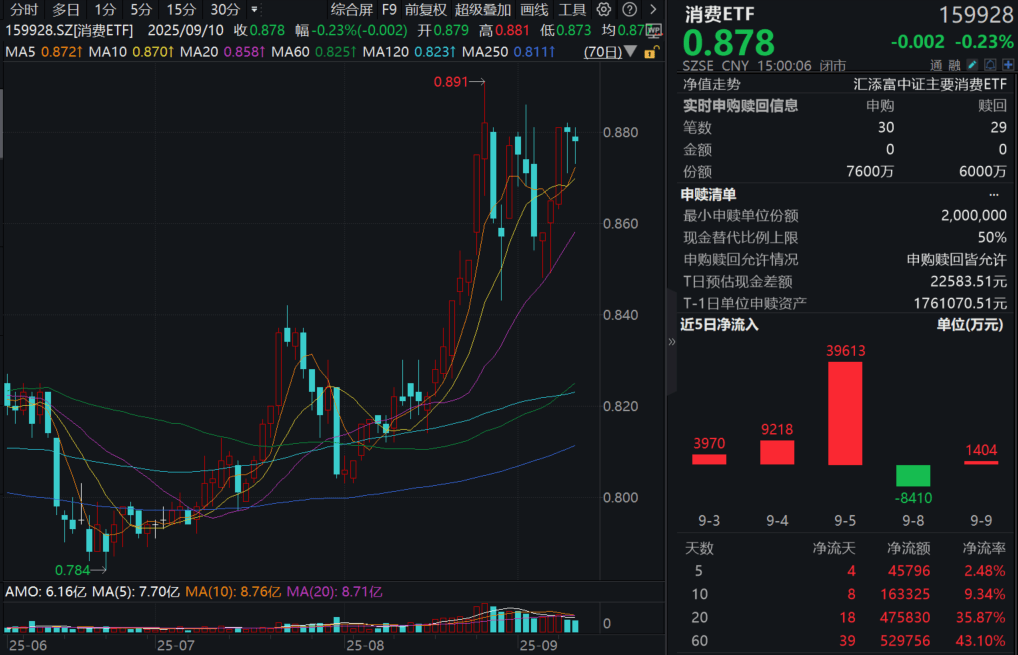
8月核心CPI继续回升,促消费政策有望加码!消费ETF(159928)回调再度吸金,近20日净流入超47亿元!港股通消费50ETF(159268)小幅收跌!
Sou Hu Cai Jing· 2025-09-10 09:42
Group 1: Market Overview - The market experienced a slight rebound with the consumption ETF (159928) declining by 0.23%, and a total trading volume exceeding 616 million yuan [1] - The consumption ETF (159928) saw a net subscription of 16 million units, with a net inflow of over 4.7 billion yuan in the past 20 days, leading to a total scale of over 19.1 billion yuan as of September 9 [1] Group 2: Hong Kong Market - The Hong Kong consumption ETF (159268) experienced a decline of 0.38%, with a trading volume exceeding 40 million yuan and a cumulative capital inflow of over 270 million yuan in the past 20 days [3] - Notable declines were observed in major stocks such as Lao Pu Gold, which fell over 7%, and Pop Mart, which dropped over 4% [3] Group 3: Consumer Price Index (CPI) Data - The CPI remained stable in August, with a month-on-month change of 0% and a year-on-year decrease of 0.4% [5] - The core CPI, excluding food and energy, increased by 0.9% year-on-year, marking the fourth consecutive month of growth [5] Group 4: Consumption Policies - The end of the summer travel peak is expected to lead to enhanced consumption policies, with new measures to stimulate service consumption anticipated in September [6] - The government aims to increase high-quality service supply and promote new consumption models, including AI and inbound consumption [6] Group 5: Alcohol and Consumer Goods Sector - The white liquor sector shows resilience among leading brands, although profit margins are under pressure, with a slight year-on-year increase in gross margin for Q2 2025 [7] - The snack food sector faces intensified competition, necessitating differentiated products to maintain or improve profit margins [8] Group 6: Consumption ETF Composition - The consumption ETF (159928) has a significant concentration in its top holdings, with the top ten stocks accounting for over 68% of its weight, including major liquor brands and agricultural companies [9] - The ETF is positioned as a resilient investment option within the consumer sector, capable of withstanding economic cycles [9]