创新医疗

Search documents
乳山市人民医院创新医疗模式入选山东公立医院高质量发展十大创新举措
Qi Lu Wan Bao· 2026-01-27 16:31
日前,由山东省卫生健康委员会指导,山东省医学会、《健康报》山东记者站主办的2025年度"创新引领 医改惠民"山东深化医改十大创新举措、公立医院高质量发展十大创新举措推介结果揭晓。乳山市人民 医院《聚焦内涵式发展建设,打造公立医院运营管理新体系》成功入选山东公立医院高质量发展十大创 新举措。 近年来,乳山市人民医院坚持以人民健康为中心,贯彻新发展理念,以满足县域居民医疗服务需求为出发点, 锚定"四个聚焦"工作路径,勇担区域医疗发展重任,坚守群众健康安全底线,做好分级诊疗联动枢纽,深耕便 民惠民服务实效,在县域医疗服务体系中的龙头作用和城乡医疗服务体系中的桥梁纽带作用发挥明显,推 动医院进入高质量发展新阶段。 能力建设上,打造省、市级临床重点专科与精品特色专科,与上级医院建立医联体,引入国家级名医工作室, 外请专家提供诊疗与手术指导。建成五大急诊急救中心,覆盖区域内超90%急危重症患者,显著缩短关键 救治时间。创新多学科会诊模式,开展县级全域MDT诊疗,会诊量同比大幅增长,患者治愈好转率高,促进 学科协同发展。 上下转诊方面,组建专家库,制定疾病转诊目录,开展规范化培训,建立绩效评价体系。搭建智慧双向转诊信 息平 ...

马斯克量产倒计时!脑机接口进入潜伏期,脑机接口商业化前夜,近期国内布局加速!优质企业详细解读
Xin Lang Cai Jing· 2026-01-27 12:24
Group 1 - Tianqi Co., Ltd. has entered the brain-computer interface (BCI) sector by investing in Suzhou Huahui Chip, focusing on high-density flexible neural electrode technology, achieving animal testing stages, and becoming a key player in domestic BCI hardware localization. The developed flexible neural electrode has 1024 channels, with signal acquisition precision and anti-interference capabilities at an internationally advanced level. The company has also completed biocompatibility surface modification technology to reduce inflammation after electrode implantation, with core patents authorized by the National Intellectual Property Administration [1][2][3] - Innovation Medical, through its subsidiary Boling Brain Machine, is one of the first companies in China to commercialize BCI rehabilitation products. The core product, Cyberlink AC5, was officially launched in October 2025, generating sales revenue of 114,000 yuan in 2025. Another product, Cyberlink AM5, has completed multi-center clinical trials and is progressing through the approval process. The company plans to establish five additional clinical cooperation centers to accelerate the application of BCI technology in treating neurological diseases [4][5][6] - iFlytek is a leading company in the non-invasive BCI field, leveraging its artificial intelligence technology to develop BCI collaborative technology. The company has established long-term partnerships with universities for research and development. Its non-invasive BCI system has been piloted in 120 schools nationwide, improving student attention by 30%. In the medical field, a collaboration with Beijing Tiantan Hospital has achieved a 92% accuracy rate in identifying abnormal brain signals for epilepsy [7][8][9] Group 2 - Jiahe Intelligent focuses on the research and mass production of BCI hardware, particularly EEG acquisition devices and core components, serving both consumer and medical-grade markets. The company has achieved large-scale production of EEG acquisition headphones with a signal recognition accuracy of 92%, primarily used in sleep monitoring and attention training. It plans to expand into overseas BCI hardware markets by 2026 [10][11][12] - Tom Cat is the first company in China to apply BCI technology in consumer scenarios, focusing on interactive games and rehabilitation training products. The company launched a mind-controlled game product in 2025, which quickly gained over 500,000 users. It also collaborates with rehabilitation institutions to develop BCI rehabilitation training systems, showing a 35% average improvement in patient motor function scores [13][14][15] - Hanwei Technology, through its subsidiary Weisheng Technology, is a leading company in the EEG sensor field, with an annual shipment of over 2 million units. The company has developed an epilepsy early warning system with an 88% accuracy rate in clinical tests. It also focuses on flexible pressure sensors for invasive BCI electrodes, addressing industry pain points [16][17][18] Group 3 - StarNet Ruijie leverages its network communication technology to develop low-power, high-stability EEG signal transmission systems and data encryption modules, becoming a core supplier for BCI data links. The developed transmission system supports real-time transmission of 1024-channel EEG signals with a latency of less than 10ms and a stability of 99.9% [19][20][21] - Yijiahe focuses on the integration of BCI and embodied intelligent robots, exploring applications in smart healthcare. The company has signed a strategic cooperation agreement to develop real-time emotional companionship and brain-controlled robots, enhancing the emotional care capabilities of robots [22][23][24] - Lihua Technology is focused on incubating and investing in the BCI sector, successfully incubating three high-tech companies in the field. The company collaborates with the Shenzhen Institute of Advanced Technology to provide comprehensive services for incubated companies, addressing development pain points [25][26][27] Group 4 - Sanbo Neurosurgery is a leading private hospital in the neurosurgery field, focusing on the clinical application and research of BCI. The company has successfully conducted an interventional BCI surgery, accumulating valuable experience for clinical applications. It is also recruiting participants for ongoing clinical trials [28][29][30] - Shiyun Circuit is a core enterprise in the PCB field, providing customized PCB products for BCI devices. The company focuses on high-density, flexible PCB designs, achieving low signal loss rates below 2% [31][32][33] - Meihua Medical is a leading supplier of core components for BCI, having entered the core supply chain for invasive BCI products. The company has developed components that have passed biocompatibility tests, ensuring long-term stability and safety for implanted devices [34][35][36]


促转化、破壁垒,创新药研发的“北京方案”
Bei Jing Shang Bao· 2026-01-26 14:07
Core Insights - Beijing has become the first city in China with a pharmaceutical and health industry exceeding 10 trillion yuan, achieving significant breakthroughs in innovative drugs and medical devices [1] - The city has implemented three rounds of action plans to accelerate collaborative innovation in the pharmaceutical sector, with new measures introduced for 2024-2025 to support high-quality development of innovative drugs [1] - Despite these advancements, challenges such as the lengthy drug development cycle and high costs remain significant bottlenecks for industry upgrades [1] Group 1: AI in Drug Development - AI technology is accelerating the drug development process, significantly shortening the traditional timeline of over 10 years to bring new drugs to market [4] - Beijing's unique advantages in talent and advanced research facilities position it well for AI-driven pharmaceutical innovation [4] - AI also shows potential in optimizing existing drug combinations, enabling new therapeutic uses for old drugs through data analysis [5] Group 2: Integration of Resources - The development of traditional Chinese medicine (TCM) requires leveraging Beijing's rich resources and talent, necessitating collaboration among government, enterprises, universities, and research institutions [6] - Successful models in TCM innovation often involve deep integration with academic and research institutions, highlighting the need for a collaborative approach [6][7] - Establishing cross-hospital research teams to standardize data collection can enhance the quality of clinical databases and accelerate drug approval processes [8] Group 3: Clinical Translation and Aging Population - The aging population presents new challenges, particularly in addressing diseases like Alzheimer's, which require innovative drug development [9][10] - Despite advancements in drug development technology, there remains a gap in the final translation of research into marketable products compared to international competitors [10] - Enhancing public awareness and understanding of diseases is crucial for early intervention and support for drug development [10][11] Group 4: Policy and Industry Support - Beijing's strong academic and industrial support, along with favorable policies, contribute to its leading position in the biopharmaceutical sector [11] - There is a need for improved strategies to transition laboratory technologies into practical applications, emphasizing collaboration with global pharmaceutical companies [11]

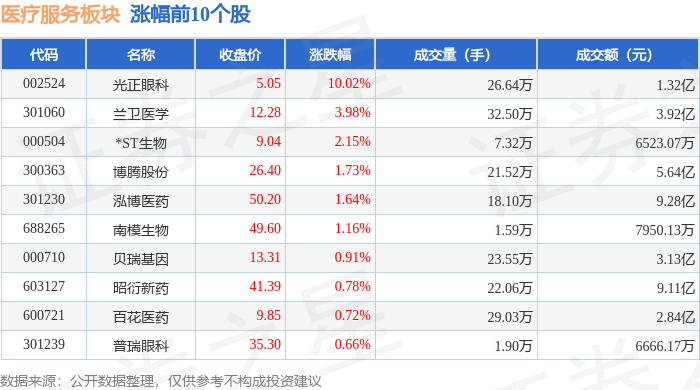
医疗服务板块1月26日跌1.41%,美迪西领跌,主力资金净流出13.18亿元
Zheng Xing Xing Ye Ri Bao· 2026-01-26 09:34
Market Overview - The medical services sector experienced a decline of 1.41% on January 26, with Meidisi leading the drop [1] - The Shanghai Composite Index closed at 4132.61, down 0.09%, while the Shenzhen Component Index closed at 14316.64, down 0.85% [1] Stock Performance - Notable gainers in the medical services sector included: - Guangzheng Eye Hospital (002524) with a closing price of 5.05, up 10.02% on a trading volume of 266,400 shares and a transaction value of 132 million [1] - Lanwei Medical (301060) closed at 12.28, up 3.98% with a trading volume of 325,000 shares and a transaction value of 392 million [1] - Major decliners included: - Meidisi (688202) closed at 60.88, down 7.28% with a trading volume of 71,600 shares and a transaction value of 444 million [2] - Meinian Health (002044) closed at 7.26, down 6.08% with a trading volume of 3.7675 million shares and a transaction value of 2.776 billion [2] Capital Flow - The medical services sector saw a net outflow of 1.318 billion from institutional investors, while retail investors had a net inflow of 1.011 billion [2] - The capital flow for specific stocks showed: - Boteng Co. (300363) had a net outflow of 39.83 million from institutional investors [3] - Guangzheng Eye Hospital (002524) had a net inflow of 39.29 million from institutional investors [3] - Lanwei Medical (301060) had a net inflow of 24.71 million from institutional investors [3]




北芯生命今日申购,深耕创新医疗器械,核心产品填补国内市场空白,营收快速增长
Sou Hu Cai Jing· 2026-01-26 07:26
Core Viewpoint - The company, Beixin Life, is launching an IPO with 57 million shares at a price of 17.52 yuan per share, aiming to raise funds for the development of interventional medical devices and enhance its production capacity and R&D capabilities [1] Group 1: Company Overview - Beixin Life is recognized as a national-level "specialized and innovative" small giant enterprise and has been awarded the title of a provincial manufacturing champion in Guangdong for 2024 [1] - The company focuses on the research, production, and sales of innovative medical devices for precise diagnosis and treatment of cardiovascular diseases [1][2] - Beixin Life is the first domestic company to offer a combination of intravascular functional (FFR) and imaging (IVUS) products, addressing a significant gap in the domestic market and reducing reliance on imported products for coronary artery disease diagnosis [1][2] Group 2: Product Development and Market Position - The core product, the IVUS system, is the first domestically developed 60MHz high-definition IVUS product approved in China and the first to be approved for sale in Europe, achieving the highest market share among domestic brands [2] - The FFR system, launched in 2020, captured 30.6% of the domestic market share by 2021, contributing to rapid revenue growth for the company [3] - As of September 30, 2025, the company plans to have launched 11 products and has 6 products in development, covering five major categories including IVUS, FFR, vascular access products, shockwave balloon therapy systems, and electrophysiological solutions [2] Group 3: Financial Performance - The company's revenue has shown significant growth, with figures of 92.45 million yuan, 183.98 million yuan, and 316.60 million yuan for the years 2022, 2023, and 2024 respectively [3] - For 2025, the company projects revenue between 520 million yuan and 560 million yuan, representing a year-on-year growth of 64.24% to 76.88%, with net profit expected to be between 78 million yuan and 88 million yuan, indicating a growth of 278.91% to 301.85% [3]
2026中国创新医疗图景:源头活水何在,产业生态又将如何重塑?
Xin Lang Cai Jing· 2026-01-26 06:56
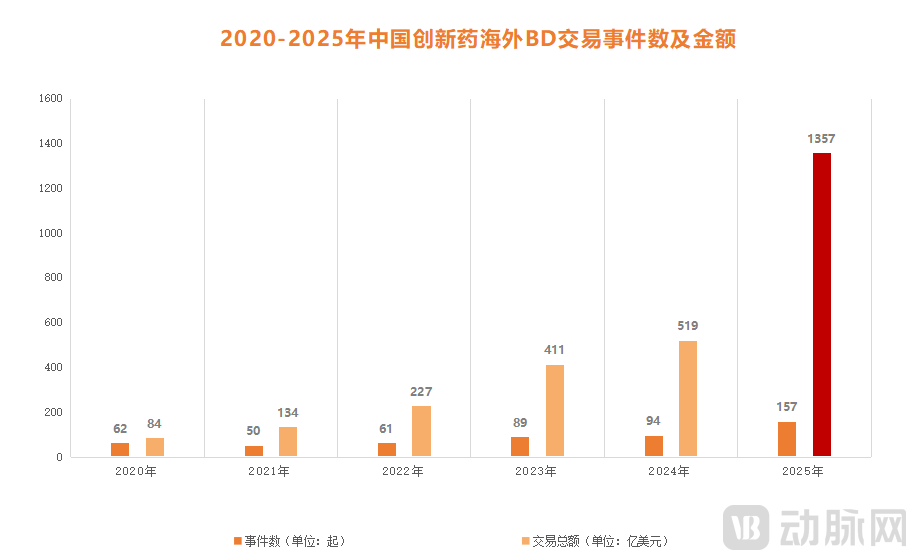
Core Insights - The Chinese healthcare industry experienced a significant surge in 2025, marked by a record number of innovative medical devices and drugs approved for market entry, indicating a growing focus on innovation in the sector [1][3] - The total value of overseas business development (BD) transactions for innovative drugs reached $135.7 billion in 2025, accounting for 49% of the global total, surpassing the United States for the first time [3] - The IPO market for healthcare companies in China saw a revival, with 37 companies successfully listed in 2025, doubling the number from 2024, reflecting strong investor interest in the sector [7] Innovation in Medical Devices and Drugs - In 2025, 109 innovative medical devices were approved, with a 19.67% year-on-year increase in Class III devices, while 76 innovative drugs were approved, focusing on advanced fields like oncology and autoimmune diseases [1] - The rapid growth in innovative drug approvals and medical device registrations highlights China's increasing capabilities in healthcare innovation [1][8] Business Development and Market Dynamics - The number of overseas BD transactions for innovative drugs reached 157 in 2025, with a total transaction value of $135.7 billion, both figures representing historical highs [3] - The increasing recognition of Chinese innovative drugs by global pharmaceutical companies is evident, particularly as they face pressures from patent expirations and global competition [8] IPO Activity and Market Sentiment - The healthcare sector in China saw a resurgence in IPO activity, with 37 companies going public in 2025, compared to 17 in 2024, indicating a robust market sentiment [7] - Over 60 healthcare companies are currently in the IPO pipeline on the Hong Kong Stock Exchange, reflecting sustained investor enthusiasm for the healthcare sector [7] Challenges and Industry Landscape - Despite the growth, challenges persist, including difficulties in financing and market entry for medical companies, exacerbated by domestic healthcare cost controls and intensified competition [7] - The industry is undergoing significant consolidation, presenting both opportunities and challenges for companies navigating this complex landscape [7][11] AI Integration in Healthcare - AI technology is increasingly integrated into the healthcare sector, enhancing the efficiency and safety of medical devices and drug development processes [10] - The shift towards data-driven, proactive healthcare solutions is transforming traditional practices, with AI expected to play a crucial role in future clinical pathways [10] Investment Trends and Future Outlook - The investment landscape in the healthcare sector is shifting towards high-tech, innovative companies, with a notable decrease in the number of financing events but an increase in total investment amounts [16] - The next 5-10 years are anticipated to be a golden period for innovation in Chinese healthcare, with a focus on projects that address unmet clinical needs [17]
今日有1只新股申购,为科创板的北芯生命
Mei Ri Jing Ji Xin Wen· 2026-01-25 23:55
每经AI快讯,1月26日有1只新股申购,为科创板的北芯生命;无新股上市。北芯生命是国内领先的心 血管精准诊疗创新医疗(002173)器械企业。 ...
量化择时周报:牛市格局仍在延续,主题投资重回主线-20260125
ZHONGTAI SECURITIES· 2026-01-25 13:29
Quantitative Models and Construction Methods 1. **Model Name**: Timing System Model **Model Construction Idea**: The model uses the distance between the short-term moving average (20-day) and the long-term moving average (120-day) of the WIND All A Index to determine the market trend[2][7] **Model Construction Process**: - Define the short-term moving average (20-day) and long-term moving average (120-day) of the WIND All A Index - Calculate the difference between the two moving averages - If the short-term moving average is above the long-term moving average and the absolute difference exceeds 3%, the market is considered to be in an upward trend - Latest data: 20-day moving average = 6668, 120-day moving average = 6245, difference = 6.78%[2][7] **Model Evaluation**: The model effectively captures the market's upward trend and provides a clear signal for timing decisions[2][7] 2. **Model Name**: Industry Trend Allocation Model **Model Construction Idea**: This model identifies industry opportunities based on medium-term reversal expectations and performance trends[6][7] **Model Construction Process**: - Use medium-term reversal expectation signals to identify industries with potential recovery, such as innovative healthcare - Apply the TWO BETA model to recommend sectors like technology, commercial aerospace, space photovoltaics, and stablecoin concepts - Use performance trend signals to highlight opportunities in semiconductors, industrial metals, and chemicals[6][7] **Model Evaluation**: The model provides actionable insights into sector allocation, focusing on industries with strong growth potential or recovery signals[6][7] 3. **Model Name**: Position Management Model **Model Construction Idea**: This model determines the recommended equity allocation based on valuation levels and market trends[8] **Model Construction Process**: - Assess the valuation levels of the WIND All A Index using PE and PB ratios - Combine valuation levels with short-term trend signals to recommend an equity allocation - Current recommendation: 80% equity allocation for absolute return products based on the WIND All A Index[8] **Model Evaluation**: The model provides a systematic approach to managing equity exposure, balancing valuation and trend considerations[8] --- Model Backtesting Results 1. **Timing System Model**: - Moving average distance: 6.78% (absolute value > 3%, indicating an upward trend)[2][7] - Profitability effect: 2.7% (positive, supporting the upward trend)[2][7] 2. **Industry Trend Allocation Model**: - Recommended sectors: Innovative healthcare, technology, commercial aerospace, space photovoltaics, stablecoin concepts, semiconductors, industrial metals, and chemicals[6][7] 3. **Position Management Model**: - Recommended equity allocation: 80%[8] --- Quantitative Factors and Construction Methods No specific quantitative factors were explicitly mentioned in the report. The analysis primarily focuses on models rather than individual factors. --- Factor Backtesting Results No specific factor backtesting results were provided in the report. The focus remains on model-level performance and recommendations.
GDP增长5.4%,北京是怎样实现的?
Xin Jing Bao· 2026-01-25 05:48
Core Insights - Beijing's economy achieved significant growth in 2025, with a GDP increase of 5.4% [1] Economic Growth and Investment - The city established a central funding project reserve mechanism, issuing 123.3 billion yuan in local government special bonds and initiating a pilot program for special bond investment in government investment funds [2] - Fixed asset investment in Beijing reached 82 billion yuan, with a 5.5% increase in overall fixed asset investment and a 40.1% rise in high-tech industry investment [4] Support for SMEs and Innovation - A total of 6,742 billion yuan in loans were provided to small and micro enterprises and individual businesses, supported by various policies aimed at enhancing long-term capital market participation and promoting venture capital [2] - The city issued 6,643.3 billion yuan in technology innovation bonds, facilitating nearly 700 billion yuan in loans for over 1,400 enterprises [2] Consumption and Market Development - Beijing accelerated the construction of an international consumption center, implementing actions to boost consumption and receiving approval for new consumption models and environments [3] - The city organized 2,295 large-scale events and launched a citywide scenic area ticketing service platform, contributing to a 5% increase in consumer spending [4] Emerging Industries and Digital Economy - The city promoted the upgrade of advantageous industries and maintained a leading position in the digital economy, with over 31 trillion data entries shared cumulatively [5][6] - The establishment of a national data circulation infrastructure and a significant increase in data trading volume were reported, with a 172% year-on-year growth in trading volume at the Beijing big data exchange [6] Green Technology and Sustainability - Beijing led in green technology with 69,000 effective green technology invention patents and initiated a voluntary greenhouse gas emission trading market [7] - The city built 490,000 charging piles and 1,044 supercharging stations, promoting renewable energy and green development initiatives [7]
超声波重启阿尔茨海默大脑,临床试验点亮治疗新希望:机械设备
Huafu Securities· 2026-01-25 05:28
Investment Rating - The industry rating is "Outperform the Market," indicating that the overall return of the industry is expected to exceed the market benchmark index by more than 5% over the next 6 months [14]. Core Insights - A breakthrough in Alzheimer's treatment was observed when a focused ultrasound surgery unexpectedly improved the cognitive function of a patient, challenging the traditional belief that Alzheimer's is irreversible. This condition affects nearly 17 million patients in China, leading to significant caregiving burdens [4][5]. - The research team led by Professor Sun Bomin is exploring a new approach using high-energy ultrasound to directly stimulate brain neural circuits, with initial clinical trials showing an average improvement rate of about 50% among seven moderate to severe patients [5]. - The global brain-computer interface (BCI) market is projected to grow rapidly, with an estimated size of approximately $2.62 billion in 2024, reaching $2.94 billion in 2025, and potentially growing to $12.4 billion by 2034, reflecting a compound annual growth rate of 17.35% over the next decade [6]. Summary by Sections Industry Overview - The report highlights the significant unmet medical need in Alzheimer's treatment and the potential for innovative therapies to emerge from recent clinical findings [4][5]. Market Potential - The brain-computer interface market is expected to see substantial growth, with specific projections for both global and Chinese markets, indicating a strategic focus on high-tech industries as outlined in national economic plans [6]. Investment Recommendations - The report suggests monitoring companies such as Yanshan Technology, Hanwei Technology, Sanbo Brain Science, and others, which are positioned to benefit from advancements in the BCI and related technologies [6].