Figure AI

Search documents
2025商用具身智能白皮书
艾瑞咨询· 2025-12-14 00:04
Core Insights - Embodied intelligence has gained significant traction globally, with Figure achieving a valuation of $39 billion despite zero revenue, while domestic players are securing commercial orders and projecting substantial revenue growth [1][4] - The Chinese market is integrating embodied intelligence into its strategic development plans, indicating a shift towards a trillion-dollar market potential [1][9] Definition and Understanding - Embodied intelligence is recognized as a crucial development in artificial intelligence, characterized by agents that interact with their environment through a physical body, showcasing autonomy and adaptability [2][4] - It represents a convergence of machine learning, computer vision, and robotics, marking a significant step towards practical AI applications [2] Commercial Scene Classification - Different forms of embodied intelligent robots are evolving to meet diverse needs across retail, dining, manufacturing, logistics, education, and healthcare [4] - Commercial applications focus on enhancing service experiences in dynamic environments, while industrial applications emphasize precision and stability in structured settings [4] Strategic Significance - Embodied intelligence is pivotal in narrowing the technological gap between China and the U.S., driving innovation across various sectors including manufacturing and healthcare [6][9] - The competition in advanced technology between the two nations highlights the importance of breakthroughs in embodied intelligence for economic and competitive advantages [6] Policy Incentives - The Chinese government is actively promoting the development of embodied intelligence through various policies, funding, and standardization efforts [8][9] Development Stages - The evolution of embodied intelligence can be categorized into three phases: conceptual development, technological accumulation, and application expansion driven by large models [11] - The current phase sees intense competition between the U.S. and China in foundational models and application deployment [11] Bottlenecks and Challenges - Key challenges include data collection, technology maturity, high costs, and long ROI cycles, which hinder large-scale commercialization [13][16] - The industry is exploring solutions to overcome data scarcity and improve training efficiency [19] Model Evolution - The VLA model is emerging as a consensus for the development of embodied intelligence, integrating reasoning capabilities with real-world perception and action [21][23] - This evolution is expected to lead to significant advancements in the capabilities of robots [21] Commercialization Breakthroughs - The commercialization of embodied intelligence is anticipated to reach a turning point as it overcomes challenges in endurance, latency, execution, reliability, and economic viability [29][31] - Initial applications are focusing on low-complexity, high-ROI scenarios, with future expansions into more complex environments [31] Global Market Predictions - The global market for embodied intelligence is projected to grow exponentially, with estimates suggesting a compound annual growth rate of 73% over the next five years [46] - China's market is expected to experience significant growth, potentially reaching over 280 billion yuan by 2035 [50] Competitive Landscape - The competition in the embodied intelligence sector is characterized by three main players: AI-native challengers, traditional industrial players, and cross-industry giants [55] - The market is witnessing a trend towards consolidation as product homogeneity increases, indicating an impending first round of industry shakeout [57] Initial Players and Innovations - Companies like Tesla and Figure AI are leading the charge in developing humanoid robots, with significant advancements in capabilities and market readiness [62][64] - Innovations in core components, such as dexterous hands and micro-servo actuators, are critical for enhancing the functionality of embodied intelligence [83][88]



当美国股市走向“邀请制”:私募交易催生越来越多巨无霸私企,普通散户被“拒之门外”
Hua Er Jie Jian Wen· 2025-12-13 13:30
Group 1 - The largest stock issuance this year occurred through a private placement by OpenAI, raising $40 billion, surpassing all IPOs and exceeding the largest IPO in history by over $10 billion [1] - The trend indicates a shift in the U.S. capital markets from broad public participation to a more exclusive "elite circle" of wealthy investors [1][4] - The number of publicly listed companies in the U.S. has halved since the late 1990s, with only about 4,000 companies currently listed compared to over 8,000 at the peak of the internet bubble [2] Group 2 - The median age of companies going public has increased from 6 years in 2000 to 14 years now, meaning companies often reach maturity before entering the public market [3] - Companies are delaying IPOs not due to a lack of funds, but because private markets are providing unprecedented financial support with lower disclosure requirements [3] - Notable companies like Figure AI and Databricks have seen their valuations soar in the private market before going public, with Figure AI's valuation increasing from $2.6 billion to approximately $39 billion [5] Group 3 - The private market is largely accessible only to "qualified investors," defined by the SEC as individuals with a net worth of at least $1 million or an annual income of $200,000 [4] - Major investment banks like Morgan Stanley, JPMorgan, and Goldman Sachs have established private market divisions, catering to large asset managers and institutional investors [6] - SpaceX exemplifies this trend, with its valuation rising to $800 billion through private financing, primarily involving long-term supporters and selected institutional funds [6] Group 4 - Regulatory concerns have emerged regarding the market's "layered operation," with the SEC chair noting that the most explosive growth phases are now confined to private markets [7] - The distribution mechanism of returns is undergoing structural changes, leading to a reconfiguration of the capital market despite its apparent openness [8] - The IPO process is increasingly viewed as a culmination of value release rather than a starting point for growth, with ordinary retail investors missing out on critical growth phases [9]
智元撞线5000台,人形机器人离规模商业化还有多远?
3 6 Ke· 2025-12-09 04:25
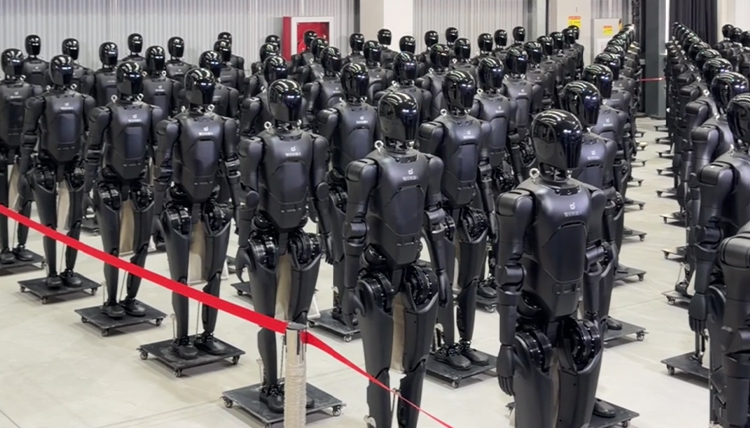
Core Insights - The core point of the article is that Zhiyuan Robotics has successfully achieved the mass production of its 5000th general-purpose humanoid robot, Lingxi X2, marking a significant milestone in the early commercialization phase of the humanoid robot industry in China [1][5]. Group 1: Production Milestones - Zhiyuan Robotics has produced a total of 5000 robots, with the breakdown being 1846 units of Lingxi X1/X2 series, 1742 units of Expedition A1/A2 series, and 1412 units of Spirit G1/G2 series [1]. - The company is positioned as a leader in mass production within the domestic market, as other major players are still transitioning from hundreds to thousands of units [3][4]. - The production speed of 5000 units has placed Zhiyuan in the first tier of domestic mass production enterprises, while competitors like Yushutech and UBTECH are still ramping up their production capabilities [3][4]. Group 2: Industry Context and Competitors - The humanoid robot industry is still in its early stages, with major players like Yushutech expected to deliver around 1400 units in 2024, and UBTECH aiming for an annual production capacity of 5000 units by 2026 [3][4]. - Internationally, Figure AI has launched an automated production line with an annual capacity of 12,000 units, planning to scale up to 100,000 units within four years [3]. - According to Nomura Securities, the production pace of humanoid and quadruped robots in China is expected to surpass that of Tesla by 2026 [3]. Group 3: Production Process and Cost Management - The path to achieving 5000 units involved three stages: initial small-batch trials, formal mass production, and market optimization based on customer needs [5]. - The company has established a stable manufacturing system, with key components and supply chains in place, which is crucial for scaling production [5][9]. - The cost of production has significantly decreased, with the price of the main model dropping from over 1 million yuan to just above 500,000 yuan, reflecting a reduction of about 50% [9][10]. Group 4: Future Outlook - Zhiyuan Robotics aims to produce 10,000 units next year and has a long-term vision for scaling up to 100,000 units [5]. - The global robot market is projected to exceed $400 billion by 2029, with China accounting for nearly half of this market [14]. - IDC forecasts that the commercial sales volume of humanoid robots in China will reach approximately 5000 units by 2025, increasing to nearly 60,000 units by 2030, with a compound annual growth rate exceeding 95% [14].

机器人“ChatGPT时刻”来临,产业链迎来投资黄金期
Zheng Quan Shi Bao· 2025-12-08 05:41
Group 1 - The humanoid robot industry is experiencing significant positive developments, with leading companies actively engaging in technology research and commercial implementation [1][2] - Tesla's CEO Musk shared a video of the "Optimus" humanoid robot running, indicating advancements in the robot's capabilities [1] - The launch of the full-size, high-efficiency humanoid robot T800 by Zhongqing Robotics marks the beginning of its sales process [1] Group 2 - Domestic and international companies are increasingly entering the humanoid robot market, with notable advancements in commercialization by firms like Tesla and Figure AI [2] - The emergence of AI companies such as DeepSeek is facilitating the development of general-purpose humanoid robot models, leading to a diverse and competitive industry landscape [2] - The humanoid robot sector is entering industrial applications, indicating a strong trend towards commercial viability [2]
【Tesla每日快訊】 手掌長眼睛?馬斯克為何堅決對「富貴手」SAY NO?🔥揭秘人形機器人的感官戰爭!(2025/12/7)
大鱼聊电动· 2025-12-07 08:43
Technology & Design Philosophies - Figure AI and Sunday Robotics adopt a "Sensory Redundancy" approach, using additional hardware like hand-mounted cameras to enhance perception and compensate for AI limitations [1] - Figure 03's hand incorporates a palm-mounted camera system to provide a "macro view," expanding the field of view by 60% and reducing latency by 75% (two times frame rate with one-quarter latency) [1] - Sunday Robotics prioritizes practicality, opting for a three-finger gripper for its Memo robot, deeming it sufficient for 99% of household tasks [1] - Tesla, under Elon Musk's "First Principles" philosophy, avoids adding a camera to Optimus's hand, relying on head-mounted vision, proprioception, and tactile sensors [1][2] Sensory Capabilities & Data Processing - Figure 03's fingertip sensors have a sensitivity of 3 grams, enabling the detection of minute vibrations preceding slippage [1] - Figure 03's hand transmits data at 10 Gbps using mmWave technology to its Helix AI model, creating a closed-loop system [1] - Sunday Robotics utilizes "Behavioral Cloning" by collecting "in-the-wild data" from 2,000+ individuals performing household tasks while wearing skill capture gloves [1] - Tesla Optimus leverages its "Occupancy Network" technology inherited from Tesla FSD, enabling it to construct 3D models and maintain object permanence even when objects are occluded [2] Market Positioning & Future Implications - Tesla aims for an Optimus price point of $20,000 - $30,000, emphasizing "generality" and "scalability" to achieve cost-effectiveness [2] - Sunday Memo targets the home appliance market with a focus on affordability and practicality for tasks like dishwashing and cleaning [2] - Figure AI aims to dominate high-end manufacturing, providing precision and reliability in tasks such as assembling electronics and handling hazardous materials [2]

2026量产元年,人形机器人机会在哪?
Ge Long Hui· 2025-12-07 07:47
Core Viewpoint - The global capital market is experiencing a surge in humanoid robots, with significant rebounds in stock performance in both A-shares and U.S. markets, driven by policy support, order fulfillment, and technological breakthroughs as the industry approaches a mass production milestone in 2026 [1][3][5]. Group 1: Market Dynamics - The humanoid robot sector in A-shares has seen a rebound, with notable stock performances such as Lixing Co. hitting a 20% limit up, alongside strong performances from Hengli Hydraulic and Haoshi Electromechanical [1]. - In the U.S. market, the government is signaling strong support for the robotics industry, leading to a collective surge in stock prices, with iRobot Corp (IRBT) experiencing a 133% increase over five trading days [3]. - The current market trend is characterized by a shift from speculative trading to performance realization, as the industry prepares for mass production [5]. Group 2: Technological Advancements - Tesla is leading the global mass production wave, with plans to launch the Gen3 production model in Q1 2026 and ramp up production capacity to 1 million units at its Fremont factory by the end of the year [6][7]. - The technological advancements in Tesla's humanoid robots, such as the Optimus Gen2.5, demonstrate significant improvements in speed and hardware design, indicating a maturation of technology [7]. - Key components like reducers and servo motors have seen over 50% domestic market share, breaking the overseas monopoly and supporting mass production [14]. Group 3: Industry Opportunities - The humanoid robot sector is becoming a focal point in the U.S.-China tech competition, with the U.S. increasing support for local enterprises while China implements a three-dimensional policy framework to enhance domestic capabilities [14]. - The demand for humanoid robots is driven by labor shortages in industrial sectors, where a single humanoid robot can replace five skilled workers, highlighting the market's potential [15]. - The global humanoid robot market is projected to reach 6.339 billion yuan by 2025, with a compound annual growth rate of 48% in industrial applications and 52% in medical rehabilitation from 2026 to 2030 [15]. Group 4: Investment Focus - Investment strategies should concentrate on three core areas: critical components and assemblies, technological upgrades, and scene implementation ecosystems [17][18]. - The focus on core components is essential as mass production ramps up, with significant procurement needs expected from manufacturers like Tesla and Xiaopeng [17]. - Long-term growth opportunities lie in technological upgrades and software ecosystems, which are crucial for enhancing robot usability and performance [18]. Group 5: Conclusion - As the industry approaches the mass production phase in 2026, structural growth opportunities are anticipated, making it a critical time for investors to position themselves for long-term development in the humanoid robot sector [20].

商汤王晓刚出任大晓机器人董事长,将开源“开悟”世界模型3.0
Sou Hu Cai Jing· 2025-12-04 05:03
Core Insights - DaXiao Robotics will officially unveil multiple globally leading technologies and products on December 18, including the first domestically open-source and commercially applicable "Kairos" World Model 3.0, aiming to build a self-controlled and open-win industrial system with industry partners [2][9] - The current embodied intelligence sector is at a critical window for technological explosion and paradigm reconstruction, presenting both challenges in path exploration and opportunities for core technological breakthroughs [2][3] Group 1: Technological Innovations - DaXiao Robotics will introduce the globally pioneering ACE technology paradigm, which constructs a comprehensive technology system based on visual data collection, world models, and embodied base models [8] - The "Kairos" World Model 3.0 features an innovative integrated architecture for multi-modal understanding, generation, and prediction, overcoming challenges in physical causal consistency and capable of generating high-definition videos [9] - The company will also launch the embodied super brain module A1, which features a groundbreaking pure visual end-to-end VLA embodied intelligence model, enabling autonomous navigation without reliance on pre-mapped environments [10] Group 2: Talent and Expertise - DaXiao Robotics has gathered top AI scientists and industry experts from prestigious institutions, enhancing its capabilities in both cutting-edge technology and practical industrial applications [4][5][7] - The chief scientist, Tao Dacheng, has a strong academic background and extensive industry experience, positioning him to lead technological innovation and practical implementation in embodied intelligence [4] Group 3: Strategic Collaborations and Ecosystem - On the launch day, DaXiao Robotics will establish multiple strategic partnerships with leading domestic companies to co-create a new ecosystem for embodied intelligence [12] - The company aims to integrate technology, products, and application scenarios, solidifying its competitive advantage in the "model-hardware-ecosystem" triad within the embodied intelligence field [11]

多机构集体表态:人形机器人商业化落地可期
Zheng Quan Shi Bao· 2025-12-04 02:46
Group 1 - The humanoid robot industry is experiencing significant positive developments, with leading companies actively engaging in technology research and commercial implementation [1][2] - Tesla's CEO Elon Musk shared a video of the "Optimus" humanoid robot running, indicating advancements in the robot's capabilities [1] - The launch of the ZHONGQING T800 humanoid robot by ZHONGQING Robotics marks the beginning of its sales process, highlighting the industry's shift towards mass production [1] Group 2 - Domestic and international companies are increasingly entering the humanoid robot market, with notable players like Tesla and Figure AI accelerating their commercialization efforts [2] - The emergence of AI companies such as DeepSeek is driving the development of general-purpose robot models, facilitating the realization of embodied intelligence in humanoid robots [2] - The humanoid robot industry is entering a phase of rapid commercialization, with a focus on identifying high-quality companies within the supply chain that demonstrate certainty in their operations [2]
2025商用具身智能白皮书:智启商业未来,身赋无限可能
Ai Rui Zi Xun· 2025-12-04 02:46
Investment Rating - The report does not explicitly state an investment rating for the industry Core Insights - Embodied intelligence is recognized as a significant direction in artificial intelligence, essential for achieving artificial general intelligence, characterized by strong interaction with the environment and continuous learning [5][12] - The global market for embodied intelligence is projected to reach 19.2 billion RMB by 2025, with a compound annual growth rate (CAGR) of 73% over the next five years, indicating a potential trillion-level market in about ten years [84][86] - The development of embodied intelligence is seen as a critical battleground in the technological competition between China and the United States, with implications for economic benefits and national competitiveness [12][15] Summary by Sections 1. Definition and Strategic Significance - Embodied intelligence integrates machine learning, computer vision, and robotics, marking a significant step towards practical AI applications [5] - It is defined as an intelligent system that interacts with the environment through physical bodies, enabling perception, understanding, decision-making, and action [6] 2. Current Development Stages and Key Challenges - The evolution of embodied intelligence is categorized into three phases: conceptual emergence (1950-2000), technological accumulation (2000-2020), and application expansion driven by large models (2020-present) [24][26] - Key challenges include data collection, technology maturity, cost of core components, and societal acceptance [28][29] 3. Global Market Trends - The market for embodied intelligence is transitioning from L2 to L3 levels of autonomy, with expectations of significant advancements in the next 2-3 years [52] - The commercial breakthrough will depend on improvements in reliability, economic efficiency, accuracy, endurance, and latency [55] 4. Industry Value Chain and Market Forecast - The industry value chain is complex, involving hardware, brain, and integration components, with significant potential for Chinese companies in downstream applications [75] - The report highlights a surge in financing for embodied intelligence companies, indicating strong investor interest and market potential [79] 5. Competitive Landscape and Key Success Factors - The competition is intensifying between Chinese and American firms, with both sides leveraging unique strengths in technology and policy support [24][25] - The report emphasizes the importance of collaboration across the industry to overcome existing bottlenecks and achieve large-scale commercialization [28][29] 6. Case Studies of Leading Companies - The report does not provide specific case studies of leading companies in the industry
清华大学薛正华:海量产业数据是中国AI发展独特优势
Xin Lang Cai Jing· 2025-12-03 09:36
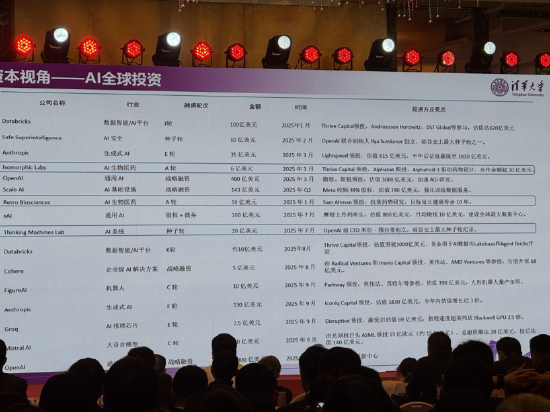
Group 1 - The core message of the event is that AI technology, centered around large models, has the capability to transform various industries, with no business scenario in finance that cannot be reimagined using these models [1][4] - AI applications in the real economy are driving fundamental changes in production materials, objects, and labor, referred to as silicon-based labor [1][4] - A comparison of AI development between China and the US shows that the US leads in global AIGC investment (approximately 70% in 2024) and has a significant number of top scholars, while China possesses a complete industrial system and abundant application scenarios with vast private data [2][5] Group 2 - The unique industrial ecosystem in China has generated a large amount of "private data" that is not captured by public large models, providing a distinct advantage for building vertical industry models [3][6] - There is a call for China to actively integrate into the global technology system while deeply cultivating local industry scenarios to convert market scale and data advantages into real industrial competitiveness [3][6] Group 3 - Notable global AI investment cases include Figure AI, which completed a $675 million Series B financing round, with a valuation nearing $2.7 billion [1][4]