
中国财险

Search documents
市场波动起,何处可避风?丨每日研选
Shang Hai Zheng Quan Bao· 2025-10-15 01:19
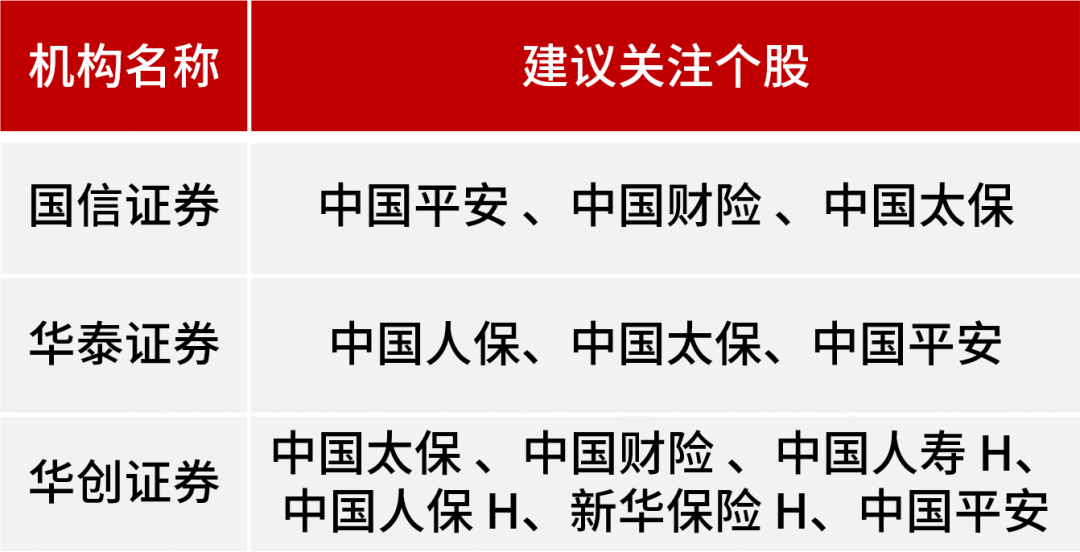
Core Viewpoint - The current market is characterized by strong short-term risk aversion, highlighting the value of certain dividend assets as safe havens and stabilizers [1] Group 1: Insurance Sector Insights - The insurance sector is seen as having significant allocation value due to dual logic of policy dividends and asset improvement [3] - The "reporting and underwriting integration" regulation is expected to reshape the competitive landscape of the property insurance sector, with major insurers likely to see profit improvements [4] - Non-auto insurance is rapidly growing in the property insurance industry, and the integration is anticipated to enhance overall underwriting performance [4] - Major insurers are expected to benefit more from the integration, with China Life and China Property & Casualty Insurance following [5] Group 2: Banking Sector Insights - The banking sector's dividend value is becoming more prominent, attracting risk-averse capital due to stable dividends and improved yield after recent corrections [6] - Recommendations for banks include Industrial and Commercial Bank of China, Agricultural Bank of China, Postal Savings Bank of China, Jiangsu Bank, Hangzhou Bank, and China Merchants Bank [6] Group 3: Investment Recommendations - Various institutions recommend focusing on specific stocks within the insurance sector, including China Ping An, China Property & Casualty, and China Life [9] - The recommendation order for major insurers is China Property & Casualty, China Life H, and China Re H, with additional suggestions based on market conditions [5][9]

为海洋牧场构筑风险保障
Jing Ji Ri Bao· 2025-10-14 22:13
Core Insights - The insurance industry is actively supporting marine farming enterprises in disaster recovery through rapid claims processing and financial assistance following typhoons "Hagupit" and "Maitong" [1][2] - The implementation of catastrophe insurance mechanisms in Zhanjiang has proven effective, with significant payouts made to support disaster response and livelihood protection [2] Group 1: Typhoon Impact and Insurance Response - Typhoons "Hagupit" and "Maitong" have severely impacted marine farms in coastal regions such as Guangdong and Guangxi, leading to risks of damage to deep-sea cages and farming facilities [1] - PICC Property and Casualty initiated an emergency response for wind disaster index insurance, disbursing 6.8 million yuan in advance claims within two hours of the typhoon's landfall [1] - The insurance claims team employed a dual strategy of "disaster prevention + claims" by collaborating with meteorological departments to track typhoon paths and working with fishermen to reinforce equipment [1] Group 2: Catastrophe Insurance Mechanism - This marks the second activation of the typhoon catastrophe insurance emergency payout mechanism in Zhanjiang this year, with a total of 40.2 million yuan paid out in catastrophe index insurance claims [2] - The insurance mechanism has been highlighted as a stabilizing force in response to major natural disasters, providing essential support for emergency management and public welfare [2] Group 3: Future of Marine Farming Insurance - A report from Swiss Re Institute predicts that by 2030, the coverage level of marine aquaculture insurance in China will increase to 6.9%, with premium scale reaching 3 billion yuan [3] - Meteorological index insurance is expected to play a crucial role in addressing complex risks, with recommendations for insurance companies to enhance risk communication across various insurance lines [3] - The report emphasizes the need for a comprehensive customer service system that integrates underwriting, claims, and disaster prevention to support the development of marine farming [3]
九月以来,河南降水量较常年同期偏多二点七倍 中原粮仓,力保秋粮收得上烘得干(秋收进行时)
Ren Min Ri Bao· 2025-10-14 22:04
Core Viewpoint - The heavy rainfall in Henan province since September has significantly impacted the harvest of autumn crops, particularly corn and peanuts, raising concerns about the overall grain yield for the year [1]. Group 1: Harvesting Challenges - Henan has experienced eight significant rainfall events since September, with an average precipitation of 332.4 mm, which is 2.7 times higher than the historical average for this period [1]. - Farmers are utilizing tracked harvesters and modifying wheeled machinery to cope with muddy conditions, with nearly 8,000 tracked corn harvesters deployed to assist in the urgent harvesting efforts [3][4]. - The use of tracked harvesters is crucial as they have a larger ground contact area and better traction, allowing them to operate in wet and muddy fields [3]. Group 2: Drying and Storage Solutions - The high humidity and low temperatures have increased the risk of grain spoilage, necessitating rapid drying processes [6]. - Agricultural cooperatives are investing in drying equipment, with one cooperative operating 16 drying towers capable of processing 800 tons daily, supported by over 1 million yuan in government subsidies [7]. - Farmers are also utilizing open spaces and promoting the use of wire mesh storage containers to facilitate drying and prevent spoilage [8]. Group 3: Impact on Crop Yield - Despite the adverse weather conditions, the reduction in corn yield is considered manageable, with many farmers reporting that the quality and quantity of their crops remain satisfactory [9]. - The local government is actively working to mitigate losses, having processed insurance claims for 65.39 million mu of corn and compensating farmers for losses due to spoilage [9][10]. - The ongoing rainfall has delayed the sowing of winter wheat, prompting agricultural authorities to issue guidance on late sowing techniques [10].
一问到底丨秋收遇上阴雨天 农户出现损失能获赔吗?
Yang Shi Wang· 2025-10-14 19:26
Core Viewpoint - Recent continuous rainy weather in China has significantly impacted the harvest of autumn crops, particularly corn, raising concerns about crop damage and insurance compensation for farmers [1] Group 1: Impact of Weather on Crop Insurance - Major grain crops in China, including corn, wheat, and rice, are covered by comprehensive cost insurance and income insurance policies nationwide [1] - Farmers who purchased agricultural insurance for corn will receive compensation from insurance companies for any reduction in yield or income due to adverse weather conditions [2][3] Group 2: Compensation Details - The policy for corn insurance has a coverage amount of 950 yuan per mu, with actual compensation determined by factors such as the area affected, loss rate, and growth stage at the time of the disaster [3] - Insurance claims are processed using technology, with companies like PICC and Ping An Insurance employing drones and satellite remote sensing to expedite damage assessment and compensation [4] Group 3: Support for Harvesting Efforts - Insurance companies are actively supporting farmers in accelerating the harvest and drying processes to mitigate losses from the ongoing rainy weather [5] - PICC is coordinating with the government to integrate mechanized harvesting and centralized drying services into the claims process, while Ping An Insurance is providing updated information on drying service points to help farmers avoid delays and reduce the risk of spoilage [6]
人形机器人产业奔跑背后的保险力量
Zheng Quan Ri Bao Zhi Sheng· 2025-10-14 16:11
Core Viewpoint - The development of humanoid robots in China is rapidly advancing, with significant applications across various industries, but it also raises concerns about associated risks and the need for a robust risk management system [1][2]. Industry Overview - The humanoid robot industry is recognized as a benchmark for cutting-edge technology, with projections indicating that by 2045, over 100 million humanoid robots will be in use in China, leading to a market size of approximately 10 trillion yuan [2]. - The insurance sector is actively supporting the humanoid robot industry through various insurance products, including liability insurance and innovative coverage options [3][4]. Insurance Product Development - Basic insurance products such as property loss insurance and product liability insurance have become standard for humanoid robots, while emerging products like R&D expense insurance and cybersecurity insurance are being developed to address new risks [3][4]. - A comprehensive insurance product called "Smart Insurance" has been launched to cover the entire humanoid robot industry chain, providing peace of mind for stakeholders [2]. Challenges in Insurance - The humanoid robot insurance market faces challenges such as data scarcity, rapid technological changes, and complex risk structures that require innovative solutions [5][6]. - Liability disputes can arise from incidents involving humanoid robots, complicating claims processes due to unclear responsibility among manufacturers, operators, and developers [6]. Policy Support - Government policies are being established to support the development of the humanoid robot industry, with over 20 relevant documents issued this year to promote technology research, application, and investment [7][8]. - Local governments are implementing measures such as premium subsidies to stimulate market demand and encourage insurance providers to develop tailored products for the humanoid robot sector [8].


中国人保&中国财险
2025-10-14 14:44
Summary of Conference Call for China Insurance (China Life & China Property Insurance) Industry Overview - **Insurance Sector**: The overall performance of the insurance industry in 2025 is under scrutiny, with specific focus on car insurance, non-car insurance, and agricultural insurance sectors. Key Points Car Insurance - **Improvement in Operations**: Despite an increase in claims ratio due to inflation, the expense ratio has significantly decreased, leading to an overall improvement in operational conditions year-on-year [1][5] - **Growth Rate**: The annual growth rate for car insurance is projected to be around 3% to 4% [5] - **Regulatory Changes**: New energy vehicle insurance policies have been adjusted, with the self-increasing coefficient range raised from 1.35 to 1.4, affecting approximately 20% of new energy vehicle policies [4][12] Non-Car Insurance - **Policy Implementation**: The "reporting and pricing integration" policy for non-car insurance will be implemented starting November 1, aimed at reducing internal competition and enhancing industry standards [1][7] - **Performance Metrics**: Non-car insurance premium growth is expected to maintain a rate of 8% to 10% when excluding the impact of agricultural product price index insurance [3] - **Cost Improvement**: The implementation of the new policy is anticipated to improve the expense ratio by at least 1 percentage point in the following year [9] Agricultural Insurance - **Current Trends**: Agricultural insurance has shown a negative growth of approximately 3% in the first nine months of 2025, but a growth of about 8% when excluding the price index insurance impact [17][18] - **Future Outlook**: With increased government focus on food security and policy enhancements, agricultural insurance is expected to maintain a rapid growth trajectory [2][18] Investment Strategy - **Equity Investments**: Since 2025, the company has been increasing its equity positions, with a focus on traditional sectors such as banking and telecommunications [1][25] - **Bond Market Performance**: The impact of the underperforming bond market in Q3 was minimal due to a lower allocation in trading bonds and shorter durations [1][5] Profitability and Reserves - **Profitability Challenges**: The insurance industry faced significant profitability pressures in the first half of 2025, but improvements are expected in the second half, particularly in critical illness and health insurance [21][20] - **Reserve Adjustments**: The company has increased its reserve ratios across various categories to address the rising claims from new energy vehicles and personal injury cases [23][24] Dividend Policy - **Stable Dividend Guidance**: The group maintains a dividend payout of no less than 30%, with property insurance at no less than 40%. If 2025 profits perform well, dividends are expected to increase [27] Health Insurance - **Growth in Health Insurance**: Health insurance has shown stable growth, particularly through internet channels, with a focus on enhancing service quality and expanding product offerings [29][30] - **Future Development**: The company plans to strengthen its health management subsidiary to provide better services and integrate medical resources [32] Risk Management - **Effectiveness of Risk Reduction Measures**: The implementation of risk reduction measures has significantly minimized losses from natural disasters, with losses from multiple typhoons in Guangdong controlled to under 1 billion yuan [35] Regulatory Environment - **Impact of Regulatory Changes**: The "anti-involution" policy is expected to benefit leading companies by slightly increasing market share while maintaining overall stability [34] This summary encapsulates the key insights and developments discussed during the conference call, highlighting the strategic direction and operational performance of China Insurance in 2025.

保险行业月报(2025年1-8月):炒停持续催化寿险销售,预计9月新预定利率下增速回落-20251014
Huachuang Securities· 2025-10-14 14:42
Investment Rating - The report maintains a "Recommendation" rating for the insurance industry, expecting the industry index to outperform the benchmark index by more than 5% in the next 3-6 months [27]. Core Insights - The insurance industry achieved a total premium income of CNY 47,999 billion from January to August 2025, reflecting a year-on-year increase of 9.6% and a month-on-month increase of 2.9 percentage points. Life insurance premiums reached CNY 29,746 billion, with a year-on-year growth of 14% [7][8]. - The report highlights that the life insurance sector continues to support industry growth, with significant sales driven by the anticipated adjustment of the preset interest rate [7][8]. - The report suggests that the life insurance industry is expected to see improved operational quality due to the dynamic adjustment mechanism of preset interest rates and the transformation of participating insurance products [7][8]. Summary by Sections Key Company Earnings Forecast, Valuation, and Investment Ratings - China Pacific Insurance: 2025E EPS of CNY 5.21, PE of 6.71, PB of 1.14, rated as "Recommendation" [3]. - China Life Insurance: 2025E EPS of CNY 3.04, PE of 12.88, PB of 2.02, rated as "Recommendation" [3]. - Ping An Insurance: 2025E EPS of CNY 7.17, PE of 7.68, PB of 1.00, rated as "Strong Recommendation" [3]. - China Property & Casualty Insurance: 2025E EPS of CNY 1.06, PE of 7.41, PB of 1.19, rated as "Recommendation" [3]. - New China Life Insurance: 2025E EPS of CNY 11.61, PE of 5.36, PB of 1.80, rated as "Recommendation" [3]. Industry Overview - The life insurance sector's premium income for January to August 2025 was CNY 29,746 billion, with a year-on-year increase of 14% and a month-on-month increase of 5 percentage points [7][8]. - The health insurance and accident insurance segments also showed growth, with health insurance premiums at CNY 7,599 billion (up 2.4% year-on-year) and accident insurance at CNY 655 billion (up 3.6% year-on-year) [7][8]. - The total assets of the insurance industry reached CNY 40.11 trillion by the end of August 2025, an increase of 11.7% from the previous year [7][8]. Investment Recommendations - The report indicates that the life insurance sector is expected to benefit from the recent adjustments in preset interest rates, which may lead to a reduction in cost risks and an improvement in operational quality [7][8]. - In the property and casualty insurance sector, the implementation of new policies is anticipated to enhance cost efficiency and benefit leading companies with scale advantages [7][8].
人保财险山东分公司:聚力“三秋”攻坚,筑牢“粮安”防线
Qi Lu Wan Bao· 2025-10-14 09:28
齐鲁晚报·齐鲁壹点 胡晓娟 通讯员 周晓光 金秋十月,正值"三秋"生产关键时期。连日来,受连续阴雨等极端天气影响,山东省部分地区的秋粮作物面临倒伏、霉变、收割受阻等多重挑战。作为农业 保险的主力军,中国人民财产保险股份有限公司(以下简称"人保财险")山东分公司坚决贯彻省委、省政府决策部署,秉持最大限度降低灾害损失、保护农 民利益的精神,以"战时状态"全力投入保险保障攻坚战。扎实推进"精准承保"与"精准理赔"双轮驱动,借力科技赋能,深化政企协同,在全省全面构筑起粮 食安全的风险防护网。 精准施策 构建高效理赔系列机制 在灾害发生前,人保财险山东分公司将风险防控关口前移,着力构建"精准承保"体系。公司依托自主研发的智农保平台,整合土地确权、种植结构、历史灾 害等数据,实现承保标的精准识别与风险分级。在承保过程中,使用"耘智保"APP进行标的查验,确保承保资料真实准确、保险责任清晰明确。同时,针对 不同区域、不同作物的风险特点,开展差异化承保策略,为后续精准理赔和风险减量奠定坚实基础。 为迅速贯彻落实省委金融办保险保障"三秋"生产座谈会精神和省财政厅农业保险专题会议精神,人保财险山东分公司于10月10日紧急召开全省 ...

人保财险、太平财险、平安产险回应
Jin Rong Shi Bao· 2025-10-14 07:55
Core Viewpoint - The recent notification from the Financial Regulatory Bureau marks a comprehensive overhaul of non-auto insurance regulation, emphasizing the integration of reporting and operations, which is expected to enhance compliance and product management across the industry [1] Group 1: Regulatory Changes - The notification outlines a systematic optimization of non-auto insurance policies, focusing on product development, rate management, and strict adherence to approved insurance products [1] - The "reporting and operations integration" initiative is fully launched in the non-auto insurance sector, indicating a significant shift in regulatory expectations [1] Group 2: Company Responses - PICC Property and Casualty is actively involved in developing demonstration products for new insurance types and has initiated a comprehensive review and upgrade of existing non-auto insurance products to align with the new regulations [2] - Taiping Property and Casualty has established a dedicated task force to implement the "reporting and operations integration" as a key focus for 2025, ensuring systematic governance and compliance [4] - Ping An Property and Casualty is shifting its operational focus from scale and speed to quality and efficiency, aligning with the regulatory push for high-quality development [8] Group 3: System and Product Management - Taiping Property and Casualty is enhancing its internal systems to ensure compliance with the new regulations, including a comprehensive evaluation of product terms and the establishment of a management system for full lifecycle oversight [5][7] - The company is also working on optimizing marketing expense management to ensure transparency and compliance in expenditure [3] Group 4: Market Trends - The non-auto insurance sector has seen significant growth, with its share of total property insurance premiums increasing from 37.1% in 2019 to an expected 47.4% in 2024, indicating a robust expansion in this market segment [10] - In the first eight months of this year, total premium income for property insurance companies reached 1.22 trillion yuan, with non-auto insurance contributing 619.5 billion yuan, accounting for 50.8% of the total [10]
中国财险(02328.HK):非车“报行合一”落地 打开承保盈利第二曲线
Ge Long Hui· 2025-10-14 04:31
Core Viewpoint - The China Banking and Insurance Regulatory Commission (CBIRC) has issued a notification to strengthen the regulation of non-auto insurance business, effective from November 1, 2025, which aims to enhance compliance, quality, and consumer protection in the insurance industry [1] Summary by Sections Notification Key Points - The notification requires insurance companies to lower the assessment requirements for premium scale, focusing on high-quality development and increasing the weight of compliance, quality efficiency, and consumer rights protection [2] - It mandates strict adherence to the "reporting and operation in one" principle for non-auto insurance, with specific requirements on rate management, clause usage, intermediary management, and operational expense regulation [2] - The notification introduces a "fee-based issuance" approach, requiring insurance companies to issue policies and invoices only after collecting premiums [2] - It promotes the standardization of non-auto insurance [2] Policy Impact Analysis - The implementation of the "reporting and operation in one" principle is expected to address issues such as high handling fees, low premium rates, and generalized liabilities in the non-auto insurance sector, thereby improving long-term underwriting profitability [2] - The "fee-based issuance" will enhance cash flow and financial stability for insurance companies, alleviating pressure from receivables and reducing disputes arising from mismatched payment obligations and insurance liabilities [2] - Leading companies are expected to leverage their brand, scale, network, expertise, and talent to enhance pricing and underwriting capabilities, improve claims service levels, and strengthen market competitiveness [2] Company Actions - The company is proactively implementing the "reporting and operation in one" principle for non-auto insurance, having initiated key work ahead of schedule, including a meeting with ten insurance companies to promote industry self-regulation [2] - The company is involved in the development of demonstration products in the insurance sector and has commenced the transformation of non-auto insurance products and expense management [2] - In the first half of 2025, the company's non-auto insurance combined ratio (COR) decreased by 0.1 percentage points year-on-year to 95.7%, with most non-auto insurance types achieving underwriting profitability [2] Financial Impact Analysis - The notification is expected to stabilize the company's guidance on commercial non-auto insurance underwriting profitability for the year [3] - The company has adjusted its target for the auto insurance COR from around 97% to below 96%, and for commercial non-auto insurance from breakeven to below 99% [3] - Assuming a 1 percentage point reduction in the combined ratio for non-auto insurance (excluding agricultural and export credit insurance), the company could see an increase in underwriting profit of approximately 1.351 billion yuan, accounting for about 3.6% of pre-tax profit in 2024 [3] Investment Recommendation - The implementation of the "reporting and operation in one" principle is expected to open a second curve of underwriting profitability [3] - The company maintains its profit forecast, expecting net profits of 33.09 billion, 35.39 billion, and 36.94 billion yuan for 2025-2027, with year-on-year growth rates of 2.8%, 6.9%, and 4.4% respectively [3] - The company is characterized by high dividend yields and an upward economic cycle, with potential for further valuation release, maintaining a "buy" rating [3]