平安银行

Search documents
银行资负跟踪20251207:Q4银行浮盈兑现估算和EVE指标影响看法
CMS· 2025-12-07 05:03
Investment Rating - The report maintains a "Recommended" investment rating for the banking industry [2] Core Insights - The banking sector is experiencing a significant adjustment in long-term bonds, with a projected interest rate increase of 25-42 basis points, aligning with the "asset shortage" logic [14][15] - There is an ongoing demand for banks to realize floating profits from bond markets, particularly as the high base from the previous year's Q4 is expected to exert greater pressure on profit realization this year [14][15] - The report outlines three scenarios for revenue growth in 2025, indicating that banks may need to sell bonds worth approximately 0.20 trillion to 1.14 trillion yuan depending on the revenue growth target [15][19] Summary by Sections Section 1: Floating Profit Realization and EVE Indicator Impact - The report discusses the ongoing pressure for banks to realize floating profits in December, with expectations of significant bond sales to support stable performance [14][15] - It highlights the need for banks to manage duration risk effectively, as the current structure of liabilities is shortening, which may impact stability [16][17] Section 2: Loan and Bond Yield Comparison - The report provides insights into the yield comparison between loans and bonds, indicating a need for banks to adjust their strategies in response to changing market conditions [8] Section 3: Deposit Rate Tracking - The report tracks changes in deposit rates, noting adjustments made by specific banks to their deposit rates, which may influence overall funding costs [6] Section 4: Bill Discounting Volume and Price Tracking - The report analyzes the trends in bill discounting, indicating a significant drop in short-term bill rates while highlighting seasonal patterns in the market [24][25] Section 5: Central Bank Dynamics and Market Rate Tracking - The report details the central bank's operations, including reverse repos and liquidity management, which are crucial for maintaining market stability [25][26] Section 6: Government Debt Financing and Fiscal Strength Tracking - The report discusses the government's debt financing activities and their implications for fiscal policy, emphasizing the need for careful monitoring of future fiscal measures [26] Section 7: Interbank Certificate of Deposit Tracking - The report notes a positive net financing position for interbank certificates of deposit, indicating a shift in funding strategies among banks [28]
信用卡市场持续收缩,三年累计减少1亿张
Di Yi Cai Jing· 2025-12-07 04:11
Core Insights - The credit card market in China is experiencing a significant contraction, with a total issuance of 707 million cards as of Q3 2025, down from 715 million in Q2 2025 and a peak of 807 million in Q3 2022, marking a decline of approximately 100 million cards over three years [2][3] - The non-performing loan (NPL) rate for credit cards has risen to 2.40% as of mid-2025, indicating increasing pressure on asset quality within the banking sector [5][6] Credit Card Issuance Trends - The total number of credit cards has been on a downward trend for 12 consecutive quarters, with a notable reduction of 800 million cards in Q3 2025 compared to the previous quarter [2] - Major banks have reported a significant decrease in credit card loan balances, with a reduction of nearly 600 billion yuan in the first half of 2025 compared to the end of 2024 [3] - Credit card transaction volumes have also declined, with an overall decrease of approximately 8% year-on-year, particularly affecting banks like China Merchants Bank and Bank of Communications [3] Factors Influencing Market Contraction - The contraction in the credit card market is attributed to multiple factors, including regulatory policies that encourage banks to move away from aggressive card issuance and the rise of mobile payments and internet credit tools that are replacing traditional credit card usage [4] - Banks are shifting their focus from merely expanding card issuance to more refined management and risk control strategies [4] Asset Quality Concerns - The total amount of overdue credit card loans has increased from 842.85 billion yuan in Q2 2022 to 1,239.64 billion yuan by the end of 2024, indicating a growing concern over asset quality [5] - The average NPL rate for credit card overdrafts among 12 domestic banks has risen from 2.33% at the end of 2024 to 2.40% by mid-2025, with specific banks like ICBC and CCB reporting even higher rates [5] Risk Management and Asset Disposal - In response to rising NPLs, banks are accelerating the disposal of non-performing assets, with over 260 billion yuan in personal loan asset packages being transferred in November alone [6] - Notable cases include large asset packages from banks like Minsheng Bank and SPDB, indicating a proactive approach to managing credit risk [6] Operational Adjustments in Banking - Banks are implementing cost-cutting measures, including the closure of credit card centers and integrating credit card operations into broader retail banking strategies [7] - The future of credit card services is expected to focus on providing safer and more value-added financial services rather than merely promoting overspending [7] - The competitive landscape is likely to favor larger banks with strong risk management capabilities, while smaller banks will need to find ways to attract and retain customers without compromising on risk [7]



告别躺赚时代:大额存单退场,你的钱该去哪儿?
Sou Hu Cai Jing· 2025-12-06 20:45
Core Viewpoint - The long-term large-denomination certificates of deposit (CDs) are disappearing from banks, leading to a significant shift in savings habits among depositors as interest rates decline sharply [1][3][5]. Group 1: Product Supply - Major state-owned banks, including Industrial and Commercial Bank of China, Agricultural Bank of China, Bank of China, and China Construction Bank, have stopped selling 5-year large-denomination CDs [3]. - Some banks have also ceased offering 3-year large-denomination CDs, with no clear timeline for their return [3]. - Local banks are following suit, with announcements of the cancellation of 5-year fixed-term deposits [3]. Group 2: Interest Rate Decline - The interest rates for large-denomination CDs have dropped to the "1" range, with 3-year CDs at 1.55% for major banks [5]. - In contrast, prior to 2020, 3-year and 5-year CDs had yields above 3%, with some smaller banks offering rates close to 4% [5]. - The traditional practice of higher interest rates for larger deposit amounts has been disrupted, as the rates for different deposit amounts are now the same [5]. Group 3: Banking Strategy - The collective withdrawal of long-term large-denomination CDs is a response to the ongoing pressure on banks' net interest margins, which fell to 1.42% by Q3 2025 [7]. - Banks aim to lower liability costs and stabilize net interest margins by reducing the supply of long-term deposits [7]. - The current low net interest margin environment compels banks to avoid high-cost long-term deposits to maintain profitability [7]. Group 4: Shift in Depositor Behavior - With the discontinuation of long-term large-denomination CDs, depositors are seeking alternative investment products, such as savings insurance, government bonds, or structured deposits [9]. - However, these alternatives come with their own limitations, such as lower liquidity for savings insurance and limited issuance for government bonds [9]. - A survey indicates an increase in residents inclined to invest more, rising by 5.6 percentage points to 18.5% [9]. Group 5: New Investment Preferences - Non-principal guaranteed bank wealth management products have become a preferred investment method among residents, with the market size reaching 32.13 trillion yuan, a 9.42% year-on-year increase [11]. - Financial advisors are recommending a diversified asset allocation strategy to improve returns and liquidity, moving away from excessive reliance on long-term deposits [11]. - Low-risk bank wealth management products are suggested as alternatives that may offer better returns than traditional deposits [11]. Group 6: Future Trends - The banking sector is expected to shift towards shorter-term products, emphasizing flexibility and a diverse range of financial products [13]. - Banks need to enhance their wealth management capabilities to maintain customer relationships and ensure stable returns [13]. - Depositors are encouraged to prioritize liquidity in their investments during a declining interest rate environment, allowing for better opportunities in the future [13].







多家银行备战2026年“开门红”
Zheng Quan Ri Bao· 2025-12-05 16:37
Core Insights - The banking industry is shifting from a traditional model focused on gifts and interest rates to a competitive landscape centered on differentiated services and comprehensive financial capabilities [1][3] - The preparation for the 2026 "opening red" marketing campaign has accelerated compared to previous years, showcasing a clear differentiation in competition among banks [1][3] - Large banks and joint-stock banks are reducing their reliance on traditional deposit gathering, focusing instead on wealth management, while smaller banks continue to prioritize deposit collection through various incentives [1][2] Group 1: Marketing Strategies - Several banks have initiated their 2026 marketing campaigns, with a focus on wealth management as a core area, as seen in the China Bank's Jilin branch and Ping An Bank's retail business strategy [1][2] - Smaller banks like Pingwu Rural Commercial Bank and Hankou Bank are implementing practical strategies such as adjusting interest rates and offering gifts to attract customers [2][3] Group 2: Market Dynamics - The differentiation in marketing strategies stems from varying resource endowments and market positioning among banks, with regional small banks relying heavily on deposit gathering to maintain business scale [3] - The pressure on bank performance is increasing due to narrowing net interest margins and rising competition for deposits, prompting banks to secure quality clients and credit projects early [3][4] Group 3: Future Outlook - The "opening red" marketing approach is undergoing a profound transformation, with banks expected to shift from a focus on scale to value-driven strategies, emphasizing comprehensive customer service [4]
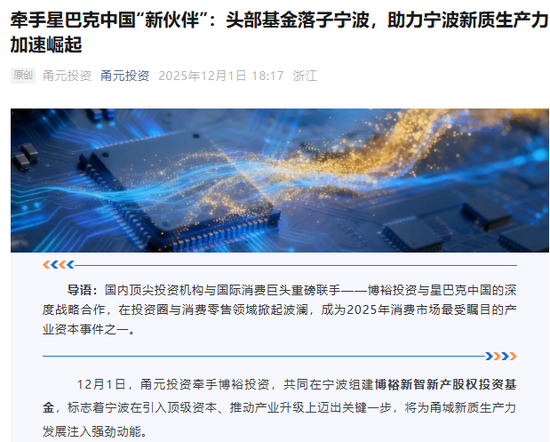
官宣后1个月,博裕已经搞定了收购星巴克的资金,收购主体落地在宁波
Xin Lang Cai Jing· 2025-12-05 14:54
Core Insights - The core point of the article is the acquisition of 60% stake in Starbucks China by Boyu Capital for approximately $2.4 billion, marking a significant investment in the coffee chain's 8,000 stores in China [1][21]. Group 1: Acquisition Details - Boyu Capital is set to spend around $2.4 billion (approximately 165 billion RMB) to acquire the stake in Starbucks China [21][22]. - The acquisition is believed to be facilitated by a newly established equity fund in Ningbo, named Boyu New Intelligence New Industry (Ningbo) Equity Investment Partnership [23][24]. - The partnership was officially announced by the Ningbo government fund on December 1, 2025, indicating a strong governmental backing for the acquisition [23]. Group 2: Fundraising Strategy - Boyu Capital likely employed a "find project first, then raise funds" strategy for this acquisition [22]. - The initial fundraising for the equity fund amounts to 4 billion RMB, with contributions from companies like Ningde Times, Luoyang Molybdenum, and Yitai B, each investing 500 million RMB [31][32]. - The total committed capital for the fund is expected to reach 4 billion RMB, with potential for expansion to 8-10 billion RMB [31]. Group 3: Financing Structure - The total funding required for the acquisition is estimated at 16 billion RMB, with the shortfall potentially covered by additional investments from limited partners [19][38]. - A syndicate loan of 10 billion RMB (approximately $1.4 billion) is being arranged by three Chinese banks to support the acquisition, with a loan term of 7 years [19][38]. - Boyu Capital's ability to secure the necessary funding within a month highlights its strong influence and negotiation capabilities in the market [19][38].

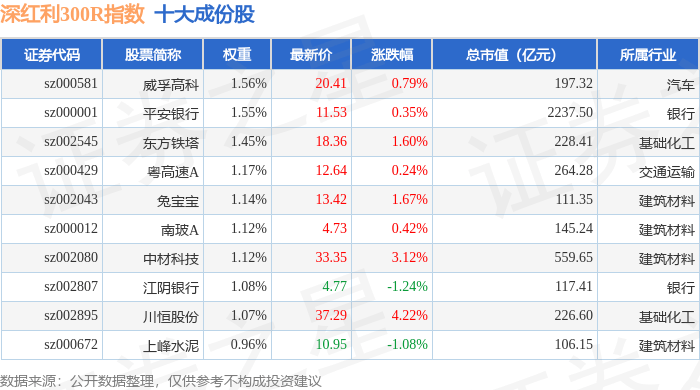
12月5日深红利300R(470062)指数涨1.16%,成份股瑞达期货(002961)领涨
Sou Hu Cai Jing· 2025-12-05 11:01
证券之星消息,12月5日,深红利300R(470062)指数报收于8140.3点,涨1.16%,成交1681.98亿元,换 手率1.55%。当日该指数成份股中,上涨的有239家,瑞达期货以10.01%的涨幅领涨,下跌的有58家,和 而泰以10.0%的跌幅领跌。 深红利300R(470062)指数十大成份股详情如下: | 证券代码 | 股票简称 | 权重 | 最新价 | 涨跌幅 | 总市值(亿元) | | 所属行业 | | --- | --- | --- | --- | --- | --- | --- | --- | | sz000581 | 威孚高科 | 1.56% | 20.41 | 0.79% | | 197.32 | 汽车 | | sz000001 | 平安银行 | 1.55% | 11.53 | 0.35% | | 2237.50 | → 银行 | | sz002545 | 东方铁塔 | 1.45% | 18.36 | 1.60% | 4 | 228.41 | 墓础化工 | | sz000429 | 粤高速A | 1.17% | 12.64 | 0.24% | | 264.28 | 交通运输 | | ...

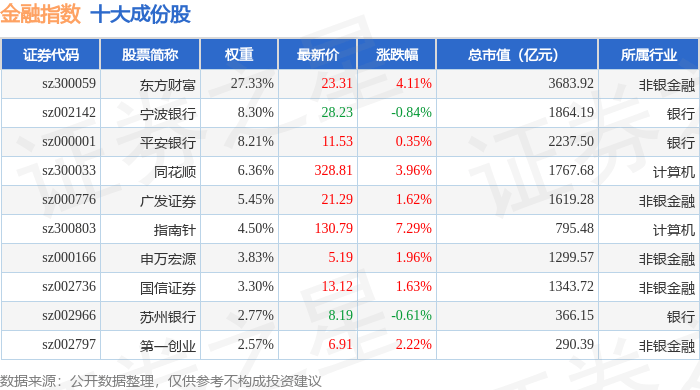
12月5日金融指数(399240)涨2.22%,成份股瑞达期货(002961)领涨
Sou Hu Cai Jing· 2025-12-05 10:24
Core Insights - The financial index (399240) closed at 1590.59 points, up 2.22%, with a trading volume of 38.556 billion yuan and a turnover rate of 1.29% [1] - Among the index constituents, 27 stocks rose, led by Ruida Futures with a 10.01% increase, while 6 stocks fell, with Qingdao Bank leading the decline at 2.06% [1] Financial Index Performance - The top ten constituents of the financial index include: - Dongfang Fortune: 27.33% weight, latest price 23.31, up 4.11%, market cap 368.392 billion yuan [1] - Ningbo Bank: 8.30% weight, latest price 28.23, down 0.84%, market cap 186.419 billion yuan [1] - Ping An Bank: 8.21% weight, latest price 11.53, up 0.35%, market cap 223.750 billion yuan [1] - Tonghuashun: 6.36% weight, latest price 328.81, up 3.96%, market cap 176.768 billion yuan [1] - Guotai Junan: 5.45% weight, latest price 21.29, up 1.62%, market cap 161.928 billion yuan [1] - Zhinanzhen: 4.50% weight, latest price 130.79, up 7.29%, market cap 79.548 billion yuan [1] - Shenwan Hongyuan: 3.83% weight, latest price 5.19, up 1.96%, market cap 129.957 billion yuan [1] - Guosen Securities: 3.30% weight, latest price 13.12, up 1.63%, market cap 134.372 billion yuan [1] - Suzhou Bank: 2.77% weight, latest price 8.19, down 0.61%, market cap 36.615 billion yuan [1] - First Venture: 2.57% weight, latest price 6.91, up 2.22%, market cap 29.039 billion yuan [1] Capital Flow Analysis - The net inflow of main funds into the financial index constituents totaled 2.177 billion yuan, while retail funds saw a net outflow of 1.563 billion yuan [3] - Detailed capital flow for key stocks includes: - Dongfang Fortune: 532 million yuan net inflow from main funds, 125 million yuan net outflow from retail [3] - Zhinanzhen: 532 million yuan net inflow from main funds, 392 million yuan net outflow from retail [3] - Guotai Junan: 132 million yuan net inflow from main funds, 868.578 million yuan net outflow from retail [3] - Other notable stocks include Tonghuashun and Ruida Futures, with varying net inflows and outflows [3]




平安集团牵头人工智能课题入选《2025金融行业关联交易高质量发展报告》优秀案例
Xin Hua Cai Jing· 2025-12-05 08:37
Core Viewpoint - The "2025 Financial Industry Related Party Transactions High-Quality Development Report" was released, highlighting the challenges and strategies for high-quality development in financial related party transactions in China, with a focus on the application of artificial intelligence in governance [1][3]. Group 1: Regulatory Context - The increasing complexity and concealment of related party transactions in China's financial sector necessitate enhanced identification, management, and regulation by financial institutions [3]. - The 2023 Central Financial Work Conference emphasized the need for comprehensive financial regulation to effectively prevent and mitigate financial risks, leading to new regulations from the National Financial Supervision Administration [3]. Group 2: Research Focus - The research led by Ping An Group addresses pain points in related party transaction management, proposing AI-driven intelligent solutions across three dimensions [3][4]. - The first dimension involves intelligent identification and dynamic management of related parties, utilizing multi-source data integration and advanced technologies to enhance accuracy and timeliness in identifying related entities [3][4]. Group 3: Intelligent Solutions - The second dimension focuses on fair pricing intelligent review and support, advocating for a standardized pricing database and AI technologies to automate the review of pricing fairness, thereby improving efficiency and quality [4]. - The third dimension emphasizes data statistics and intelligent analysis, introducing tools for automated data collection and reporting, which facilitate real-time decision-making and risk monitoring [4]. Group 4: Industry Implications - The research aligns with national regulatory directions and industry needs, showcasing a proactive shift from "passive compliance" to "active risk prevention" through the use of cutting-edge technology [4]. - Such explorations are expected to enhance the precision and automation of related party transaction management, significantly contributing to financial risk prevention and improving corporate governance effectiveness [4]. Group 5: Future Directions - Ping An Group plans to continue advancing the application of AI and other technological innovations in risk management and corporate governance, reinforcing the commitment to financial safety and supporting high-quality industry development [5].


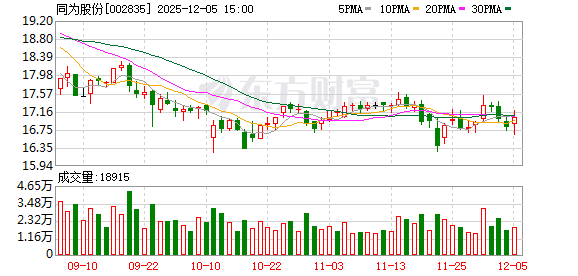
同为股份:关于使用自有资金购买银行理财产品到期赎回的公告
Zheng Quan Ri Bao· 2025-12-05 07:15
(文章来源:证券日报) 证券日报网讯 12月4日晚间,同为股份发布公告称,公司于2025年8月29日使用自有资金3,000万元购 买招商银行结构性存款产品,于近日赎回,收回本金并获得理财收益130,890.41元;于2025年9月1日 使用自有资金2,000万元购买平安银行结构性存款产品,于近日赎回,收回本金并获得理财收益82, 849.32元。 ...

12月4日区块链50(399286)指数涨0.13%,成份股东华软件(002065)领涨
Sou Hu Cai Jing· 2025-12-05 06:46
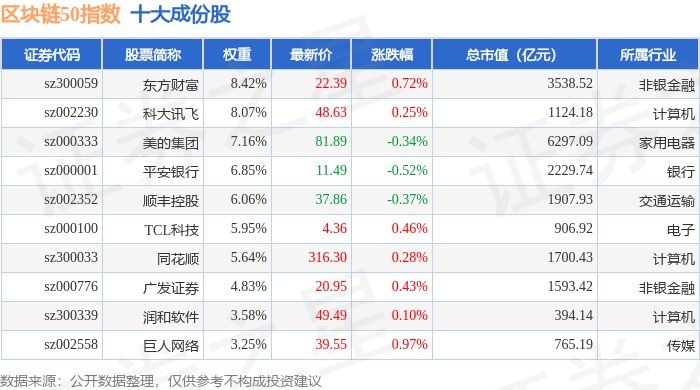
证券之星消息,12月4日,区块链50(399286)指数报收于3866.03点,涨0.13%,成交305.46亿元,换手 率1.7%。当日该指数成份股中,上涨的有19家,东华软件以5.94%的涨幅领涨,下跌的有30家,智度股 份以3.19%的跌幅领跌。 | 代码 | 名称 | 主力净流入(元) | 主力净占比 游资净流入 (元) | | 游资净占比 散户净流入 (元) | | 散户净占比 | | --- | --- | --- | --- | --- | --- | --- | --- | | 300007 | 汉威科技 | 1.48 Z | 9.69% | -371.68万 | -0.24% | -1.44 Z | -9.44% | | 002065 | 东华软件 | 9052.31万 | 4.97% | 1500.75万 | 0.82% | -1.06 Z | -5.79% | | 300059 | 东方财富 | 7689.48万 | 1.91% | -3485.67万 | -0.87% | -4203.81万 | -1.04% | | 000776 广发证券 | | 3800.40万 | 7.16% | ...