
HTSC

Search documents
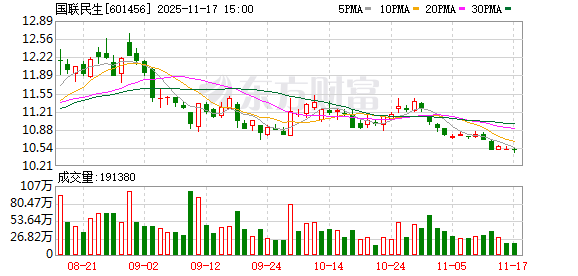
多家券商着力强化做市业务布局 近期国联民生证券、财达证券相关做市业务资格申请均取得进展
Zheng Quan Ri Bao· 2025-11-17 16:14
Core Insights - The market-making business is increasingly recognized as a crucial component for the high-quality development of securities firms in China, reflecting a trend seen in international investment banks' revenue structures [1][3] Group 1: Market-Making Business Expansion - The domestic market-making system is continuously improving, leading to a strategic acceleration in the layout of market-making businesses by securities firms [2] - Major securities firms are actively applying for market-making qualifications and advancing the application for segmented licenses [2][3] - Recent approvals include Guolian Minsheng Securities for stock options market-making and feedback on Caida Securities' application for North Exchange stock market-making [2][3] Group 2: Revenue Stability and Risk Management - Market-making businesses exhibit more stable revenue and lower risk, allowing firms to leverage their professional advantages to create barriers and generate consistent cash flow [3] - The initiation of market-making on the Sci-Tech Innovation Board and North Exchange has prompted strong firms to increase investments in this area, including team formation and technology upgrades [3][4] Group 3: Regulatory Environment - Regulatory bodies are refining the review standards for market-making businesses, emphasizing capital strength, business capability, and compliance risk control [3][4] - Caida Securities is adjusting its department structure and must clarify the impact of these changes on its market-making decision-making processes [4] Group 4: Growth Potential - The number of securities firms with market-making qualifications remains limited, with 23 firms approved for listed securities market-making, 19 for stock options, and 21 for North Exchange market-making [5] - The high entry barriers mean that only a few firms possess market-making qualifications, leading to a concentration of capabilities among top firms [5][6] - The potential for market-making in derivatives is significant, especially as financial derivative products continue to diversify [5][6] Group 5: Strategic Differentiation - Different segments of market-making require varying levels of capital strength, pricing ability, and risk control systems, with options and stock market-making being the most promising areas [6] - The North Exchange market-making is still in its nurturing phase, benefiting from policy incentives but requiring long-term investments from firms [6]


多家券商着力强化做市业务布局
Zheng Quan Ri Bao· 2025-11-17 15:53
Core Viewpoint - The recent progress in market-making qualifications for Guolian Minsheng Securities and Caida Securities reflects the accelerating strategic layout of brokerages in the market-making business as the domestic market-making system continues to improve and diversify [1][2]. Group 1: Market-Making Business Development - The market-making system is a mature trading mechanism widely applied across various financial markets, and it plays a crucial role in the high-quality development of brokerages [2]. - Guolian Minsheng Securities has officially received approval for its stock options market-making business, marking the first expansion of the stock options market-making team in two and a half years [2][3]. - Brokerages are increasing investments in market-making, including applying for relevant qualifications, forming specialized teams, and enhancing their service capabilities for institutional clients [2][4]. Group 2: Regulatory Environment and Challenges - Regulatory authorities are refining the review standards for market-making qualifications, emphasizing capital strength, business capability, and compliance risk control [3]. - Caida Securities is adjusting its organizational structure to enhance its market-making capabilities, responding to regulatory feedback regarding its application for the North Exchange market-making qualification [3]. Group 3: Market Potential and Growth - The number of brokerages with market-making qualifications remains relatively limited, with 23 brokerages approved for listed securities market-making and 19 for stock options market-making [4]. - The market capacity for market-making could significantly increase if the business expands to the main board and the growth potential of derivative market-making is further explored [4][5]. - The market-making business is becoming a core pillar for brokerages' self-operated transformation and stable balance sheet expansion due to its low-risk exposure and stable returns [5].
头部券商把脉2026:A股有望震荡上行,科技成长仍是投资主线
2 1 Shi Ji Jing Ji Bao Dao· 2025-11-17 13:12
Core Viewpoint - The consensus among major securities firms is that the A-share market is expected to enter a "slow bull market" in 2026, with a shift in investment opportunities from technology dominance in 2025 to multiple main lines in 2026 [1][3]. Group 1: Market Outlook - The A-share market has entered a new bull market since the policy measures introduced on September 24, 2024, with the Shanghai Composite Index reaching a ten-year high in 2025 [2]. - Major securities firms predict that the market will continue to evolve within a slow bull framework, with a key characteristic being the shift in driving forces [3][4]. - CITIC Securities emphasizes that A-shares should be viewed from a global demand perspective, as Chinese companies' advantages in the global value chain are transforming into pricing power, forming the basis for a low-volatility slow bull market [3]. Group 2: Driving Forces - There is a general expectation among securities firms that the driving force for the market will shift from "valuation recovery" to "profit-driven" or "fundamental verification" in 2026 [4]. - CICC estimates that the overall profit growth for A-shares in 2026 could be around 4.7%, with many industries nearing performance improvement [4]. - Dongwu Securities notes that the overall revenue and profit growth for A-shares has ended a four-year downward cycle and is beginning to rebound, supported by economic reforms and improved supply-demand dynamics [4]. Group 3: Investment Styles - The debate among securities firms centers on whether the market style will shift from "growth" to "value" in 2026, with Dongwu Securities identifying June 2026 as a potential key time for this transition [6][7]. - CICC suggests that the market style may become more balanced, as many cyclical industries approach supply-demand equilibrium [8]. - Guotai Junan recommends maintaining a focus on technology while also considering previously underperforming sectors such as real estate and consumer goods during the bull market [8]. Group 4: Investment Themes - Securities firms highlight three main investment themes: technology growth, Chinese companies going global, and cyclical resource products [9][10]. - The technology growth sector remains a favored direction, with a shift in focus from concepts to performance, particularly in application breakthroughs [9]. - The trend of Chinese companies expanding internationally is seen as a significant opportunity, with recommendations to focus on sectors like home appliances, engineering machinery, and global pricing resources [10][11].



头部券商,加速“出海”!
Zhong Guo Ji Jin Bao· 2025-11-17 12:50
Group 1 - Guotai Junan Securities' overseas subsidiary plans to acquire an Indonesian securities company, marking a significant step in its internationalization strategy in Southeast Asia [1] - The company has previously established subsidiaries in Singapore and Vietnam, indicating a continuous expansion of its regional business [1] - In 2024, Guotai Junan's Vietnam subsidiary received approval for capital increase from the Vietnam Securities Commission, and its UK subsidiary achieved full coverage of E-FICC asset classes [1] Group 2 - The internationalization of Chinese securities firms is a common development direction, with leading firms focusing on establishing hubs in key regions such as Europe, Southeast Asia, and the Middle East [2] - Southeast Asia is emerging as a new growth engine for Chinese securities firms, with notable market share achievements by firms like China Galaxy and Huatai Securities in Malaysia and Vietnam [2] - The strategy to expand into Southeast Asia aligns with the "Belt and Road" initiative, providing new business growth opportunities for Chinese firms [2] Group 3 - The China International Capital Corporation (CICC) is actively engaging with Middle Eastern sovereign wealth funds, which are increasingly investing in the Chinese market [3] - CICC aims to contribute to expanding China's capital market connections and building a new investment framework between China and Arab countries [3]
头部券商,加速“出海”!
中国基金报· 2025-11-17 12:27
Core Viewpoint - Guotai Junan Securities' overseas subsidiary plans to acquire an Indonesian securities company, marking a significant step in its internationalization strategy in Southeast Asia [2]. Group 1: International Expansion - Guotai Junan Securities has made positive progress in overseas expansion, focusing on Southeast Asia, the US, and Europe through subsidiary capital increases, business license acquisitions, and cross-border service expansions [4]. - The company aims to optimize cross-border integrated management mechanisms and development models while enhancing its international business, personnel, and operations by 2025 [4]. Group 2: Southeast Asia Market Growth - The Southeast Asian market is emerging as a new growth engine for Chinese securities firms, with several firms reporting significant revenue and scale growth in the region [4]. - China Galaxy has achieved a market share of 10% in Malaysia and 8% in Singapore, leading the largest IPO in Thailand in recent years, raising $207 million [4]. Group 3: Competitive Landscape - Huatai Securities is leveraging Singapore as a hub to create an ecosystem of investment banking, wealth management, and institutional trading, becoming the first Chinese institution to directly participate in Vietnamese securities trading [5]. - Other major firms like China International Capital Corporation (CICC) are also expanding into the Middle East, with CICC opening its first licensed branch in Dubai [5].

收盘丨沪指震荡调整跌0.46%,福建本地股掀涨停潮
Di Yi Cai Jing· 2025-11-17 07:26
Market Overview - The A-share market experienced a decline with the Shanghai Composite Index falling by 0.46%, the Shenzhen Component down by 0.11%, and the ChiNext Index decreasing by 0.20% [1][2] - The total trading volume in the Shanghai and Shenzhen markets was 1.91 trillion yuan, a decrease of 47.3 billion yuan compared to the previous trading day [1][2] Sector Performance - The sectors that saw the largest declines included non-ferrous metals, pharmaceuticals, electric power grid, photovoltaic, and banking [2] - Conversely, lithium mining, aquaculture, and AI application concept stocks showed strength, with local stocks in Fujian experiencing a surge [2] - The lithium mining sector was particularly strong, with Tianhua New Energy hitting a 20% limit up, and several other stocks also reaching their daily limit [2] Fund Flow - There was a net inflow of funds into the computer, energy metals, and media sectors, while there was a net outflow from photovoltaic equipment, securities, and chemical pharmaceuticals [4] - Specific stocks that saw significant net inflows included 360 Security Technology, Huasheng Tiancheng, and Great Wall Military Industry, with inflows of 1.439 billion yuan, 1.226 billion yuan, and 866 million yuan respectively [5] - On the other hand, stocks like CATL, Sungrow Power Supply, and Century Huatong faced net outflows of 1.713 billion yuan, 1.175 billion yuan, and 1.088 billion yuan respectively [5] Institutional Insights - Huatai Securities noted that short-term uncertainties remain, suggesting that the market may continue to experience fluctuations [6] - Galaxy Securities anticipates that the year-end market will likely maintain a fluctuating structure, with a focus on "anti-involution" and dividend themes during sector rotations [6] - Xiangcai Securities believes the market is in a "slow bull" phase, predicting that November will likely continue to show wide fluctuations with a gradual upward trend [6]

十大券商看后市|A股中长期向好趋势不改,短期或以震荡为主
Sou Hu Cai Jing· 2025-11-17 00:17
Core Viewpoint - The A-share market is expected to maintain a long-term upward trend despite short-term fluctuations, with a focus on sector rotation and investment opportunities in technology and cyclical industries [1][3][10]. Market Performance - The A-share market has been oscillating around the 4000-point mark, with a slowdown in the upward slope of the index, but this does not indicate the end of the current market cycle [1][10]. - The market is currently in a "systematic slow bull" phase, with a positive long-term outlook [1][12]. Sector Rotation - There is a notable rotation among sectors, with funds shifting from previously high-performing technology stocks to sectors like lithium batteries and consumer goods, benefiting from policy support [3][10][11]. - Investment themes to watch include anti-involution and dividend opportunities, as well as specific technology segments that may see a rebound [2][4]. Institutional Behavior - As the year-end approaches, institutional allocations are expected to stabilize, leading to a focus on balanced investment strategies [3][8]. - The upcoming Central Economic Work Conference is anticipated to set the tone for macroeconomic policies and investment priorities for the following year [8][11]. Economic Indicators - Recent economic indicators show a decline in M1 growth, suggesting a weakening macro liquidity environment, which may impact market dynamics [10]. - The market is currently experiencing a "high position oscillation," with expectations of a gradual recovery in economic conditions [5][16]. Investment Strategies - Investors are advised to focus on sectors with potential for performance improvement, such as AI, engineering machinery, and renewable energy, while also considering the implications of global market trends [7][17]. - The emphasis on "small and mid-cap + thematic investment" is seen as a favorable strategy in the current market environment [15].




机构研究周报:牛市或步入第二阶段,配置力量有望推动利率下行
Wind万得· 2025-11-16 22:35
Focus Review - The People's Bank of China (PBOC) will conduct a 6-month reverse repurchase operation of 800 billion yuan to maintain liquidity in the banking system, resulting in a net injection of 500 billion yuan after accounting for maturing operations [3] - The PBOC has established a pattern of monthly liquidity injections, indicating a continued focus on maintaining a loose monetary environment amid increased growth demands [3] Equity Market - CITIC Securities suggests that China's capital market is transitioning from an emerging market to a mature market, with an increasing global business exposure for listed companies, which is foundational for a low-volatility bull market [5] - Huatai Securities predicts that the A-share profit cycle will likely recover in the first half of 2026, driven by positive signals from capacity inventory cycles and overseas expansion [6] - Galaxy Securities warns of a potential decline in market risk appetite as the year-end approaches, suggesting a focus on cyclical sectors and dividend stocks that may benefit from improved Sino-U.S. trade relations [7] Industry Research - HSBC Jintrust Fund highlights the storage industry as a sector with multiple opportunities, driven by policy shifts and increased demand, particularly from AI data centers, suggesting a strategic opportunity for high growth [12] -招商证券 identifies investment potential in sectors experiencing supply clearing, particularly in resources, consumer goods, and traditional machinery, recommending focus on quality leaders and low-inventory industries [13] - 嘉实基金 sees significant long-term growth potential in China's innovative pharmaceutical sector, suggesting that recent corrections are a market adjustment rather than an end to the growth trend [14] Asset Allocation - Guosen Securities indicates that the bull market may be entering its second phase, with economic conditions improving and a broadening market trend, particularly in technology and undervalued sectors like liquor and real estate [22]



科技板块获逆势加仓 “哑铃策略”重回视野
Zhong Guo Zheng Quan Bao· 2025-11-16 20:09
Core Viewpoint - The A-share and Hong Kong stock markets experienced high-level fluctuations last week, showcasing a structural market with a focus on both growth and value sectors, leading to a renewed interest in the "barbell strategy" among investors [1][5]. Group 1: Market Performance - The A-share and Hong Kong markets displayed notable structural characteristics, with the Hong Kong innovation drug and gold sectors leading the market [2]. - The Hang Seng Innovation Drug ETF (159316) and other ETFs tracking the Hong Kong pharmaceutical sector saw weekly gains of around 7% [2]. - A500 ETF and other major ETFs in the A-share market recorded significant trading volumes, with A500 ETF achieving over 130 billion yuan in total trading [2]. Group 2: Investment Trends - Despite a general pullback in technology-themed ETFs, funds flowed into the Sci-Tech 50 index, which saw a net inflow of 2.3 billion yuan, making it the top equity index for net inflows [3]. - The AI-themed ETFs also attracted over 1 billion yuan in net inflows, indicating strong investor interest in emerging technology sectors [3]. - The overall liquidity in A-share and Hong Kong markets is expected to remain reasonably ample, with emerging industries like AI and innovative pharmaceuticals poised for further development [3]. Group 3: Barbell Strategy - The high dividend sectors in the Hong Kong market attracted significant capital, with products like the Hang Seng Dividend Low Volatility ETF gaining attention [5]. - The "barbell strategy," which combines technology growth and high dividend stocks, is being emphasized by various institutions as a key investment approach in the current market environment [5][6]. - The current allocation of public funds in the TMT sector has reached historical highs, indicating a potential shift in market dynamics and a focus on structural opportunities [5][6].
前三季度券商私募资管规模增近2700亿元
Zheng Quan Ri Bao· 2025-11-14 16:11
Core Insights - The brokerage asset management business is accelerating its return to active management fundamentals, with a notable increase in the scale of private asset management products [1][2] Group 1: Asset Management Scale and Growth - As of the end of September, the scale of brokerage private asset management products reached 5.73 trillion yuan, an increase of approximately 2687.33 billion yuan since the beginning of the year, reflecting a growth rate of 4.92% [2] - The scale of actively managed collective asset management plans rose to 31,957.89 billion yuan, with an increase of 3004.97 billion yuan, representing a growth rate of 10.38% and accounting for 55.73% of the total scale of brokerage private asset management [2][3] - In contrast, the scale of single asset management plans, primarily focused on channel business, decreased to 25,386.32 billion yuan, down by 317.63 billion yuan, continuing a downward trend [2] Group 2: Product Supply and Market Trends - The success of the active management transition is validated by new product data, with a total of 3,536.12 billion yuan in newly filed brokerage private asset management products in the first three quarters of the year [2] - Among these, the scale of collective asset management plans accounted for 2,189.76 billion yuan, representing 61.93% of the newly filed products, indicating a dominant position in the market [2] Group 3: Future Outlook and Structural Optimization - Analysts expect that the brokerage asset management business will continue to grow in both scale and revenue, with a stabilization trend anticipated by 2026 [3] - The implementation of asset management regulations has led to a continuous decline in channel-type asset management scale, while the proportion of collective asset management has been steadily increasing, highlighting a clear trend towards active management [3] - Policy support, particularly for small and medium-sized brokerages, is expected to facilitate the development of the asset management business, with new regulations encouraging differentiated development paths [3]