北方稀土

Search documents
稀土指数,正式上线
券商中国· 2026-01-11 11:51
Core Viewpoint - The Baotou Rare Earth Products Exchange (referred to as "Rare Exchange") has officially launched a rare earth price index, which aims to provide timely, accurate, and transparent price references for the rare earth industry, reflecting overall price trends and changes in specific varieties [1]. Group 1: Price Index Launch - The rare earth price index is based on the exchange's trading data and extensive collection of compliant trade data, developed using rigorous index models from research institutions [1]. - The index covers mainstream rare earth products such as lanthanum, cerium, praseodymium, and neodymium, and has gained significant attention since its announcement [1]. - The exchange plans to continuously optimize the index content, enrich the index system, and expand its application to serve the development of a unified national market for rare earths [1]. Group 2: Historical Context and Company Information - The Rare Exchange was established with contributions from 13 major rare earth enterprises and institutions, officially opening in March 2014 after passing national inspections [2]. - In January 2026, Baogang Co. and Northern Rare Earth both announced an increase in the associated transaction price for rare earth concentrates to 26,834 yuan/ton (excluding tax) [2][3]. - The price adjustment mechanism indicates that for every 1% change in REO (Rare Earth Oxide), the price will increase or decrease by 536.68 yuan/ton [3]. Group 3: Price Trends - The price of rare earth concentrates has been on the rise since 2024, with the fourth quarter of 2025 seeing a 37% increase from the previous quarter, adjusting to 26,205 yuan/ton [4][5]. - Rare earths are classified into light and heavy rare earths, with heavy rare earths being rarer and more unevenly distributed, primarily concentrated in China [5].



兴业证券:如何看待A股本轮开门红的结构与延续性?
智通财经网· 2026-01-11 10:36
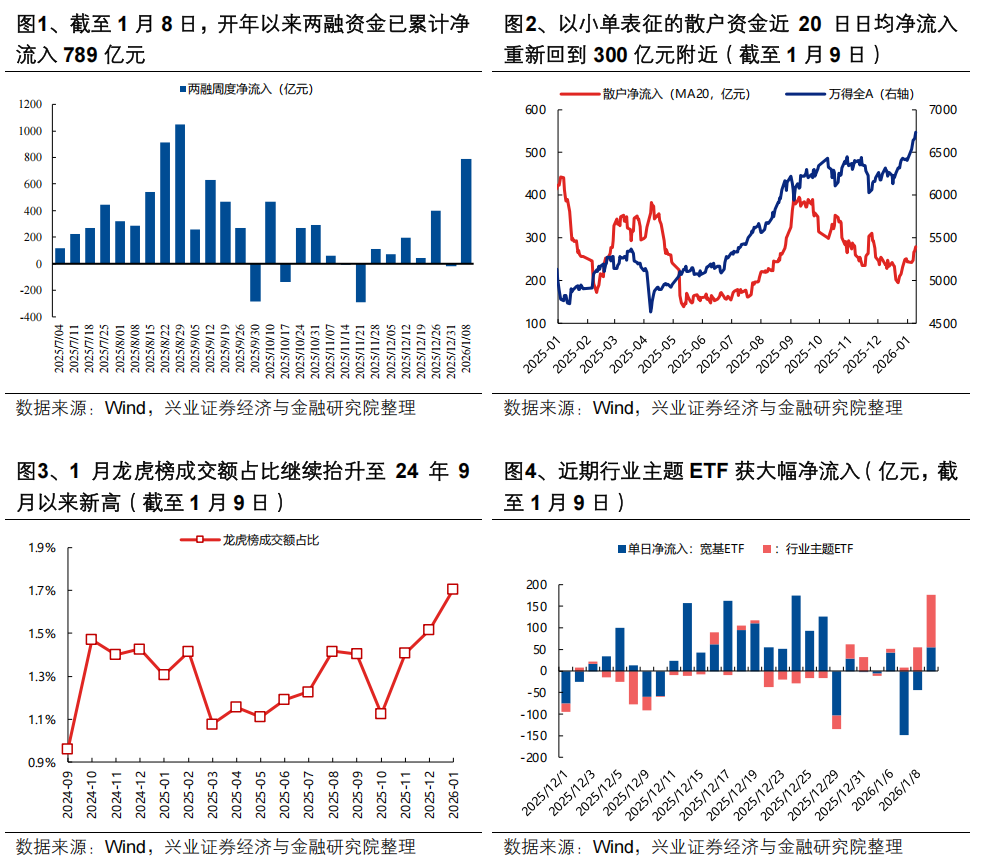
Core Viewpoint - The recent "opening red" in the A-share market reflects a favorable macroeconomic environment and abundant liquidity, which supports market risk appetite and attracts incremental capital inflow, creating a positive feedback loop between capital inflow and market rise [2][18]. Group 1: Market Dynamics - The A-share market has experienced a strong start with the Shanghai Composite Index breaking key levels and achieving a "sixteen consecutive days" rise, exceeding many investors' expectations [1][19]. - Historical data indicates that after a single-day trading volume exceeds 3 trillion yuan, there is typically at least a monthly-level market rally [19]. - Various types of trading funds have shown signs of accelerated entry, including a net inflow of 78.9 billion yuan in margin financing since the beginning of the year and a return of retail investor net inflow to around 30 billion yuan daily [2][5]. Group 2: Structural Characteristics - The inflow structure of different funds shows a strong consensus on key themes, primarily focusing on TMT (storage, AI applications), military industry (commercial aerospace), non-ferrous metals, new energy (controlled nuclear fusion), machinery (robots), and pharmaceuticals (innovative drugs, brain-machine interfaces) [5][36]. - The global stock market has also seen a strong start in 2026, driven by macroeconomic and industrial narratives, with A-shares reflecting similar trends [13][18]. Group 3: Future Directions - As companies begin to disclose annual reports, earnings will become a key factor driving market dynamics, leading to a structural adjustment where previously hot sectors face performance validation, while some low-performing sectors may attract new capital inflows [36]. - Industries with significant upward revisions in profit forecasts since November include technology (consumer electronics, computing), advanced manufacturing (new energy, military), cyclical sectors (building materials, non-ferrous metals), and consumer sectors (food processing, retail) [37][38].

稀土企业绕管控卖永磁体给西方,技术护城河或10年被摸透,国家战略在漏气
Sou Hu Cai Jing· 2026-01-11 08:50
Core Viewpoint - The article highlights the alarming issue of Chinese rare earth elements being secretly sold to Western countries, undermining China's strategic advantage in the global supply chain of these critical resources [2][10]. Group 1: Importance of Rare Earth Elements - Rare earth elements such as Neodymium, Dysprosium, and Terbium are essential for modern military and industrial applications, including advanced radar systems and electric vehicle motors [3][5]. - China holds over 30% of the world's rare earth reserves and dominates the processing and refinement capabilities, making it a key player in the global market [8]. Group 2: Illicit Trade Practices - The article describes sophisticated methods used by companies to bypass regulations, including the use of false documentation and the establishment of shell companies to obscure the origin of the materials [10][12]. - These operations not only facilitate the export of rare earth elements but also allow Western countries to reverse-engineer and analyze the technology embedded in these materials, potentially compromising China's technological edge [14]. Group 3: Strategic Implications - The unauthorized export of rare earth elements provides Western countries with critical resources, allowing them to strengthen their own supply chains and reduce dependency on China [18][19]. - The article warns that this trend could lead to a future where China loses its competitive advantage as Western nations develop their own capabilities in rare earth processing and technology [21][19]. Group 4: Regulatory Response - In response to these challenges, the Chinese government is implementing stricter regulations starting in 2025, focusing on the end-users of exported materials and requiring licenses for any products containing Chinese rare earth components [24][26]. - The article emphasizes the need for a comprehensive tracking system to monitor the flow of rare earth elements from extraction to final product, ensuring that all transactions are transparent and compliant with national security interests [28][30]. Group 5: Industry Responsibility - Companies are urged to recognize the strategic importance of rare earth elements and to avoid short-sighted profit motives that could jeopardize national interests [35]. - The article concludes that the rare earth industry must undergo a fundamental transformation to align with national security objectives, emphasizing that engaging in gray market operations is detrimental to the industry's future [35].
稀土价格指数正式上线!
新华网财经· 2026-01-11 08:18
Core Viewpoint - The Baotou Rare Earth Products Exchange (referred to as "Rare Exchange") has officially launched a rare earth price index on multiple platforms, aiming to serve as a price "barometer" and "guideline" in China's rare earth product circulation sector [1]. Group 1 - The Rare Exchange is established by 13 major rare earth enterprises and related institutions, including Northern Rare Earth, China Rare Earth, and others [1]. - The index is based on the Rare Exchange's trading data and compliant trade data, utilizing a rigorous index model developed by research institutions, covering mainstream rare earth products like lanthanum, cerium, praseodymium, and neodymium [1]. - Future plans for the Rare Exchange include optimizing index content, enriching the index system, expanding index platform releases, and promoting index applications [1]. Group 2 - As of January 9, the average price of praseodymium-neodymium oxide is 624,900 yuan/ton, and metallic praseodymium-neodymium is 760,700 yuan/ton, showing a slight increase compared to the first trading day of 2026 [2]. - On January 9, Northern Rare Earth and Baotou Steel announced an adjustment of the rare earth concentrate transaction price for the first quarter of 2026 to 26,834 yuan/ton (dry weight, REO=50%), reflecting a 2.4% increase [2]. - Since the third quarter of 2024, the transaction price of rare earth concentrates has been raised consecutively six times, with a price change of 536.68 yuan/ton for every 1% change in REO [2].

周末影响市场重要资讯回顾:国常会部署实施财政金融协同促内需一揽子政策,证监会提高吹哨人奖励至100万元
Xin Lang Cai Jing· 2026-01-11 08:10
Macro Economy - The State Council has deployed a package policy for fiscal and financial coordination to promote domestic demand, emphasizing the importance of effective demand expansion and innovative macro-control measures [2] - The National Business Work Conference highlighted the need to accelerate the cultivation of new growth points in service consumption and optimize the implementation of the old-for-new consumption policy [3] - The Ministry of Finance and the State Taxation Administration announced the cancellation of VAT export tax rebates for photovoltaic products starting April 1, 2026, and a reduction in the VAT export tax rebate rate for battery products from 9% to 6% until the end of 2026 [4] Capital Market - The China Securities Regulatory Commission has significantly increased the rewards for whistleblowers reporting violations in the securities and futures markets, with the maximum reward rising to 1 million yuan for major cases [10] - The Shanghai Stock Exchange issued over 130 disciplinary penalties for information disclosure violations in 2025, with a focus on financial fraud and serious violations leading to delisting [11] Industry Dynamics - The first successful flight of the "Tianma-1000" unmanned transport aircraft was reported, which is designed for logistics transport and emergency rescue, showcasing its capabilities in complex terrains [16] - New Jian Transmission, a first-tier supplier for humanoid robots, has initiated its IPO process, indicating strong industry interest due to its connection with Tesla's Optimus supply chain [17] - The domestic first 3D-printed aviation engine has completed its flight test, marking a significant milestone in China's aerospace technology [30] Company News - Tianpu Co., Ltd. is under formal investigation for significant disclosure omissions, raising concerns about its market conduct [33] - Guizhou's Green Land Holdings has projected a net loss of 16 billion to 19 billion yuan for 2025, attributed to declining asset prices and increased promotional efforts [36] - The stock of Guozheng Technology is set to resume trading after a suspension due to abnormal price fluctuations, with an expected net loss for the fiscal year [39]


稀土指数,正式上线
Zheng Quan Shi Bao· 2026-01-11 08:05
Core Viewpoint - The Baotou Rare Earth Products Exchange (referred to as "Rare Exchange") has officially launched a rare earth price index, which aims to provide timely, accurate, and transparent price references for the rare earth industry, reflecting overall price trends and specific product variations in the market [1] Group 1: Price Index Launch - The rare earth price index is based on the exchange's trading data and extensive collection of compliant trade data, developed using a rigorous index model from research institutions [1] - The index covers mainstream rare earth products such as lanthanum, cerium, praseodymium, and neodymium, and aims to support the healthy and orderly development of the rare earth market [1] - The index was launched on December 5, 2025, during the 2025 Entrepreneurs Forum in Boao, and has garnered significant attention from the rare earth industry [1] Group 2: Future Developments - The Rare Exchange plans to continuously optimize the index content, enrich the index system, expand the index platform, and enhance the promotion of index applications [1] - The goal is to create an indispensable price "barometer" and "weather vane" in the rare earth product circulation field, contributing to the establishment of a unified national market for rare earths [1] Group 3: Company Background - The Rare Exchange was established with contributions from 13 major rare earth enterprises and related institutions, including Northern Rare Earth and China Rare Earth [2] - The exchange was officially launched on August 8, 2012, and has since passed various national reviews and received high-tech enterprise certification in 2022 [2] Group 4: Price Adjustments - On January 9, 2026, Baogang Co. and Northern Rare Earth announced an increase in the associated transaction price for rare earth concentrates for the first quarter of 2026 to 26,834 yuan/ton (excluding tax, dry weight, REO=50%) [2] - The price adjustment mechanism indicates that for every 1% change in REO, the price will increase or decrease by 536.68 yuan/ton [2][3] - The previous quarter's price was adjusted to 26,205 yuan/ton, reflecting a 37% increase [3] Group 5: Market Context - Since 2024, the trading prices of rare earth concentrates have been on the rise, highlighting the strategic importance of rare earth elements, which are non-renewable resources [4] - Rare earths are categorized into light and heavy rare earths, with heavy rare earths being rarer and more unevenly distributed, primarily concentrated in China [4]
有色金属行业周报:宏观升温板块大涨,重视稀土涨价行情-20260111
Guotou Securities· 2026-01-11 08:04
Investment Rating - The report maintains an investment rating of "Outperform the Market - A" for the non-ferrous metals sector [4]. Core Views - The report highlights a bullish sentiment towards non-ferrous metals, particularly copper, aluminum, rare earths, tin, lithium, gold, silver, tantalum, niobium, antimony, and uranium in the medium to long term [1][2][3]. - The macroeconomic environment is warming, leading to price increases in various non-ferrous commodities, with lithium, silver, tin, and aluminum leading the gains [1]. - The report emphasizes the potential for continued price increases in rare earths and tantalum, which are less influenced by supply-demand dynamics [1]. Summary by Sections Precious Metals - Gold and silver prices have shown significant increases, with COMEX gold closing at $4,473 per ounce (+3.68%) and silver at $79.4 per ounce (+2.75%) [1]. - The U.S. labor market data indicates a slight decrease in unemployment to 4.4%, influencing market expectations for the Federal Reserve's interest rate decisions [1]. - The People's Bank of China has increased its gold reserves for the 14th consecutive month, now holding 74.15 million ounces [1]. Industrial Metals - **Copper**: LME copper closed at $12,965.5 per ton (-0.93%), while SHFE copper rose to ¥101,210 per ton (+2.60%). Supply disruptions in Chile and a slight decrease in demand from downstream industries are noted [2]. - **Aluminum**: LME aluminum reached $3,149.0 per ton (+1.91%), with SHFE aluminum at ¥24,455.0 per ton (+7.78%). The report indicates a slight increase in domestic production capacity but weak downstream demand [3]. - **Tin**: SHFE tin contracts rose to ¥352,910 per ton (+7.7%), driven by macroeconomic sentiment and supply expectations from key producing regions [7]. Energy Metals - **Nickel**: Nickel prices experienced volatility, with LME nickel peaking at $18,000 per ton before a sharp decline due to increased inventory levels and weak demand [8]. - **Cobalt**: Cobalt prices remain stable around ¥460,000 per ton, with supply constraints expected to tighten further in 2026 due to export quota delays from the Democratic Republic of Congo [9]. - **Lithium**: Carbonate lithium futures reached ¥143,420 per ton (+18%), with expectations for increased demand from energy storage and electric vehicle sectors [10]. Strategic Metals - **Rare Earths**: Prices for praseodymium-neodymium oxide and terbium oxide have increased to ¥626,000 and ¥623,500 per ton, respectively, with expectations for continued price growth due to stable demand [12].
稀土价格指数在多家平台正式上线!
Xin Lang Cai Jing· 2026-01-11 07:56
Core Viewpoint - The Baotou Rare Earth Products Exchange (referred to as "Rare Exchange") has officially launched a rare earth price index, which aims to provide timely, accurate, and transparent price references for the rare earth industry in China [1]. Group 1: Price Index Launch - The rare earth price index is based on the exchange's trading data and extensive collection of compliant trade data, utilizing a rigorous index model developed by research institutions [1]. - The index covers mainstream rare earth products such as lanthanum, cerium, praseodymium, and neodymium, reflecting the overall price trends and market changes of rare earth products in China [1]. - The index was announced on December 5, 2025, during the 2025 Entrepreneurs Forum in Boao, and has garnered significant attention from the rare earth industry [1]. Group 2: Future Developments - The Rare Exchange plans to continuously optimize the index content, enrich the index system, expand the index platform, and enhance the promotion of index applications [1]. - The goal is to establish the index as an indispensable "barometer" and "weather vane" for the circulation of rare earth products in China, contributing to the development of a unified national market for the rare earth industry [1]. Group 3: Company Background - The Rare Exchange was established with contributions from 13 major rare earth enterprises and related institutions, including Northern Rare Earth and China Rare Earth [2]. - The exchange was officially launched on March 28, 2014, after passing national inspections and has since received recognition as a national high-tech enterprise in 2022 [2]. Group 4: Price Adjustments - On January 9, 2026, Baogang Co. and Northern Rare Earth announced an increase in the associated transaction price for rare earth concentrates for the first quarter of 2026 to 26,834 yuan/ton (excluding tax, dry weight, REO=50%) [2][3]. - The price adjustment mechanism indicates that for every 1% change in REO, the price will increase or decrease by 536.68 yuan/ton [3]. - The previous quarter's price was set at 26,205 yuan/ton, reflecting a 37% increase compared to the prior quarter [3]. Group 5: Market Trends - Since the beginning of 2024, the trading prices of rare earth concentrates have been on the rise [4]. - Rare earth elements are classified into light and heavy rare earths, with heavy rare earths being rarer and more unevenly distributed, primarily concentrated in China [4].
上证指数创十年新高,主升浪行情来了?高手看好军工、白银等板块
Mei Ri Jing Ji Xin Wen· 2026-01-11 07:44
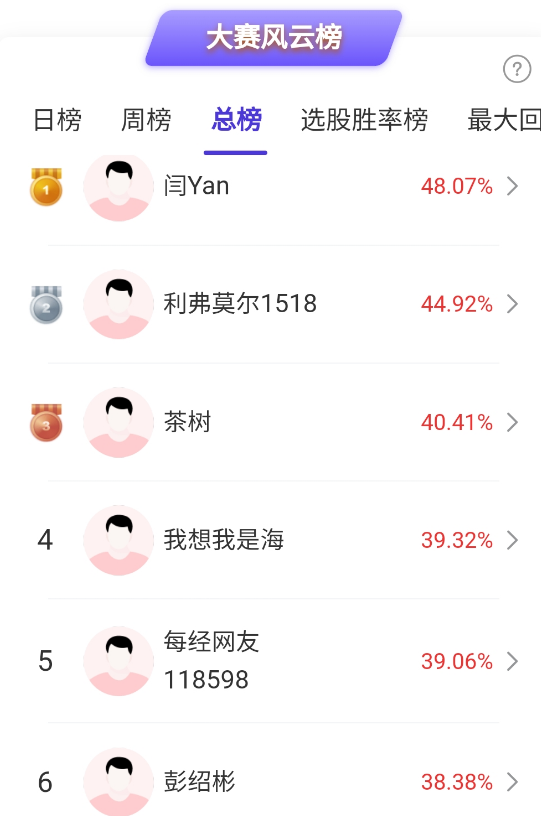
Group 1 - The A-share market has shown a good profit effect in the first week of 2026, with the Shanghai Composite Index reaching a ten-year high, and various sectors performing well, including display panels, vanadium mining, and commercial aerospace [1] - The "GEO" concept has gained market attention, with related stocks experiencing significant increases [8] - The competition for the "掘金大赛" (Gold Digging Competition) has attracted many participants, indicating a bullish sentiment in the market as it enters a main upward trend [6] Group 2 - The competition allows participants to simulate trading with a virtual fund of 500,000 yuan, running from January 5 to January 16, 2026, with cash rewards for positive returns [3][7] - Participants can gain access to exclusive market insights and analysis through the "火线快评" (Fire Line Quick Review) service, which provides updates on market trends and investment logic [3][7] - The competition also facilitates networking among participants, allowing them to exchange market insights and investment strategies [4]
稀土价格指数正式上线
财联社· 2026-01-11 07:36
Core Viewpoint - The Baotou Rare Earth Products Exchange (referred to as "Rare Exchange") has officially launched a rare earth price index, which utilizes its own trading data and widely collected compliant trade data, aiming to serve as a price "barometer" and "guideline" for the rare earth market in China [1]. Group 1 - The rare earth price index covers mainstream products such as lanthanum, cerium, praseodymium, and neodymium [1]. - The Rare Exchange plans to continuously optimize the index content, enrich the index system, and expand the index platform's publication to contribute to the establishment of a unified national market for rare earths [1]. - Baotou Steel and Northern Rare Earth announced an adjustment of the rare earth concentrate transaction price to 26,834 yuan/ton (excluding tax, REO=50%) for Q1 2026, marking a 2.4% increase [1]. Group 2 - The pricing trend for rare earth concentrates shows a significant increase from 19,109 yuan/ton in Q3 2025 to 26,834 yuan/ton in Q1 2026, reflecting a 37.13% increase from Q4 2025 [3]. - The price adjustments have been consistent, with six consecutive increases since Q3 2024, indicating a strong upward trend in the rare earth market [1][3].