国家电网

Search documents
新能源汽车补能焦虑被终结了吗
Zhong Guo Qing Nian Bao· 2025-07-17 01:59
Core Points - NIO has completed its plan to establish 1,000 high-speed battery swap stations, creating a network connecting 550 cities across China [2][3] - The NIO L60 vehicle completed a 10,000 km journey in 98 hours, demonstrating the convenience of electric vehicles on highways [3][4] - NIO has invested over 18 billion yuan in the development and operation of battery swap infrastructure, leading the industry in the number of swap stations [4][5] Group 1 - NIO's 1,000th high-speed battery swap station is located at the G5011 Wuhu-Hefei service area, marking a significant milestone in its infrastructure development [2][3] - The company has built a total of 3,399 battery swap stations, with nearly 80 million battery swap services provided to users [4][5] - NIO aims to enhance the user experience for electric vehicle charging and swapping, positioning itself as a leader in the industry [4][6] Group 2 - NIO has formed strategic partnerships with various automotive and energy companies to improve the charging experience for electric vehicle users [5][6] - The company is actively involved in setting industry standards for battery swap technology, contributing to the development of a national standard for battery swap stations [5][6] - The recent government guidelines emphasize the importance of building high-power charging infrastructure, which aligns with NIO's goals for expanding its network [6]



“万元”学费时代,要来了吗?
虎嗅APP· 2025-07-17 00:37
Core Viewpoint - The article discusses the rising trend of tuition fees in Chinese universities, indicating that many institutions are entering a new phase of tuition inflation, with some fees exceeding 40,000 yuan per year for certain programs, reflecting a significant financial burden on families [4][5][6]. Group 1: Tuition Fee Increases - Public universities are experiencing tuition increases ranging from 10% to 30%, with some private institutions seeing even higher hikes, such as Shanghai Zhongqiao Vocational and Technical University, where art program fees have surpassed 43,000 yuan, a 23% increase from the previous year [3][5][12]. - Yunnan Normal University has raised tuition for liberal arts majors from 3,400 yuan to 4,200 yuan per year, marking a 23.5% increase, while other disciplines also saw increases of 10% to 32.4% [8][9][10]. - The average tuition increase across various disciplines in Yunnan is approximately 10.5%, with a new floating mechanism linked to program quality being introduced [10][11]. Group 2: Financial Pressures and Future Trends - The rising tuition fees are attributed to increased operational costs and reduced government funding, leading universities to rely more heavily on tuition revenue [6][34][22]. - The trend of tuition hikes is expected to continue, with many institutions already experiencing significant increases since 2020, indicating a long-term shift in the higher education funding landscape [22][28]. - The financial strain on families is compounded by the rising costs of living and the declining birth rate, which may lead to fewer students enrolling in higher education institutions in the future [34][35]. Group 3: Impact on Educational Value - The article highlights a concerning trend of degree devaluation, where the job market is increasingly favoring vocational qualifications over traditional degrees, leading to a phenomenon where even graduates from prestigious universities struggle to secure employment [37][40]. - The rising tuition costs are juxtaposed with the increasing number of graduates, creating a competitive job market that diminishes the perceived value of a university degree [37][41]. - There is a growing call for higher education institutions to focus on practical skills and employability, suggesting a need for reform in how education is delivered to better align with market demands [42][43].

多地高温天气频繁,央企加力能源保供
Di Yi Cai Jing· 2025-07-16 10:38
Core Viewpoint - The article highlights the significant increase in electricity demand during the summer peak season in China, driven by high temperatures and economic growth, with expectations of a year-on-year increase of approximately 100 million kilowatts in peak load [1] Group 1: Electricity Supply and Demand - The central enterprises are identified as the main force in ensuring energy supply during the summer peak, with the State-owned Assets Supervision and Administration Commission urging them to contribute to stable economic growth and public comfort [1] - The National Energy Group has initiated measures to ensure power supply, including the commissioning of a new coal-fired power unit that incorporates advanced technologies, enhancing the overall efficiency of electricity generation [2] - As of mid-July, the National Energy Group reported a power generation of 1,523.9 billion kilowatt-hours, reflecting a year-on-year increase of 3.3%, with coal production reaching 74.26 million tons, up 1.7% [2] Group 2: Renewable Energy Integration - Wind and solar power are increasingly becoming the main sources of new electricity generation, with installed capacities reaching 570 million and 1.08 billion kilowatts respectively, accounting for 45.7% of total installed capacity, surpassing coal-fired power [2] - The article emphasizes the need for high-level integration and consumption of renewable energy as a key aspect of building a new energy system [2] Group 3: Infrastructure and Market Developments - The Hami-Chongqing ±800 kV UHVDC project has successfully delivered over 1 billion kilowatt-hours of electricity since its commissioning, significantly supporting the power supply in Chongqing [4] - The "Xinjiang Power to Chongqing" project is expected to inject over 36 billion kilowatt-hours of clean electricity into the Chongqing grid by the end of the year, equivalent to one-fifth of the city's annual electricity consumption [7] - A new cross-regional electricity trading mechanism has been established, facilitating the transfer of over 2 billion kilowatt-hours of electricity from Guangdong, Guangxi, and Yunnan to eastern provinces, marking a significant step towards a unified national electricity market [8]


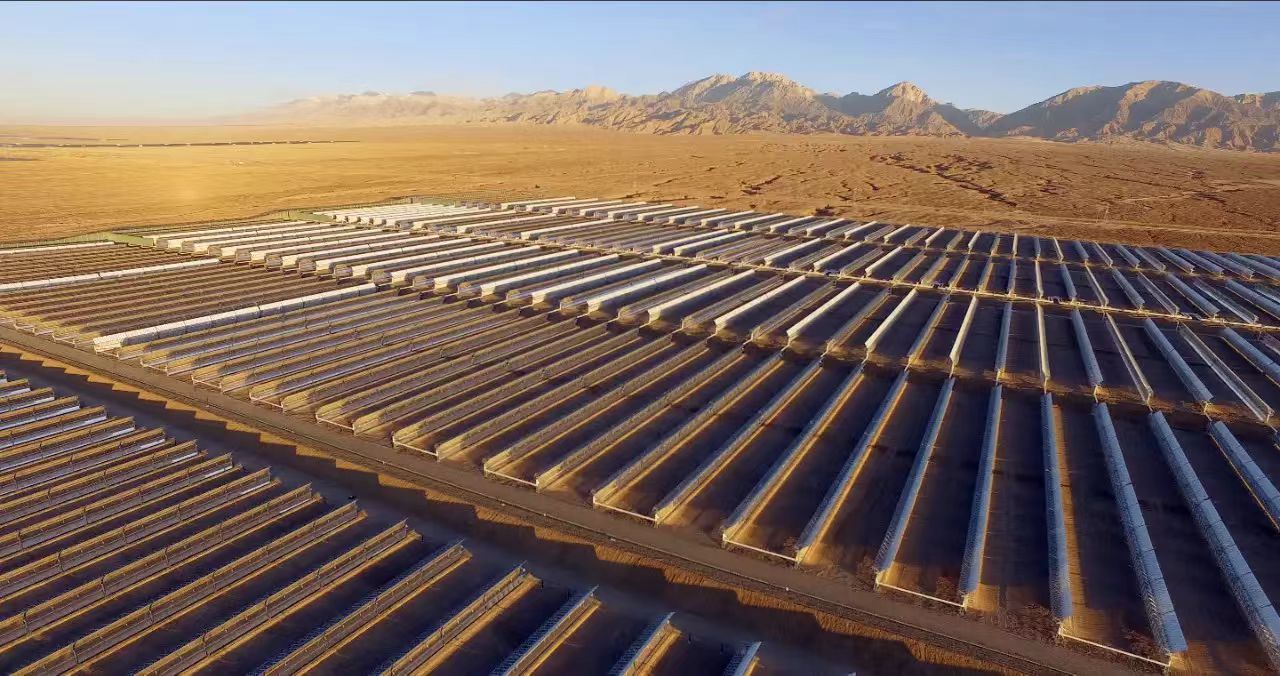
前景无忧拟冲北交所:董事长景治军控股55%,曾在山西省电力系统任职多年
Sou Hu Cai Jing· 2025-07-16 08:19
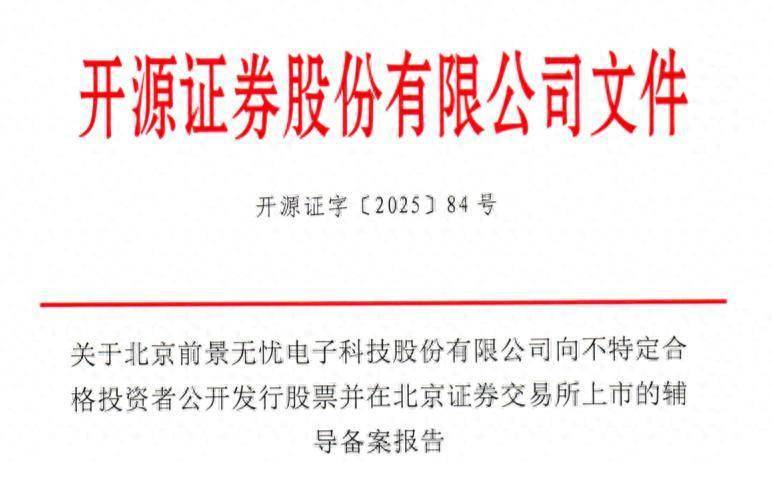
Group 1 - The core viewpoint of the news is that Qianjing Wuyou Technology Co., Ltd. has completed its IPO counseling filing with the Beijing Securities Regulatory Bureau and plans to list on the Beijing Stock Exchange, with Kaiyuan Securities as the counseling institution [2] - Qianjing Wuyou was established in 2011 with a registered capital of 5.3 billion yuan, focusing on providing smart IoT products and digital solutions in the power distribution sector, recognized as a national-level "specialized and innovative" small giant enterprise [2] - The actual controller of the company, Chairman and General Manager Jing Zhijun, directly holds 32.34% of the shares and indirectly controls 22.22% through Deqing Jianyang, giving him a total voting power of 54.56% [2] Group 2 - Jing Zhijun, born in 1970, has extensive experience in the power industry, holding various positions in companies such as Shanxi Jineng Materials Co., Ltd. and Miya Microelectronics, which is the predecessor of Qianjing Wuyou [5] - The company has shown rapid revenue growth, achieving operating revenues of 317 million yuan, 582 million yuan, and 332 million yuan for the years 2022, 2023, and the first eight months of 2024, respectively [5] - Net profits for the same periods were 50.09 million yuan, 92.75 million yuan, and 53.95 million yuan, indicating a significant increase in profitability [5] - The State Grid Corporation is the largest customer, contributing approximately 40% of the company's revenue [5]
跨电网经营区常态化电力交易落地 售电行业迎来大洗牌
经济观察报· 2025-07-16 04:33
Core Viewpoint - The implementation of the new cross-grid electricity trading mechanism will significantly alter the landscape for electricity sales companies, leading to a larger market, more players, faster pace, and more complex rules, ultimately increasing profit opportunities and requirements for companies [1][26]. Summary by Sections National Unified Electricity Market - A new important document was released on July 14 by the National Development and Reform Commission (NDRC), marking a significant breakthrough in electricity system reform and a key step in building a national unified electricity market [2]. - The document outlines a cross-grid trading mechanism that aims to break market segmentation and achieve "soft connectivity" between the State Grid and Southern Grid [2][9]. Trading Mechanism Details - The mechanism includes detailed designs for various trading types, safety checks, execution principles, and information sharing [2][3]. - It sets short-term, medium-term, and long-term goals for integrating trading within and across the two grids [3][9]. Impact on Electricity Sales Companies - Following the announcement, many electricity sales companies began preparing to understand the implications for their future operations [4]. - Companies that fail to upgrade their systems within 1-2 years may be forced to retreat to regional retail or transform into service providers [4][20]. - Leading companies can leverage their national business layouts to engage in large-scale cross-regional trading, enhancing their market opportunities [4][20]. Market Dynamics and Trading Opportunities - The new scheme will increase the variety of trading products and shorten trading cycles, providing more options and profit points for market participants [22][25]. - The transition from annual and monthly trading to continuous trading on working days will require companies to enhance their algorithmic trading and real-time risk management capabilities [25][26]. Regulatory and Structural Changes - The scheme addresses the historical market segmentation between the State Grid and Southern Grid, filling a regulatory gap for cross-grid trading [9][10]. - It promotes a principle of "one registration, nationwide sharing," allowing companies to operate across different regions without the need for multiple registrations [15][20]. Future Outlook - By 2025, the market is expected to see more market-based trading methods and a reduction in trading cycles, catering to the green consumption needs of electricity users [7]. - The long-term vision includes achieving a unified market with fair competition and optimized resource allocation across the country by 2030-2035 [9].

政策与大类资产配置周观察:”对等关税”再临,TACO面临考验
Tianfeng Securities· 2025-07-15 09:17
Group 1: Domestic Policy Insights - The Chinese government emphasizes the importance of international operations for domestic enterprises, highlighting the increasing significance of overseas investments for domestic economic development [11] - The recent meeting between Chinese Premier Li Qiang and Brazilian President Lula underscores the strengthening of China-Brazil relations, with bilateral trade reaching a record $181.5 billion in 2023 [11] - The Chinese government is committed to enhancing support for enterprises operating abroad, focusing on financial, insurance, and safety measures to create a better environment for business [11] Group 2: Overseas Policy Insights - The U.S. has initiated a new round of tariff pressures, threatening high tariffs on 25 countries if they do not comply with U.S. demands by August 1 [19] - The tariffs range from 25% to 50% depending on the country, with significant implications for international trade dynamics [19] - The U.S. administration's focus on reducing trade deficits may lead to further escalations in trade tensions, impacting global markets [19] Group 3: Equity Market Analysis - A-shares have shown a positive trend, with major indices like the CSI 500 and Shenzhen Composite Index rising nearly 2% in the past week, driven by improved market sentiment [25] - The net inflow of southbound funds reached 24.119 billion yuan during the second week of July, indicating strong investor interest in A-shares [25] - The MSCI China A-share Index also saw a 1.06% increase, reflecting overall market optimism [25] Group 4: Fixed Income Market Analysis - The People's Bank of China has indicated a shift towards a more accommodative monetary policy, with a net withdrawal of 226.5 billion yuan in open market operations last week [49] - The 10-year government bond yield has shown slight recovery, reflecting market adjustments to the evolving monetary policy landscape [49] - The expansion of the Bond Connect program to include more non-bank institutions is expected to enhance overseas asset allocation opportunities for domestic investors [50] Group 5: Commodity Market Analysis - The prices of non-ferrous metals have continued to decline, while precious metals have rebounded slightly, indicating mixed trends in the commodity market [49] - The IEA reports that global oil supply is expected to exceed demand this year, which may impact oil prices moving forward [49] - The Chinese government has set clear goals for new urbanization, which may influence agricultural and commodity markets in the long term [49]
政策与大类资产配置周观察:“对等关税”再临,TACO面临考验
Tianfeng Securities· 2025-07-15 07:16
Policy and Macro Analysis - The report highlights the increasing internationalization of Chinese enterprises, emphasizing their importance to domestic economic development as stated by Premier Li Qiang during a meeting with Chinese companies in Brazil [11] - The U.S. has initiated a new round of tariff pressures, threatening high tariffs on 25 countries if they do not comply with U.S. demands by August 1 [19][24] - The report notes that the U.S. tariffs vary significantly by country, with Brazil facing a 50% tariff, while other countries like Japan and South Korea face tariffs of 25% [23] Equity Market Analysis - A-shares have shown a positive trend, with major indices like the CSI 500 and Shenzhen Composite Index rising nearly 2% in the past week, influenced by the U.S.-China discussions [4][27] - The net inflow of southbound funds reached 24.119 billion yuan during the second week of July, indicating strong investor interest [27] - The MSCI China A-share Index increased by 1.06% during the same period, reflecting overall market optimism [27] Fixed Income Market Analysis - The People's Bank of China has signaled a commitment to increasing monetary easing, with a net withdrawal of 226.5 billion yuan in open market operations last week [47] - The DR007 rate remained low, dropping to 1.46% on July 8, indicating a relaxed liquidity environment [47] Commodity Market Analysis - The report notes a decline in non-ferrous metals prices, while crude oil has seen a slight recovery, and precious metals have rebounded [5] - The IEA has reported that global oil supply is expected to exceed demand this year, impacting commodity pricing strategies [5] Foreign Exchange Market Analysis - The U.S. dollar index has shown slight strengthening, closing at 97.87, while the Chinese yuan depreciated to 7.17 against the dollar [5] - The report indicates that the continuous increase in foreign exchange reserves and the expansion of gold reserves by the central bank reflect a stable financial strategy [5] Major Asset Rotation Outlook - The report suggests a cautious approach to asset rotation in July, emphasizing the need to prevent overheating in the market [5] - It anticipates further fiscal expansion and moderate monetary easing to address potential uncertainties from U.S. trade policies and geopolitical risks [5]
中国经验助力巴西东北部地区能源转型
Xin Hua Wang· 2025-07-15 07:04
Group 1 - Brazil's Northeast region is becoming a key area for energy transition, driven by renewable energy resources, with significant investments from Chinese companies like State Power Investment Corporation, China General Nuclear Power Group, and others [1] - The region has seen a rapid increase in installed renewable energy capacity, with 99.75% of energy in Piauí state being renewable [1] - The Brazilian National Economic and Social Development Bank is studying China's "sponge city" concept to enhance urban resilience against extreme climate events [1] Group 2 - China General Nuclear Power Group has been active in the Brazilian energy market for six years, planning to build a multi-energy complementary base in Piauí with over 1,400 MW capacity and an investment exceeding 3 billion Brazilian Reais (approximately 540 million USD) [2] - The establishment of a Sino-Brazil Clean Energy Innovation Center is planned to deepen cooperation in research and development, energy storage, and other areas [2] - The development of clean energy is viewed as a crucial opportunity for economic and social improvement in Brazil's Northeast region, enhancing the quality of life for residents [2]
中能观察丨国网、南网联手,电力全国“大循环”时代来临
国家能源局· 2025-07-15 03:38
Core Viewpoint - The article discusses the significant breakthrough in China's electricity market with the approval of the "Cross-Grid Operating Area Normalized Electricity Trading Mechanism Plan," which allows for the seamless flow of electricity resources across the national grid, marking a step towards a unified national electricity market [1][3]. Group 1: Market Structure and Historical Context - Historically, China's electricity market has been divided between the State Grid and the Southern Grid, with the State Grid covering 26 provinces and accounting for over 88% of the land area, while the Southern Grid operates in five provinces [3]. - This regional division has led to market isolation, preventing efficient electricity transfer between regions, especially during peak demand or surplus generation periods [3][4]. Group 2: Mechanism Implementation and Transactions - The first transaction under the new mechanism involved 2 million kilowatts of electricity flowing from the Southern Grid to the Eastern region, showcasing the mechanism's role in optimizing national electricity resource allocation [1]. - In March, a successful cross-regional green electricity transaction was conducted, marking a significant milestone in the establishment of a normalized trading mechanism [4]. - In June, over 34 million kilowatt-hours of renewable energy were traded across multiple channels, demonstrating the mechanism's ability to enhance market competition and resource efficiency [5]. Group 3: Future Goals and Framework - The plan outlines a phased approach to building a unified electricity market, focusing on foundational improvements, expanding participation, and ultimately achieving rule unification and comprehensive integration [6][7]. - The "Take the Smaller Principle" is a key innovation in ensuring safety and efficiency in transactions, allowing for better coordination between the two grid operators [8]. Group 4: Economic and Environmental Impact - The implementation of this mechanism is expected to significantly enhance market vitality and expand market space, allowing for efficient resource flow and optimization across the country [10]. - It aims to improve the consumption of clean energy by creating stable channels for renewable resources from regions like Southwest China to major consumption areas [10][11]. - The establishment of long-term green electricity purchase agreements is anticipated to stabilize market expectations and drive efficient resource conversion into economic advantages [11][12].

财经聚焦|直面高温“烤”验 看今夏电力供应如何“过关”
Xin Hua She· 2025-07-14 14:42
Core Insights - The article highlights the record high electricity demand in China, reaching 1.467 billion kilowatts, and emphasizes the importance of ensuring sufficient power supply during peak summer months [1][2]. Group 1: Power Supply and Generation - Coal remains a critical component in energy supply, acting as a stabilizer in the energy mix, with major coal-fired power plants in Huainan contributing significantly to the grid [1][2]. - Huainan has seven large coal-fired power plants with a total installed capacity of 15.62 million kilowatts, supplying nearly 200 million kilowatt-hours daily to the East China grid [2]. - Nationally, coal inventories at regulated power plants have remained above 200 million tons, ensuring over 30 days of supply [2]. Group 2: Renewable Energy Contribution - The transition to renewable energy sources is increasingly vital for power supply during peak demand periods, with significant solar power generation reported in Shandong [4]. - On July 5, Shandong's renewable energy output reached 66.615 million kilowatts, accounting for 54.9% of the total grid load and 63.1% of total generation, with solar power contributing 83.9% of that output [4]. Group 3: Energy Distribution and Management - Efficient energy distribution systems are crucial for managing peak demand, with initiatives in Xinjiang facilitating the transfer of renewable energy to other regions [6][7]. - A new cross-regional trading mechanism has been established to optimize electricity supply and demand across different regions, enabling significant electricity transfers from southern provinces to eastern regions [9]. Group 4: Demand-Side Management - Demand-side management strategies, such as using virtual power plants and new energy storage systems, are being implemented to balance peak loads effectively [10][11]. - Initiatives encouraging residential energy conservation, such as the "demand response" program in Anhui, aim to reduce peak electricity usage by incentivizing households to save energy [13].