
大疆

Search documents
吃肉没赶上 割肉一次没落下
Datayes· 2025-11-18 11:57
Core Viewpoint - The article discusses the global risk-off sentiment affecting various markets, including declines in U.S. stocks, Japanese stocks, cryptocurrencies, and even gold. It highlights the investment strategies of former President Trump, who purchased significant amounts of corporate and municipal bonds during this period [1]. Market Overview - The article notes that the A-share market experienced a collective decline on November 18, with the Shanghai Composite Index down 0.81%, the Shenzhen Component down 0.92%, and the ChiNext Index down 1.16%. The total trading volume across the three markets was 1,946.17 billion yuan, an increase of 15.701 billion yuan from the previous day [16]. - Over 4,100 stocks in the market fell, with 63 stocks hitting the daily limit up, while 23 stocks were locked, and 17 stocks had consecutive limit-ups, with the maximum being six consecutive limit-ups [16]. Sector Analysis - The lithium battery sector faced a downturn due to profit-taking and rumors regarding price increases being debunked. Additionally, there were reports of a price war in the energy storage sector, with prices dropping by 30% [12]. - The AI application sector saw some stocks rise against the trend, with companies like Rongji Software and Inspur Software performing well [16]. - The semiconductor sector remained active, driven by concerns over supply chain security due to changing Sino-Japanese relations and the upcoming IPOs of domestic companies [16]. Financial Support Initiatives - The People's Bank of China and 12 other departments issued a plan to boost consumption in Beijing, particularly focusing on financial support for automobile loans, including incentives for new energy vehicle purchases [23]. Investment Trends - The article highlights that the main funds saw a net outflow of 87.67 billion yuan, with the largest outflows occurring in the electric equipment sector. Conversely, sectors like media, computing, and communication saw net inflows [26]. - Notable stocks with significant net inflows included Liou Shares and Huasheng Tiancai, while companies like Tianshi Materials and Yangguang Electric Power experienced the largest net outflows [26]. Valuation and Market Sentiment - The article indicates that sectors such as media, computing, and electronics are leading in performance, while coal, electric equipment, and steel are lagging. The trading heat in sectors like defense, basic chemicals, and agriculture has increased, with some sectors like agriculture and non-bank financials currently at historical low PE percentiles [33].






大疆密会百家投资机构
2 1 Shi Ji Jing Ji Bao Dao· 2025-11-18 11:53
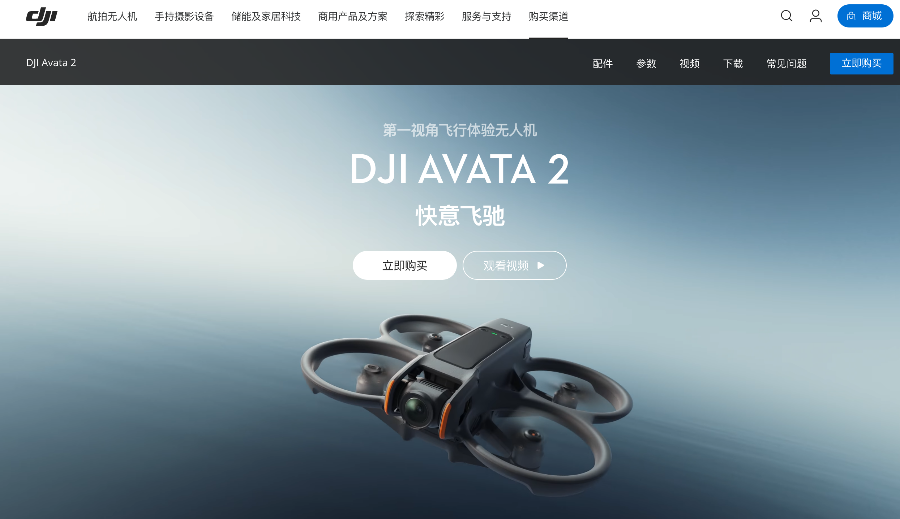
Core Insights - DJI is expanding into multiple consumer electronics and smart hardware sectors, including panoramic cameras, robotic vacuums, and 3D printing, with plans to enter the panoramic drone market [1][12] Group 1: DJI's Recent Activities - DJI recently invited numerous investment institutions to its Shenzhen headquarters for a closed-door research session on its upcoming panoramic drone, the DJI Avata 360 [2][3] - During the event, investors tested the yet-to-be-released DJI Avata 360 and attended a presentation covering product comparisons, industry competition, and market insights [3][4] - Despite the extensive investor engagement, DJI clarified multiple times that it has no financing needs or plans for an IPO, which raised questions among attendees about the purpose of the event [2][8] Group 2: Product Features and Market Position - The DJI Avata 360 is based on the Avata 2 model, designed to simplify operation compared to traditional DIY drones, although it still presents a learning curve for novice users [4][5] - Feedback from investors indicated that while the drone's video transmission is clear and stable, it requires some adaptation due to its fast acceleration [5][6] - DJI's strategy to launch the panoramic drone is seen as a defensive move in response to competitors, with a focus on keeping production costs low [7][10] Group 3: Market Dynamics and Future Outlook - The global consumer drone market is transitioning from an "incremental market" to a "stock market," with growth rates expected to slow down significantly [11] - DJI's recent product strategy reflects a shift from aerial to ground-based technologies, aiming to diversify and find new growth avenues [12][13] - Investors express optimism about the potential of the panoramic drone market, viewing it as a new category that could combine the strengths of both drones and panoramic cameras [14][15]
大疆密会百家投资机构
21世纪经济报道· 2025-11-18 11:37
Core Viewpoint - DJI is expanding into multiple consumer electronics and smart hardware sectors, including panoramic cameras, robotic vacuum cleaners, and 3D printing, while preparing to launch a new panoramic drone, DJI Avata 360 [1][9]. Group 1: DJI's Market Activities - DJI invited numerous investment institutions to its Shenzhen headquarters for a closed-door event to test the yet-to-be-released DJI Avata 360 panoramic drone [1][2]. - Despite the invitation, DJI stated it has no financing or IPO plans, which raised questions among investors about the purpose of the event [1][6]. - The event included a product demonstration and a presentation covering product comparisons, industry competition, and market insights [2][4]. Group 2: Product Features and Market Position - The DJI Avata 360 is based on the Avata 2 model, designed to be more user-friendly than traditional DIY racing drones, but still presents a learning curve for novice users [4][6]. - DJI's strategy appears to be a defensive move in response to competitors, with the potential for lower production costs by integrating panoramic capabilities into existing drone models [6][9]. - DJI holds a dominant position in the global consumer drone market, with a market share consistently above 70%, but the market is transitioning from growth to saturation [9][10]. Group 3: Competitive Landscape - The entry of DJI into the panoramic drone market is seen as a direct response to competitors like YingShi Innovation, which is also developing a panoramic drone [6][9]. - Investors believe that while DJI has advantages in drone technology, YingShi may have an edge in software capabilities crucial for panoramic imaging [11][12]. - The competition between DJI and YingShi is expected to foster market growth, with both companies aiming to innovate and expand their product offerings [11][12].

大疆农业今日发布三款新品 向“空中智驾”演进
Zheng Quan Shi Bao Wang· 2025-11-18 10:02
Core Insights - DJI Agriculture has launched three new agricultural drones: T100S, T70S, and T55, with T100S being the flagship model, emphasizing safety and intelligence in design [1][2] Product Features - The T100S has undergone significant design changes, reducing its weight from 60 kg to 46 kg, a decrease of over 23%, allowing for easier handling by operators [1][2] - The T100S features an 85-liter pesticide tank and supports a payload of 90 kg, an increase of approximately 10 kg compared to the previous T100 model [2] - The T100S incorporates a new single-layer propeller design, enhancing propulsion efficiency while maintaining a balance between load capacity and portability [2] - The T100S is equipped with a new generation laser radar system, achieving a point cloud density of 760,000 points, a 153% increase from the previous model, significantly improving environmental perception and operational precision [2] Market Positioning - The T70S retains the safety systems and core functionalities of the T100S, targeting users with smaller plots or lower annual operational volumes [3] - The T55 is designed for lightweight operation and ease of use, featuring a 50-liter spray capacity and a dual nozzle design that increases flow rate by 33% [3] User Demographics - The customer base for DJI Agriculture drones has shifted, with over half of the buyers now being ordinary farmers, necessitating simpler operation and smaller equipment [3][4] - DJI's agricultural equipment accounts for nearly 90% of the market share in China, highlighting its leadership position in the industry [4] Production Capacity - DJI has opened a new production line in Heyuan, Guangdong, with a capacity of approximately 500 units, indicating potential for future expansion [4]
大疆投资智能派!中国消费级3D打印产业爆发
Sou Hu Cai Jing· 2025-11-18 09:54
Industry Overview - 3D printing is rapidly transitioning from a niche market to a mainstream business, with a significant growth potential [1] - According to the National Bureau of Statistics, the production of 3D printing equipment increased by 40.5% year-on-year in the first three quarters of 2025, outpacing growth in industrial robots and new energy vehicles [1] Company Developments - DJI confirmed its investment in Shenzhen-based 3D printing company Smart Pie, highlighting its confidence in the growth potential of consumer-grade 3D printing technology [1] - Smart Pie, established in 2015, focuses on the development, production, and sales of consumer-grade 3D printers and related products, and will benefit from DJI's advanced technology and financial support [1] - Shenzhen Snapmaker completed a B-round financing with participation from notable institutions like Meituan and Hillhouse Capital, raising over 150 million yuan through crowdfunding for its new independent four-nozzle 3D printer U1 [2] - Creality submitted its prospectus to the Hong Kong Stock Exchange, aiming to raise funds for R&D and international market expansion, potentially becoming the first publicly listed consumer-grade 3D printing company [2] - Topworks Technology launched two new 3D printer models, H2D and H2S, and achieved the top sales and revenue in the 3D printer category during the recent Double Eleven shopping festival [2][3] Market Position - Chinese companies, including Topworks Technology and Creality, dominate over 90% of the global entry-level 3D printer market, indicating China's strong leadership in this sector [3] - The opening of Topworks Technology's first flagship store in Shenzhen marks a significant step in enhancing brand connection with consumers [3]
大疆步步紧逼,影石决定“改行”
3 6 Ke· 2025-11-18 09:08
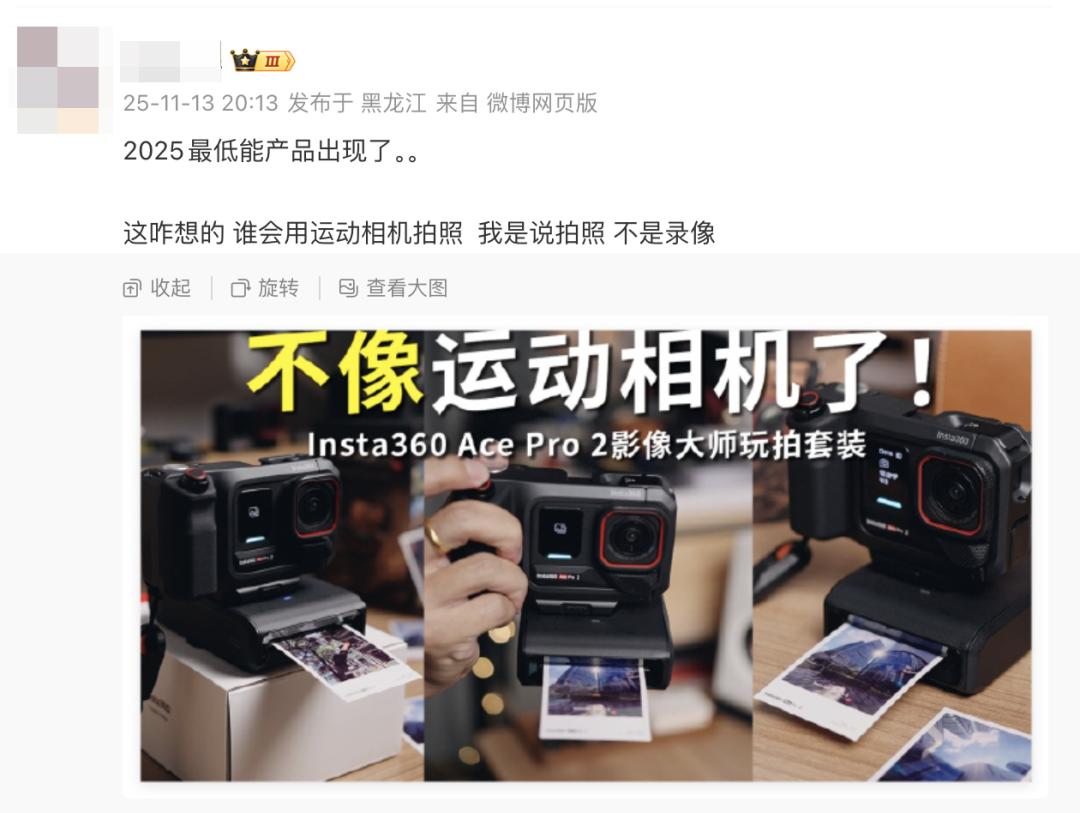
Core Insights - The article discusses the recent launch of the Ace Pro 2 sports camera by Ying Shi Technology, which includes a "Play and Shoot Package" that transforms the camera into a Polaroid-like device with instant printing capabilities [1][4][9] - The product aims to target the growing market of young female consumers who are increasingly interested in instant photography, as evidenced by the booming sales of Fujifilm's Instax series [9][12] - The competitive landscape has shifted with DJI entering the panoramic camera market, leading to a significant decline in Ying Shi's market share, prompting the company to pivot its strategy [12][16] Product Features - The Ace Pro 2's "Play and Shoot Package" includes a mini portable printer, enhancing the camera's appeal by allowing users to print photos instantly, thus adding emotional value [4][6] - The camera also incorporates Leica's color and style, aiming to provide a unique aesthetic that resonates with consumers seeking a vintage feel [7][9] - The product's design reflects a shift from a traditional sports camera to an "emotional camera," targeting the preferences of young women [9][11] Market Dynamics - The instant printing market has seen explosive growth, with Fujifilm's Instax series achieving sales of 150 billion yen (approximately 7 billion RMB) in the 2023-2024 fiscal year, marking a threefold increase year-on-year [9][12] - The popularity of instant photography among young women has created a billion-dollar market, indicating a strong consumer trend that Ying Shi aims to capitalize on [9][12] - The competitive pressure from DJI, which has rapidly gained market share with its Osmo 360 camera, has forced Ying Shi to adapt its product offerings [12][16] Challenges and Criticism - Despite the innovative features, the Ace Pro 2 has faced criticism for its suitability as a static photography device, with concerns about image quality and user experience [17][19] - The high price point of the Ace Pro 2, which can exceed 4,099 RMB with additional accessories, raises questions about its market viability, especially compared to more affordable alternatives [19][20] - Previous failures of similar products in the market highlight the risks associated with launching emotionally-driven products that lack practical value [20][21]
大疆农业无人机发布三款新产品|最前线
3 6 Ke· 2025-11-18 08:04
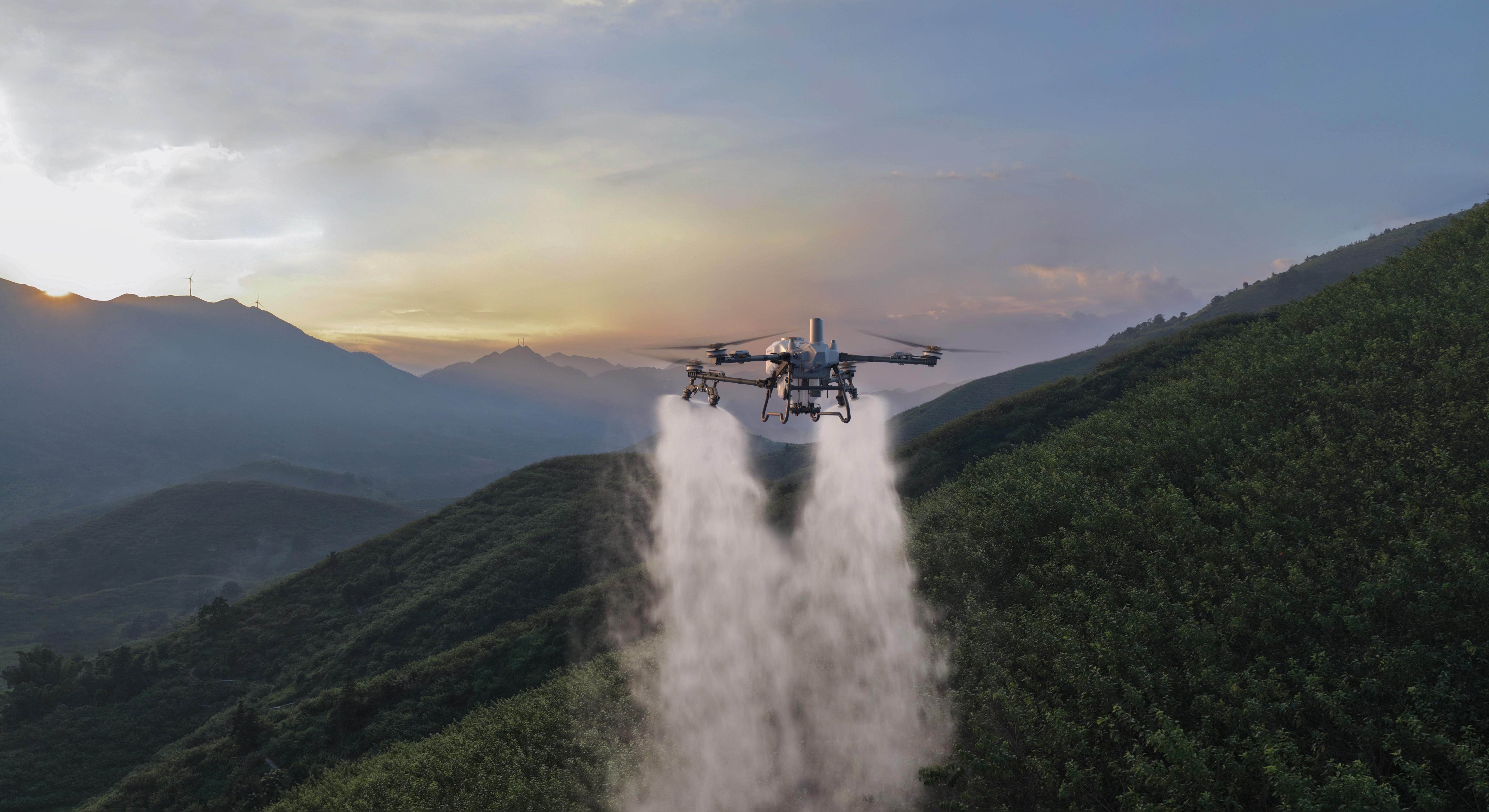
Core Insights - DJI has launched three new agricultural drone models: T100S, T70S, and T55, aimed at enhancing agricultural efficiency and meeting diverse farming needs [10][11]. Product Details - The flagship model T100S has a maximum takeoff weight of 149.9 kg, with a spraying system capacity of 85 liters, a seeding load of 90 kg, and a lifting capacity of 95 kg, suitable for large fields and various agricultural tasks [10]. - The T70S features a spraying capacity of 50 liters, a seeding load of 70 kg, and a lifting capacity of 70 kg, designed for medium-sized farms and small orchards [10]. - The entry-level T55 has a spraying capacity of 50 liters, a seeding capacity of 80 liters, and a lifting capacity of 40 kg, allowing for easy operation by a single user [6][10]. Pricing and Promotions - The standard prices for the new models are set at 48,999 yuan for T100S, 43,999 yuan for T70S, and 36,999 yuan for T55, with promotional discounts available until January 31, 2026 [10]. Technological Advancements - The new models feature enhanced safety systems, including a new 256-line laser radar on T100S, which improves point cloud density by 153% and increases detection range for small obstacles by five times [10]. - The drones are now capable of L3 level autonomous operation, allowing for fully automated tasks under specific conditions [11]. Market Position and Sales - DJI holds a dominant position in the agricultural drone market, with nearly 90% of the agricultural drone equipment purchased being produced by the company [11]. - By October 2025, DJI's cumulative global sales of agricultural drones are expected to exceed 500,000 units, with over 320,000 units operating annually in China [11]. User Demographics - The ratio of self-use users to service providers has shifted from 1:9 to 5:5, indicating a growing trend of individual farmers using drones for their own agricultural needs [14].
强强联合!大疆发布首款可变光圈运动相机,欧菲光独供摄像头模组
Quan Jing Wang· 2025-11-18 05:10
Core Insights - DJI has launched the Osmo Action 6, its first variable aperture action camera, breaking the traditional fixed aperture limitation [1] - The supply chain for the Osmo Action 6 features a fully domestic supply chain, highlighting the maturity of the domestic imaging industry [1] - O-Film is identified as DJI's strategic core supplier, providing the camera module, lens, and CMOS image sensor chip for the Osmo Action 6 [1] Company Developments - O-Film's continuous technological research and development has strengthened its supply chain competitiveness, with recent patents granted for optical components and imaging modules [2] - The patents are particularly relevant for applications in smartphones and drones, indicating O-Film's commitment to the 400 billion yuan drone industry and its partnership with DJI [2] - O-Film is focusing on three strategic business areas, including drones, smart homes, and VR/AR, with significant progress in various niche markets [2]

智能早报丨美股大型科技股多数下跌;大疆投资3D打印公司
Guan Cha Zhe Wang· 2025-11-18 02:25
Group 1: Market Performance - The S&P 500 index fell below 6700 points, ending a streak of 10 consecutive weeks of gains [1] - Major U.S. stock indices closed lower, with the Dow Jones down 1.18%, S&P 500 down 0.92%, and Nasdaq down 0.84% [1] - Most large tech stocks declined, with AMD and Intel dropping over 2%, while Nvidia, Apple, Oracle, and Meta fell over 1% [1] Group 2: 3D Printing Investment - DJI confirmed its investment in a 3D printing company, driven by optimism about the growth potential of consumer-grade 3D printing technology [2] - The global 3D printing market is projected to reach $24.61 billion in 2024, with a compound annual growth rate (CAGR) of 18.5% from 2024 to 2034 [2] Group 3: Strategic Partnerships - Digua Robotics announced a deep strategic partnership with Fourier to promote embodied intelligent interaction using the new RDK S600 platform [3] - Fourier's first humanoid robot, Care-bot GR-3, will be equipped with the RDK S600, marking a significant collaboration [3] Group 4: Automotive Developments - Momenta and BMW Group announced a joint development of a new generation of intelligent driving assistance solutions for the Chinese market, set to debut in the domestic BMW iX3 [4] - The production of the new BMW iX3 is planned for 2026, with collaborative development and testing taking place across four major cities in China [4] Group 5: AI and Data Initiatives - Google pledged $2.25 million to support the modernization of public data systems in Africa, enhancing accessibility and readiness for the AI era [5] Group 6: AI Improvements - OpenAI announced improvements to ChatGPT, addressing the excessive use of long dashes in writing, which has been a long-standing stylistic issue [6]

深圳的咖啡馆里,又开始聊创业了丨一线
吴晓波频道· 2025-11-18 00:30
Core Viewpoint - The article highlights the emergence of a new golden era for hardware entrepreneurship in Shenzhen, particularly in the Nanshan Technology Park, where a diverse range of innovative startups are thriving and leveraging local resources to create impactful products [3][4][8]. Group 1: Entrepreneurial Landscape - Shenzhen's Nanshan Technology Park has become a hub for over ten thousand startup teams, indicating a high density of entrepreneurial activity [4][8]. - The article categorizes three types of entrepreneurs: top technical talents in hardware, young professionals transitioning from other industries, and traditional factory owners from Shenzhen's electronics sector [5][8]. - Many of these startups operate with small teams, often consisting of just 1-2 members, yet they are capable of developing mature hardware products [6][21]. Group 2: Success Stories - Entrepreneurs like Hou Ningzhe and Li Yilu exemplify the new wave of hardware creators, with Hou focusing on robotic tactile sensing technology and Li developing a portable water purifier [12][15]. - Li's team, consisting of only three people, managed to raise over one million RMB in overseas funding and won a design award, showcasing the potential of small teams in the hardware sector [15][22]. - Zhang Hailong transitioned from managing an electronics factory to creating his own brand of smart rings, demonstrating the shift from traditional manufacturing to innovative product development [16]. Group 3: Collaborative Ecosystem - The article emphasizes the importance of Shenzhen's efficient hardware supply chain, which allows startups to quickly source components and collaborate with experienced manufacturers [27][30]. - The presence of numerous incubators and maker spaces in Shenzhen supports young entrepreneurs by providing access to resources, technical support, and market connections [34][36]. - The local entrepreneurial ecosystem fosters collaboration, enabling startups to validate their products through crowdfunding before scaling up production [25][26]. Group 4: Market Potential and Innovation - Shenzhen is home to a significant number of high-tech enterprises, with over 2.5 million national high-tech companies and a high density of AI and robotics firms [49][50]. - The article notes that small startups are often more agile and innovative than larger corporations, which may hesitate to enter new markets due to potential risks [42]. - The growth of "super nodes" in the hardware sector, such as companies that have achieved significant market share, illustrates the potential for small teams to disrupt established industries [41][42].
