OPPO

Search documents
中国互联网大厂,在海外找到「利润黑马」
3 6 Ke· 2025-12-10 04:32
Group 1: Core Insights - The overseas business segments of major Chinese internet companies have become "profit dark horses," with Alibaba's international digital commerce turning profitable, Meituan's Keeta achieving monthly profitability in Hong Kong, and Tencent's overseas gaming revenue surging by 43% year-on-year [1] - As domestic internet traffic growth reaches diminishing returns, going overseas has become a necessary strategy for companies, evolving from "go overseas or go home" to "no core capabilities, no overseas expansion" [1] Group 2: Cross-Border E-commerce - Alibaba's international retail business reported revenue of 28.068 billion yuan, a 10% year-on-year increase, driven by growth from AliExpress and other international operations [2] - The international wholesale business generated 6.731 billion yuan, an 11% increase year-on-year, attributed to growth in value-added services related to cross-border business [2] - Temu's gross merchandise volume (GMV) growth is primarily due to rapid penetration in the European (30-40% share, 60-70% year-on-year growth) and Latin American markets (over 15% share), while growth in North America is slowing [2][3] Group 3: Local Lifestyle Services - Meituan's Keeta achieved its first monthly profitability in Hong Kong, marking a significant milestone in its overseas expansion [4] - Keeta is expanding in the Middle East and Brazil, utilizing AI algorithms and big data to optimize delivery routes and improve efficiency [4][5] - The competitive landscape in Brazil is intense, with Didi and Uber also expanding their food delivery services, indicating a battle for market share [6] Group 4: Entertainment Sector - Tencent's international gaming revenue reached 20.8 billion yuan, a 43% year-on-year increase, driven by successful titles like "Clash Royale" and "PUBG MOBILE" [7] - NetEase's overseas strategy is undergoing significant adjustments, with the closure of several overseas studios despite some successful game launches [8] Group 5: Mobile Phones - Xiaomi's smartphone revenue declined by 3.1% year-on-year to 46 billion yuan, attributed to a decrease in average selling price (ASP) [9] - Xiaomi's overseas internet service revenue reached a record high of 3.3 billion yuan, growing by 19.1% year-on-year, with a notable increase in the share of high-margin overseas market revenue [10] - The competition in the African market between Xiaomi and Transsion is intensifying, leading to price wars [10] Group 6: Conclusion - The third-quarter financial reports indicate a shift in Chinese internet companies' overseas strategies, moving from reliance on policy advantages and low prices to focusing on supply chain capabilities, AI technology, localization, and compliance management [12] - The transformation represents an upgrade from being participants in the global value chain to integrators, with challenges such as geopolitical compliance risks and cultural differences remaining significant [13]





存储价格暴涨,这个“上古”功能要重回旗舰机了?
猿大侠· 2025-12-10 04:11
Core Viewpoint - The article discusses the potential return of MicroSD card slots in flagship smartphones due to rising NAND flash prices and the need for cost control among manufacturers [3][8][11]. Group 1: MicroSD Card Slot Trends - MicroSD card slots were commonly used for expanding storage in devices, especially during the feature phone era, but have been removed from many high-end smartphones in recent years for design and cost reasons [3]. - Major brands like Samsung and Huawei have eliminated MicroSD slots in their flagship models, while mid-range and budget devices still rely on them [3]. - There is speculation that MicroSD slots may return to flagship models as manufacturers reassess their storage strategies in light of rising memory costs [8]. Group 2: NAND Flash Price Increases - The demand for AI computing has led to a shortage of enterprise memory (HBM), causing a decrease in consumer-grade NAND flash supply and significant price increases [6]. - SanDisk has raised NAND flash prices three times in 2025, with the most recent increase in November reaching 50%, breaking market expectations [6][7]. - The consensus in the industry is that the shortage and price increases for DRAM will persist until at least 2027, impacting smartphone memory chip supplies [6]. Group 3: Cost Management Strategies - Smartphone manufacturers, particularly in the Android ecosystem, are reevaluating the feasibility of including MicroSD slots in flagship models to manage costs [8]. - By offering models with MicroSD support, manufacturers can keep base prices lower while allowing users to expand storage affordably, thus maintaining sales volume and revenue [8][9]. - The new MicroSD Express standard has improved performance, with some cards achieving read/write speeds of up to 800MB/s, addressing previous speed limitations [9]. Group 4: User Demand and Future Outlook - There remains a strong user demand for expandable storage, as the price difference between high-capacity internal storage and MicroSD cards is significant, making the latter a more attractive option for cost-sensitive consumers [11]. - However, flagship models are already in production, and it may take until the second half of 2026 for manufacturers to incorporate MicroSD slots into new designs [11].


国内手机涨价潮,来了!小米、OPPO、vivo、荣耀等厂商发布的新机,不同配置较上代机型有100至600元不等提价
Ge Long Hui· 2025-12-10 03:36
格隆汇12月10日|据中国新闻周刊,梳理发现,自今年10月以来,小米、OPPO、vivo、荣耀等厂商发 布的新机,不同配置较上代机型有100至600元不等的提价。如今多方预测,明年新机定价更贵几乎又已 是板上钉钉,且涨幅可能更大。 今年下半年,尤其是进入9月后,全球存储芯片迎来疯狂的涨价周期。手机常用的移动 DRAM(LPDDR4X、LPDDR5/5X等),涨价同样迅猛,其中中高端手机主流配置的LPDDR5X价格飙升尤 其明显。公开数据显示,其12GB规格从年初的约33美元涨至11月末的超过70美元。 这并不符合传统认知。毕竟,消费者的换机周期已经从2020年的24个月,拉长至今年的33个月,手机出 货量也一度接连下降。为了能吸引消费者买单,近年来各大手机厂商都铆着劲儿"卷"配置、压价格;再 加上"国补"助力,国内手机市场才有了复苏的迹象。 ...

X @𝘁𝗮𝗿𝗲𝘀𝗸𝘆
𝘁𝗮𝗿𝗲𝘀𝗸𝘆· 2025-12-10 01:51
Product Release - The report indicates user anticipation for the release of the OPPO Find N6 [1]
智谱开源AutoGLM,AI手机的 “全民共创” 时代,产业链迎来放量契机
财联社· 2025-12-10 01:25
昨日, AI大模型企业智谱开源其能操作手机的 AI Agent模型AutoGLM。开源链接在此: https://github.com/zai-org/Open-AutoGLM 此次开源的是一套 "拿来就用"的完整能力包,包括训练好的核心AI Agent模型、 Phone Use 能力框架与工具链、覆盖淘宝、抖音、美团 等 超过 50个高频中文App 。 市场对此反应迅速。业内调研数据显示,开源消息公布后, AI手机概念在二级市场短线拉 升,福蓉科技涨停,胜宏科技、道明光学等个股纷纷走高;思泉新材、鹏鼎控股等产业链配套 企业也纷纷跟涨 , 整体形成板块普涨的活跃态势,凸显市场对 AI手机产业链开放发展的强烈 看好。 开发者实测发现, AutoGLM通过一整套Phone Use能力框架,能在真机上稳定 准确 完成一 系列操作,诸如发送微信红包、外卖点单、机票预订等。 安卓生态虽以开源立足,却深陷 "碎片化"泥潭——全球超2万种设备型号、各厂商定制化系统 导致适配成本暴涨,开发者被迫将80%精力耗费在兼容工作上。更关键的是,安卓缺乏统一 的AI Agent底座,跨APP协同能力薄弱。 AutoGLM的开源恰好提供 ...

巨头联手进入,这一产业新生态有望开启丨每日研选
Shang Hai Zheng Quan Bao· 2025-12-10 00:46
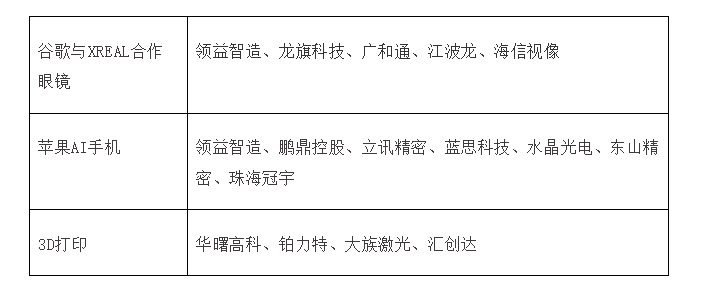
在技术创新与需求修复的共振下,消费电子板块正显现新的活跃信号。近日,谷歌与国内企业共同推出 全球首款Android XR平台的AI智能眼镜,或再次催化该板块。国内哪些产业链企业有望从中受益?请 看机构最新研判。 全年来看,消费电子板块在1-2月上涨,4月受美国加征关税影响有较大幅度回调,6-7月逐步进入上涨 趋势,8-9月加速上涨,10月以来高位震荡。估值方面,目前消费电子板块PE-TTM约38倍,相对电子行 业其他板块仍处于偏低状态,为后续行情演绎留出空间。 从基本面看,2025年以来消费电子复苏趋势持续巩固,技术创新成为板块景气度抬升的重要驱动力。一 方面,折叠屏手机新品密集发布,带动相关零部件需求回暖;另一方面,人工智能技术快速迭代,AI 基础设施需求维持高景气,同时,AI在终端侧的加速落地推动端侧硬件升级,端侧SoC、散热材料等零 部件赛道景气度高企。 与此同时,近期百度、阿里夸克相继发布眼镜产品后,理想汽车也正式发布其第一代AI眼镜理想 Livis。机构认为,此前的AI眼镜多为支付、导航、影音等手机生态的延伸,而此次Livis的发布为AI眼 镜的发展开辟了和手机厂商、互联网公司等不同的新路径,车机联 ...
iPhone 17上市仅两个月即迎来官方降价 苹果今年出货量或创新高
Shen Zhen Shang Bao· 2025-12-09 17:32
Group 1 - Apple has experienced a revenue decline in the Chinese market for seven consecutive quarters, with a 3.6% year-on-year drop in the latest quarter [3] - The iPhone 17 series has been a significant growth driver globally, with a production forecast of 133 million units for the year, and a record market share of 24.2% in October 2025 [2][3] - Despite strong global performance, the Chinese market remains a challenge, with local competitors like Huawei and Xiaomi offering compelling alternatives that emphasize AI capabilities and user experience [3][5] Group 2 - The iPhone 17 series contributed to a 3% increase in smartphone sales during the "Double 11" shopping festival in China, contrasting with declines from other manufacturers [4] - Recent executive departures and a lack of clarity in AI strategy have raised concerns about Apple's future direction, alongside rumors regarding CEO Tim Cook's potential departure in 2026 [5] - The early price reduction of the iPhone 17 series is seen as a strategic move to recalibrate in the high-end market and address competitive pressures from domestic brands [5]


“百万英才汇南粤”活动携1.5万余个岗位赴湘赣两地揽才
Zhong Guo Xin Wen Wang· 2025-12-09 13:39
"人才的跨区域有序流动与优化配置,是推动区域协调发展、激发国家整体创新活力的关键一环。"珠海 市人民政府副秘书长刘渊介绍,根据统一部署,珠海市联同阳江市、横琴粤澳深度合作区共同承办湖 南、江西地区的高校招聘活动。活动将于12月13日至17日,分别在湘赣的6所知名高校举办专场招聘。 同时,这6场活动会覆盖周边的110多所高校。 "百万英才汇南粤"活动携1.5万余个岗位赴湘赣两地揽才 中新网南昌12月9日电 (记者 李韵涵)9日,"百万英才汇南粤"2025年N城联动秋季招聘活动(湖南、江西 地区高校)新闻发布会在江西南昌召开。记者从会上了解到,此次活动汇聚了超310家优质用人单位,提 供超1.5万个优质岗位。 12月9日,"百万英才汇南粤"2025年N城联动秋季招聘活动(湖南、江西地区高校)新闻发布会在江西南昌 召开。李韵涵 摄 编辑:王永乐 广告等商务合作,请点击这里 本文为转载内容,授权事宜请联系原著作权人 中新经纬版权所有,未经书面授权,任何单位及个人不得转载、摘编或以其它方式使用。 关注中新经纬微信公众号(微信搜索"中新经纬"或"jwview"),看更多精彩财经资讯。 据了解,此次招聘活动汇聚了广铁集团、 ...

数千万老年人,正被手机广告弹窗霸凌
凤凰网财经· 2025-12-09 12:52
Core Viewpoint - The article highlights the challenges faced by elderly individuals, particularly in navigating smartphone technology, which often leads to frustration and exploitation through intrusive advertisements and scams [5][20][26]. Group 1: Elderly Users' Experience - Liu Huiqin, a 73-year-old retired worker, uses her smartphone to connect with the world, but often struggles with intrusive ads that disrupt her experience [2][3]. - The number of internet users aged 60 and above in China is projected to reach 161 million by mid-2025, indicating a significant demographic increasingly exposed to digital advertising [5]. - Elderly users like Liu Huiqin and others often find themselves overwhelmed by unwanted applications and advertisements, leading to a frustrating user experience [8][10]. Group 2: Impact of Advertisements - The article discusses how advertisements infiltrate the apps that elderly users frequently engage with, causing confusion and leading to accidental downloads of unwanted software [8][9][12]. - Many elderly individuals cannot distinguish between legitimate notifications and scams, making them vulnerable to fraud [9][10]. - The prevalence of ads in free applications is a significant issue, as these ads are often designed to exploit the lack of digital literacy among older users [20][24]. Group 3: Family Dynamics and Support - Younger family members often take on the role of tech support for their elderly relatives, regularly cleaning their devices and teaching them how to navigate the digital landscape [13][16]. - The article illustrates the emotional toll on family members who feel responsible for protecting their elderly relatives from digital exploitation [30][32]. - There is a growing need for better-designed technology that caters to the elderly, as current solutions often fail to address their specific needs [34][35]. Group 4: Industry and Technology Design - The article points out that many apps and services targeting elderly users are not designed with their needs in mind, often leading to a poor user experience [20][26]. - Despite regulations aimed at protecting elderly users from intrusive ads, the effectiveness of these measures remains limited due to the prevailing "free + advertising" business model [26][27]. - The technology industry is urged to create more user-friendly interfaces and applications that do not bombard elderly users with advertisements [26][34].

段永平王石对谈实录:用“本分”构建一个反脆弱的人生系统
虎嗅APP· 2025-12-09 11:14
Core Insights - The article features a rare in-depth conversation with the renowned entrepreneur and investor Duan Yongping, discussing his philosophy of "being true to oneself" and its application in business, investment, and personal development [3][4][6]. Investment Logic - Duan emphasizes that understanding the business is the core of investment, sharing insights from his experience with companies like Apple and Moutai, highlighting the importance of business models and corporate culture in investment decisions [4][24][25]. Corporate Culture and Succession - The success of companies like OPPO and vivo is attributed to a hiring principle where cultural fit is prioritized over capability, and a systematic approach to identifying compatible partners over time [5][29][30]. Marketing Principles - Duan advocates for honesty in marketing, stating that communication with users should be efficient and truthful, which he believes is essential for building trust and brand loyalty [6][55]. Education Philosophy - He provides insights on parenting, arguing against physical punishment and advocating for unconditional love and boundary-setting to foster a sense of security in children [6][74][75]. Long-term Perspective - Duan defines a "calm mind" as rationality and long-term thinking, suggesting that maintaining a long-term perspective can lead to better decision-making in both business and life [6][92]. Reflections on Success - The conversation touches on the role of luck and effort in success, with Duan asserting that while luck plays a part, consistent effort and understanding one's business are crucial for achieving long-term success [6][78][82]. Insights from Buffett's Lunch - Duan shares a key takeaway from a lunch with Warren Buffett, emphasizing the importance of a company's business model and culture as filters for investment decisions [4][87][88]. AI and Future Perspectives - The discussion includes thoughts on AI, recognizing its potential to enhance efficiency while also acknowledging the uncertainties it brings to the future [6][90]. Philosophy of "Being True to Oneself" - Duan's overarching philosophy revolves around the concept of "being true to oneself," which he believes underpins both effective business strategies and a fulfilling life [6][93].