
OPPO

Search documents
消费电子ETF(561600)涨超2.8%,AI主线持续催化
Xin Lang Cai Jing· 2025-12-08 05:59
Core Insights - The consumer electronics sector is experiencing significant growth, driven by advancements in AI technology and the release of new AI-enabled smartphones by major manufacturers [1][2] - The China Securities Consumer Electronics Theme Index (931494) has shown a strong upward trend, with notable increases in key component stocks [1][2] Group 1: Market Performance - As of December 8, 2025, the China Securities Consumer Electronics Theme Index (931494) rose by 2.95%, with significant gains in component stocks such as Lixun Precision (002475) and East Mountain Precision (002384) [1] - The Consumer Electronics ETF (561600) also increased by 2.83%, marking its third consecutive rise [1] Group 2: AI Integration in Consumer Electronics - Major smartphone manufacturers, including Apple, Vivo, OPPO, and Honor, have been focusing on AI capability upgrades, launching new flagship models with AI features since October [1] - ByteDance and ZTE are collaborating to develop an AI smartphone, indicating a trend towards integrating content ecosystems with hardware [1] Group 3: Government Initiatives and Market Trends - A joint initiative by six government departments aims to enhance the adaptability of supply and demand in consumer goods, promoting AI applications across the entire industry [2] - The market for AI glasses and smartwatches has seen a year-on-year growth of 23.1%, with the AI toy market projected to reach 29 billion yuan by 2025 [2] Group 4: Index Composition - The China Securities Consumer Electronics Theme Index comprises 50 listed companies involved in component production and brand design, reflecting the overall performance of the consumer electronics sector [2] - As of November 28, 2025, the top ten weighted stocks in the index accounted for 56.39% of the total index weight [2]





联通元景持续支撑国家人工智能应用中试基地启动建设
Xin Hua She· 2025-12-08 03:48
Core Insights - The establishment of the first national AI application pilot base for mobile terminals was announced during the 2025 Global Intelligent Machinery and Electronic Products Expo, with China Unicom playing a key role in its construction [1][4] - The base aims to facilitate the digital and intelligent upgrade of enterprises in the AI terminal industry, enhancing the quality of development in this sector [1][4] Group 1: AI Terminal Industry Development - The AI terminal industry faces two common challenges: traditional terminal products struggle to meet the demands of AI upgrades, and there are inefficiencies and high costs in the R&D and manufacturing processes [2] - The base has created a unique "552" capability service system, focusing on terminal innovation and manufacturing efficiency, covering five dimensions: computing power, data, models, AI application development tools, and security [2][3] Group 2: Collaborative Ecosystem - China Unicom has injected four key capabilities into the base, including access to vast network data, IoT connectivity, simplified development through its intelligent platform, and a large market space with over 600 million terminal users [3] - The establishment of the AI Terminal Industry Alliance aims to leverage the strengths of Shenzhen and Dongguan, collaborating with various partners to drive technological advancements in open-source chip development, large model applications, and intelligent hardware innovation [3][4] Group 3: Future Prospects - China Unicom plans to act as a leader in the AI industry chain, fostering collaboration with ecosystem partners to accelerate the commercialization of innovative technologies and enhance the industrial application of AI [4]

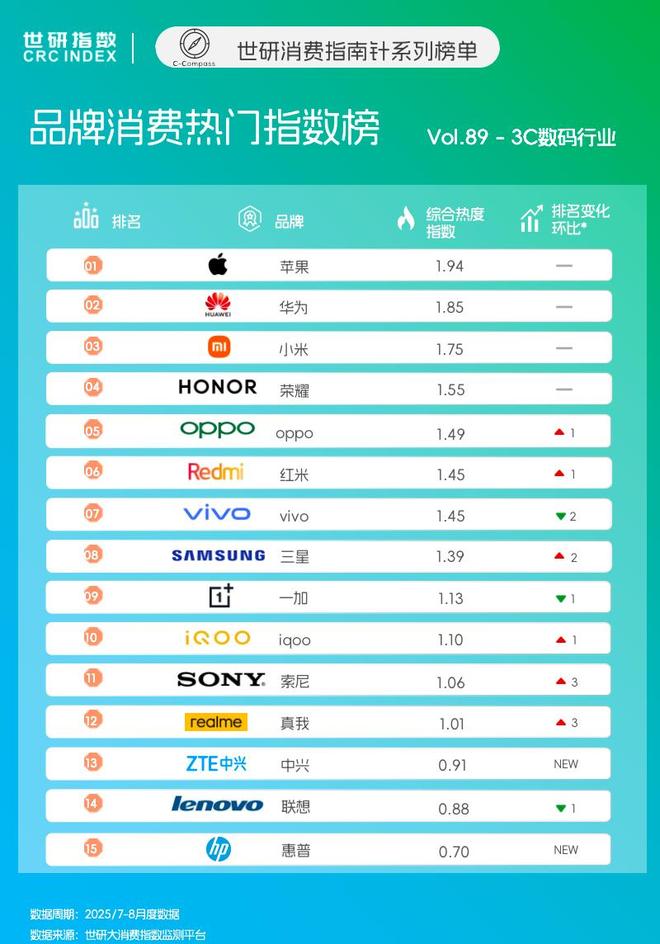
体验消费至上,折叠屏卷向主力机|世研消费指数品牌榜Vol.89
3 6 Ke· 2025-12-08 03:07
Group 1 - The 3C industry is experiencing a "downward" and "upward" strategic competition, with OPPO focusing on affordable cooling technology for budget phones, while Honor and Samsung are emphasizing lightweight foldable screens and AI integration for high-end devices [1][4][5] - In the budget segment, OPPO launched the K13 Turbo series featuring a "wind cooling engine" that enhances cooling efficiency by 120%, targeting a price point under 2000 yuan [4] - Honor's new foldable phone, Magic V5, is positioned as the thinnest and lightest in the industry, featuring advanced AI capabilities and priced starting at 8999 yuan, marking a significant step in its high-end strategy [4] Group 2 - The tablet market is evolving with Huawei's MatePad Pro 12.2, which integrates HarmonyOS 5 and focuses on professional software and AI functionalities, catering to mobile office and creative needs [6] - The wearable segment is also expanding, with iQOO launching the iQOO WATCH GT and OnePlus introducing the OnePlus Watch 3, both targeting specific niches in the market [6] - The competitive landscape is shifting towards technology experience, innovative forms, and ecosystem collaboration, moving beyond traditional parameter comparisons [1]

苹果放下身段、华米攻入腹地,高端手机战场为何更焦灼了?
Xin Lang Cai Jing· 2025-12-08 01:32
Core Insights - The introduction of the "Doubao AI Assistant" by Nubia aims to revolutionize mobile interaction and system permissions, positioning itself as a potential supplier of smart driving systems for smartphones [2][39] - The competition in the high-end smartphone market is expected to intensify in 2024, with Apple accelerating its integration into China's social and content e-commerce ecosystem [2][24] Group 1: Market Dynamics - Domestic smartphone brands are actively positioning themselves in the high-end market, with a notable shift towards premium models priced above 6000 yuan, which is the only segment showing growth [7][42] - According to Counterpoint Research, the market share of high-end smartphones priced at $600 and above has increased from 11% in 2018 to 28% in 2024, driven primarily by Huawei's resurgence [8][43] - Huawei's market share in the high-end segment rose from 20% to 29% within a year, making it the fastest-growing domestic smartphone manufacturer [8][43] Group 2: Product Innovations - The Huawei Mate 80 series has successfully ended Apple's dominance in the high-end market, featuring significant technological advancements and achieving strong sales shortly after launch [12][47] - Xiaomi's 17 series has also gained traction, with a notable sales figure of 2.34 million units, and is positioned to compete directly with Apple's iPhone 17 [6][41][49] - OPPO and Vivo have introduced competitive models, such as the Find X9 series and X200 series, which have shown strong sales performance and contributed to the overall growth in the high-end market [52][54] Group 3: Competitive Landscape - Apple remains a significant competitor in the high-end smartphone market, with its iPhone 17 series experiencing a resurgence in sales, capturing 25% of the market share by October [20][59] - The introduction of the iPhone 17 series has prompted domestic brands to adjust their product strategies in response to Apple's aggressive market tactics [55][60] - The competition is expected to escalate further with the anticipated release of the iPhone 18 series, which aims for a production target of 95 million units, reflecting Apple's confidence in maintaining its market position [25][60] Group 4: Challenges and Future Outlook - The reduction in government subsidies and rising prices have negatively impacted the entry-level high-end market, leading to a 9% decline in sales in that segment [27][65] - The challenges faced by the Doubao AI phone highlight the broader difficulties in the high-end smartphone market, particularly regarding the integration of AI capabilities within existing app ecosystems [30][32][67] - The future of high-end smartphone competition will hinge on the ability of brands to navigate ecological barriers and establish a competitive edge through technological innovation and user experience [68][69]


以创新因子拓展全球市场 中国品牌出海展现新气象
Ren Min Ri Bao· 2025-12-08 00:38
Group 1 - The core viewpoint of the articles highlights the transformation of Chinese brands from merely exporting products and capital to a comprehensive upgrade in brand output, organizational capabilities, management mechanisms, and governance systems in the global market [1] - Chinese brands are increasingly favored by overseas consumers due to their technological content, cultural heritage, design inspiration, and emotional value, leading to enhanced product recognition and influence [1] - The global recognition of Chinese companies, such as Yushutech, which won an award from the World Intellectual Property Organization, underscores the hard power of Chinese brands in the robotics sector [2] Group 2 - Chinese brands are innovating by adapting to local consumer habits, as seen with Niu Electric optimizing its products for European and Southeast Asian markets [3] - International experts praise the Chinese government's emphasis on technological innovation and the establishment of manufacturing clusters that enhance productivity and foster innovation [4] - China is recognized as a global innovator, moving beyond being the "world's factory" to becoming a source of innovation, which is expected to reshape its global identity and drive balanced economic growth [5] Group 3 - Chinese consumer electronics brands like Xiaomi and OPPO are gaining popularity among young consumers due to their high cost-performance ratio, while companies like BYD are contributing to green transportation [6] - The rise of Chinese brands is accelerating technological, environmental, and service model upgrades in local markets, as noted by experts in Spain [6] - Chinese enterprises are committed to improving global consumer quality of life by sharing technological advancements and providing opportunities for developing countries to access the latest technologies at lower costs [6] Group 4 - China continues to expand high-level opening-up policies, supporting domestic companies in entering international markets while welcoming foreign brands into China, promoting fair competition and mutual benefits [7]
金融时报:中国手机厂商抓住苹果AI困局,吸引iPhone用户倒戈
Feng Huang Wang· 2025-12-08 00:26
Core Insights - Apple is facing increasing pressure from Chinese smartphone manufacturers who are promoting switch applications to attract iPhone users to Android, as Apple has not yet launched AI features in China, the world's largest smartphone market [1][3] Market Competition - The top five Chinese smartphone manufacturers have launched switch applications this year, facilitating data migration from Apple's iOS to their devices, or allowing users to keep their Apple devices while using Chinese brand phones [1] - The Chinese smartphone market is highly competitive, with no single manufacturer holding more than 20% market share. Vivo has overtaken Apple as the market leader, achieving an 18.5% share in Q3, while Apple, Honor, OPPO, Xiaomi, and Huawei hold between 13.6% and 16.4% [1] AI Development and Innovation - Chinese manufacturers believe their AI capabilities and innovations, such as foldable phones, make their products attractive enough to win over loyal Apple users [3] - OPPO's latest smartphone features an AI assistant that tracks daily spending and provides real-time fitness guidance, while Honor's new model helps users find discounts and coordinate ride-hailing services [3] User Migration Strategies - Honor has upgraded its switch application, allowing users to migrate photos, messages, and contacts from Apple devices by scanning a QR code. The Honor Connect app supports file transfers with iOS devices, similar to Apple's AirDrop [3] - Among consumers purchasing Honor's flagship Magic V5 online, 37% switched from Apple devices using these tools, indicating success in attracting high-end Apple users [3] Other Manufacturers' Initiatives - Other Chinese manufacturers are also enhancing their offerings to attract Apple users. Xiaomi's founder promoted new features for file transfer and notification synchronization between Xiaomi phones and iPhones [4] - OPPO's latest operating system allows users to answer calls and reply to messages from Apple devices directly on OPPO phones [4] Sales Performance - Apple's sales in China declined by 4% year-on-year in the quarter ending September 30, but CEO Tim Cook expects sales to "recover growth" in the upcoming quarter [4] Consumer Sentiment - Counterpoint estimates that after the iPhone 17's release in mid-September, Apple's sales in China increased by 22% year-on-year, suggesting that consumer concerns over the lack of AI features are lower than expected by Chinese competitors [6] Market Dynamics - Analysts indicate that while Chinese manufacturers' new features have not significantly impacted Apple's dominance in high-end markets outside China, their efforts to convert users pose a notable challenge to Apple, especially as global smartphone sales growth has slowed to single digits [7]
中国品牌出海展现新气象
Ren Min Ri Bao· 2025-12-07 22:02
Group 1 - The core viewpoint of the articles highlights the evolution of Chinese companies from merely exporting products and capital to a new phase of brand output, organizational capability, management mechanisms, and governance systems in the global market [1] - Chinese brands are increasingly favored by overseas consumers due to their technological content, cultural heritage, design inspiration, and emotional value that resonates across cultures [1] - The recognition of Chinese companies in the global market is exemplified by Yushutech, which won an award from the World Intellectual Property Organization, showcasing its strength in robotics [2] Group 2 - Chinese brands are innovating by adapting to local consumer habits, as seen with Niu Electric optimizing its products for European and Southeast Asian markets [3] - International experts praise China's emphasis on technological innovation and the establishment of manufacturing clusters that enhance productivity and foster innovation [5] - The shift in China's global identity from being merely a "world factory" to becoming a source of innovation is noted, with a focus on scientific strength and open collaboration [6] Group 3 - Chinese consumer electronics brands like Xiaomi and OPPO are gaining popularity among young consumers due to their high cost-performance ratio, while companies like BYD are contributing to green transportation [7] - The commitment of Chinese companies to improve global consumer quality of life through technology sharing and lower-cost access to innovations is emphasized [7] - China's ongoing efforts to expand high-level openness and support for domestic companies entering international markets align with global interests for fair competition and mutual benefits [8]

以创新因子拓展全球市场 以开放合作提供广阔机遇 中国品牌出海展现新气象
Ren Min Ri Bao· 2025-12-07 21:56
Group 1: Core Insights - Chinese companies are transitioning from merely exporting products and capital to enhancing brand output, organizational capabilities, management mechanisms, and governance systems in response to a complex global market [1] - A growing number of Chinese brands are gaining recognition among overseas consumers due to their technological content, cultural heritage, design inspiration, and emotional value [1] Group 2: Technological Innovation and Global Impact - Chinese brands are innovating based on the usage habits of consumers in different regions, with companies like Niu Technologies optimizing their products for local markets [3] - The rapid development of "Made in China" is attributed to the formation of manufacturing clusters, which lower costs and enhance productivity, supported by long-term government planning [4] - China is recognized as a major player in technological innovation, with significant advancements in AI, 5G, and new energy sectors, contributing to global technological development [4] Group 3: Market Expansion and Consumer Engagement - Chinese consumer electronics brands like Xiaomi and OPPO are gaining popularity among young consumers due to their high cost-performance ratio [5] - Chinese electric vehicle manufacturers, such as BYD, are facilitating green transportation for local populations, while e-commerce platforms are driving digital economic growth in collaboration with local businesses [5] - The presence of Chinese technology, such as the humanoid robot from UTree Technology, is being integrated into educational systems in Germany, showcasing China's research capabilities in intelligent systems and automation [5] Group 4: Open Market and Global Cooperation - China is committed to expanding high-level openness and building an open world economy, supporting domestic companies in entering international markets while welcoming foreign brands [6] - The emphasis on fair competition and mutual benefit aligns with the interests of countries worldwide, fostering a collaborative environment for innovation and technology sharing [6]
小米、vivo、荣耀供应商:大股东“套现”
Xin Lang Cai Jing· 2025-12-07 15:04
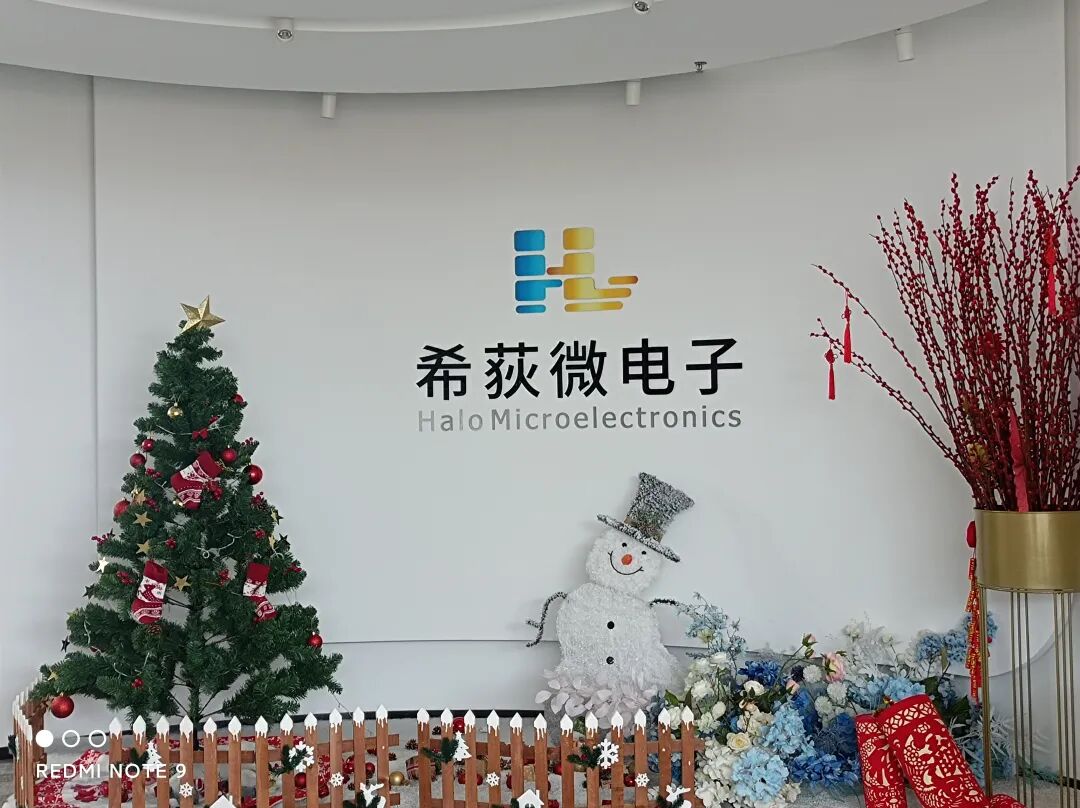
Core Viewpoint - The company, Xidiwei, is facing ongoing financial challenges despite significant revenue growth, with major shareholders planning to reduce their stake in the company [1][4]. Group 1: Company Overview - Xidiwei is a leading domestic supplier of power management and signal chain chips, focusing on high-performance analog and mixed-signal chip development, design, and sales [3][6]. - The company has successfully developed a series of high-efficiency, high-precision, and high-reliability products, including DC/DC chips and super-fast charging chips, which have entered the supply chains of major brands like Xiaomi and OPPO [3][6]. Group 2: Financial Performance - Since its listing in 2022, Xidiwei has faced continuous pressure on its performance, with cumulative losses of 360 million yuan from 2022 to 2024, despite a pre-listing net profit of 26 million yuan in 2021 [3][6]. - For the first three quarters of 2025, the company reported revenue of 717 million yuan, a year-on-year increase of 107.81%, while the net profit attributable to shareholders was -76 million yuan, representing a 60.94% reduction in losses compared to the previous year [4][7]. - The company has managed to reduce sales expenses and improve operational efficiency, contributing to a narrowing of losses as the market environment stabilizes [4][7].

3C设备周观点:理想发布AI眼镜,消费电子与AI深度融合打造新增长点-20251207
Huafu Securities· 2025-12-07 10:47
Investment Rating - The industry rating is "Outperform the Market" [8] Core Insights - The report highlights the launch of the first generation AI glasses by Li Auto, marking its entry into the wearable smart device market, alongside major players like Baidu and Alibaba [2][3] - Major companies are actively investing in the AI glasses sector, with Google, Vivo, and Apple also developing their own products, indicating a competitive landscape [3] - The smart glasses market is expected to see significant growth, with global sales projected to reach 14.5 million units by 2025, and a compound annual growth rate (CAGR) exceeding 50% from 2025 to 2029 [4] - The integration of AI into consumer electronics is creating new growth opportunities, with companies like ByteDance and ZTE collaborating on AI smartphones [5] Summary by Relevant Sections AI Glasses Market - Li Auto has launched its AI glasses, which support wireless fast charging, promising "never-ending power" [2] - Google is in the POC stage for two AI glasses products, collaborating with Qualcomm, Samsung, and Foxconn [3] - The smart glasses market is heating up, with a forecast of 6 million units sold by 2029 [4] Consumer Electronics and AI Integration - The report notes a trend among major smartphone manufacturers to release flagship models with AI features, positioning smartphones as key devices for AI technology implementation [5] - The collaboration between ByteDance and ZTE on AI smartphones is expected to yield a product release soon [5] Investment Opportunities - The report suggests focusing on companies involved in foldable screens, smart glasses, silicon-based OLED screens, automation equipment, and 3D printing applications [6]