
壁仞科技

Search documents
基石投资者参与度提高
Jin Rong Shi Bao· 2026-02-12 01:37
今年,基石投资者结构中不仅有国内百亿级私募和险资巨头,还有大量全球顶级资产管理机构的名 字。部分企业如东鹏饮料、澜起科技、壁仞科技等,其基石投资者阵容中不乏国际长线基金的身影。例 如,东鹏饮料在2月3日上市时,在其15家基石投资者中,就包含卡塔尔投资局(QIA)、贝莱德 (BlackRock)、淡马锡(Temasek)、摩根大通、瑞银等来自美国、中东、欧洲、亚洲各地的长线资金 身影。 瑞银集团中国区总裁及瑞银证券董事长胡知鸷表示,国际投资者在去年就已经完成了从观望到继续 参与的转折。"我们看到的不仅是兴趣的回归,更是行为上的变化。外资正从此前相对被动的状态,转 向主动且偏向长期标的选择的交易状态。因此,在港股IPO等项目中,国际长线资金作为基石投资者的 参与度明显提高。" 在胡知鸷看来,这背后的逻辑并不复杂。一方面,中国企业在技术创新上取得了显著进展,全球竞 争力提升;另一方面,从全球配置的角度看,中国资产的估值和成长潜力为国际投资者提供了分散风险 的重要选择。 市场定价能力提升 2月11日,随着上市锣声的再次敲响,A股新能源智能装备企业——先导智能成功在香港联合交易 所主板挂牌上市,成为澜起科技、爱芯元智、 ...


今年以来22只港股新股首日零破发 多股首日涨幅超六成
Jin Rong Jie· 2026-02-12 00:44
基石投资者机制发挥了股价托底作用,今年上市的22只新股均获基石投资者认购,参与机构涵盖淡马 锡、GIC等主权基金,贝莱德、瑞银等资管巨头,以及高瓴资本等私募机构。LiveReport大数据显示, 2026年1月港股IPO基石投资者单月投资金额达185.21亿港元,同比大幅增长13.3倍。基石投资者提前锁 定大额认购需求,通过信誉背书增强市场信心,减少短线投机资金占比,推动股价转向价值驱动的轨 道。此外,绿鞋机制作为补充稳定手段,主承销商可在上市后30天内通过超额配售或二级市场买入动作 调节股价,平抑波动。 香港证监会此前发出通函,严抓IPO质量,针对上市文件质量欠佳、保荐人履职失当等问题提出规范要 求,推动市场从流量导向转向质量导向,将长期提升港股上市公司整体资质,吸引更多长期资金入驻。 市场有风险,投资需谨慎。本文为AI基于第三方数据生成,仅供参考,不构成个人投资建议。 本文源自:市场资讯 作者:观察君 今年以来,港股新股市场呈现首日零破发现象。Wind数据显示,已有22只新股完成上市,上市首日全 部守住发行价。对比之下,2025年12月上市的25只新股中,有10只首日未能守住发行价。 2月11日登陆港股的 ...
今年以来,香港新股上市首日“零破发”!
证券时报· 2026-02-12 00:27
多位受访人士分析指出,今年以来,港股新股市场"零破发"的背后,是短期市场情绪、定价策略以及政策层面等多重因素共同作用的结果。短期 市场情绪来看,投资者心态积极转变,为市场注入了活力;发行方谨慎务实合理定价,为新股上市后的表现预留了空间;基石投资者机制等也在 稳定股价方面发挥了关键作用。 港股新股首日"零破发" 2月11日,智能装备企业先导智能登陆港股。上市首日,公司股价开盘上涨1%,尽管尾盘股价一度下探至发行价以下,但随后快速拉升,最终守 住发行价,收盘未出现破发。先导智能的表现是近期新股市场的一个写照。Wind数据显示,今年以来已有22只新股在港股上市,且这些新股在 上市首日无一破发。与之形成鲜明对比的是,在2025年12月,25只新股上市首日竟有10只出现破发。 在今年登陆港股市场的新股阵营里,大模型公司MiniMax上市首日涨幅高达109.09%,在一众新股中脱颖而出,成为涨幅之冠。港股"钓鱼装备第 一股"乐欣户外上市首日的涨幅也达到102.29%,仅次于MiniMax。此外,AI芯片企业壁仞科技、量贩零食龙头鸣鸣很忙、集成电路企业澜起科技 等上市首日的涨幅不低,均在60%以上。 今年在港股市场上市的新 ...


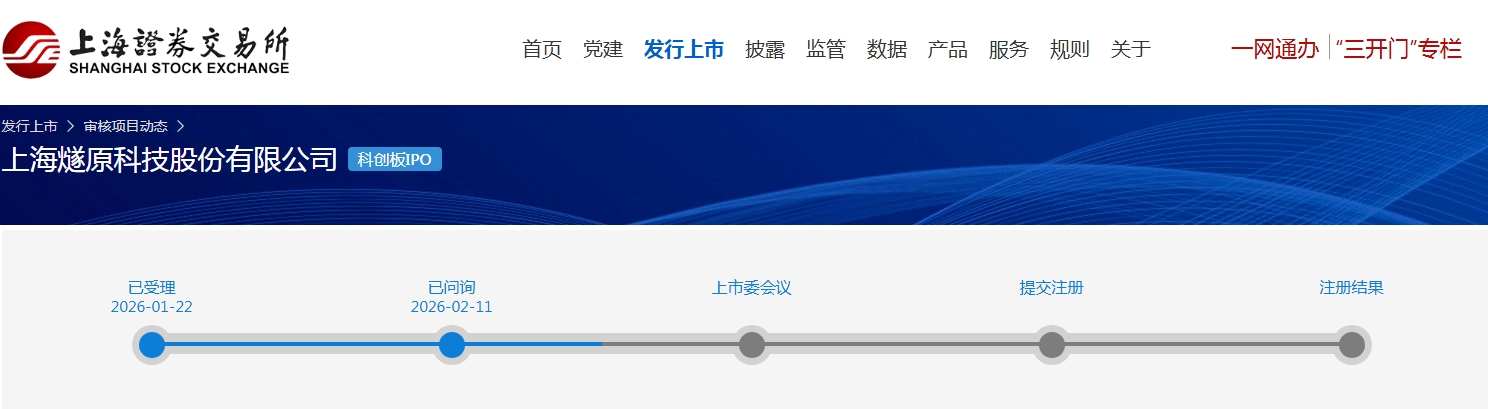
仅受理20天后,IPO审核状态变更为“已问询”!“国产GPU四小龙”之一的燧原科技IPO极速推进,最后一轮融资估值超200亿元
Jin Rong Jie· 2026-02-11 12:54
摩尔线程、沐曦股份、壁仞科技均已上市 2024年8月,燧原科技首次提交了IPO辅导备案,聘任的辅导机构为中金公司。但是,作为"国产GPU四小龙"之一的燧原科技IPO速度明显滞后于其他对手, 2025年12月,摩尔线程、沐曦股份两家GPU企业先后登陆科创板,两者市值最高时分别达到4423亿元、3580亿元;2026年1月2日,壁仞科技也亮相港交所, 成为"港股国产GPU第一股"。 燧原科技IPO极速推进,在仅仅受理20天后,IPO审核状态变更为"已问询"! 2月11日晚间,上交所官网显示,上海燧原科技股份有限公司科创板IPO审核状态变更为"已问询"。此次燧原科技IPO进展也十分迅速。1月23日,燧原科技 IPO正式获得受理,保荐机构为中信证券,公司拟融资60亿元,计划投向基于五代AI芯片系列产品研发及产业化项目、基于六代AI芯片系列产品研发及产业 化项目、先进人工智能软硬件协同创新项目三大部分。 如今仅用了20天时间,燧原科技IPO便从受理状态变成了已问询。按照正常流程,如果燧原科技回复问询顺利,下一步将是上会。 燧原科技注册地位于上海临港,其前身燧原有限成立于2018年,由ZHAOLIDONG和张亚林共同投资 ...
深度|投出爱芯、壁仞的耀途资本:中国AI芯片的胜算
Xin Lang Cai Jing· 2026-02-11 10:16
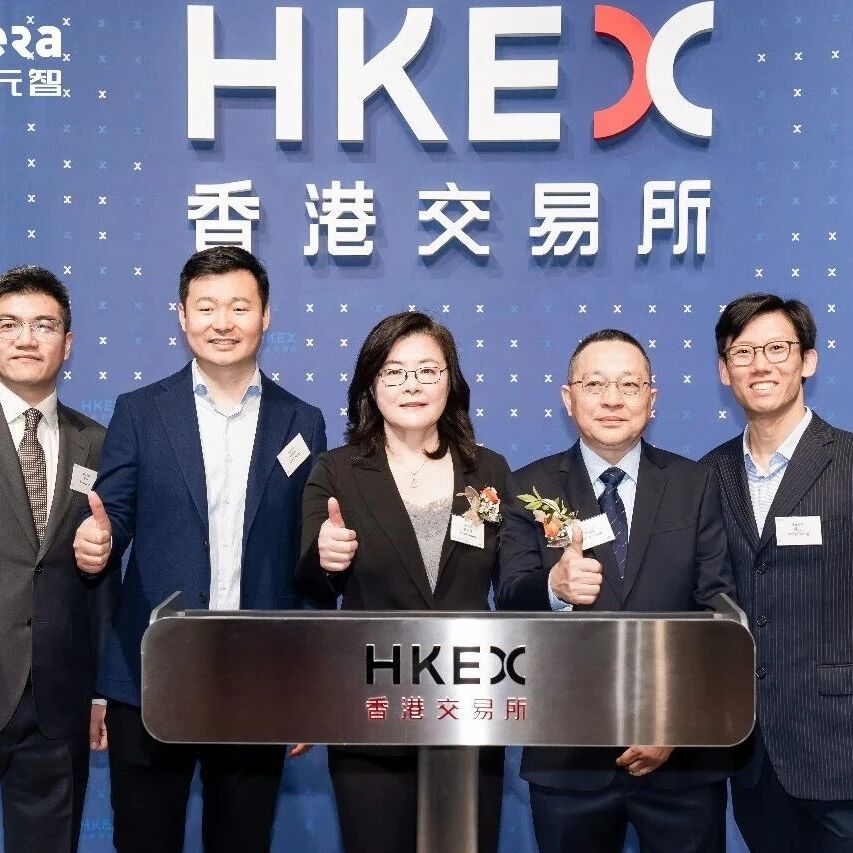
Core Insights - Aixin Yuan Zhi, a company specializing in edge AI inference chips, officially listed on the Hong Kong Stock Exchange on February 10, 2026, becoming the first Chinese edge AI chip stock [4][44]. - The investment journey of Yaotu Capital, which began in 2017, reflects a long-term belief in the potential of edge AI chips, driven by the intelligentization of hardware in consumer electronics and automotive sectors [54][45]. - The emergence of Aixin Yuan Zhi and other companies marks a significant shift in China's AI chip industry, transitioning from cloud computing to edge computing [4][47]. Company Development - Aixin Yuan Zhi successfully captured market share in visual terminal computing and quickly entered the smart automotive sector in 2021, securing multiple orders from car manufacturers, with a cumulative shipment of nearly one million units over four years [49][50]. - The company has attracted strategic investments from major players like Weihua Chuangxin, Meituan, Tencent, and government investment platforms from Ningbo and Chongqing, enabling substantial funding for high-end smart driving chip development [49][50]. - Aixin Yuan Zhi plans to release a significant chip supporting urban NOA (Navigation on Autopilot) in Q2 2026, aiming to penetrate the L2+ high-level autonomous driving market [49][50]. Investment Logic - The investment logic for edge AI chips is based on the belief that Chinese hardware manufacturers will become global players, thus creating a substantial market for domestic edge AI chips [54][54]. - The company’s success is attributed to three key strategies: building a team that integrates AI algorithms and chip design, early investment in the smart automotive market, and leveraging industry collaboration for funding [50][57]. Market Dynamics - The edge AI chip market in China benefits from rich application scenarios, a complete supply chain, and diverse customers, providing opportunities for world-class enterprises to emerge [53][70]. - The competitive landscape indicates that the moat for edge chips lies in ecosystem development rather than performance alone, necessitating collaboration with solution providers to penetrate fragmented markets [53][73]. - The rise of open-source models has significantly lowered adaptation barriers for domestic AI chips, enabling faster scene implementation and forming a "sovereign AI" ecosystem [53][39]. Future Trends - The year 2025 is anticipated to be a significant year for GPUs, while the future will see a rise in network interconnectivity and communication chips, with several companies expected to achieve valuations exceeding $10 billion [53][64]. - The evolution of AI models continuously defines new requirements for AI chips, creating opportunities for technological innovation [66][66]. - The demand for edge AI chips is driven by the need for low latency, strong privacy, and high energy efficiency, particularly in sensitive fields like autonomous driving and robotics [62][63].

从通道到枢纽:中资券商的港股大航海时代
市值风云· 2026-02-11 10:12
Core Viewpoint - The Hong Kong stock market has become the most comprehensive market for foreign capital to allocate Chinese assets, providing a "one-stop" opportunity for international investors to access China's growth [3][4]. Group 1: Market Dynamics - In 2024, the Hong Kong stock market raised approximately HKD 87.6 billion, a year-on-year increase of 89% [4]. - In 2025, the market saw a significant surge in IPO fundraising, reaching HKD 2,856.93 billion, a year-on-year increase of 224%, reclaiming the top position globally for IPO fundraising [4]. - The number of companies waiting for IPOs in Hong Kong has exceeded 350, indicating sustained capital vitality in the market [4]. Group 2: Sectoral Trends - In 2025, 117 companies successfully listed on the Hong Kong stock market, with new economy sectors like hard technology (27%), healthcare (23%), and new consumption (25%) becoming the main contributors [5][7]. - The traditional sectors such as infrastructure and real estate are gradually declining in proportion [5]. Group 3: Role of Chinese Securities Firms - The A+H listing model became a powerful engine for the Hong Kong IPO market in 2025, with 19 A-share companies raising nearly HKD 1.4 billion, contributing to nearly half of the total fundraising [8]. - Chinese securities firms have transitioned from participants to dominant players in the market, with a market share of approximately 56% among the top ten IPO underwriters [8][10]. - The number of licensed Chinese securities firms in Hong Kong has increased from 8 in 2007 to 111 by 2024, indicating significant growth in the sector [10]. Group 4: Competitive Advantages - Chinese securities firms leverage their "home advantage" and offer comprehensive end-to-end solutions, from identifying new economy companies for listing to providing seamless A+H share services [10]. - The case of CATL's secondary listing in Hong Kong exemplifies the shift of Chinese firms from "supporting roles" to "pricing leaders" in major IPOs [11][13]. - The independent service capability of Chinese securities firms is highlighted by the successful IPO of Sanhua Intelligent Controls, which did not hire foreign underwriters [13]. Group 5: Financial Performance - The brokerage industry is expected to see significant profit increases in 2026, with CITIC Securities projected to earn HKD 30.051 billion, a year-on-year increase of 38.46% [18]. - Other firms like Guotai Junan and GF Securities are also expected to report substantial profit growth [18]. Group 6: Strategic Transformation - A trend of capital increase among Chinese securities firms is evident, with at least five firms announcing capital increases totaling nearly HKD 20 billion, marking a new high [20][21]. - This capital influx indicates a strategic shift towards higher-yield capital business, moving from a low-risk, low-return model to a more integrated service provider role [21][22]. - The Hong Kong market serves as a strategic training ground for Chinese securities firms to enhance their capabilities in pricing, market-making, and risk management [22][23].



AI算力竞速(中):国产GPU企业的集体冲锋与隐忧
3 6 Ke· 2026-02-11 05:44
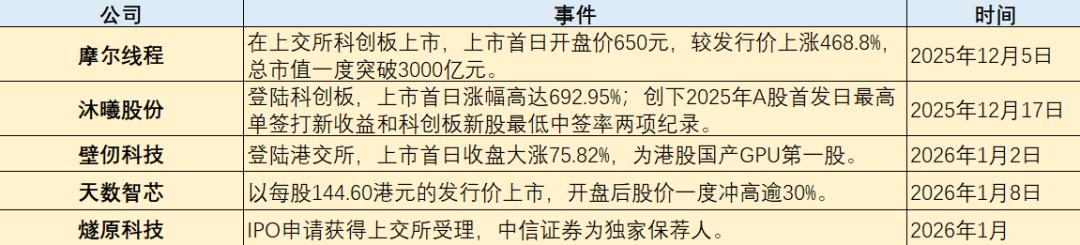
当全球巨头在技术前沿狂奔时,中国本土的GPU产业在历史机遇的叠加下,正奋力开启一场波澜壮阔的追赶。来自弗若斯特沙利文的调查数据揭示了令人 惊叹的增长曲线:中国GPU市场规模从2020年的385亿元猛增至2024年的1638亿元,预计到2029年将攀升至1.4万亿元,占全球市场的份额将从16%跃升至 38%。其中,由大模型驱动的AI智算GPU是绝对的增长引擎。 与此同时,外部环境的变化构成了强烈的"倒逼"力量。近年来,高性能AI芯片的出口管制持续升级,国际领先产品的供应受到限制。这场"断供"危机,将 供应链安全的紧迫性提到了前所未有的高度,从反面催生了刚性的国产替代需求。 01 国产崛起:政策东风与市场沃土下的追赶者 国家层面,从国务院到工信部,支持AI芯片与智算基础设施发展的政策密集出台。笔者观察到,上海在该领域继续走在了前列——上海市国资委推动设 立的总规模1000亿元产业投资母基金,首个直投项目便是壁仞科技。这种政策与资本的深度绑定,为本土企业开辟了一个受保护的、宝贵的战略成长窗口 期。 | 公司 | 事件 | 时间 | | --- | --- | --- | | 摩尔线程 | 在上交所科创板上市,上市首 ...
投出爱芯、壁仞的耀途资本:中国AI芯片的胜算
投中网· 2026-02-11 03:25
Core Viewpoint - The article emphasizes the importance of edge AI chips in the context of China's growing AI chip industry, highlighting the potential for world-class companies to emerge from this sector due to its rich application scenarios and complete supply chain [12][25][37]. Group 1: Investment and Market Dynamics - Aixin Yuan Zhi, an edge AI inference chip company, successfully listed on the Hong Kong Stock Exchange on February 10, 2026, marking a significant milestone in the AI chip industry [3]. - Yao Tu Capital's investment in Aixin Yuan Zhi reflects a long-term belief in the company's technology and the potential of the edge AI chip market, which has seen a surge in demand due to the shift from cloud to edge computing [4][6]. - The company has captured a significant share of the visual terminal computing market and has expanded into the smart automotive sector, becoming China's second-largest domestic smart driving SoC supplier with nearly one million units shipped over four years [8][9]. Group 2: Technological Trends and Challenges - The article discusses the shift in the AI chip landscape, where software capabilities are becoming critical for success, with many AI chip companies employing a majority of software engineers [28][29]. - The edge AI chip market is characterized by a fragmented application landscape, necessitating the construction of an ecosystem involving chip manufacturers, solution providers, and end applications to create a competitive advantage [30][31]. - The evolution of AI models is driving new requirements for AI chips, with increasing demands for performance and capabilities in areas such as autonomous driving and robotics [22][23]. Group 3: China's Competitive Edge - China's edge AI chip market benefits from a rich array of application scenarios and a robust supply chain, positioning it well to develop leading companies in this space [12][37]. - The rapid adoption and iteration of new technologies in sectors like autonomous driving in China create a fertile ground for chip demand, allowing domestic companies to establish a competitive edge [38][39]. - The article posits that the future of AI chips lies in their ability to understand and cater to specific application needs, with a focus on vertical markets that can sustain large-scale chip demand [43]. Group 4: The Role of Open Source - Open-source models are seen as a key factor in enabling Chinese AI chip companies to thrive, as they lower the barriers to entry for application deployment and enhance compatibility with domestic chips [45][49]. - The shift towards open-source in the AI industry allows for a more inclusive distribution of profits and fosters a "sovereign AI" ecosystem where domestic companies control the entire stack from chips to applications [46][53]. - The article highlights that the open-source approach has significantly reduced the compatibility barriers for AI chips, creating a complete ecological loop that benefits local enterprises [54].
开年连获三个人工智能IPO,对话启明创投周志峰:遵循幂律法则,坚定布局长雪坡、大赛道里的科技标的
IPO早知道· 2026-02-11 03:12
Core Viewpoint - The article emphasizes that IPOs are not the end but a starting point for companies, serving as a gathering place for resources and strength to face greater challenges ahead [4][8]. Group 1: Recent IPOs and Market Context - In the first 40 days of 2026, five AI-related hard tech companies completed their IPOs through the Hong Kong Stock Exchange's "Special Line for Science and Technology Enterprises" [3]. - Qiming Venture Partners, a prominent investor in the AI sector, has invested in more than half of these IPO projects, highlighting its role in supporting these companies from early stages [3][5]. - The success of these IPOs is attributed to a combination of favorable policies, market conditions, and the growing interest in AI technology [5][6]. Group 2: Investment Philosophy and Strategy - Qiming Venture Partners adheres to the Power Law principle in venture capital, believing that a few high-quality projects can generate significant returns, which are essential for the fund's overall value [7]. - The firm focuses on investing in core sectors of the AI ecosystem, such as cloud GPUs, large models, and AI inference chips, which are characterized by substantial market demand and technological depth [7]. - The investment strategy includes early intervention and comprehensive support for companies, from technology development to commercialization and IPO [6][7]. Group 3: Future Outlook and Challenges - The article suggests that companies should focus on their core value creation capabilities to achieve sustainable growth and maintain a reasonable market valuation post-IPO [8]. - The IPO is viewed as a milestone rather than a celebration, with the real challenge being the journey towards long-term success and innovation after going public [4][8]. - Historical examples, such as NVIDIA's post-IPO innovations, are cited to illustrate the potential for companies to leverage IPOs for further growth and market leadership [9].

五年间增长约370倍,大行预测国产Token消耗量将迎来大爆发
Xuan Gu Bao· 2026-02-10 23:27
Group 1 - The AI inference token consumption in China is projected to increase from approximately 10 trillion in 2025 to about 3,900 trillion by 2030, representing a growth of around 370 times over five years [1] - The explosive growth is driven by two main factors: increased penetration of AI in consumer and enterprise workloads, and the expansion of application scenarios from simple conversational AI to complex intelligent agents and multimodal outputs [1] - As of December 2025, the daily token consumption of ByteDance's Doubao series models has exceeded 50 trillion, showing a year-on-year increase of over 10 times [1] Group 2 - Domestic models are entering a release window as the Spring Festival approaches, with rapid iterations expected to capture user AI interaction entry points, leading to an accelerated demand for inference-side computing power [1] - 2026 is anticipated to be a pivotal year for the domestic super node market, with numerous domestic manufacturers releasing next-generation super node solutions, including Huawei's Atlas 950/960 and others [1] - The industry chain is expected to reach a significant growth point as both supply and demand sides are actively engaged [1] Group 3 - Kehua Data has signed an ecological cooperation agreement with Wallen Technology and Digital China to jointly build a four-in-one industrial ecosystem encompassing "chip-server-data center-computing power services" [2]