第一三共

Search documents
创新药出海黄金时代,科创板抢占弹性先机|2025招商证券“招财杯”ETF实盘大赛
Sou Hu Cai Jing· 2025-10-17 11:18
Core Insights - The article discusses the growth and potential of China's innovative drug industry, highlighting its transition from generic to innovative drug development, particularly in the context of global competition and market dynamics [1][2][3] Group 1: Innovative Drug Definition and Market Position - Innovative drugs are defined as medications that are first to be launched globally, requiring novel efficacy and mechanisms of action [2] - The distinction between innovative drugs and generic drugs lies in the former's unique patents and superior therapeutic effects [2][3] - China's innovative drug sector has made significant advancements, particularly in CAR-T therapies and bispecific antibodies, positioning itself competitively against the US [1][3] Group 2: Pipeline Importance and Development Challenges - The pipeline of innovative drug companies is a critical asset, with multiple projects often pursued simultaneously to mitigate risks [4][5] - The development cycle for innovative drugs can span 10 to 20 years, with a global success rate of less than 7% from discovery to market [4][6] - China's innovative drug companies are noted for their efficiency and progress in pipeline development, often leading globally [5][6] Group 3: Market Environment and Policy Support - Recent policy changes have improved the R&D and market environment for innovative drug companies in China, including better collaboration between medical insurance and commercial insurance [9][10] - The government has allocated significant funds to support innovative drugs, with 360 billion yuan redirected from generic drug payments to support innovative drug development [10] - The introduction of commercial insurance for innovative drugs is expected to enhance market access and payment structures [10][11] Group 4: Globalization and Collaboration Models - The collaboration model for Chinese innovative drug companies has evolved from outright buyouts to co-development partnerships with multinational corporations [12][13] - New models, such as joint ventures, are emerging, reflecting the increasing global recognition of Chinese innovative assets [13][14] - Successful examples, like the drug Zebutinib, demonstrate the potential for significant revenue generation from international markets [15] Group 5: Role of the Science and Technology Innovation Board - The Science and Technology Innovation Board (STAR Market) plays a crucial role in supporting innovative drug companies by providing access to capital for R&D [16][17] - The STAR Market's index includes a concentrated number of high-potential innovative drug companies, enhancing investment opportunities [17][18] - The index's structure allows for better risk management and investment in the innovative drug sector [18][19] Group 6: Future Growth Potential - The innovative drug sector in China is expected to experience substantial growth over the next 3 to 5 years, driven by increasing domestic demand and improved payment mechanisms [20][21] - The current market dynamics suggest a shift towards more innovative products, with a growing number of first-in-class drugs anticipated [22][23] - The potential for large contracts and partnerships indicates a robust future for the innovative drug industry in China [23][24]

解码上海生物医药全链条创新生态——走进上海生物医药创新成果展
Di Yi Cai Jing Zi Xun· 2025-10-17 06:45
Core Insights - The Shanghai Biopharmaceutical Innovation Achievements Exhibition showcases the progress made during the "14th Five-Year Plan" period, emphasizing innovation-driven development and reform in the biopharmaceutical sector [1][2]. Group 1: Innovation and Achievements - Shanghai has approved a total of 30 domestic Class 1 innovative drugs and 45 domestic Class 3 innovative medical devices from 2021 to September 2025, demonstrating its leading position in drug and device innovation in China [2]. - The number of overseas licensing transactions (License-out) from Shanghai reached 38 in 2024, accounting for 35% of the national total, with transaction amounts reaching $30.7 billion, representing 47% of the national total [2]. - Shanghai's research output in top-tier journals has increased significantly, with 3 out of 12 papers in the "Best of Cell 2024" list published by Shanghai researchers, and a total of 127 papers published in four major medical journals from 2021 to 2024 [3]. Group 2: Policy and Reform - The exhibition highlights 14 policy regulations and special measures introduced during the "14th Five-Year Plan" to promote high-quality development in the biopharmaceutical sector, covering areas such as drug regulation, medical device innovation, and clinical trials [5]. - New policies, including the "Opinions on Supporting the Full-Chain Innovation Development of the Biopharmaceutical Industry," aim to enhance the policy framework and support for the biopharmaceutical sector [5]. Group 3: Industry Growth and Structure - The biopharmaceutical industry in Shanghai has grown from ¥761.71 billion in 2021 to ¥984.70 billion in 2024, with a compound annual growth rate of 8.94%, and is expected to exceed ¥1 trillion in 2025 [6]. - By the end of 2024, Shanghai had 2,183 biopharmaceutical enterprises, including 675 manufacturing, 569 service, and 939 wholesale enterprises, indicating a robust industry structure [6]. - Major multinational pharmaceutical companies have established headquarters or R&D centers in Shanghai, with 19 out of the top 20 global pharmaceutical and medical device companies present [6]. Group 4: Financial Support and Investment - Shanghai's biopharmaceutical companies have been active in IPOs, with 102 companies listed across A-shares, Hong Kong, and the US, and several more in the pipeline [7]. - The Shanghai State Investment Corporation established a biopharmaceutical industry mother fund with a total scale of ¥22.5 billion to support the development of the biopharmaceutical innovation ecosystem [7].

解码上海生物医药全链条创新生态——走进上海生物医药创新成果展
第一财经· 2025-10-17 06:32
Core Viewpoint - The article highlights the achievements and developments in Shanghai's biopharmaceutical industry during the "14th Five-Year Plan" period, emphasizing innovation, reform, and the establishment of a comprehensive ecosystem for biopharmaceutical innovation [1][3][9]. Group 1: Innovation Achievements - Shanghai has approved a total of 30 domestic Class 1 innovative drugs and 45 domestic Class 3 innovative medical devices from 2021 to September 2025, showcasing its leading position in drug and device innovation in China [3]. - The number of overseas licensing transactions (License-out) from Shanghai reached 38 in 2024, accounting for 35% of the national total, with a transaction value of $30.7 billion, representing 47% of the national total [3]. - Research output from Shanghai has significantly increased, with 3 out of 12 papers listed in "Best of Cell 2024" published by Shanghai researchers, and the number of papers in top global medical journals rising from 24 in 2021 to 52 in 2024, totaling 127 [4]. Group 2: Policy and Reform - Shanghai has implemented a series of policies aimed at addressing bottlenecks in the biopharmaceutical sector, including 14 policy regulations covering various key areas such as drug regulation, medical device innovation, and commercialization of innovative drugs [8]. - The exhibition highlighted new policies such as the "Opinions on Supporting the Full Chain Innovation Development of the Biopharmaceutical Industry" and the "Action Plan for Promoting the Full Chain Development of High-end Medical Devices" [8]. Group 3: Industry Growth - The biopharmaceutical industry in Shanghai has expanded from 761.7 billion yuan in 2021 to 984.7 billion yuan in 2024, with an average annual growth rate of 8.94%, and is projected to exceed 1 trillion yuan in 2025 [9]. - By the end of 2024, there were 2,183 large-scale biopharmaceutical enterprises in Shanghai, including 675 manufacturing companies and 569 service companies [9]. - Major multinational pharmaceutical companies have established their headquarters or R&D centers in Shanghai, with 19 out of the top 20 global pharmaceutical and medical device companies present [9].
默沙东,放手一搏
Ge Long Hui· 2025-10-16 04:03
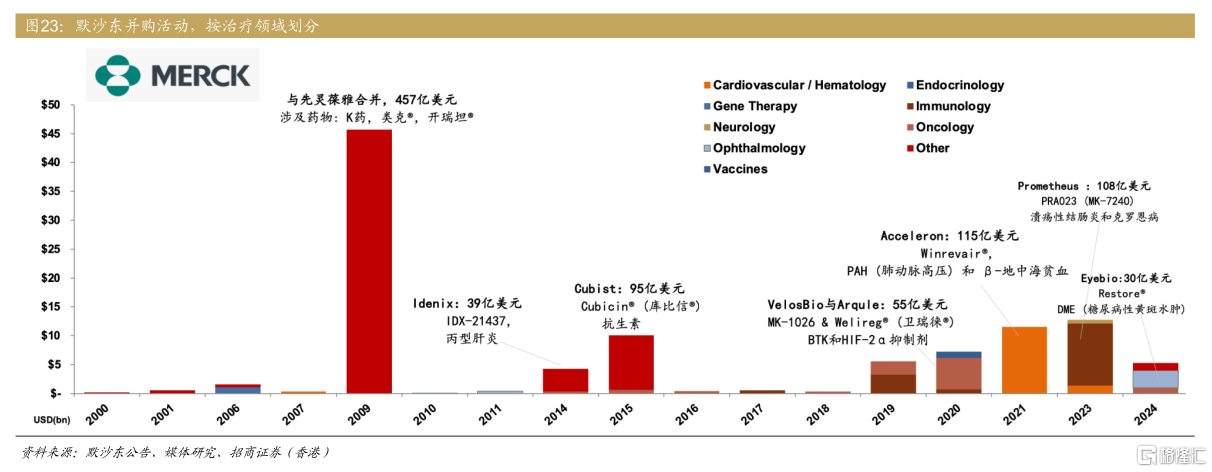
Core Viewpoint - Merck is aggressively pursuing acquisitions and partnerships to diversify its product portfolio and mitigate the impending revenue loss from the expiration of key patents, particularly for its blockbuster drug Keytruda, which is expected to face significant sales declines by 2030 [6][23]. Group 1: Acquisition Strategy - Over the past three years, Merck has spent over $50 billion on acquisitions, with significant deals including the $11.5 billion acquisition of Acceleron Pharma in 2021, $10.8 billion for Prometheus Biosciences in 2023, and a planned $10 billion acquisition of Verona Pharma in 2025 [1][6]. - Merck's acquisition strategy includes a focus on various therapeutic areas such as oncology, autoimmune diseases, cardiovascular, respiratory, and ophthalmology, aiming to build a diverse product pipeline [3][8]. Group 2: Key Products and Partnerships - Merck has established partnerships worth over $30 billion with companies like Kura Oncology and Daiichi Sankyo to develop antibody-drug conjugates (ADCs), enhancing its oncology pipeline [2][10]. - The company is also introducing new drugs, such as a cardiovascular treatment from Hutchison China MediTech for $2 billion, and is actively developing multiple ADC products in collaboration with partners [2][10]. Group 3: Revenue Challenges - The patent for Keytruda is set to expire in 2028, with projections indicating a potential sales drop of nearly 50% by 2030, leading to an anticipated revenue gap of around $15 billion [6][8]. - Sales of Merck's second-best-selling product, the HPV vaccine Gardasil, have also declined by 48% year-on-year, further exacerbating revenue concerns [7][8]. Group 4: Future Growth Potential - Merck's acquisitions and partnerships are expected to yield several potential blockbuster drugs across various therapeutic areas, including the TL1A monoclonal antibody for inflammatory bowel disease and the dual-target COPD drug Ensifentrine [16][17]. - The company is also exploring innovative treatments in the ophthalmology sector, with a potential first-in-class Wnt antibody for diabetic macular edema [20]. Group 5: Strategic Outlook - Merck's recent acquisitions and partnerships are part of a strategic shift to prepare for the post-Keytruda era, aiming to fill revenue gaps and reshape the competitive landscape in the pharmaceutical industry [23].

锚定百亿美元乳腺癌用药市场 中国生物制药库莫西利冲刺一线最佳疗法
Zheng Quan Shi Bao Wang· 2025-10-15 07:48
Core Insights - The 2025 European Society for Medical Oncology (ESMO) annual meeting will take place in Germany from October 17 to 21, where several significant oral reports from domestic innovative pharmaceutical companies are expected to be disclosed [1] - China National Pharmaceutical Group is set to present key data on its CDK2/4/6 inhibitor, Kumosili, and HER2 dual-target ADC, TQB2102, highlighting its comprehensive coverage in the breast cancer treatment landscape [1] Industry Overview - Breast cancer is the second most common cancer globally, following lung cancer, and has the highest incidence and mortality rates among women [1] - The breast cancer market is highly competitive, particularly in the HR+/HER2- subtype, which accounts for approximately 65%-70% of all breast cancer cases [2] - The global market for CDK4/6 inhibitors is projected to approach $13 billion by 2024, with ongoing growth driven by products from Pfizer, Eli Lilly, and Novartis [2] Company Developments - Kumosili capsules, a new generation CDK2/4/6 inhibitor, are expected to receive approval for second-line treatment of HR+/HER2- locally advanced or metastatic breast cancer by the end of this year [3] - The company is also advancing its clinical trials for Kumosili in first-line and adjuvant settings, aiming for comprehensive coverage across treatment lines [3] - TQB2102, another product from China National Pharmaceutical Group, will present phase Ib clinical data for HER2-positive recurrent/metastatic breast cancer at ESMO [3] Competitive Landscape - The ADC market for HER2-positive breast cancer is evolving, with significant sales from existing products like DS-8201, which reached $3.8 billion last year and is projected to peak at $10 billion [4] - TQB2102 has been optimized in terms of target binding, toxin load, and payload compared to DS-8201, and has been recognized as a breakthrough therapy for multiple indications [4] - The company has a diverse pipeline covering various cancer types, including breast, colorectal, lung, bile duct, and gastric cancers, with several indications entering phase III clinical trials [4]

创新药重返泡沫时代?对话映恩生物朱忠远:行业估值有泡沫不是坏事,对外授权不是创新药公司的目标,而是手段
Mei Ri Jing Ji Xin Wen· 2025-10-14 12:52
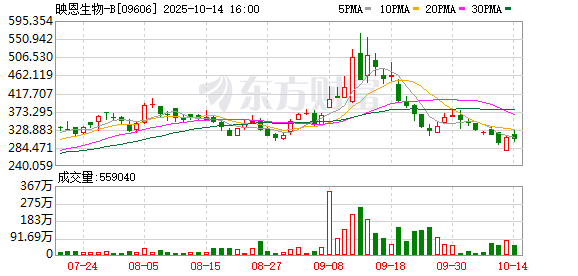
Core Insights - The stock price of InnoCare Pharma (映恩生物) reached a historical high of HKD 563.50 per share after being included in the Hang Seng Composite Index and successful Phase III clinical trial results for its core product DB-1303, but has since dropped to HKD 305 per share [2] - The Hong Kong innovative drug index surged from 666.91 to 1660.66 in the first nine months of the year, indicating a potential return to a bubble era for Chinese innovative drugs [2] - The founder and CEO, Zhu Zhongyuan, believes that industry development is akin to wine fermentation, where bubbles are a natural occurrence, and emphasizes that business development (BD) is a means to an end, not the goal [2][11] Company Overview - InnoCare Pharma, known as the "first ADC stock in China," has emerged as a strong player in the ADC (antibody-drug conjugate) sector, with 10 ADC clinical-stage pipelines [3] - The company went public on the Hong Kong Stock Exchange after a significant increase in stock price on its first day, raising the largest financing amount in the Hong Kong biotech sector [3] - The company’s lead product, DB-1303, has shown significant advantages over the established T-DM1 drug in clinical trials, and it is approaching the stage of market application [3][4] Clinical Development - DB-1303 is being developed for endometrial cancer, a condition with limited treatment options, and has received breakthrough therapy designation from both the FDA and CDE [3][4] - Another core product, DB-1311, targets B7-H3 and has entered global I/IIa clinical trials, with the company aiming to catch up with competitors in the ADC space [5][6] - InnoCare Pharma has initiated clinical trials in 20 countries, with over 2,700 patients enrolled, positioning itself among the leaders in the domestic biotech sector [6] Strategic Vision - Zhu Zhongyuan envisions a future where Chinese ADC companies will be globally recognized, focusing on the impact of their drugs on patient lives rather than merely on pipeline sales [7][12] - The company has established a "flywheel model" to leverage its experience in ADC development, aiming for partnerships with multinational pharmaceutical companies to secure funding and expand its network [8][9] - InnoCare Pharma has successfully completed multiple BD transactions with notable partners, including BioNTech and GSK, which has positioned it as a leading player in the domestic biotech landscape [9][10] Market Dynamics - The innovative drug market in Hong Kong has seen significant investment from multinational companies, with over 52.5% of global BD transactions related to Chinese innovative drugs as of August 2023 [10] - The stock price fluctuations in the biotech sector are influenced by market sentiment towards BD activities, with a notable correlation between overseas market rights and stock performance [11] - Despite current losses, the company is optimistic about its future, projecting significant milestone payments from existing BD agreements over the next two years [11][13]
2025张江药谷产业生态全球推介会成功举行
Zheng Quan Ri Bao Zhi Sheng· 2025-10-14 12:09
Core Insights - The 2025 Zhangjiang Pharmaceutical Valley Global Promotion Conference and International Innovation Conference has commenced, focusing on the full-cycle development system from source innovation to global market application [1][2] - Zhangjiang Pharmaceutical Valley has approved 29 first-class domestic new drugs, with seven innovative drugs set to launch in 2025, showcasing strong source innovation capabilities [1][2] - The establishment of the Zhangjiang Pharmaceutical Valley Comprehensive Service Center aims to enhance industry service capabilities and support the entire lifecycle of enterprises [2] Group 1 - The conference gathered leaders from the National Medical Products Administration, local governments, academicians, top scientists, industry leaders, and capital representatives to discuss the development of the pharmaceutical industry [1] - Seven innovative drugs from companies such as Inpai Pharmaceutical and Fuxing Pharmaceutical are expected to launch in 2025, including the first human-derived long-acting GLP-1 receptor agonist and the first gene therapy drug [1][2] - A total of 38 innovative medical device products have been approved, with four products from Xuan Yu Medical and Shang Yang Medical successfully launched in 2025, marking advancements in cardiac electrophysiology [1][2] Group 2 - Zhangjiang Pharmaceutical Valley has become a global platform for pharmaceutical innovation, with 11 global innovative drugs launched in China to date [2] - The Comprehensive Service Center integrates industry resources and provides a "1+1+1" service system, including a scientist salon, a results display center, and a one-stop service center [2] - The future focus will be on strengthening the entire innovation ecosystem, from source innovation to clinical application, to establish an internationally influential biopharmaceutical industry innovation hub [2]
刚刚,大涨!达利欧:黄金比美元更安全
Zhong Guo Ji Jin Bao· 2025-10-08 01:26
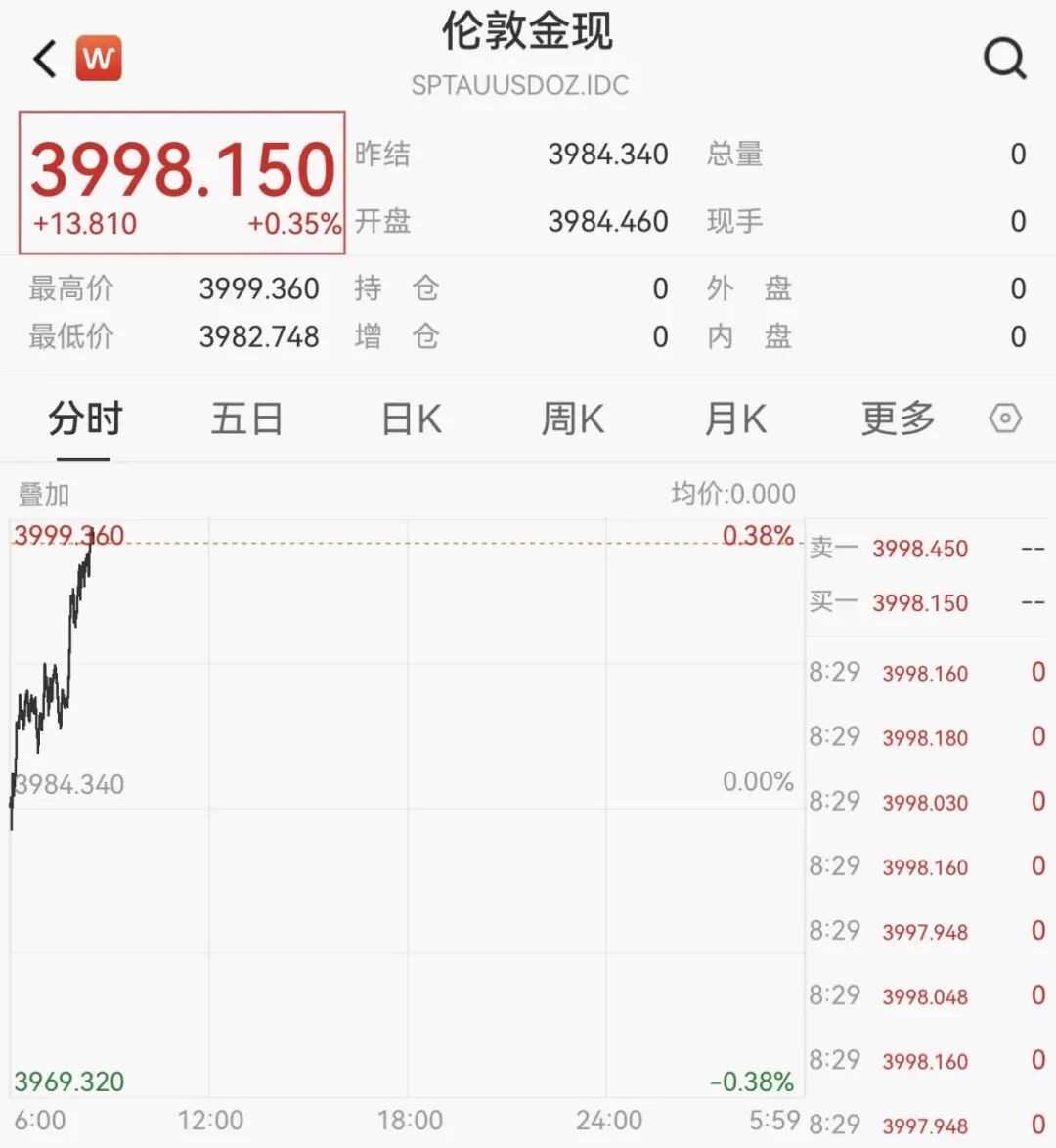
Group 1: Gold Market - Spot gold reached a historic high, surpassing $3999 per ounce, and COMEX gold futures reported at $4018.4 per ounce [1] - Ray Dalio, founder of Bridgewater Associates, emphasized that gold is a superior safe-haven asset compared to the US dollar, suggesting a strategic asset allocation of about 15% in gold for optimal portfolio diversification [4] Group 2: Japanese Stock Market - The Japanese stock market saw a rise, with the Tokyo Stock Price Index increasing by 1% to 3260.25 points, driven by gains in major stocks like Ishikawajima-Harima Heavy Industries and Rakuten Bank [5] - Notable stock performances included Aichi Financial (+7.23%), Ishikawajima-Harima Heavy Industries (+5.95%), and Mitsubishi Heavy Industries (+5.56%) [6] Group 3: Currency Exchange - The USD/JPY exchange rate rose to 152.25 yen, the highest level since February 19, indicating pressure on the yen due to political developments in Japan [7] - The yen's depreciation is linked to concerns over fiscal expansion policies under the new administration, which may exacerbate inflation and prompt the Bank of Japan to raise interest rates [7] Group 4: Japanese Economic Indicators - Japan's real wages adjusted for inflation fell by 1.4% year-on-year in August, marking the eighth consecutive month of decline, indicating ongoing pressure on household purchasing power [8] - Despite nominal wage growth of 1.5%, it remains below the consumer inflation rate of 3.1%, leading to a decrease in real income [8] - Japan's trade balance showed a surplus of 105.9 billion yen in August, contrary to expectations of a deficit, while the current account surplus was reported at 24.635 trillion yen [8]
诺奖点燃多个千亿市场,辉瑞、阿斯利康都在下注
虎嗅APP· 2025-10-07 02:49
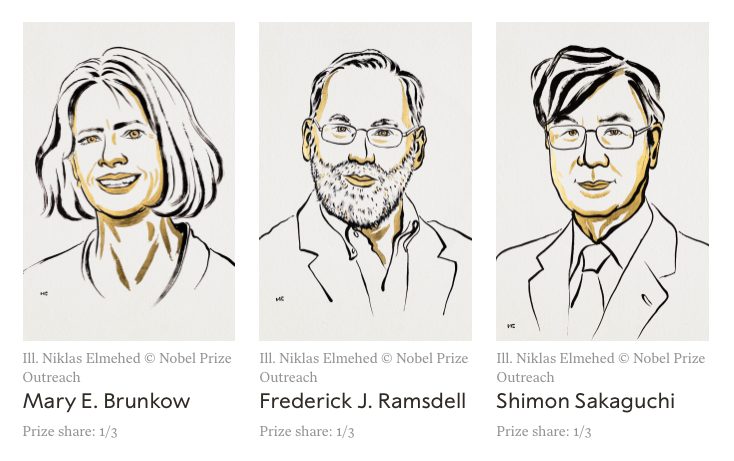
Core Insights - The 2025 Nobel Prize in Physiology or Medicine was awarded to American scientists Mary E. Brunkow, Fred Ramsdell, and Japanese immunologist Shimon Sakaguchi for their groundbreaking discoveries in peripheral immune tolerance, specifically the role of regulatory T cells (Treg cells) in immune system regulation [2][3]. Group 1: Research and Findings - The key discovery by the awardees is the identification of a gene locus (Foxp3) that controls a type of cell (Treg cells) capable of breaking immune tolerance, leading to autoimmune and inflammatory issues [7][12]. - The research highlights the importance of maintaining a balance in the immune system, as an overly aggressive immune response can lead to autoimmune diseases [6][7]. - Treg cells are now recognized not only for their role in immune suppression but also for their potential in treating various diseases, including autoimmune disorders and cancer [9][11]. Group 2: Market Potential - Treg cell-related therapies are projected to exceed $250 million by 2031, with a compound annual growth rate (CAGR) of 44% from 2024 to 2031 [9]. - The autoimmune drug market is significant, with a global market size exceeding $100 billion, expected to reach $176.7 billion by 2030 [11][12]. - The recognition of Treg cell research by the Nobel Prize is anticipated to accelerate investment and research in this area, potentially leading to new treatment paradigms [12]. Group 3: Clinical Applications and Challenges - Clinical trials involving Treg cell therapies are already underway, with 234 studies registered, primarily in North America [9]. - There are promising case studies, such as a patient with ALS showing improvement after Treg cell treatment, indicating potential new paradigms in treating neurodegenerative diseases [11]. - Despite the potential, challenges remain, including the need for precise targeting of Treg cells and issues related to stability and toxicity [12].

诺奖点燃多个千亿市场,辉瑞、阿斯利康都在下注
Hu Xiu· 2025-10-07 01:45
Group 1 - The Nobel Prize in Physiology or Medicine for 2025 was awarded to American scientists Mary E. Brunkow, Fred Ramsdell, and Japanese immunologist Shimon Sakaguchi for their groundbreaking discoveries in peripheral immune tolerance [1][2] - Their research focuses on the mechanisms of negative regulation of the immune system, specifically the role of regulatory T cells (Treg cells) as a "brake" for immune responses [1][7] - The total prize money for this year's award is 11 million Swedish Krona, approximately 8.31 million RMB, which remains unchanged from the previous year [3] Group 2 - The research conducted by the awardees has been relatively overlooked in the past, but it is now gaining attention as it has the potential to impact multiple billion-dollar markets [2][9] - Treg cell-related therapies are projected to exceed $25 billion by 2031, with a compound annual growth rate of 44% from 2024 to 2031, indicating significant market potential in areas such as cancer, autoimmune diseases, and organ transplant rejection [8][11] - The global market for autoimmune drugs has surpassed $100 billion, with projections reaching $176.7 billion by 2030, highlighting the growing interest and investment in this therapeutic area [11][12] Group 3 - Treg cell therapies are currently in a critical transition from research to clinical application, with 234 studies already in clinical trial phases, predominantly in North America [7][11] - Major pharmaceutical companies like Pfizer and AstraZeneca are actively investing in Treg cell-related therapies, indicating a strong industry interest in this area [11][12] - Despite the potential of Treg cell therapies, challenges remain, including issues with stability and potential toxicity, which need to be addressed for effective clinical use [12][13]