
博时基金

Search documents
上一轮牛市买的主动权益基金 为何还有四成未回本?
YOUNG财经 漾财经· 2025-11-13 14:35
Core Insights - The article discusses the performance of actively managed equity funds in the context of the recent bull market, highlighting that 38% of these funds remain in a loss position over the past five years despite a significant number achieving positive returns since 2025 [2][3][4]. Performance Overview - As of November 10, 2023, the Shanghai Composite Index has risen by 19.42% since 2025, with 97.45% of actively managed equity funds reporting positive returns this year [4]. - However, 1,019 actively managed equity funds are still in a loss position over the past five years, with 302 funds having reduced their maximum drawdown to less than 10% [5][6]. Reasons for Underperformance - The article identifies three main reasons for the underperformance of many funds: high-level accumulation, frequent trading, and reliance on specific sectors [7][8]. - Funds that experienced negative returns had an average stock position of 84.22% during peak market periods, indicating a tendency to increase exposure during high valuations [7]. Trading Behavior - The average turnover rate for actively managed equity funds from 2021 to 2024 was 460.71%, with funds losing over 30% seeing an even higher turnover rate of 508.45% [8]. - Some funds, such as Tianzhi New Consumption and Guodu Innovation Drive, reported turnover rates exceeding 1,000%, indicating excessive trading activity [8]. Sector Dependence - Many funds have shown a heavy reliance on traditional sectors despite being marketed as focusing on new or innovative sectors, leading to performance discrepancies [10][11]. - For instance, funds like Tianzhi New Consumption and Invesco Great Wall New Growth have maintained significant positions in traditional consumer stocks, which have not performed well recently [10][11]. Market Outlook - The article notes a resurgence in investor interest in actively managed funds, with 1,354 new funds launched in 2023, reflecting a doubling in issuance compared to the previous year [12]. - Fund managers are advised to focus on sectors with long-term growth potential, such as high-end manufacturing and innovative pharmaceuticals, while being cautious of market volatility [13][14].


万亿公募官宣,陈宇履新博时基金总经理
2 1 Shi Ji Jing Ji Bao Dao· 2025-11-13 11:29
Core Viewpoint - The appointment of Chen Yu as the new General Manager of Bosera Fund marks a significant leadership change, aligning with the evolving trends in the public fund industry and aiming to enhance the company's investment management capabilities [1][2][5]. Group 1: Leadership Changes - Chen Yu has officially taken over as General Manager of Bosera Fund, following the appointment of Zhang Dong as Chairman [1][2]. - Chen Yu has extensive experience in various financial sectors, including banking, insurance asset management, and insurance companies, which is expected to bring synergistic benefits to Bosera Fund [2][3]. - The new leadership team is seen as well-rounded, with expertise in wealth management and asset management, which will help Bosera Fund leverage its resources for high-quality development [2][5]. Group 2: Company Performance and Strategy - As of the end of Q3, Bosera Fund manages 399 public funds with total assets exceeding 1.8 trillion RMB, serving over 180 million clients [2][6]. - The company is optimistic about the long-term growth of the Chinese economy and capital markets, aiming to adapt to the ongoing transformation in the public fund industry [5][6]. - Bosera Fund plans to focus on high-quality development, aligning its strategies with market demands and prioritizing investor interests [5][6]. Group 3: Market Context - The public fund industry is undergoing significant changes, with regulatory bodies emphasizing the need for improved asset management and comprehensive wealth management capabilities [5][6]. - The new management team is expected to drive innovation and development within Bosera Fund, particularly in the context of increasing market competition [6].
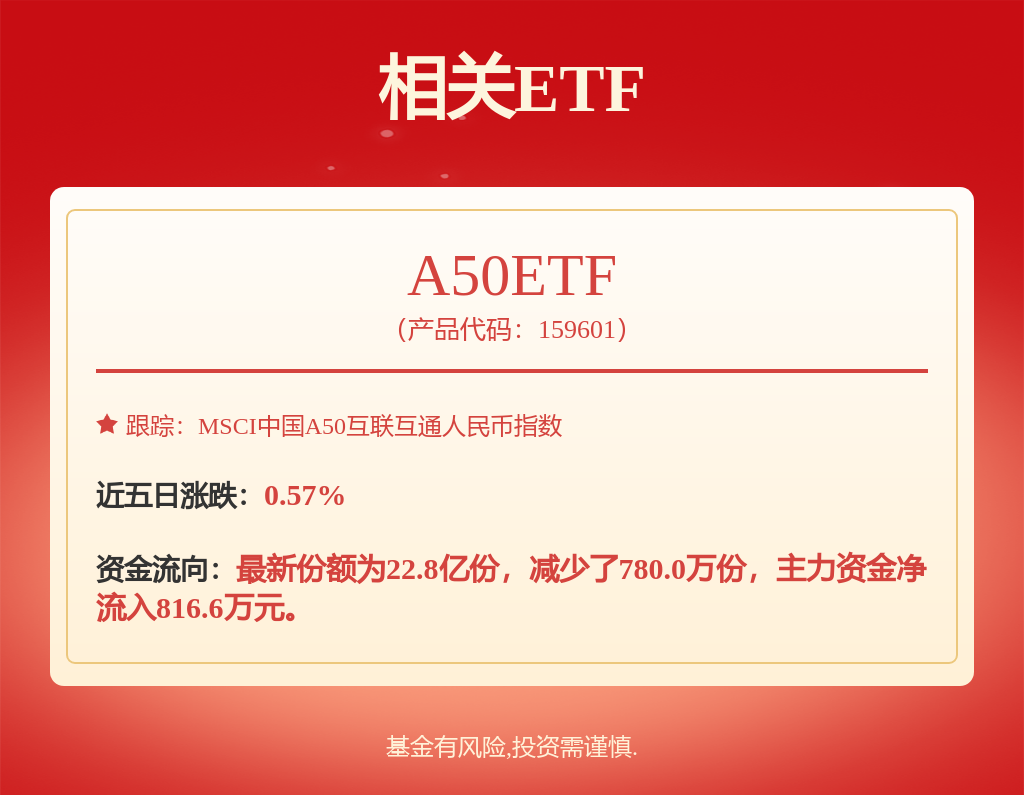
百度发布两款昆仑芯芯片,科创芯片ETF博时(588990)涨近2%,佰维存储领涨
Xin Lang Cai Jing· 2025-11-13 05:10
Group 1 - The core viewpoint of the news highlights the strong performance of the Sci-Tech Innovation Board chip index, with significant gains in constituent stocks such as Baiwei Storage and Yandong Micro, indicating a bullish trend in the semiconductor sector [1] - The Sci-Tech Chip ETF by Bosera has seen a notable increase of 35.64% over the past three months, reflecting growing investor interest and confidence in the domestic chip industry [1][3] - The liquidity of the Bosera Sci-Tech Chip ETF is robust, with a turnover rate of 3.1% and an average daily transaction volume of 1.08 billion yuan over the past month, suggesting active trading and investor engagement [1][4] Group 2 - Baidu is set to launch the next-generation Kunlun chips, M100 and M300, with M100 optimized for large-scale inference and expected to be released in early 2026, while M300 will focus on ultra-large-scale model training and inference, slated for early 2027 [1] - Huaxi Securities emphasizes the importance of the domestic computing power industry chain, noting the accelerated growth of AI applications and the impact of recent product launches by Alibaba Cloud and Huawei [2] - Zhongyin Securities points out the rapid construction of global data centers driven by the demand for AI model training and deployment, leading to increased needs for storage and power [2] Group 3 - The latest scale of the Bosera Sci-Tech Chip ETF has reached 739 million yuan, marking a new high in the past month [3] - The ETF's share count has also reached 310 million shares, indicating strong investor interest and participation [4] - The ETF has experienced continuous net inflows over the past three days, totaling 63.15 million yuan, with an average daily net inflow of 21.05 million yuan, reflecting positive market sentiment [4]

首航新能股价涨5.1%,博时基金旗下1只基金重仓,持有411股浮盈赚取674.04元
Xin Lang Cai Jing· 2025-11-13 02:45
Group 1 - The core viewpoint of the news is that Shihang New Energy has seen a stock price increase of 5.1%, reaching 33.81 CNY per share, with a total market capitalization of 13.942 billion CNY [1] - Shihang New Energy, established on June 7, 2013, focuses on the research, production, sales, and service of new energy power equipment, particularly in solar energy conversion, storage, and management [1] - The company's main business revenue composition includes: grid-connected inverters at 57.98%, energy storage batteries at 23.11%, energy storage inverters at 13.72%, accessories and others at 4.85%, and other supplementary sources at 0.34% [1] Group 2 - From the perspective of fund holdings, Bosera Fund has one fund heavily invested in Shihang New Energy, specifically the Bosera CSI A50 ETF Linked A, which holds 411 shares, accounting for 0.01% of the fund's net value [2] - The Bosera CSI A50 ETF Linked A has a total scale of 60.1895 million CNY and has achieved a year-to-date return of 16.13% [2] - The fund manager, Gui Zhenghui, has a tenure of 10 years and 119 days, with the fund's total asset size at 7.051 billion CNY [3]
科陆电子股价涨5.12%,博时基金旗下1只基金重仓,持有28.96万股浮盈赚取13.32万元
Xin Lang Cai Jing· 2025-11-13 02:04
Group 1 - The core point of the article highlights the recent performance of Kelu Electronics, which saw a 5.12% increase in stock price, reaching 9.45 CNY per share, with a trading volume of 295 million CNY and a market capitalization of 15.695 billion CNY [1] - Kelu Electronics, established on August 12, 1996, and listed on March 6, 2007, is based in Shenzhen, Guangdong Province, and specializes in the research, production, and sales of electrical instruments, power automation products, and renewable energy solutions [1] - The company's revenue composition includes 49.83% from energy storage, 48.74% from smart grid, 0.91% from property, 0.43% from comprehensive energy management and services, and 0.10% from other sources [1] Group 2 - From the perspective of fund holdings, Kelu Electronics is a significant investment for Bosera Fund, with one of its funds, Bosera CSI Taogold Big Data 100A, holding 289,600 shares, representing 1.2% of the fund's net value, making it the fourth-largest holding [2] - The Bosera CSI Taogold Big Data 100A fund, established on May 4, 2015, has a current size of 151 million CNY and has achieved a year-to-date return of 27.39%, ranking 1971 out of 4216 in its category [2] - The fund manager, Yang Zhenjian, has been in charge for 6 years and 348 days, overseeing assets totaling 15.704 billion CNY, with the best return during his tenure being 69.51% [3]

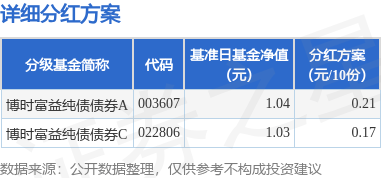
基金分红:博时富益纯债债券基金11月19日分红
Sou Hu Cai Jing· 2025-11-13 01:43
证券之星消息,11月13日发布《博时富益纯债债券型证券投资基金分红公告》。本次分红为2025年度的 第1次分红。公告显示,本次分红的收益分配基准日为11月11日,详细分红方案如下: | 分级基金简称 | 代码 | 星准日星会净值 | | 分红方案 | | --- | --- | --- | --- | --- | | | | (元) | | (元/10份) | | 博时富益纯债债券A | 003607 | | 1.04 | 0.21 | | 博时富益纯信信券C 022806 | | | 1.03 | 0.17 | 本次分红对象为权益登记日登记在册的本基金份额持有人,权益登记日为11月17日,现金红利发放日为 11月19日。选择红利再投资方式的投资者所转换的基金份额将以2025年11月17日的基金份额净值为计算 基准确定再投资份额,红利再投资所转换的基金份额于2025年11月18日直接划入其基金账户,2025年11 月19日起投资者可以查询、赎回。根据财政部、国家税务总局的财税[2002]128号《财政部 国家税务总 局关于开放式证券投资基金有关税收问题的通知》及财税[2008]1号《关于企业所得税若干优惠政策 ...
FOF基金再现小“爆款” 年内募集规模增超4倍
Zheng Quan Shi Bao· 2025-11-12 18:46
Core Insights - The FOF (Fund of Funds) market has seen significant growth in 2023, with a total fundraising scale exceeding 200 billion yuan, marking an increase of over 400% compared to the previous year [1][4][6] - The number of FOF products established this year has surpassed 60, significantly exceeding the total of 35 for the entire year of 2024 [2][3] - The popularity of FOFs is attributed to the recovery of the A-share market and the diversification of underlying assets, including ETFs and REITs [5][6] Group 1: FOF Market Growth - The newly established FOF by the company has raised nearly 1.8 billion yuan, becoming a "hit" product in this category [1] - The total number of FOFs established this year has reached over 60, with a cumulative fundraising scale exceeding 56 billion yuan [2] - The overall scale of FOFs has surpassed 200 billion yuan, although it remains small compared to the total mutual fund market of over 36 trillion yuan [1][4] Group 2: Product Performance and Characteristics - The FOFs are increasingly diversifying their underlying assets, moving from primarily active funds to include passive index funds and REITs [4][5] - The most favored index funds among FOFs include gold ETFs and bond ETFs, with significant increases in holdings compared to previous quarters [4][5] - The performance of FOFs has been bolstered by strategic asset allocation, particularly in high-growth sectors such as technology and consumer goods [5] Group 3: Challenges and Future Outlook - Despite the growth, over 60% of FOFs have a scale of less than 200 million yuan, indicating a significant disparity in performance and investor experience [6][7] - The FOF market faces challenges such as a shortage of professional talent and insufficient research capabilities, which need to be addressed to improve investment quality [7] - There is a need for enhanced risk management strategies and cross-market knowledge within FOF research teams to navigate market volatility effectively [7]
“招商系”两大公募领导班子先后变更
Bei Jing Shang Bao· 2025-11-12 15:47
Group 1 - The core point of the article is the appointment of Chen Yu as the new General Manager of Bosera Asset Management, following the recent appointment of Zhang Dong as Chairman, both of whom have backgrounds in the "China Merchants" system [1][2][3] - Chen Yu has extensive experience in various financial institutions, including China Merchants Jinling Insurance and has held multiple senior positions, which is expected to enhance the company's resource integration and competitiveness [2][3] - The new management team is seen as well-equipped to leverage their backgrounds to improve investment management capabilities and drive high-quality development for the company [2][3][4] Group 2 - Bosera Asset Management was established in 1998 and is one of the first five fund management companies in mainland China, currently without a controlling shareholder, with China Merchants Securities holding 49% of its shares [4][6] - The company aims to strengthen its strategic direction by focusing on value orientation and long-termism, while coordinating development across various investment avenues [3][4] - The recent changes in leadership at both Bosera and China Merchants Fund are viewed as efforts to enhance governance structures and align with shareholder strategies, potentially leading to improved performance [6][7]
上一轮牛市买的主动权益基金,近40%未回本
2 1 Shi Ji Jing Ji Bao Dao· 2025-11-12 13:49
Core Insights - The recent performance of active equity funds has been under scrutiny, with over 38% of these funds still in losses over the past five years despite a significant number achieving positive returns since 2025 [1][2][3] - Key factors contributing to the underperformance include high-level accumulation, frequent trading, and reliance on specific sectors, which have eroded fund values [1][5][7] Performance Overview - As of November 10, 2025, the Shanghai Composite Index has risen by 19.42%, while 97.45% of active equity funds reported positive returns [2][3] - However, 1019 active equity funds remain in losses, with 38% of the total, indicating a stark contrast in performance for investors who entered the market earlier [1][2] Fund Performance Analysis - Among the 2695 active equity funds with over five years of existence, 1676 have achieved positive returns, with six funds reporting over 200% returns [3] - Conversely, nearly 40% of active equity funds have not turned a profit in five years, with some funds experiencing maximum drawdowns starting in 2021 [3][4] Underperforming Funds - Notable underperformers include funds managed by well-known managers, with losses exceeding 30% over five years [4] - Specific funds like Tianzhi New Consumption and Fangzheng Fubang Innovation Power have reported losses of -65.25% and -62.32%, respectively [3][4] Trading Behavior - High average stock positions during market peaks have been linked to poor long-term performance, with funds showing an average stock position of 84.22% during critical periods [5][6] - Frequent trading has also negatively impacted fund performance, with an average turnover rate of 460.71% across all active equity funds, rising to 508.45% for those with over 30% losses [7][8] Sector Reliance - Many funds have shown over-reliance on traditional sectors, leading to underperformance despite being labeled as "new" or "growth" funds [8][9] - Funds like Tianzhi New Consumption and Invesco Great Wall New Growth have shifted their holdings but still struggle to achieve positive returns [8][9] Market Outlook - The active equity fund market is seeing a resurgence, with 1354 new funds launched in 2025, indicating renewed investor interest [11] - Fund managers are advised to focus on sectors with long-term growth potential, such as high-end manufacturing and new consumption, while being cautious of market volatility [12]
上一轮牛市买的主动权益基金,为何还有4成未回本?
2 1 Shi Ji Jing Ji Bao Dao· 2025-11-12 12:13
Core Insights - The article highlights the performance of active equity funds in the context of the Shanghai Composite Index surpassing 4000 points for the first time in a decade, revealing that over 97% of these funds achieved positive returns since 2025, yet 38% remain in losses over the past five years [1][2][3] - Key reasons for the underperformance of many active funds include high-level accumulation, frequent trading, and reliance on specific sectors, which have eroded fund values [1][5][6] Performance Overview - As of November 10, the Shanghai Composite Index closed at 4018 points, marking a significant recovery, with major indices like the Shenzhen Composite and ChiNext Index showing gains of 27.6% and 46.35% respectively since 2025 [2] - Despite a high percentage of active equity funds showing positive returns in 2023, the long-term performance reveals a stark contrast, with many investors experiencing losses since entering the market around the end of 2020 [2][3] Fund Performance Analysis - Among the 2695 active equity funds with over five years of existence, 1676 have achieved positive returns, while nearly 40% remain unprofitable, with some funds experiencing drawdowns exceeding 50% [3][4] - Notable underperformers include funds managed by well-known managers, indicating that even established names are not immune to market challenges [4] Causes of Underperformance - High-level accumulation during market peaks has been identified as a significant factor contributing to the long-term underperformance of active equity funds [5][6] - Frequent trading has also negatively impacted fund performance, with average turnover rates for underperforming funds significantly higher than the market average [7][8] Market Trends and Future Outlook - The article notes a shift in investor sentiment towards active management products, with a notable increase in the number of newly established funds and a doubling of issuance scale compared to the previous year [11] - Fund managers are advised to focus on sectors with long-term growth potential, such as high-end manufacturing and new consumption, while being cautious of over-reliance on specific themes or sectors [12]