
赛力斯

Search documents
年末车企“兜底”购置税 新能源车市缓冲跨年
Zhong Guo Jing Ying Bao· 2025-12-26 20:31
Core Viewpoint - The impending adjustment of the new energy vehicle (NEV) purchase tax policy from full exemption to a 50% reduction starting January 1, 2026, is prompting major car manufacturers to implement strategies to stabilize sales and manage consumer expectations during this transitional period [2][3]. Group 1: Company Responses - Major car manufacturers such as GAC Group, Seres, and Xpeng Motors are introducing purchase tax "bottom line" or equivalent subsidy schemes to offset the cost changes resulting from the policy shift, aiming to maintain sales momentum and capitalize on the limited time window before the policy change [2][3]. - GAC Group has extended its purchase tax subsidy policy until the end of 2025, allowing customers who complete orders by December 31, 2025, to receive a subsidy of up to 15,000 yuan if their vehicle delivery is delayed due to company reasons [4]. - Seres and Xpeng Motors are also implementing similar subsidy strategies, with Seres offering tax subsidies for specific models and Xpeng focusing on new products to lower the transaction threshold during the policy transition [4]. Group 2: Market Dynamics - The combination of policy changes and corporate subsidies is beginning to show effects, with November's NEV retail sales reaching 1.354 million units, a year-on-year increase of 7% [5]. - Despite the positive short-term effects, the market is still in a transitional phase, with a decline in retail sales observed in early December, indicating that the demand recovery may be temporary rather than indicative of a long-term trend [5]. - The overall automotive market is expected to achieve growth beyond initial forecasts for 2025, driven by policies such as trade-in subsidies and NEV purchase tax exemptions, with production and sales figures showing significant year-on-year increases [6][7]. Group 3: Future Considerations - The shift from a policy-driven market to one reliant on endogenous growth remains a critical challenge for car manufacturers post-policy adjustment [3]. - The potential for diminishing returns from frequent subsidies raises concerns about consumer dependency on temporary discounts, which could lead to increased volatility in demand around policy changes [3]. - The automotive industry may face intensified price competition in early 2026, particularly affecting smaller manufacturers, necessitating a focus on technological and service differentiation rather than solely price competition [8].




星闪:让万物互联“飙”进未来
Xin Lang Cai Jing· 2025-12-26 16:58
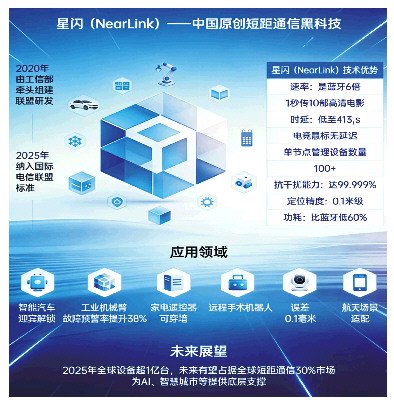
Core Viewpoint - The article highlights the emergence of "NearLink," a Chinese-developed short-range wireless communication technology that significantly enhances connectivity and performance for smart devices, addressing the limitations of existing technologies like Bluetooth and Wi-Fi [2][3]. Group 1: Technology Development - NearLink was initiated in 2020 by the Ministry of Industry and Information Technology, gathering over 400 organizations, including Huawei and China Mobile, to develop a faster, more responsive, energy-efficient, and stable short-range communication technology [2]. - The first technical standard for NearLink was published in 2022, and in 2023, Huawei launched the first terminal product supporting NearLink, enabling high-quality lossless audio transmission [3]. Group 2: Performance Metrics - NearLink operates in two modes: one for low-power scenarios with transmission speeds six times faster than traditional Bluetooth, and another for high-speed needs capable of transmitting 8K ultra-high-definition video [4]. - The latency of NearLink can reach as low as 20 microseconds, making it 1500 times faster than traditional Bluetooth and 500 times faster than Wi-Fi, surpassing human neural response speed [4]. Group 3: Application Scenarios - NearLink can connect up to 4096 devices simultaneously, significantly outperforming traditional Wi-Fi routers, which can only handle 32 devices [6]. - In smart home applications, devices using NearLink can operate seamlessly without interference, even in environments with many connected devices [6]. Group 4: Energy Efficiency - NearLink is designed to be energy-efficient, consuming 60% less power than traditional Bluetooth and 80% less than Wi-Fi, leading to extended battery life for devices [8]. - For instance, smartwatches equipped with NearLink can have their battery life extended by 30%, and industrial sensors can see battery life increase from three months to eight months [8]. Group 5: Industry Impact - In the automotive sector, NearLink enhances vehicle key functionalities, improving accuracy and responsiveness for features like automatic unlocking and guest welcome [10]. - In industrial applications, NearLink facilitates real-time data transmission, significantly reducing operational delays and improving efficiency in manufacturing and healthcare settings [11]. Group 6: Future Prospects - To achieve widespread adoption comparable to Bluetooth and Wi-Fi, NearLink needs to expand its ecosystem and reduce costs, as the current chip price is approximately 15 yuan, nearly double that of traditional Bluetooth chips [12]. - The anticipated reduction in chip costs by 30% by 2026 is expected to make NearLink more accessible to consumers and encourage broader adoption across various device categories [12].
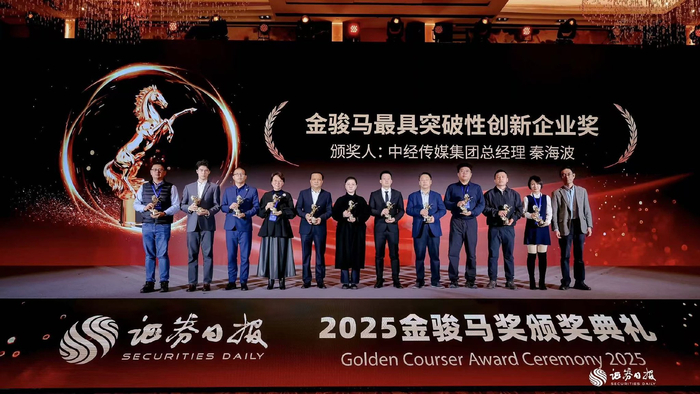
2025年度金骏马最具突破性创新企业奖
Zheng Quan Ri Bao Zhi Sheng· 2025-12-26 15:11
Group 1 - The article discusses various companies including 创新奇智, 北部湾港, and 矽电股份, highlighting their recent developments and market positions [2] - It mentions 中直股份 and 兴福电子 as key players in their respective sectors, indicating their growth potential and strategic initiatives [2] - The performance of 吉贝尔 and 华资实业 is analyzed, focusing on their financial results and market trends [2] Group 2 - 莱特光电 and 华领医药 are noted for their innovative approaches and contributions to technology and healthcare industries [2] - 福莱新材 and 赛力斯 are highlighted for their advancements in materials science and potential impact on the market [2]


重庆民营企业科技创新指数100强企业贡献全市27.43%研发经费
Zhong Guo Xin Wen Wang· 2025-12-26 14:37
中新网重庆12月26日电 (记者刘相琳)重庆市工商联26日发布"2025重庆民营企业科技创新指数100强榜 单"显示,2024年,重庆民营科技创新指数100强民企研发费用总额229.6亿元,较上年增长32.43%,占 重庆全市研发经费支出的27.43%。 当天还发布了"2025重庆民营企业研发投入50家榜单""2025重庆民营企业发明专利50家榜单"。位 列"2025重庆民营企业研发投入50家榜单"前3位的是赛力斯集团股份有限公司、宗申产业集团有限公 司、马上消费金融股份有限公司;位列"2025重庆民营企业发明专利50家榜单"前3位的是视联动力信息 技术股份有限公司、赛力斯集团股份有限公司、OPPO(重庆)智能科技有限公司。(完) 据介绍,"2025重庆民营企业科技创新指数100强榜单"是在全国工商联第27次上规模民营企业调研的基 础上,综合企业部分公开数据,进行量化和综合评价后形成的。榜单排名前三的企业分别是赛力斯集团 股份有限公司、宗申产业集团有限公司、重庆智飞生物制品股份有限公司。 (文章来源:中国新闻网) 统计显示,2024年,重庆民营企业科技创新指数100强企业平均研发投入强度为3.9%,高于全市研 ...
赛力斯(601127) - 关于控股股东部分股份解除质押及非公开发行可交换公司债券的进展公告
2025-12-26 13:16
证券代码:601127 证券简称:赛力斯 公告编号:2025-108 赛力斯集团股份有限公司 关于控股股东部分股份解除质押及非公开发行 可交换公司债券的进展公告 本公司董事会及全体董事保证本公告内容不存在任何虚假记载、误导性陈述或者 重大遗漏,并对其内容的真实性、准确性和完整性承担法律责任。 公司于近日接到小康控股通知,小康控股将其所持有本公司的部分股份办理 了解除质押手续,其中包含原质押于可交换公司债券质押专户的35,000,000股股 份,并根据可交换公司债券募集说明书相关约定,已办理完成持有股份担保及信 托登记手续。具体情况如下: 一、股份解除质押情况 单位:股 | 股东名称 | 重庆小康控股 | 重庆小康控 | 重庆小康控 | 重庆小康控 | | --- | --- | --- | --- | --- | | | 有限公司 | 股有限公司 | 股有限公司 | 股有限公司 | | 本次解除质押股份 | 10,000,000 | 26,000,000 | 13,000,000 | 35,000,000 | | 占其所持股份比例 | 2.50% | 6.49% | 3.25% | 8.74% | | --- ...
金融“升维”:当好现代化产业体系的“增长伙伴”
经济观察报· 2025-12-26 12:23
Core Viewpoint - The article emphasizes the need for a profound financial transformation to support China's industrial upgrade towards an intelligent, green, and integrated modern industrial system, which is positioned as a top strategic task in the new "14th Five-Year Plan" [1][2][3]. Group 1: Industrial Development and Financial Integration - China is advancing its industrial system towards intelligent, green, and integrated development, achieving significant historical progress in scale, technological innovation, and enterprise competitiveness [1][2]. - The financial sector, particularly Agricultural Bank, plays a crucial role in supporting industrial development by providing tailored financial services that integrate deeply with industry needs [3][11]. Group 2: Innovative Financial Models - Traditional credit models have created barriers for technology-driven companies, which often lack physical assets for collateral, leading to financing challenges [5]. - Agricultural Bank has introduced a "technology flow" evaluation system that assesses companies based on their technological capabilities rather than traditional asset-based metrics, enabling precise financial support [6][8]. Group 3: Comprehensive Financial Support - The bank's approach has evolved from merely providing loans to becoming a partner in the entire lifecycle of a company's development, offering diverse financing solutions that adapt to changing business needs [10][11]. - Agricultural Bank has established a comprehensive service system that includes investment, loans, and advisory services, supporting over 80,000 technology enterprises [11][15]. Group 4: Systemic Integration and Ecosystem Building - The competition in modern industrial systems is fundamentally about the competition between ecosystems, necessitating a shift from single-point support to systemic integration and co-construction of industrial ecosystems [13]. - Agricultural Bank is actively building a collaborative financial ecosystem that connects technology, industry, and finance, facilitating the growth of key industrial chains and innovative enterprises [15].


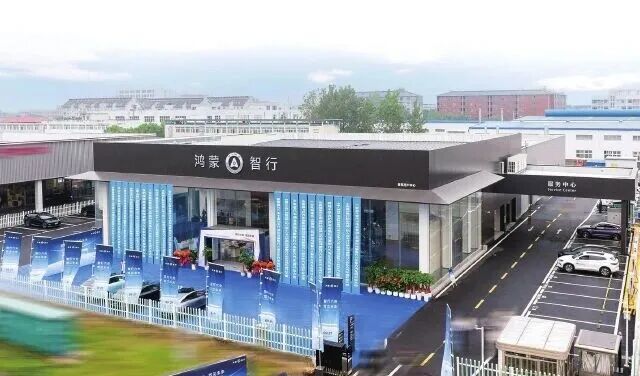
鸿蒙智行大酒店 勇闯汽车零售创新之路
Xin Lang Cai Jing· 2025-12-26 12:21
Core Viewpoint - The automotive industry is witnessing a significant transformation with the emergence of the "Hongmeng Intelligent Hotel," which offers a luxurious customer experience that surpasses traditional 4S stores of brands like Mercedes-Benz, BMW, and Audi. This initiative has led to a monthly delivery of over 80,000 new vehicles within the Hongmeng Intelligent system, indicating a strong market presence and customer engagement [2][15]. Group 1: Strategic Developments - The recent gathering of the five brands under Hongmeng Intelligent in Shanghai marks a deepening of strategic cooperation, focusing on enhancing collaboration in research, manufacturing, charging, and marketing [2][15]. - The establishment of a standardized service system aims to create the first cross-brand shared after-sales service network in the industry, ensuring high-quality service across the entire process from pre-sale to after-sale [2][15]. Group 2: Customer Experience and Challenges - The "Hongmeng Intelligent Hotel" has gained popularity for its unique offerings, such as diverse regional menus and a welcoming atmosphere, which have been well-received by customers [4][17]. - However, there are concerns regarding the sustainability of free services due to rising operational costs, leading to changes in several complimentary policies [3][16][24]. Group 3: Industry Comparisons and Innovations - The concept of shared after-sales service networks is not entirely new, as other companies like SAIC and Toyota have implemented similar strategies to enhance service efficiency and customer satisfaction [21][22]. - Analysts suggest that the shift from direct sales to a dealer model may help reduce costs and accelerate market coverage, indicating a strategic pivot in the operational approach of Hongmeng Intelligent [19][23]. Group 4: Future Directions - The company is currently focused on enhancing user experience as part of a three-step development strategy, with future expansions likely to prioritize efficiency and scale over lavish customer services [25].
星闪的2025:终端破亿,国标发布,一场无线短距通信的产业级跃迁
36氪· 2025-12-26 09:55
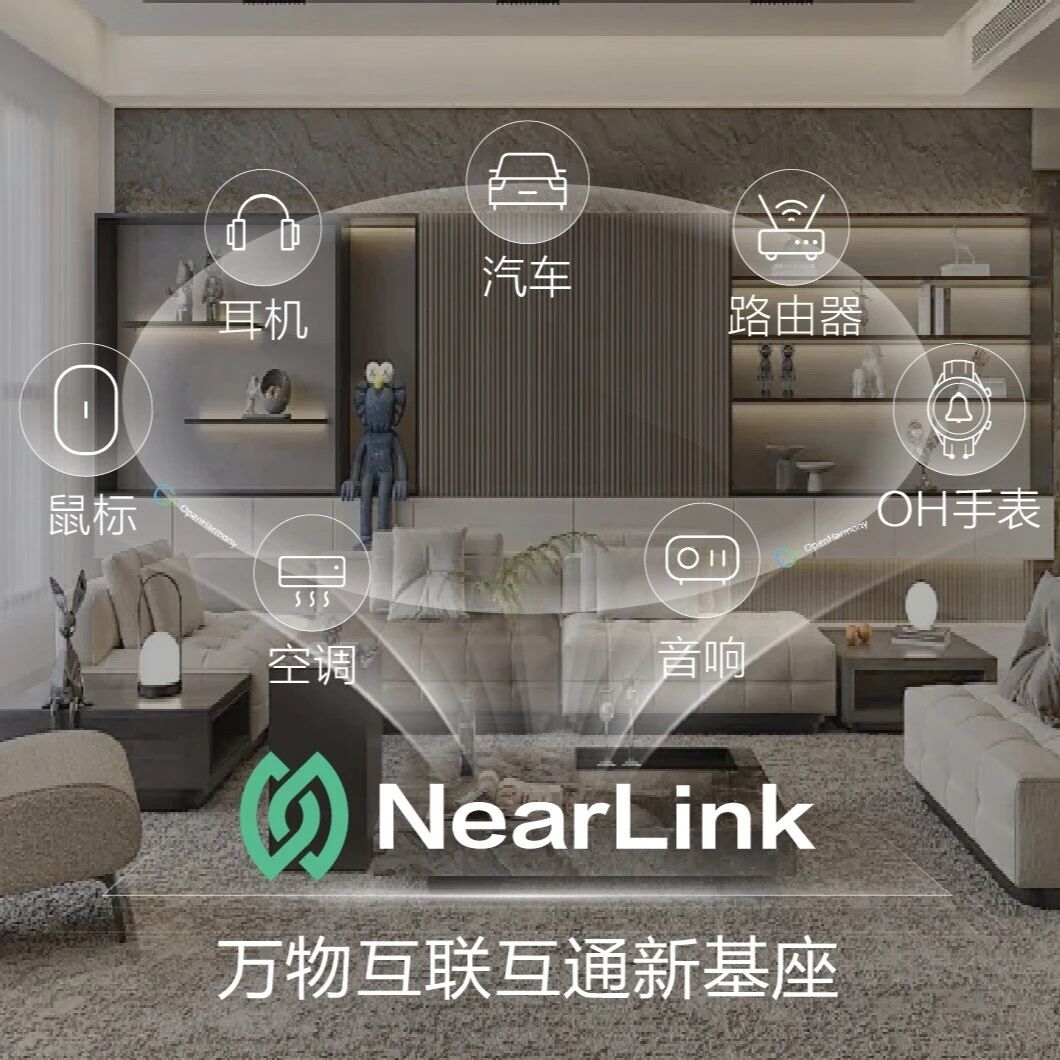
Core Viewpoint - The article emphasizes that transformative technologies, like the new wireless short-range communication technology "Star Flash," often become essential infrastructure that is taken for granted rather than being constantly highlighted as groundbreaking innovations [1][3]. Group 1: Technology Evolution - The development of Star Flash follows a clear industrial evolution path, marked by the establishment of the International Star Flash Alliance in September 2020, its commercial launch in 2023, and the release of the Star Flash 2.0 standard in March 2025 [5]. - Star Flash's approach is characterized by a "slow start, heavy standards, and later explosion" strategy, allowing it to bridge gaps between devices and systems in the AI-driven digital transformation wave [5][12]. Group 2: Standardization and Industry Consensus - The competition in wireless short-range communication is fundamentally a competition at the standards level, focusing on how devices can collaborate under a unified set of rules [7][9]. - The release of the Star Flash 2.0 standard signifies a critical industrial leap, integrating key capabilities into a standardized framework that can be reused across various scenarios [16][17]. Group 3: Ecosystem Development - As of 2025, Star Flash has crossed the critical threshold of 100 million devices, indicating its transition from a validated technology solution to a widely adopted connectivity foundation across multiple sectors [21][22]. - The Star Flash ecosystem has attracted over 1,200 partners since the establishment of the International Star Flash Alliance, forming a complete collaborative network that includes chips, modules, terminals, and applications [19]. Group 4: Application Scenarios - In smart home scenarios, Star Flash enhances the integration of appliances, enabling precise control and interaction, as demonstrated by products like the Haier air conditioner that utilizes Star Flash's capabilities for improved user experience [23]. - In the consumer electronics sector, Star Flash 2.0 provides a stable wireless audio experience, allowing high bitrate and low-latency audio transmission, as seen in products like Huawei's FreeBuds Pro 5 [25]. - In the automotive industry, Star Flash is reshaping core interaction scenarios, with over 50 vehicle models adopting the Star Flash digital key technology, showcasing its broad applicability [29]. Group 5: Future Prospects - The combination of Star Flash and open-source HarmonyOS is seen as a critical step towards building a new generation of interconnected systems, enhancing both connectivity and system-level collaboration [35][37]. - The integration of Star Flash with HarmonyOS allows for seamless interaction across diverse devices, paving the way for a more interconnected and intelligent ecosystem [38].
乘用车板块12月26日涨2.54%,比亚迪领涨,主力资金净流入16.99亿元
Zheng Xing Xing Ye Ri Bao· 2025-12-26 09:07
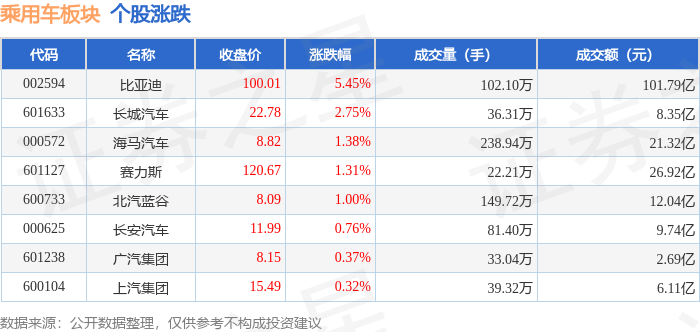
Group 1 - The passenger car sector increased by 2.54% compared to the previous trading day, with BYD leading the gains [1] - The Shanghai Composite Index closed at 3963.68, up 0.1%, while the Shenzhen Component Index closed at 13603.89, up 0.54% [1] - Major stocks in the passenger car sector showed varied performance, with BYD closing at 100.01, up 5.45%, and Great Wall Motors at 22.78, up 2.75% [1] Group 2 - The passenger car sector saw a net inflow of 1.699 billion yuan from main funds, while retail investors experienced a net outflow of 794 million yuan [1] - BYD attracted a significant net inflow of 1.473 billion yuan from main funds, while retail investors had a net outflow of 683 million yuan [1] - Other notable stocks included Seres with a net inflow of 152 million yuan from main funds and a net outflow of 106 million yuan from retail investors [1]

纳百川:深耕新能源热管理赛道
Quan Jing Wang· 2025-12-26 09:04
Core Viewpoint - Nanbaichuan successfully listed on the Shenzhen Stock Exchange, marking a significant milestone for the company and reflecting the promising prospects of the domestic thermal management sector under the "dual carbon" strategy [1] Group 1: Company Overview - Nanbaichuan New Energy Co., Ltd. was established in October 2007, focusing on the research, production, and sales of thermal management products for electric vehicle power batteries, fuel vehicle power systems, and energy storage batteries [1] - The company has developed into a solution provider for various thermal management applications, including mobile, fixed, and specialized thermal management systems [1] Group 2: Technological Innovation - Continuous R&D investment is a cornerstone of Nanbaichuan's technological leadership, with R&D expenses projected to increase from 34.07 million yuan in 2022 to 54.11 million yuan in 2024 [2] - The company holds 203 authorized patents, including 20 invention patents and 183 utility model patents, covering core technologies such as temperature control, lightweight design, and quality optimization [2] Group 3: Product and Market Position - Nanbaichuan's product line includes a wide range of thermal management solutions, from small module liquid cooling plates to large-sized liquid cooling plates for SUVs and energy storage devices, meeting diverse market needs [2] - The company has completed over 300 product projects and adapted more than 200 vehicle models, serving major manufacturers like NIO, Xpeng, and Geely, establishing a leading position in the domestic thermal management market for electric vehicle power batteries [5] Group 4: Strategic Vision - The chairman expressed gratitude for the support received and emphasized the company's commitment to adhering to capital market regulations, enhancing governance, and increasing R&D investment [7] - Nanbaichuan aims to leverage the historical opportunities presented by the global electrification and intelligence of vehicles, striving to become a leading provider of thermal management system solutions globally [7]